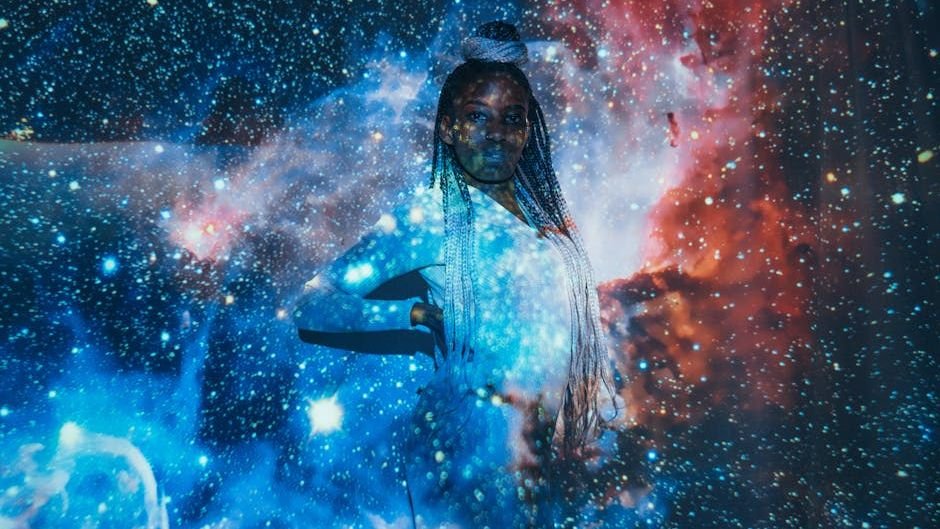

Stop and think for a moment about what you actually are. Not who you are, but what. The skin you’re sitting in right now, the calcium holding your bones upright, the iron quietly carrying oxygen through your blood – every single one of those atoms began its journey billions of years before Earth even existed. You are, in the most literal and verifiable scientific sense, an artifact of exploding stars.
Honestly, I think this is one of the most mind-bending facts in all of science, and yet most people have never truly let it sink in. We go through life feeling like small, separate beings in a vast, indifferent universe. The science says otherwise. Let’s dive in.
The Universe Had to Die for You to Live
Here’s the thing most people gloss over: you are here because stars died. Not metaphorically. Not poetically. Stars burned to make us, became giants, and went supernova. The densest stars in the universe merged to make bits of us, and the molecules that make us formed in burning atmospheres and freezing interstellar clouds. That’s the raw, extraordinary truth behind your existence.
The universe began roughly 13.8 billion years ago with the Big Bang. At that point, only the lightest elements, such as hydrogen, helium, and minuscule amounts of lithium, existed. The first generation of stars formed as lumps of gas drew together and began to combust. You weren’t possible yet. Not even close.
The next generation of seeded stars were then able to produce other, heavier elements such as carbon, magnesium, and nearly every element in the periodic table. Any element in your body that’s heavier than iron has travelled through at least one supernova. Let that settle in for a second. Your blood, your bones, your DNA – all veterans of catastrophic stellar explosions.
The Six Elements That Build You
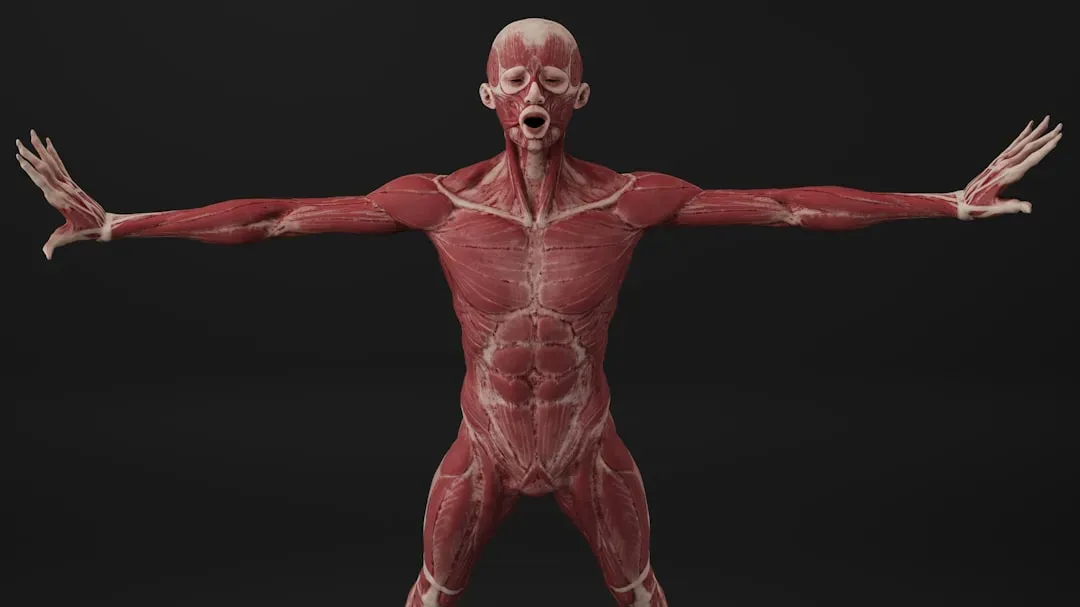
Roughly 99 percent of the human body is made of just six elements. In order of fraction of mass, they are: oxygen, carbon, hydrogen, nitrogen, calcium, and phosphorus. It’s almost shocking how compact the recipe for a human being really is. Six ingredients, forged across billions of years, and here you are.
Oxygen constitutes the largest portion by mass, roughly 65%, found in water, which is abundant in tissues and cells. Carbon follows as the second most abundant element, making up about 18% of body mass, forming the structural backbone of essential organic molecules like carbohydrates, proteins, lipids, and nucleic acids. Hydrogen accounts for approximately 10% of our mass, present in water and nearly all organic compounds. Think of it like the universe’s own recipe card, written in fire and gravity.
Nitrogen makes up about 3% of the human body and is a component of amino acids and nucleic acids. Calcium, comprising around 1.4% of body mass, is mostly stored in bones and teeth, providing structure and playing a role in muscle movement. Phosphorus, the second most plentiful mineral in the body, works with calcium to build bones and teeth, and is involved in energy production and cell structure. These six elements collectively make up about 99% of the human body’s mass.
Nuclear Fusion: The Cosmic Forge Inside Every Star
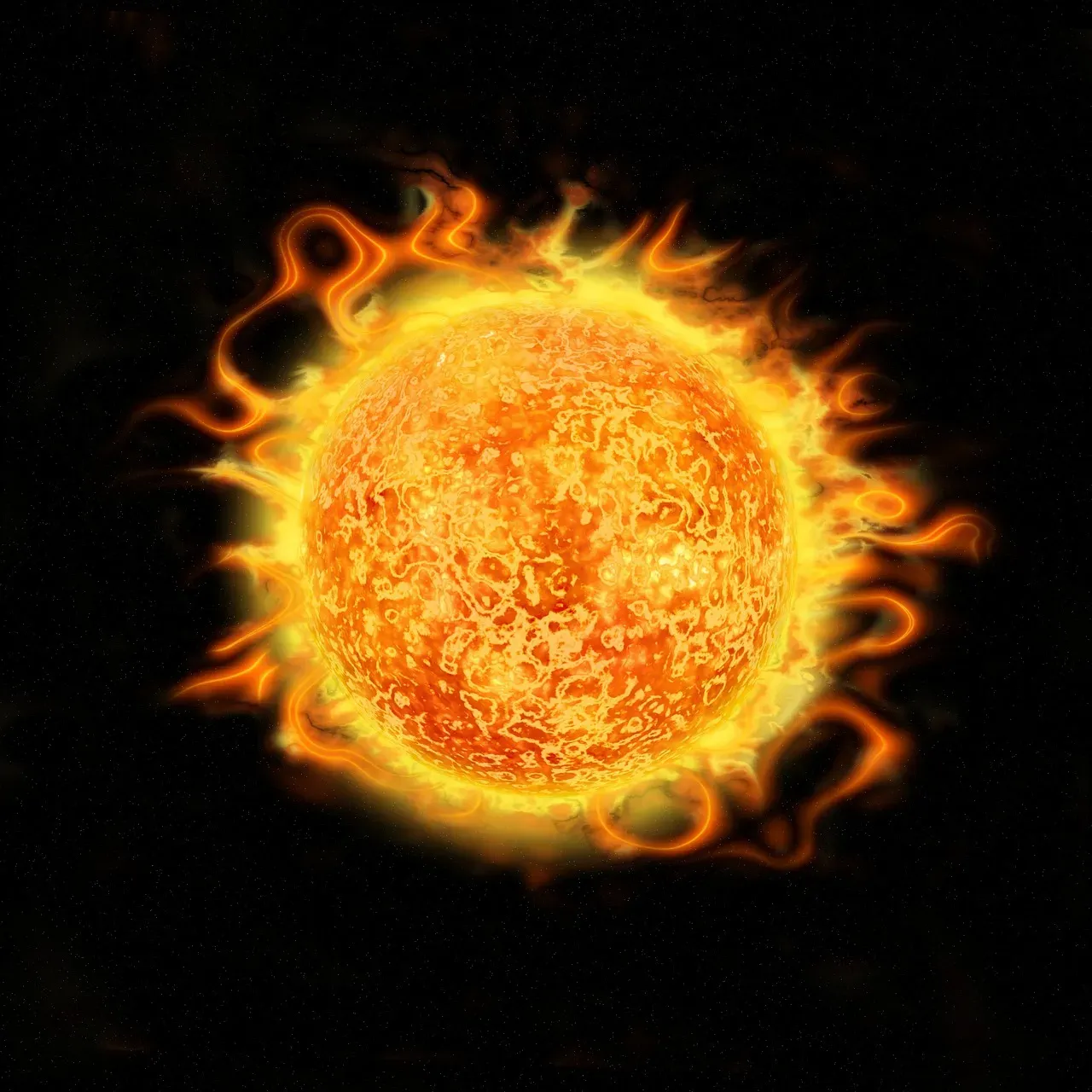
Stars are like nuclear reactors. They take a fuel and convert it to something else. Hydrogen is formed into helium, and helium is built into carbon, nitrogen and oxygen, iron and sulfur – everything we’re made of. It’s a chain reaction so ancient and so powerful that it makes every human-built machine look like a child’s toy in comparison.
Most stars, including our Sun, are constantly fusing hydrogen to helium. When all the hydrogen has been burnt, helium itself becomes the fuel. Most stars stop there, puffing off their outer layers into space, so that the enriched gas can become the raw material for the next generation of stars and planets. A star that contains several times more mass than the Sun, however, goes further, creating carbon, oxygen, silicon, sulphur, and iron. Your body is literally the product of stellar inheritance passed down across generations of dying suns.
Supernovae: The Most Important Explosions in Your History
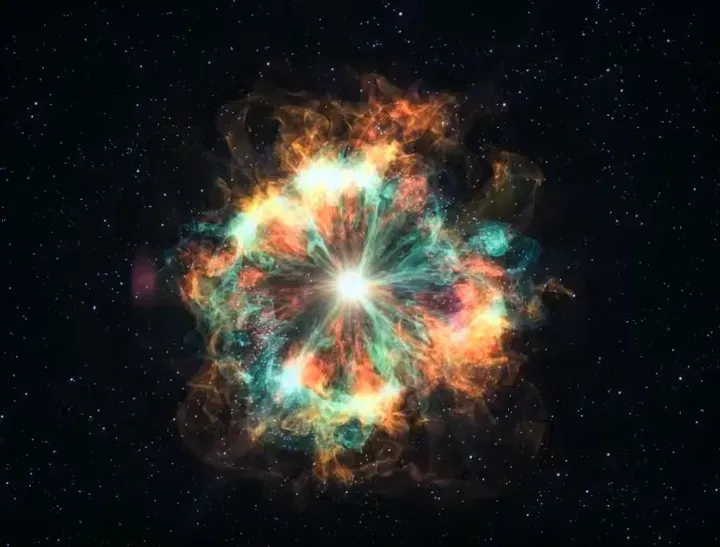
Stars that go supernova – meaning they explode powerfully – are responsible for creating many of the elements of the periodic table, including those that make up the human body. It’s hard to fully grasp the scale of that statement. A single supernova explosion releases energy so extreme it briefly outshines entire galaxies.
The energy released is extreme. In just a few seconds, more energy is released than the Sun will release in its entire life. For weeks afterwards, a supernova can shine brighter than an entire galaxy with billions of stars. And all that violent, glorious energy had a purpose: scattering the heavy elements you need across the cosmos so that, one day, they could form you.
Not only do supernovae serve as the mechanism for the creation of these heavy elements, they also serve as the mechanism for their dispersal. It is impossible to speculate which specific supernovae created the heavy elements that ended up in a specific solar system; the heavy elements that are in your body and in objects around you are the products of many different supernovae over many millions of years all over the Galaxy. You are, in every real sense, a community project spanning the entire Milky Way.
How Stardust Found Its Way Into You
Our own solar system, including Earth, formed from a cosmic cloud approximately 4.6 billion years ago. The elements forged in ancient stars were thus incorporated into the very dust and gas that became our planet. On early Earth, these elements were subjected to various geological and chemical processes. The planet’s environment, with its liquid water and energy sources, and the presence of these chemical building blocks, provided conditions conducive to chemical evolution.
Over millions of years, simple inorganic molecules reacted to form more complex organic compounds, such as amino acids and sugars, which are the fundamental building blocks of life. This complex chemistry eventually led to the emergence of self-replicating molecules and the first living organisms. The journey of elements from stellar interiors to the intricate biological structures of human bodies highlights a profound cosmic connection. Think of it as a 13.8-billion-year relay race, with stardust as the baton – and you as the finish line.
Your Body Never Stops Exchanging With the Cosmos
Everything we are and everything in the universe and on Earth originated from stardust, and it continually floats through us even today. It directly connects us to the universe, rebuilding our bodies over and again over our lifetimes. You’re not a fixed object. You’re more like a process – a pattern that cosmic material temporarily flows through.
Every tissue recreates itself, but they all do it at a different rate. Research through carbon dating shows that cells in the adult human body have an average age of seven to ten years. That’s far less than the age of the average human, but there are remarkable differences in these ages. Some cells literally exist for a few days. Your body isn’t just made of stardust – it is continuously refreshing that stardust, pulling from the environment and cycling ancient materials in and out of your tissues throughout your entire life.
You Share 97 Percent of Your Atoms With the Milky Way
A survey of 150,000 stars shows just how true the old cliché is: humans and their galaxy have about 97 percent of the same kind of atoms, and the elements of life appear to be more prevalent toward the galaxy’s center. Let that be your new favorite fact to share at dinner parties. You and the Milky Way are practically family.
The crucial elements for life on Earth, often called the building blocks of life, can be abbreviated as CHNOPS: carbon, hydrogen, nitrogen, oxygen, phosphorus and sulfur. For the first time, astronomers have cataloged the abundance of these elements in a huge sample of stars. The astronomers evaluated each element’s abundance through a method called spectroscopy; each element emits distinct wavelengths of light from within a star, and they measured the depth of the dark and bright patches in each star’s light spectrum to determine what it was made of. It’s not poetry anymore. It’s data.
Each one of us – in a very physical and physiological way – is 13.8 billion years old. This is the age of the Universe. It took our cosmos this long to forge the elements and build up the cumulative complexity that makes us what we are. When you gaze up at the night sky, you’re not looking at something foreign or distant. You’re looking at your own origin story written in light.
Conclusion: You Are the Universe Looking at Itself
Zoom out for a moment. You are not a small creature on a small planet in a forgettable corner of space. You are a highly organized, self-aware arrangement of atoms that were born in some of the most violent explosions the universe has ever produced. The calcium in your bones and the iron in your blood came from enormous supernova explosions, while the gold in the universe’s crust and the heavy elements on Earth came from violent mergers of unimaginably dense neutron stars.
I think the most profound takeaway here is not just scientific but deeply personal. Every atom of your DNA is stardust. Every atom in your skin, blood, and bones is stardust. Every atom of the oxygen you breathe is stardust. You are an intimate part of the whole universe. Not figuratively. Not philosophically. Literally, measurably, scientifically.
The next time the world feels small or you feel disconnected from something greater, remember this: you carry billions of years of cosmic history inside you, walking around, thinking thoughts, asking questions. That is not an accident. That is the universe becoming conscious of itself – through you. So, does knowing you are made of stardust change how you see yourself?