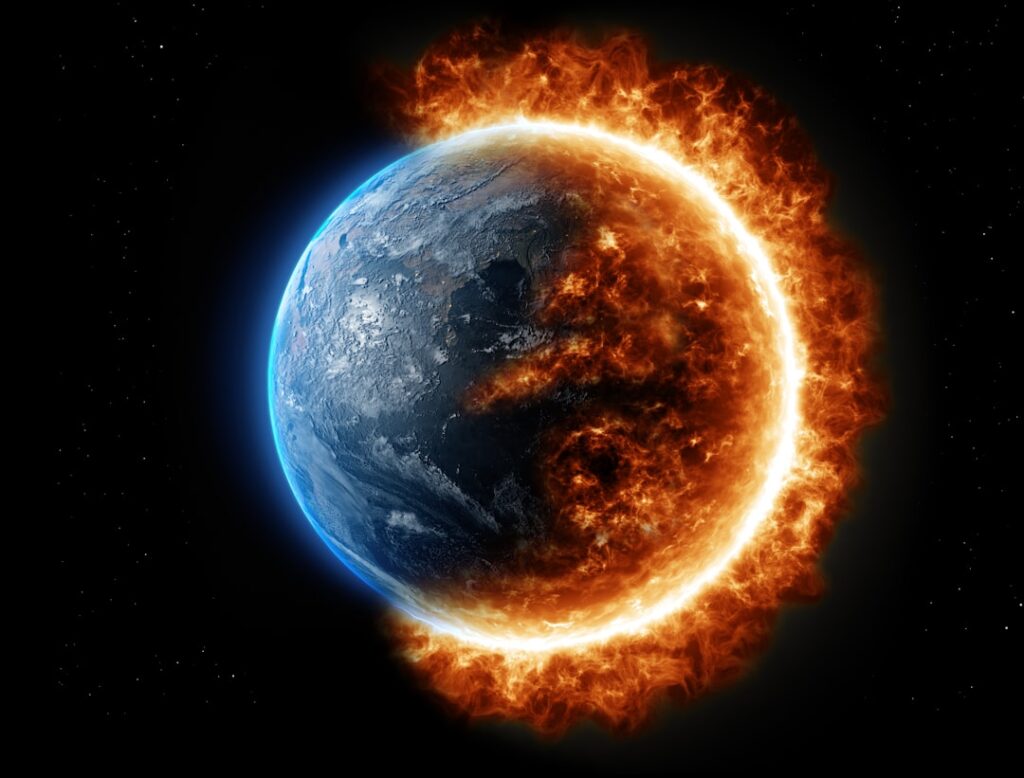
You probably think you already know where Earth’s most extreme heat lives: Death Valley, the Sahara, maybe some scorching patch of Iran’s Lut Desert. You’ve heard about air temperatures around one hundred thirty degrees Fahrenheit, people frying eggs on car hoods, and cities buckling during record-breaking heatwaves. But none of those even comes close to the single hottest temperature ever detected on Earth’s surface. That record lives in a place that looks, at first glance, like the exact opposite of a blistering desert. You are dealing with rocks shattered by cosmic violence, temperatures that briefly rival stars, and a kind of heat you will never feel on your skin because if you did, you simply would not exist. Once you see how this record was set, you may never look at phrases like “hottest day on Earth” the same way again.
The Real Record: A Flash of Heat Hotter Than Lava
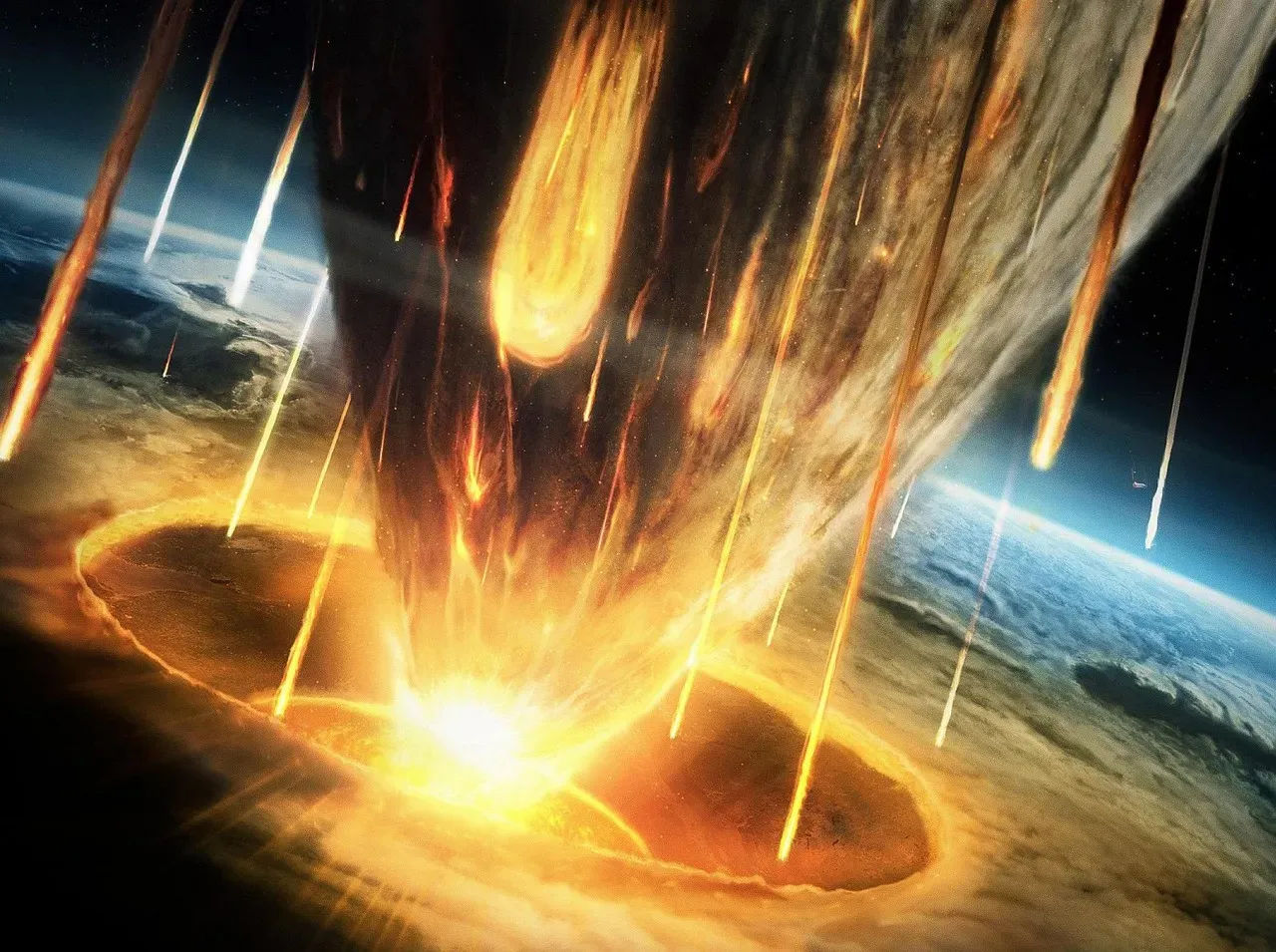
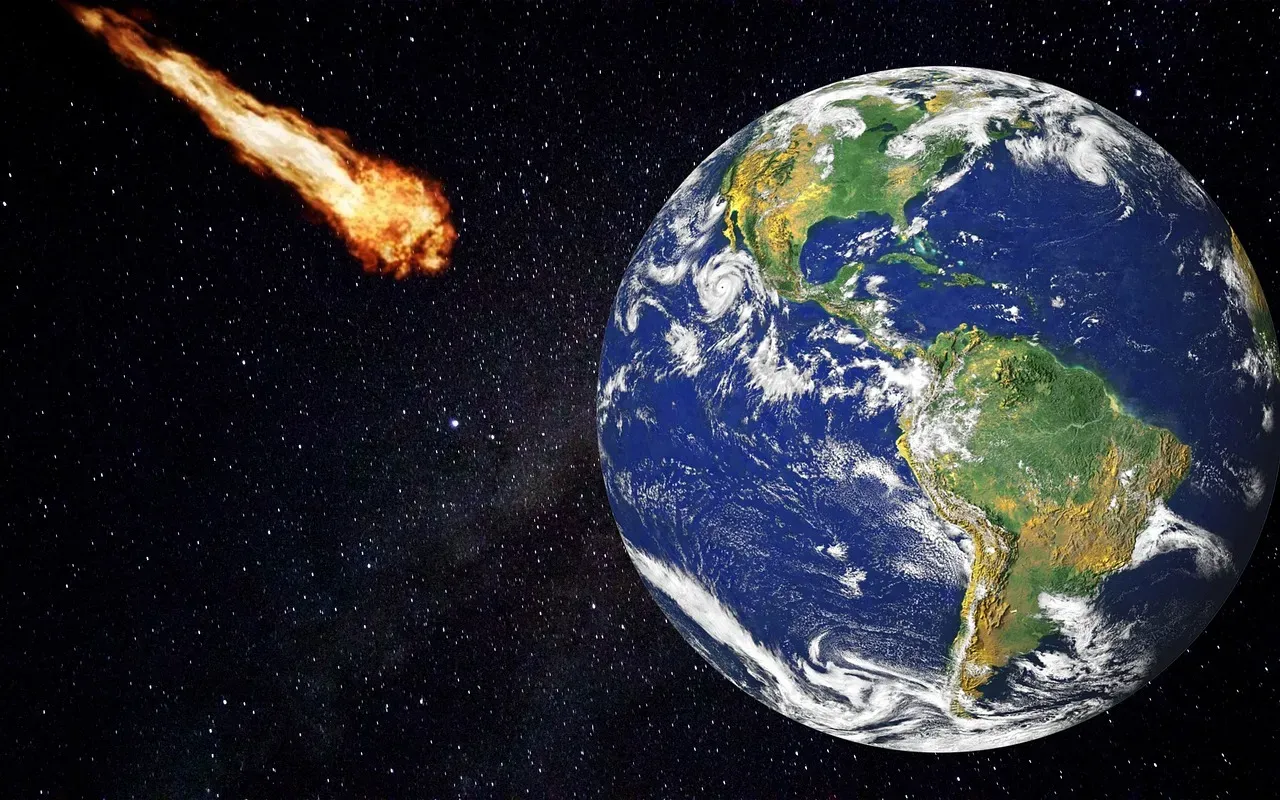
You are used to hearing about record heat as something that happens in the air, where a thermometer is shaded and set at about human height. That is how Death Valley’s famous one hundred thirty-four degrees Fahrenheit reading is defined: an air temperature, averaged over a short time, in a standard setup. But when you ask a more ruthless question – what is the highest temperature that has ever actually existed at Earth’s surface, for any length of time – you walk into a different world. In that world, you leave weather stations and heatwaves behind and enter the realm of violent impacts. Researchers studying shocked minerals in ancient rocks have calculated that, during one meteor strike, parts of Earth’s surface were heated to roughly four thousand three hundred degrees Fahrenheit, almost twice as hot as typical molten lava and far above anything your weather app will ever show you. You are no longer thinking in terms of summer heat; you are looking at instant, catastrophic energy release that rewrites local geology in a heartbeat.
How a Meteor Strike Turned Solid Rock Into a Heat Record
Imagine you are standing on solid ground and, out of nowhere, a space rock arrives at tens of thousands of miles per hour. In a fraction of a second, that kinetic energy has to go somewhere, and a staggering amount of it becomes heat. You are not talking about gently warming a landscape; you are talking about vaporizing rock, melting crust, and driving shock waves deep into the ground. The temperatures at the very point of impact can spike so fast and so high that even tough minerals are pushed to their limits. When scientists later inspect those minerals – often quartz or similar silicate crystals – they find microscopic scars and unusual structures that only form above certain extreme temperatures and pressures. By recreating those conditions in the lab, you can back-calculate how hot the rock must have been when the meteor hit. That is how researchers concluded that, in at least one known impact structure, the surface temperature briefly exceeded four thousand degrees Fahrenheit. You never had a thermometer sitting there; you have the rock itself acting as a physical recording device, holding the memory of that unimaginably intense moment.
Why Climatologists Don’t Usually Talk About This Record
If you work in climatology, you spend your days worrying about patterns: average temperatures, records that last hours or days, long-term warming trends, and extremes that affect real communities. You care about heatwaves that damage crops, overload health systems, and turn once-rare “hundred-year events” into something you see every few summers. In that context, a fleeting spike of rock temperature from a long-ago meteor strike feels almost irrelevant to your daily job. You also care deeply about consistent measurement methods. Air temperatures are taken with specific instruments, at fixed heights, with standard shielding from direct sunlight so you can compare one place to another. A meteor-induced heat flash does not fit into that framework at all. You cannot compare it to a city’s record high or a new heat record at an airport station. So even though that impact temperature is physically real and truly occurred at Earth’s surface, you almost never see it in the same lists that rank the hottest places on Earth. It belongs to planetary science more than to weather and climate statistics, which is exactly why it can surprise even experts in the field.
Air vs. Surface vs. Impact: You Are Talking About Different Kinds of Heat
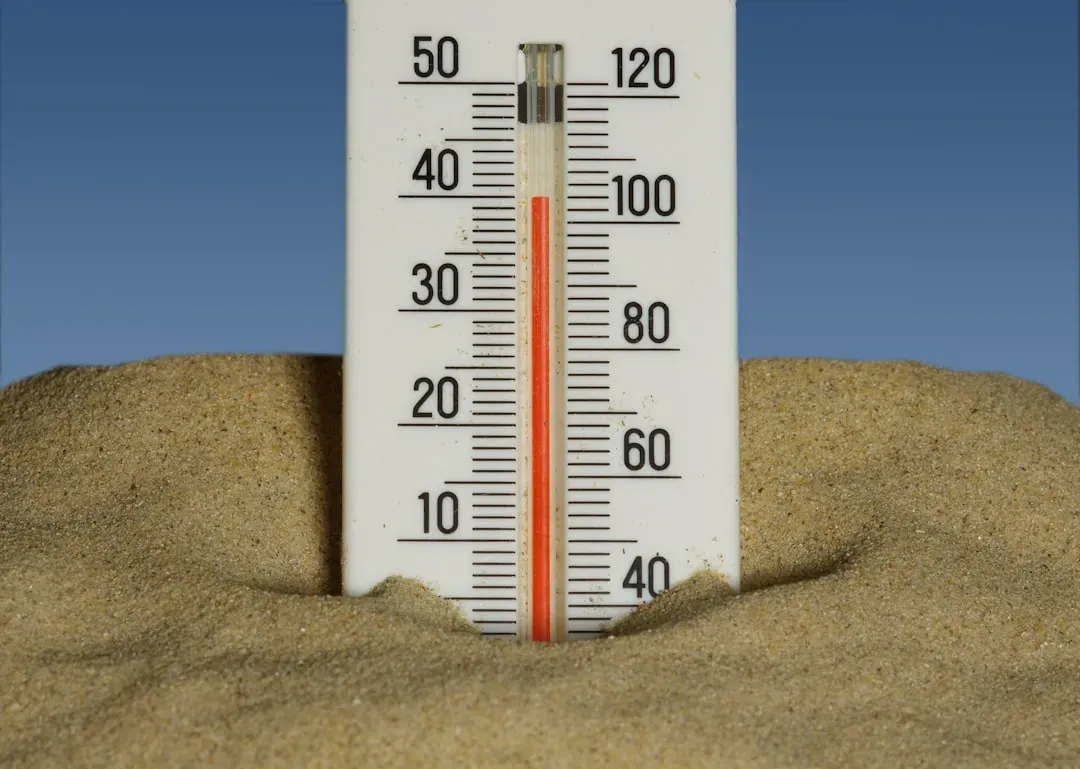
You might be wondering how to make sense of all these different numbers. One moment you are hearing about fifty degrees Celsius in a desert, the next about seventy-degree land surfaces seen from satellites, and now something well above two thousand degrees Celsius in impact rocks. The key is that you are talking about different parts of the environment and wildly different timescales. Air temperature is the one you feel when you step outside; it is the atmosphere’s state, averaged over minutes to hours, and is crucial for climate records. Surface temperature is another beast. You know this intuitively when you walk barefoot across a dark parking lot in summer and feel it burning under your feet while the air still feels tolerable. Dark, dry surfaces can heat to far higher temperatures than the surrounding air. Satellite instruments have shown remote deserts with land surfaces hotter than a stovetop on medium heat, even while the air a couple of meters up remains far cooler. Meteor impact temperatures go further still, existing for only fractions of a second but reaching extremes that outstrip even volcanic eruptions. Once you separate these categories in your mind – air, ground, and impact – you can see why the “hottest ever” answer depends entirely on what kind of heat you care about.
Why the Hottest Surface Temperatures Are Usually Found in Deserts

Here is where you might feel even more thrown by the headline. For modern, natural heating by sunlight, you generally expect the hottest surfaces to be in deserts. You have clear skies, very dry air, and almost no vegetation. Sunlight comes in strong, and instead of fueling plant growth or evaporating much water, it just bakes the ground. Satellite-based instruments have repeatedly found deserts like Iran’s Lut or parts of Mexico and the American Southwest reaching brutal land surface temperatures that you would never want to experience up close. These hot spots are not always the same from year to year, because weather patterns and soil conditions change, but deserts consistently dominate the charts when you track naturally heated ground. In that context, it makes perfect sense for a climatologist to expect the hottest surface temperatures to come from some obscure dune field or rocky basin. What throws you off is that the absolute, once-in-a-geological-event record was not created by sunlight slowly baking dry ground – it was created by an extraterrestrial projectile slamming into whatever surface happened to be underneath it, desert or not.
Why This “Non-Desert” Record Still Matters to You
You might be tempted to shrug and say that a meteor-induced flash of heat millions of years ago has nothing to do with your life. You would never feel that kind of temperature, and it is not going to cook your city in July. But there is a deeper lesson here about how you think of “records” and how easily your intuition can mislead you. You are reminded that Earth can produce extremes far beyond your everyday experience, and those extremes are recorded not in human logs but in the minerals under your feet. There is also something humbling in knowing that the landscape you see as stable has lived through energies you can barely imagine. The same crust that carries your roads, farms, and cities has, in places, been melted and reshaped by cosmic bullets that turned solid rock into a temporary inferno. When you look at modern climate extremes – unprecedented heatwaves, record-breaking ocean temperatures – you are seeing a different kind of shock to the system, slower and more sustained, but still capable of rewriting the rules your societies rely on. The impact record is a reminder that the planet has many ways to get very, very hot.
How Scientists Read Ancient Heat in Ordinary-Looking Rocks

If you picked up a rock from an old impact site, you might not guess you were holding evidence of the hottest temperature ever recorded at Earth’s surface. It would not glow or feel warm; its drama is frozen inside its crystal structure. But scientists can read that structure the way you read lines on a weather chart. You can thinly slice the rock, place it under a microscope, and look for specific patterns – tears, fractures, and transformed minerals that only form above certain thresholds of pressure and temperature. By recreating those conditions in a lab furnace and high-pressure apparatus, you can match the damage patterns and narrow down the temperature range that would have caused them. It is a bit like forensic work: you never saw the crime happen, but the evidence left behind lets you reconstruct the event in striking detail. In this case, your “crime scene” is a planetary surface slammed by a meteor, your witnesses are crushed and melted crystals, and your final conclusion is that, at least for a moment, the ground itself became as hot as the fire at the heart of a blast furnace.
Putting Today’s Heat Records in Perspective
Once you know there has been a four-thousand-degree moment in Earth’s past, it is easy to dismiss modern heat records as tame. But that reaction misses what actually matters to you. A flash of extreme temperature in a tiny patch of rock, long ago, does not threaten your food systems, your energy grid, or your health. What threatens you is prolonged, widespread heat that pushes your cities, your bodies, and your ecosystems beyond what they were built to handle. That is the realm of climatology, and that is where recent decades have been deeply alarming. When you see repeated years ranked among the hottest on record, or coastal waters lingering at temperatures that stress coral reefs and fisheries, you are looking at a different kind of record: duration and scale. You can think of it this way: the meteor impact is a single explosive note, deafening but brief; modern climate change is a rising background volume that never turns down. The meteor story gives you awe; the climate story demands action. Both are about heat, but only one is about the world you have to live in every day.
What This Extreme Teaches You About a Restless Planet
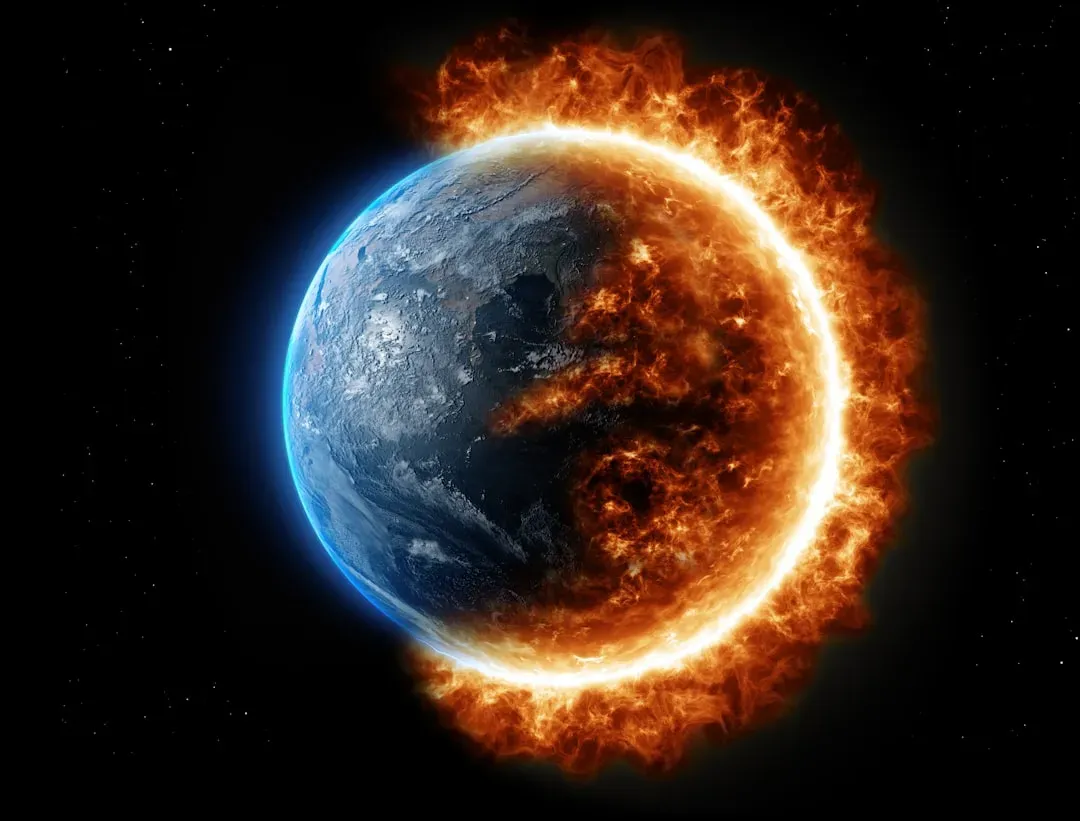
There is something both unsettling and strangely comforting in realizing that Earth has seen worse in some ways and yet is still here. You live on a planet where rocks have been vaporized on impact, where deserts glow under satellite sensors, and where polar regions can flip between ice ages and warm periods. The hottest surface record from a meteor strike is just one more reminder that the ground beneath you has a long, wild history that does not begin or end with human weather records. At the same time, you cannot hide behind that history to minimize what you are doing to the climate now. The fact that Earth has endured past extremes does not guarantee that your societies, your coastlines, or your infrastructure will endure the extremes you are creating. You are fragile even when the planet is resilient. When you hold both truths together – that Earth has known unimaginable heat and that your modern heat records are still dangerous – you start to see your place here with a little more humility and a lot more urgency.
Conclusion: Rethinking What “Hottest Ever” Really Means
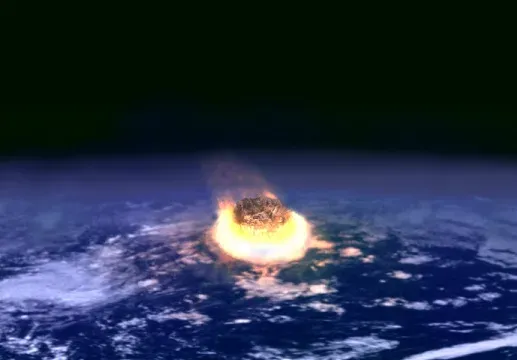
So when you hear someone say that the hottest temperature ever recorded on Earth’s surface was not in a desert, you now know why that statement can be both surprising and absolutely true. The ultimate record is not a weather station number from Death Valley or a satellite reading over some remote dune sea. It is a searing, split-second blast of heat from a meteor strike that turned ordinary rock into evidence of temperatures beyond anything you will find in a climate report. That record sits outside the daily concerns of climatology, which is exactly why it can catch even experts off guard. But you also know that the records that matter most to your life are not those brief, cosmic extremes. They are the steadily rising air temperatures, the hotter nights, the more frequent heatwaves that shape the world you wake up in every morning. Holding the meteor record in mind just gives you a deeper sense of how wild this planet can be and how narrow the slice of conditions is that you actually depend on. Knowing that, you can ask yourself: when you hear the phrase “hottest ever,” what kind of heat are you really talking about – and which kind should keep you up at night?