
Imagine a universe where nothing has any weight. Not stars, not planets, not you. Every particle is flying through space at the speed of light, with no way to slow down, cluster together, or form anything meaningful. That is, honestly, a mind-bending thought. No galaxies, no life, not even the faintest wisp of structure. Yet this was precisely the state of the cosmos moments after the Big Bang.
What changed everything was one of the most elegant and startling ideas in the history of science. A hidden field, woven into the very fabric of space, quietly grants mass to the particles that interact with it. You’ve probably heard its associated particle called the “God Particle.” You may even know it as the Higgs boson. So let’s dive into exactly what this remarkable particle is, how it was found, and why its discovery continues to reshape our understanding of the cosmos.
A Universe Without Mass: The Problem That Started It All
You and everything around you are made of particles. Yet when the universe began, no particles had mass. They all sped around at the speed of light, and stars, planets, and life could only emerge because particles eventually gained their mass from a fundamental field associated with the Higgs boson. Think about that for a second. The entire richness of the cosmos, every mountain, every ocean, every living thing, all owe their very existence to a field you’ve never directly seen or felt.
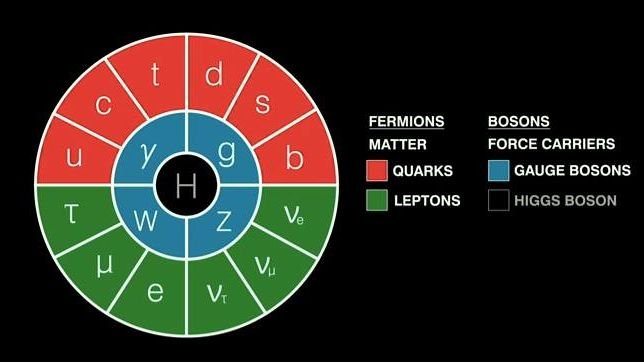
Back in 1964, the only mathematically consistent theory available required bosons to be massless. Yet experiments showed that the carriers of the weak nuclear interaction, the W and Z bosons, had large masses. To solve this problem, three teams of theorists, Robert Brout and François Englert, Peter Higgs, and Gerald Guralnik, Carl Hagen and Tom Kibble, independently proposed a solution now referred to as the Brout-Englert-Higgs mechanism. It is hard to overstate how radical this idea was at the time. Physicists were essentially proposing that empty space is not empty at all.
What Exactly Is the Higgs Field?
The Higgs field was proposed in 1964 as a new kind of field that fills the entire universe and gives mass to all elementary particles. The Higgs boson is a wave in that field. Its discovery confirms the existence of the Higgs field. Here’s a useful way to think about it. Imagine the entire universe is an invisible ocean. Every particle swims through it. Some particles, like photons, barely interact with the water at all and glide through effortlessly. Others drag against it heavily, and that resistance is what you perceive as mass.
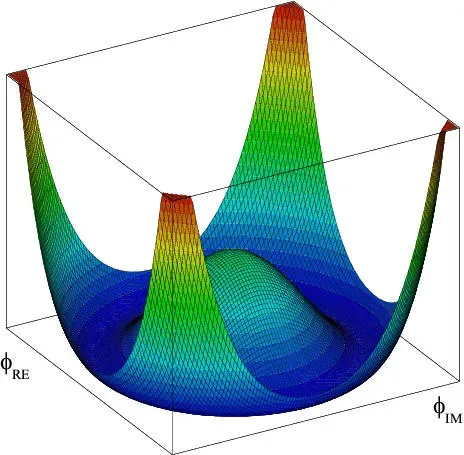
While some popular tales suggest that mass arises from the slowing of elementary particles by a molasses-like substance, the truth is that a stronger Higgs field makes the elementary particles vibrate at higher frequencies, thus raising their masses. You might therefore view the Higgs field as a sort of cosmic stiffening agent, whose role is to increase the resonant frequencies of other fields. A key feature of the field is that it would have less energy when it had a non-zero value than when it was zero, unlike every other known field; therefore, the Higgs field has a non-zero value everywhere. That is genuinely bizarre, and kind of wonderful.
The Hunt for the Higgs: Decades of Science and Perseverance
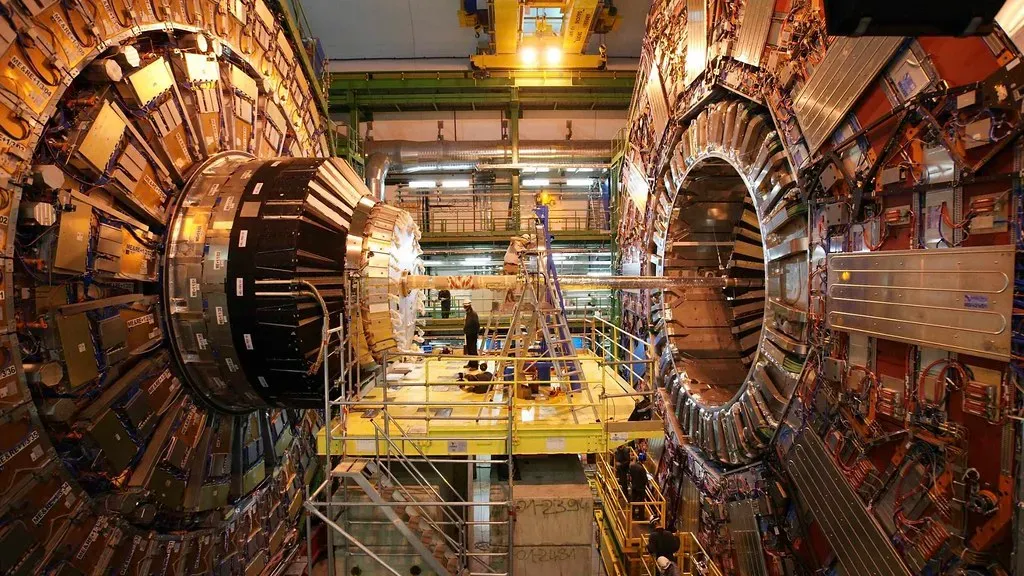
It would take 48 years and the largest machine ever made, the Large Hadron Collider, to finally find evidence that Higgs and his colleagues had been correct. CERN, the organization which operates the LHC, announced that physicists had almost certainly discovered the particle on July 4, 2012. Let’s be real, a 48-year search is extraordinary. Entire scientific careers came and went before confirmation finally arrived. The frustration was real and palpable in the physics community.
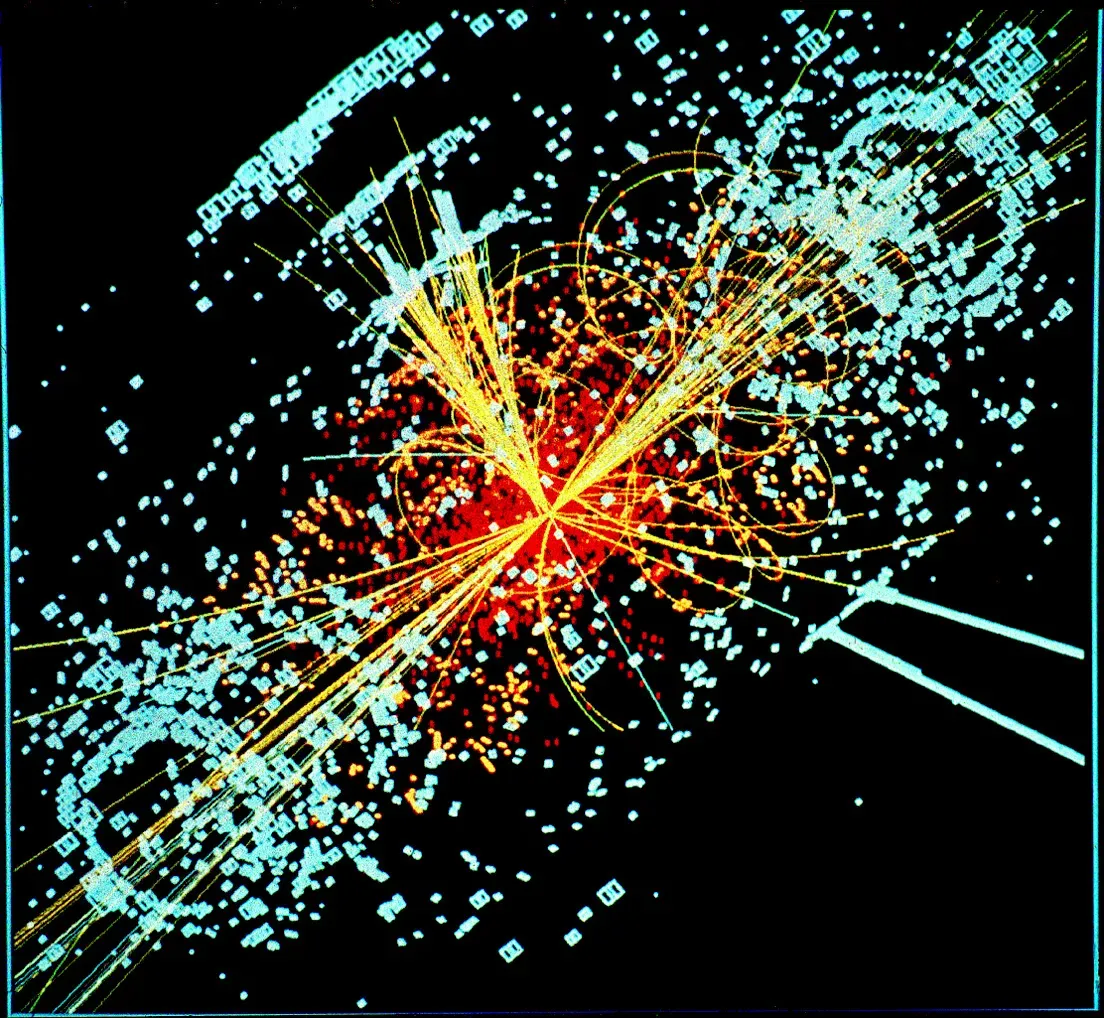
The Higgs boson cannot be “discovered” by finding it somewhere. It has to be created in a particle collision. Once created, it transforms, or “decays,” into other particles that can be detected in particle detectors. Physicists look for traces of these particles in data collected by the detectors. The challenge is that these particles are also produced in many other processes, plus the Higgs boson only appears in about one in a billion LHC collisions. It is a bit like searching for a single specific raindrop in an entire thunderstorm.
The July 4, 2012 Discovery and the Nobel Prize
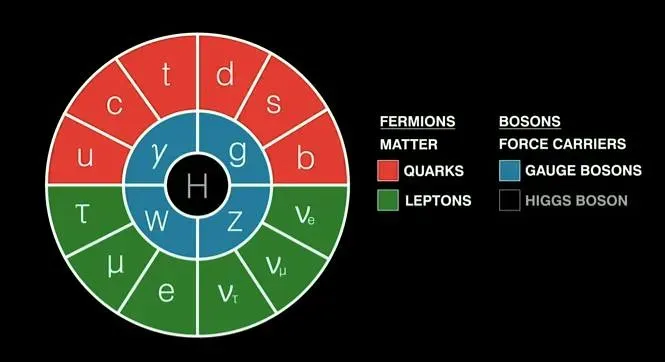
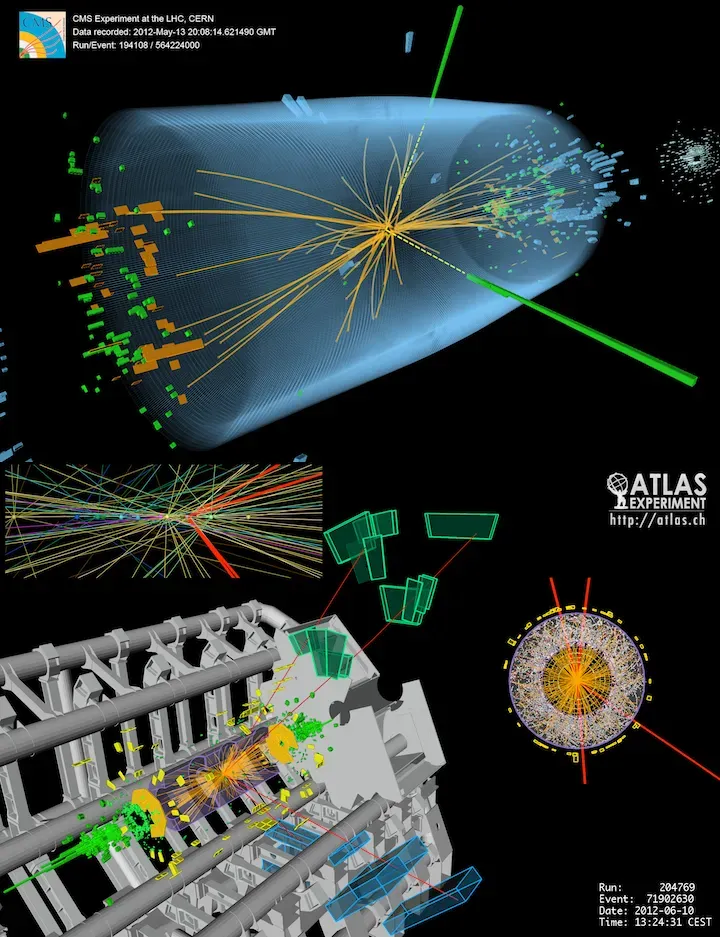
On 4 July 2012, the ATLAS and CMS experiments at CERN announced that they had independently observed a new particle in the mass region of around 125 GeV: a particle consistent with the Higgs boson. The atmosphere in the auditorium that day was electric. During the announcement, the audience broke out in wild applause. One of the scientists who first proposed the Higgs particle even shed a tear of joy. That kind of raw human emotion, in the middle of a physics presentation, tells you everything about what the moment meant.
On 8 October 2013, the Nobel Prize in Physics was awarded jointly to theorists François Englert and Peter Higgs “for the theoretical discovery of a mechanism that contributes to our understanding of the origin of mass of subatomic particles, and which recently was confirmed through the discovery of the predicted fundamental particle, by the ATLAS and CMS experiments at CERN’s Large Hadron Collider.” This particle had no electrical charge, it was short-lived, and it decayed in ways that the Higgs boson should, according to theory. To confirm if it really was the Higgs boson, physicists needed to check its “spin.” The Higgs boson is the only particle to have a spin of zero.
The Higgs Boson and Its Impact on Everyday Life
The strength of the interaction between any particle and the Higgs field directly affects a fundamental property of that particle: its mass. As such, it ultimately determines the size of atoms, makes the proton stable and sets the timescale of radioactive decays, which for example impact the lifetime of stars. Without you even realizing it, the Higgs field is quietly holding your entire physical reality together, right now, as you read this sentence.
The invention of the World Wide Web at CERN was born out of particle physicists’ needs to share data across institutes. Now, society depends on the World Wide Web every day to communicate and work. Similarly, in the early 1970s, engineers from CERN contributed to the advancement of touchscreen technology by trying to create a simple interface to use with one of CERN’s particle accelerators. Since then, touchscreens have gone on to be a mainstay in everyday life. Accelerator technology used in the search for the Higgs boson is also used to treat cancer, in hadron therapy and electron radiotherapy. It’s hard to say for sure just how deep the ripple effects go, but they touch nearly every corner of modern life.
What the Higgs Boson Still Hasn’t Told Us: The Road Ahead
Scientists at CERN’s ATLAS experiment have uncovered compelling evidence of Higgs bosons decaying into muons, an incredibly rare event that could deepen our understanding of how particles acquire mass. They also sharpened their ability to detect the even rarer Higgs decay into a Z boson and a photon, a process that might reveal hidden physics beyond the Standard Model. These 2025 results from Run 3 of the LHC show that the story of the Higgs boson is absolutely nowhere near finished.
The Higgs boson can be a unique portal to finding signs of dark matter due to its own distinctive characteristics and properties. The new “atom smasher,” named the Future Circular Collider, will dwarf the LHC in size and power. It will smash particles together with so much energy, in fact, that scientists say it may be capable of investigating our universe’s most mysterious entities: dark energy and dark matter. Is the Higgs boson one of a kind or is there a whole Higgs sector of particles? Does it help to explain how the universe was formed, with matter triumphing over antimatter? These questions are keeping physicists very busy indeed, and honestly, I think that’s one of the most exciting parts of all this.
Conclusion: A Particle That Changed Everything
The Higgs boson is far more than a trophy on a physicist’s shelf. It is the confirmation of a radical idea that empty space is not passive but actively shapes reality. It is the reason you exist, the reason stars burn, and the reason atoms can form stable structures at all. Its discovery in 2012 did not close a chapter in physics. It opened a vast new one.
As research continues in 2026 and the Future Circular Collider takes shape on the horizon, we are only beginning to probe the full depth of what the Higgs field truly means. We have very good reasons to know that the Standard Model isn’t in fact the whole story; it’s not a theory of everything. There are various things that can’t be understood within it. There’s evidence from astrophysical observations that there’s more matter in the galaxies than we can observe, and we postulate something called dark matter to explain that, but it’s not in the Standard Model. That’s where we’re sailing now. The universe still holds enormous secrets, and the humble Higgs boson may be the key that unlocks them. What do you think: could one tiny particle really hold the answers to the biggest mysteries in existence? Tell us in the comments.