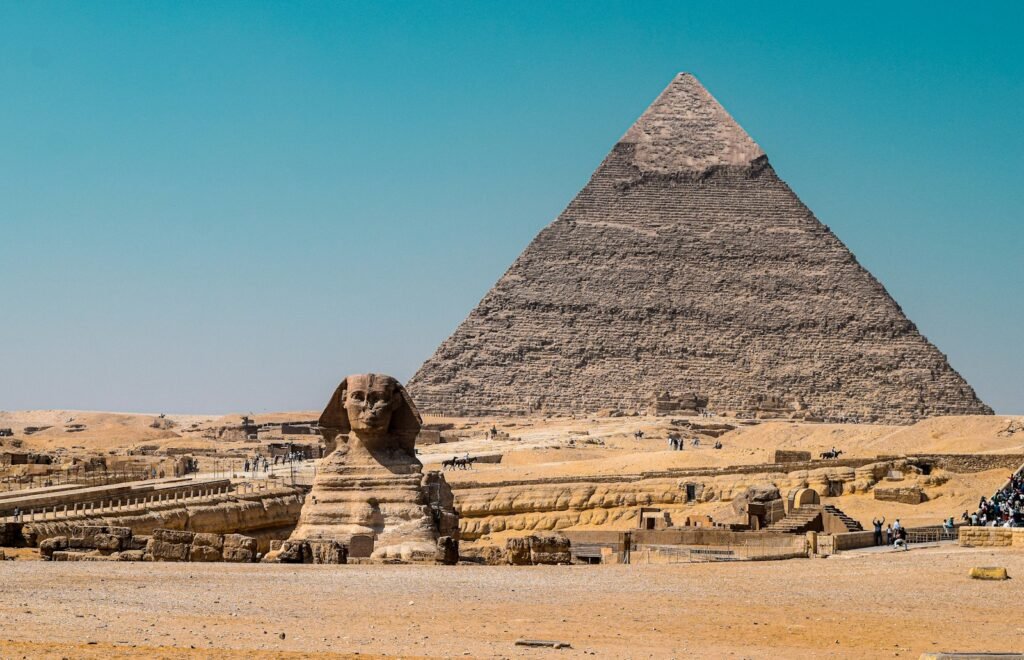

Standing at the edge of Cairo’s urban sprawl, the Great Pyramid of Giza still looks less like a ruin and more like a challenge hurled across 45 centuries: explain me, if you can. We have measured its angles with lasers, mapped its interior with cosmic particles, and compared its design against everything from cathedrals to rockets, yet the full story of how it was planned and built remains stubbornly incomplete. This article looks past the usual clichés and dives into the engineering decisions, tools, and trade‑offs that turned a desert plateau into the world’s most famous stone machine. By tracing what we know, what we have recently discovered, and what still does not quite add up, the pyramid becomes less a static wonder and more a live scientific problem. And that, perhaps, is what makes it so compelling in 2026: it forces us to admit that even in an age of supercomputers and satellites, one of humanity’s most ambitious construction projects is still not fully understood.
Stone on a Planetary Scale: The Sheer Physics of Building Up
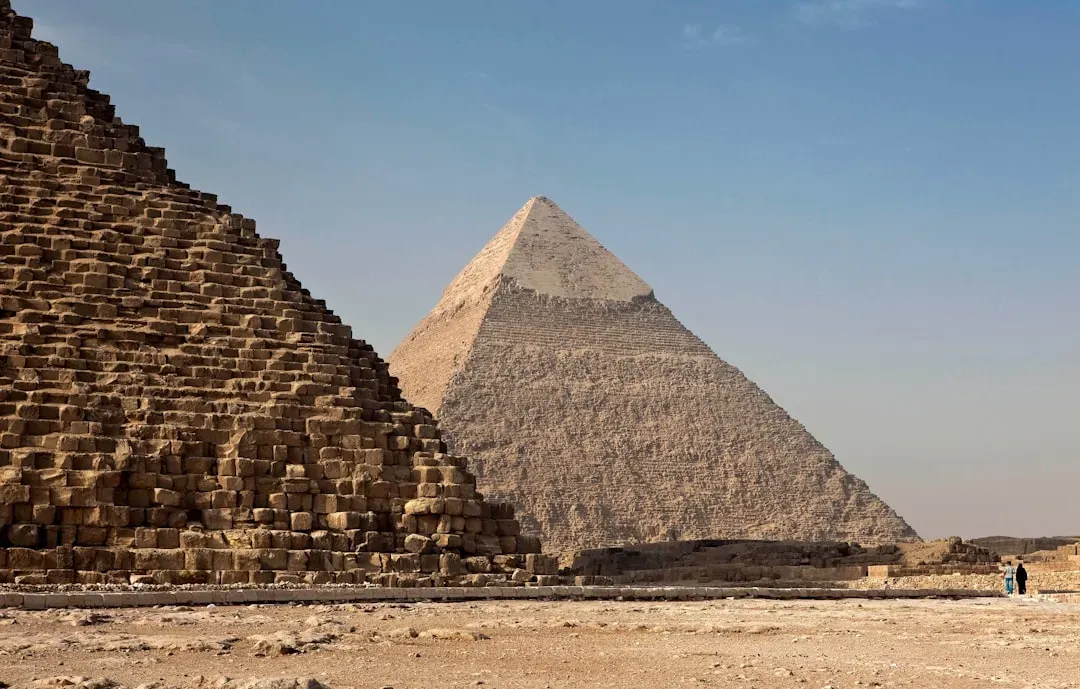
The basic numbers behind the Great Pyramid are quietly outrageous. Rising originally to about 146 meters and built from roughly millions of limestone and granite blocks, it concentrates more mass in one place than many modern skyscrapers built with steel and concrete. Engineers today often point out that if you stripped away the mystery and just handed them those constraints – ancient tools, no cranes, desert environment – they would hesitate before promising to match it. The structure’s base is large enough that small errors at ground level could have turned into massive twists and tilts at the top, yet the alignment and straightness fall within impressively tight tolerances.
What makes the physics even more impressive is that the pyramid is not simply a pile of stones but a carefully graded arrangement of rising courses, internal chambers, and passages that had to stay stable as weight accumulated. Every layer added load, and every misjudged joint risked a crack that could propagate through many tons of rock. The fact that the pyramid stands today with its core largely intact, after earthquakes and erosion that have battered other monuments, tells us the builders understood far more about weight, pressure, and material behavior than their simple tools might suggest. It is an ancient lesson in what happens when you treat stone not just as a building material, but as a medium for precise engineering.
Blueprints Without Paper: Geometry Carved Into the Desert
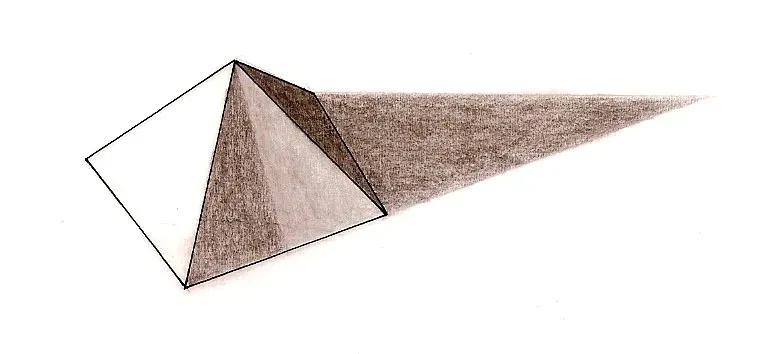
One of the strangest realities about the Great Pyramid is that the “blueprints” do not survive, yet the finished product shows a geometric discipline that rivals many modern projects. The base is remarkably close to a perfect square, with sides differing by only a very small margin, and the entire structure is aligned to the cardinal directions with a precision that still impresses surveyors. Archaeologists have found evidence that the ancient Egyptians used simple but clever tools such as sighting rods, cords, and leveling devices based on water to lay out large right angles and straight lines. This would have required repeated measuring and checking across a site spanning more than five hectares, all under the hot Egyptian sun.
The pyramid’s slope angle also appears to have been chosen deliberately, creating a stable form that still produces a striking visual profile. Workers likely used proportional relationships, such as setting a specific rise over a given horizontal distance, to recreate the angle consistently across each face. Instead of a rolled-out architect’s plan, the design was probably embodied in ritualized measurements, standardized tools, and an ingrained geometry culture among the builder elite. In a way, the plateau itself became the drawing board, with each survey line and marker stake functioning as a line in a vast outdoor schematic.
From Quarry to Pyramid: Logistics That Rival Modern Megaprojects
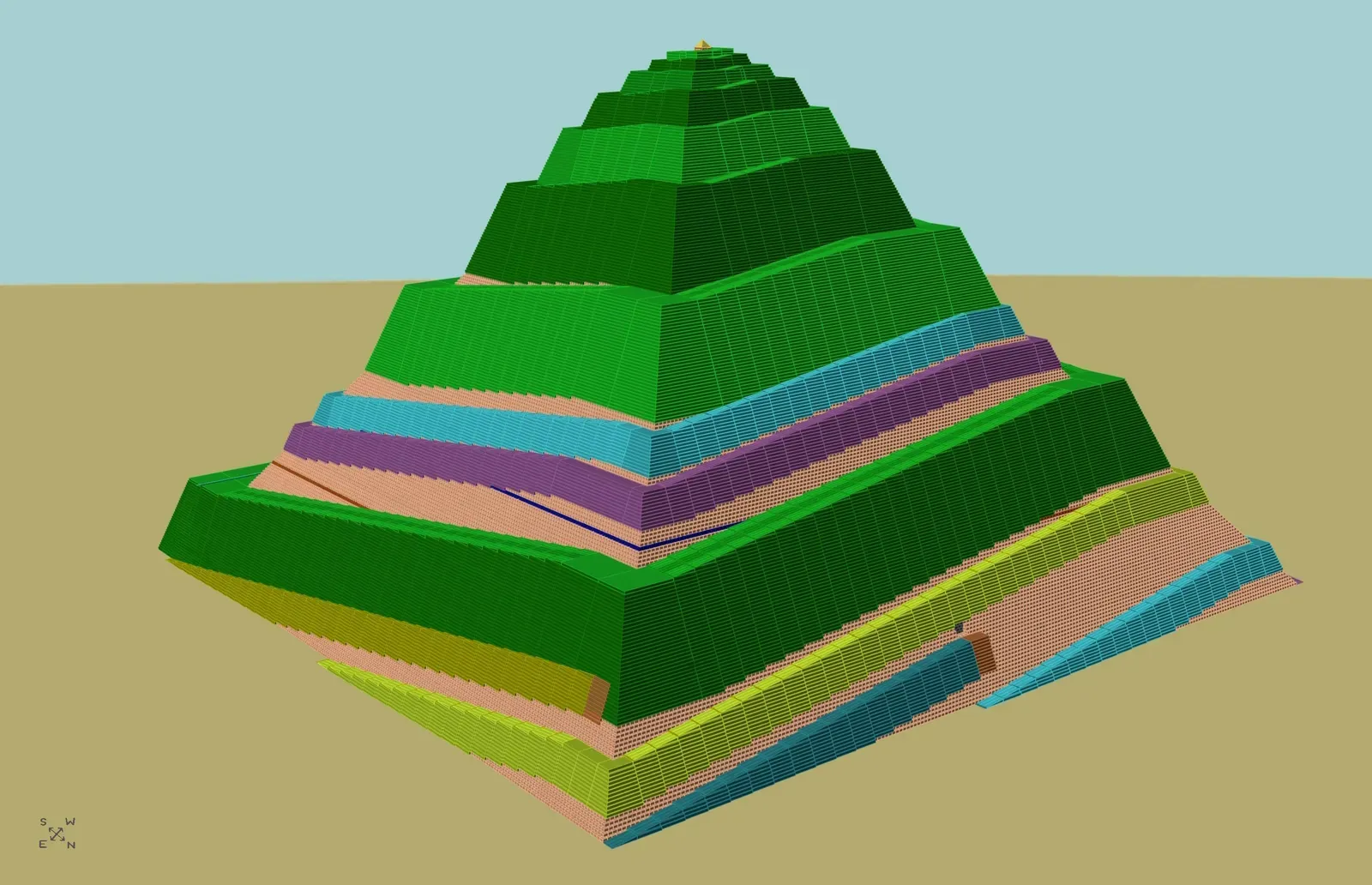
If the geometry impresses engineers, the logistics of moving and placing the stone impress project managers. The bulk of the Great Pyramid’s limestone came from nearby quarries on the Giza plateau, but the harder granite used in the internal chambers traveled much farther, from quarries near Aswan hundreds of kilometers to the south. Recent discoveries of ancient papyri describing work at nearby pyramids, along with remains of harbors and transport channels, support the picture of a highly organized system using Nile boats, canals, and ramps to move stone in staggering quantities. This was not improvisation; it was supply-chain management on a national scale.
On site, teams had to coordinate the arrival of blocks so that masons, haulers, and placement crews stayed in sync, without long delays that could strand workers or waste effort. Many researchers now think the builders used a combination of straight, zigzag, and possibly internal ramps to drag stones upward, lubricating sledges with water or other materials to reduce friction. While no single ramp theory has won full consensus, almost all serious proposals converge on the idea of flexible, adaptive infrastructure constantly reshaped as the pyramid grew. What looks today like a finished stone mountain was once a buzzing, rearrangeable construction landscape evolving year by year.
Inside the Stone Mountain: Precision Where No One Was Supposed to See
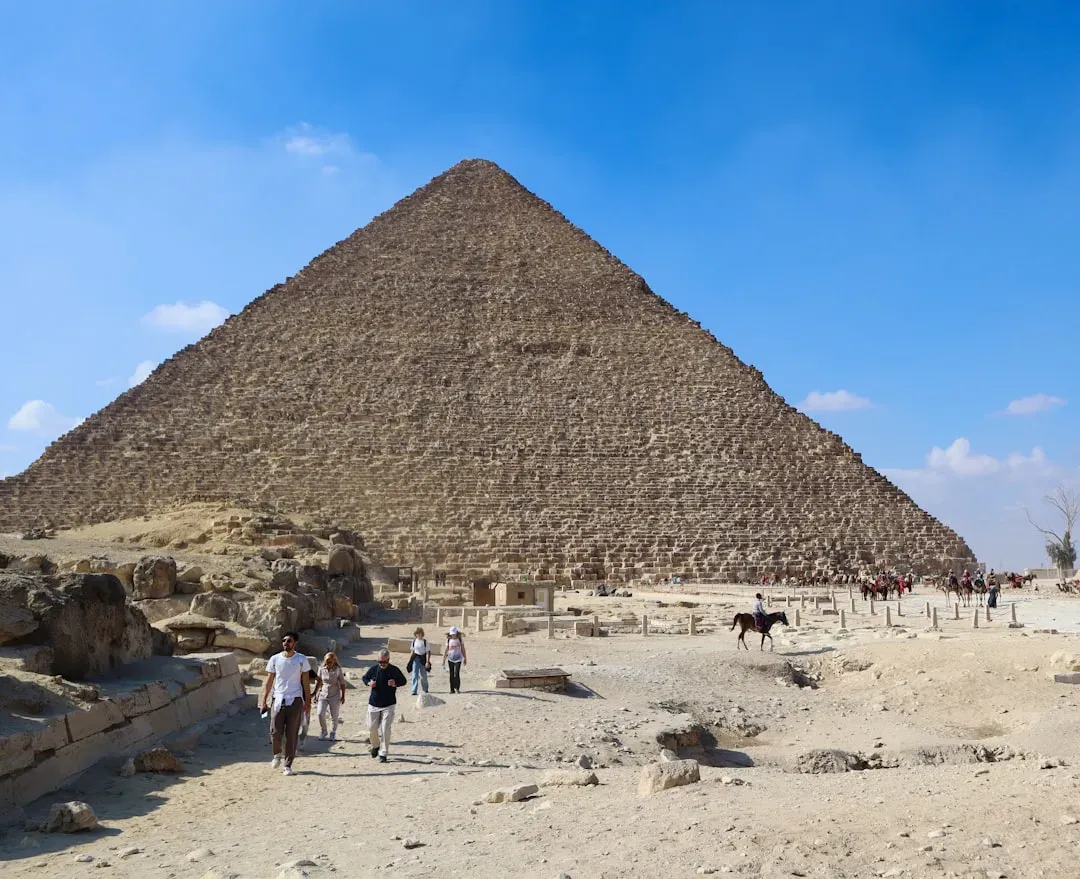
The Great Pyramid’s outer silhouette is striking, but its interior is where the engineering becomes downright puzzling. The so‑called King’s Chamber, built from massive granite blocks, sits deep inside the structure and is capped by multiple layers of relieving chambers designed to redirect weight away from the flat ceiling. This is an elegant solution to a concrete problem: how to place a large, open room under millions of tons of stone without crushing it. The choice of granite, stronger than the surrounding limestone, suggests an understanding of differential material properties far more practical than theoretical.
Even more curious are the narrow shafts leading from inner chambers toward the exterior, whose exact original purpose is still debated. Some align closely with particular stars as they appeared in the sky during the pyramid’s construction era, while others terminate in small sealed “doors” discovered in the late twentieth and early twenty-first centuries. These features required careful planning long before the upper courses were laid, because once embedded they were essentially unchangeable. That level of forethought challenges the simple idea of a monument that grew in a purely incremental, trial‑and‑error fashion. It feels more like a three‑dimensional puzzle whose pieces had to be conceived in full before the first stone rose above the plateau.
Labor, Not Slavery: The Human Engine Behind the Monument
The story of the Great Pyramid is often told as if it were a triumph of anonymous forced labor, but archaeology over the past few decades has shifted that picture dramatically. Excavations around Giza have revealed workers’ villages with bakeries, breweries, medical facilities, and evidence of organized housing for rotating crews. Skeletal remains show signs of treated injuries, including healed fractures, suggesting people who were cared for rather than simply discarded. While life on the pyramid crews was undoubtedly exhausting and dangerous, it appears closer to a massive national workforce project than to the chain‑gang imagery many of us grew up with.
Seen through this lens, the pyramid becomes not just a monument to a pharaoh, but to a coordinated social system capable of feeding, housing, and directing tens of thousands of people for decades. The Egyptian state had to mobilize farmers during the Nile’s inundation period, manage food surpluses, and keep the project aligned with religious and political goals. That makes the Great Pyramid something like a stone fossil of a whole society’s logistics and values. The human story here is not just about the royal tomb, but about how ordinary people’s labor and belief powered an undertaking that would outlast every name in its payroll records.
Measured Against Modern Engineering: What Really Sets It Apart
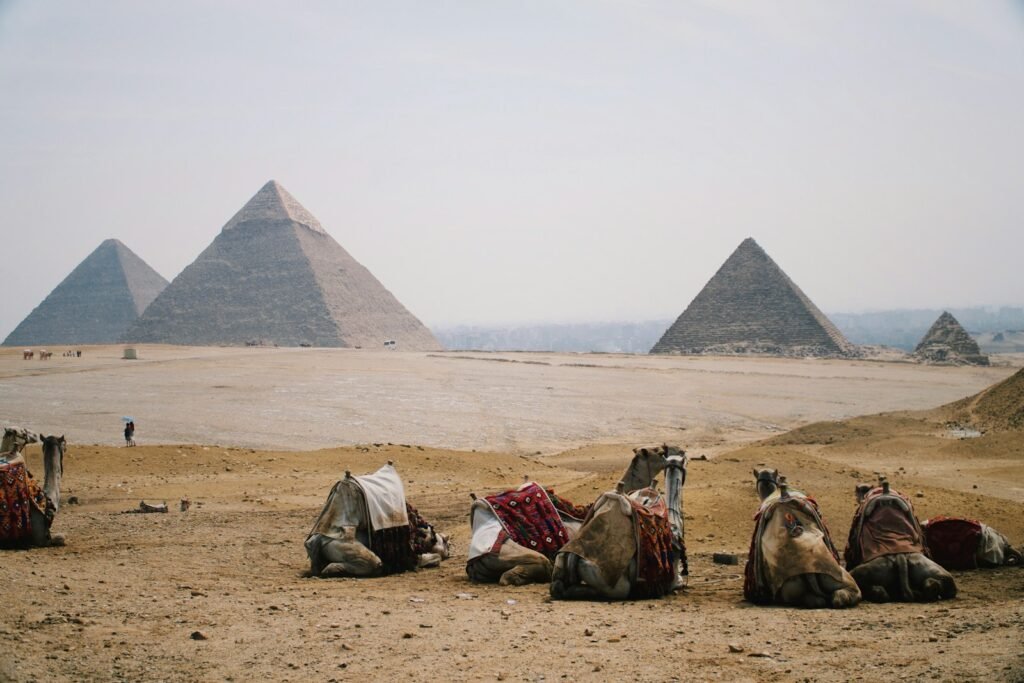
From a twenty-first‑century engineering perspective, the Great Pyramid is not mysterious because we think it required lost technologies, but because it represents a totally different approach to solving grand problems. Modern engineers lean on high‑strength materials, digital modeling, and mechanized lifting, but the pyramid builders leaned on redundancy, mass, human labor, and incremental correction. Where a contemporary skyscraper might optimize every kilogram of steel, the pyramid throws sheer quantity of stone at gravity until stability is no longer a question. Yet, its alignment, proportions, and internal features show that this was not brute force alone; it was brute force channeled by careful measurement.
Compared with other ancient monuments, the Great Pyramid stands out less for having a unique mystery and more for being the pinnacle of a long series of experiments. Earlier pyramids show cracks, subsidence, and changes of plan that look very much like a civilization learning the hard way. By the time the builders reached Giza’s great monument, they had refined angles, foundation preparation, and internal layouts through a kind of generational field testing. In this sense, the Great Pyramid is the successful version of many failed prototypes, much like a reliable aircraft or bridge today is the product of accidents and redesigns that preceded it. The difference is that the Egyptian test data is embedded in stone rather than spreadsheets.
Hidden Voids and Cosmic Particles: How New Science Reopens Old Questions
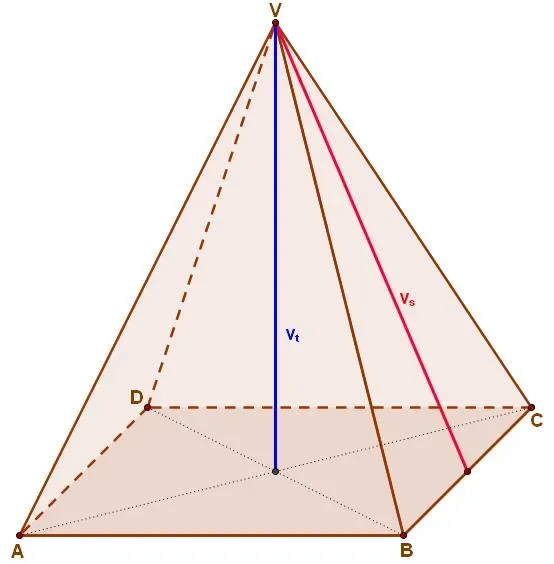
In the past decade, the Great Pyramid has become a testing ground for non‑invasive scanning technologies, particularly muon tomography that uses naturally occurring cosmic particles to map density inside the structure. These studies have revealed previously unknown voids, including a large cavity above the Grand Gallery whose shape and purpose are still under investigation. The discovery does not support wild theories of secret machines or alien influence, but it does signal that our map of the interior was incomplete even after centuries of exploration. Each new void forces a reconsideration of how loads were managed and how access routes were planned during construction.
The use of high‑energy physics tools on a Bronze Age monument is more than a clever technical trick; it represents a shift in how we study ancient engineering. Instead of relying solely on excavations that can disturb or damage a site, scientists can now treat the pyramid almost like a patient undergoing advanced medical imaging. These scans, combined with 3D digital models and structural simulations, allow researchers to test competing theories about ramps, chamber functions, and stress distribution. The irony is that the more we see inside the pyramid, the more questions open up about decisions made thousands of years ago in dusty planning yards, by people whose names we will never recover.
Why This Monument Still Matters: Science, Culture, and Our Need for Awe
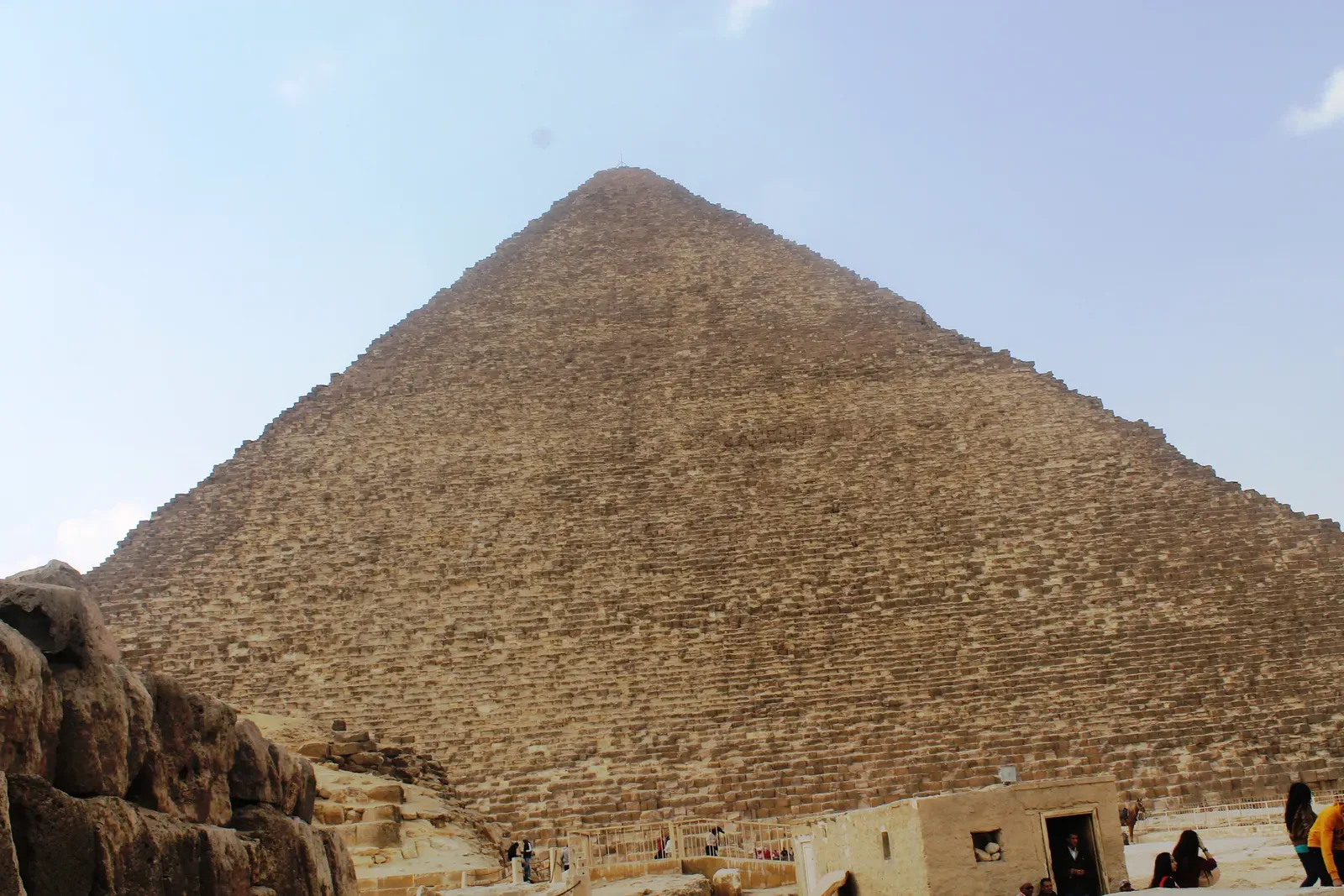
The Great Pyramid matters today not just as a tourist magnet or postcard icon, but as a rare point where science, history, and raw human emotion intersect. From a scientific standpoint, it challenges us to reconstruct complex processes from stubbornly incomplete physical evidence, which is exactly what fields like geology, planetary science, and climate research do on different scales. Culturally, it reminds us that large, coordinated projects linking belief, politics, and engineering are not inventions of the modern era. There is something humbling about realizing that people who lacked iron tools or written blueprints still solved problems that make seasoned engineers pause.
On a more personal level, standing in front of the pyramid can reset your sense of time in a way no article fully captures. It compresses thousands of years into a single line of sight: a monument designed for eternal permanence, now ringed by highways, smartphones, and drone cameras. In that tension between ancient intention and modern context lies its deepest significance. The pyramid is not a riddle waiting for a single solution, but an ongoing invitation to learn how humans, across any era, turn abstract ideas into physical reality on a staggering scale.
What You Can Do With That Sense of Wonder
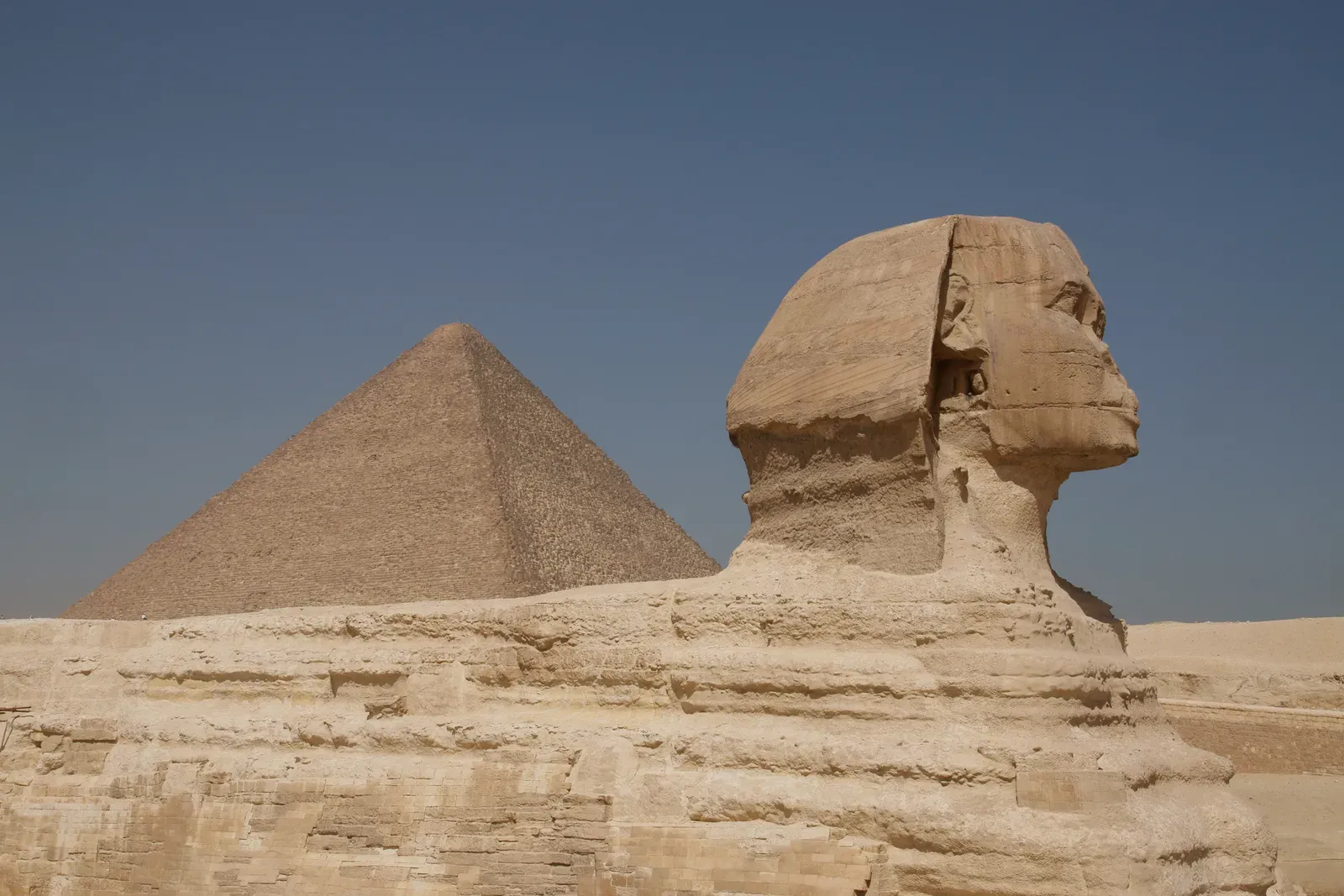
Most of us will never calculate stress paths through granite ceilings or model muon trajectories through limestone, but we can decide what we do with the curiosity that the Great Pyramid sparks. One simple step is to look beyond the familiar images and seek out credible archaeological and engineering explanations, rather than settling for sensational but unsupported stories. Learning how researchers actually test ideas about ramps, labor organization, or astronomical alignments can sharpen your sense for how evidence works in any scientific field. It is a small but real antidote to a world saturated with confident claims and thin backing.
If you ever make it to Giza, the most important thing you can bring, beyond sunscreen and water, is patience: time to notice tool marks, uneven stones, and the very human imperfections in a supposedly perfect structure. Even from afar, you can support institutions that protect and study heritage sites, because every careful survey, conservation effort, and open dataset helps keep this monument from becoming just a backdrop for social media. The Great Pyramid is a reminder that big things are built from countless small decisions, many of them made by people whose names never appear in bold. The real question it leaves you with is simple and quietly unsettling: what are we building today that will still make sense to someone forty‑five centuries from now?
Suhail Ahmed is a passionate digital professional and nature enthusiast with over 8 years of experience in content strategy, SEO, web development, and digital operations. Alongside his freelance journey, Suhail actively contributes to nature and wildlife platforms like Discover Wildlife, where he channels his curiosity for the planet into engaging, educational storytelling.
With a strong background in managing digital ecosystems — from ecommerce stores and WordPress websites to social media and automation — Suhail merges technical precision with creative insight. His content reflects a rare balance: SEO-friendly yet deeply human, data-informed yet emotionally resonant.
Driven by a love for discovery and storytelling, Suhail believes in using digital platforms to amplify causes that matter — especially those protecting Earth’s biodiversity and inspiring sustainable living. Whether he’s managing online projects or crafting wildlife content, his goal remains the same: to inform, inspire, and leave a positive digital footprint.