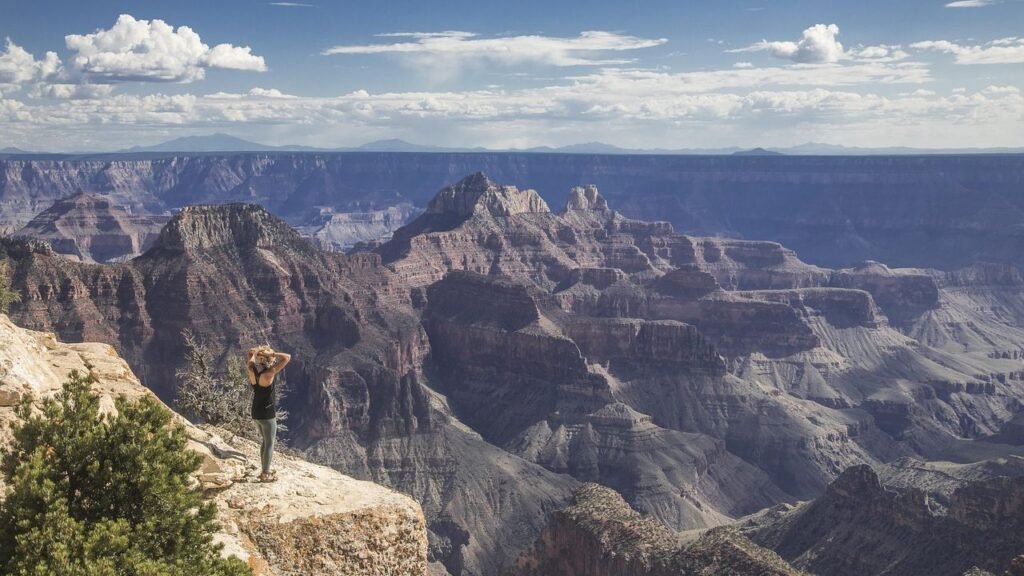

There are places on Earth that don’t just impress you – they humble you completely. The Grand Canyon is one of those rare places. Standing at its rim and gazing into its vast, layered abyss, you’re not just looking at rock. You’re staring at time itself, carved open and exposed for anyone curious enough to look deeper.
What most visitors don’t realize is that the canyon they see today represents only the most recent chapter in an almost incomprehensibly long story. The rock walls stretching downward hold secrets that took geologists well over a century to even begin to understand. Some of those secrets are still being uncovered right now. So let’s dive in.
Reading the Rocks: The Art and Science of Stratigraphy
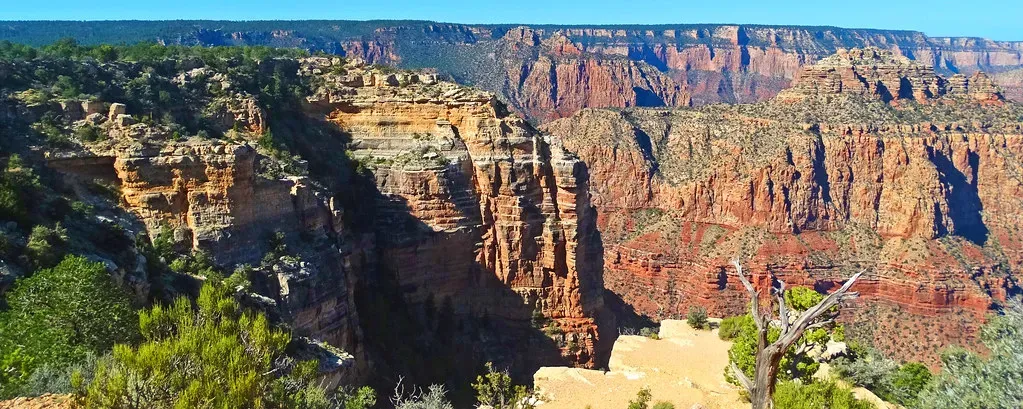
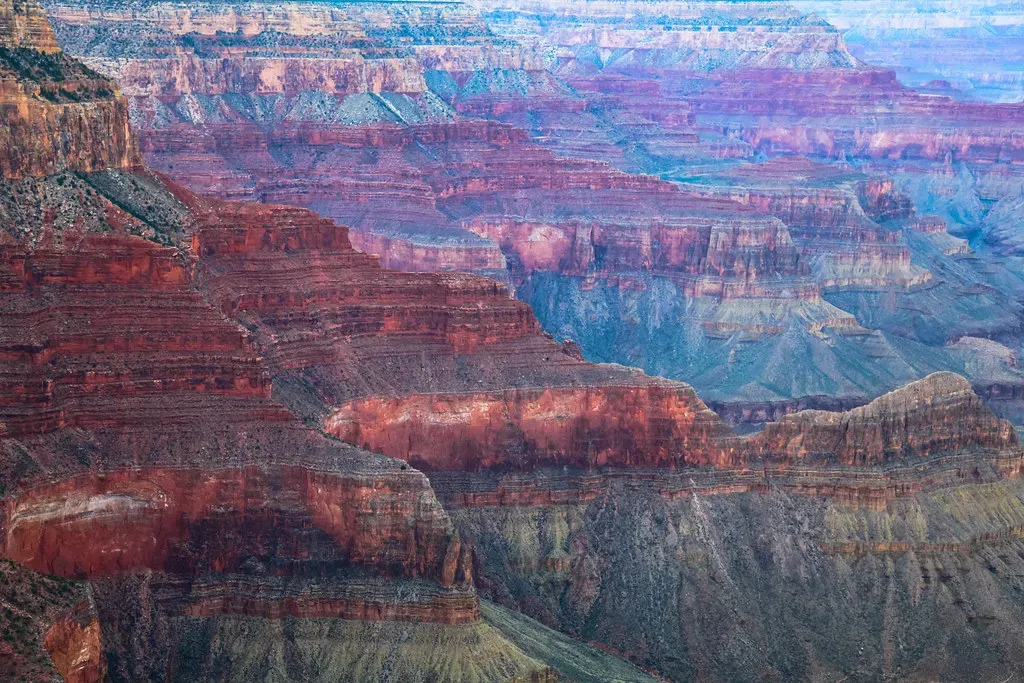
Imagine walking into a library where every shelf represents millions of years of history, and the only way to read it is by decoding the color, texture, and chemistry of rock. That is essentially what geologists do every time they study the Grand Canyon’s walls. Stratigraphy, the study of rock layering, reveals a wealth of information about what Earth was like when each layer formed. In the Grand Canyon, clear horizontal layers of different rocks provide information about where, when, and how they were deposited, long before the canyon was even carved.
The Law of Superposition states that sediment is deposited in layers in a sequence, with the oldest rocks on the bottom and the youngest rocks on the top, similar to the way sand piles up in an hourglass. This principle is a key part of determining the relative age of a rock layer. Think of it like a stack of old newspapers left in a basement. The one at the very bottom is the oldest. At the Grand Canyon, that “newspaper at the bottom” is nearly two billion years old.
The Vishnu Basement Rocks: Earth’s Ancient Foundation
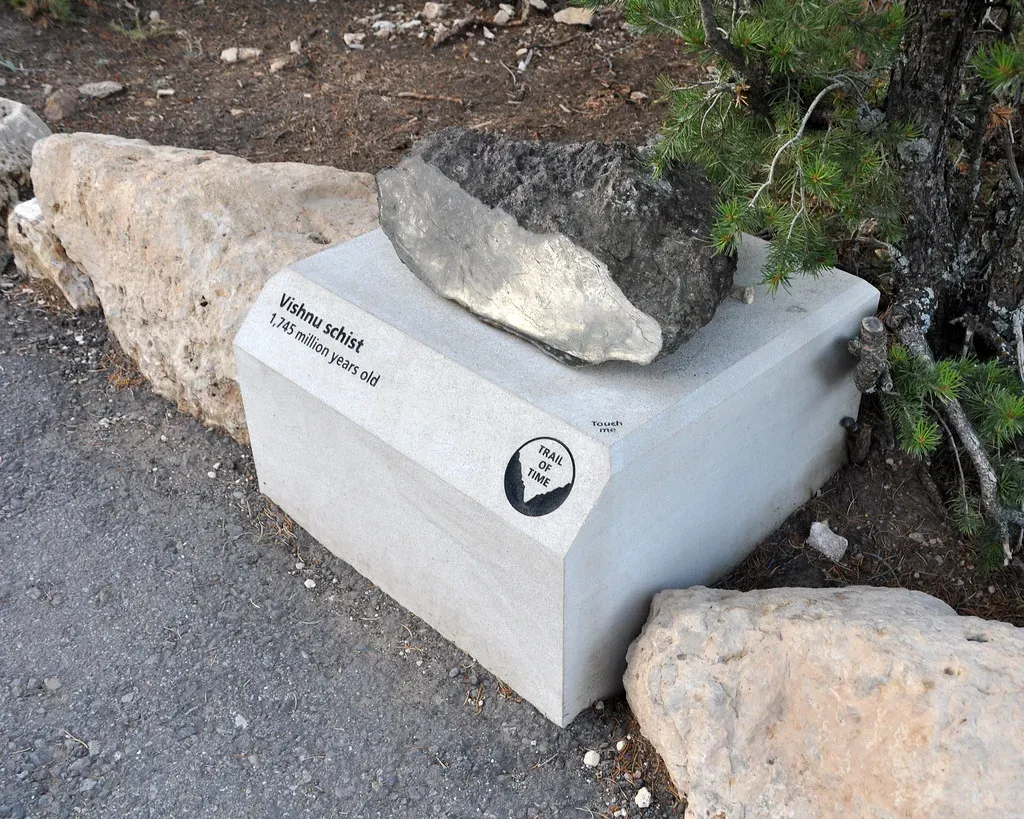
At the very bottom of the canyon lies some of the oldest and most dramatic rock in North America. Dark, twisted, and almost haunting in appearance, these rocks are the product of unimaginable heat and pressure from an era so distant it predates almost all complex life. The dark black rock down at river level is a big leap back in time. This Vishnu Schist first appeared almost two billion years ago, as lava exposed to the heat and pressure of colliding volcanic islands with the North American landmass.
The oldest rocks in the Grand Canyon, found at the bottom of the canyon, are primarily metamorphic, with igneous intrusions. The intrusive igneous rocks here are called Zoroaster Granite. The name given to this rock set, the combination of metamorphic and igneous rock of a certain age found at this location, is Vishnu Basement Rocks. Honestly, standing at river level and touching those black walls feels like pressing your palm against the very spine of the continent. It’s one of those genuinely visceral moments you don’t forget.
The Great Unconformity: A Billion Years of Missing Time
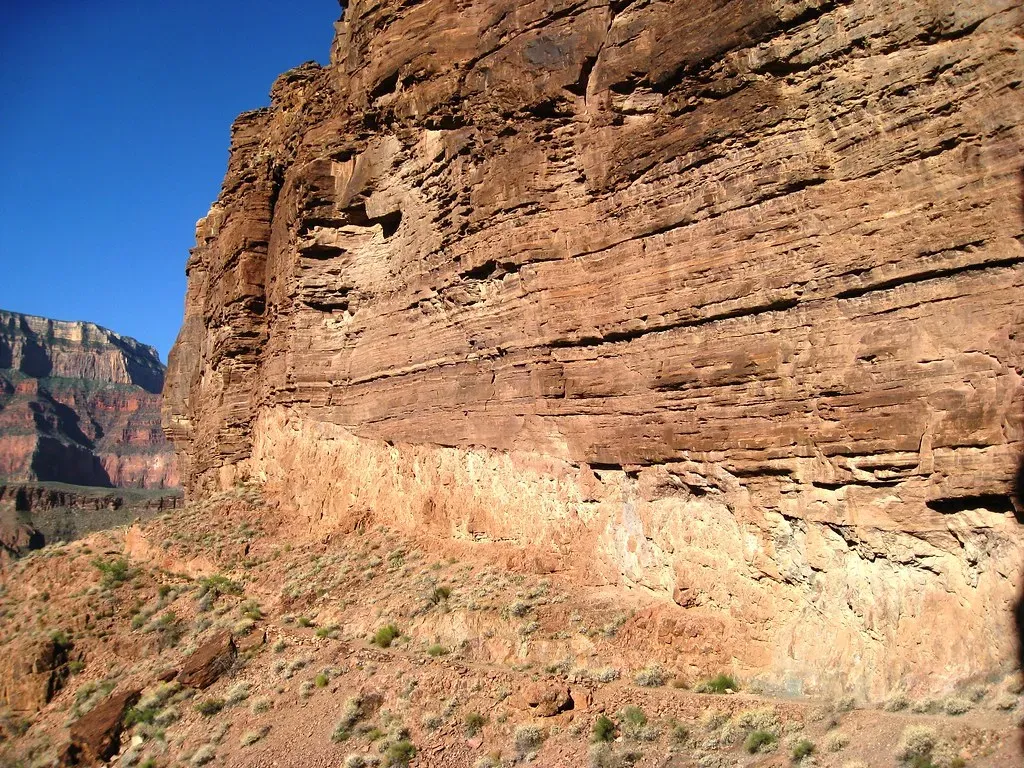
Here is something that, when you truly grasp it, will make your brain spin. There is a visible line in the Grand Canyon’s walls where roughly a billion years of geological history simply does not exist. No record. No rock. Just gone. Unconformities are gaps in the geologic record that occur when rocks or sediments are eroded away and time elapses before new deposition occurs. New sediment eventually forms new rock layers on top of the eroded surface, but there is a period of geologic time that is not represented. You can think of unconformities as missing “pages” in the book of the geologic record. Missing layers may seem like a problem, but the very fact that there is this gap in the record provides information to geologists, indicating changing ocean levels or changes in the Earth’s crust.
Any rocks that were deposited on top of the Grand Canyon Supergroup in the Precambrian were completely removed. This created a major unconformity that represents 460 million years of lost geologic history in the area. Geologists call this the Great Unconformity, and it is one of the most studied and debated features in all of geology. It is, in essence, a mystery that has never been fully solved. I find that deeply thrilling, honestly. That we can see the gap but still argue about what happened within it.
The Colorado River: Sculptor of a Supercharged Canyon
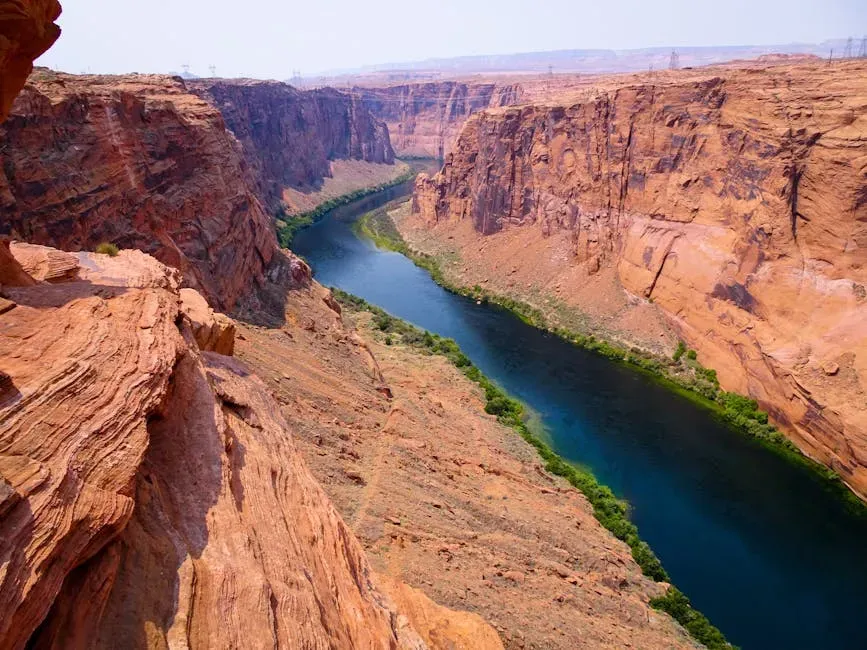
You might assume a canyon this enormous took hundreds of millions of years to carve. Here’s the thing – it actually didn’t. The Grand Canyon reaches a maximum depth of 6,000 feet, carved almost entirely by the Colorado River over roughly six million years. That’s an extraordinary amount of rock removed in a relatively short geological timeframe. For context, the rocks at the bottom are nearly two billion years old, but the canyon cutting into them is geologically brand new. It’s like a freshly dug trench through an ancient stone monument.
The canyon owes its depth to a combination of forces: a river with a steep gradient and heavy sediment load, a high plateau that kept rising, exposed bedrock with no soil to protect it, and alternating rock layers that eroded in just the right way to produce sheer walls instead of gentle slopes. Faster-moving water can carry heavier rocks and gravel along the riverbed, and those rocks act like natural sandpaper, grinding into the bedrock below. The Colorado River, in this sense, is less a gentle sculptor and more a relentless grinding machine.
Tectonic Uplift: How the Land Raised the Stakes
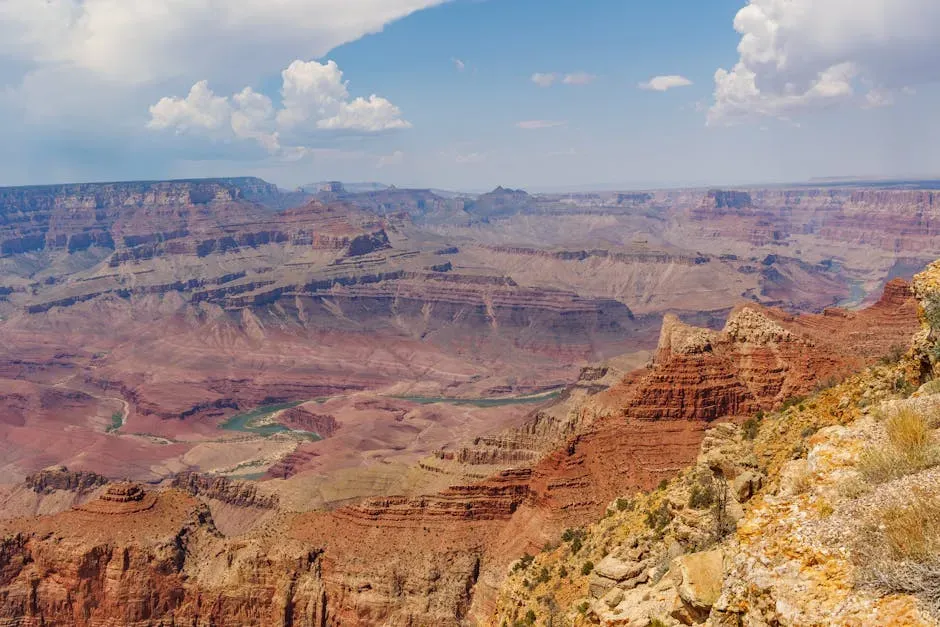
The Colorado River alone could never have carved the Grand Canyon without a crucial co-conspirator: tectonic uplift. Picture a slow-motion drama unfolding over tens of millions of years, where the very ground beneath the canyon was being pushed steadily upward. After all the rocks were deposited, there was a period of uplift where plate tectonics literally forced a section of the Earth upward, setting the stage for canyon formation. It provided a high enough elevation that water could flow downward, cutting through the rock as it went.
Uplift of the region started about 75 million years ago during the Laramide orogeny, a mountain-building event that is largely responsible for creating the Rocky Mountains to the east. In total, the Colorado Plateau was uplifted an estimated two miles. Around five to six million years ago, tectonic forces opened the Gulf of California to the south, giving the Colorado River a new, much lower outlet to the sea. This dramatically lowered what geologists call the river’s “base level,” the lowest elevation it can erode down to. That combination of rising land and a newly lowered outlet essentially hit the canyon’s formation into high gear.
The Grand Canyon Supergroup: A Sea That Once Covered the Desert
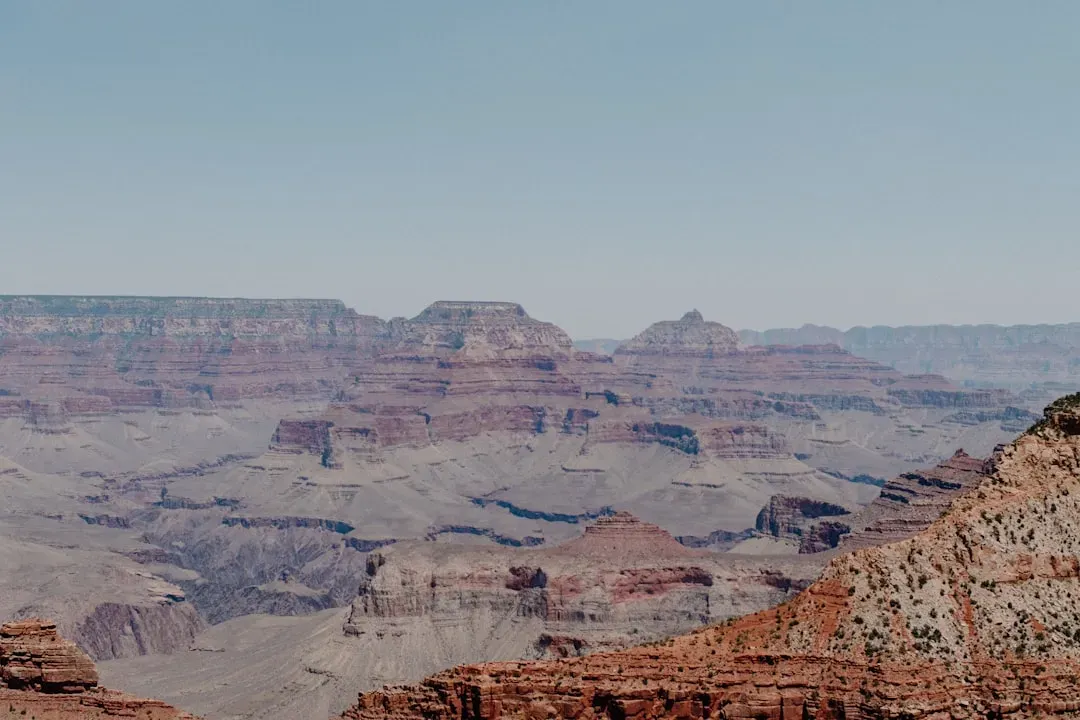
Long before any canyon existed, the region now occupied by the Grand Canyon was submerged beneath an ancient sea. It sounds almost impossible when you’re standing in the blazing Arizona heat, but the rock record doesn’t lie. The Grand Canyon Supergroup of sedimentary units is composed of nine varied geologic formations that were laid down from 1.2 billion and 740 million years ago in this sea. Nine formations. Each one a chapter in a story that spans nearly half a billion years of marine history alone.
Some layers were formed when the region was covered by shallow seas, while others were created when the land was a vast desert. The colors of the canyon walls, reds, oranges, tans, and grays, come from minerals in the rock that reacted with oxygen over time. Those gorgeous, painterly bands you photograph from the rim? Each color shift represents a completely different world, a different climate, a different ocean, a different era. It’s staggering when you stop and really think about it.
Cambrian Fossils: A Goldilocks Zone for Early Life
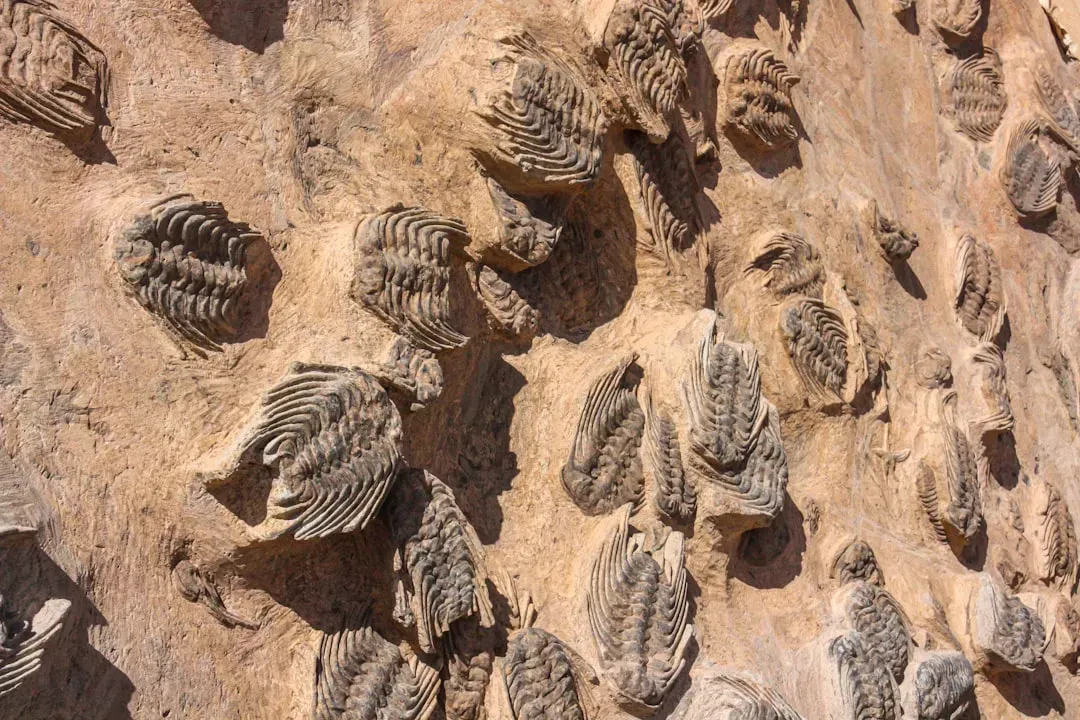
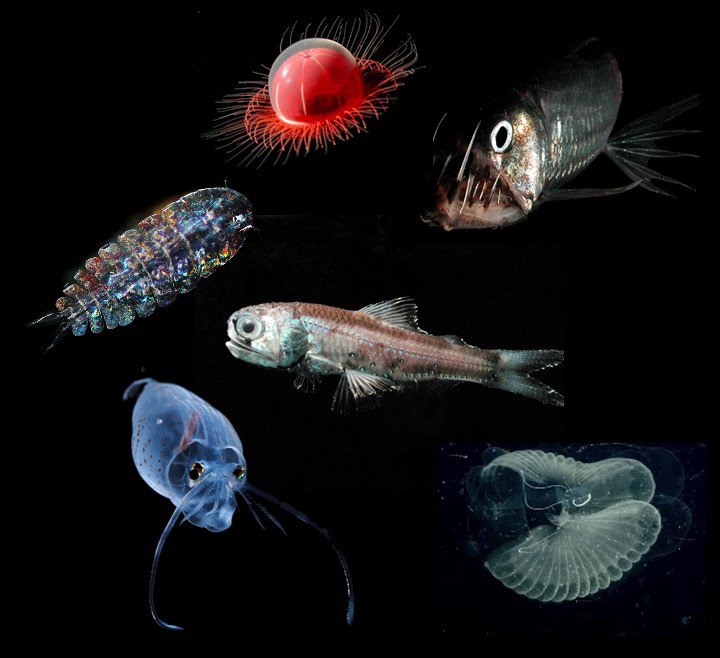
Perhaps one of the most jaw-dropping chapters in the Grand Canyon’s story is what paleontologists discovered in its rocks in recent years. The canyon wasn’t just a geological wonder. It was once, half a billion years ago, a thriving underwater nursery for some of the earliest complex life on Earth. The fossilized animals date from between 507 and 502 million years ago, during a period of rapid evolutionary development known as the Cambrian explosion, when most major animal groups first appear in the fossil record. In some areas during this period, nutrient-rich waters powered an evolutionary arms race, with animals evolving a wide variety of exotic adaptations for food, movement, or reproduction.
During the Cambrian, the shallow sea covering the Grand Canyon was especially oxygen-rich thanks to its perfect “Goldilocks” depth. Ranging from about 130 to 165 feet in depth, the ecosystem was undisturbed by the shoreline’s constant waves shifting around sediments, and sunlight was still able to reach photosynthesizing plants on the seafloor that could provide oxygen. The discovery is the first of its kind from the famous canyon and includes exquisitely preserved remains of ancient animals such as rock-scraping mollusks, filter-feeding crustaceans, and toothed worms, as well as the food they likely consumed. These fossils, found during a 2023 expedition, are reshaping what scientists thought they knew about early ecosystems.
Thermochronology and Modern Dating: Unlocking the Canyon’s True Age
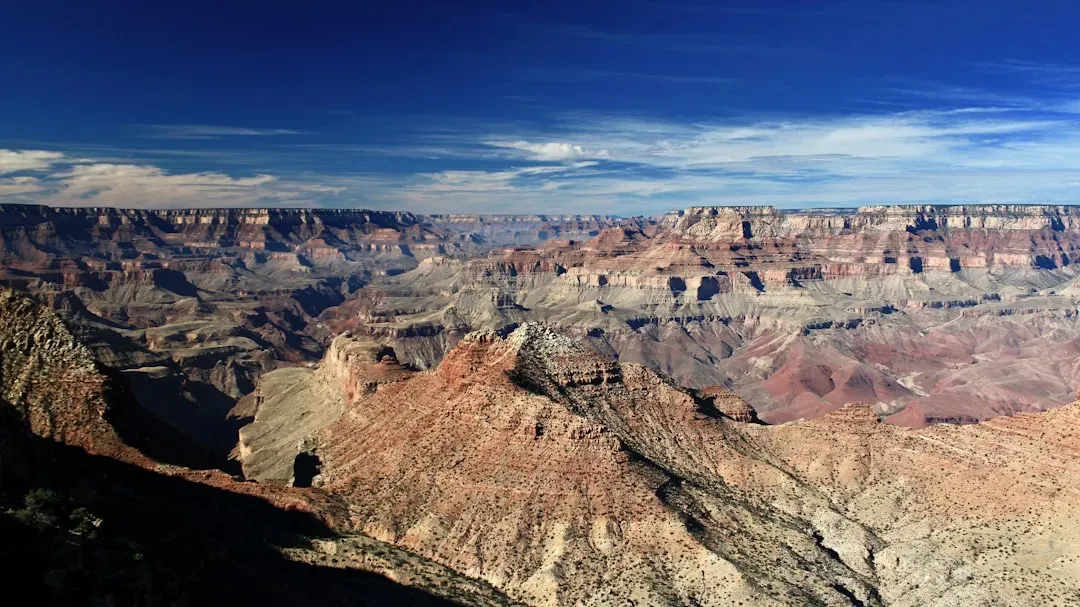
For most of geological history, estimating the age of rocks was more art than science. Thankfully, modern techniques have transformed how geologists read deep time. With the later development and refinement of techniques that determine the numeric ages of rocks, geologists developed the ability to know the ages of rocks exposed in the Grand Canyon with greater accuracy and precision. This has completely rewritten some assumptions that had stood for generations.
To help estimate ancient erosion rates, one research team turned to thermochronology, the study of how a rock’s temperature has changed through its history. In recent decades scientists have mostly split into two camps: those proposing a “young canyon” model in which the Colorado River alone carved much of the gorge in the past five million years or so, and those suggesting an “old canyon” model in which a series of ancient rivers carved ancestral canyons along more or less the same route. It’s hard to say for sure who has the final word, but the evidence increasingly points to a complex, multi-stage story that neither camp fully predicted.
Ongoing Mysteries and Future Discoveries: The Canyon Isn’t Done Talking
After more than 150 years of dedicated geological study, you might think the Grand Canyon has given up all its secrets. It hasn’t. Not even close. After 150 years the Grand Canyon is still a mystery even to the geologists who study it. As recently as the mid-1970s, scientists identified a new rock layer at the canyon. Even today, geologists still debate just how old some rock layers are, and when and why the Colorado River began carving the Grand Canyon in the first place.
The Grand Canyon is one of the supreme geologic laboratories on Earth and, after about 140 years of geologic investigation, one might think that its secrets have been mostly resolved. This is especially true of the flat-lying layered rocks that are so visible from both rims within Grand Canyon National Park. Nearly five decades ago, in the late 1970s, was the last time a new formation was discovered and defined in the Grand Canyon with the discovery of the Surprise Canyon Formation. Yet even that record of discovery continues, with researchers redefining rock layers and their ages using new dating tools. Geology has always been recognized as central to the canyon’s significance. The canyon remains an important field laboratory for active researchers.
Conclusion: A Story Still Being Written
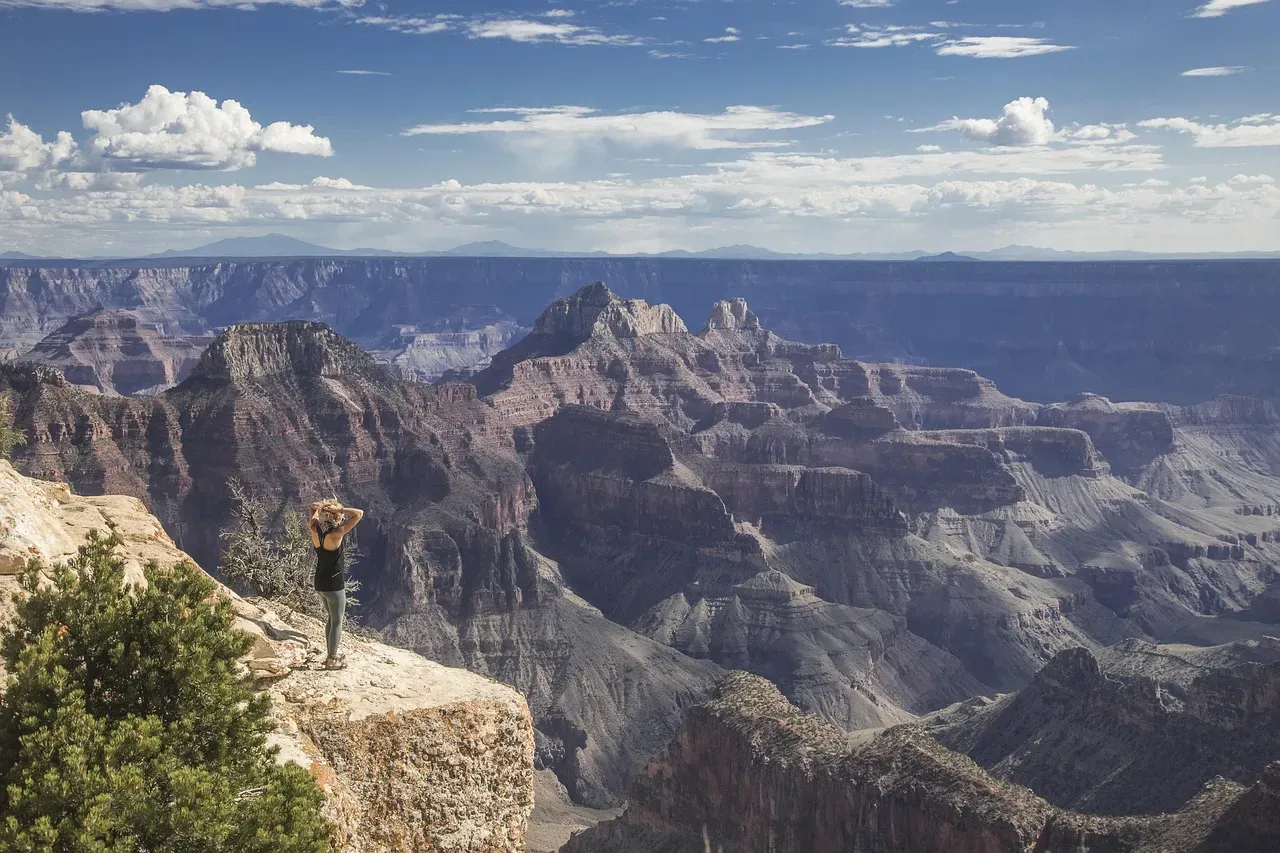
The Grand Canyon is not a finished monument to the past. It is a living, evolving archive that geologists are still actively reading, arguing over, and rewriting with each new expedition, each new dating technique, and each new fossil pulled from its ancient walls. Every layer you see from the rim is a sentence in a book that stretches back nearly two billion years, and scientists are still trying to decode some of the earliest chapters.
What makes this even more extraordinary is that the canyon itself is still forming. The river continues to be an agent of change, reshaping the canyon over time. The canyon isn’t fully formed as long as there is water flowing. The story is not over. It is still being carved, one grain of sand at a time. Perhaps the most powerful takeaway here is that some of the greatest scientific discoveries in the world are not locked away in a lab. They’re out there in the open, written in red and orange rock, waiting for the right eyes to read them.
Next time you stand at the rim, remember: you’re not just looking at a canyon. You’re looking at nearly half the age of Earth itself. Does that change the way you see it?