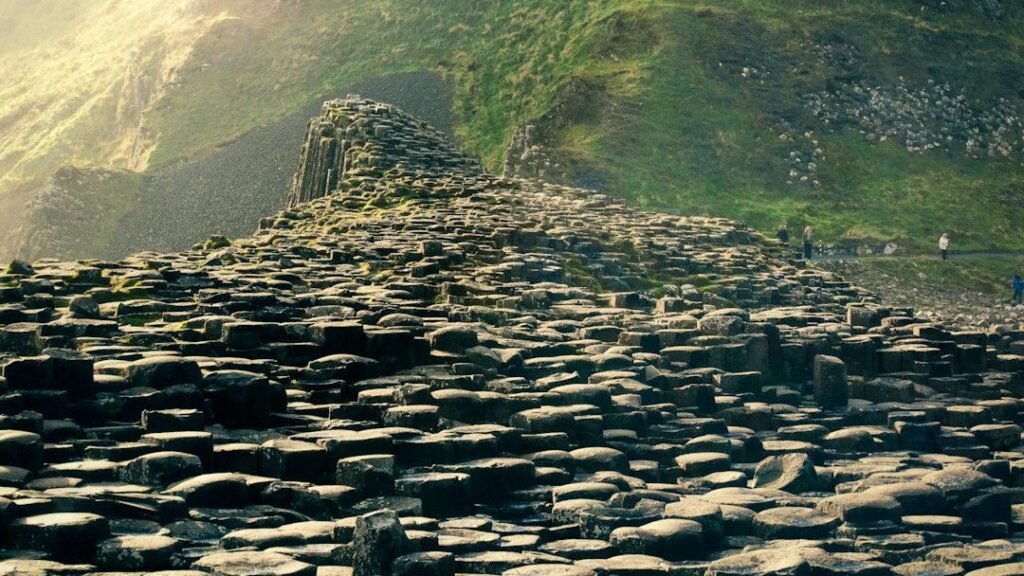

If you’ve ever seen a photo of the Giant’s Causeway, it almost looks fake. Perfect stone columns, stacked like a gigantic honeycomb, marching straight into the North Atlantic. It feels more like the work of a stonemason god than the slow grind of geology. For a long time, people believed exactly that: that giants built it, not lava.
Standing there today, with the wind slapping your face and waves hammering the rocks, it’s hard not to feel small. But the story science tells about this place is, in a quiet way, just as epic as any legend. It’s a story of fire, fractures, time measured in millions of years, and how chaos can produce patterns so neat they seem designed.
The First Shock: Those Almost-Perfect Hexagons
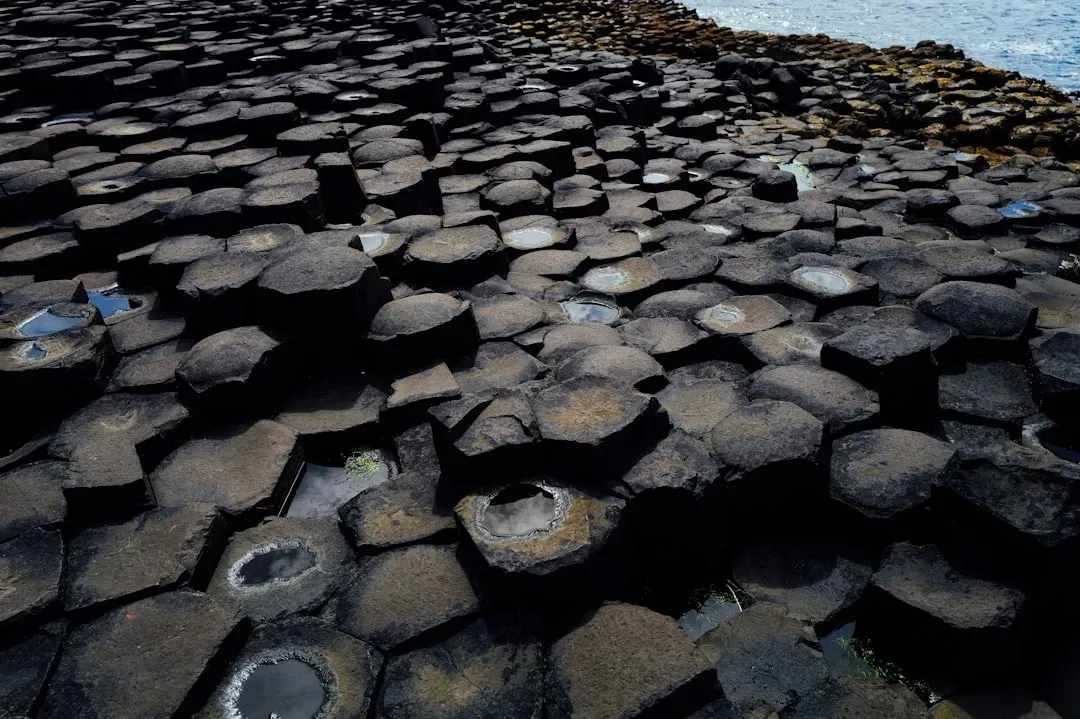
The first time you see the Giant’s Causeway up close, the geometry hits you like a jump scare in broad daylight. Thousands of interlocking columns, mostly six-sided, some five, some seven, packed so tightly together they look like tiles laid by a careful craftsman. Your brain screams: this is too organized to be natural. It’s like nature left its usual messy handwriting and suddenly produced an architect’s blueprint.
But that unsettling neatness is exactly why scientists love this place. The columns are made of basalt, a dark volcanic rock, and they form a natural pavement leading down from the cliff into the sea. No cement, no human chisel marks, just rock that cracked itself into order as it cooled. You can literally walk across this frozen pattern of stress and cooling, each column the size of a stepping stone for something massive.
Born Of Fire: Ancient Volcanoes Beneath Calm Green Hills
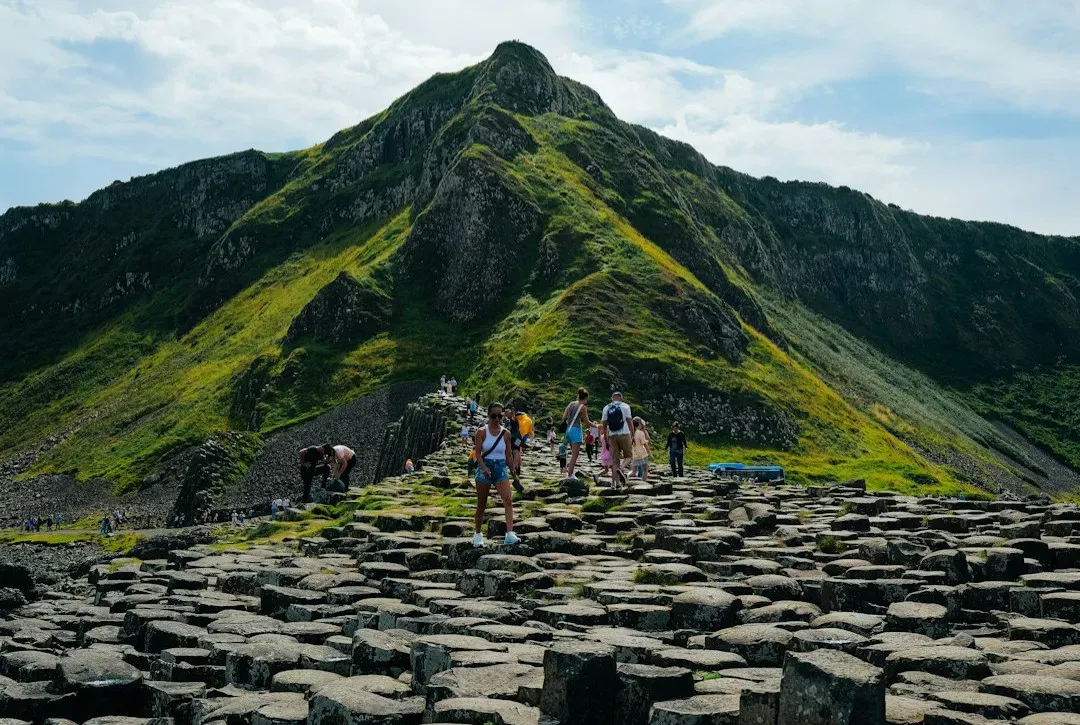
It’s strangely peaceful at the Giant’s Causeway now: green headlands, seabirds, maybe the distant sound of a tour bus. It’s hard to imagine that this calm scene was once a fiery hotspot. But about fifty to sixty million years ago, during the Paleocene period, this region was torn apart by intense volcanic activity as the Atlantic Ocean was beginning to open between what is now Europe and North America.
Back then, lava flowed into valleys and lowlands, spreading out as thick basaltic sheets. These flows buried landscapes, filled in basins, and cooled into enormous slabs of solid rock. The Giant’s Causeway is what’s left of those huge lava flows after unimaginable amounts of erosion shaved away softer material and left the most resilient structures behind, like the bones of an ancient lava plain.
Cracking The Code: How Cooling Lava Makes Straight-Edged Columns
So how does a giant puddle of molten rock end up looking like a crate full of stone pencils? The key is cooling and shrinking. As hot basalt cools, it contracts. That contraction pulls on the solidifying rock, building up internal stress. When the stress gets high enough, the rock cracks to relieve it, in much the same way mud in a dry riverbed breaks into polygonal plates as it dries.
Those cracks propagate downward through the cooling lava like slow-motion lightning bolts. Because the stress spreads fairly evenly, the fractures tend to form shapes that efficiently fill space: mostly hexagons, with the occasional five- or seven-sided column where the pattern adjusts. The result is vertical pillars with polygonal tops, each one like a stone core sample cut from a single colossal lava blanket.
Why Hexagons? The Same Pattern Shows Up In Surprising Places
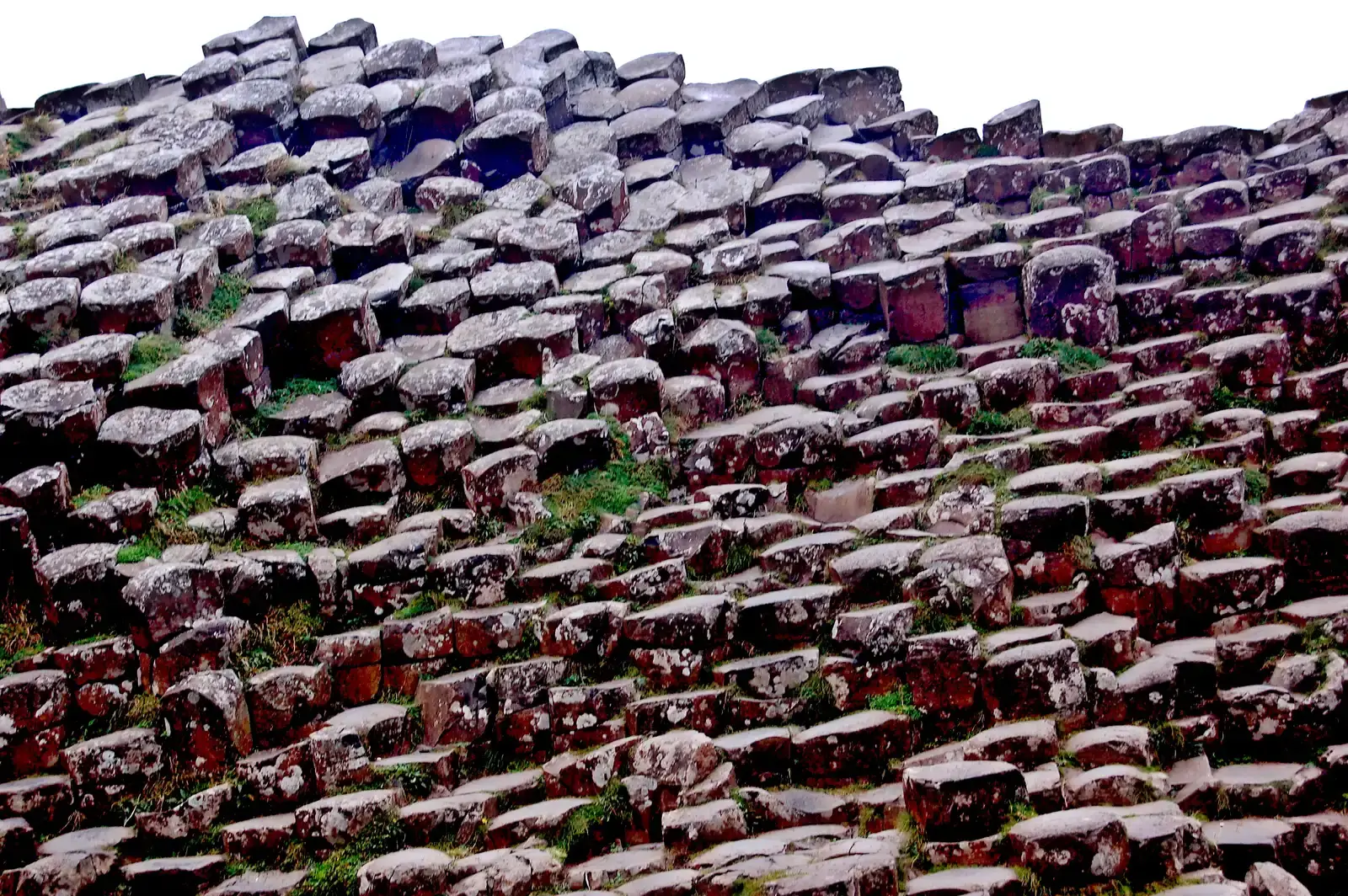
Hexagons might feel mysterious, but your brain has met them before. Think of a honeycomb, dried mud polygons, or even some patterns in cooling glass and ceramics. Hexagons are an incredibly efficient way to tile a surface without gaps, using minimal energy and material, and that makes them naturally common in systems where uniform pressure or stress pushes everything into a tight, repeating arrangement.
At the Giant’s Causeway, the hexagons appear because the cooling basalt wants to split into pieces of roughly equal size. The hexagonal pattern is the best compromise: it divides the rock into similar units with minimal strain on each boundary. It’s a bit like a crowd of people trying to stand as close together as possible; eventually, they settle into a repeating pattern that just works, and at the Giant’s Causeway, that pattern happens to look mathematically elegant.
From Plateau To Pathway: Erosion Sculpted The Causeway We See Today
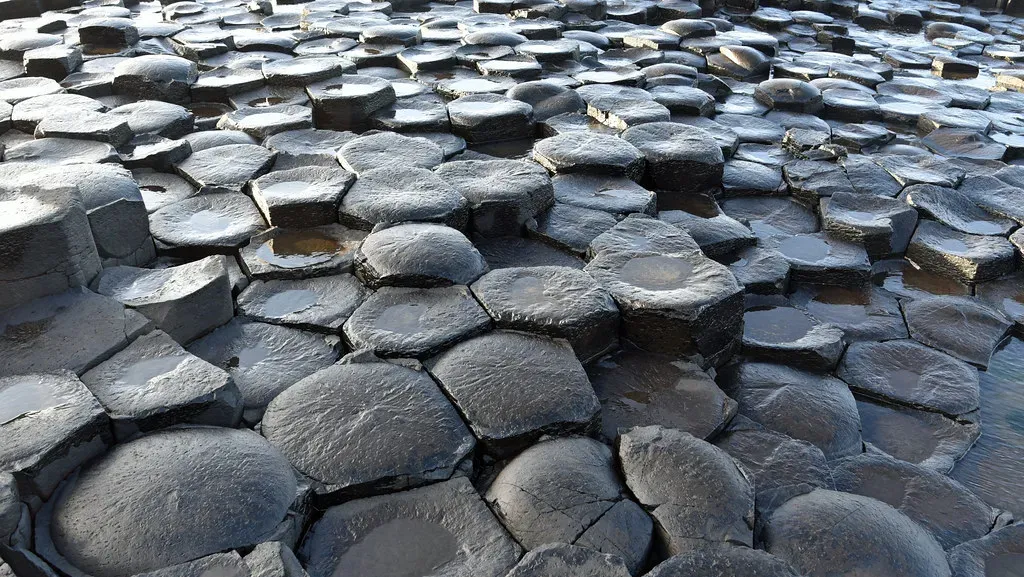
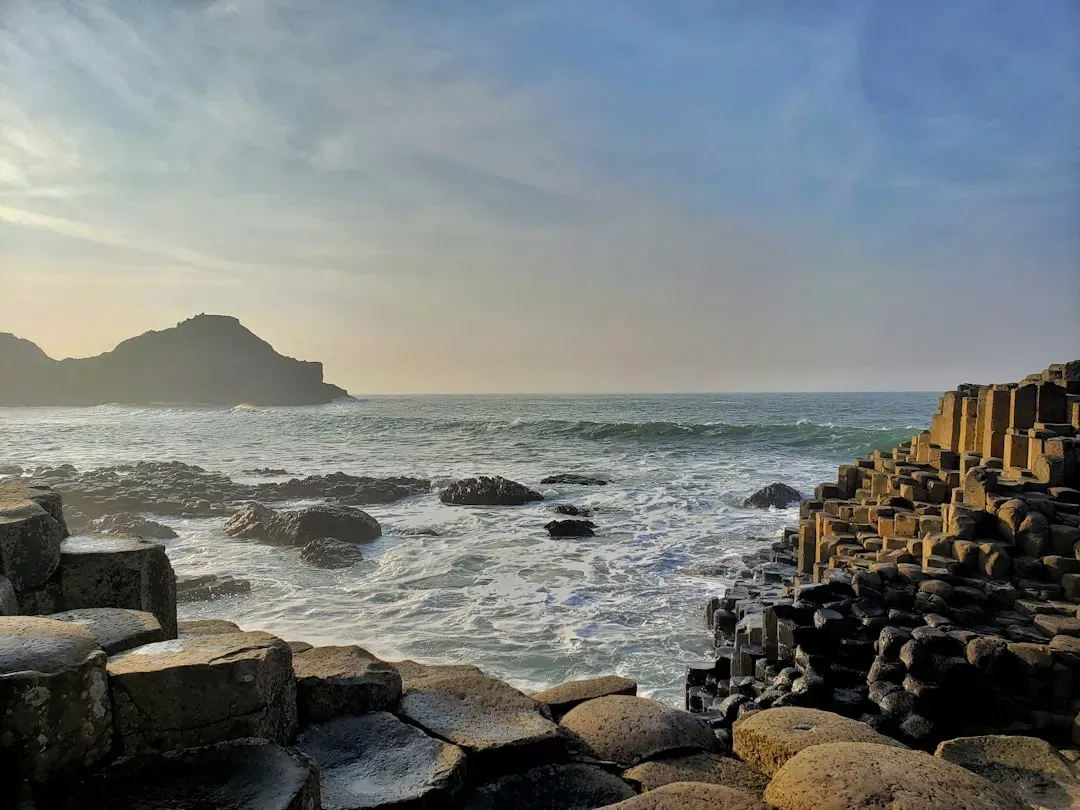
Here’s the twist: the Giant’s Causeway wasn’t born as a neat staircase into the sea. It started as a thick, mostly flat basalt plateau deep in the landscape. Over millions of years, wind, rain, frost, and relentless wave action gnawed away at the cliffs and valleys around it, stripping off softer rocks and trimming down everything that didn’t resist. What stayed standing was the tougher basalt columns, locked together like a stone parquet floor.
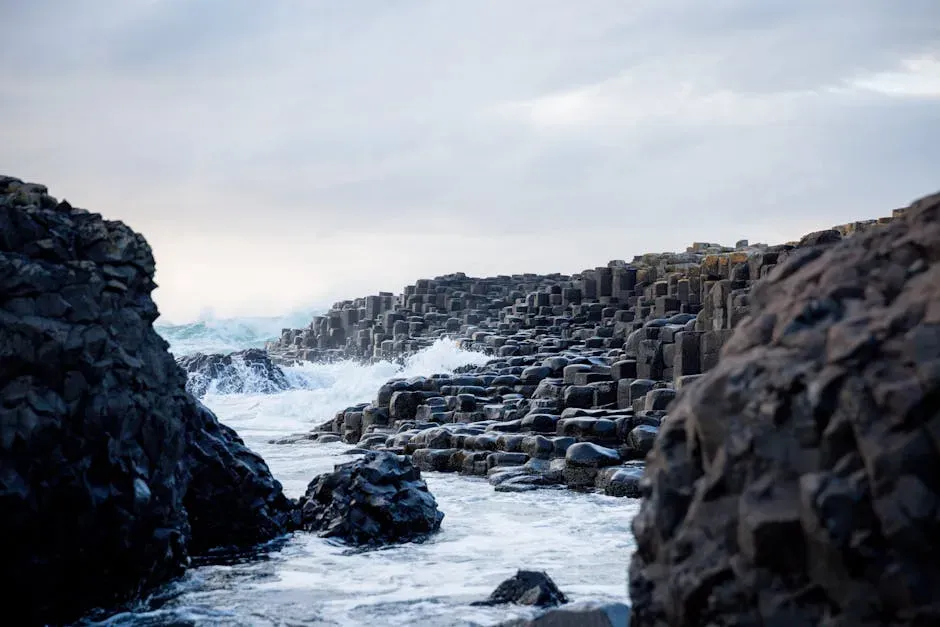
As the coastline was carved back, sections of the old lava sheet were exposed, revealing the columns from the side and from above. Waves undercut weaker parts, causing chunks of the column field to collapse and adjust. The famous “causeway” that now juts out into the sea is really the surviving edge of that once-massive basalt layer, polished and rearranged by countless storms into a natural pier.
Looking Inside The Columns: Clues Hidden In Shape, Height, And Texture
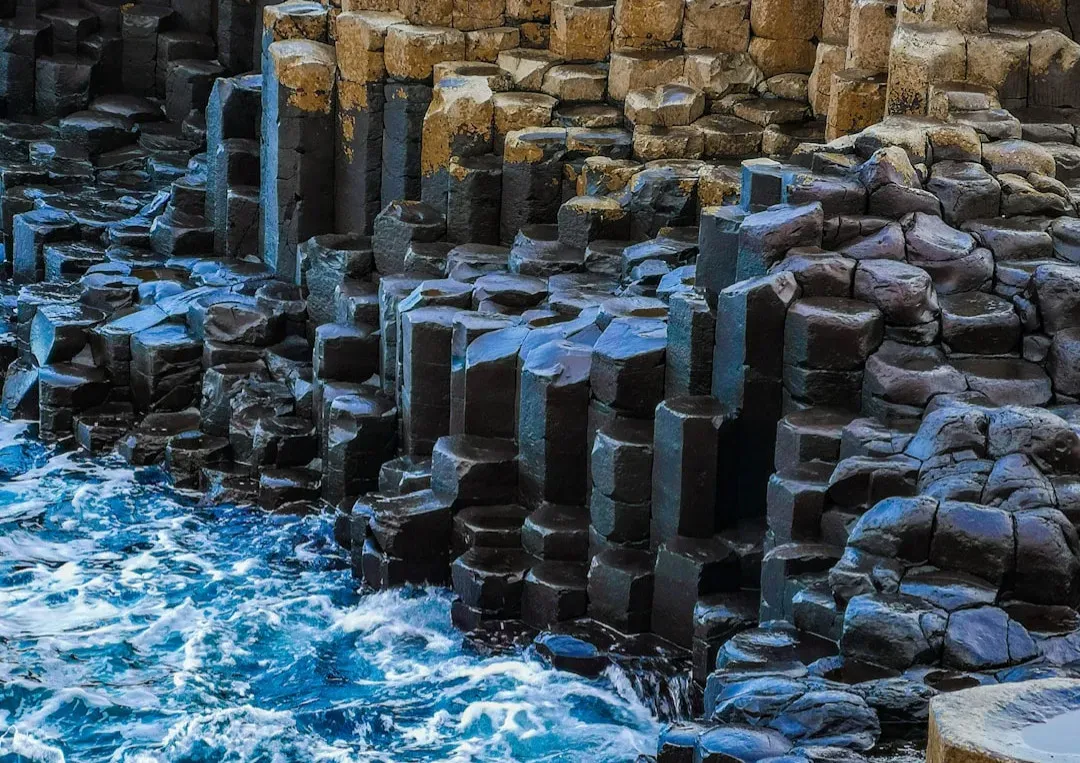
If you look closely, you’ll see that the columns aren’t all the same. Some are tall, some short; some have very clean, straight sides; others are twisted or broken. Geologists read these differences like a diary. Variations in column diameter and length tell a story about how fast or slowly different parts of the lava cooled, and whether cooling happened mostly from the top down, from both top and bottom, or along buried cracks and water-rich zones.
Some columns show horizontal steps called “entablature” and “colonnade” zones, where cooling conditions changed partway through the process. Subtle color differences can hint at mineral changes from weathering or exposure to groundwater long after the lava solidified. Even the way columns lean or fan out along the cliffs helps reconstruct how the original lava flows thickened, thinned, or dammed up against older hills that no longer exist.
Science Versus Myth: Giants, Bridges, And The Power Of A Good Story
The scientific explanation might feel cold compared to the old legends, but the myths tell us something important about how people respond to places like this. For centuries, locals explained the stones with stories of a giant building a bridge to Scotland. It made emotional sense: when nature looks engineered, we reach for builders, whether human, divine, or monstrous. In a way, the myth is an early attempt to make sense of geometry that seemed too perfect to be accidental.
Modern geology replaces giants with lava and stress, but it doesn’t have to kill the wonder. Knowing that these columns are the product of fire and time, not footsteps, can make them feel even more astonishing. Instead of one dramatic week in a giant’s life, you’re looking at the slow choreography of physics, grinding away for millions of years, guided by nothing more than temperature, pressure, and gravity – and still ending up with something that looks like a deliberate work of art.
The Giant’s Causeway Today: A Living Laboratory Under Threat
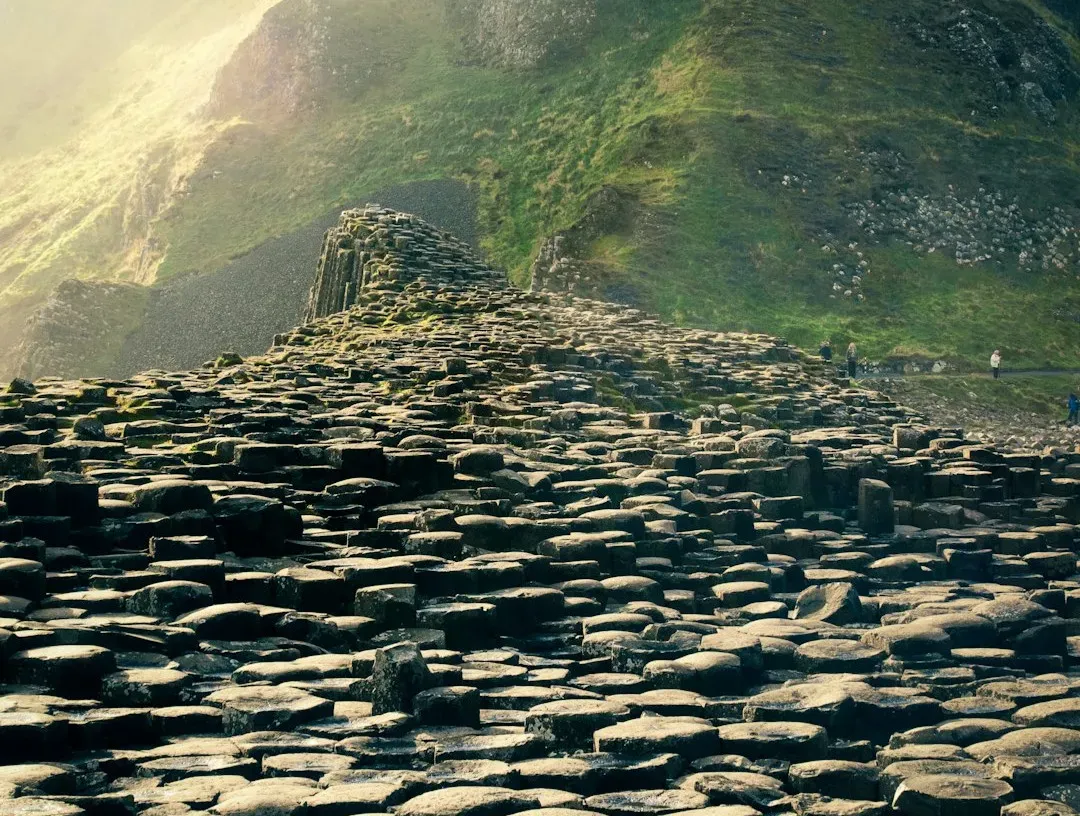
In 2026, the Giant’s Causeway is both a world-famous tourist magnet and a serious scientific site. Geologists use it as a natural classroom to study lava cooling, fracture patterns, and coastal erosion. Visitors, meanwhile, test how many photos their phones can store while balancing on the hexagonal tops. It’s one of those rare places where schoolbook diagrams suddenly feel much more real because you can literally stand inside them.
At the same time, the site is under pressure. Rising sea levels and more frequent storms hit the coast harder each year, and heavy foot traffic can wear down fragile surfaces and disturb surrounding habitats. Balancing access and protection means strict paths, managed visitor numbers, and constant monitoring of the cliffs and rock stability. The same forces that made this masterpiece – water, wind, waves – are still working on it, and they don’t care about heritage plaques.
Conclusion: A Masterpiece Written In Rock And Time
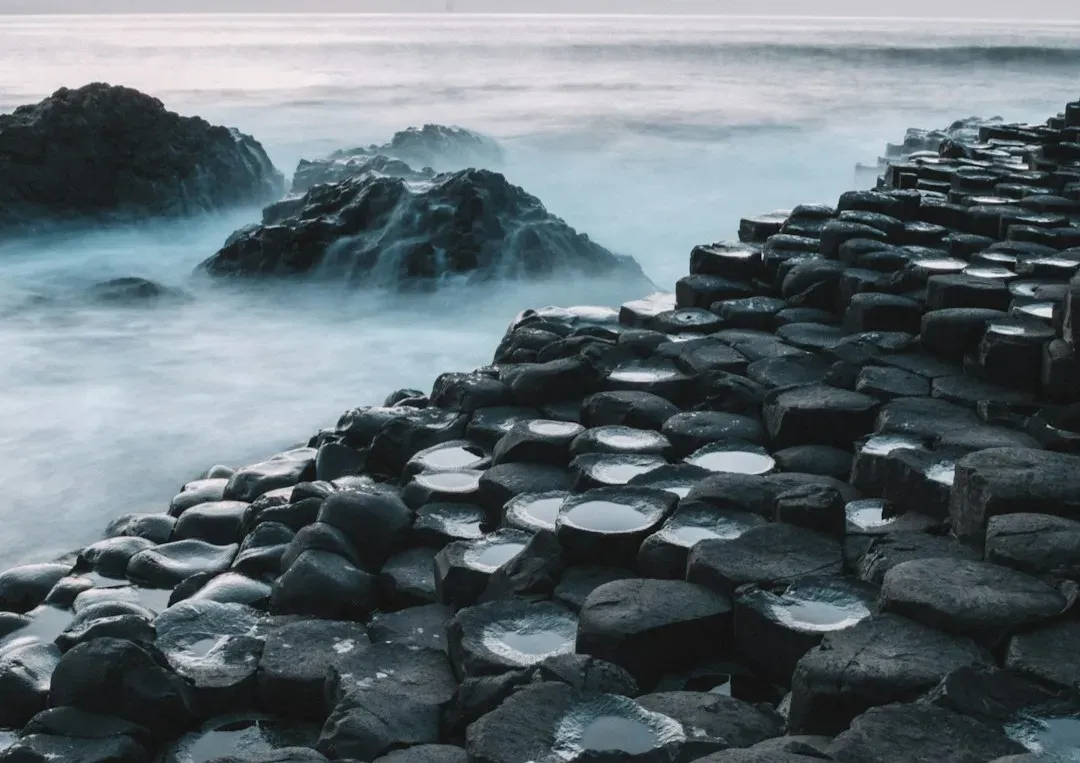
The Giant’s Causeway can feel like a puzzle that’s almost taunting you: too orderly to be random, too raw to be man-made. Science’s answer is quietly radical. It says you do not need a designer, a giant, or a miracle to get something this beautiful. You just need hot rock, patient cooling, relentless erosion, and a few simple physical rules repeating themselves over absurd stretches of time. Out of that slow grind emerges a landscape that looks as if someone carefully planned every stone.
When you put your hand on one of those columns, you’re touching the cooled skin of an ancient lava flow, sculpted first by temperature and stress, then by weather and waves, and finally by human stories layered on top. It’s proof that nature can outdo our best architecture without ever picking up a tool. Next time you see a photo of those hexagons disappearing into the surf, ask yourself: does it feel more or less magical now that you know the science – and which version of the story will you tell first?