
Step outside right now and look around. Seriously. A spider’s web, the curve of a seashell, the crown of a sunflower staring up at the sky – every single one of these is quietly whispering the language of mathematics. It sounds almost too poetic to be real, but nature has been solving complex geometric problems for millions of years, long before humans ever picked up a pencil.
What if the wilderness around you is not chaotic at all, but instead running on a kind of invisible software? A hidden code, written not in silicon but in petals and spirals and branching veins. You might be surprised just how deep this rabbit hole goes. Let’s dive in.
The Fractal Blueprint: Nature’s Infinite Repetition
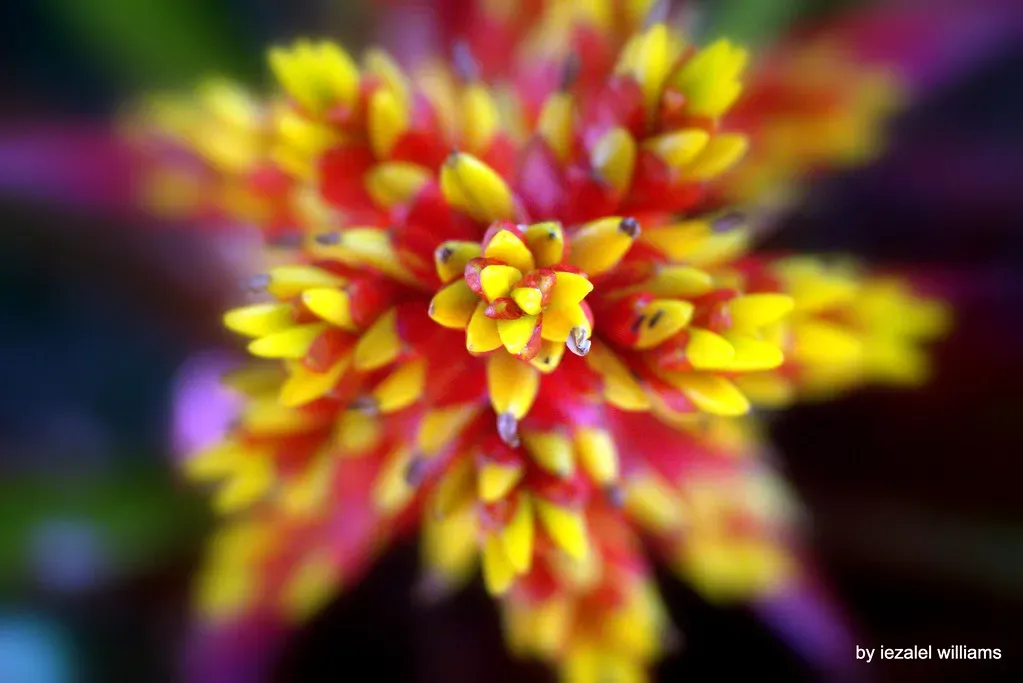
Here’s the thing about fractals: they are endlessly fascinating once you know what to look for. A fractal is a never-ending pattern – infinitely complex and self-similar across different scales, created by repeating a simple process over and over in an ongoing feedback loop. Think of it like a mirror facing another mirror, except instead of reflections of you, you get the intricate branching of a lightning bolt or the unfurling arms of a fern.
The term “fractal” was coined by the mathematician Benoît Mandelbrot in 1975, based on the Latin word frāctus, meaning “broken” or “fractured,” used to extend the concept of theoretical fractional dimensions to geometric patterns in nature. Before his work, the irregular, jagged shapes of the natural world were largely ignored by classical mathematics, which preferred smooth, tidy shapes. Mandelbrot changed everything by showing that “messy” and “mathematical” are not opposites – they are the same thing.
The Fibonacci Code Hidden in Every Flower
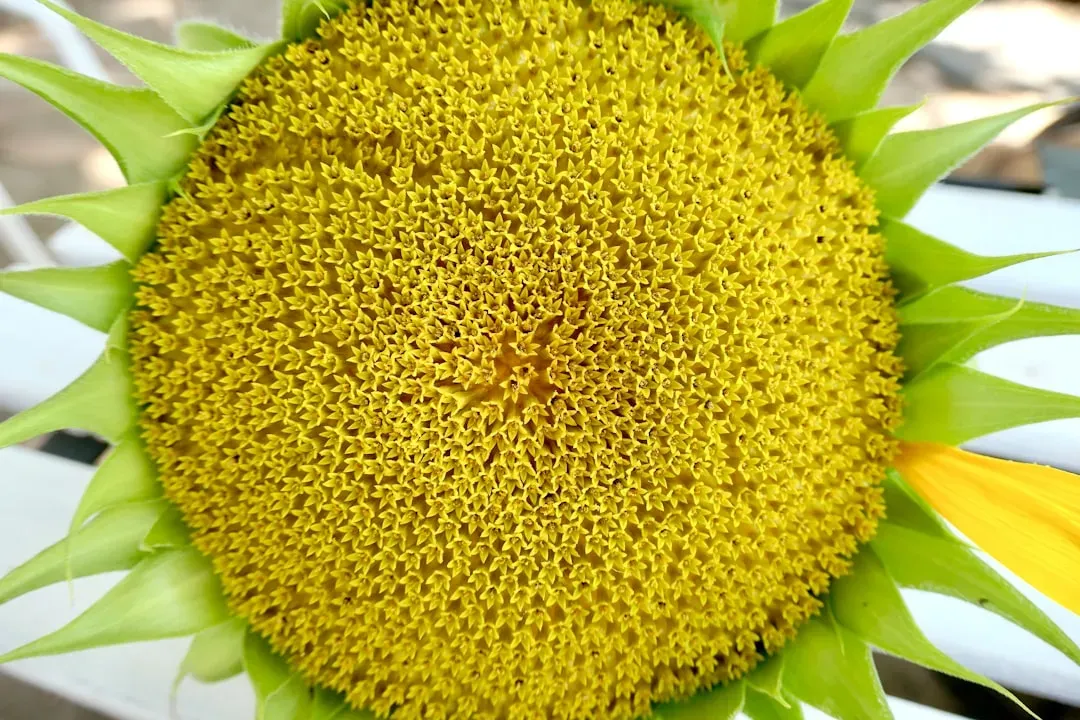
You might have heard of the Fibonacci sequence before, but its presence in the wild goes far deeper than most people realize. In mathematics, the Fibonacci sequence is one in which each element is the sum of the two that precede it, beginning with 0 and 1 – producing the sequence 0, 1, 1, 2, 3, 5, 8, 13, 21, 34, 55, 89, 144, and onward. Simple enough on paper. Extraordinary in a garden.
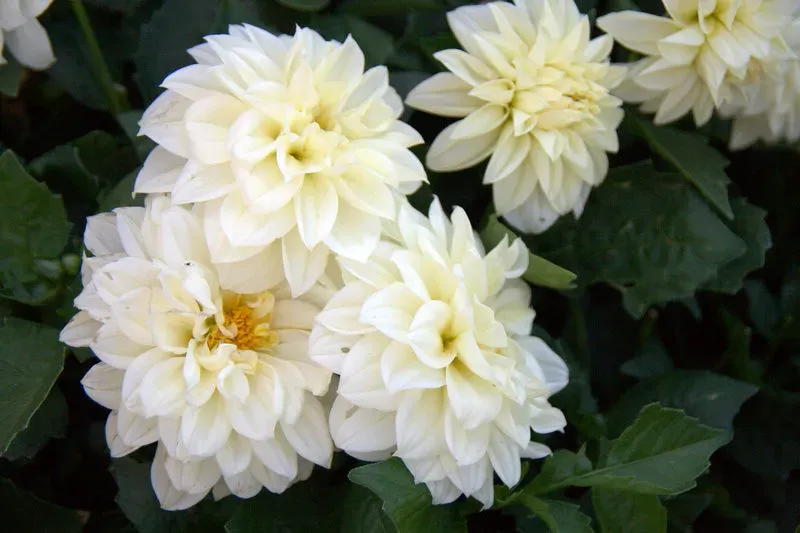
Fibonacci numbers occur in many places in the real world – many flowers, for instance, have a Fibonacci number as their number of petals, such as 3, 5, 8, or 13. The lily has 5 petals, some daisies have 13 petals, and a chicory has 21 petals. These numbers also appear in biological settings such as branching in trees, the arrangement of leaves on a stem, the fruit sprouts of a pineapple, the flowering of an artichoke, and the arrangement of a pine cone’s bracts. It is almost impossible not to be a little awestruck by that.
The Golden Ratio: Nature’s Most Famous Number
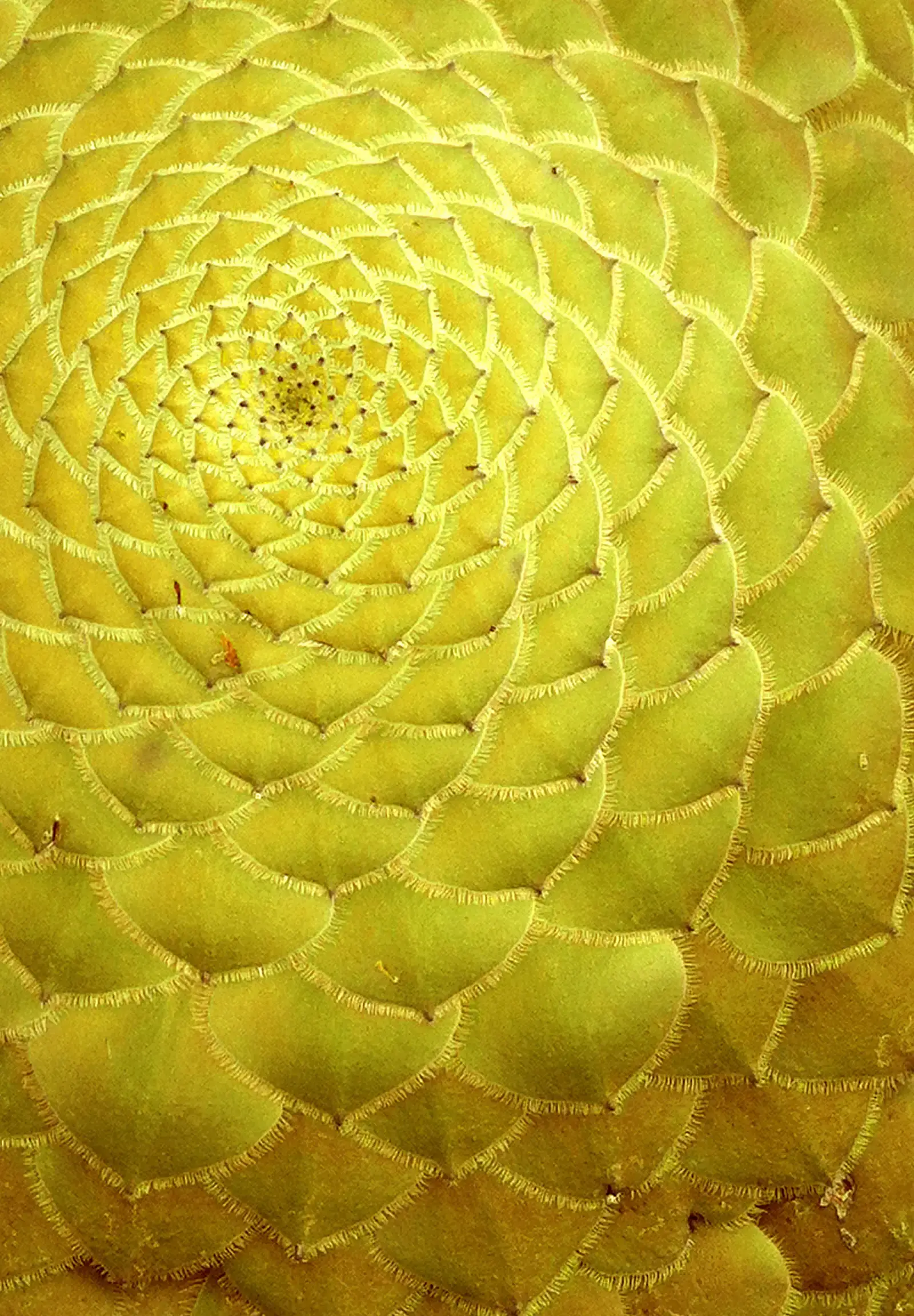
Closely related to the Fibonacci sequence is what many call the most beautiful number in existence. The golden ratio, represented by the Greek letter phi (Φ), is a special number approximately equal to 1.618033. It is also known as the divine proportion, the golden mean, or the golden section. Honestly, even the nicknames are impressive. If you take any two consecutive numbers in the Fibonacci sequence and divide the larger number by the smaller one, you will notice that the ratio between them gets closer to the golden ratio as you progress along the sequence.
In phyllotaxis – the arrangement of leaves on a stem – growth patterns based on the golden angle of roughly 137.5 degrees ensure that new leaves do not block the sun from older ones, maximizing sunlight exposure for the entire plant. Similarly, Fibonacci spirals provide the most efficient way to pack seeds in a flower head, ensuring no wasted space. You could think of it as nature running an optimization algorithm before we even had computers to coin the term.
Spirals Across the Wild: From Shells to Storms
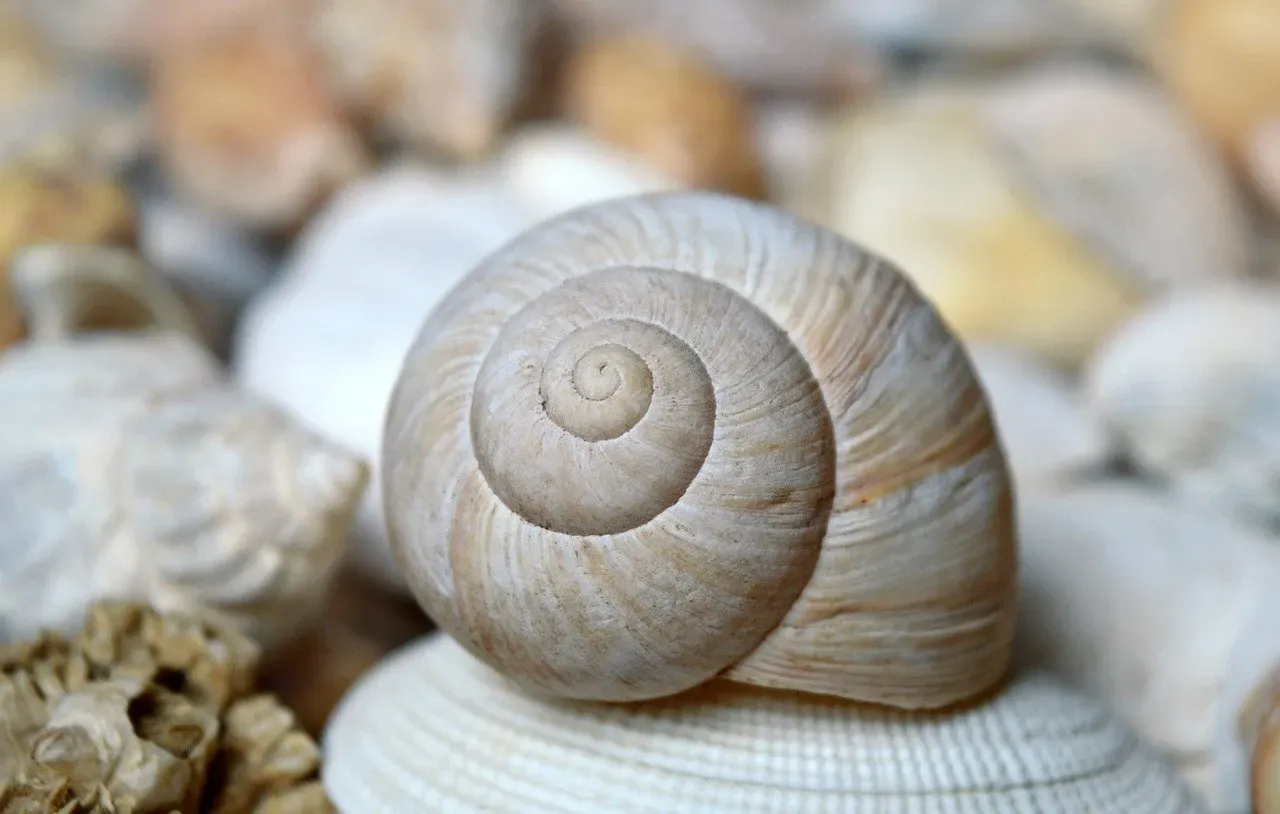
Spirals are common in plants and in some animals, notably molluscs. In the nautilus, a cephalopod mollusc, each chamber of its shell is an approximate copy of the next one, scaled by a constant factor and arranged in a logarithmic spiral. Pick up a nautilus shell and you are essentially holding a piece of living mathematics. The elegance of it still surprises me every time I see one.
There are several types of spiral patterns found in nature. The golden spiral, a Fibonacci spiral, and a logarithmic spiral are all found in nature’s patterns. Spirals appear due to radial growth or the shape of an organism such as a chameleon’s tail or a fiddlehead fern, and are a natural pattern produced as the organism develops. Even hurricanes are not exempt – as they form at sea, the spiral pattern of a hurricane also emulates the golden spiral.
The Symmetry Equation: How Animals Are Built
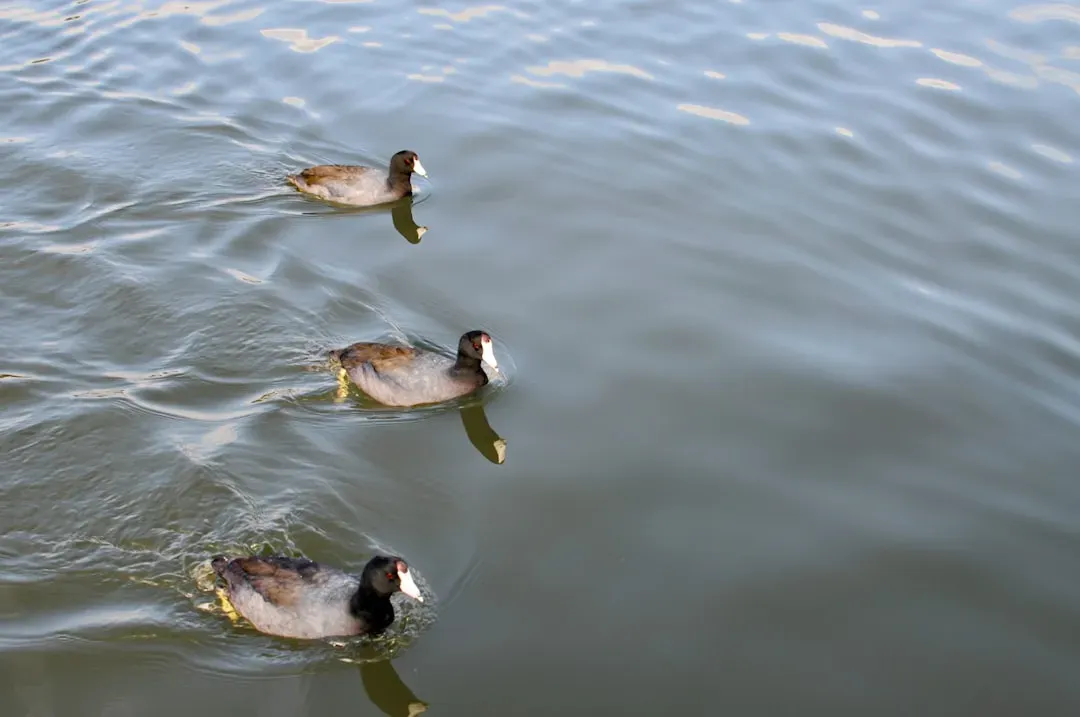
Symmetry is not just about looking good. It is a functional, survival-driven geometric strategy. Biological symmetry can be thought of as a balanced distribution of duplicate body parts within the body of an organism. Importantly, unlike in mathematics, symmetry in biology is always approximate – plant leaves, while considered symmetrical, rarely match up exactly when folded in half. Still, the approximation is close enough to shape entire kingdoms of life.
Radial symmetry is especially suitable for sessile animals such as the sea anemone, floating animals such as jellyfish, and slow-moving organisms such as starfish, whereas bilateral symmetry favors locomotion by generating a streamlined body. Bilateral symmetry is characteristic of the vast majority of animals, including insects, fishes, amphibians, reptiles, birds, mammals, and most crustaceans. In other words, if you move fast and hunt, you are almost certainly bilateral. If you drift and filter-feed, radial is your geometry.
Fractals in Trees and Branching Systems
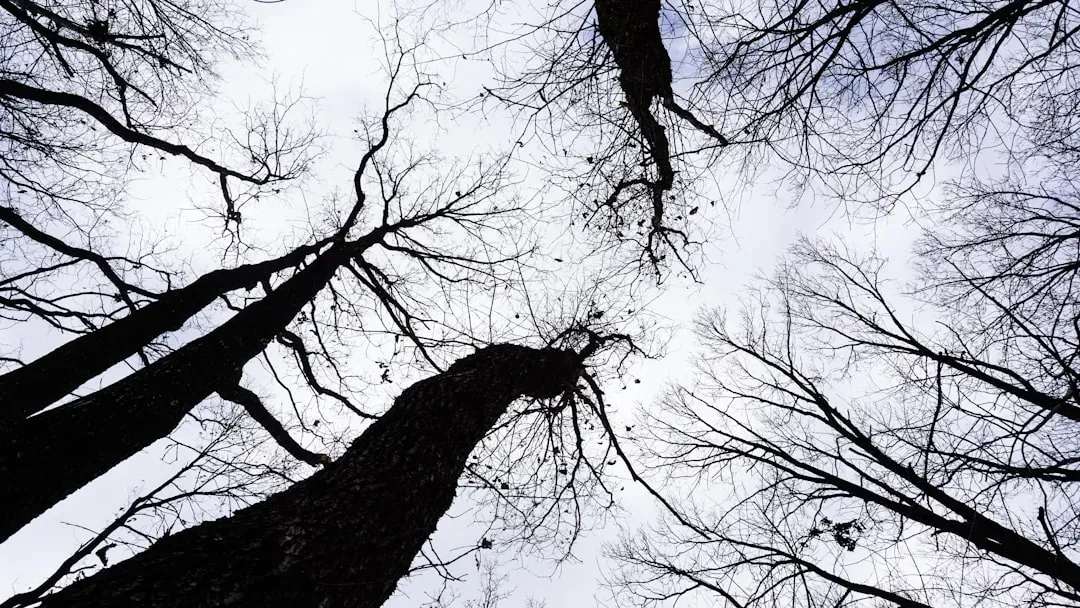
Perhaps the best example of fractals in nature is trees. These remarkable creations can be explained not only with biology but also with mathematics. Tree roots, especially fibrous roots, are an example of fractals – they form a network-like branching structure where smaller parts match the bigger ones and grow into progressively smaller versions. Stand in a forest and look up at the canopy. You are looking at recursive geometry playing out on a massive scale.
Tree branches are another example of fractals, as they replicate themselves into similar structures. The leaves on these branches contain veins that originate from the midrib and form a network of veins replicating the parent vein, resulting in numerous such structures. This fractal design helps ferns, for instance, gather sunlight efficiently and grow in a wide range of environments, giving us a clear look at how fractal geometry appears in the structure and function of living things. Nature is nothing if not efficient.
The Honeycomb and the Hexagon: Tessellations in the Wild
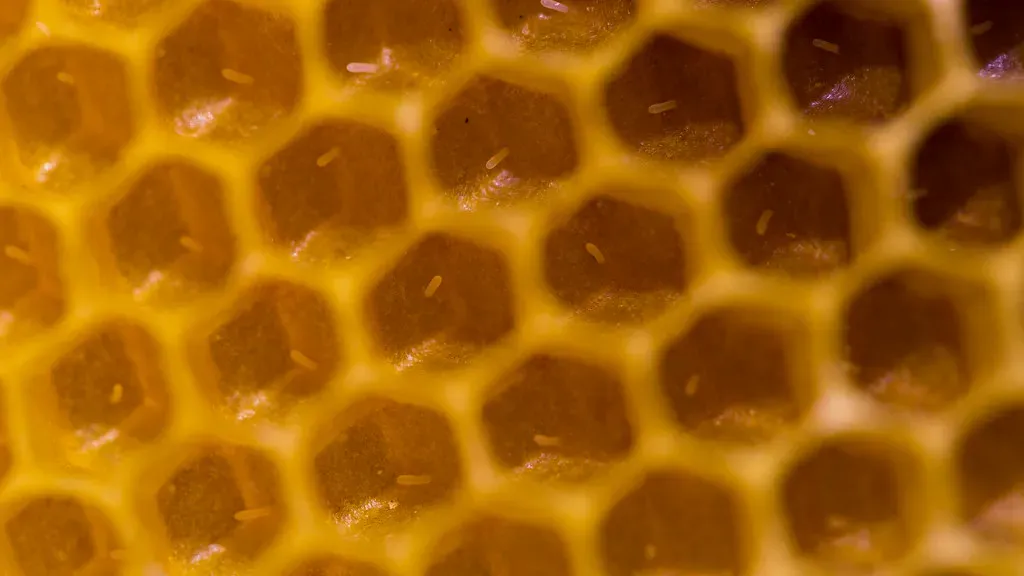
Let’s be real – the fact that bees build perfect hexagons without any formal education in geometry is genuinely mind-blowing. Hexagonal cells have two big advantages for any bee building a hive: they ensure no empty space is left between cells, and hexagons offer the highest ratio between surface and perimeter of any cell. Maximum storage, minimum material. That is engineering genius.
Look at a giraffe’s fur and you will see a collection of irregular brown spots that fit together like puzzle pieces. The delicate veins on a dragonfly’s wings also outline a puzzle-like collection of irregular translucent cells. And the honeycomb cells built by bees appear to fit together in a regular arrangement. All these natural patterns may be modeled with a mathematical technique known as a Voronoi tessellation. Basaltic lava flows often display columnar jointing as a result of contraction forces causing cracks as the lava cools, and the extensive crack networks that develop often produce hexagonal columns – one famous example being the Giant’s Causeway in Northern Ireland.
Turing Patterns: Spots, Stripes, and the Math of Animal Coats
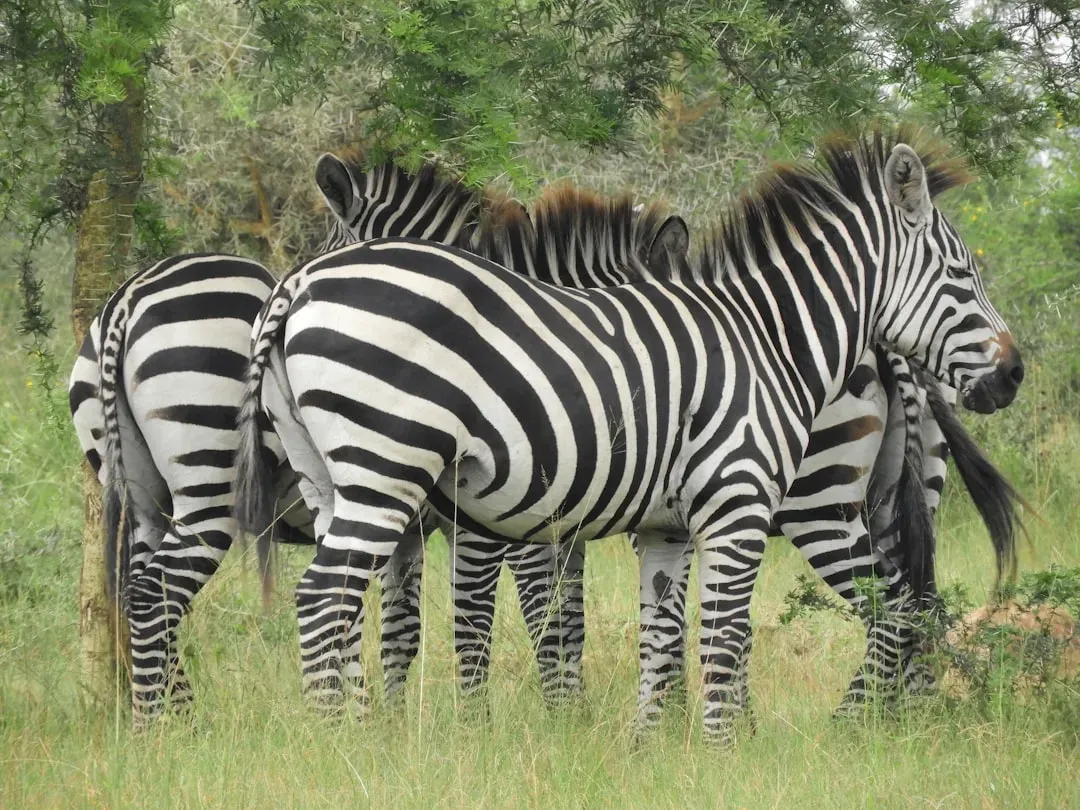
It might sound crazy, but the spots on a leopard and the stripes on a zebra are mathematical outputs. In the 20th century, the English mathematician Alan Turing predicted mechanisms of morphogenesis which give rise to patterns of spots and stripes, and the Hungarian biologist Aristid Lindenmayer and French American mathematician Benoît Mandelbrot later showed how the mathematics of fractals could create plant growth patterns. Turing is often remembered for code-breaking in World War Two, but his contribution to biology is arguably just as profound.
These activator-inhibitor mechanisms, Turing suggested, can generate patterns of stripes and spots in animals and contribute to the spiral patterns seen in plant phyllotaxis. In biology, natural selection can cause the development of patterns in living things for several reasons, including camouflage, sexual selection, and different kinds of signalling, including mimicry and cleaning symbiosis. The stripes on a tiger are not random decoration – they are a mathematical solution to a survival problem, refined over millions of years.
Chaos Theory and the Deep Order Beneath the Wild
Here is where things get truly mind-bending. Nature looks chaotic. Storms, rivers, mountain ranges – they all appear wild and unpredictable. Yet chaos theory reveals that even these seemingly random systems follow mathematical rules. In mathematics, a dynamical system is chaotic if it is highly sensitive to initial conditions – the so-called butterfly effect – which requires topological mixing and dense periodic orbits. Alongside fractals, chaos theory ranks as an essentially universal influence on patterns in nature.
While most traditional science deals with supposedly predictable phenomena like gravity and chemical reactions, chaos theory deals with nonlinear things that are effectively impossible to predict or control – like turbulence, weather, and brain states. These phenomena are often described by fractal mathematics, which captures the infinite complexity of nature. Many natural objects exhibit fractal properties, including landscapes, clouds, trees, organs, and rivers. It is hard to say for sure where order ends and chaos begins – but that blurry boundary is exactly where the most fascinating science lives.
Conclusion: The Universe Speaks in Shapes
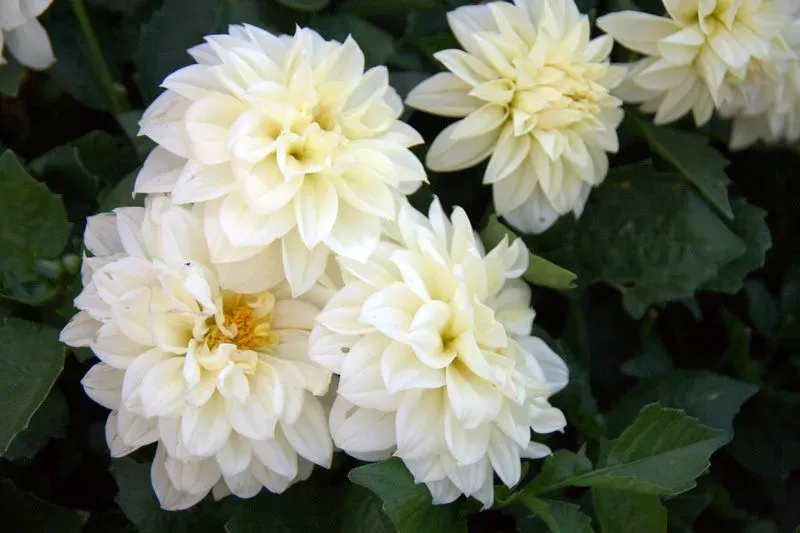
You have just taken a tour through the hidden geometry of the natural world, and if there is one thing worth taking away, it is this: the wild is never truly random. From the spirals of a hurricane to the hexagons in a beehive, from the fractal veins of a leaf to the bilateral symmetry of your own face, mathematics is the quiet architect behind every living form on this planet.
The deeper you look into nature, the more you realize you are not just looking at biology or chemistry. You are reading an ancient language that predates every human civilization, written in the curves of shells and the branching of rivers and the petals of flowers. Next time you walk through a forest or stare at a stormy sky, take a moment to ask yourself – what equation am I looking at right now? You might be amazed by the answer that comes back.