
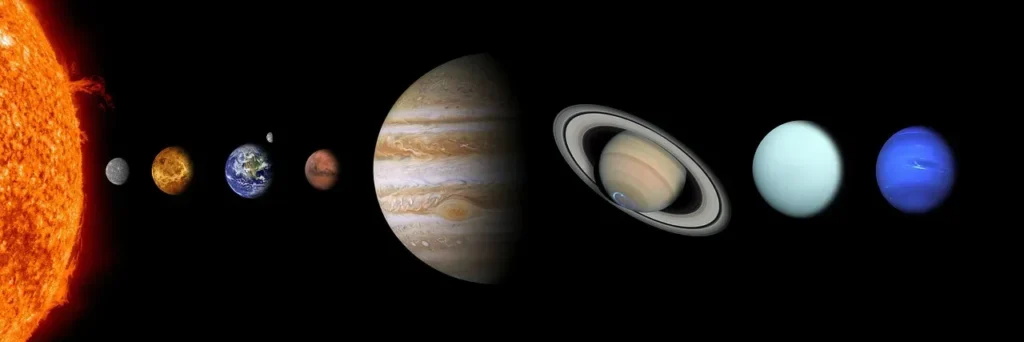

When you look up at the night sky, it all seems so calm. Planets glide along invisible paths. Stars burn steadily. Everything appears to be following a very orderly script. But that serene picture is, honestly, a massive illusion. The story behind how our solar system came to be reads less like a textbook diagram and more like a cosmic disaster film involving planetary wanderers, catastrophic crashes, world-shattering collisions, and an asteroid apocalypse that lasted millions of years.
What really happened out there, roughly four and a half billion years ago, would make even the wildest science fiction seem timid by comparison. The more scientists dig into the data, the more jaw-dropping the early solar system becomes. So let’s dive in, because the truth is far stranger and more spectacular than you might expect.
It All Started With a Dead Star’s Final Scream
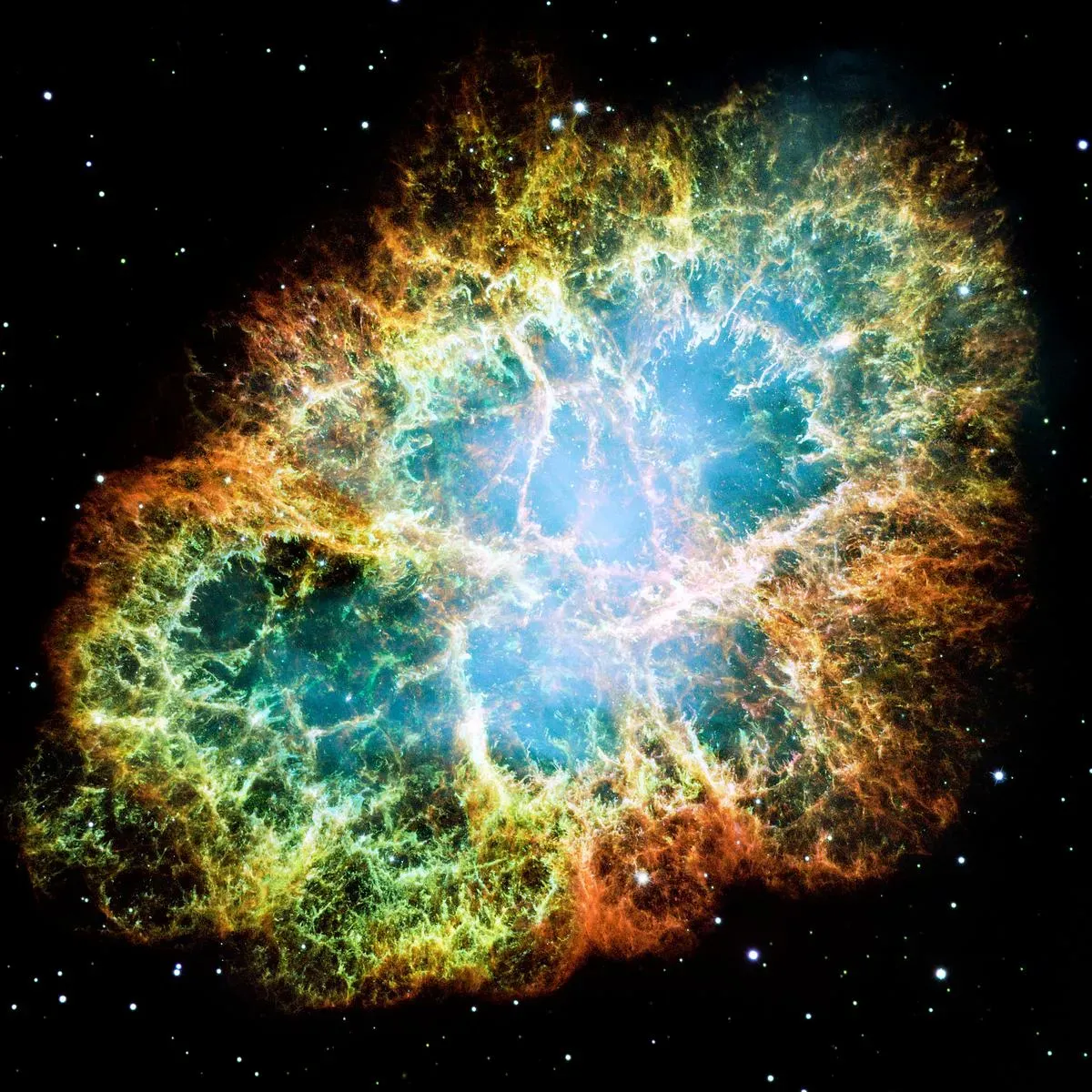
Our solar system formed about 4.6 billion years ago from a dense cloud of interstellar gas and dust, and that cloud collapsed possibly due to the shockwave of a nearby exploding star called a supernova. Think about that for a moment. The very event that gave birth to everything you know, including the Earth you stand on and the air you breathe, may have been triggered by the violent death of another star. It is a kind of cosmic inheritance nobody asked for, but everyone benefited from.
There is evidence that the formation of the solar system began about 4.6 billion years ago with the gravitational collapse of a small part of a giant molecular cloud. Most of the collapsing mass collected in the center, forming the Sun, while the rest flattened into a protoplanetary disk out of which the planets, moons, asteroids, and other small solar system bodies formed. The process was not gentle or gradual in the way you might imagine. It was turbulent, hot, and relentlessly chaotic from the very start, like dropping a marble into a spinning bowl of boiling soup.
The Protoplanetary Disk: A Spinning Warzone
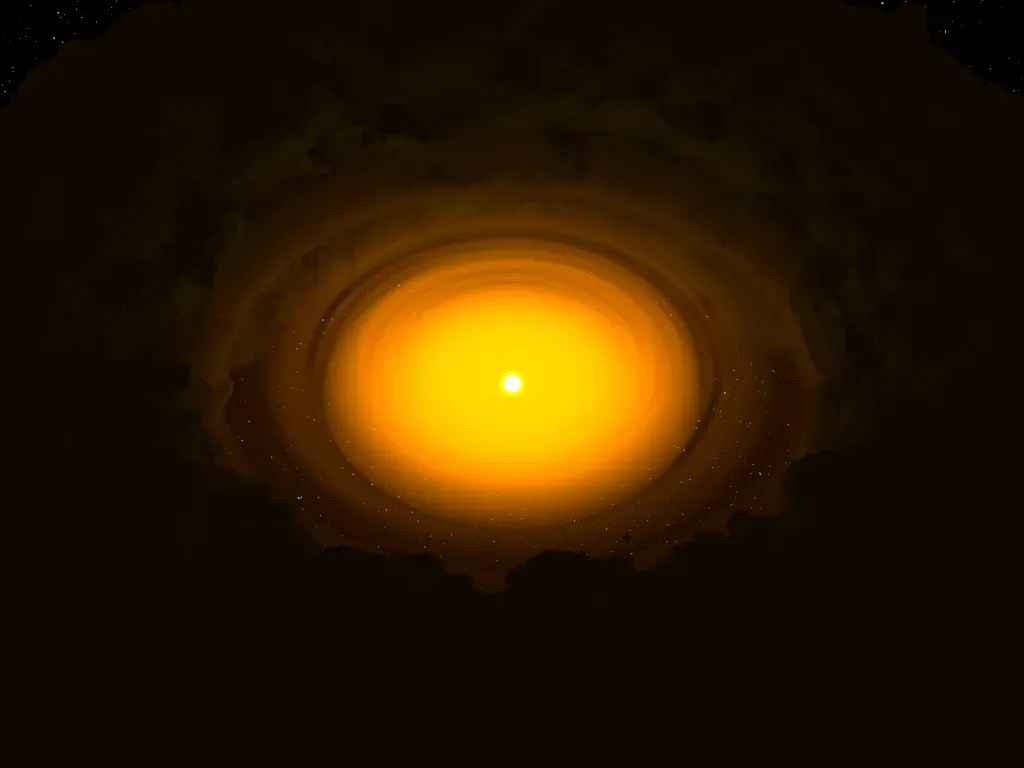
Over about 100,000 years, the competing forces of gravity, gas pressure, magnetic fields, and rotation caused the contracting nebula to flatten into a spinning protoplanetary disc with a diameter of about 200 AU and form a hot, dense protostar at the centre. Inside that disc, almost nothing was stable. Particles slammed into each other constantly, merging into clumps, breaking apart, and merging again in a frenzied cycle of construction and destruction.
When a star first forms, it is surrounded by a disk of swirling gas and dust. Over billions of years, this gas and dust gradually clumps together to form larger and larger objects, eventually becoming a mature system of large planets in stable orbits. This process, in which small bodies collide to form planets, is called accretion. Here is the thing though: accretion sounds almost peaceful, like baking bread. In reality, you are talking about hypersonic collisions, enormous heat, and bodies being blasted apart just as quickly as they tried to form. You would not want to be anywhere near it.
Planet-Building Through Destruction: The Giant Impacts
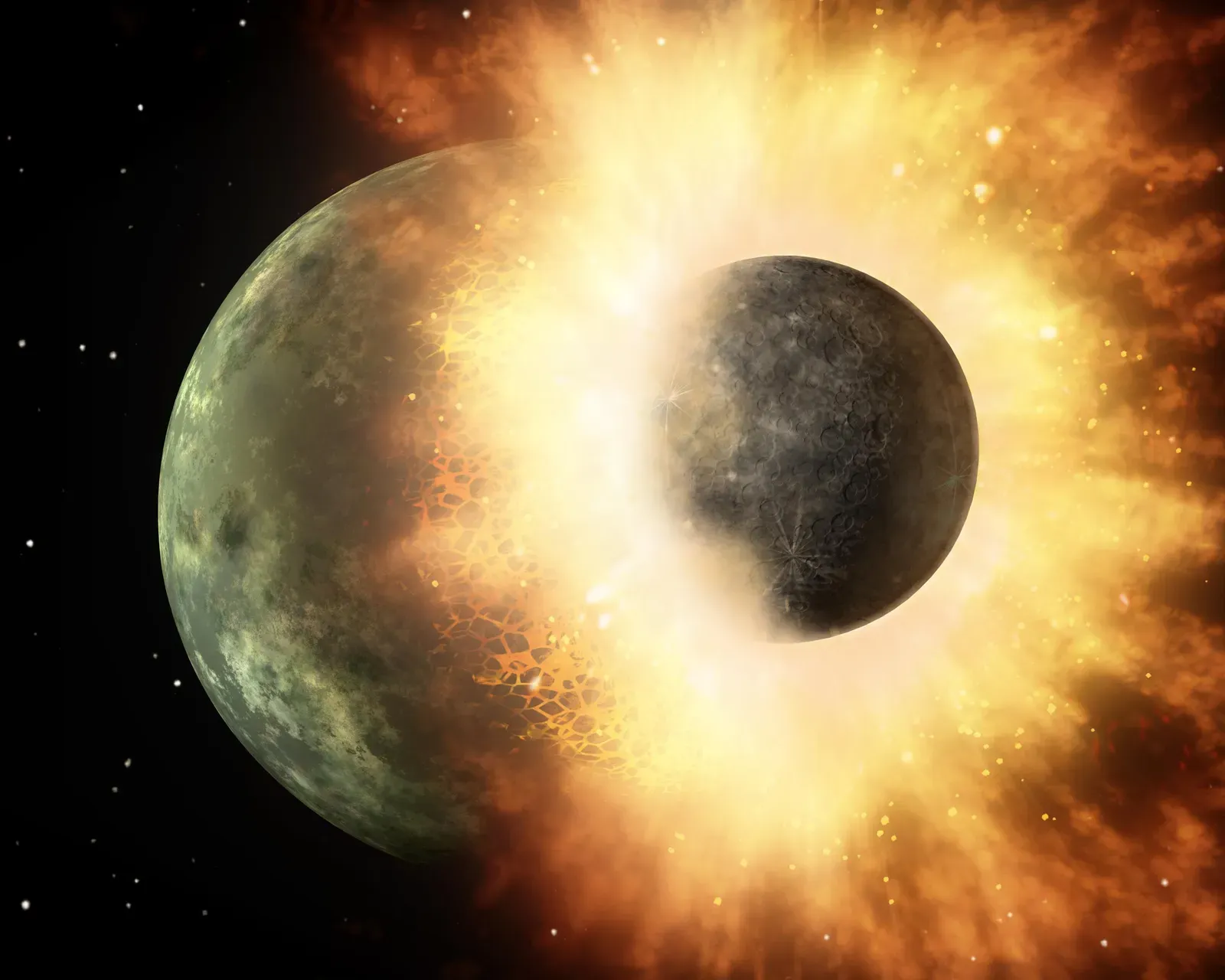
In the final stages of planet formation, collisions can occur between large, growing planets themselves. These giant impacts have a variety of outcomes, creating new planets with different properties or even obliterating the colliding planets altogether. Scientists call these events “giant impacts,” which is one of the most understated terms in all of science. Imagine two bodies, each potentially as large as Mars, slamming into each other at speeds of thousands of kilometers per hour. The energy released would be almost incomprehensible.
A recent study reveals that early planet formation occurred from fragments of earlier bodies that broke apart and reformed within the solar system. The research team reinterpreted chemical clues in iron meteorites to show that the metal was separated, shattered, and then recycled into second-generation bodies within the first few million years. The study shifts attention from a slow, single-stage story to a stop-start process shaped by collisions and reheating. So the planets you see today are, in a very real sense, recycled wreckage. The building blocks of Earth itself were once part of something else entirely, something that got destroyed and rebuilt, almost like a cosmic do-over.
Jupiter’s Wild Road Trip Across the Solar System
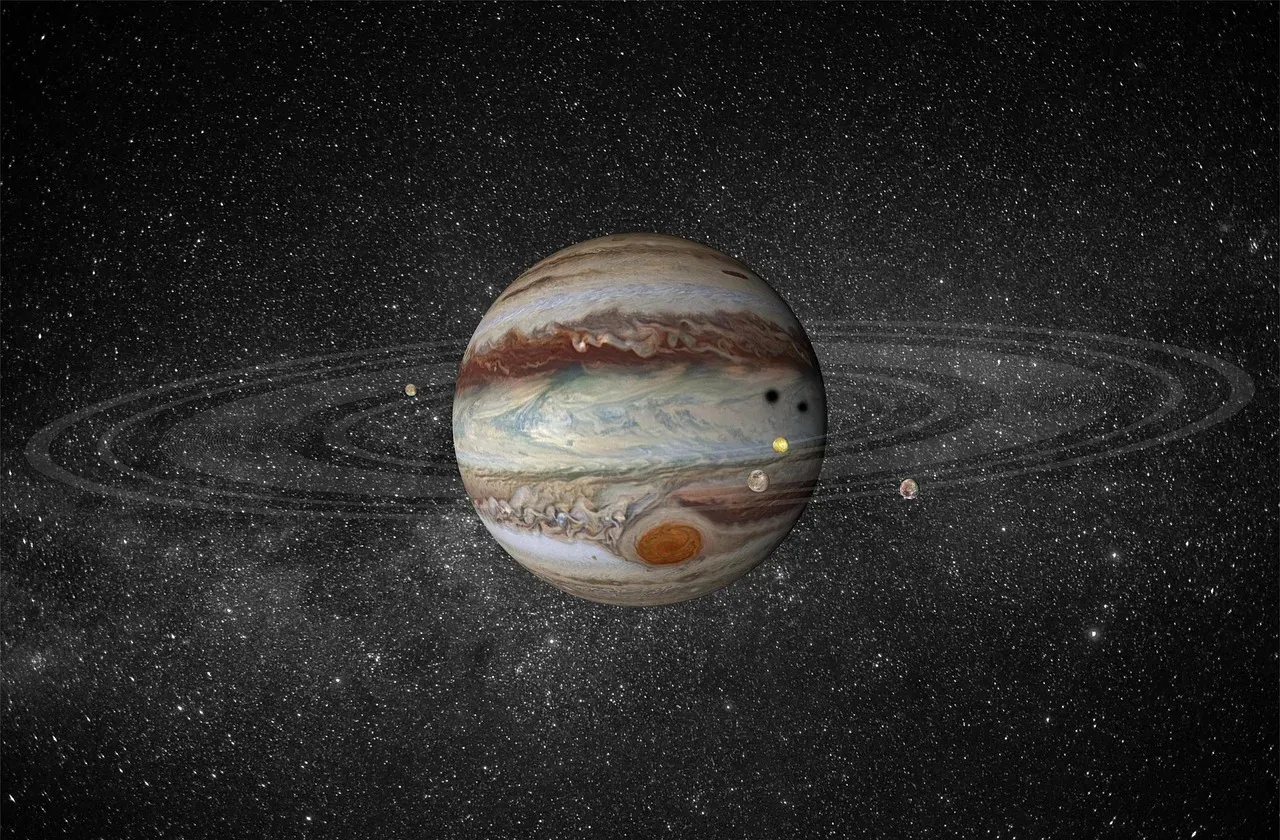
The Grand Tack hypothesis proposes that Jupiter formed at a distance of 3.5 AU from the Sun, then migrated inward to 1.5 AU, before reversing course due to capturing Saturn in an orbital resonance, eventually halting near its current orbit at 5.2 AU. Let that sink in. Jupiter, the giant that we think of as a permanent fixture of our solar system, once went wandering. It was not sitting quietly in its lane. It charged deep into the inner solar system like a wrecking ball, scattering everything in its path.
Over the eons, the giant planet roamed toward the center of the solar system and back out again, at one point moving in about as close as Mars is now. The planet’s travels profoundly influenced the solar system, changing the nature of the asteroid belt and making Mars smaller than it should have been. If Jupiter had been left on its own, it likely would have kept moving inward and ultimately would have wound up snug up against the Sun, which would have been bad news for the inner solar system, Earth included. You could say you owe your existence to Saturn showing up just in time to redirect Jupiter’s course. Cosmic luck at its finest.
The Moon Was Born From a Planetary Catastrophe
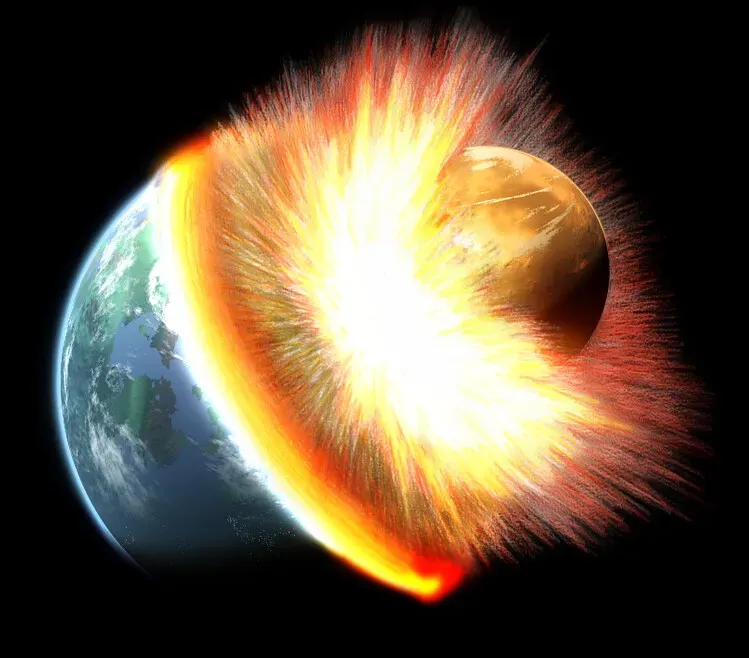
A massive object named Theia, after the mythological Greek Titan who was the mother of Selene, goddess of the Moon, smashed into Earth, flinging material into space that became the Moon. This is the leading scientific theory for how Earth’s companion formed, and it is breathtaking in its violence. You are not looking up at a calm, pale disc of rock at night. You are looking at the remnant of one of the most savage collisions in the history of the solar system.
One of the attractive features of the giant-impact hypothesis is that the formation of the Moon and Earth align. During the course of its formation, Earth is thought to have experienced dozens of collisions with planet-sized bodies, and the Moon-forming collision would have been only one such giant impact, but certainly the last significant impactor event. A new simulation even puts forth the possibility that the Moon may have formed immediately, in a matter of hours, when material from the Earth and Theia was launched directly into orbit after the impact. Hours. The Moon may have been born faster than it takes to fly from New York to London.
The Late Heavy Bombardment: A Solar System Under Siege
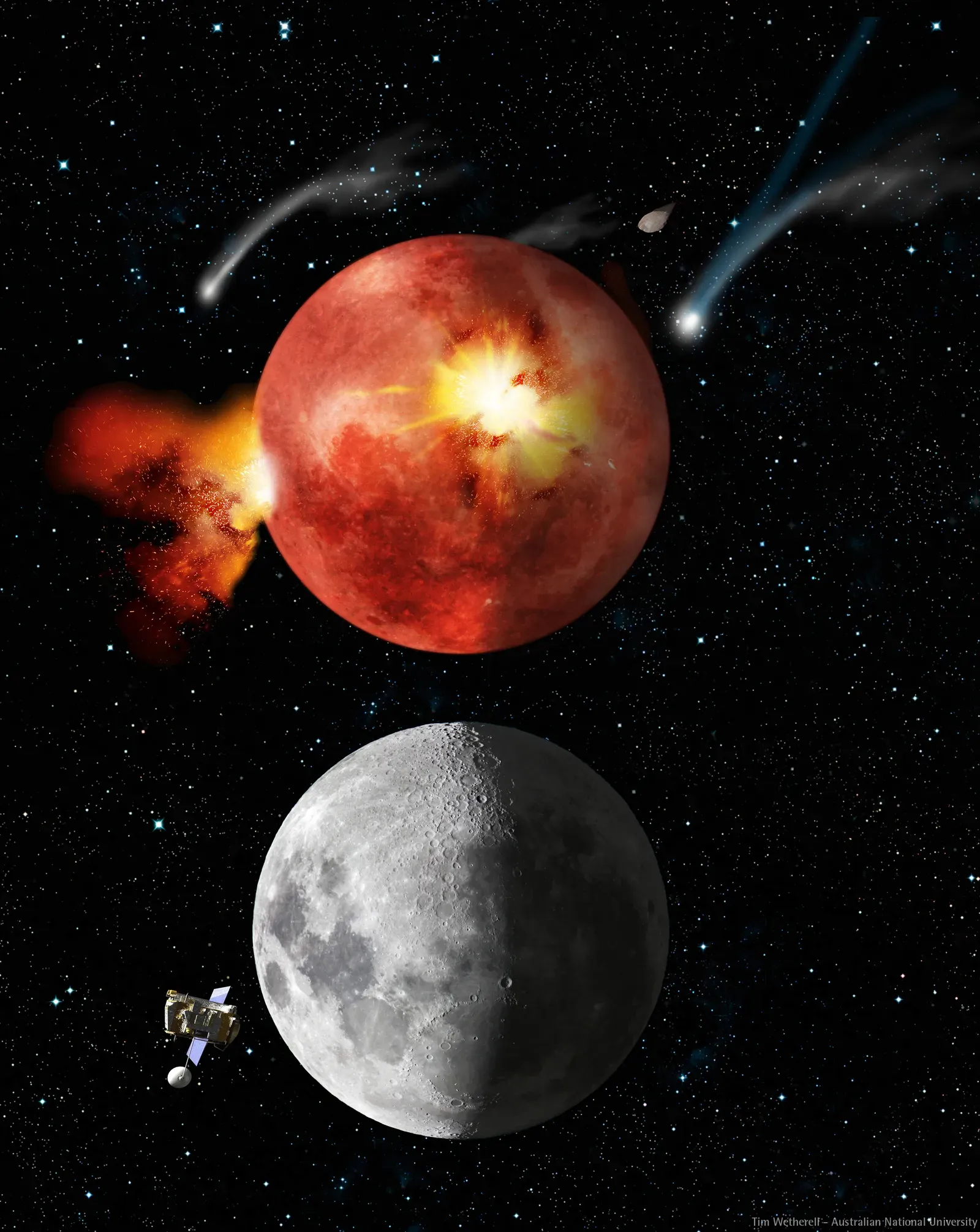
Long after the planets of the solar system formed, catastrophic collisions continued, with a climax about 4 billion years ago during an interval called the Late Heavy Bombardment. The scars of this geologic violence are evident today in the ancient cratered terrains of planetary surfaces. Imagine Earth and everything around it being pummeled, again and again, for potentially hundreds of millions of years. It sounds like something out of a nightmare, but it is written directly into the rock record of our Moon.
Around 4 billion years ago, our young inner solar system underwent a cataclysmic pummeling by asteroids that carved huge basins into Earth’s Moon. That is the theory of the Late Heavy Bombardment, which posits that a sudden change in the orbits of the giant planets threw the asteroid belt into disarray and sent those leftover pieces of the solar system’s formation crashing into the inner planets. Among the evidence for this period, thought to have lasted anywhere between 20 and 200 million years, are the scarred surfaces of the Moon, Mercury, and Venus, the distribution of asteroids in the asteroid belt, and the dates of impact melt in Moon rocks from the Apollo missions. Incredibly, this same chaotic era may have delivered water and even the raw ingredients for life to early Earth, making destruction and creation two sides of the same coin.
The Asteroid Belt: Jupiter’s Unfinished Business
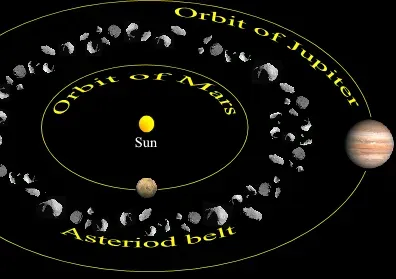
The asteroid belt occupies a torus-shaped region between 2.3 and 3.3 AU from the Sun, which lies between the orbits of Mars and Jupiter. It is thought to be remnants from the solar system’s formation that failed to coalesce because of the gravitational interference of Jupiter. In other words, what you are looking at when you picture the asteroid belt is not really a planet that exploded. It is a planet that never got the chance to be born. Jupiter’s immense gravity kept preventing it from forming, like a bully knocking down a building before the workers could finish constructing it.
As Jupiter migrated inward following its formation, resonances would have swept across the asteroid belt, dynamically exciting the region’s population and increasing their velocities relative to each other. The cumulative action of the resonances and the embryos either scattered the planetesimals away from the asteroid belt or excited their orbital inclinations and eccentricities. Some of those massive embryos too were ejected by Jupiter, while others may have migrated to the inner solar system and played a role in the final accretion of the terrestrial planets. The asteroid belt as you see it today is essentially the battered, depleted aftermath of Jupiter’s gravitational interference, and it is still being shaped to this day.
Uranus Got Knocked Sideways by Something Enormous
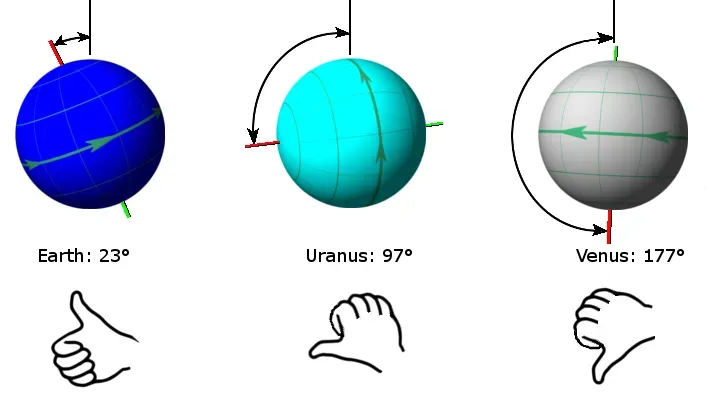
Uranus is unique among the planets in the solar system because it rotates on its side. Its axis is tilted at an angle of about 98 degrees, meaning it essentially rolls around the Sun like a ball. This extreme tilt is thought to be the result of a massive collision with an Earth-sized object billions of years ago. It is hard to even picture what kind of impact could tilt an entire planet so dramatically. Whatever hit Uranus, it hit hard enough to permanently change how the planet rotates for the rest of its existence. There are really no small incidents in the story of solar system formation.
The new history of the solar system is a tale of wandering planets evicted from their birthplaces, of lost worlds driven to fiery destruction in the Sun eons ago, and of lonely giants hurled into the frigid depths of near-interstellar space. Scientists now think that some simulations even show that additional ice giants may have formed in the early solar system, only to be kicked out entirely. Some simulations show that additional ice giants may have formed that were later kicked out of our solar system. These lost worlds are gone forever, and we can only guess at what the solar system might have looked like with them still in it.
The Galactic Environment Made Things Even More Dangerous
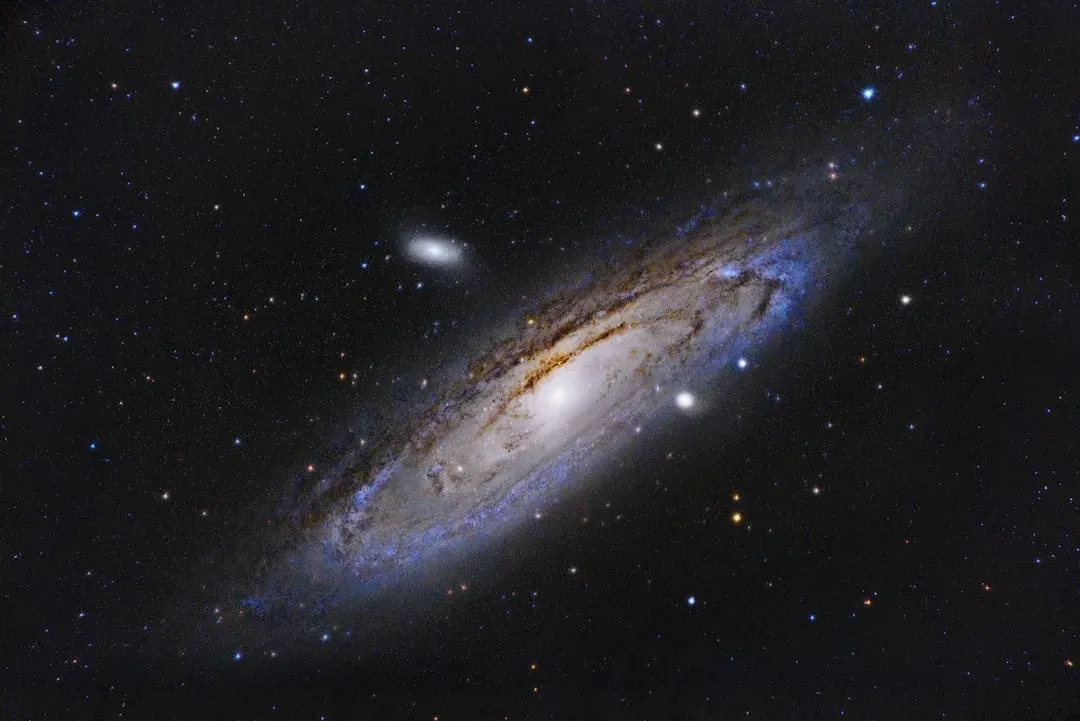
The solar system’s location in the Milky Way is a factor in the evolutionary history of life on Earth. Spiral arms are home to a far larger concentration of supernovae, gravitational instabilities, and radiation that could disrupt the solar system, but since Earth stays in the Local Spur and therefore does not pass frequently through spiral arms, this has given Earth long periods of stability for life to evolve. The location of where you were born matters, in cosmic terms just as much as in human terms. Had our solar system formed in a denser, more dangerous neighborhood of the galaxy, life as you know it might never have had a chance.
When the Sun’s orbit takes it outside the galactic disc, the influence of the galactic tide is weaker. As it re-enters the galactic disc, as it does every 20 to 25 million years, it comes under the influence of the far stronger disc tides, which, according to mathematical models, increase the flux of Oort cloud comets into the solar system by a factor of 4, leading to a massive increase in the likelihood of a devastating impact. The violence of the early solar system, it turns out, never truly ended. It merely slowed down. Every so often, the cosmos still sends a reminder of just how precarious and dynamic the space around us really is.
Conclusion: The Calm You See Was Hard Won
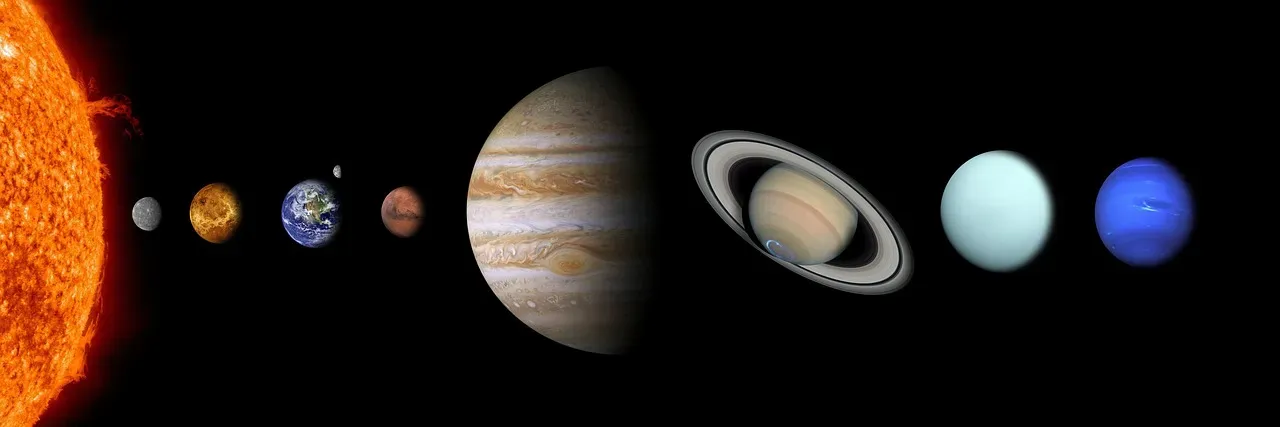
The solar system you inhabit today is not a product of gentle, predictable assembly. It is the survivor of an almost unimaginable gauntlet of collisions, migrations, orbital chaos, and bombardments that played out over hundreds of millions of years. Every planet, every moon, every asteroid has a story written in impact craters, tilted axes, and ancient chemistry. You are standing on a world that was literally forged in violence.
What makes this all so strangely beautiful is the contrast. Out of all that destruction and chaos came the conditions for oceans, for continents, for life, and eventually for creatures capable of looking back up at the stars and asking how it all began. The solar system did not become a stable home by accident. It earned it. And every scar left behind is evidence of the extraordinary, improbable journey it took to get here.
Next time you look up at the Moon, the asteroid belt, or even the tilted silhouette of Uranus in a telescope, ask yourself: what else are we still getting wrong about the world above us?
Hi, I’m Andrew, and I come from India. Experienced content specialist with a passion for writing. My forte includes health and wellness, Travel, Animals, and Nature. A nature nomad, I am obsessed with mountains and love high-altitude trekking. I have been on several Himalayan treks in India including the Everest Base Camp in Nepal, a profound experience.


