
Stand in a sunflower field or stare at the spiral shell of a nautilus long enough, and it starts to feel like the universe is quietly counting behind the scenes. That counting, incredibly, often follows the same simple string of numbers: 1, 1, 2, 3, 5, 8, and onward. The Fibonacci sequence, first formalized in medieval Italy, has become a kind of Rosetta stone for patterns that show up in plants, storms, galaxies, and even your own body. This article unpacks how such a modest bit of mathematics ends up written into living tissue and whirling clouds, and why scientists still argue over just how deep that code really runs. Along the way, it reveals a more unsettling idea: that what we call “beauty” might just be our brains recognizing a pattern nature cannot stop repeating.
A Medieval Puzzle That Quietly Rewired Mathematics
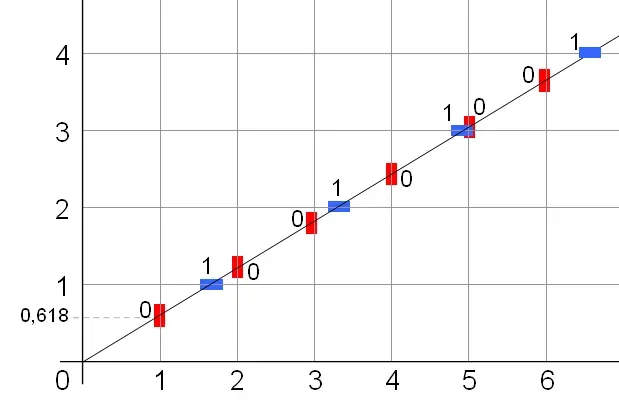
The Fibonacci sequence did not begin in a high-tech lab but in a thought experiment about breeding rabbits. In the early thirteenth century, the Italian mathematician Leonardo of Pisa, known as Fibonacci, posed a simple question in a mathematical treatise: how many pairs of rabbits will exist after a certain number of months if each pair produces another pair on a regular schedule and none die. The solution produced a sequence where each new number is the sum of the previous two, and while the rabbit assumptions are biologically unrealistic, the math turned out to be surprisingly powerful.
That rabbit problem appeared in a book that helped move Europe from clumsy Roman numerals toward more flexible Hindu–Arabic numerals and algebraic thinking. Fibonacci himself saw the sequence as one tool among many, not a mystical key to the universe. Only much later did naturalists, botanists, and physicists begin to notice that the same pattern kept reappearing in the world around them. By then, what began as a tidy bookkeeping question had become an entry point into how systems grow, self-organize, and optimize space.
Spirals in Sunflowers, Pinecones, and the Architecture of Plants
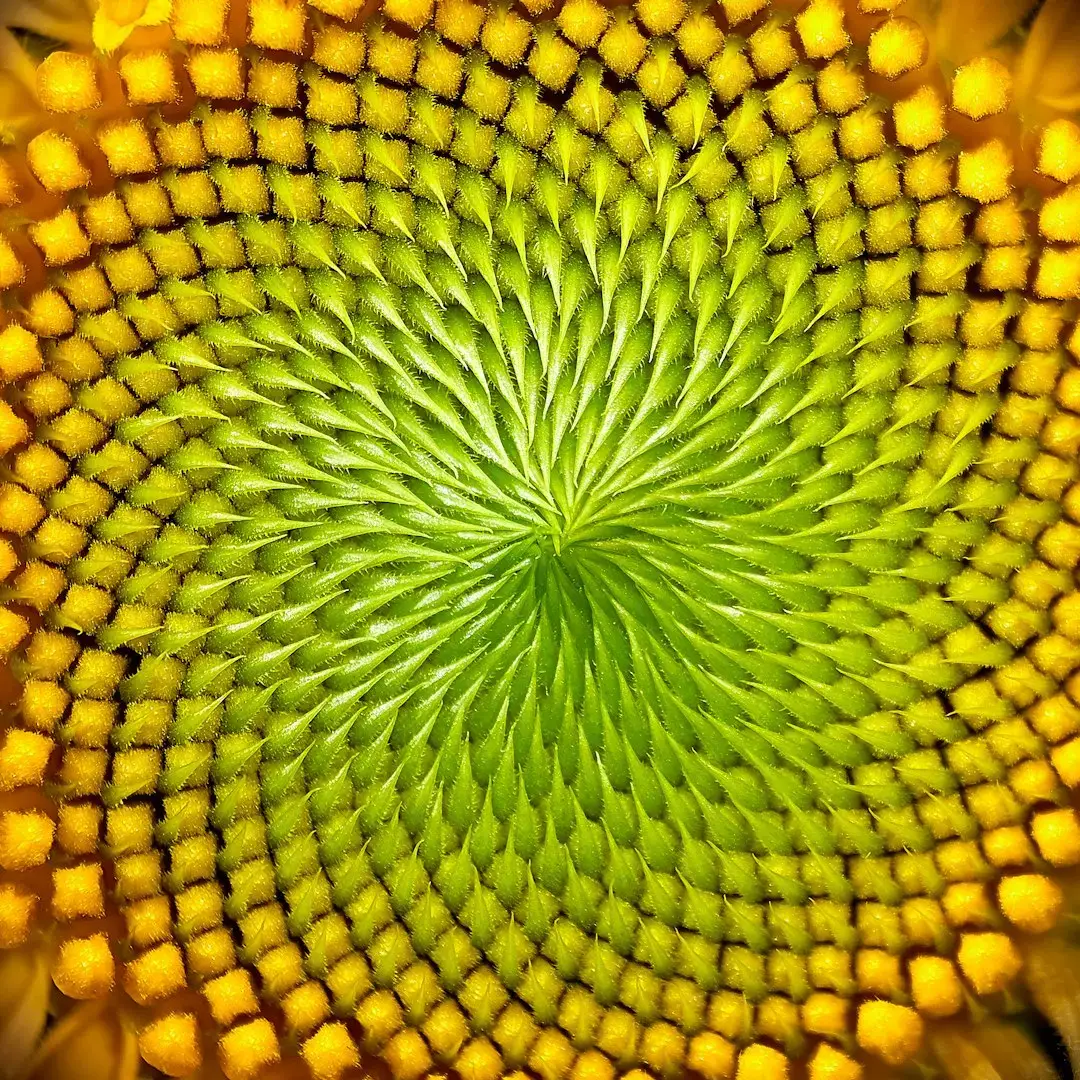
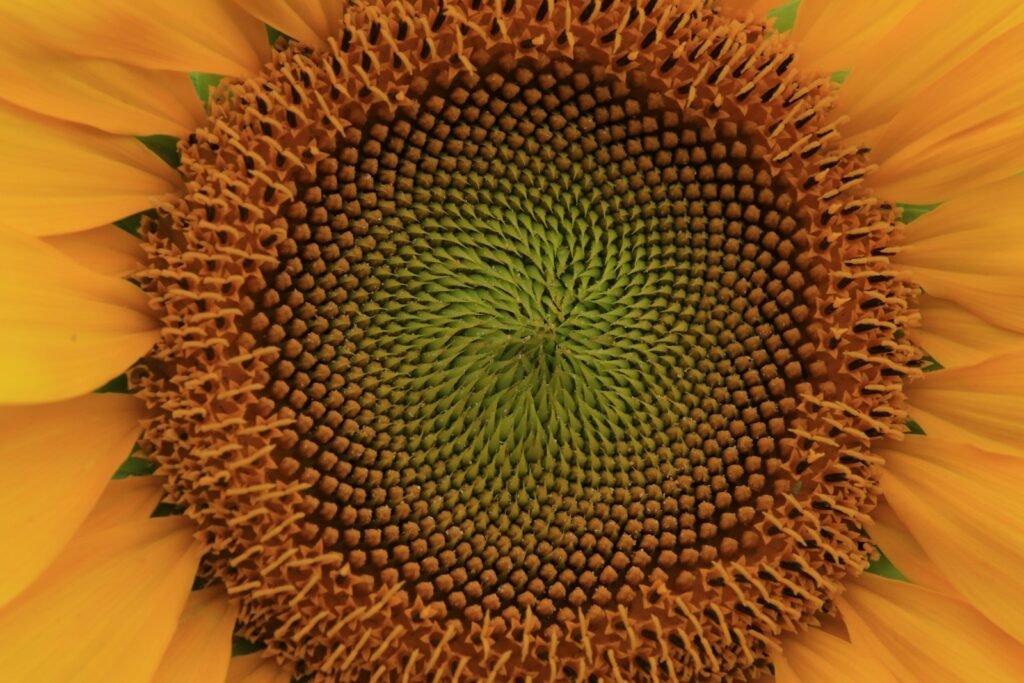
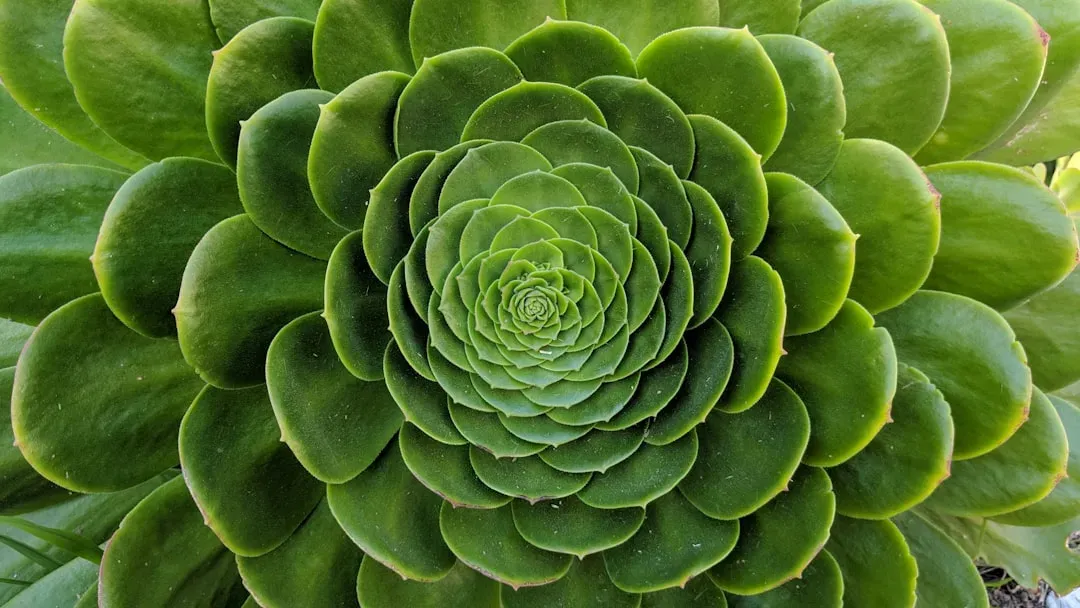
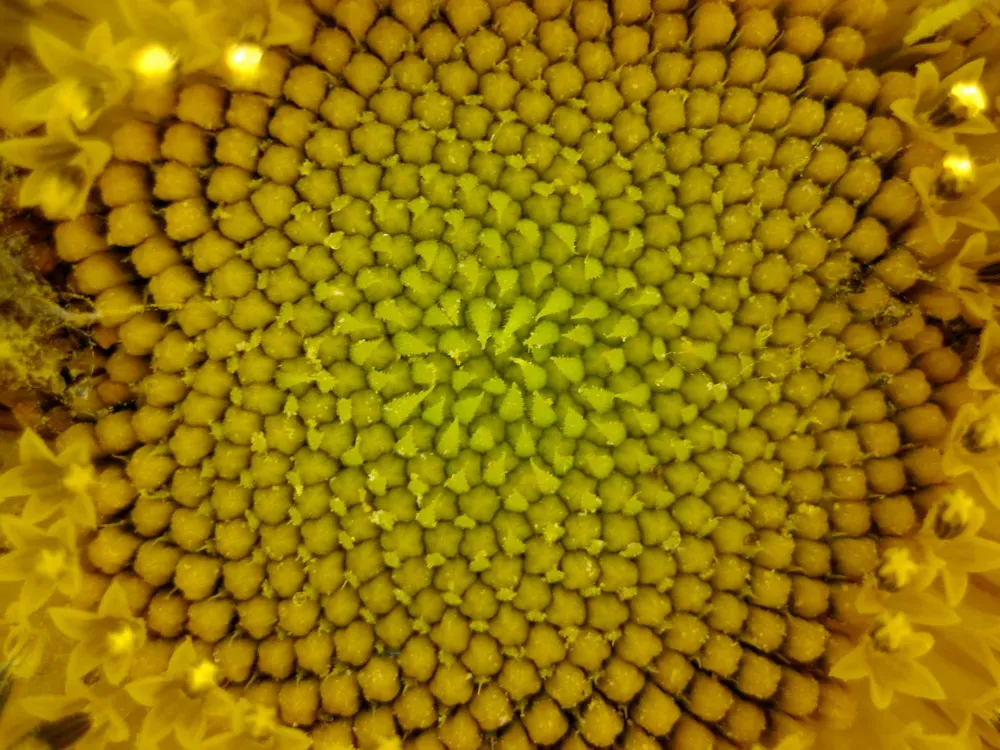
One of the most striking places the Fibonacci sequence shows up is in the way plants arrange their leaves, seeds, or petals. Look closely at the head of a sunflower and you will see two families of spirals crossing in opposite directions, with the number of spirals in each family typically matching neighboring Fibonacci numbers, such as thirty-four and fifty-five or fifty-five and eighty-nine. Botanists observe similar counts in pinecones, where the woody scales trace out intersecting spirals, and in pineapples, artichokes, and succulents.
This recurring architecture is not an aesthetic flourish but a spatial strategy. As a plant grows, new organs emerge around the stem with a turning angle that tends toward an irrational fraction of a circle related to the so-called golden angle, about two fifths of a full turn. This angle, in turn, is tightly linked to the Fibonacci sequence through a ratio that approaches the golden ratio as the numbers increase. The result is an efficient packing that lets leaves catch light without shading each other and seeds fill a disk without leaving large gaps.
The Golden Ratio Bridge: From Numbers to Shapes
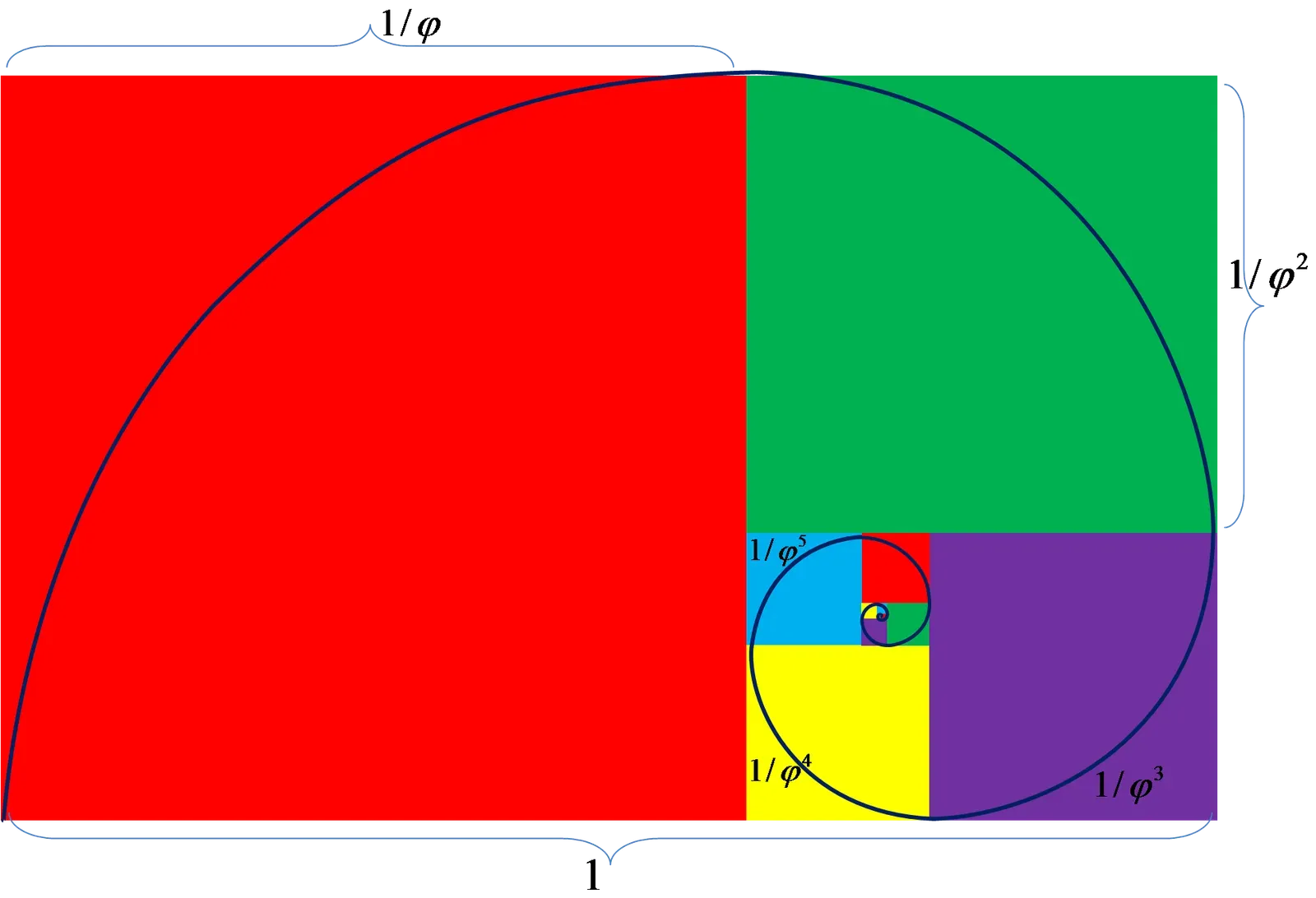
The Fibonacci sequence and the golden ratio are mathematically intertwined, and that connection helps explain why the sequence seems so “geometric” in nature. If you take any Fibonacci number and divide it by the one before it, the result approaches a special value that is a little more than one and a half. This value, often called the golden ratio, has the curious property that adding one to it simply multiplies it by itself, linking growth and self-similarity in a precise way.
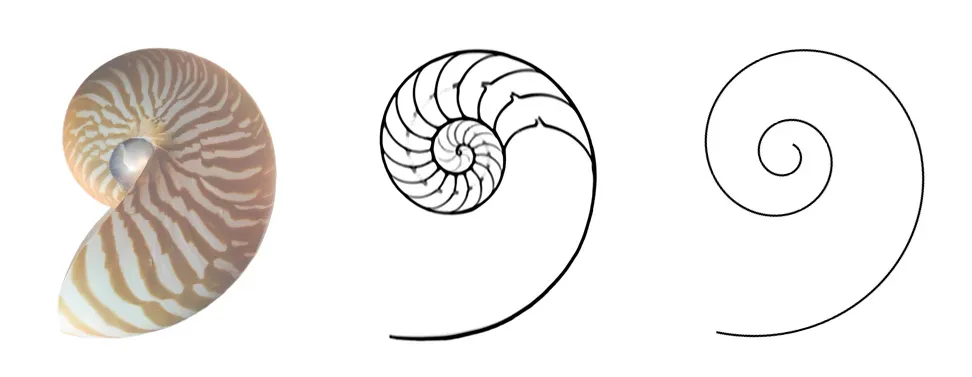
Geometrically, this ratio can be used to construct golden rectangles whose side lengths reflect this special proportion, and by nesting such rectangles you can trace out a spiral that resembles the pattern seen in shells, storms, and galaxies. While those natural spirals are rarely perfect golden spirals in a strict mathematical sense, the overlap between the models and the real shapes is often close enough to be striking. In that sense, the Fibonacci sequence is not just a list of numbers but a set of instructions for building forms that scale smoothly from small to large.
Storms, Shells, and Galaxies: How Far the Pattern Reaches
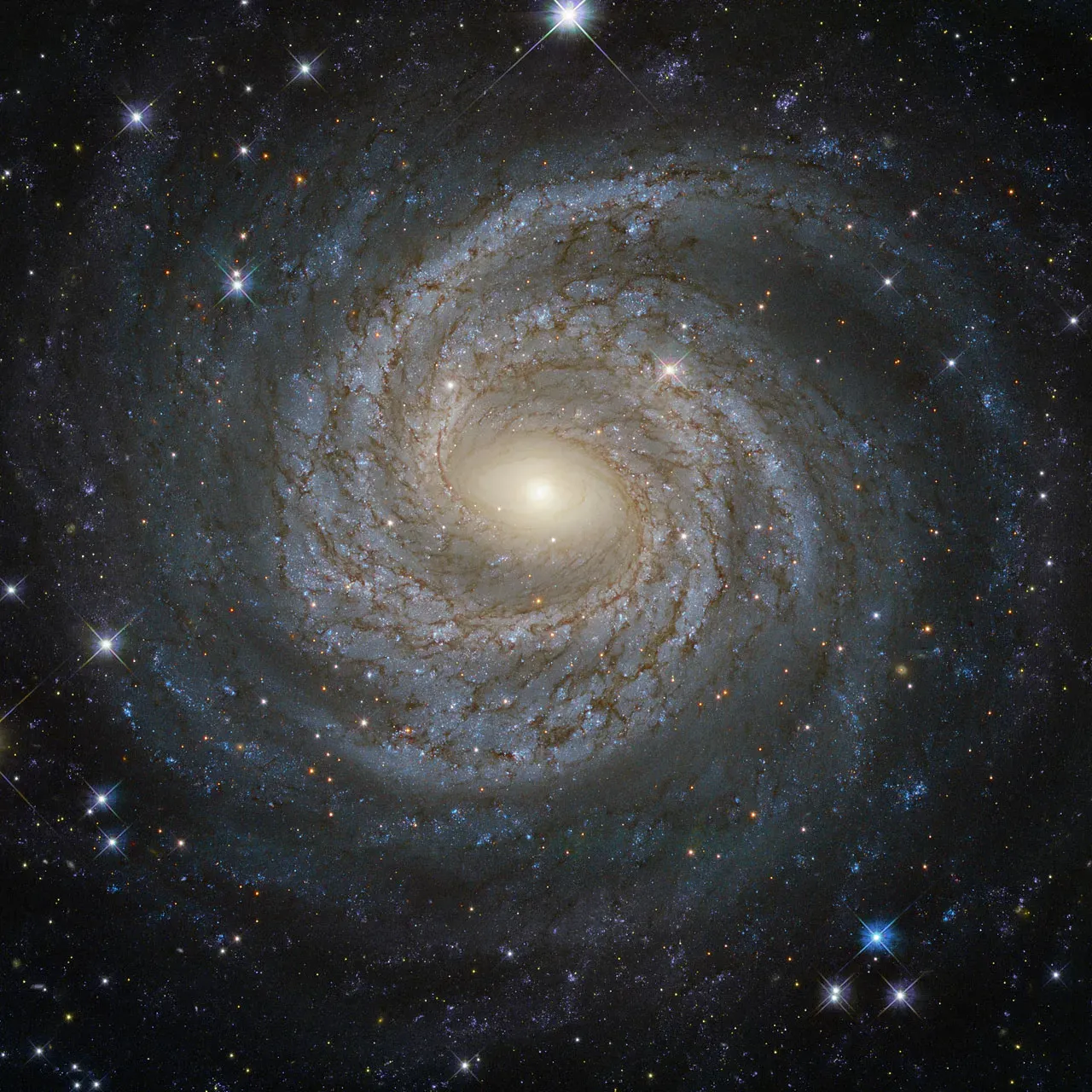
Once people started looking for Fibonacci-related spirals, they seemed to appear everywhere from the ocean floor to deep space. The chambered shells of some mollusks expand in a roughly logarithmic spiral, allowing the animal to grow without changing its overall shape, and those spirals often sit in the same visual family as Fibonacci and golden spirals. Satellite images of hurricanes reveal sweeping spiral arms of clouds coiling around an eye, shaped by the interplay of pressure, rotation, and moisture rather than any botanical rule.
On an even larger scale, the spiral arms of many galaxies curl outward in forms that can be approximated by logarithmic spirals too, driven by gravity and orbital motion. The underlying physics in these systems differs dramatically from what acts on a sprouting sunflower or an unfolding fern. Yet the common geometry suggests that when matter grows or rotates while conserving certain constraints, spirals often emerge as a natural solution. Fibonacci-linked spirals, then, are not a magical code imposed from above but a particular flavor of self-organization that keeps showing up when nature is forced to make the most of limited space and energy.
Inside the Growing Tip: How Biology “Calculates” Fibonacci
For plants, Fibonacci patterns begin in a microscopic region known as the shoot apical meristem, the tiny dome of tissue at the tip of a growing stem. Here, new leaves or flower parts are born one after another, and their positions are influenced by the concentrations of growth hormones and the mechanical pressures of tightly packed cells. As each new organ forms, it tends to appear at the spot where it experiences the least competition from existing organs, leading over time to a stable turning angle close to the golden angle.
Computer simulations that model each new organ as a dot repelled by its neighbors generate spiral patterns with Fibonacci counts remarkably similar to real plants. Genetic studies have also identified specific genes and molecular pathways that control how cells sense and respond to hormonal gradients in the meristem. Biology, in other words, is not consciously “doing Fibonacci,” but its local rules of repulsion, growth, and resource sharing produce global patterns that match the sequence. This turns the Fibonacci phenomenon from a curious coincidence into a test case for understanding how simple rules can produce complex, robust order.
Beyond Nature’s Aesthetic: Fibonacci in Finance, Coding, and Design
As the Fibonacci sequence seeped into popular culture, people began applying it far outside botany and astrophysics. Traders in financial markets sometimes use Fibonacci ratios to draw potential support and resistance levels on price charts, betting that human psychology and crowd behavior might somehow echo natural patterns of expansion and contraction. While there is no strong scientific consensus that such tools outperform more conventional analysis on their own, their widespread use illustrates how the sequence has become part of the language of risk and expectation.
In computer science and engineering, Fibonacci numbers show up in data structures, search algorithms, and even strategies for scheduling tasks or compressing information. Architects and designers occasionally use golden-ratio-like proportions for building façades, logos, or layouts, not because the universe forces those choices, but because viewers often find them pleasing and balanced. In these human-made systems, Fibonacci is less a hidden code and more a design palette, adopted because it resonates with patterns already familiar from the natural world.
The Deeper Significance: From Mystical Symbol to Scientific Testbed
For centuries, people have been tempted to treat the Fibonacci sequence as evidence of an underlying cosmic blueprint, a kind of mystical fingerprint of order. Modern science takes a more grounded view, seeing Fibonacci not as a secret message but as a recurring outcome when evolving systems try to solve certain optimization problems. When new structures must be added iteratively, with limited information and competition for space or resources, the rules that minimize interference often produce arrangements that mirror Fibonacci-related spirals and ratios.
This shift in perspective matters because it turns Fibonacci into a practical testbed rather than a metaphysical symbol. Researchers now use these patterns to probe how robust developmental programs are in plants, or how sensitive spiral galaxies are to changes in mass distribution and rotation. Comparing earlier, more romantic interpretations of Fibonacci in art and architecture with modern, mechanism-focused models highlights a broader cultural move from seeing nature as encoded with deliberate design to seeing it as the outcome of repeated constraints and selection. The wonder does not disappear in this transition; instead, it is redirected toward the elegance with which simple mathematical relationships emerge from messy, imperfect processes.
Open Questions: Where the Pattern Breaks and Why That Matters
Even in plants, where Fibonacci patterns are textbook material, the sequence is not universal, and those exceptions are scientifically important. Some species routinely deviate from Fibonacci numbers in their leaf or seed arrangements, and even classic examples like sunflowers can produce heads where the spiral counts do not match the expected neighboring values. Environmental stress, mutations, or small differences in growth rates can nudge developing organs away from the optimal angles that usually produce Fibonacci-style packing.
These “errors” challenge the idea of Fibonacci as a rigid code and instead highlight the flexibility of living systems. By studying how and when patterns break, researchers gain clues about which aspects of the developmental machinery are essential and which are more tolerant of variation. In physics and astronomy, questions remain about how often spiral structures in galaxies genuinely follow Fibonacci-like proportions versus broader families of logarithmic spirals. The ongoing work keeps the sequence at the edge of active research rather than confining it to the status of a solved curiosity.
Seeing the Hidden Code in Your Everyday World
Once you know what to look for, the Fibonacci sequence turns walks, markets, and weather apps into informal field labs. You can count the spirals on a pinecone, trace the pattern of seeds on a sunflower at the grocery store, or zoom into satellite images of swirling storms and compare their curves to simple geometric spirals. None of these activities require advanced math, only patience, attention, and a willingness to be surprised by how much structure hides in plain sight.
Teachers, parents, and curious readers can turn this into a gentle gateway to scientific thinking: guess the pattern, measure it, and see where reality agrees or disagrees with expectation. This kind of hands-on noticing builds a habit of asking not just whether a pattern exists, but how it might arise from the physical and biological rules at work. The more often you catch the world quietly counting in Fibonacci’s language, the harder it becomes to see nature as random noise. And standing in front of a sunflower, quietly adding up spirals, you might find yourself wondering what other hidden codes you have been walking past for years.
Suhail Ahmed is a passionate digital professional and nature enthusiast with over 8 years of experience in content strategy, SEO, web development, and digital operations. Alongside his freelance journey, Suhail actively contributes to nature and wildlife platforms like Discover Wildlife, where he channels his curiosity for the planet into engaging, educational storytelling.
With a strong background in managing digital ecosystems — from ecommerce stores and WordPress websites to social media and automation — Suhail merges technical precision with creative insight. His content reflects a rare balance: SEO-friendly yet deeply human, data-informed yet emotionally resonant.
Driven by a love for discovery and storytelling, Suhail believes in using digital platforms to amplify causes that matter — especially those protecting Earth’s biodiversity and inspiring sustainable living. Whether he’s managing online projects or crafting wildlife content, his goal remains the same: to inform, inspire, and leave a positive digital footprint.