

Imagine standing in the middle of a vast ocean, surrounded by billions of other waves, currents, and creatures, and still hearing absolutely nothing. No signal. No whisper. Complete and utter silence. That’s exactly the situation humanity finds itself in when staring out at a universe packed with hundreds of billions of galaxies, each teeming with stars and planets, yet somehow offering us no confirmed sign of another civilization.
It’s a puzzle that has consumed scientists, philosophers, and curious minds for decades. The numbers say there should be someone else out there. The sky says otherwise. So what’s actually going on? Let’s dive in.
The Lunch That Changed Everything: Fermi’s Famous Question

It all started with a simple question over lunch. In 1950, Enrico Fermi, the Nobel Prize-winning physicist who helped usher in the atomic age, was dining with colleagues at Los Alamos, New Mexico, when the conversation turned to extraterrestrial life. Given the vastness of the universe and the statistical likelihood of other intelligent civilizations, Fermi wondered, “Where is everybody?” The room reportedly went silent. Nobody had a good answer.
Fermi’s paradox highlights the contradiction between the high probability of extraterrestrial life, given the universe’s age and vast number of habitable planets, and the lack of contact with alien civilizations. Proposed explanations include the rarity of life, technological or self-destructive barriers known as the “great filter,” deliberate alien avoidance, or limitations in human detection methods. Honestly, when you look at the numbers, it feels almost offensive that we have found nothing.
The Milky Way is around 10 billion years old and is home to more than 100 billion stars, which suggests there is likely a mind-boggling number of potentially habitable planets in our home galaxy alone. If interstellar travel is possible, even the “slow” kind nearly within the reach of Earth technology, it would only take from 5 million to 50 million years to colonize the galaxy. In the grand cosmic timeline, that’s barely a coffee break.
The Drake Equation: Doing the Math on Alien Civilization
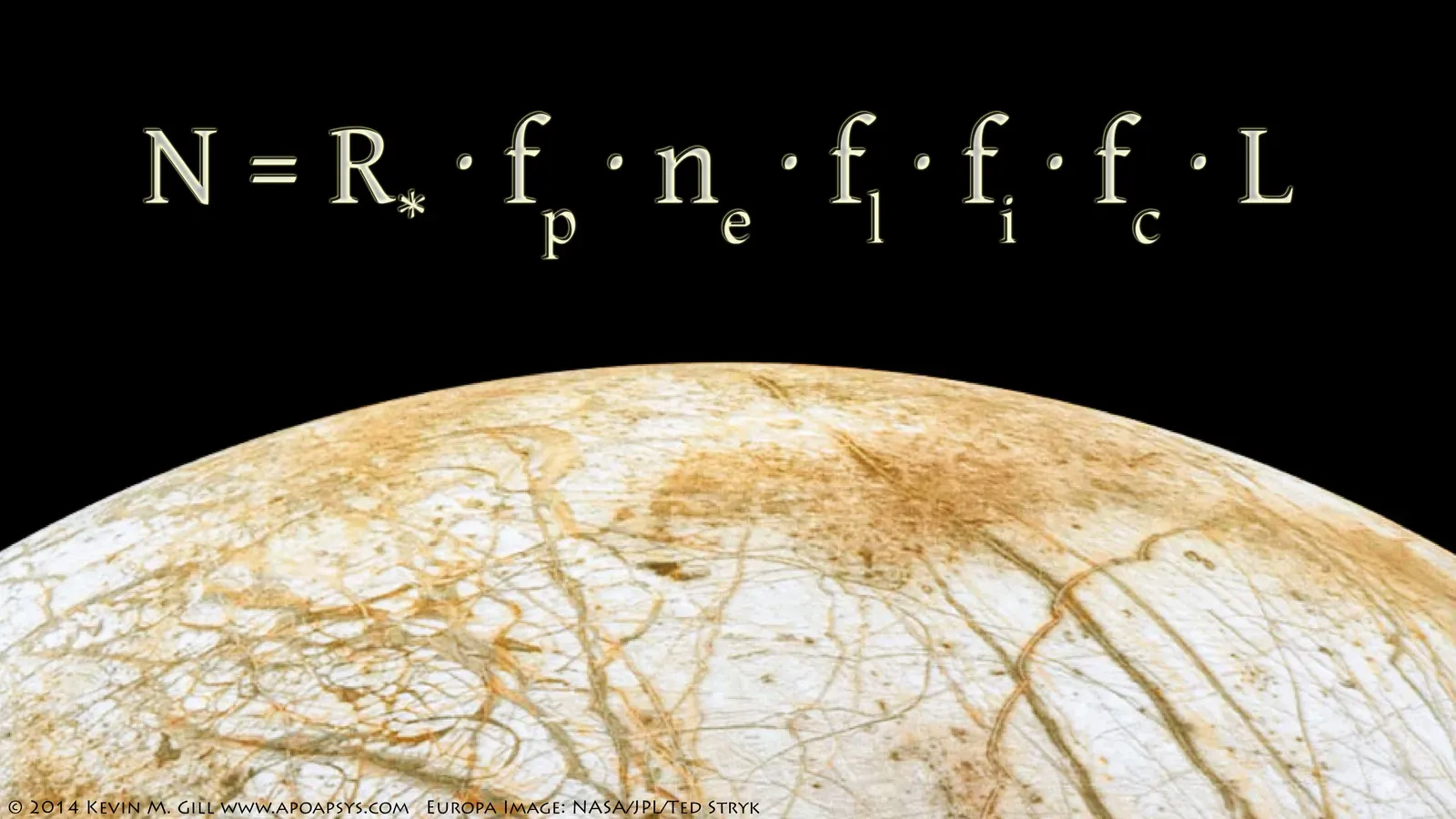
Frank Drake created his famous equation to serve as part of the agenda for a meeting of experts held in West Virginia in 1961. It is a probabilistic equation for estimating the number of extraterrestrial civilizations in the Milky Way galaxy with technology that can be detected by humans, estimating N, the number of transmitting societies in the galaxy. Think of it as humanity’s very first serious attempt to put a number on cosmic company.
Criticism of the Drake equation is varied. Many of the terms in the equation are largely or entirely based on conjecture, as star formation rates are well-known and the incidence of planets has a sound theoretical and observational basis, but the other terms become very speculative. In November 2013, astronomers reported, based on Kepler space telescope data, that there could be as many as 40 billion Earth-sized planets orbiting in the habitable zones of sun-like stars and red dwarf stars within the Milky Way, with 11 billion of these estimated planets possibly orbiting sun-like stars. The planets are there, alright. The civilizations, apparently, are not.
At least 75 speculative solutions to Fermi’s paradox have been proposed so far, according to a 2015 book, and more have likely been added since. While the Drake Equation cannot be “solved” or even accurately calculated, it retains considerable utility for discussions about extraterrestrial life and intelligence. It’s a bit like a recipe that lists “unknown amount” for most of its ingredients. Useful as a concept, maddening in practice.
The Great Filter: A Wall Most Life Cannot Climb

In the 1990s, another possible explanation for our apparent aloneness in the universe was formulated by Robin Hanson, a postulate that has become known as the Great Filter. Simply stated, the Great Filter says that intelligent interstellar lifeforms must first take many critical steps, and at least one of these steps must be highly improbable. Indeed, the premise of the Great Filter is that there is at least one hurdle that is so high virtually no species can clear it and move on to the next.
Some scientists think that the silence is the product of something they have coined the Great Filter, an evolutionary wall impermeable to most life. For these scientists, there are two basic possibilities regarding the Great Filter: it is either behind us or in front of us. If it is behind us, scientists have speculated that it may have occurred at the creation of life itself or at the jump from single-cell prokaryotes to multicell eukaryotes.
Existential risks or self-destruction might prevent advanced civilizations from persisting long enough to make contact. Known as the Great Filter theory, this explanation posits that there is a near-universal hurdle, either before or after the emergence of intelligent life, that most civilizations fail to overcome. This obstacle might involve planetary or galaxy-wide catastrophes, such as asteroid impacts, supernovae, or ecological collapse, that extinguish intelligent life before it advances to interstellar travel or communication. Here’s the thing – if the filter is still ahead of us rather than behind us, that’s a genuinely terrifying conclusion.
The Dark Forest Hypothesis: The Universe as a Hunting Ground
The dark forest hypothesis is the idea that extraterrestrial civilizations may exist in abundance across the universe, but remain silent and hidden out of fear that revealing themselves would lead to destruction by a more technologically advanced and hostile civilization. It is one of several proposed explanations of the Fermi paradox, which contrasts the apparently high probability of extraterrestrial life with the lack of evidence for it. I know it sounds crazy, but this idea has a terrifying internal logic to it.
The Dark Forest hypothesis argues that the intentions of any newly contacted civilization can never be known, meaning that if one is encountered, it is best to shoot first and ask questions later to avoid the destruction of one’s own species. As a result, all advanced civilizations keep silent, with any who stick their heads above the parapet destroyed by those fearful of their intentions. This taciturn pact of mutually assured destruction is what ensures the silence we observe in the cosmos.
Perhaps even more chillingly, humanity has not been silent. We have announced our presence: both deliberately by sending messages and unintentionally through our “radio bubble” of radio and TV signals which leak into space. If the dark forest hypothesis is correct, we have essentially been shouting into a jungle full of armed hunters. Not exactly a comforting thought for a Tuesday evening.
The Rare Earth Hypothesis and the Zoo Hypothesis: Two Opposite Extremes
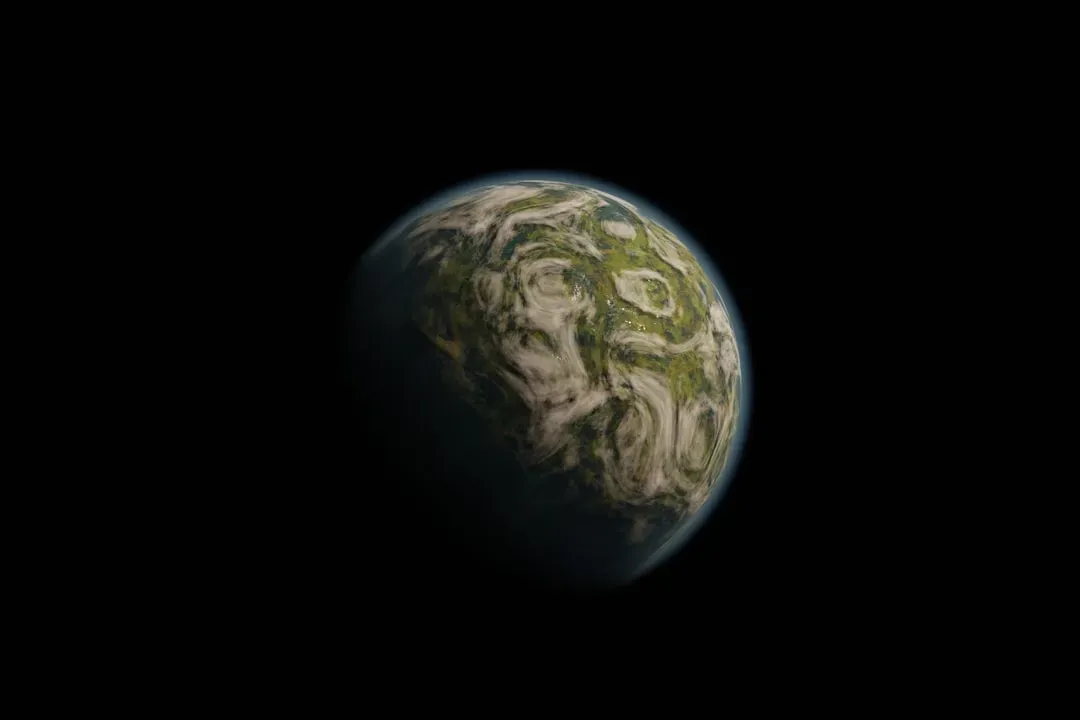
The Rare Earth hypothesis argues that the origin of life and the evolution of biological complexity, such as sexually reproducing, multicellular organisms on Earth, and subsequently human intelligence, required an improbable combination of astrophysical and geological events and circumstances. According to the hypothesis, complex extraterrestrial life is an improbable phenomenon and likely to be rare throughout the universe as a whole.
Planetary magnetic fields, axial stability, tectonic recycling, atmospheric chemistry, and long-term climate balance all appear tightly constrained. The diversity revealed among Earth-like planets shows that small differences can produce radically different outcomes. This line of reasoning strengthens what is known as the Rare Earth Hypothesis. Think of it like a lock with ten thousand tumblers. Earth happened to have the right key. Everyone else might still be fumbling.
At the complete opposite end of the spectrum sits the Zoo Hypothesis. The hypothesis states that extraterrestrial life intentionally avoids communication with Earth to allow for natural evolution and sociocultural development, and avoiding interplanetary contamination, similar to people observing animals at a zoo. Extraterrestrial life forms might, for example, choose to allow contact once the human species has passed certain technological, political, or ethical standards. Alternatively, they may withhold contact until humans force contact upon them, possibly by sending a spacecraft to an extraterrestrial-inhabited planet. We could literally be the cosmic equivalent of a nature reserve, watched quietly from a distance.
Civilizations That Destroy Themselves: The Terrifying Self-Destruction Explanation

One of the more unsettling explanations is that intelligent civilizations tend to destroy themselves before they become interstellar. Technological advancement brings immense power. Nuclear weapons, engineered pathogens, environmental collapse, and artificial intelligence risks are all consequences of advanced technology. A civilization may reach a point where its destructive capacity exceeds its wisdom. Sound familiar? Humanity has been flirting with that edge for decades.
If technological civilizations commonly self-destruct within a few hundred or thousand years of developing advanced capabilities, then the window during which they emit detectable signals may be brief. Given the vast timescales of the galaxy, civilizations could rise and fall without overlapping in time. It is a little like two ships that never quite sail through the same patch of ocean at the same time.
Humanity has only been scanning the skies for a few decades, an eye blink in cosmic history. Advanced civilizations could rise and fall in cycles, missing each other in time. Human radio leakage has existed for roughly a century, which is microscopic against cosmic time. Our detection tools are young and our search radius is limited. It’s honestly hard to say for sure, but we may simply be too early, too late, or too limited to find anyone at all.
Conclusion: The Question That Defines Us

The Fermi Paradox is not just a scientific riddle. It touches something deeper. The Fermi Paradox carries emotional weight. If life is rare, then Earth is extraordinarily precious. If intelligent civilizations tend to self-destruct, then our survival is fragile. If advanced beings are watching silently, then we are part of a larger cosmic narrative we do not yet understand.
A review of attempted solutions to the paradox concludes that either extraterrestrial technological civilizations are extremely rare or absent in the Galaxy, or they exist but are deliberately hiding from us, a scenario generally known as the “zoo hypothesis.” In this sense, the answer to the Fermi paradox may simply be “the zoo hypothesis or nothing.” Humanity may be able to distinguish between these two alternatives within the next half-century.
Without more data, a signal, an artifact, or conclusive proof of absence, all these solutions remain speculation. The paradox is not a statement of fact about the universe, but a reflection of the limits of our own knowledge. It is the gap between what seems probable and what we can actually observe. And perhaps that gap is the most revealing thing of all. In searching for others, we end up learning more about ourselves than we ever expected.
So let me ask you this: of all the explanations you have just read, which one keeps you up at night? Share your thoughts in the comments below.