

The Fermi Paradox Revisited (Image Credits: Dailygalaxy.com)
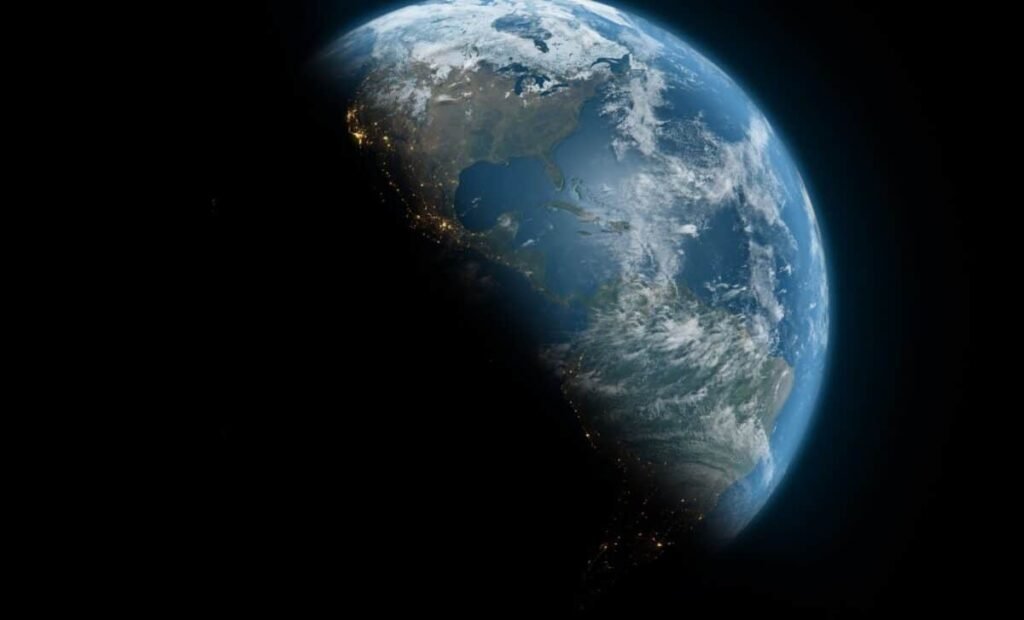
The vast expanse of the Milky Way, home to billions of stars, prompts a profound question about humanity’s place in the universe.
The Fermi Paradox Revisited
Enrico Fermi’s famous query from 1950 – “Where is everybody?” – continues to echo through astrophysics, highlighting the apparent contradiction between the high probability of extraterrestrial life and the lack of evidence for it. Scientists have long estimated that our galaxy could host numerous habitable planets, yet no signals or signs of intelligent civilizations have emerged. This paradox gained renewed attention in recent years as telescopes like Kepler and TESS revealed thousands of exoplanets, many in habitable zones.
Researchers now explore solutions that emphasize rarity over absence. For instance, the Drake Equation, which calculates the number of communicative civilizations, relies on variables like the rate of star formation and the fraction of planets that develop life. Adjustments to these factors suggest that intelligent life might arise infrequently, confined to specific conditions our own planet barely met. Though the equation remains speculative, it underscores how small tweaks in assumptions can explain the silence.
Harsh Barriers to Life’s Spread
Astrophysical conditions in the galaxy impose formidable obstacles to the emergence and persistence of complex life. Intense radiation from supernovae and black holes can sterilize entire regions, while galactic collisions disrupt planetary systems over billions of years. Studies indicate that only a narrow window of stability around stars like our Sun allows for the prolonged evolution needed for intelligence to develop.
Moreover, the sheer scale of interstellar distances plays a critical role. Even at light speed, traveling between stars takes years or centuries, rendering interstellar communication or travel impractical for most civilizations. This isolation effect, often called the “great filter,” proposes that some evolutionary hurdle – perhaps transitioning from single-celled to multicellular life – proves insurmountable for most species. Evidence from Earth’s own history supports this, as complex life took nearly four billion years to appear here.
Cosmic Voids and Uneven Distributions
Recent observations challenge the assumption of a uniform universe, suggesting our galaxy resides in a vast cosmic void. Data from surveys like the Sloan Digital Sky Survey reveal underdense regions spanning billions of light-years, where matter density drops by about 20 percent compared to average. This positioning could skew our view, making distant galaxies appear sparser and reducing the odds of nearby habitable worlds.
Such voids influence galaxy formation and star distribution, potentially limiting the number of systems capable of fostering life. Astrophysicists argue that these large-scale structures explain why we detect so few Earth-like planets in our local cosmic neighborhood. While the universe teems with galaxies overall, our void’s relative emptiness amplifies the sense of solitude, aligning with the lack of detected technosignatures from advanced societies.
Implications for the Search for Life
Despite these isolating factors, ongoing missions like NASA’s James Webb Space Telescope push boundaries by analyzing exoplanet atmospheres for biosignatures such as oxygen or methane. Preliminary findings show promising candidates, yet none confirm life beyond microbes. The focus has shifted toward understanding why intelligent life seems confined, with theories emphasizing self-limitation – civilizations might avoid expansion to preserve resources or evade detection.
Here are key astrophysical reasons contributing to our potential isolation:
- Vast distances that hinder communication and travel.
- Rare windows of galactic stability for life’s evolution.
- Cosmic voids reducing local density of habitable systems.
- Evolutionary “great filters” that few species overcome.
- High-energy events like supernovae that disrupt planetary habitability.
Key Takeaways
- The galaxy’s structure favors isolation over abundance of life.
- Drake Equation variables highlight the fragility of intelligent development.
- Future telescopes may clarify if solitude stems from rarity or undetected presence.
As astrophysicists refine models of cosmic habitability, the silence of the stars invites reflection on our unique journey. What steps should humanity take next in this quest for cosmic companionship? Share your thoughts in the comments.