
You’ve probably had one of those days where five minutes feels like an hour, or a whole week vanishes in what seems like a blink. Maybe you brushed it off as stress, boredom, or just a quirky habit of the mind. Here’s the thing, though – what if the real explanation goes far deeper than mood or distraction? What if the way you experience time isn’t just psychological, but is rooted in something almost impossibly strange: the quantum fabric of reality itself?
This isn’t science fiction. Researchers from neuroscience, physics, and philosophy are converging on a staggering possibility. Your sense that time “flows” forward, that the past is fixed and the future is open, may not be a feature of the universe at all. It might be something your brain is actively constructing, possibly through mechanisms operating at the quantum scale. Buckle up. This one goes deep.
Time Is Not What You Think It Is
Let’s start with the most uncomfortable truth of all: time, as physics describes it, looks nothing like the time you experience. In classical Newtonian mechanics, time is a steady background river. In Einstein’s relativity, it bends, stretches, and slows depending on gravity and velocity. Neither version resembles the vivid, rushing “now” that you feel pulling you forward from moment to moment.
The interesting thing about time is that it is not like a river that runs, but rather like a train laying down its own tracks – time is something your brain has to be actively constructing. Whether time is a reality of the physical world at all or merely an artificial construct of the human mind is a heavily debated topic in philosophy and quantum physics. Honestly, that sentence alone should stop you cold. You aren’t passively receiving time. You are, in a very real sense, making it up – or at least assembling it from raw ingredients your brain selects.
There is one unsurmountable bridge between neuroscience and physics: the fact that the interpretation of laws of physics is filtered through a computational device that did not evolve to understand the mysteries of the universe. The brain is a product of haphazard evolutionary design, and thus constrained by limitations, biases, and bugs. In other words, you’re trying to understand the cosmos using a tool that was shaped by survival pressures on an African savanna, not by the demands of quantum physics.
Your Brain Builds Time from Scratch
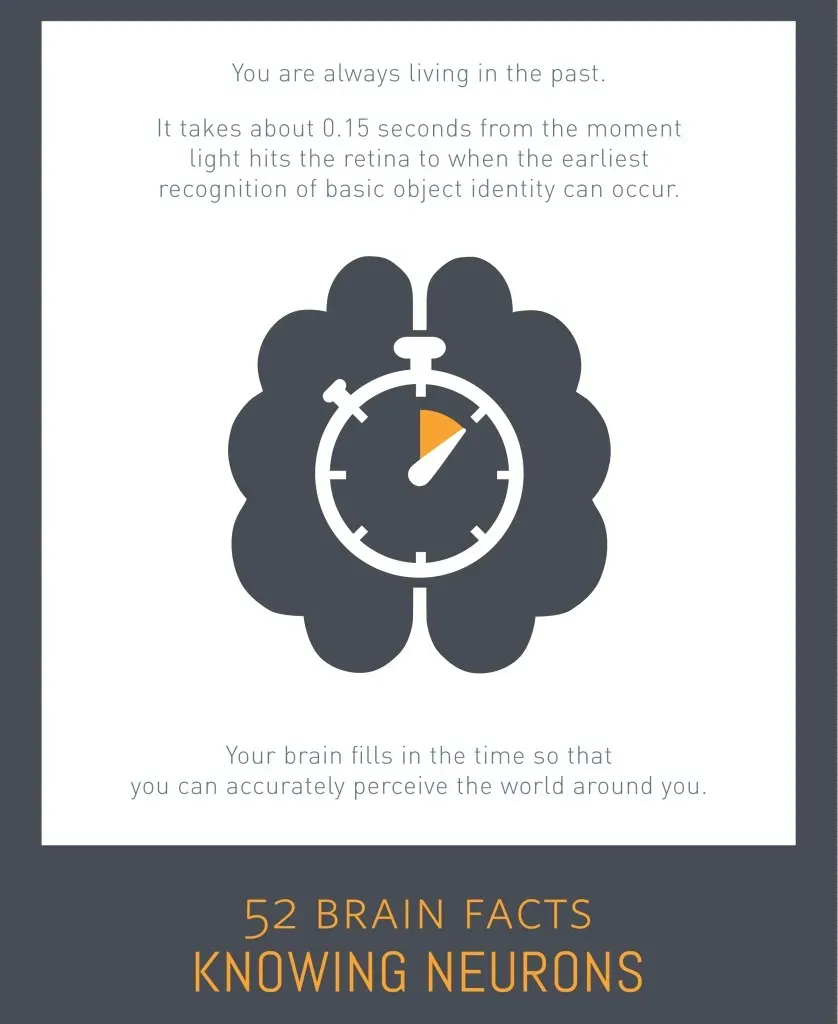
Although the perception of time is not associated with a specific sensory system, psychologists and neuroscientists suggest that humans do have a system, or several complementary systems, governing the perception of time. Time perception is handled by a highly distributed system involving the prefrontal cortex, cerebellum and basal ganglia. One particular component, the suprachiasmatic nucleus, is responsible for the circadian rhythm, while other cell clusters appear to be capable of shorter timekeeping.
Your sense of time is unlike your other senses because you do not so much sense it as perceive it. There is no single sensory organ responsible for the encoding of time, and this causes the neuroscience behind the way you process time to be complicated. Essentially, your brain takes information from the senses and organizes it in a way that makes sense, before you ever perceive it. Think of it like a movie editor cutting footage: the final experience of “now” you receive is already a polished product, assembled backstage without your input or awareness.
The Quantum Vacuum and the Conscious Brain
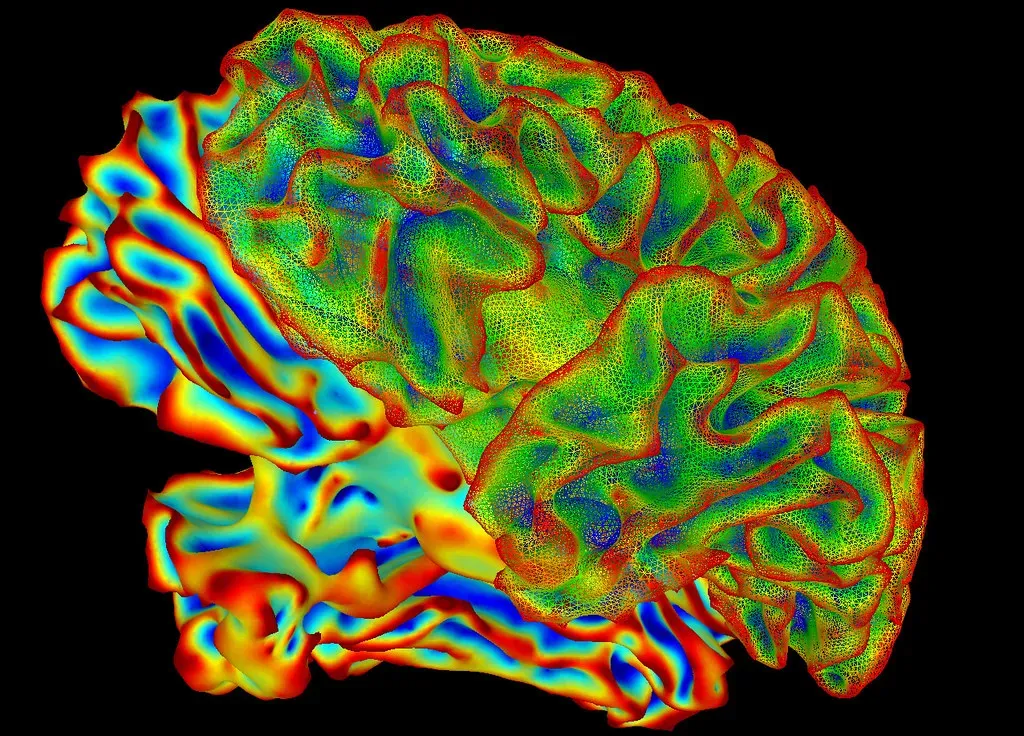
What if your conscious experiences were not just the chatter of neurons, but were connected to the hum of the universe? New evidence published in Frontiers in Human Neuroscience indicates that conscious states may arise from the brain’s capacity to resonate with the quantum vacuum – the zero-point field that permeates all of space. I know it sounds crazy, but this isn’t fringe speculation from a sci-fi blog. It’s peer-reviewed science.
The answer lies in quantum electrodynamics (QED), the fundamental theory of electromagnetism. In this theory, the vacuum is not empty but filled with a fluctuating ocean of energy known as the electromagnetic zero-point field (ZPF). QED-based model calculations demonstrate that specific frequencies of the ZPF can resonate with glutamate, the brain’s most abundant neurotransmitter. The resonant interaction takes place in microcolumns, cortical units made up of about 100 neurons bathed in a glutamate pool. Your brain, it seems, may literally be tuned to the universe like a radio receiver.
The Orch OR Theory: When Consciousness Collapses Time
Orchestrated objective reduction (Orch OR) is a controversial theory postulating that consciousness originates at the quantum level inside neurons, rather than being a product of neural connections. The mechanism is held to be a quantum process called objective reduction that is orchestrated by cellular structures called microtubules. It is proposed that the theory may answer the hard problem of consciousness and provide a mechanism for free will. The hypothesis was put forward in the 1990s by physicist Roger Penrose and anesthesiologist Stuart Hameroff.
An important point in the Orch OR model is the breaking of time-reversal symmetry. Whether this asymmetry stems from a deterministic, non-computable law governing quantum state reduction, or from nonadiabatic transitions and interactions with dissipative classical environments, time-irreversible dynamics appears intrinsically linked to the conscious perception of the unidirectional flow of time. In plain terms: the reason time feels like it only moves forward may be a direct consequence of quantum events collapsing inside your neurons. Your experience of “past” and “future” might literally be a side effect of quantum mechanics at work inside your own skull.
Consciousness First, Then Time – A Radical New Theory

Here’s where things get genuinely mind-bending. Most of us assume that time and space exist first, and then consciousness appears inside them. A growing body of scientific thought flips that assumption entirely. Consciousness is fundamental; only thereafter do time, space and matter arise. This is the starting point for a new theoretical model of the nature of reality, presented by Maria Strømme, Professor of Materials Science at Uppsala University, published in AIP Advances.
The article presents a framework in which consciousness is not viewed as a byproduct of brain activity, but as a fundamental field underlying everything we experience – matter, space, time, and life itself. Think about that metaphor carefully. If consciousness is the canvas rather than the painting, then your experience of time isn’t happening inside reality. Reality might be happening inside your experience of time. Consciousness represents universal awareness that enables the perception of space, time, and matter. It acts as a substrate, giving structure and form to the formless potential of the mind and bridging the infinite and the physical.
When Emotions and Fear Warp Your Clock

You’ve felt this before, even if you didn’t realize it was physics. Time slows to a crawl during a car accident. A first date flashes by. A boring meeting drags for what feels like geological epochs. People shown extracts from films known to induce fear often overestimated the elapsed time of a subsequently presented visual stimulus. It is argued that fear prompts a state of arousal in the amygdala, which increases the rate of a hypothesized internal clock. This could be the result of an evolved defensive mechanism triggered by a threatening situation.
Time notion is dependent on intrinsic emotional state and extrinsic context, in which relations between emotion and time do not distort the function of the internal clock but change how the clock adapts to events. This indicates that there is no such thing as homogenous time, but rather multiple experiences of time, and these reflect the way the brain adapts to diverse temporal scales. So your emotional state doesn’t just color your experience – it literally reshapes the architecture of how your brain processes when things happen. You aren’t sharing one universal clock with anyone else. You are each running your own.
Quantum Computing, the Brain, and What Comes Next
Hartmut Neven, a physicist and computational neuroscientist leading Google’s Quantum Artificial Intelligence Lab, believes quantum computing could help explore consciousness. Neven outlined experiments and theories suggesting consciousness might emerge from quantum phenomena, such as entanglement and superposition, within the human brain. He proposes leveraging quantum computers to test these ideas, potentially expanding our understanding of how the mind interacts with the physical world.
A new study from Chapman University argues that neither quantum physics alone nor classical physics alone can sustain something as fundamental as agency – the ability to model the world, evaluate choices and act on purpose. The finding hints that consciousness, and even artificial intelligence, may depend on physical processes that straddle the quantum-classical divide rather than reside purely in one realm. The implication? Your conscious experience of time might live precisely in that strange borderland where quantum potential crystallizes into the definite, classical “now” you call the present moment. Not fully quantum. Not fully classical. Something altogether stranger and more wonderful than either.
Conclusion: The Clock Was Never What You Thought
Here’s what all of this circles back to, in the end. The smooth, forward-flowing river of time you experience every day is not a given. It’s a construction – assembled by your brain, shaped by your emotions, potentially rooted in quantum processes happening at scales a billion times smaller than a human hair. Scientists from Oxford, Uppsala, Google, and dozens of other institutions are now, in 2026, genuinely grappling with whether your sense of “now” is actually a quantum event repeating itself across your consciousness like a cosmic heartbeat.
Does that change anything for you, practically speaking? Probably not what time your alarm goes off tomorrow. Still, there’s something quietly extraordinary about knowing that the most familiar thing in your life – the feeling of time passing – might be one of the universe’s deepest unsolved mysteries, playing out not in some distant galaxy, but right inside your own mind. What would you do differently if you knew time was something you were building, rather than something happening to you?