
Time travel has a way of grabbing your imagination and refusing to let go. One moment you’re just daydreaming, and the next you’re wondering whether you could step into a machine, press a few buttons, and go back to fix the one decision that still keeps you up at night. It feels like pure science fiction, yet modern physics keeps hinting, quietly but persistently, that reality might be a lot stranger than we were told in school.
I still remember sitting in a late-night physics lecture, hearing for the first time that time is not some universal ticking clock, but something stretchy, flexible, and relative. It was unsettling, almost like discovering that gravity only works on weekdays. From that moment, the question stopped being “Is time travel ridiculous?” and turned into a more uncomfortable one: “If the laws of nature allow it, why haven’t we seen it?”
Einstein’s Relativity: Time Already Travels (Just Not How You Want)
Here’s the first surprising twist: a kind of time travel already happens, and it’s been measured. According to Einstein’s theory of special relativity, time doesn’t flow at the same rate for everyone; it depends on how fast you’re moving. Clocks on fast-moving airplanes or satellites tick ever so slightly slower than clocks on the ground, and this isn’t just theory – we’ve checked it with highly precise atomic clocks and had to correct for it to make GPS systems work properly.
In a sense, astronauts on the International Space Station come back to Earth having experienced a tiny bit less time than the people who stayed here, meaning they’ve “traveled” a fraction of a second into the future. That sounds trivial, but it proves something profound: time is not fixed, and our experience of it can be stretched. The catch is that this kind of time travel only lets you go forward and only by small amounts unless you move at speeds close to light, which is currently far beyond our engineering abilities.
Time Dilation and the One-Way Ticket to the Future

If you pushed Einstein’s equations to the extreme and built a spaceship that could fly at a significant fraction of the speed of light, strange things would happen to your personal timeline. While only a few years might pass for you aboard the ship, decades – or even centuries – could pass back on Earth. This is sometimes called the “twin paradox,” where one twin travels at near-light speed and returns younger than the twin who stayed behind.
This isn’t a paradox in the sense of a contradiction; it’s just how spacetime works when you move fast. So, in principle, if humanity someday builds such a ship, a crew could leave, travel near light speed, and arrive in Earth’s far future, having aged far less than the rest of humanity. This kind of time travel is completely compatible with what we know from physics today. The real barrier isn’t the math – it’s the staggering amount of energy, engineering, and survival challenges that stand in the way.
General Relativity and the Weirdness of Closed Timelike Curves
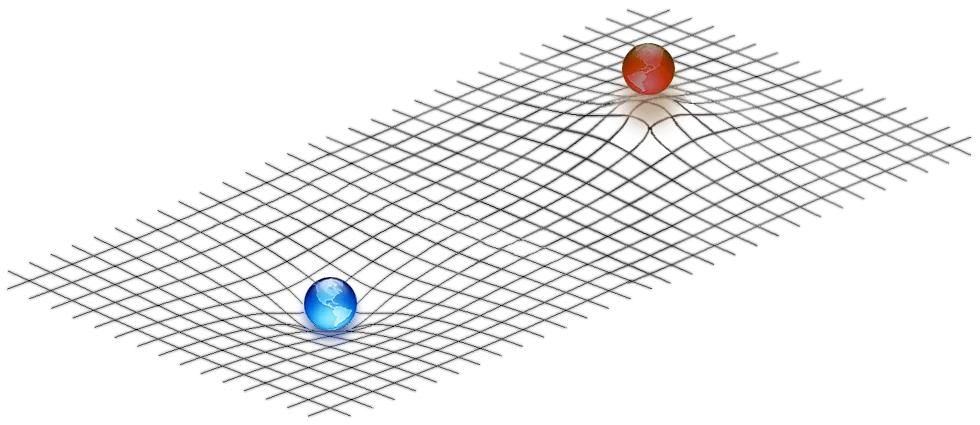
Einstein’s later theory, general relativity, takes things further by showing how mass and energy literally curve spacetime. In some of the more exotic solutions to the equations, paths appear that loop back on themselves in time; physicists call these “closed timelike curves.” If those existed in reality, you could, in principle, start at one moment, follow a path through spacetime, and end up back at an earlier moment in your own history.
These solutions pop up in certain theoretical scenarios, like rotating black holes or spinning universes, which sound more like plot devices than everyday reality. The uncomfortable part is that the equations do not automatically forbid this kind of looping in time. Instead, it feels like the universe is saying, “I won’t make this easy, but I’m not outright banning it either,” and that ambiguity keeps theorists awake at night.
Wormholes: Cosmic Shortcuts or Just Beautiful Math?
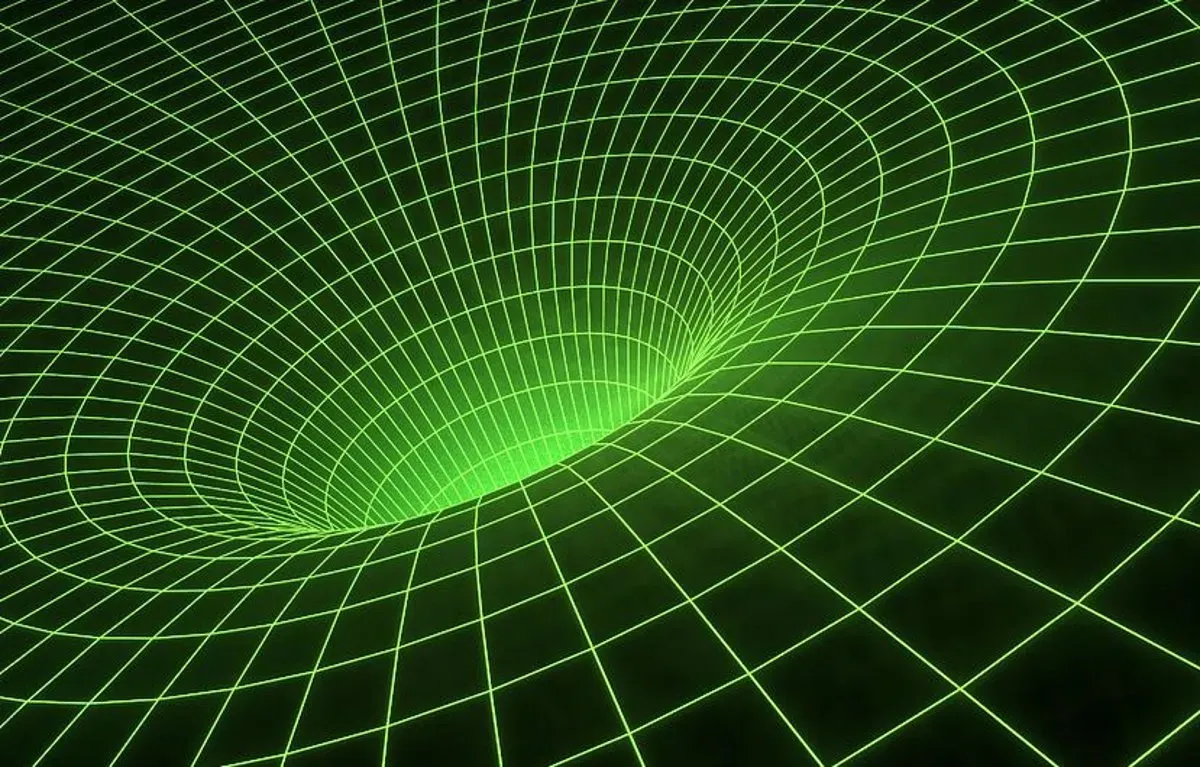
Wormholes are one of those concepts that sound completely made up yet drop out of general relativity as a serious mathematical possibility. Imagine spacetime as a sheet of paper: normally, to get from one point to another, you move along the surface. A wormhole is like folding the paper so two distant points touch, then punching a tunnel between them. If such tunnels existed and could be stabilized, they could connect different locations in space – and potentially different times.
Here’s where it gets even stranger. Some physicists have argued that if one end of a wormhole experiences time differently from the other – say, by moving at high speed or sitting in a strong gravitational field – the two mouths could become time-shifted. Enter one side, exit the other, and you might emerge in your own past or future. The problem is that actual wormholes, if they exist at all, seem to require forms of “exotic matter” with properties we’ve never observed in the real world, so for now they remain more like thought experiments than blueprints.
Paradoxes: The Grandfather Problem and Self-Consistent Timelines
The moment you let people wander into their own past, trouble shows up fast, usually in the form of a paradox. The classic example is the so-called grandfather problem: if you travel back in time and somehow prevent your grandparent from having children, how could you exist to go back in time in the first place? This kind of loop tears at the logic of cause and effect that our entire understanding of reality depends on.
Some physicists and philosophers respond by proposing that the universe simply does not allow actions that would create such contradictions. One idea, called the “self-consistency” principle, suggests that anything you do in the past was always part of history, so you can’t change it in a way that breaks causality. Instead of being free to rewrite the past, you’d be stuck inside it, acting out a role that was already baked into the timeline. It’s a bit like trying to improvise in a movie that’s already been filmed.
Quantum Mechanics, Many Worlds, and the Escape Hatch
Quantum mechanics makes everything murkier, as if time travel weren’t confusing enough already. At the smallest scales, particles don’t behave like tiny billiard balls but more like smeared-out possibilities. One interpretation of this strange behavior, the many-worlds picture, suggests that every possible outcome actually happens in some branching version of reality. In that framework, going back in time might not change your own past but instead nudge you into a different branch altogether.
If that were true, the grandfather paradox dissolves: you could go back and alter events, but you’d only be changing the history of a slightly different universe, not the one you came from. It sounds tidy, but there’s a catch – we don’t yet have experimental proof that this is how reality truly works. For now, the many-worlds picture is a mathematically consistent way to think about quantum events, but it remains one of several competing interpretations rather than a settled fact.
Practical Barriers: Why We Don’t See Time Tourists
The biggest hint that time travel to the past might be impossible is painfully simple: we see no sign of time tourists. No mysterious visitors from the year 3000 have shown up with verifiable evidence and detailed user manuals. People have even organized playful “time traveler parties” announced only after the event, hoping someone from the future would show up; so far, no luck. It doesn’t prove anything, but the silence is hard to ignore.
On top of that, the practical barriers are monstrous. The energies required to twist spacetime enough for wormholes or closed timelike curves seem far beyond anything our species can realistically harness. Quantum gravity – the as-yet incomplete theory that should unite general relativity with quantum physics – might ultimately rule out stable time machines altogether. From where we stand in 2026, time travel to the future via high-speed motion looks theoretically solid but technically unreachable, while travel to the past hovers in a gray area between math and impossibility.
So Is Time Travel Possible, or Just a Beautiful Fantasy?

When you strip away the dramatic movie scenes and wild speculation, a strange picture emerges: time travel into the future is firmly grounded in modern physics, at least in principle, while time travel into the past sits on shakier ground crowded with paradoxes and unresolved theories. Our best-tested frameworks, especially relativity, already show that time is flexible and personal, not a single universal flow. Yet every plausible route to genuine time machines runs into brutal technical walls or logical nightmares.
In the end, time travel occupies this rare space where hard science and human longing collide. We want it not just out of curiosity, but out of regret, hope, and the quiet wish to fix what went wrong or peek at how things turn out. For now, the most powerful time machine we have is still one-way and low-tech: the steady forward march of seconds that carries us into tomorrow. Maybe one day physics will hand us something more dramatic – but until then, how we use the time we do have might be the real question that matters.