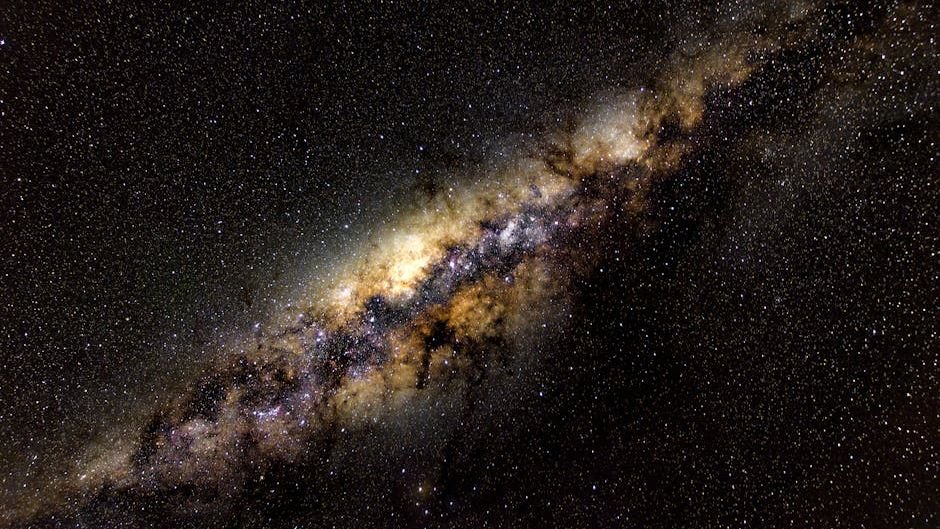

Imagine looking up at the night sky and realizing that almost everything you see – every star, every glowing galaxy – is just a thin layer of paint on a much bigger, invisible structure. That’s what modern cosmology is telling us: most of the universe is made of something we can’t see, can’t touch, and still don’t truly understand. We call it dark matter, and it quietly shapes almost everything we know about the cosmos.
What makes dark matter so fascinating is the tension at its core: we’re very confident it exists, yet we still don’t know what it actually is. It’s like finding deep footprints in fresh snow with no sign of who or what made them. The more precisely scientists measure the universe, the louder dark matter’s silent presence becomes, forcing us to rewrite what we thought we knew about gravity, matter, and the origin of structure in the cosmos.
The Strange Discovery: When Galaxies Misbehaved
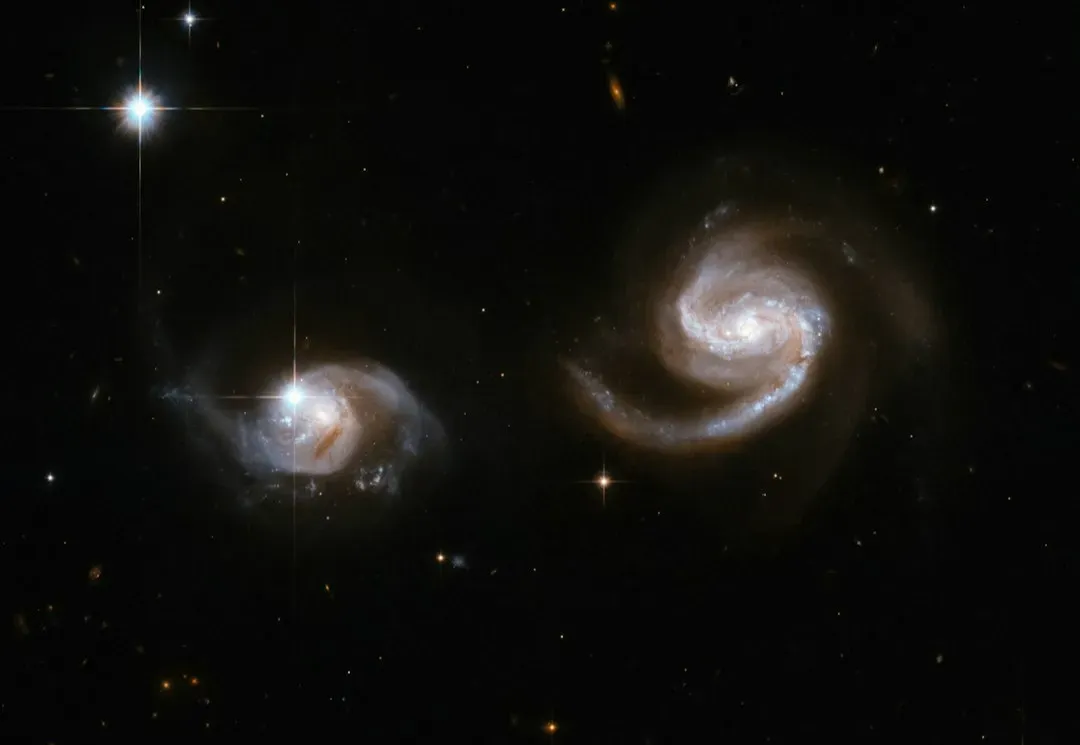
One of the most surprising moments in modern astronomy came when scientists realized that galaxies were spinning “wrong.” When astronomers measured how fast stars orbit around the centers of galaxies, those outer stars were moving far too quickly to be held in place by the gravity of the visible matter alone. By the rules of classical gravity, many galaxies should have simply flown apart, tearing themselves to pieces.
Yet they did not fall apart, which implied something unseen was providing extra gravity and holding everything together. This missing mass was not shining, not glowing in any part of the electromagnetic spectrum, and yet it had to be there. Over time, as more galaxies were studied, this invisible component showed up again and again, like a cosmic fingerprint stamped across the universe. That persistent mismatch between what we see and how things move is the puzzle that gave birth to the concept of dark matter.
What Dark Matter Is – And What It Definitely Is Not
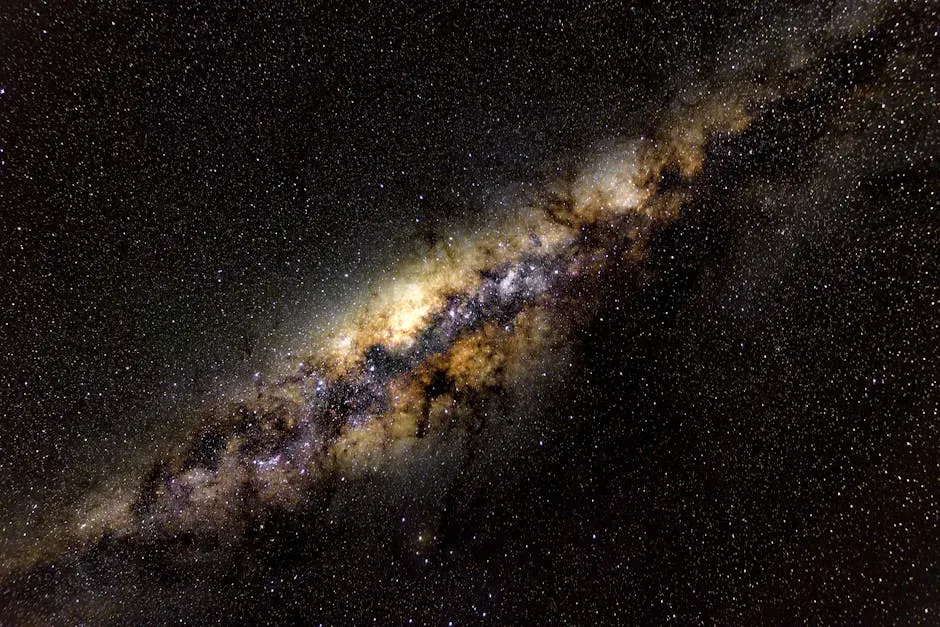
Dark matter is not just regular matter hiding in the shadows; it’s fundamentally different. It does not emit, absorb, or reflect light in any way we can detect, which is why we call it “dark.” If dark matter were simply made of dim stars, black holes, or cold gas clouds, our telescopes and gravitational microlensing surveys would have found enough of them by now. Instead, observations show that those ordinary “hidden” objects can only account for a small fraction of the missing mass.
Most evidence points to dark matter being some kind of new, non-baryonic matter: particles that are not part of the everyday protons, neutrons, and electrons making up us, Earth, and the stars. These particles seem to interact very weakly with normal matter, mostly through gravity, like shy guests at a party who stay pressed against the wall and never talk to anyone. That weird behavior is exactly what makes dark matter so difficult to study, and also so intriguing, because it hints at physics beyond the familiar playbook taught in standard textbooks.
The Cosmic Web: Dark Matter as the Universe’s Scaffolding
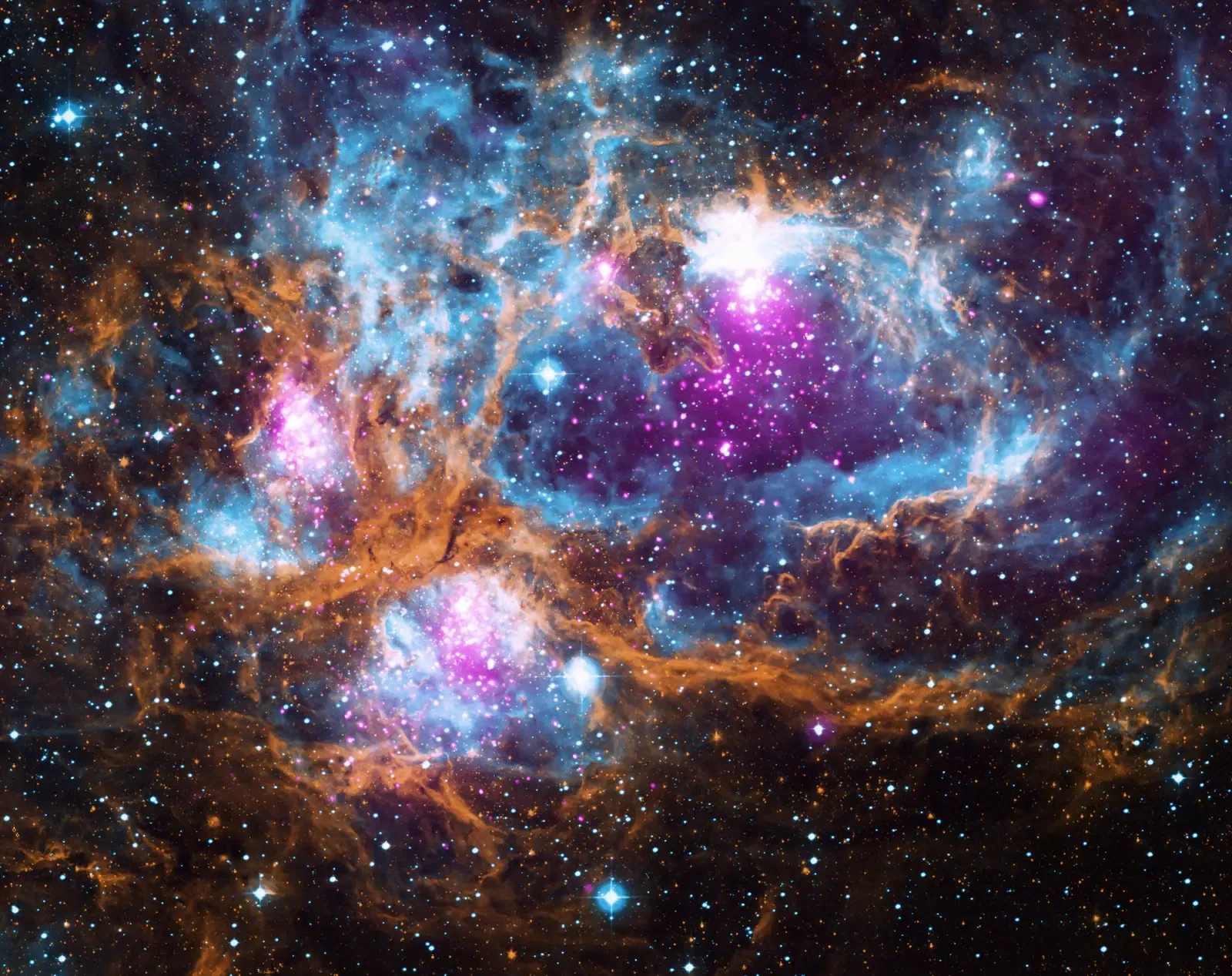
On the largest scales, the universe is not a random sprinkle of galaxies, but a vast cosmic web: filaments, clusters, and voids stretching across unimaginable distances. Computer simulations of cosmic evolution, based on the laws of gravity and expanding space, reveal that this web-like structure forms naturally if you fill the early universe with dark matter. The dark matter clumps first, creating gravitational wells into which ordinary matter falls, eventually lighting up as stars and galaxies.
In this sense, dark matter acts like the invisible steel beams inside a skyscraper: you rarely see the beams themselves, but everything else is built around them. Without dark matter’s early and efficient clumping, galaxies might have formed much more slowly, or perhaps not at all in the way we observe. When we map the distribution of galaxies in large surveys, we are essentially tracing the outlines of this unseen dark matter skeleton that has shaped the universe from its earliest moments.
How We Know It’s There: Evidence Across the Universe
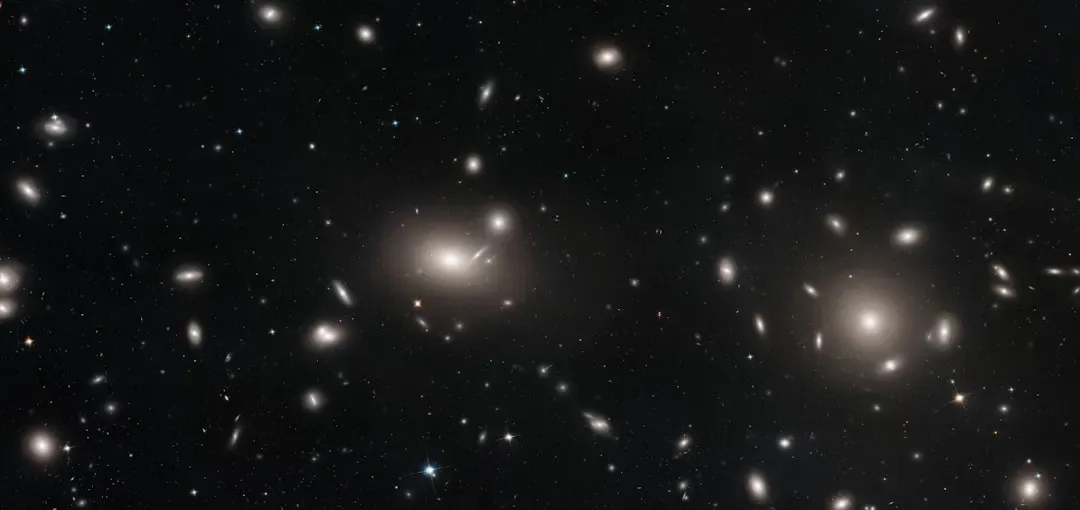
Galaxy rotation curves were the first loud clue, but they’re far from the only one. When astronomers study galaxy clusters – huge gatherings of hundreds or thousands of galaxies – they find that the visible matter again falls short of explaining the gravitational pull holding the cluster together. The gas in these clusters is so hot that it should escape, unless it’s bound by a massive halo of unseen matter. Once more, dark matter fills the gap.
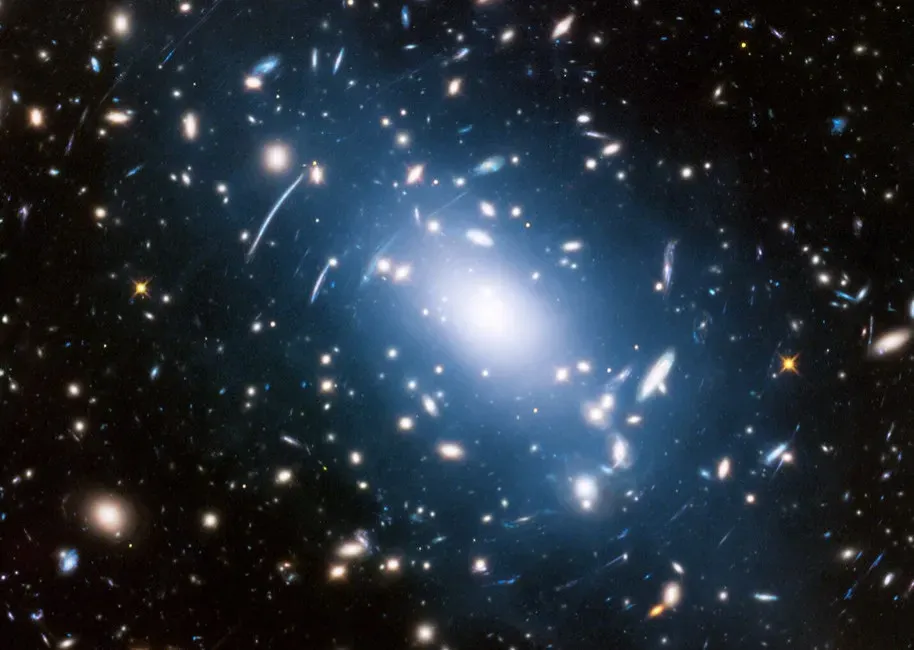
Another powerful line of evidence comes from gravitational lensing, where heavy masses bend light from background galaxies like glass lenses. Some clusters, such as the famous “Bullet Cluster,” show a striking separation between the hot visible gas and the main center of gravitational mass inferred from lensing. This pattern is hard to explain with modified gravity alone, but fits naturally if most of the mass is in a collisionless dark matter component that passes through almost unaffected when clusters smash together.
The Particle Hunt: From WIMPs to Axions and Beyond
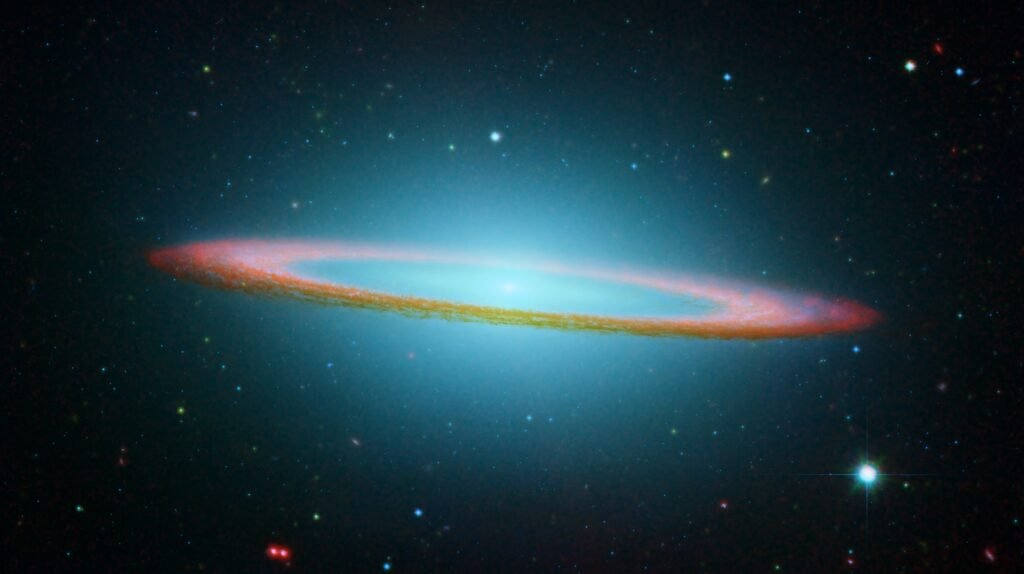
If dark matter is made of new particles, finding them is one of the biggest quests in physics today. For decades, a leading idea has been WIMPs – weakly interacting massive particles – which would have been produced in the early universe and then cooled into a halo around galaxies. Massive underground experiments, often placed in old mines to shield them from cosmic rays, use ultra-pure detectors to look for the tiny recoils caused when a dark matter particle bumps into a nucleus. So far, the results have been frustratingly quiet, pushing researchers to reconsider what dark matter could be.
That silence has opened the door to other candidates like axions, extremely light particles that could act more like a field spread across space than individual chunks. There are also ideas about “fuzzy” dark matter, sterile neutrinos, or even entire families of hidden-sector particles that barely interact with our known particles. Each possibility demands its own kind of experiment, from ultra-sensitive radio cavities for axions to precision cosmological measurements that would reveal subtle fingerprints in the cosmic microwave background or small-scale structure.
I remember the first time I saw an animation of a simulated dark matter halo forming – it looked almost alive, swirling and merging like ink in water – and it drove home how much we’re still guessing about what’s actually doing that dancing. The honest truth is that despite decades of effort, the particle nature of dark matter remains unsolved, and that might be the most thrilling part of the story.
Rival Ideas: Do We Need New Matter or New Gravity?
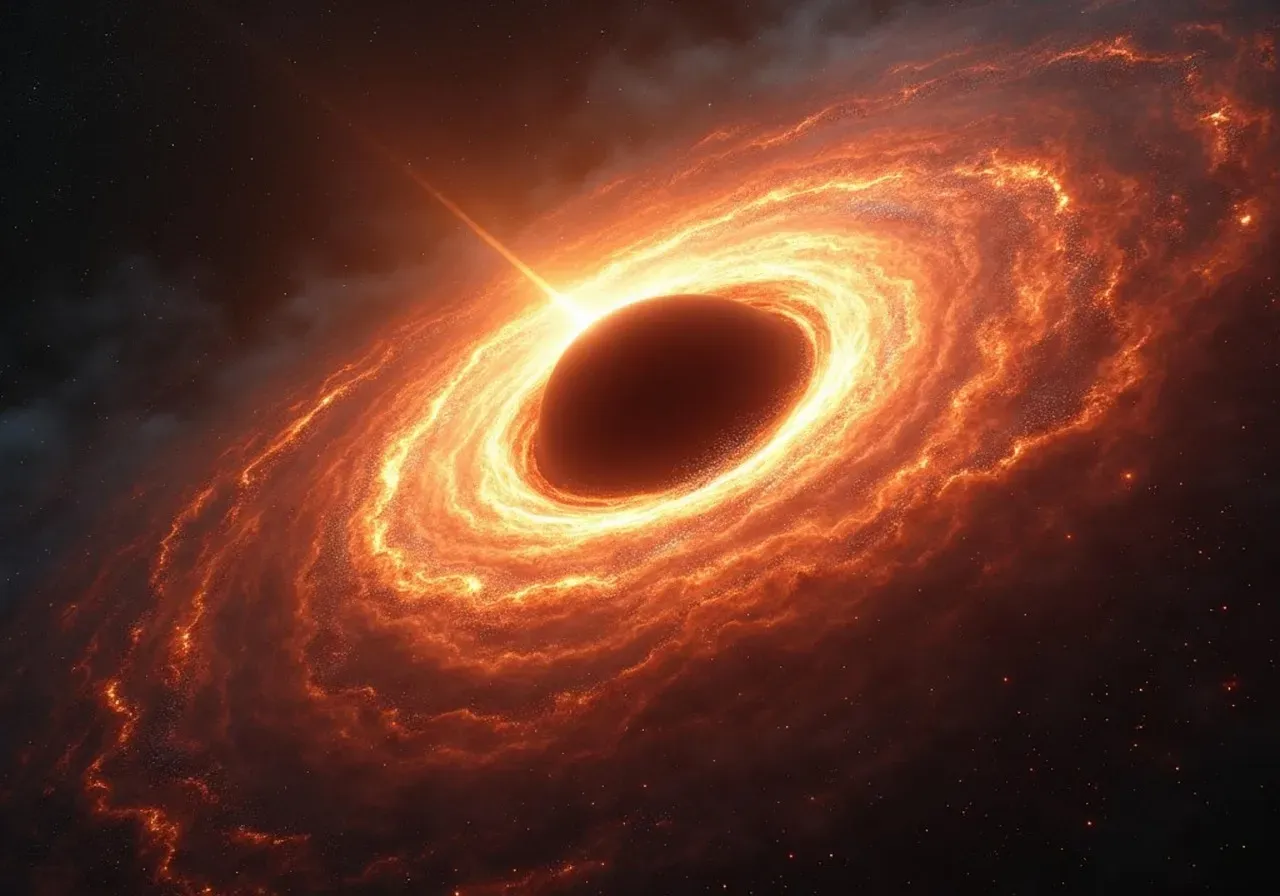
Not everyone is convinced that we need to invoke a new form of matter; some researchers argue instead that our theory of gravity might be incomplete. Ideas like modified Newtonian dynamics suggest that gravity behaves differently at very low accelerations, potentially eliminating the need for dark matter in explaining galaxy rotation curves. These models have had some success on galaxy scales, matching certain rotation patterns surprisingly well with just a tweak to gravitational laws.
However, once you zoom out to galaxy clusters, gravitational lensing, and the cosmic microwave background, modified gravity alone struggles to match all the data at once. The vast majority of cosmologists currently favor the dark matter explanation because it consistently fits many independent observations. Still, the existence of these rival theories is healthy for science, forcing dark matter models to face tough, specific tests instead of being accepted on faith. That tension – between new matter and new gravity – keeps the field sharp and the debates lively.
Why Dark Matter Matters for Us
It might seem like dark matter is just a distant, abstract curiosity, but it actually plays a central role in why the universe looks the way it does, and therefore why we are here at all. Without the extra gravitational pull of dark matter, galaxies might not have condensed as quickly after the Big Bang, and the rich cosmic structures where stars and planets form could have been far rarer or very different. In a real sense, dark matter helped build the stage on which life could eventually appear.
There’s also a philosophical punch to this story: we like to think we understand our surroundings, yet most of the mass in the universe is made of stuff we can’t directly detect. That humbling realization forces us to accept that our familiar world is only a thin slice of reality. It also means that any breakthrough in understanding dark matter could transform fundamental physics, just as discovering the electron or decoding the atom reshaped technology and society. For all we know, solving the dark matter puzzle could someday lead to tools or insights that feel as radical to us as electricity would have to people centuries ago.
The Road Ahead: New Telescopes, New Experiments, New Clues

The coming years promise a flood of new data that will test dark matter ideas more sharply than ever. Powerful observatories like the James Webb Space Telescope and new large-scale sky surveys are mapping galaxies in exquisite detail, probing how structure formed over cosmic time. Subtle patterns in how galaxies cluster and how light is bent across the sky can reveal how dark matter behaves on different scales, potentially ruling out entire classes of theories.
On Earth, next-generation detectors are digging deeper into the noise, searching for rare interactions or decays that might betray the presence of dark matter particles. At the same time, particle colliders and precision experiments in quantum physics are exploring corners of parameter space that were once out of reach. We might discover that dark matter is made of one elegant new particle, or that it is a messy combination of several components, or even that our framework for thinking about it needs a major overhaul. The universe has been stubbornly tight-lipped so far, but every new measurement is like another turn of the key in a very old, very complicated lock.