
You’ve been awake for a few minutes this morning, sipping coffee, watching sunlight spill across the floor – and somewhere in that quiet moment, something extraordinary is happening inside your skull. You are aware. You feel the warmth of the mug, notice the quality of the light, experience a fleeting sense of calm. Scientists can measure the neural activity behind each of those sensations. What they cannot do – at least not yet – is explain why any of it feels like anything at all.
Consciousness remains one of the most maddening puzzles in all of science. It sits at the strange crossroads of biology, physics, philosophy, and even spirituality, and despite centuries of inquiry, the core mystery has barely budged. From ancient Greek philosophers to cutting-edge neuroscientists at MIT and beyond, the question keeps circling back to the same impossible knot: how does a lump of biological tissue give rise to your inner world? The answers – or the lack of them – are far more surprising than you might expect. Let’s dive in.
The “Hard Problem”: Why Explaining the Brain Isn’t Enough
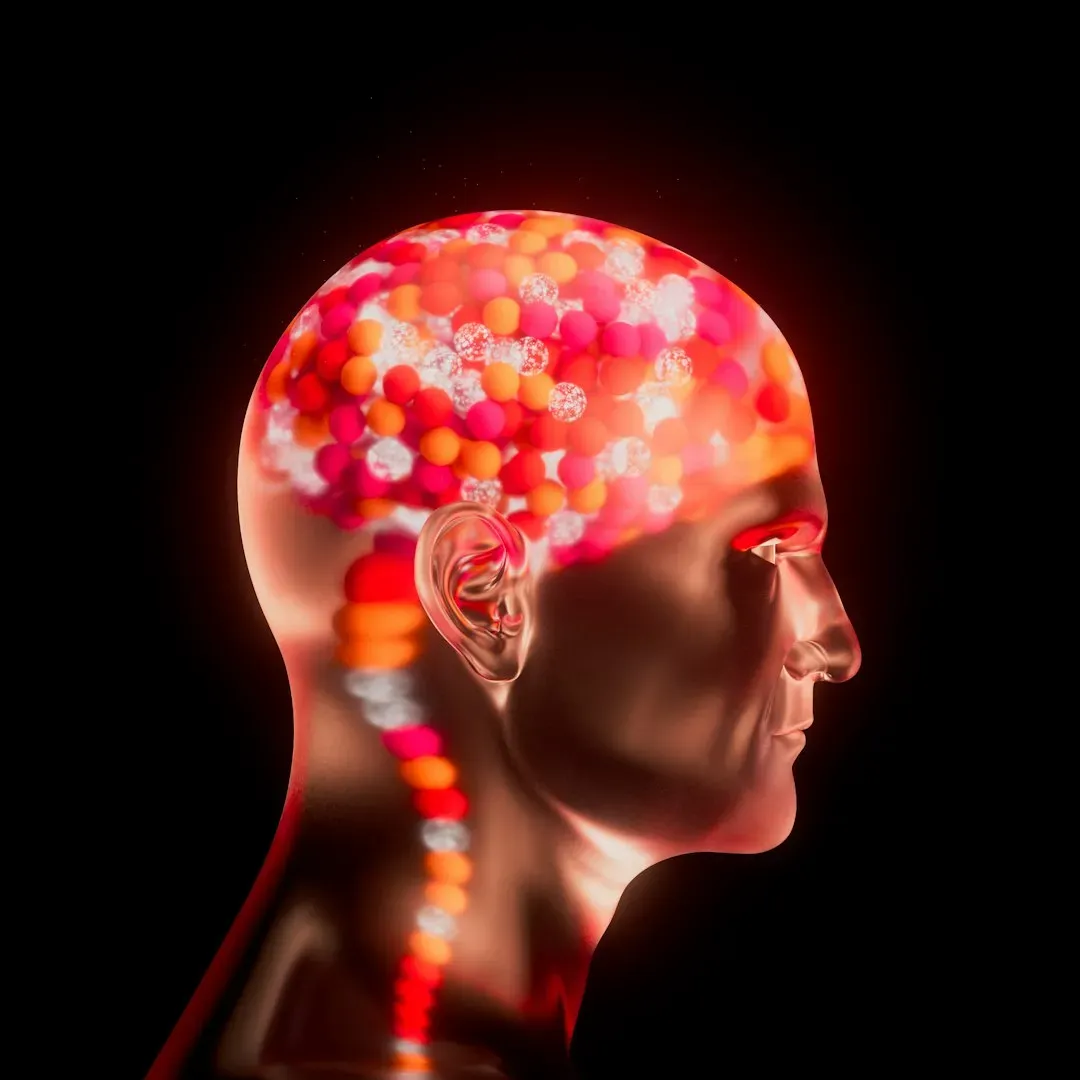
Here’s the thing – science has actually made remarkable progress in understanding the brain. You can map neural circuits, observe which regions activate during fear or joy, and trace the electrochemical cascades that underlie every thought. Impressive, sure. But this research arguably addresses the question of which neurobiological mechanisms are linked to consciousness, not the question of why those mechanisms should give rise to consciousness at all. That gap – between physical process and subjective experience – is the heart of what philosopher David Chalmers famously called the “Hard Problem.”
The hard problem of consciousness is the problem of explaining why any physical state is conscious rather than nonconscious – why there is “something it is like” for a subject in conscious experience, why conscious mental states “light up” and directly appear to the subject. Think of it this way: you could build a perfect robot that behaves as if it sees the color red, processes it correctly, and avoids red stop signs. But does it experience redness? Does it feel anything? That is the question science keeps stumbling on, and honestly, it’s both thrilling and unsettling.
Easy Problems vs. The Real Monster
Explaining why consciousness occurs at all can be contrasted with so-called “easy problems” of consciousness – the problems of explaining the function, dynamics, and structure of consciousness. These features can be explained using the usual methods of science. But that still leaves the question of why there is something it is like for the subject when these functions are present. This is the hard problem. The label “easy” is, it must be said, gloriously misleading. These problems include how the brain integrates information, how we report mental states, and how attention works – none of which are trivial in the slightest.
Consciousness poses the most baffling problems in the science of the mind. There is nothing that you know more intimately than conscious experience, but there is nothing that is harder to explain. All sorts of mental phenomena have yielded to scientific investigation in recent years, but consciousness has stubbornly resisted. It’s a bit like trying to use a flashlight to find its own source of light. The very tool you’d use to investigate consciousness – your mind – is the thing you’re trying to explain.
Over 200 Theories and Still No Consensus
I know it sounds crazy, but as of today, there are literally hundreds of competing theories trying to crack the code of consciousness. The field gathers, collects, and organizes candidate explanations from neuroscience, psychology, computer science, philosophy, physics, and religious and philosophical traditions. We’re talking about over two hundred distinct theoretical frameworks, ranging from the deeply mathematical to the almost mystical. None has won the argument.
The landscape of theories ranges from the subatomic dance of quantum mechanics to the universal embrace of cosmic consciousness. Physicalist theories flow from quantum collapse, sub-neuronal organelles, neurons and synapses, neuronal nodes and local brain circuits, large-scale brain circuits, brain-wide electromagnetic fields, to embodied, enactive, and extended mind. When you have that much theoretical sprawl, it’s a sign that the field is genuinely, profoundly stuck – not because researchers aren’t brilliant, but because the problem itself may be unlike any other problem science has ever faced.
Integrated Information Theory: Mathematics Meets Inner Life
One of the most talked-about modern theories is Integrated Information Theory, or IIT, proposed by neuroscientist Giulio Tononi. IIT says that consciousness is integrated information, and that even simple systems with interacting parts possess some degree of consciousness. That’s a bold claim – one that implies your thermostat might have the faintest flicker of inner experience. Unsurprisingly, it’s proven controversial.
In a March 2025 Nature Neuroscience commentary, proponents of IIT listed 16 peer-reviewed studies as empirical tests of the theory’s core claims. A commentary in the same issue argued that, despite current empirical limitations, IIT remains scientifically legitimate. Defenders and skeptics are still going at it fiercely in peer-reviewed journals. IIT remains controversial, and in 2023 a number of scholars characterized it as unfalsifiable pseudoscience for lacking sufficient empirical support, a claim reiterated in a 2025 Nature Neuroscience commentary. The debate shows no sign of slowing down.
Is Consciousness Older – and More Widespread – Than You Think?
Here is where things get genuinely mind-bending. The dominant assumption in Western science has long been that consciousness is something uniquely human – or at least reserved for complex animals with sophisticated brains. Recent research is pushing back hard on that idea. Researchers argue that consciousness “rather represents a more basic cognitive process, possibly shared with other animal phyla” – a reframing that has major implications for how scientists define consciousness and for how humans understand their relationship to other life forms.
Meanwhile, some theorists have gone even further. A new theoretical model proposes that consciousness is the foundational field from which time, space, and matter emerge, rather than a byproduct of brain activity. This idea, developed by Professor Maria Strømme of Uppsala University, integrates quantum physics with non-dual philosophy, positing individual consciousnesses as parts of a universal field and offering testable predictions in physics, neuroscience, and cosmology. It sounds far out – and it is. Yet it’s being published in peer-reviewed physics journals and attracting serious attention. Whether you find it thrilling or absurd probably says something about your own assumptions.
What Psychedelics and Near-Death Experiences Are Teaching Science
Some of the most surprising recent advances in consciousness research haven’t come from brain scanners alone – they’ve come from the edges of human experience. Multiple studies in 2025 demonstrated that psychedelic compounds can rapidly reorganize brain networks, temporarily dissolving rigid patterns of thought associated with depression, trauma, and addiction. More than just a clinical curiosity, this suggests that the ordinary “default” state of consciousness is itself just one mode of many – not the fixed baseline you probably assume it to be.
Near-death experiences, too, are now taken seriously in rigorous research settings. Near-death experiences are deeply affecting, often mystical episodes that experts call periods of “disconnected consciousness” – they affect some people who are close to death or in situations of grave physical or emotional danger. Researchers at the University of Virginia have identified significant gaps in psychological and medical support for people who report NDEs, many of whom struggle to integrate these experiences into their lives. The data is hard to dismiss: something dramatic is happening to consciousness in these moments, and science is only beginning to map it.
Can Artificial Intelligence Ever Be Truly Conscious?
The AI explosion of the past few years has added urgent new fuel to the consciousness debate. If a machine can write poetry, hold a conversation, and solve complex problems, does that mean it might be aware? Most researchers are skeptical – at least for now. The familiar fight between “mind as software” and “mind as biology” may be a false choice. One new proposal suggests that brains compute, but not in the abstract, symbol-shuffling way we usually imagine. In other words, copying the outputs of a brain is not the same as replicating what the brain actually does.
Anil Seth, Professor of Cognitive and Computational Neuroscience and Director of the Centre for Consciousness Science at the University of Sussex, examines one of the most consequential questions of our technological era: could artificial intelligence ever be conscious? While the prevailing intuition suggests that consciousness might naturally follow sophisticated computation, Seth outlines a series of arguments challenging this assumption. Honestly, this is a question with enormous ethical stakes. If an AI system could suffer, or have genuine experiences, then treating it as a disposable tool would be a serious moral problem. We’d better figure this out before we build more of them.
Conclusion: A Mystery Worth Keeping
You might have hoped that science, by now, would have cracked the consciousness code. The truth is humbling: humans know they exist, but we still don’t understand where the subjective experiences associated with brain functions originate. Researchers at the world’s top institutions – MIT, Oxford, Sussex, Uppsala – are actively wrestling with this problem, deploying tools from quantum physics, neuroscience, philosophy, and even psychedelic pharmacology. Progress is real. The finish line, however, remains genuinely invisible.
Perhaps that’s not a failure of science. Perhaps it is, as some thinkers argue, a sign that the universe has depths that our current frameworks simply weren’t built to reach. Understanding the biophysical basis of consciousness remains a substantial challenge for 21st-century science – and this endeavor is becoming even more pressing in light of accelerating progress in artificial intelligence and other technologies. The stakes are rising. The mystery is deepening. And the fact that you can even wonder about all of this – that wondering itself feels like something – may be the most extraordinary thing about you.
What do you think – is consciousness a puzzle science will one day fully solve, or is there something about the inner life that will forever elude the microscope? Share your thoughts in the comments.