
Every now and then, the past drops something on our lap that simply refuses to make sense. A carved stone where no stone should be, a mechanism centuries ahead of its time, a burial that looks less like a funeral and more like a riddle left for the future. We like to think history is a neat timeline, but these artifacts feel more like glitches in the matrix.
What makes them so compelling isn’t just the mystery, but the feeling that we’re staring straight at the limits of our own understanding. I still remember seeing a photo of the Antikythera mechanism for the first time and thinking it looked like a Victorian clock dragged out of the sea, only to find out it was older than most major world religions. These objects force us to admit that the people who lived thousands of years ago were not clueless primitives – they were often brilliant in ways we still can’t fully decode.
The Antikythera Mechanism: A Bronze Computer From Another Age
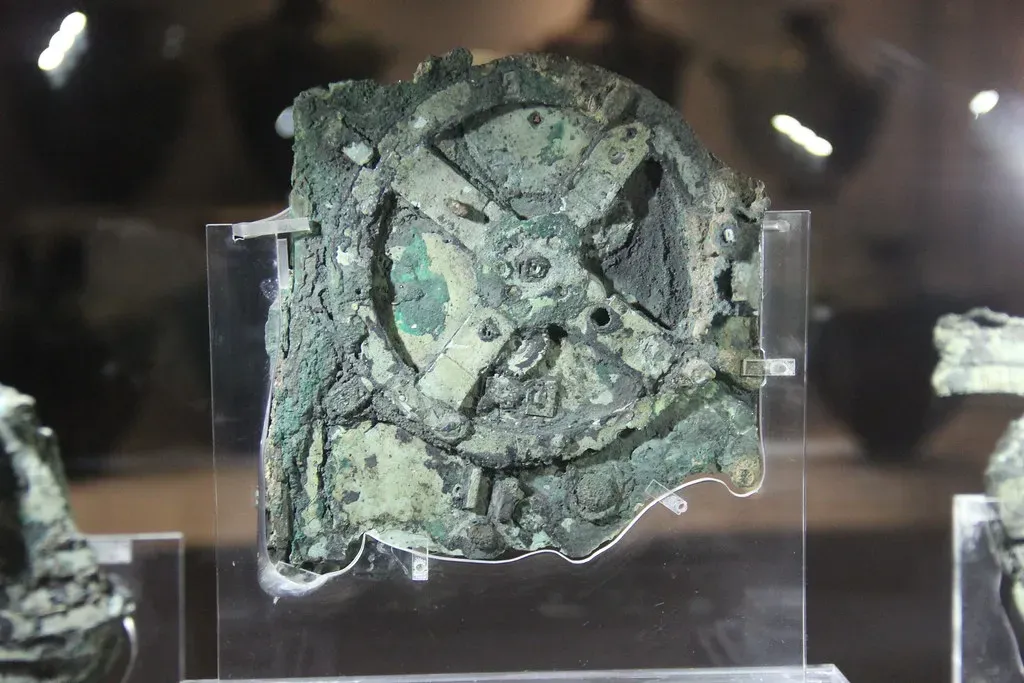
Imagine pulling up a shipwreck, expecting amphorae and coins, and instead finding what looks like the corroded guts of a pocket watch from a civilization that supposedly didn’t know gears that well. That’s essentially what happened off the coast of the Greek island of Antikythera in the early twentieth century. The device they recovered, now called the Antikythera mechanism, is a dense cluster of bronze gears and dials that has been dated to around the second or first century BCE.
Modern imaging and reconstruction work suggest it could predict eclipses, track the motions of the sun, moon, and probably planets, and even model complex astronomical cycles using interlocking gears. In simple terms, it behaves like a mechanical computer built more than two thousand years ago. What we still don’t fully understand is who exactly made it, how widespread that level of engineering knowledge was, and why we see nothing quite like it again for so many centuries afterward. It feels like stumbling on a stray laptop in a medieval monastery and then…nothing else like it anywhere.
The Phaistos Disc: A Spinning Puzzle No One Can Read
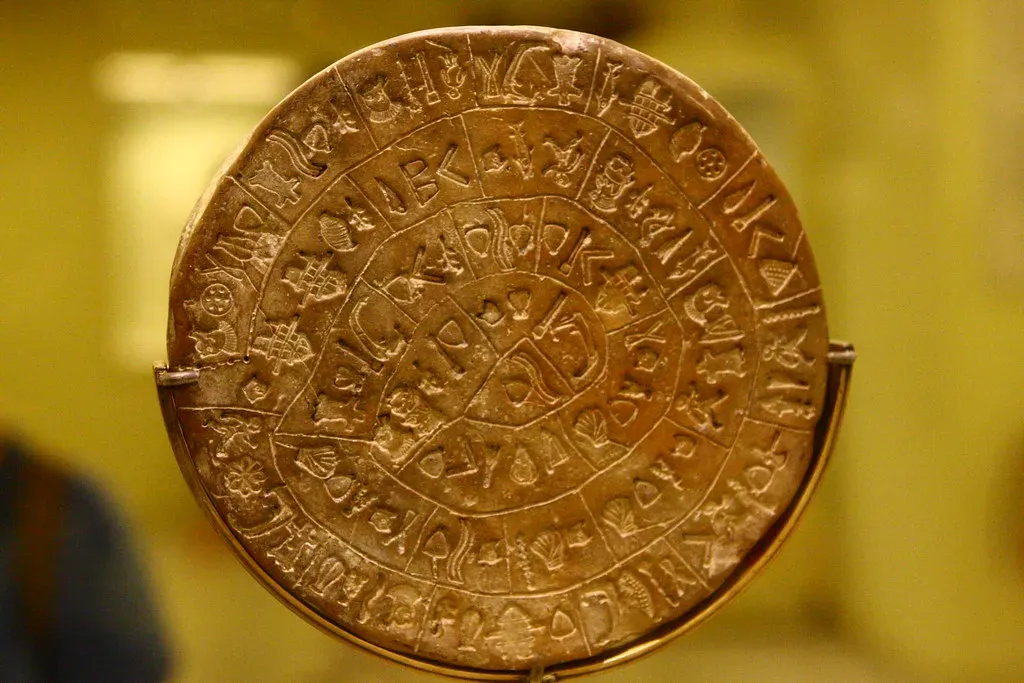
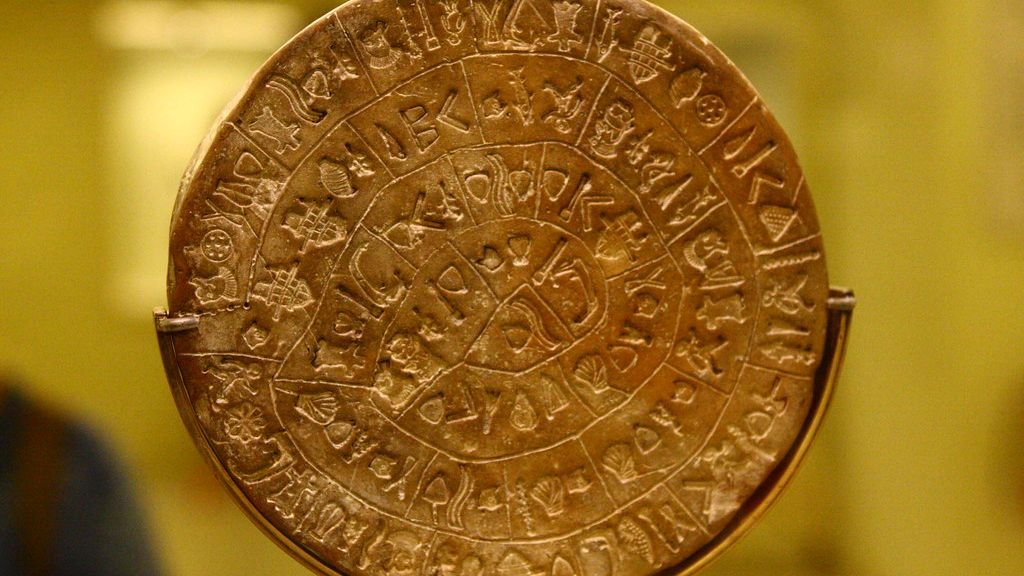
At first glance, the Phaistos Disc looks like a quirky piece of ancient art – a round clay disc stamped on both sides with spiraling symbols. It was found in Crete in the early twentieth century and is usually dated to the Bronze Age, possibly tied to the Minoan civilization. The disc is covered in small pictograms: human figures, animals, tools, plants, and abstract shapes, all pressed into wet clay using stamps rather than carved by hand.
Here’s the catch: no one has convincingly deciphered it. We’re not even fully sure it is a “text” in the way we normally think of writing. It might be a ritual chant, a calendar, a game board, a dedication, or something more mundane like an inventory or list. Because we don’t have other artifacts with the same script, there’s nothing to compare it to, so any proposed reading hangs in midair. It’s like being handed a single page of a book in a language that appears nowhere else on Earth and being told, “Go ahead, read it.”
The Baghdad “Battery”: Power Source or Misunderstood Jar?
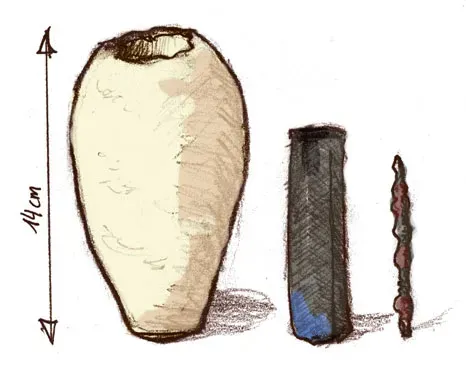
Few objects capture the imagination like the so‑called Baghdad Battery: a small ceramic jar with a copper cylinder and an iron rod inside, discovered near modern-day Baghdad and usually dated to the first centuries BCE or CE. When people noticed that lemon juice or vinegar could, in theory, turn such a setup into a basic galvanic cell, the idea exploded that this might be an ancient battery. The phrase alone – “ancient battery” – almost writes its own headlines.
But here’s where the enigma really lies. There’s no clear evidence anyone actually used these jars for electrical purposes. No ancient texts describe them this way, and there are no wires or associated devices that would obviously need electricity. Some scholars suggest they were used for storing scrolls, holding sacred objects, or even as simple containers. We’re left in a tug-of-war between a thrilling theory about forgotten electrical experiments and the sober realization that we may be projecting modern tech fantasies onto a jar that was never meant to light anything up.
The Nazca Lines: Giant Drawings Only the Sky Can See
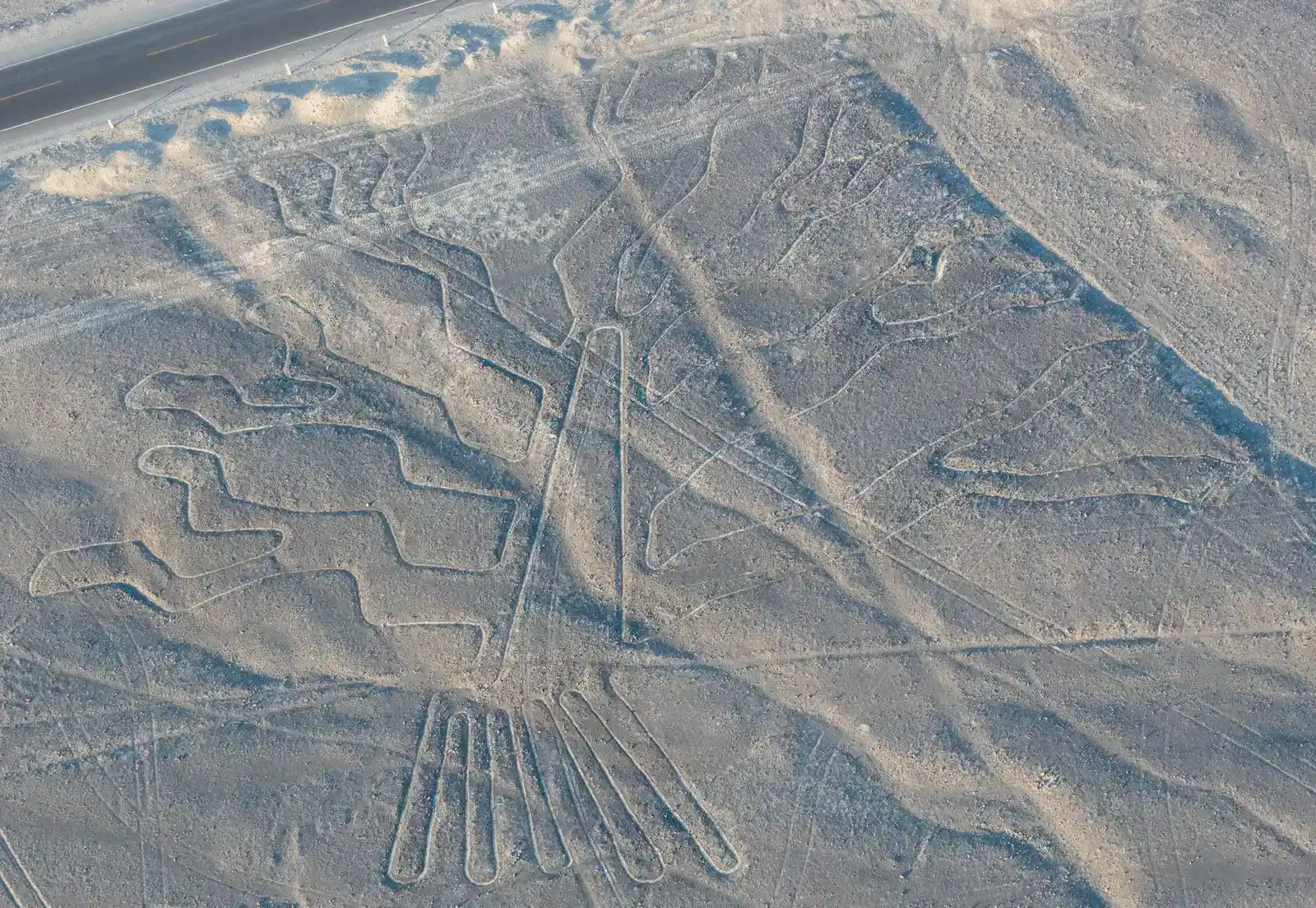
Across the dry plains of southern Peru, the ground is scratched with enormous shapes – monkeys, hummingbirds, spiders, geometric patterns, and long, ruler-straight lines that stretch for kilometers. These are the Nazca Lines, created by removing the darker surface stones to reveal lighter soil beneath. From the ground they mostly look like shallow tracks, but from above they form precise, striking images that look surprisingly modern when you see them from an airplane or drone.
We have solid evidence that the Nazca people made these lines roughly between two thousand and fifteen hundred years ago. What remains elusive is why. Interpretations range from astronomical calendars and ritual pathways to water-related ceremonies in a harsh desert environment. My own impression, seeing aerial photos, is that they feel like messages meant for something – or someone – far above, whether that meant deities, the cosmos, or simply a different kind of perspective. The unsettling part is that we might never truly step into the worldview that made them feel necessary in the first place.
Gobekli Tepe: A Monument That Should Not Be So Old
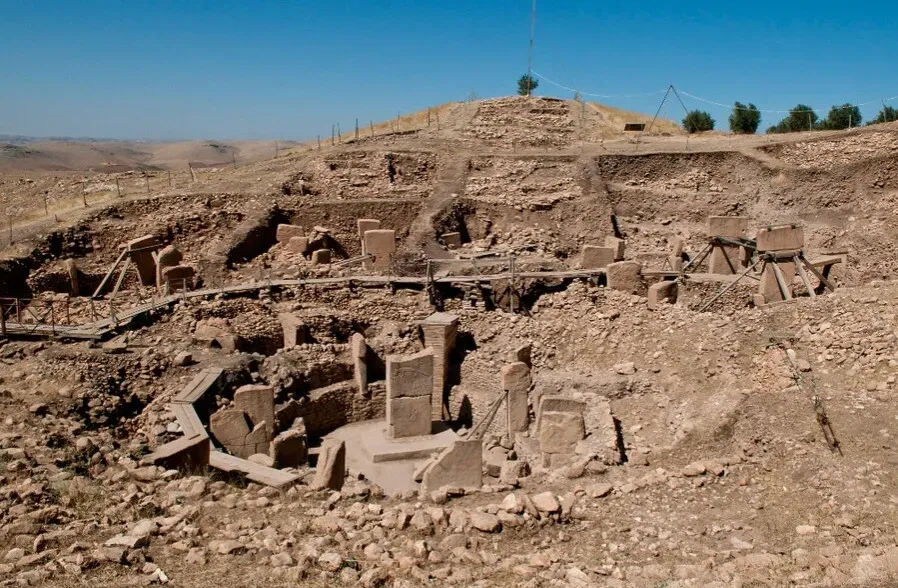
When archaeologists began uncovering Gobekli Tepe in southeastern Turkey, it quietly rewrote a big chunk of human history. The site consists of massive T-shaped stone pillars arranged in circular enclosures, some carved with animals and abstract symbols. The shock came with the dating: it appears to be around eleven to twelve thousand years old, drastically older than Stonehenge or the Egyptian pyramids. That puts it close to the period when humans were just beginning to shift from hunting and gathering to settled farming.
The usual story goes that agriculture comes first, large permanent settlements second, and then monumental architecture. Gobekli Tepe flips that script. It suggests that large-scale ritual or religious gathering places may have actually encouraged people to stay put and organize themselves, possibly pushing them toward farming to support these gatherings. Yet we still don’t know exactly what rituals took place there, why the site was deliberately buried, or how a society without metal tools or pottery managed to carve and move such huge stones. It’s like finding a cathedral in a campsite.
The Voynich Manuscript: A Book from Nowhere

The Voynich Manuscript looks like something a fantasy novelist might invent on a late night: a thick, illustrated book written in an unknown script, filled with strange plants, unusual diagrams, and pages of text that flow smoothly but remain completely unreadable. It surfaced in the early twentieth century, but carbon dating of the parchment places it in the early fifteenth century. Linguists, cryptographers, and code‑breakers – including some who work in modern intelligence – have spent years trying to crack it.
What keeps the manuscript in the realm of true enigma is that it behaves statistically like real language, not obvious gibberish, yet no one has convincingly mapped it to any known tongue or code system. The drawings show plants that either don’t exist or look like surreal mash-ups of real species, along with zodiac-like wheels and crowded bathing scenes in greenish liquid. Some think it’s a medical or herbal text in cipher, others suspect a clever hoax from centuries ago. Standing in front of a page, you feel a very specific frustration: the words are right there, line after line, and still you can’t hear a single sentence in your head.
Out-of-Place Artifacts: When Objects Show Up Where They Shouldn’t
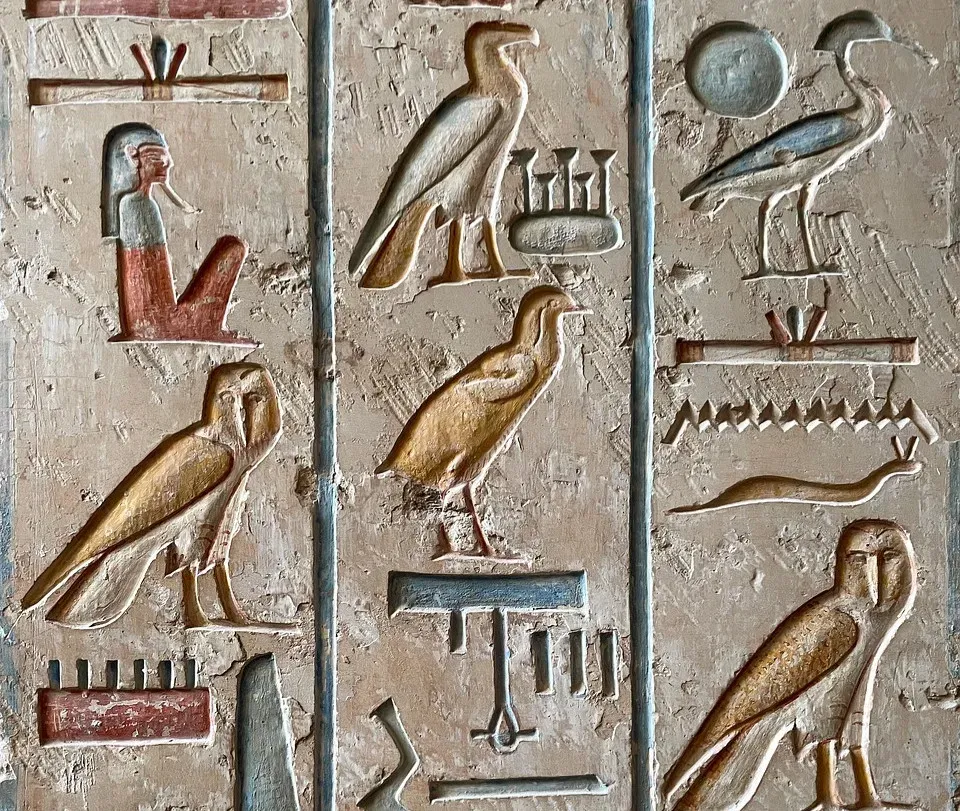
Beyond the headline-making mysteries, there’s a whole category of smaller puzzles often called out-of-place artifacts: objects that appear in geological layers, locations, or cultural settings where they seemingly do not belong. Some of these are eventually debunked or reassigned to more mundane explanations, but a few still raise questions. Think of finely worked metal objects in very old strata, or advanced-looking tools in societies we thought were less technologically developed at the time.
The problem with this category is that it sits right on the edge between solid archaeology and wishful thinking. Contamination of layers, mislabeling, and even outright hoaxes have clouded the field, making it hard to separate genuine anomalies from noise. Yet there remain cases where an artifact’s presence nudges us to rethink trade routes, cultural contact, or the pace of innovation in certain regions. The enigma here is less about time travelers or lost super-civilizations, and more about how patchy our map of the human past still is, full of blank spaces that a single unexpected object can suddenly light up.
Why Some Mysteries Refuse To Die

One reason these artifacts refuse to be neatly explained is that they collide with what we expect history to look like. We like clean narratives: progress marching in a straight line, each invention arriving right on schedule. When a mechanism appears centuries too early, or a temple rises before cities, our tidy storyline crumples a bit. It’s tempting to either downplay the anomaly or spin it into something wild, and both reactions can get in the way of honest understanding.
There’s also something stubbornly human at play: we don’t like admitting what we don’t know. A jar might just be a jar, but if there’s even a hint it did something more, we rush to fill the gap with hypotheses that match our fears and fantasies. Still, the gaps themselves matter. They remind us that earlier people were capable of genius, complexity, and weirdness on a scale we still underestimate. In a way, the enduring enigma of these artifacts is less about the objects and more about us – how we react when the past refuses to fit the story we’ve already written in our heads.