
Cassiopeia: The Circumpolar Beacon Dominating Winter Nights (Image Credits: Pixabay)
Amateur astronomers across the Northern Hemisphere discovered a straightforward route to the Andromeda Galaxy last weekend by leveraging the prominent W-shape of Cassiopeia under pristine dark skies.[1]
Cassiopeia: The Circumpolar Beacon Dominating Winter Nights
Observers quickly identified Cassiopeia as one of the sky’s most reliable markers, thanks to its unmistakable M or W configuration that circles the North Star throughout the year. This constellation, known as the Queen in mythology, appeared high overhead during early evenings in February, making it ideal for beginners. Its five brightest stars formed the distinctive pattern, with one side featuring a deeper notch that served as a natural directional cue.
The brightest star, Schedar, anchored the formation and drew eyes northward. Community reports highlighted successful sightings from locations as diverse as Mansfield in Ohio, Jaipur in India, and Cheyenne in Wyoming, proving the constellation’s accessibility even from moderately rural spots. Dark adaptation enhanced visibility, allowing stargazers to pick out the pattern within minutes.[1]
Master the Star-Hop: From Cassiopeia to Andromeda in Three Steps
A simple extension from Cassiopeia’s stars led directly to the galaxy, transforming casual skywatching into a rewarding hunt. This method relied on precise alignment rather than complex equipment.
- Locate the W or M of Cassiopeia high in the northern sky at nightfall.
- Spot Kappa Cassiopeiae and Schedar; Kappa lies at the tip of the shallower arm, while Schedar marks the brighter hub.
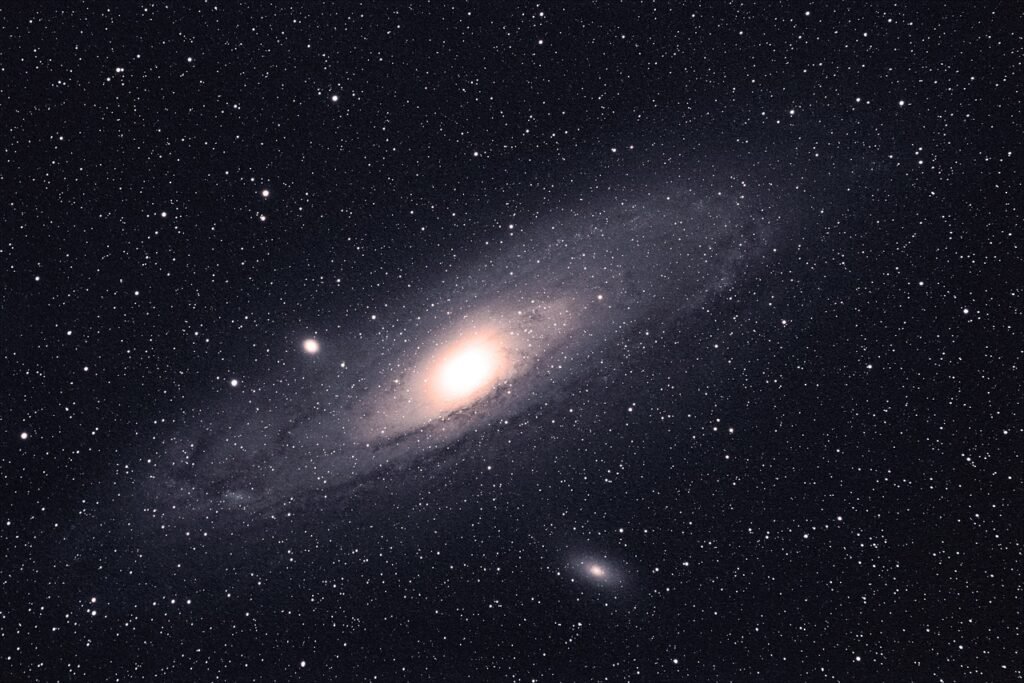
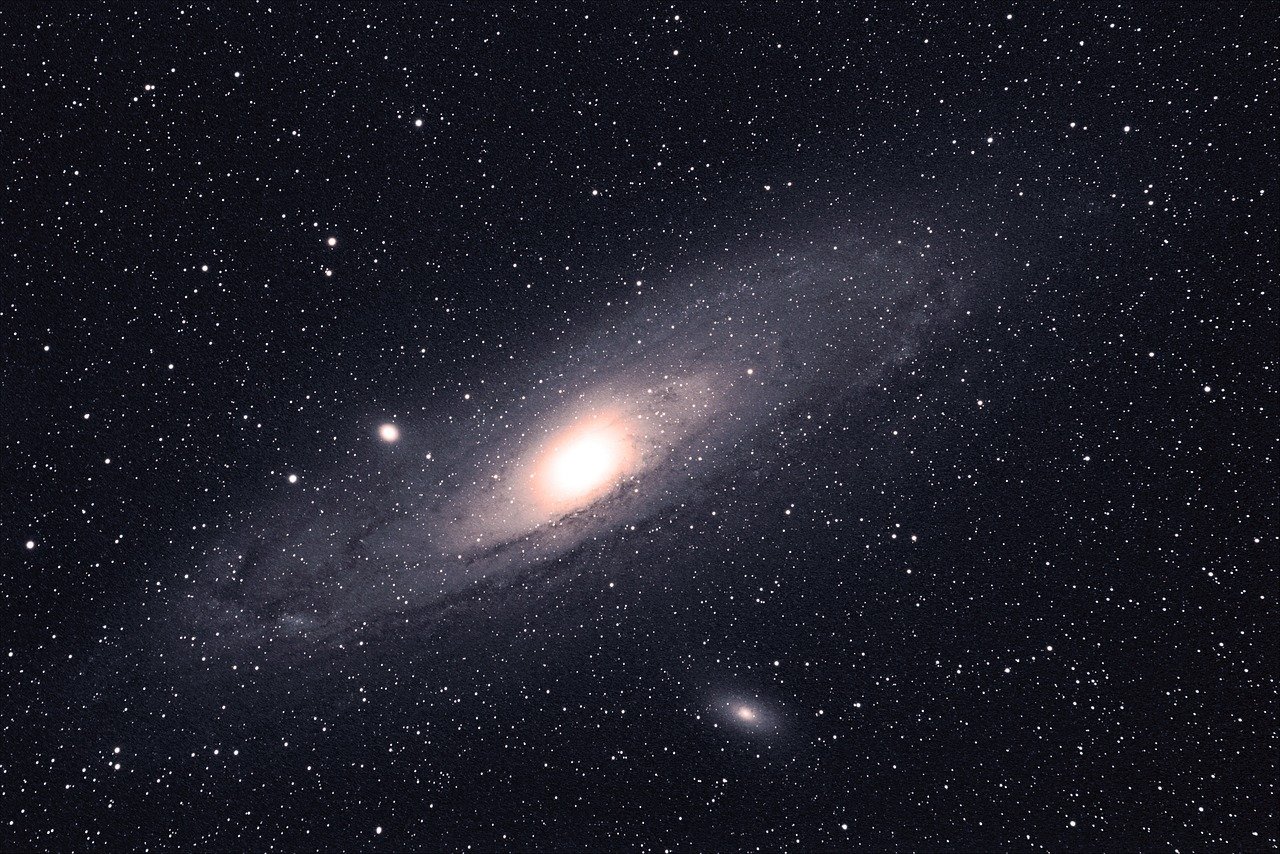
- Draw an imaginary line from Kappa through Schedar, then extend it roughly three times that distance to reach the faint glow of Messier 31, the Andromeda Galaxy.
Binoculars confirmed the target as a hazy patch with a brighter core, far wider than similar features in the Milky Way. This technique worked reliably when the constellation positioned itself prominently, as it did during recent clear nights.[1]
Prime Viewing Windows and Essential Preparation
February evenings offered optimal positioning, with Cassiopeia descending slowly after dusk and remaining visible until dawn. Light pollution posed the primary obstacle, so enthusiasts traveled beyond urban glow to rural horizons. Patience paid off as eyes adjusted over 20-30 minutes, revealing subtleties invisible at first glance.
Binoculars elevated the experience without requiring telescopes; users swept the area gently or centered on the hop’s endpoint. Tools like Stellarium provided location-specific charts to refine timing. Recent accounts emphasized steady hands and averted vision to sharpen the galaxy’s oval silhouette against the starry backdrop.[1]
The Allure of Andromeda: A Cosmic Neighbor Unveiled
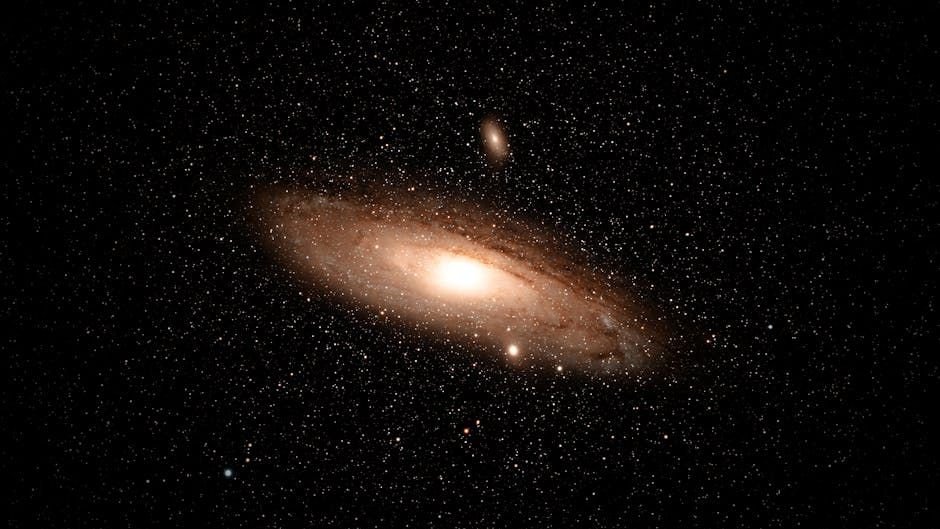
At 2.5 million light-years distant, Andromeda stood as the farthest object discernible to the naked eye, a spiral giant harboring up to a trillion stars. Ancient skywatchers noted its faint smudge long before modern lights obscured it, underscoring humanity’s enduring fascination with deep space.
Its proximity to the Milky Way fueled speculation about future collisions, yet observations remained a testament to accessible astronomy. Binocular views hinted at its vast structure, inspiring viewers to contemplate the universe’s scale. No advanced gear matched the thrill of naked-eye detection on perfect nights.[1]
Key Takeaways
- Cassiopeia’s deeper V-notch acts as an arrow to Andromeda.
- Extend the Kappa-Schedar line three times for precise location.
- Dark skies and binoculars unlock the galaxy’s hazy splendor.
Cassiopeia’s guidance reminded stargazers that profound discoveries awaited just beyond city limits, blending myth, navigation, and cosmic wonder into one accessible pursuit. What galaxies will you chase next? Share your sightings in the comments.