

Most of the time, when we think about Earth making noise, we imagine earthquakes rattling buildings or volcanoes roaring to life. But our planet has another voice, far quieter and more constant: a gentle, low-frequency vibration known as the Earth’s hum. You can’t hear it with your ears, but sensitive instruments pick it up all the time, like a heartbeat pulsing beneath everything we do.
For years, even many scientists found this idea a bit unsettling: why is the ground vibrating when there’s no earthquake, no explosion, no obvious trigger at all? As research has improved, that eerie question has started turning into something much more exciting. The hum is becoming less of a cosmic oddity and more of a powerful new way to understand the planet we live on, from its deep interior to the restless oceans and even the changing climate.
The Strange Discovery Of A Planet That Never Truly Sleeps

Imagine checking a seismograph on a perfectly calm day: no storms, no traffic, no earthquakes, nothing obvious going on. Yet the instrument still draws a restless, wiggly line. That’s exactly what puzzled researchers in the late twentieth century, when they realized that background vibrations were constantly present, even in the quietest conditions they could find. At first, many thought it was just noise from nearby cities, machines, or instruments themselves misbehaving.
When independent groups around the world began reporting the same strange background signal, the story changed. These vibrations, stretching across low frequencies that humans can’t hear, were showing up everywhere, from quiet ocean islands to remote desert stations. It slowly became clear that Earth never really stands still. Even when we think the planet is calm, it’s murmuring in an almost musical way, a continuous, low rumble that scientists started to call the Earth’s hum.
How Ocean Waves Can Shake A Whole Planet

The big surprise was that these mysterious vibrations weren’t mainly caused by earthquakes at all, but by something much gentler: ocean waves. When waves traveling in different directions meet, they can collide and create subtle pressure changes that push rhythmically on the seafloor. It’s a bit like thousands of fingers drumming softly on a giant drum; a single tap is small, but together they build up a steady rhythm.
The constant churning of the oceans sends low-frequency energy into the solid Earth, which then travels through rock just like sound moves through air. These signals are incredibly faint, but because they never really stop, they add up over hours, days, and years into that continuous hum. In some regions, stormy seas and strong swells make the hum louder; in calmer seasons, it softens. The oceans, in other words, are playing the Earth like an instrument, even on days that seem perfectly still on land.
Listening To The Deep Interior Without Waiting For Disasters
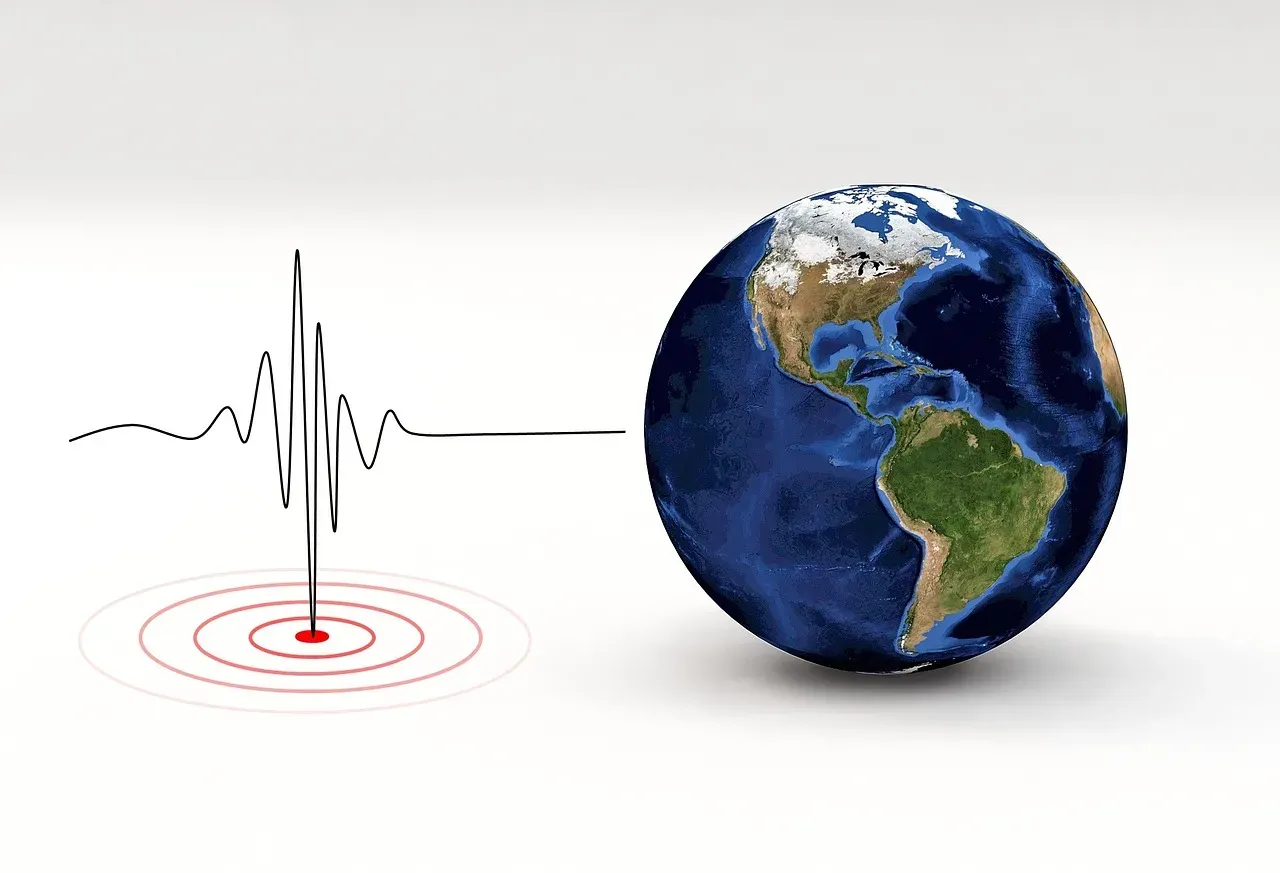
Traditionally, scientists learned about Earth’s interior by watching how seismic waves from earthquakes travel through the planet. The problem is, big quakes are rare, unpredictable, and unevenly distributed. The hum completely changes the game, because it’s there all the time, like a constant stream of tiny test pulses traveling through rock. Instead of waiting for nature to deliver a massive jolt, researchers can use this low-level rumble as a continuous probe.
By carefully analyzing how the hum moves through the crust and mantle, scientists can map structures deep below the surface with surprising detail. Differences in rock temperature, composition, and thickness all subtly change the way the hum’s waves behave. It’s a bit like using the muffled sound of traffic heard through a wall to guess what that wall is made of and whether it has hidden pipes or gaps. The hum gives us a quiet, almost gentle form of X-ray vision into the planet’s bones.
What The Hum Reveals About Shifting Ice, Rising Seas, And Climate

Because the hum is so tightly linked to the oceans and atmosphere, it isn’t just a geophysical curiosity; it reflects changes in the climate system. As storms become stronger or more frequent in some regions, or as wind patterns shift, the energy poured into the oceans changes too. That alters the background vibrations recorded by sensitive instruments, leaving faint fingerprints of weather and climate in the seismic data. The hum has started to look less like a static noise and more like a dynamic diary of the planet’s mood.
On longer timescales, changes in sea level and the melting of large ice sheets gradually redistribute weight on the Earth’s surface. That slow reshaping affects how the planet flexes and vibrates, just as tightening or loosening a guitar string changes its tone. While these signals are subtle and hard to tease out, researchers are increasingly interested in using the hum as one more tool to track large-scale changes. The idea that melting ice in Greenland or Antarctica might slightly alter the background rumble of the whole planet is both unsettling and incredibly revealing.
New Listening Tools: From Deep-Sea Sensors To Quiet Desert Stations

To make sense of such faint signals, scientists rely on dense networks of seismometers spread across the globe. In recent years, new instruments placed on the seafloor, inside boreholes, and even temporarily on the ocean surface have opened up regions that used to be almost silent in the data. The more ears we have listening, especially in the oceans where much of the hum is generated, the sharper the global picture becomes. It’s similar to switching from a fuzzy radio to a high-quality stereo system.
Modern processing techniques, including methods borrowed from signal processing and data science, allow researchers to pull meaningful patterns out of what looks like random noise. By stacking data from many stations over long periods, they can amplify the shared hum and suppress local interference from traffic, industry, or nearby storms. In a way, the entire Earth is being treated like a massive laboratory experiment, with thousands of synchronized listeners quietly recording its ongoing conversation with the oceans and the atmosphere.
From Mysterious Noise To A New Way Of Seeing Earth

As understanding of the hum has deepened, what once looked like a nuisance has turned into a rich source of information. Early on, some researchers tried to filter out the background vibrations to focus solely on earthquakes. Now, many of those same teams are doing the opposite: isolating the hum itself and treating it as the main signal of interest. It’s a reminder of how often breakthroughs begin with something people first try to ignore.
The hum has already helped refine models of the crust and upper mantle, and it continues to reveal unexpected variations from one region to another. Some areas transmit the hum more efficiently, hinting at colder, stiffer rock, while others seem to soften and scatter it, pointing to warmer or fractured zones. As the datasets grow and decades of recordings accumulate, the quiet parts of the seismic record are becoming just as scientifically valuable as the dramatic spikes from major earthquakes.
Why This Matters More Than You Might Think

It’s easy to shrug off something we can’t hear and don’t feel, especially when it’s as abstract as a global background vibration. But the Earth’s hum ties together the solid planet, the oceans, and the atmosphere into a single story. It offers a rare bridge between deep-earth science and everyday phenomena like waves, storms, and shifting ice. In a world where we’re trying to understand how everything is connected, that bridge is worth paying attention to.
On a personal level, knowing that the ground beneath you is quietly singing can change the way you see an ordinary day. Even when the sky is clear and the air is still, the planet is busy, flexing, pulsing, and responding to distant storms you’ll never see. The hum doesn’t shout or demand attention, but it carries messages about Earth’s past, present, and future for anyone patient enough to listen.