
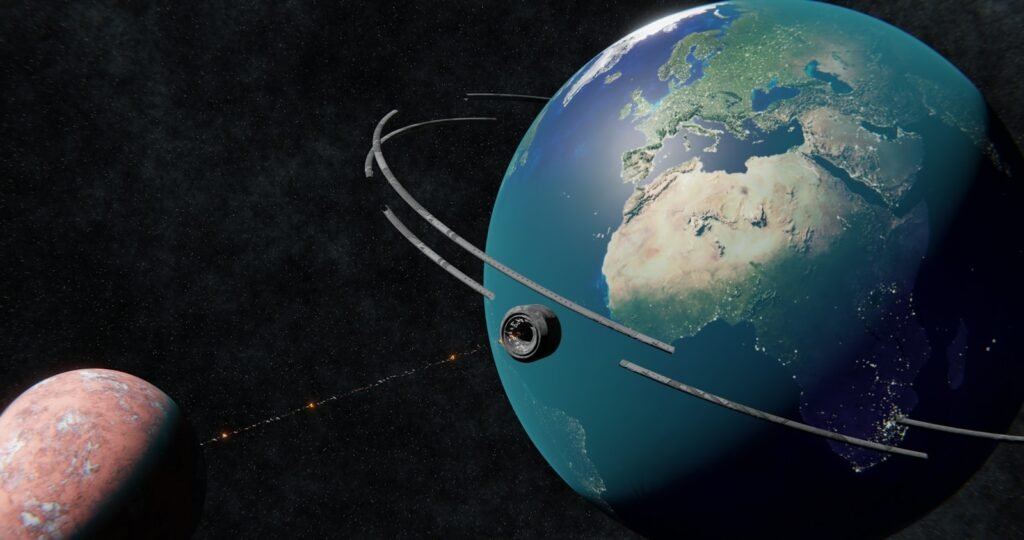

Somewhere beneath your feet, thousands of miles down in searing liquid metal, the planet’s internal compass is twitching and drifting in ways that are starting to worry scientists. Over the past century, the magnetic north pole has lurched across the Arctic at an accelerating pace, forcing cartographers, pilots, and even smartphone makers to scramble just to keep up. What we are seeing is not a Hollywood-style catastrophe, but a subtle rearrangement of the invisible shield that makes Earth habitable. This article explores what is actually changing inside our magnetic field, how past upheavals have played out, and what parts of the story we still do not understand. The mystery is not whether Earth’s magnetism is shifting – it is – but how far it will go, and what that might mean for a civilization that quietly depends on it every day.
When Your Compass Is Wrong: The Race of the Magnetic North Pole
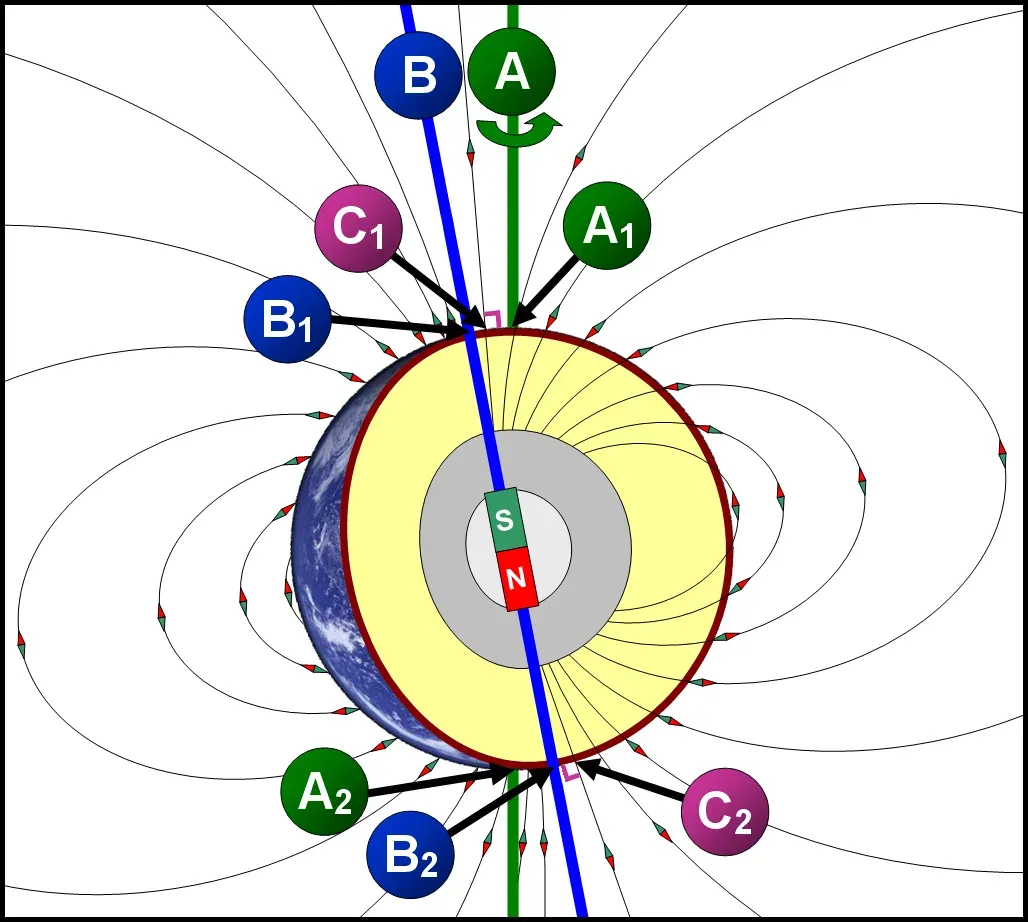
The phrase “magnetic north” sounds reassuringly fixed, but it is anything but stable right now. Since the early twentieth century, the magnetic north pole has migrated from northern Canada toward Siberia, and in recent decades that drift has sped up dramatically. Instead of creeping a few miles a year, it has been streaking tens of miles annually, enough to throw off navigation charts and runway markings at busy airports. Organizations that maintain the World Magnetic Model, which underpins navigation systems worldwide, had to issue an unscheduled update in 2019 because the pole’s rapid motion was breaking their prediction limits.
For most people, this shift shows up in mundane ways: the compass app on your phone quietly corrects for “declination,” the offset between geographic and magnetic north, and GPS-based systems increasingly take over where magnetism used to lead. Yet many backup navigation systems in ships, aircraft, and the military still rely on magnetic bearings that must be recalibrated more often as the pole moves. Indigenous communities in the Arctic, whose traditional wayfinding once leaned on a more stable sky and Earth relationship, now share a planet where the invisible reference lines are sliding underfoot. The movement itself is not unprecedented in Earth’s history, but it is a visible, measurable signal that something in the planet’s core dynamics is changing in real time.
A Dynamo in Turmoil: How Earth’s Magnetic Field Is Made
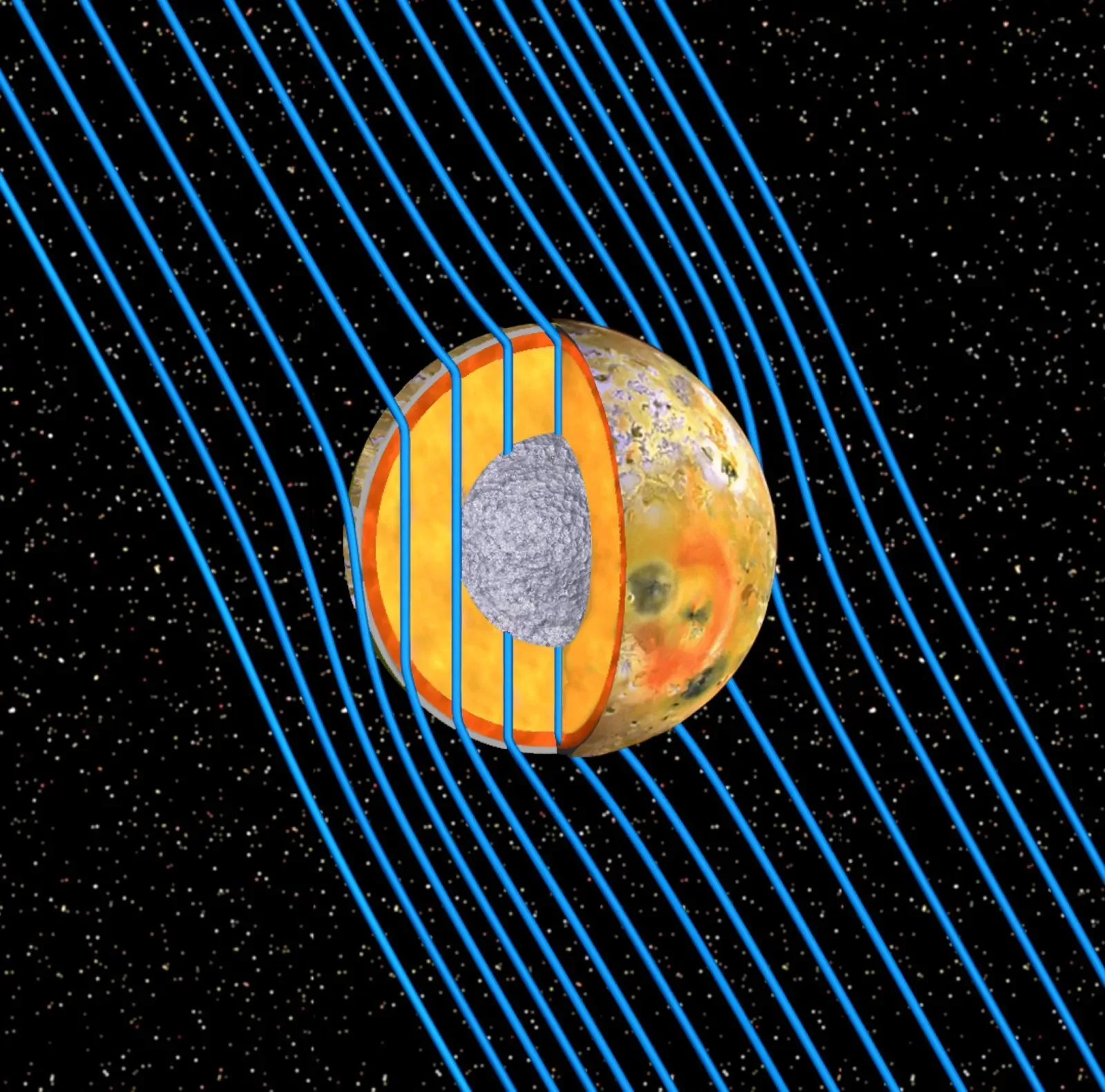
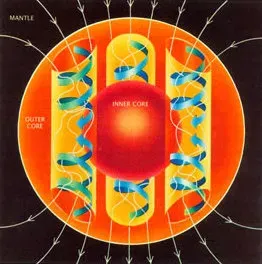
The drama at the surface begins in the deep interior, where a churning ocean of molten iron and nickel forms Earth’s outer core. As this electrically conducting fluid moves under the influence of Earth’s rotation and heat escaping from the inner core, it generates a self-sustaining magnetic field, a process physicists call a geodynamo. This is not a smooth, clockwork mechanism; it is more like a pot of boiling metal, with swirling jets, eddies, and plumes that constantly reshape the magnetic field lines threading through them. Small changes in flow patterns, density, or temperature can gradually alter where magnetic poles emerge and how strong the field is at different locations.
What makes the current era unnerving is that we can now “see” these deep processes better than ever using satellites that track minute changes in the field from orbit. Observations over the last few decades reveal patches where the field is strengthening and weakening, migrating like weather systems across the core-mantle boundary. Numerical simulations, run on some of the world’s largest supercomputers, show that such shifts can precede larger reorganizations of the field, including partial collapses and even reversals of polarity. Yet those models are still approximations, constrained by the fact that we cannot drill to the core or recreate its extreme pressures and temperatures in the lab. So, while we know the engine is restless, we do not yet have a technician’s manual for what each rattle and wobble really means.
Ghosts in the Rocks: What Ancient Reversals Tell Us
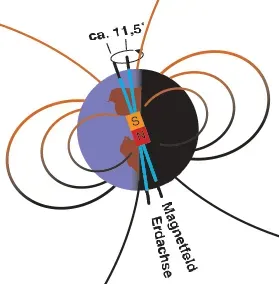
If you want to know how wild Earth’s magnetic field can get, you have to ask the rocks. When volcanic lava cools or sediments settle on the seafloor, tiny magnetic minerals inside them align with the current direction of the field and lock that orientation in place. Layer by layer, these materials build a time-stamped record of the planet’s magnetic history, which geophysicists have decoded over the past several decades. The record shows that Earth’s polarity has flipped many times, with north and south trading places on average every few hundred thousand years, though the spacing is irregular and sometimes long gaps occur.
The last full reversal, known as the Brunhes–Matuyama reversal, happened roughly about 780,000 years ago, long before modern humans existed. There have also been shorter-lived events, called excursions, where the field weakened, wandered, and then recovered without a complete flip. Importantly, the fossil and climate records around these episodes do not show clear global die-offs triggered solely by magnetism misbehaving. That does not mean reversals are consequence-free, but it suggests that life – and Earth’s atmosphere – are more resilient to magnetic chaos than some apocalyptic stories imply. Still, none of those past upheavals played out in a world wrapped in power grids, satellites, and global air travel, which changes the stakes in ways geology alone cannot answer.
The South Atlantic Anomaly: A Weak Spot Over a Busy Sky
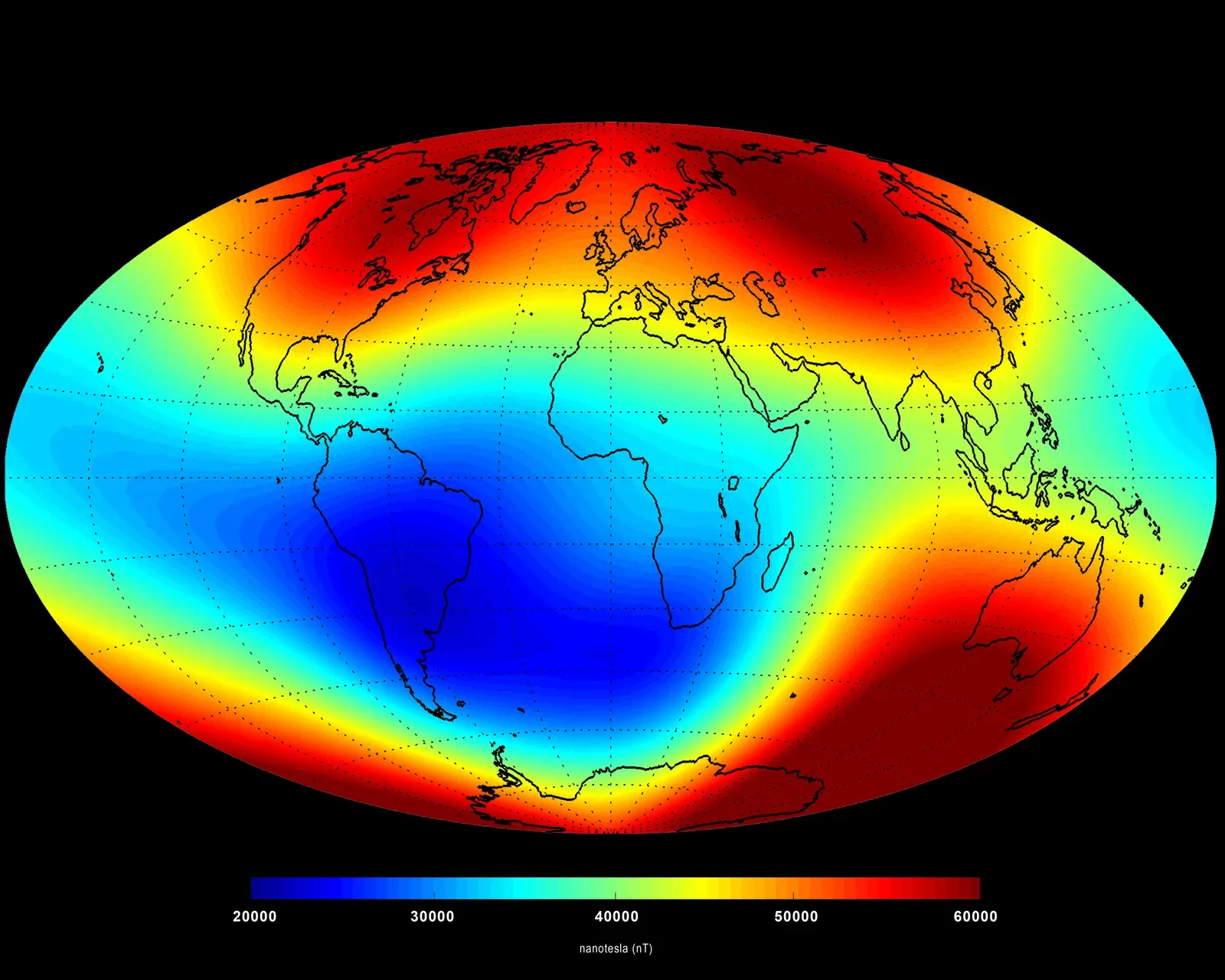
One of the most puzzling features of the modern magnetic field hangs over a region stretching from South America across the South Atlantic toward southern Africa. In this zone, known as the South Atlantic Anomaly, the magnetic field at satellite altitudes is significantly weaker than elsewhere at similar latitudes. For spacecraft passing overhead, that weakness means less shielding from high-energy charged particles trapped in Earth’s radiation belts. Satellites experience more frequent electronic glitches and radiation hits in this corridor, prompting operators to switch off sensitive instruments or harden their systems for repeated bombardment.
On the ground, the anomaly is mostly invisible, but to scientists it looks like a dent or bubble in the protective magnetic armor. Measurements suggest it has been expanding and shifting over the past few centuries, and there are signs it may be splitting into multiple lobes. Some researchers interpret this as a surface expression of competing magnetic patches in the core, a bit like two bar magnets buried deep below, wrestling over which orientation will dominate. Whether the South Atlantic Anomaly is simply a transient feature or a harbinger of a larger field reorganization remains a live question. Either way, it serves as a natural test lab for how technology behaves as the geomagnetic shield thins locally.
Radiation, Power Grids, and Orbits: What We Know About Real Risks
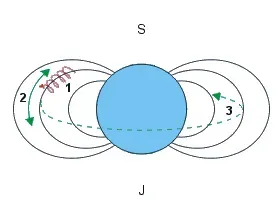
The magnetic field’s most practical job for us is deflecting a large share of charged particles streaming from the Sun and from cosmic sources. When the field weakens or warps, more of those particles can pour into near-Earth space, colliding with satellites, astronauts, and at times with our infrastructure. We already know from major solar storms, such as the event in March 1989 that knocked out power in parts of Quebec, that strong space weather can induce currents in long power lines and transformers. A weaker or more chaotic magnetic field could make such events more damaging or more frequent for satellites in certain orbits, even if ground-level impacts remain patchy and manageable.
At high altitudes, airline crews and frequent flyers on polar routes receive a higher radiation dose, and navigation systems already account for shifting magnetic parameters along those paths. Satellite designers now routinely include radiation-hardened electronics, shielding, and fault-tolerant systems precisely because they expect the field to misbehave in places like the South Atlantic Anomaly. Still, many risk estimates depend on extrapolating from a relatively short window of direct satellite observations and a limited number of extreme storms. We can say with confidence that space-based technology is the frontline vulnerable layer, but translating core dynamics into precise engineering risk remains a work in progress. The real danger may not be a single catastrophic event, but a steady uptick in glitches and costs that we barely notice until they accumulate.
Navigation, Animals, and Us: A World That Literally Feels the Field

Long before humans etched compass roses on maps, countless other species were already reading Earth’s magnetic field as naturally as we read street signs. Experiments with birds, sea turtles, salmon, and even some insects show that many animals can sense magnetic direction, and in some cases field strength and inclination, to guide long-distance migrations. These creatures appear to carry an internal magnetic map layered on top of visual and chemical cues, allowing them to return to the same beaches, rivers, or nesting sites year after year. If the field drifts or warps, that map effectively distorts, raising questions about how flexible these magnetic senses really are.
So far, there is evidence that some migratory animals adjust routes as the magnetic contours change, much like a hiker reorienting when a familiar landmark moves. Others seem to rely more on a combination of cues, which may buffer them from moderate magnetic shifts over decades. Humans, in contrast, largely outsourced our relationship with magnetism to technology, from compass needles to smartphone sensors. There are tantalizing hints that the human brain can respond faintly to magnetic changes, but any such sense is far from the robust, built-in compass of a homing pigeon. As the field evolves, the question is not only how animals will cope, but how attentive we will be to subtle disruptions that might show up first in non-human travelers.
Beyond Headlines: What the Shifting Field Really Means for Science
The deeper significance of today’s shifting magnetic field lies less in doomsday scenarios and more in what it reveals about a planet still very much alive inside. For centuries, Earth science treated the deep interior as almost unreachable, inferred only from seismic waves and surface rocks. The modern ability to monitor magnetic changes from orbit, combine them with ground observatories, and feed them into physics-based models has turned the field into a powerful diagnostic tool. By comparing present-day anomalies with paleomagnetic records from ancient lavas and sediments, researchers can test which simulations of the geodynamo come closest to reality.
This is where our understanding is quietly leaping ahead of earlier, more static views of Earth. Instead of imagining a stable bar magnet, scientists now talk about flux patches, reversed bundles of field lines, and complex feedbacks between core cooling, mantle structure, and magnetic behavior. That shift in mindset parallels broader changes in Earth science, from plate tectonics to climate, where dynamic systems thinking replaces simple, linear narratives. For culture at large, a wandering magnetic field undermines the comforting assumption that the planet’s big-scale features are fixed on human timescales. It forces us to see our home not as a finished product, but as a work in progress, with a molten heart that occasionally rewrites even our basic directional words like “north” and “south.”
Unknowns at the Core: Open Questions and Competing Scenarios
For all the new data, scientists still cannot say with confidence whether the current changes are the early stages of a full polarity reversal, a temporary excursion, or just one more wobble in a very noisy system. One major unknown is exactly how fast the field can collapse and reorganize; some geological records hint that local regions may experience drastic shifts on the scale of a human lifetime, while the global reversal unfolds over thousands of years. Another question is how tightly features like the South Atlantic Anomaly are tied to deep-seated structures in the lower mantle, which may anchor patterns in the core flows. Different computer models, tuned with slightly different assumptions, can reproduce different histories that all look somewhat like what we see today.
There is also ongoing debate about how low the overall field strength might drop during any future transition, and for how long, which matters directly for radiation exposure and technological impacts. As observations accumulate from dedicated satellite missions and denser ground observatory networks, research teams are constantly revising their maps and forecasts. That process is less about naming a single predicted outcome than about narrowing the range of plausible futures. In that sense, the shifting magnetic field is a perfect example of modern Earth science: rich with data, crowded with models, and still full of surprises that resist tidy answers.
How to Pay Attention to an Invisible Shield
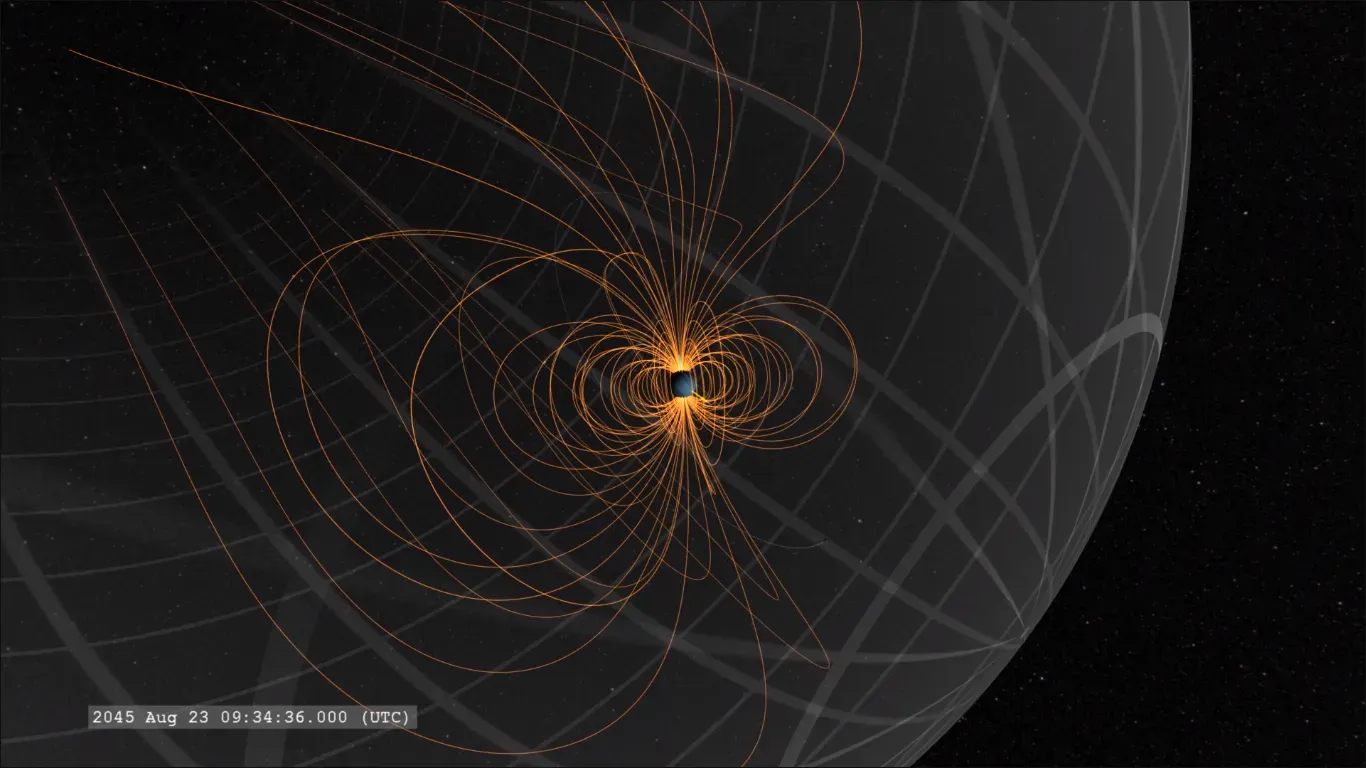
Most of us will never hold a magnetometer, but we all live under the protection of the magnetic field every moment of our lives. One practical way to stay engaged is to treat geomagnetism the way we increasingly treat weather and climate: as a background system worth occasional, informed attention. Following space weather forecasts, paying attention when airlines reroute polar flights, or noticing headline-grabbing solar storms can all serve as reminders that our planetary shield is dynamic. Educators and parents can fold simple demonstrations – like compasses responding to nearby magnets – into conversations about what lies beneath our feet and above our heads.
If you are more technically inclined, many space agencies and research institutions publish open data and visualizations of the changing field that anyone can explore. Supporting science literacy, public observatories, and long-term satellite missions might sound abstract, but they are exactly what allow us to detect and interpret slow planetary changes before they surprise us. In a world full of immediate crises, the gradual shift of an invisible field is easy to ignore, yet it quietly shapes everything from navigation to satellite communication. The magnetic field may be restless and its exact future uncertain, but paying attention to it is one concrete way to remember that Earth is not just a stage for human stories; it is an active cosmic machine that we are still learning how to read.
Suhail Ahmed is a passionate digital professional and nature enthusiast with over 8 years of experience in content strategy, SEO, web development, and digital operations. Alongside his freelance journey, Suhail actively contributes to nature and wildlife platforms like Discover Wildlife, where he channels his curiosity for the planet into engaging, educational storytelling.
With a strong background in managing digital ecosystems — from ecommerce stores and WordPress websites to social media and automation — Suhail merges technical precision with creative insight. His content reflects a rare balance: SEO-friendly yet deeply human, data-informed yet emotionally resonant.
Driven by a love for discovery and storytelling, Suhail believes in using digital platforms to amplify causes that matter — especially those protecting Earth’s biodiversity and inspiring sustainable living. Whether he’s managing online projects or crafting wildlife content, his goal remains the same: to inform, inspire, and leave a positive digital footprint.


