
Somewhere beneath your feet, more than three thousand miles down, lies one of the most fascinating and least understood places in the entire solar system. You are standing above a solid iron sphere that is nearly the size of the moon, spinning at its own pace, quietly shaping the magnetic field that shields every living thing on this planet. You never feel it. You never see it. Most of the time, you probably never think about it.
Yet right now, in laboratories and research institutions around the world, scientists are uncovering things about Earth’s inner core that are forcing them to completely rewrite what they thought they knew. The discoveries being made are not minor tweaks. They are game-changers. So buckle up, because what is happening at the very center of our planet is stranger and more wonderful than almost anyone expected. Let’s dive in.
A World Within a World: Just What Is the Inner Core?
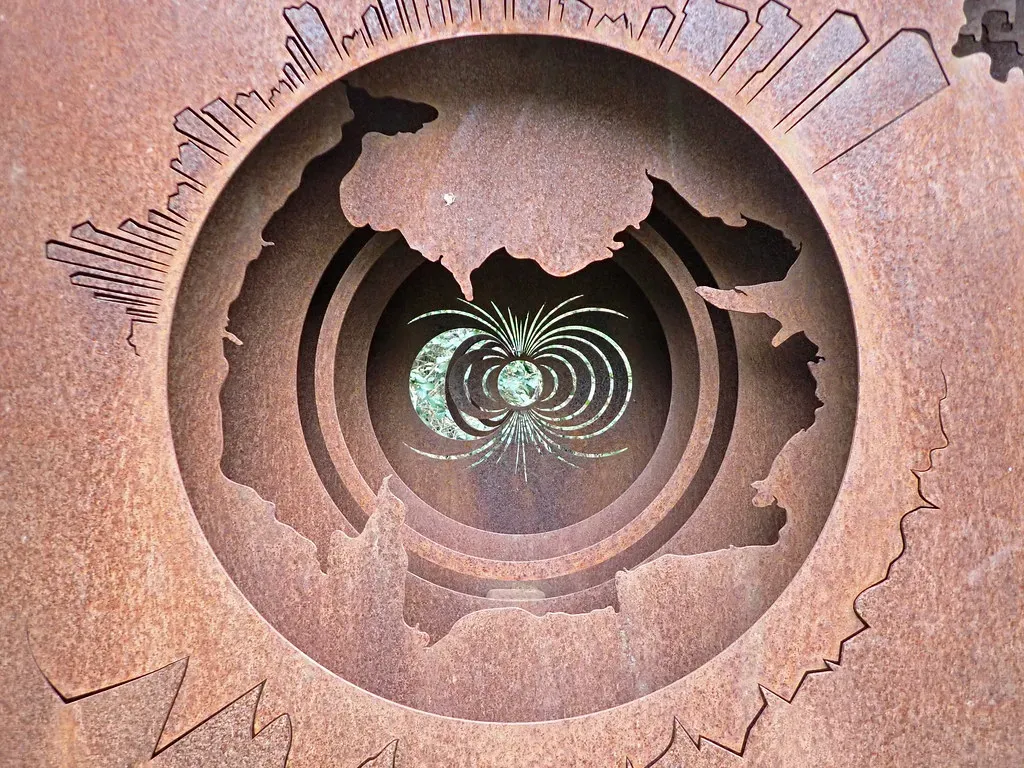
Picture a planet inside a planet. That is, honestly, the best way to think about Earth’s inner core. This solid sphere of iron and nickel is about seventy percent the size of the moon, with a radius of approximately 759 miles. It sits suspended in silence, wrapped in a roiling ocean of liquid metal, completely inaccessible to any drill or camera ever built.
Temperatures in the inner core reach as high as 9,800 degrees Fahrenheit, and pressures can climb to more than three million times greater than Earth’s average atmospheric pressure on land. That combination of heat and pressure is almost incomprehensible. Think of the deepest, most crushing environment you can imagine, then multiply it by a factor that makes it almost fictional, and you are somewhere close.
While direct observation of the core is impossible, scientists study it by analyzing changes in the size and shape of seismic waves as they pass through the core. It is a bit like trying to figure out what is inside a sealed, locked safe by listening to how sound bounces around inside it. Remarkably, this method has taught us a tremendous amount, and it is revealing surprises that nobody predicted.
The Spinning Core: A Rotation That Defies Expectations
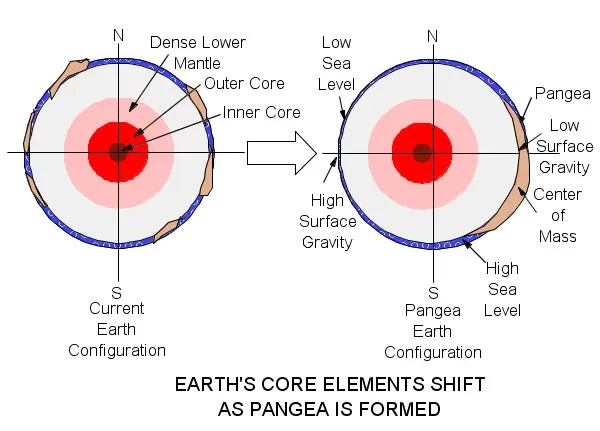
Here is something that might make your head spin, literally. The inner core does not rotate in perfect lockstep with the rest of the planet. Although the entire planet rotates, the inner core can spin at a slightly different speed than the mantle and crust, due to the viscosity of the outer core. Think of it like a spinning top inside a jar of honey. The top has its own motion, slightly decoupled from the world around it.
A USC study provides clear evidence that Earth’s inner core began to decrease its speed around 2010. Even more strikingly, the inner core is considered to be reversing and backtracking relative to the planet’s surface, due to moving slightly slower instead of faster than the Earth’s mantle for the first time in approximately forty years. This is not a small, academic observation. It is a genuine behavioral shift at the very center of the world.
Research published in the journal Nature not only confirms the core slowdown, but supports the proposal that this core deceleration is part of a decades-long pattern of slowing down and speeding up. Scientists now believe this follows a roughly seventy-year cycle, and that something similar happened in the 1970s, fitting within a long-term oscillation pattern. I think it is absolutely wild that the very heart of our planet is essentially doing its own thing on its own schedule.
A Changing Shape: The Core Is Deforming Over Time
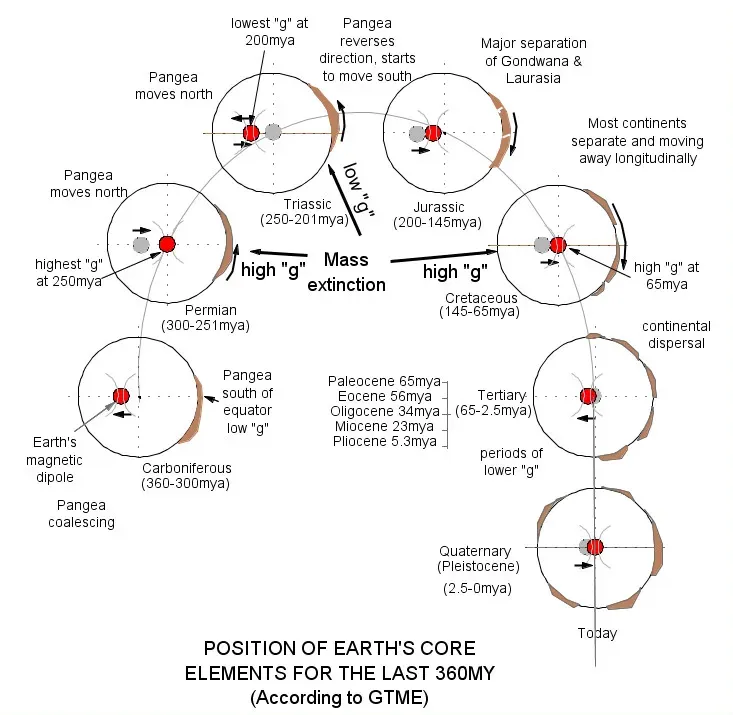
If a slowing spin was not enough to raise your eyebrows, consider this: the inner core is also changing shape. Scientists in 2024 confirmed that Earth’s inner core reversed its spin, and in February 2025 the same team revealed changes to the inner core’s shape, with deformations in its shallowest level. For decades, planetary scientists suspected this might be happening. Now there is actual evidence.
Using seismic data from repeating earthquakes, researchers found evidence of variations in how seismic waves travel through Earth’s inner core, suggesting that the core itself may be shifting in form. The method involved comparing 168 pairs of repeating earthquakes, nearly identical seismic events, which allowed scientists to isolate changes in seismic wave behavior and attribute those changes to specific variations within the Earth’s interior.
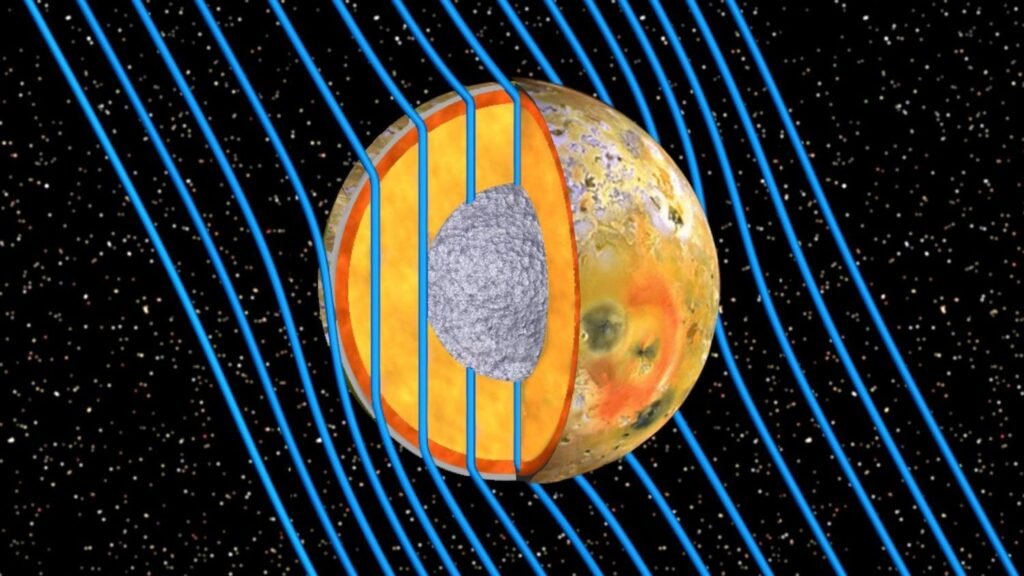
Shape changes in the core could hold clues about the forces deep inside Earth that power our magnetosphere, the invisible lines of magnetic energy that protect our planet from solar weather and deadly radiation. The magnetosphere is essentially the invisible armor keeping you alive every single day, so any connection between core deformation and magnetic protection is something worth paying close attention to.
Not Quite Solid, Not Quite Liquid: A New State of Matter
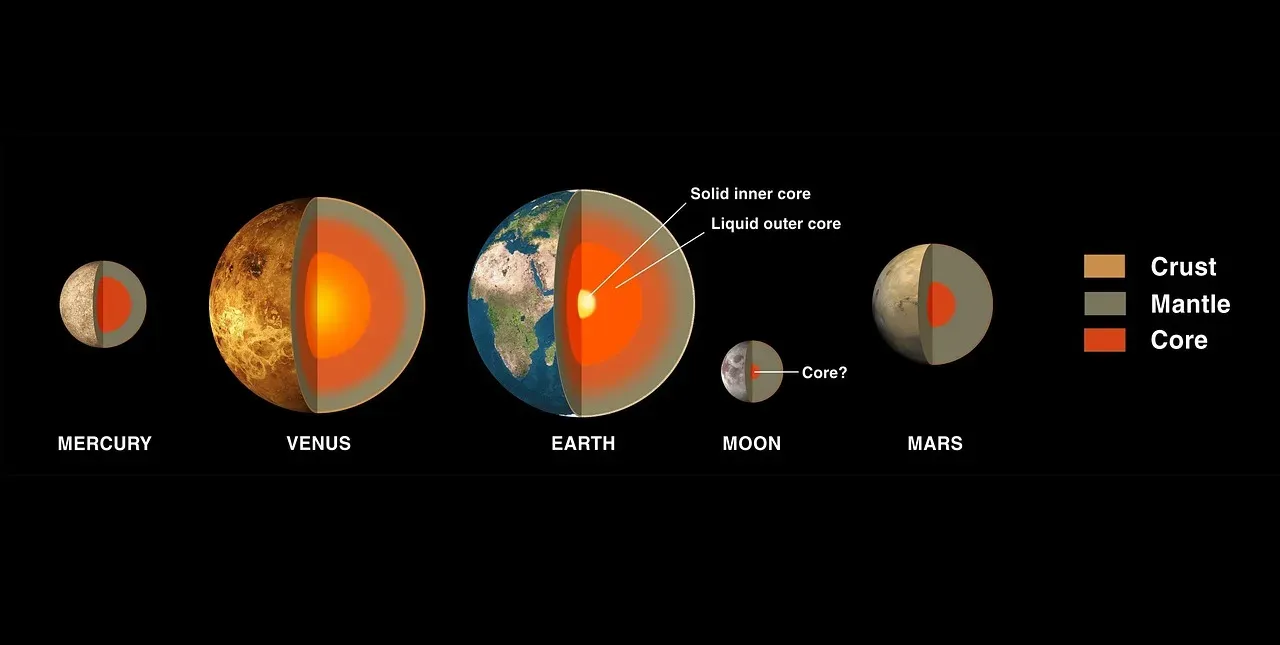
This is where things get genuinely mind-bending. You probably learned in school that Earth’s inner core is solid. That is still broadly true, but the reality, it turns out, is far more interesting. Earth’s inner core may not be a conventional solid at all, but a superionic material where light elements drift like liquid through a rigid iron lattice, and new experiments show that this unusual state dramatically softens the core.
Even though the inner core is solid, it behaves like a softened metal, slowing seismic shear waves and displaying a Poisson’s ratio more similar to butter than to steel. This paradox raised a fundamental question: how can the planet’s solid center appear firm yet strangely pliable? Scientists were puzzled by this for a long time, and the answer they have now found is remarkable.
The research team, led by scientists at Sichuan University and the Institute of Geochemistry of the Chinese Academy of Sciences, demonstrated that iron-carbon alloys shift into a superionic phase when subjected to intense pressure and heat, where carbon atoms travel quickly through the crystal framework of solid iron, greatly reducing its stiffness. It is as if the inner core is simultaneously a solid and a slow-motion liquid. Science has a way of making you rethink what words like “solid” even mean.
The Secret Role of Carbon: An Unexpected Architect
You would be forgiven for thinking carbon is just the stuff of pencils and diamonds. At the center of the Earth, though, carbon may be the secret ingredient that made our entire planet livable. Researchers long struggled to explain how Earth’s solid inner core formed, cooled, and crystallized without undergoing extreme supercooling, but a study published in Nature Communications reveals that carbon may play a far more significant role than previously believed.
The international team, led by scientists from the University of Oxford, University of Leeds, and University College London, used atomic-scale simulations to show that carbon accelerates the nucleation process necessary for the core to freeze. In plain terms, carbon helped the inner core “set” into a solid, much the way a catalyst helps cement harden. Without it, the whole process might have stalled out. While silicon and sulfur, long thought to be important core components, actually slowed the crystallization process, carbon had the opposite effect.
Without carbon, Earth might have failed to develop a solid inner core, potentially compromising the generation of the planet’s magnetic field, which shields us from harmful solar radiation. Let that sink in. A single element, in precisely the right concentration, may have made the difference between a living planet and a barren rock. It is hard to say for sure exactly how the story of Earth would have unfolded without it, but the implication is staggering.
The Doughnut Discovery: A Hidden Ring in the Outer Core
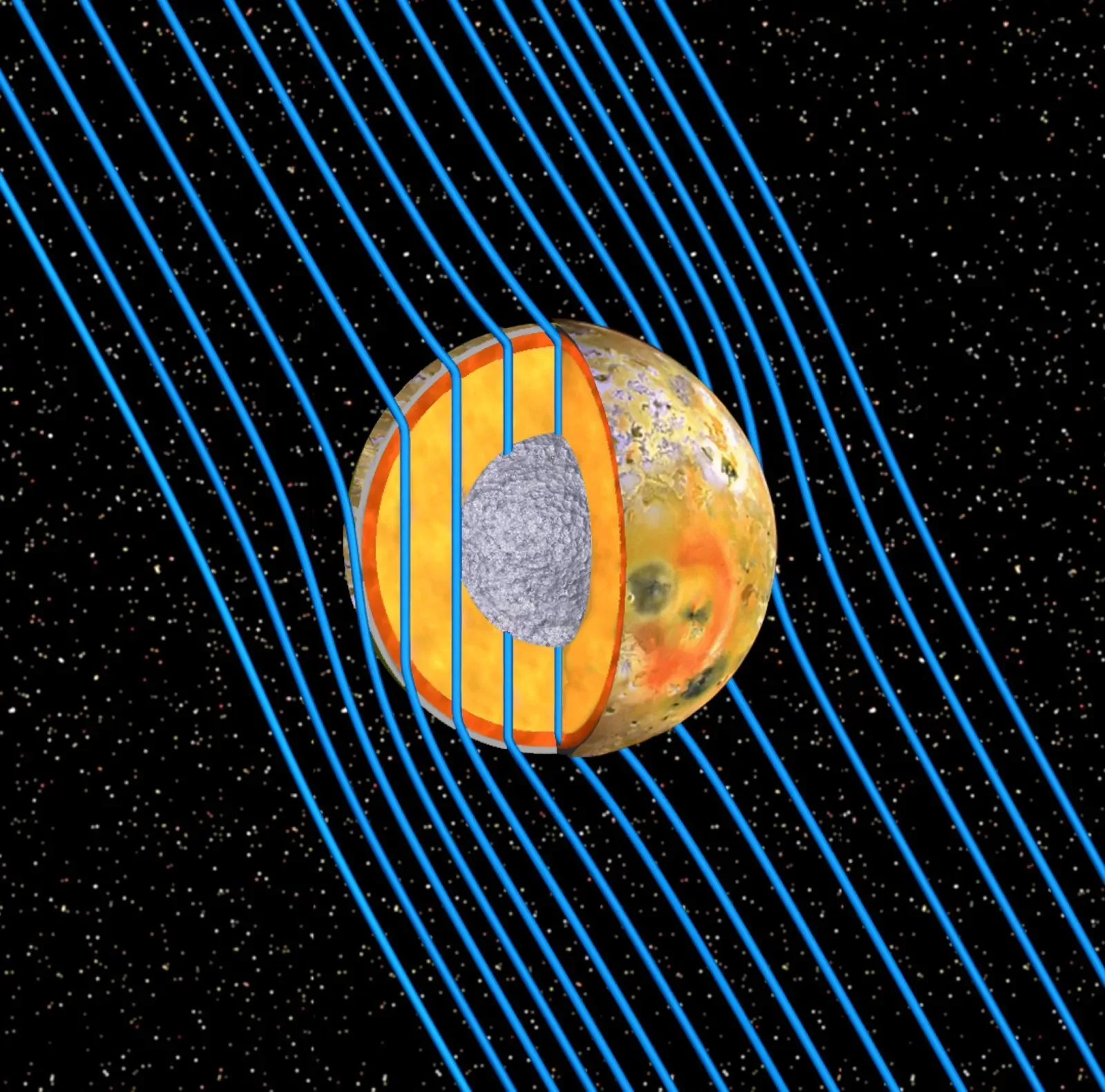
Scientists love a good unexpected shape. In August 2024, researchers at the Australian National University stumbled onto something nobody had mapped before. Dr. Xiaolong Ma and Professor Hrvoje Tkalčić discovered a large, doughnut-shaped region of the core parallel to Earth’s equator. Yes, a doughnut. Right there at the boundary between the outer core and the mantle, quietly hiding for billions of years.
The newly discovered doughnut-shaped region is at the top of Earth’s outer core, where the liquid core meets the mantle, and the seismic waves detected are slower in this region than in the rest of the liquid outer core. Seismic waves travel through the region approximately two percent slower than in the rest of the core, and the pair estimates that this area is just a few hundred kilometers thick.
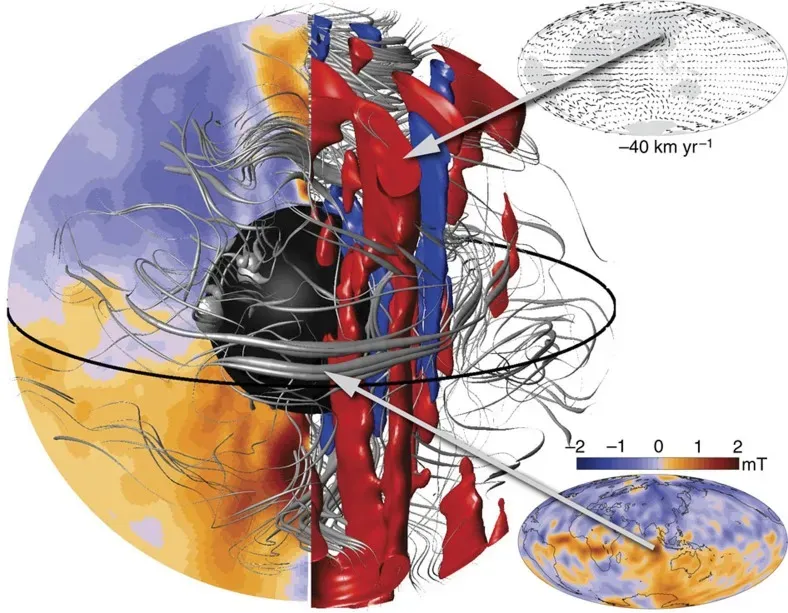
The outer core is predominantly made of liquid iron and nickel, and the vigorous movement of the electrically conductive liquid creates Earth’s magnetic field. Scientists believe that knowing more about the outer core’s composition is fundamental to understanding the magnetic field and predicting when it could potentially cease or weaken. The doughnut region raises fresh questions about what is going on chemically in that zone, and researchers are eager to find out.
A Fifth Layer and Hidden Metallic Ball at the Core’s Center
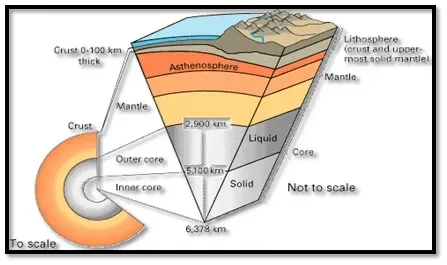
For most of human history, we thought Earth had four layers: the crust, the mantle, the outer core, and the inner core. Then came a discovery that quietly rewrote the textbooks. By measuring the different speeds at which seismic waves penetrate and pass through the Earth’s inner core, researchers believe they documented evidence of a distinct layer inside Earth known as the innermost inner core, a solid metallic ball that sits within the center of the inner core.
The findings, published in Nature Communications, confirm there is a fifth layer. The existence of an internal metallic ball within the inner core was hypothesized about twenty years ago, and researchers from the ANU Research School of Earth Sciences provided another line of evidence to prove the hypothesis. Think about that for a moment. A planet within a planet within a planet. The layers just keep going.
This innermost inner core behaves differently from the surrounding inner core, with seismic waves moving through it at noticeably different speeds depending on direction. It is like discovering that your house has a secret room inside a secret room. Studying the deep interior of Earth’s inner core can tell us more about our planet’s past and evolution, and the discovery of this fifth layer has opened entirely new lines of research into Earth’s geological history.
What the Core Means for Earth’s Magnetic Shield and Future
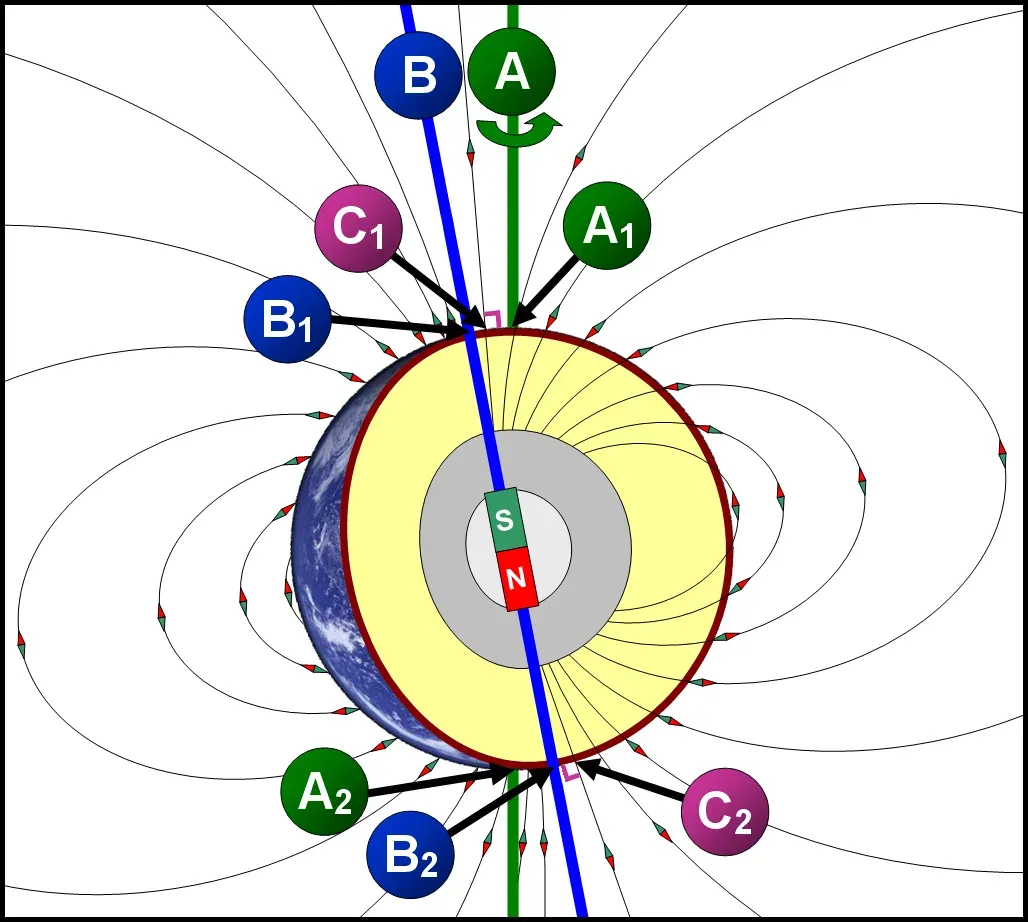
Let’s be real: the inner core is not just an abstract geological curiosity. It is directly connected to the reason you are alive right now. The vigorous movement of the electrically conductive liquid outer core creates Earth’s magnetic field, which shields the planet and helps sustain all life, protecting it from damaging solar winds and harmful radiation. The core is, in a very literal sense, a planetary life-support system.
Since the inner core interacts with the surrounding liquid outer core, which generates Earth’s magnetic field, changes in the core’s rotation could affect the magnetic field’s behavior over time. Meanwhile, the mobility of light elements within the superionic inner core may also contribute energy to Earth’s magnetic field. Every new discovery seems to deepen the connection between what happens three thousand miles down and the world you experience every day.
The liquid outer core is slowly shrinking. Millimeter by millimeter, the inner core has siphoned molten metal from the liquid core surrounding it. It likely took billions of years for the inner core to cool and solidify, and over the next few billion years, the inner core will continue to cool, until Earth’s entire core is a solid metal sphere. That is a distant future, and there is no need to panic. But it is a reminder that even the most stable-looking things are always quietly changing.
Conclusion: The Deep Earth Is Speaking, and We Are Finally Listening
There is something profoundly humbling about all of this. We have sent probes to the edge of the solar system, mapped the surface of Mars in extraordinary detail, and built telescopes that can peer at galaxies billions of light-years away. Yet the center of our own planet has remained a near-total enigma. That is finally changing, and the pace of discovery is accelerating.
From a spinning solid ball that is changing its rotation and deforming its shape, to a strange superionic state of matter that defies easy classification, to a newly discovered fifth planetary layer and a mysterious doughnut region lurking in the outer core, Earth’s deep interior is proving to be endlessly surprising. Every earthquake that ripples through the planet carries a message from the core, and scientists are getting better and better at reading it.
The inner core is not just a lump of iron sitting quietly at the center of the world. It is an active, dynamic, ever-evolving engine that makes life on the surface possible. The more we learn, the more we realize just how little we understood before. What would you have guessed was hiding at the center of the Earth? Whatever your answer, the truth is almost certainly stranger.