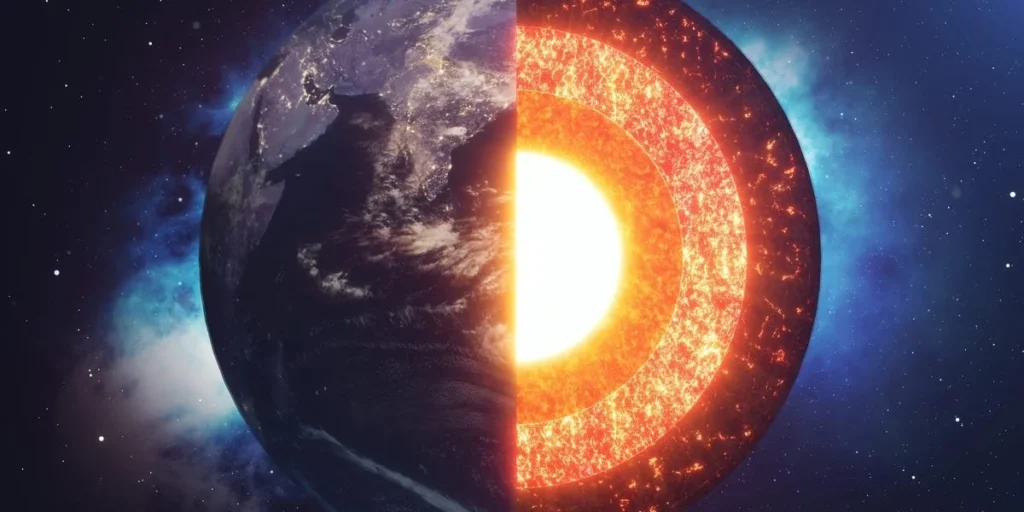

You are standing on roughly 6,371 kilometers of layered rock, molten metal, and mind-bending pressure right now. Beneath your feet lies a world that has never been seen, never been touched, and may never be fully understood. It sounds like science fiction, but it’s the very real story of Earth’s core – a region so extreme, so remote, and so dynamic that it continues to outwit even the most brilliant geophysicists on the planet.
What’s remarkable is how much science has uncovered about a place no human or instrument has ever physically visited. Discoveries made between 2025 and 2026 alone have fundamentally rewritten what we thought we knew. So if you ever assumed the ground beneath you was boring and unchanging, prepare to be genuinely surprised. Let’s dive in.
A World Built in Layers: Understanding Earth’s Core Structure
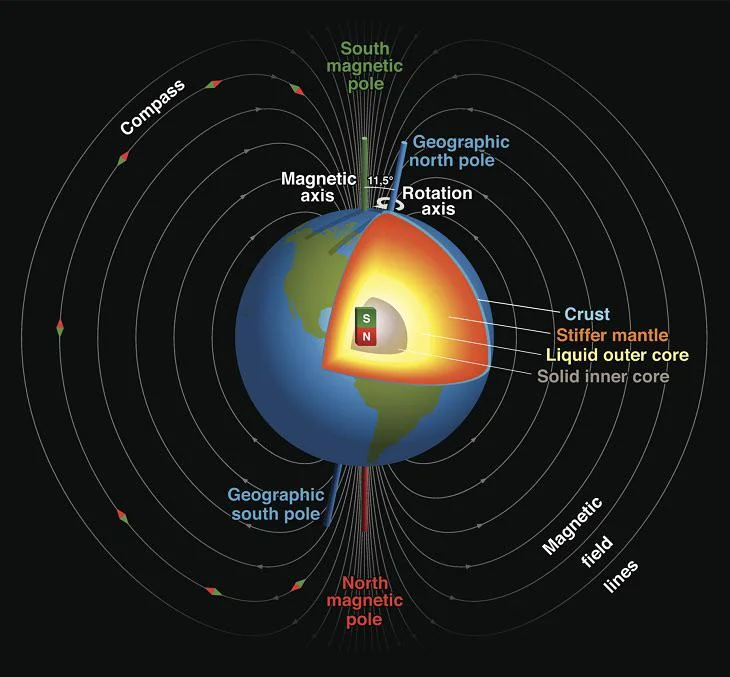
Think of Earth like a hard-boiled egg, but dramatically more violent on the inside. The outer core is a fluid layer roughly 2,260 kilometers thick, composed mostly of iron and nickel, lying above the solid inner core and below the mantle, beginning approximately 2,889 kilometers beneath Earth’s surface. Below that, the inner core sits compressed and incredibly dense at the very center of the planet.
Beneath Earth’s molten outer core is a dense central region – the inner core, a compact sphere made of an iron and light-element alloy squeezed by more than 3.3 million atmospheres and heated to temperatures comparable to the Sun’s surface. To put that in perspective, the deepest point in any ocean – the Mariana Trench – sits at just over a thousand atmospheres of pressure. The core makes that look like a warm puddle.
How Scientists Actually Study Something They Can Never Reach
Here’s the thing: no drill has ever come remotely close to the core. Reaching the deepest parts of Earth is far more difficult than traveling through space. Humans have journeyed roughly 25 billion kilometers beyond the planet, yet drilling beneath Earth’s surface has only reached a depth of just over 12 kilometers. So how do scientists know anything about the core at all?
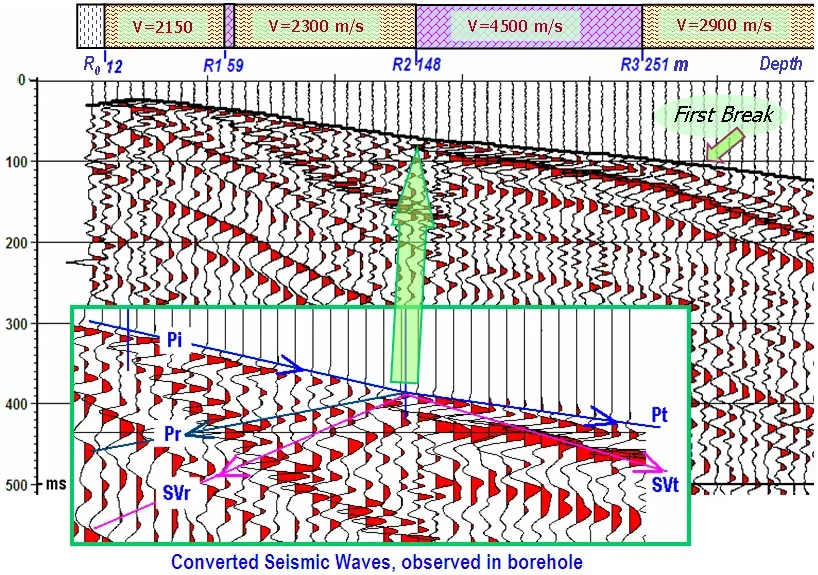
The answer is earthquakes. While direct observation of the core is impossible, scientists study it by analyzing changes in the size and shape of seismic waves as they pass through the core. Earthquakes generate two types of waves: primary waves, or P waves, which move the ground in the same direction the wave travels, and shear waves, or S waves, which are slower and move the ground perpendicular to the wave’s direction. By watching how those waves change as they pass through the planet, scientists can effectively take an X-ray of the Earth’s interior.
The Outer Core: A Churning Ocean of Liquid Metal
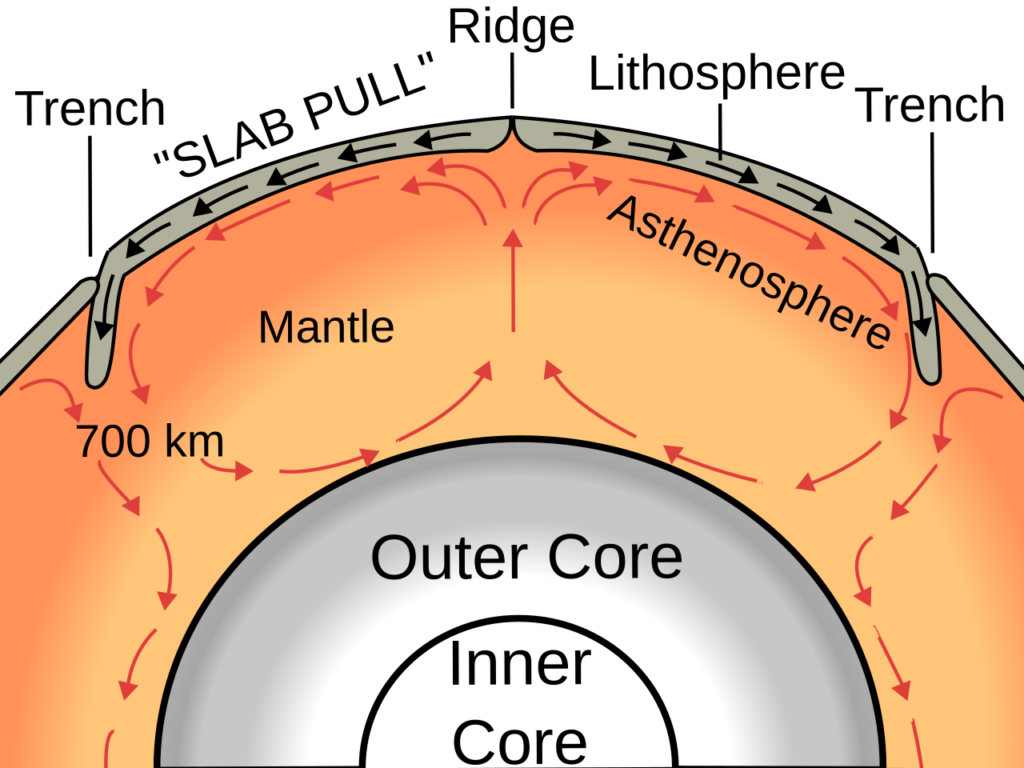
The outer core is a significant liquid layer of Earth’s core located between the mantle and the inner core, making up about 30 percent of Earth’s mass. It begins approximately 1,800 miles beneath the surface and is around 1,430 miles thick, primarily consisting of liquid iron and nickel, with temperatures ranging from 7,200 to 9,000 degrees Fahrenheit. Honestly, when you hear the word “liquid,” don’t picture water. Think something far stranger.
Earth’s magnetic field is driven by thermal convection and also by chemical convection – the exclusion of light elements from the inner core, which float upward within the fluid outer core while denser elements sink. This chemical convection releases gravitational energy that is then available to power the geodynamo that produces Earth’s magnetic field. Without that churning cauldron of metal beneath you, life on the surface would look radically different – or quite possibly not exist at all.
The Inner Core: Solid, but Stranger Than Anyone Expected
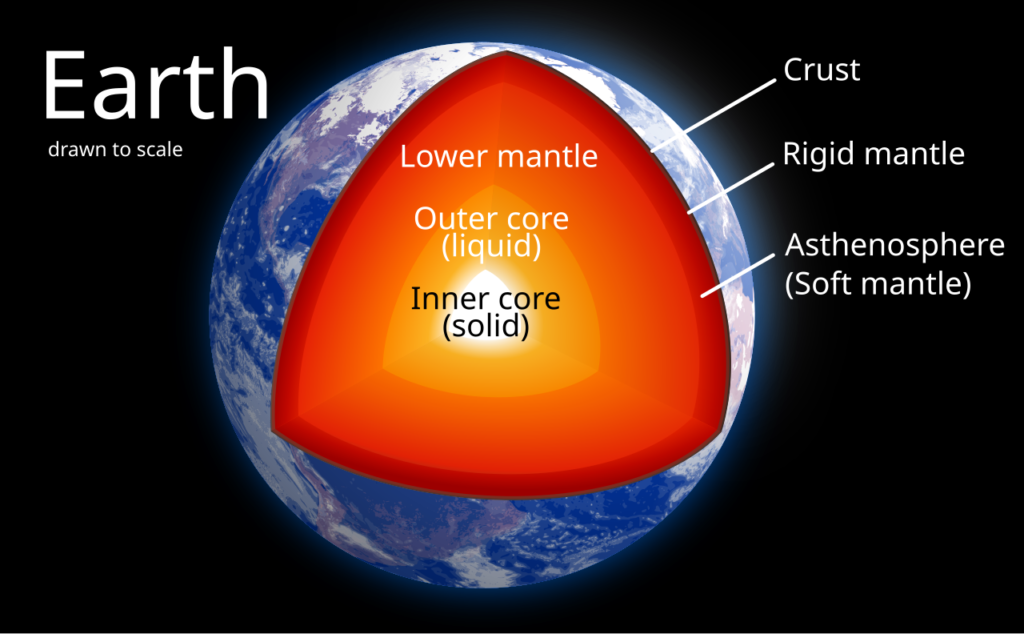
For decades, scientists assumed the inner core was simply a dense, solid, and largely unchanging ball of iron and nickel. That view has been overturned in spectacular fashion. Research reveals that Earth’s inner core is not behaving like a conventional solid – instead, it exists in a superionic state in which light elements move through a stable iron framework as if they were liquid. New research reveals that Earth’s solid inner core is actually in a superionic state, where carbon atoms flow freely through a solid iron lattice. This unusual behavior makes the core soft, matching seismic observations that have puzzled scientists for decades.
I think that’s one of the most genuinely mind-bending scientific ideas of recent years. Something that’s technically solid, yet behaves with the fluidity of a liquid on an atomic level. Even though the inner core is solid, it behaves like a softened metal, slowing seismic shear waves and displaying a Poisson’s ratio more similar to butter than to steel. This paradox raised a fundamental question: how can the planet’s solid center appear firm yet strangely pliable? Researchers now have a strong answer, and it involves carbon.
The Role of Carbon: The Unsung Hero of Earth’s Deep Interior
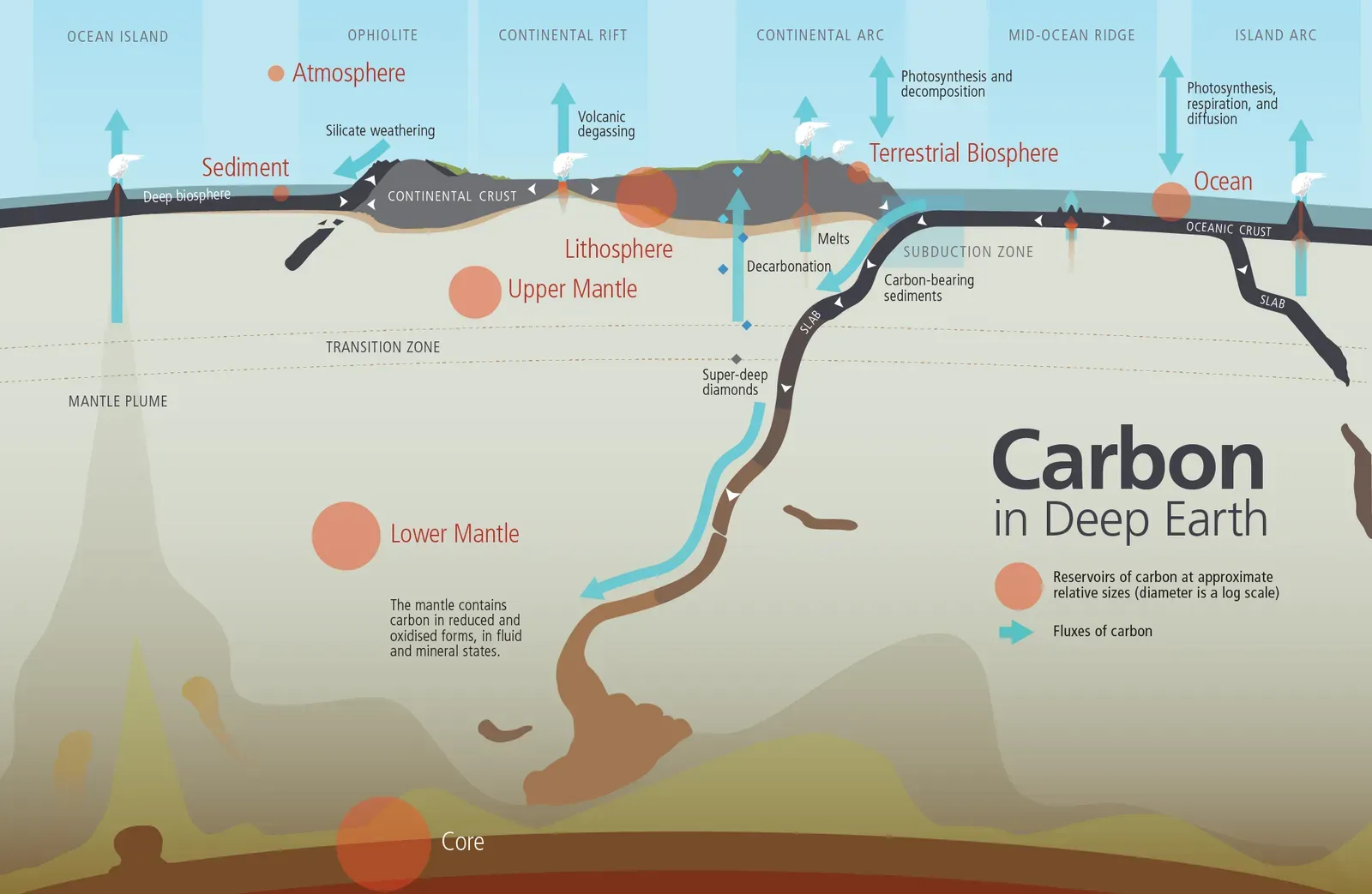
Carbon tends to get all its fame from diamonds, pencils, and life itself. Yet it plays a far more fundamental role than most people realize. New research reveals that carbon made it possible for Earth’s molten core to freeze into a solid heart, stabilizing the magnetic field that protects the planet. Without it, Earth’s deep interior – and life above – might look very different. That’s not a small statement. That’s the entire premise of habitable Earth.
A study by researchers at the University of Oxford, University of Leeds, and University College London identified a new constraint on the chemistry of Earth’s core, by showing how it was able to crystallize millions of years ago. The study was published in Nature Communications. The researchers showed that the core would need to be made of roughly 3.8 percent carbon for it to have begun crystallizing. That figure suggests carbon is significantly more abundant in the core than scientists had previously assumed – a revelation that reshapes our understanding of planetary formation itself.
A Core That Changes Shape: New Evidence From 2025

If you thought the core was just sitting there motionless at the center of the Earth, this section is going to surprise you. The Earth’s inner core is less solid than previously believed, undergoing structural changes near its surface. Seismic waveform data from repeated earthquakes revealed that the inner core may experience viscous deformation, altering its shape. Researchers observed this using earthquake data spanning more than three decades.
The study utilized seismic waveform data – including 121 repeating earthquakes from 42 locations near Antarctica’s South Sandwich Islands that occurred between 1991 and 2024 – to give a glimpse of what takes place in the inner core. As the researchers analyzed the waveforms from receiver-array stations located near Fairbanks, Alaska, and Yellowknife, Canada, one dataset of seismic waves included uncharacteristic properties the team had never seen before. New research led by seismologist John Vidale suggests that Earth’s inner core is not just rotating but also undergoing notable shape changes, with regions potentially rising and falling by up to 1 kilometer over short geological timeframes. That’s about as surprising as realizing your house’s foundation has been silently reshaping itself for years.
The Magnetic Field Connection: Why the Core Affects Every Living Thing

Here’s something worth sitting with for a moment. The dynamics happening thousands of kilometers beneath you are directly connected to whether life can exist on this planet at all. Without the outer core, life on Earth would be very different. Scientists believe that convection of liquid metals in the outer core creates Earth’s magnetic field. This magnetic field extends outward from Earth for several thousand kilometers, creating a protective bubble that deflects the Sun’s solar wind. Without this field, the solar wind would have blasted away our atmosphere, and Earth would be dead and lifeless like Mars.
Changes in the inner core’s shape and movement could affect heat transfer between core layers, potentially influencing the stability of Earth’s magnetic field and contributing to fluctuations such as geomagnetic reversals. Meanwhile, as Earth’s solid inner core spins, the molten outer core churns and sloshes, and their interactions generate magnetic energy that enfolds the planet in the magnetosphere. The liquid outer core is slowly shrinking – millimeter by millimeter, the inner core has siphoned molten metal from the liquid core surrounding it. It likely took billions of years for the inner core to cool and solidify, and over the next few billion years, the inner core will continue to cool until Earth’s entire core is a solid metal sphere. When that day comes, the magnetic field will cease – though thankfully that is billions of years away.
Conclusion: The Deepest Mystery Is Right Under Your Feet
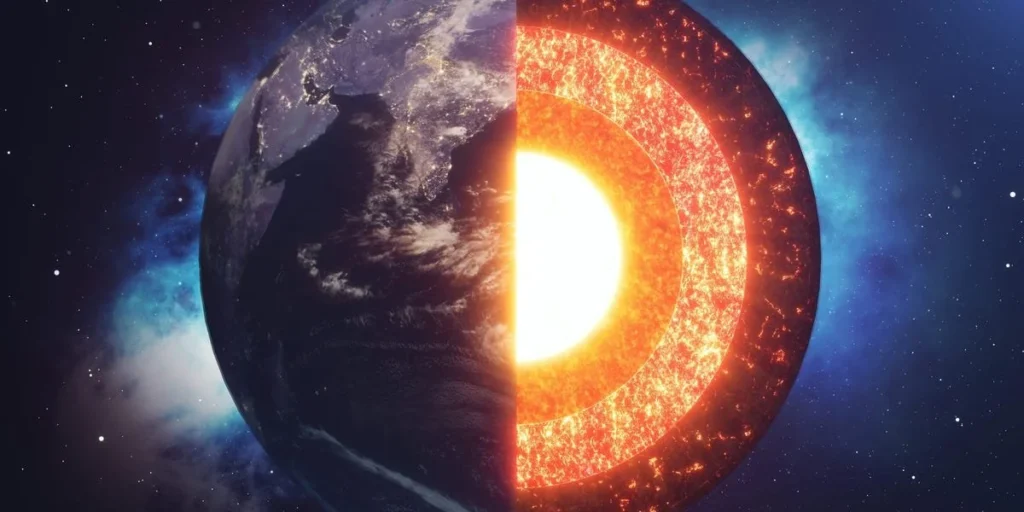
It’s easy to look outward – to space, to distant planets, to galaxies billions of light-years away – and feel a sense of cosmic wonder. Yet one of the greatest mysteries in all of science sits directly beneath you, every single second of every day. Earth’s inner core, a roughly 1,500-mile-wide hot ball of metal, is still mysterious to scientists. Separated from the planet’s surface by thousands of miles of rock, it’s incredibly difficult to study. The most cutting-edge technology humans possess still cannot physically touch it.
What makes this even more astonishing is how alive the core actually is. It changes shape. It may exist in a state of matter that defies simple categories. It is slowly absorbing its own liquid surroundings. Ongoing research continues to reinforce the view that Earth’s deep interior is dynamic rather than static, playing a significant role in shaping the planet’s geophysical and magnetic behaviors. There is something profoundly humbling about the fact that the ground we build our cities on rests above a world that may take centuries more to fully understand.
The Earth’s core isn’t just a geological curiosity. It is the engine of life, the guardian of the atmosphere, and one of the last truly unexplored frontiers on this planet. Every earthquake that rattles a window is, in a sense, a tiny message from the deep. The question is whether we’ll learn to read them well enough in time. What do you think science will uncover next from this hidden world? Share your thoughts in the comments below.