
Deep below your feet, far beneath the crust and the swirling mantle, there’s a hidden engine roaring with quiet power. You can’t see it, you can’t touch it, but every earthquake, every drifting continent, and even the compass on your phone owes its behavior to this restless, molten heart. For a long time, scientists treated Earth’s core like a mostly steady, slowly cooling ball of metal – intense, yes, but basically predictable.
Over the last couple of decades, that picture has been flipped on its head. New data suggest the core is more dynamic, more changeable, and frankly more moody than we ever gave it credit for. It speeds up, slows down, squirms, tilts flow patterns, and sends subtle ripples all the way to the surface. Once you see how alive it really is, it’s hard not to feel like we’re living on top of a sleeping beast that never fully sleeps.
The Hidden Heart: A Churning Metal World

About three thousand kilometers below us, the solid inner core sits inside a swirling ocean of molten iron and nickel called the outer core. It’s unimaginably hot down there – hotter than the surface of the Sun – and under pressure so crushing that metal behaves more like an ultra-thick liquid than anything we’re used to. For years, the common view was simple: the core is gradually cooling, slowly crystallizing, and powering Earth’s magnetic field in a mostly steady way.
But as more seismic data have been gathered from around the world, that simplistic image has fallen apart. Researchers now see complex flows, weird asymmetries, and surprising changes over mere decades. The core isn’t just a dying ember; it’s more like a fiercely boiling pot, with currents, eddies, and layers that constantly reorganize. To me, it’s a bit like discovering the engine of your car isn’t a solid block of metal, but a living, breathing creature constantly rearranging itself while you drive.
The Core That Spins, Slows, And Speeds Up
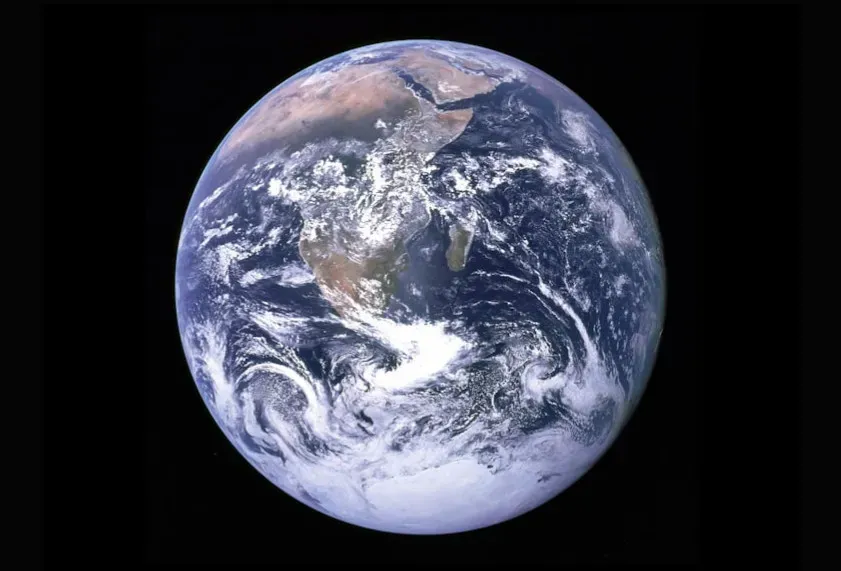
One of the most surprising ideas of the last few years is that the solid inner core doesn’t always rotate at the exact same rate as the rest of the planet. Studies of seismic waves passing through the core suggest it sometimes spins a bit faster, sometimes a bit slower, and may even pause or gently reverse its relative motion over decades-long cycles. That sounds almost science-fiction, but it comes straight out of trying to match real earthquake data with models of how waves travel through metal under insane pressure.
These tiny differences in rotation – we’re talking about small shifts, not wild spins – may ripple outward into changes we can actually measure at the surface. Slight variations in the length of the day, tiny wobbles in Earth’s rotation, and subtle shifts in the magnetic field all seem to be part of this deep choreography. It’s as if the planet has a slow internal heartbeat, and we’re only now learning how to read the pulse. When I first read about that, it felt less like geology and more like listening in on the planet’s private rhythm.
The Churning Dynamo: How The Core Builds Our Magnetic Shield
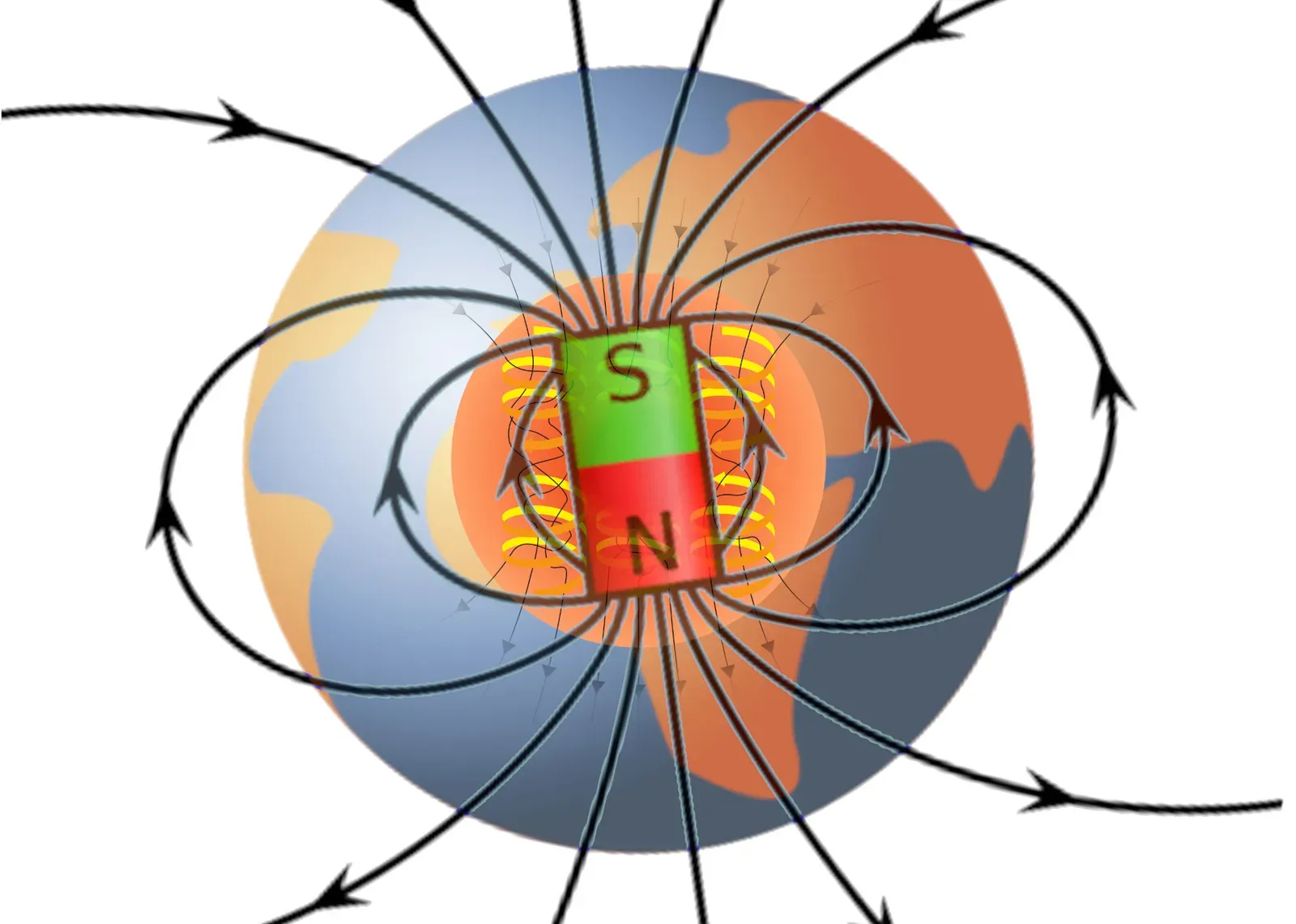
If the core ever truly went quiet, life on Earth would be in serious trouble. The flowing metal in the outer core acts like a giant dynamo, turning motion into a magnetic field that wraps the planet in a protective shield. This magnetic cocoon deflects charged particles from the Sun and cosmic rays from deep space; without it, our atmosphere would erode far more quickly and the surface would be blasted with radiation. The fact that your phone’s compass works is the tiniest, most mundane symptom of an absolutely colossal physical process.
What makes the story more intense is that this dynamo is not completely stable. The magnetic field drifts, weakens in some places, strengthens in others, and has even flipped directions multiple times over Earth’s history. The South Atlantic Anomaly – a region where the field is particularly weak – is one ongoing example of this uneven behavior. Geophysicists now think these surface changes are driven by changes in flow deep in the core. So when satellites glitch more in certain regions, or navigation systems need updating, it’s not just a technical issue; it’s a faint echo of the chaos in the metal ocean far beneath our feet.
Core–Mantle Conversations: How Deep Forces Move Continents

The core doesn’t just generate magnetism; it also leaks heat. A lot of it. That heat flows upward into the mantle, the thick rocky layer that slowly convects and drags continents around like rafts on a sluggish, scorching river. The more we study this deep heat engine, the clearer it becomes that variations at the core–mantle boundary can change how and where mantle plumes rise. Those plumes can fuel major volcanic hotspots, super-eruptions, and maybe even help trigger the splitting and drifting of continents over millions of years.
Seismic imaging has revealed giant, mysterious structures at the base of the mantle – massive zones with different compositions and temperatures, especially beneath Africa and the Pacific. These regions might be where extra heat from the core funnels upward, focusing mantle upwelling in particular places. It’s like the core and mantle are in a long, slow conversation, passing notes back and forth that eventually show up as earthquakes, mountain building, and rifting at the surface. Plate tectonics stops feeling like a surface-only phenomenon and starts to look like a symptom of Earth’s deep inner restlessness.
Earthquakes As Messages From The Deep

We can’t actually go to the core, at least not with any technology that’s realistic today. So we rely on waves from earthquakes, which race through the planet and bend, bounce, and slow down in ways that reveal the hidden interior. Over decades, scientists have noticed that repeated quakes traveling along similar paths don’t always behave the same way. Tiny changes in their travel times hint that something in the inner core is shifting: its structure, its alignment, or its rotation relative to the surface.
There’s growing evidence that the inner core isn’t uniform, but has different regions with different crystal orientations and possibly even a layered structure, a bit like the rings inside a tree. Some data suggest one hemisphere of the inner core may be growing slightly faster than the other, with molten metal in the outer core freezing onto the solid core at slightly different rates. That uneven growth could feed back into how the magnetic field behaves and how seismic waves travel. Every big earthquake becomes a kind of ultrasound ping, and when you stack decades of those pings together, you start to see the core as something that evolves on human timescales, not just deep-time geological ones.
A Planet That Actually Breathes: Tiny Time Shifts And Wobbles
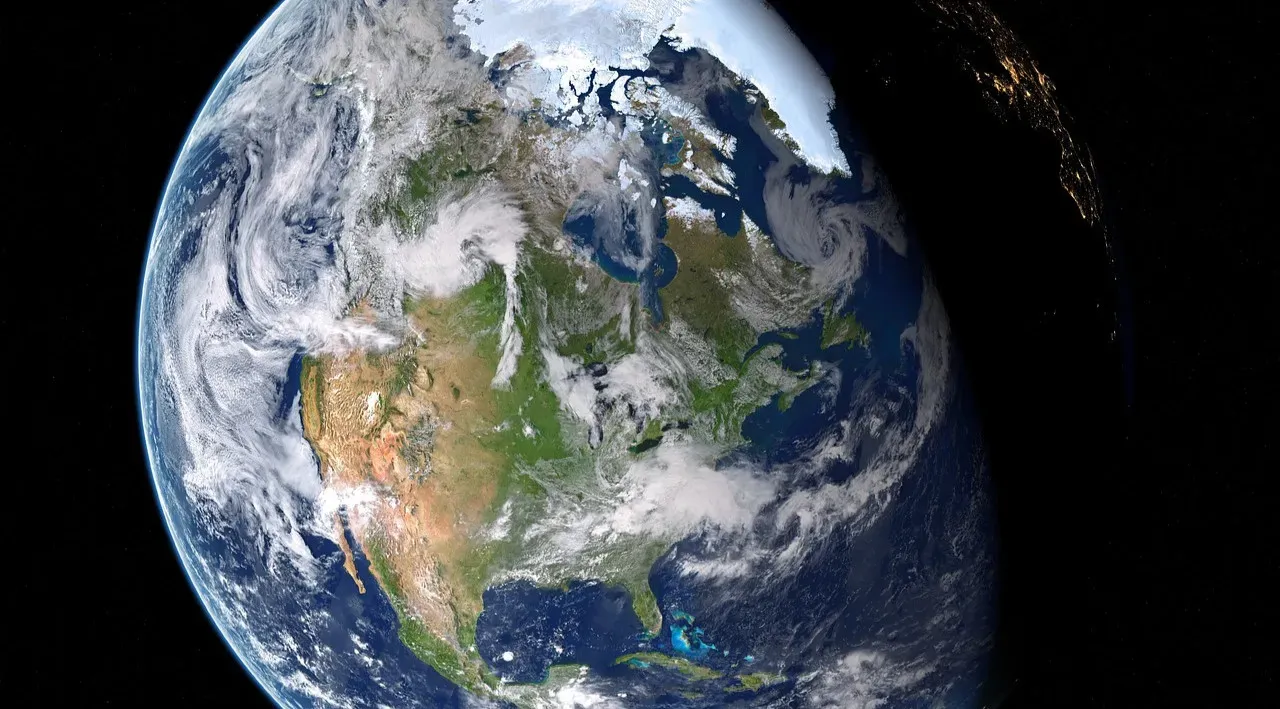
Believe it or not, the length of a day on Earth isn’t perfectly fixed. Over long periods, tidal forces from the Moon gradually slow Earth’s rotation, but on shorter scales – years to decades – there are small, measurable wobbles. Some of these are linked to shifting winds, ocean currents, and mass changes at the surface, but others appear to trace back to exchanges of angular momentum between the mantle and the core. When the core subtly changes how it spins, the rest of the planet compensates in order to conserve overall angular momentum.
That means your day today is not exactly the same length as your grandparents’ day, and part of the reason lies in a metallic sphere thousands of kilometers below. Earth’s rotation axis also shifts slightly, a phenomenon called polar motion, influenced not just by surface mass changes but by deep interior dynamics. To me, it makes the whole planet feel less like a rigid rock and more like a breathing, shifting organism. Even if these changes are tiny – milliseconds here, centimeters of wobble there – they’re a reminder that “solid ground” is a comforting illusion.
The Future Core: Cooling, Crystallizing, But Still Restless
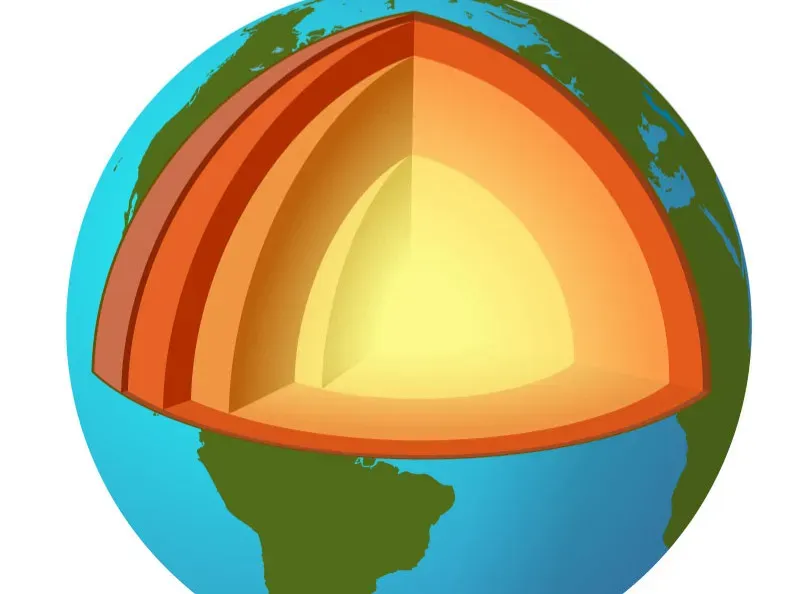
In the very long run, the core is cooling and the inner core is slowly growing as more liquid iron solidifies onto it. This gradual crystallization releases heat and light elements, which in turn help drive the convection in the outer core that powers the magnetic field. At some distant point, billions of years from now, that process will slow and the dynamo will likely weaken or shut down. But on human and even civilizational timescales, the core is nowhere near “done.” It’s moving through complex, poorly understood cycles that can shift conditions at the surface in subtle but meaningful ways.
Some researchers are trying to understand whether patterns in core dynamics could help us anticipate big magnetic changes, or better interpret long-term climate records that are influenced by cosmic rays and solar activity. We’re not at the stage of forecasting core behavior like weather, but the direction is clear: the more we learn, the more alive the core appears. It’s not just a background machine humming away; it’s an active player in Earth’s story, shaping our sky, our continents, and even the technology we rely on. Thinking of it as a slowly changing but ever-present companion under our feet makes the planet feel at once more fragile and more extraordinary.
Living On A Restless World

Once you see Earth as a layered, dynamic system driven by a fiercely active core, everyday life looks different. The ground beneath you, the continents on your map, the invisible magnetic shield that keeps your electronics functioning and your DNA a bit safer from radiation – all of it traces back to a roiling, metal ocean and a spinning solid sphere we’ll probably never touch. The core is not a quiet relic from Earth’s birth, but a restless engine continually rewriting the details of our world.
We often talk about space as the great unknown, but in many ways the deeper mystery still lies below us, not above. As new seismic networks, satellite missions, and computer models sharpen our view, the core keeps surprising us with its complexity and its influence. Living on Earth means riding on the thin, cool rind of a planet whose heart is still very much alive. Did you expect that?