
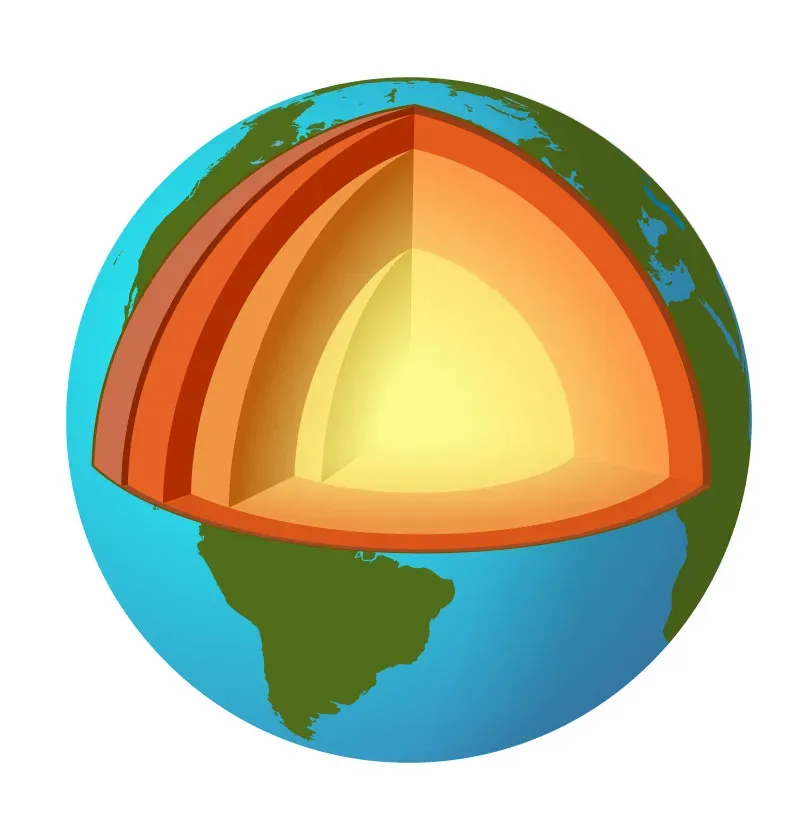
Far below our feet, beyond the crust we walk on and the mantle that slowly churns, something strange is happening at the very center of Earth. For decades, scientists thought they understood the basic structure of the core: a solid inner sphere wrapped in a liquid metal ocean. But in the last few years, a flood of new data has suggested that this picture is incomplete, and maybe even wrong in important ways. Tiny changes in the speed of seismic waves, hints of shifting magnetic behavior, and puzzling temperature estimates are all pointing to a deeper mystery. The heart of our planet appears to be more dynamic, more uneven, and more alive with hidden processes than anyone expected.
The Hidden Clues Beneath Our Feet
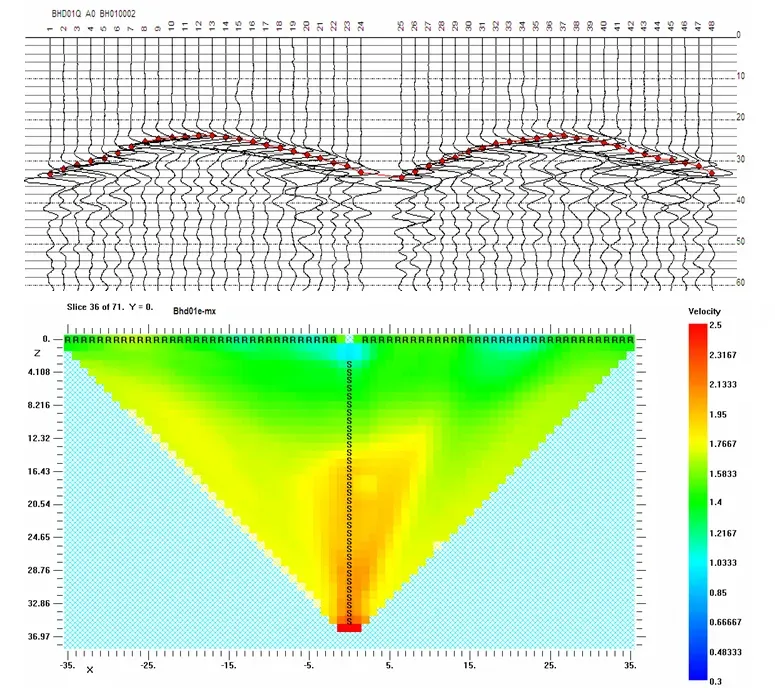
The most surprising thing about the core’s secret is how quietly it reveals itself. There are no dramatic tremors announcing what is going on, only subtle changes in how earthquake waves travel through the planet. Seismologists have noticed that waves moving through the inner core sometimes arrive a bit earlier or later than theory predicts, and the pattern depends on the direction they travel. It is as if the inner core has a grain or texture, like wood, instead of being a perfectly uniform metal ball. That texture carries information about how the core formed and how it is still evolving today.
Some studies suggest that one side of the inner core – roughly beneath the Pacific – may be growing slightly faster than the side under the Atlantic. If that sounds lopsided, it is, and it forces scientists to rethink how heat escapes from the deep interior. Slight differences in growth and composition could be changing how iron crystals align, which in turn changes how seismic waves pass through them. A few decades ago, this kind of fine detail seemed impossible to see, but dense global networks of seismic stations are turning Earth into a tomographic subject, like a patient in a planetary-scale CT scanner. The result is a slowly sharpening picture of a core that is not simply solid and static, but patterned, layered, and restless.
From Ancient Tools to Modern Planetary Forensics
It is almost funny to think that our understanding of the core started with something as simple as compasses and magnets. Sailors navigating by magnetic needles had no idea they were holding evidence for a swirling metallic engine thousands of kilometers below them. Over the twentieth century, measurements of the magnetic field, combined with advances in physics, led scientists to the idea of a geodynamo: a self-sustaining generator powered by the motion of liquid iron in the outer core. That, in turn, required a solid inner core as an anchor and a source of heat and light elements.
Now the tools have become vastly more sophisticated, but the detective game is the same. Instead of handheld compasses, researchers use arrays of seismic stations, satellite measurements of the magnetic field, and lab experiments squeezing metals to pressures matching those at the core. Supercomputers simulate the behavior of iron alloys at temperatures hotter than the surface of the Sun, hunting for combinations that match what we infer from real Earth. In a way, the planet has become a cold case file that we can finally reopen with better forensic technology. Each new technique adds a layer of nuance, suggesting that the inner core may have zones, transitional shells, and even what some have described as a distinct “innermost inner core” with properties different from the rest.
A Core That Refuses to Be Simple
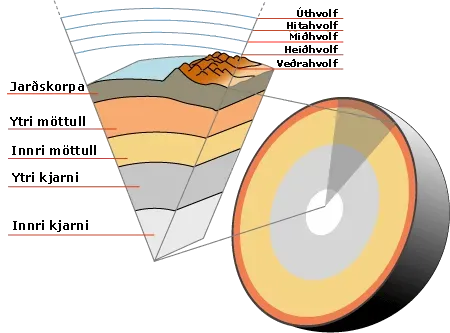
For years, textbooks showed the inner core as a neatly defined solid sphere, but the latest research keeps complicating that clean diagram. Some seismic studies indicate that the boundary between the liquid outer core and solid inner core might not be a sharp line at all, but a fuzzy region where partially molten material and solid iron coexist. This “mushy” transition could change over time, responding to how heat moves through the mantle above. Other work points to a layered structure inside the inner core itself, with an inner zone where iron crystals may be oriented in a different direction than the rest.
There are also hints that the inner core may not rotate in perfect lockstep with the rest of the planet. Some analyses of seismic records suggest that, over decades, the inner core’s spin might speed up, slow down, or even slightly lag behind the mantle and crust. Not every scientist agrees on that interpretation, and the debate is intense, but the very fact that we are arguing about tiny rotations of a metal sphere thousands of kilometers down shows how far the field has come. Instead of treating the core as a static object, researchers are increasingly talking about it as a dynamic system with its own rhythms and quirks. The simplicity has shattered, but in its place we get a far richer story.
The Magnetic Heartbeat and Its Strange Rhythms
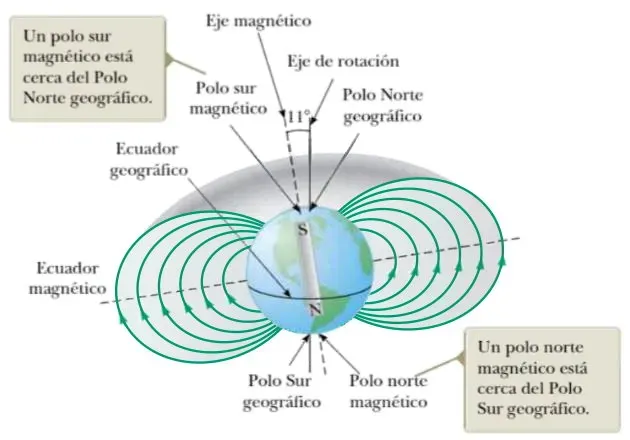
One of the clearest ways the core’s secret touches our lives is through Earth’s magnetic field. This invisible shield deflects much of the charged particle radiation streaming from the Sun, protecting our atmosphere and the technologies we rely on. The field is not constant: it drifts, weakens, strengthens, and occasionally flips polarity entirely, with north and south swapping places on the compass. These flips and fluctuations are fingerprints of how the liquid outer core is moving, stirring, and interacting with the solid inner core.
In the past few decades, satellites have mapped subtle changes in the magnetic field with increasing precision. They reveal features like the South Atlantic Anomaly, a region where the field is unusually weak, worrying engineers who design satellites and spacecraft. While this does not mean a dramatic imminent reversal, it is a sign that the core’s flows are changing in ways that we are only beginning to understand. Researchers link the behavior of the magnetic field to heat loss patterns at the boundary between the core and the mantle, which may in turn be affected by those uneven growth zones in the inner core. It becomes a complex chain: tiny shifts in structure and temperature deep inside can, over long timescales, shape the magnetic cocoon that makes Earth so habitable.
Why It Matters: More Than Just Deep Earth Trivia

At first glance, the inner core’s quirks can feel like a niche topic, the kind of thing only specialists argue about at conferences. But the processes unfolding there help set the conditions for life on the surface. The geodynamo in the core generates the magnetic field that shields our atmosphere from erosion by solar wind, helping to keep the air thick enough for oceans, weather, and breathing. A stronger or weaker field over millions of years could change how much radiation reaches the surface, affecting both climate and biological evolution. If you care about how Earth became such a stable cradle for life, you care about what the core is doing.
There is also a more practical side. Our understanding of the deep interior feeds into models that predict how Earth will behave in the deep future: how long plate tectonics might continue, how the planet will cool, and how the magnetic field might evolve. Compared with past knowledge, when the core was treated as a uniform ball of iron, today’s models are more subtle and, hopefully, more accurate. That can influence how we interpret everything from ancient rocks recording past magnetic fields to the chances that other planets might sustain habitable environments. Personally, I find it humbling that the comfort of standing under a blue sky is connected to the hidden dance of crystals and molten metal thousands of kilometers below me.
Global Perspectives: Earth in a Planetary Lineup

The mystery in Earth’s core also plays into a bigger question: why is our planet so different from its neighbors? Mars shows evidence of a once-active magnetic field that faded long ago, leaving its atmosphere vulnerable to erosion. Mercury has a weak but still detectable magnetic field, hinting at a small but operating dynamo. Gas giants like Jupiter and Saturn host far more powerful fields, generated in layers of metallic hydrogen and exotic fluids. By comparing Earth’s restless inner core with the quieter or more extreme interiors of other worlds, scientists can test their ideas about how dynamos start, sustain themselves, and eventually fail.
This planetary perspective has become sharper as missions send orbiters and landers to other worlds and as telescopes discover rocky exoplanets around distant stars. A key question in astrobiology is whether Earth’s combination of a long-lived magnetic field, active plate tectonics, and surface water is rare or more common than we think. The detailed structure and behavior of our core are part of that puzzle. They help set timescales for how long a planet can maintain protection from stellar radiation and keep volatile compounds like water and carbon dioxide near the surface. In that sense, each new clue about Earth’s core is also a clue about where else in the universe worlds like ours might exist.
New Eyes on the Deep: Tools Revealing the Core’s Secret
Probing the center of the planet will never be as direct as sending a probe into space, so scientists are getting creative. Global networks of seismic stations are constantly listening for earthquakes, and clever techniques use even small, distant quakes to sharpen images of the inner core. Some teams stack years of seismic data to tease out faint echoes that bounce multiple times between the core and surface, extracting more information from each tremor. Others design experiments that squeeze iron and nickel alloys between diamonds while blasting them with lasers, briefly reaching core-like pressures and temperatures.
There are also emerging ideas that borrow methods from other fields. For example, some researchers look at tiny timing differences in waves from nuclear tests or controlled sources, applying tricks similar to medical imaging and telecommunications. Satellites that monitor minute variations in Earth’s gravity field and magnetic field add another layer of insight, especially when they gather data over many years. Even machine learning is getting involved, helping to spot patterns in huge datasets that human analysts might miss. The toolkit is expanding, and with every new instrument and algorithm, the veil over the core lifts just a little more.
The Future Landscape: What Comes Next for Earth’s Deepest Secret
Looking ahead, the biggest challenge is turning scattered clues into a coherent, testable picture of the core’s structure and evolution. Researchers are working toward next-generation seismic arrays with denser coverage, including ocean-bottom stations that fill in gaps on the seafloor. More precise satellite missions will track changes in the magnetic field and gravity with even finer resolution, letting scientists watch the deep interior’s influence unfold over time. On the modeling side, more powerful supercomputers will make it possible to simulate the geodynamo and inner-core growth over millions of years, rather than the simplified snapshots we rely on now.
The possible global implications are wide ranging. A better understanding of how and why the magnetic field changes can improve long-term assessments of radiation risks for satellites, astronauts, and even high-altitude flights. Insights into heat flow from the core might refine models of volcanic activity and plate tectonics, indirectly influencing how we think about natural hazards. There is also the chance that, as we decode Earth’s interior, we will refine our criteria for habitable exoplanets, guiding future telescope missions. The secret at our planet’s center is not just a curiosity; it is a reference point for thinking about the long-term fate of worlds like ours.
How You Can Stay Connected to Earth’s Deep Story
Most of us will never calculate a seismic waveform or run a core simulation, but that does not mean we are locked out of this unfolding discovery. One simple step is to stay curious and informed: many space and Earth science agencies, museums, and universities share accessible updates on deep-Earth research. Supporting public science institutions, whether through memberships, donations, or simply visiting and engaging with exhibits, helps keep this kind of fundamental research alive. When conversations about funding and education come up in your community, remembering that the invisible core underpins our visible world can change how you see those debates.
You can also look for ways to connect the story of the core to other “amazing earthy phenomena” that feel closer to home, like volcanoes, earthquakes, and auroras. All of them, in different ways, trace their roots back to energy moving through the planet from the deep interior. Sharing that perspective with kids, friends, or coworkers can turn a simple sky show or news story about an earthquake into a doorway to deeper understanding. In the end, the core’s secret is not just for scientists; it is part of a shared planetary biography that we are slowly learning to read. Paying attention is, in its own quiet way, a form of participation.
Suhail Ahmed is a passionate digital professional and nature enthusiast with over 8 years of experience in content strategy, SEO, web development, and digital operations. Alongside his freelance journey, Suhail actively contributes to nature and wildlife platforms like Discover Wildlife, where he channels his curiosity for the planet into engaging, educational storytelling.
With a strong background in managing digital ecosystems — from ecommerce stores and WordPress websites to social media and automation — Suhail merges technical precision with creative insight. His content reflects a rare balance: SEO-friendly yet deeply human, data-informed yet emotionally resonant.
Driven by a love for discovery and storytelling, Suhail believes in using digital platforms to amplify causes that matter — especially those protecting Earth’s biodiversity and inspiring sustainable living. Whether he’s managing online projects or crafting wildlife content, his goal remains the same: to inform, inspire, and leave a positive digital footprint.