
If you grew up picturing the center of the Earth as a blazing ball of molten metal, you’re not exactly wrong – but you’re not getting the whole story either. Deep beneath our feet, far below the crust and mantle, scientists now believe there’s something even stranger: an enormous “hidden ocean” locked inside the planet, not as sloshing liquid water, but trapped within minerals under insane pressure.
This isn’t a sci‑fi fantasy or a wild conspiracy theory. Over the past two decades, geophysicists, seismologists, and mineral physicists have been quietly piecing together evidence that the deep Earth holds as much water as, or even more than, all of the surface oceans combined. That discovery doesn’t just change how we imagine the planet – it rewrites our understanding of where Earth’s water came from, how it moves, and even why our world stayed habitable when others dried out or froze.
The Shocking Idea of a Hidden Ocean Beneath Our Feet
Imagine standing on a beach, watching waves crash, and realizing that the ocean in front of you might be just the visible tip of Earth’s total water. That’s roughly the scale of what scientists are proposing: a vast reservoir of water stored hundreds of kilometers down, bound inside rocks near the boundary between the lower mantle and the outer core. It’s not a sea with fish or currents, but in terms of total water content, it could rival or exceed everything we see at the surface.
What makes this idea so shocking is that it completely flips our mental picture of the planet. Instead of a dry, rocky interior wrapped in a thin skin of liquid oceans, Earth starts to look more like a gigantic sponge – one where water is woven throughout its structure, from shallow crust to deep mantle. The deeper you go, the stranger it gets: crushing pressures, soaring temperatures, and minerals whose behavior is nothing like the rocks we know on the surface, yet somehow still capable of clinging to water in unexpected ways.
How Scientists can “See” Water Thousands of Kilometers Underground
We obviously can’t just drill to the core and scoop up a sample – our deepest boreholes barely scratch the upper crust. So instead, scientists rely on a kind of planetary X‑ray: earthquake waves. When major quakes happen, they send seismic waves rippling through the entire planet, and because different materials change how those waves move, researchers can use the timing and speed to map what’s hidden inside. Subtle delays or changes in wave behavior can hint at rocks that are unusually wet, soft, or partially molten.
In addition to seismic data, lab experiments have become a surprisingly powerful window into the underworld. Researchers use diamond anvil cells and giant presses to crush tiny mineral samples to pressures found near the core–mantle boundary, then heat them to thousands of degrees. By watching how these minerals absorb or release water, they can estimate how much water the deep mantle could store. The numbers that keep coming back are staggering: enough to match multiple surface oceans, locked into the crystal structures of deep‑Earth minerals.
The Strange Minerals that can Hold an “Ocean” Inside Them
The key to this hidden ocean lies in minerals that don’t exist naturally at the surface. One of the stars of the story is a mineral called ringwoodite, a high‑pressure form of olivine that forms in the transition zone between the upper and lower mantle. In the lab, ringwoodite has been shown to hold a surprising amount of water trapped as hydroxyl groups within its crystal lattice, almost like water molecules stuffed into tiny molecular lockers. Under the right conditions, a huge volume of ringwoodite can store staggering quantities of water in solid form.
The big breakthrough came when a tiny diamond from deep within the Earth was found to contain naturally occurring ringwoodite that was measurably water‑rich. That was like finding a fossil from a hidden ecosystem: concrete proof that the deep mantle really can be saturated with water‑bearing minerals. Other exotic high‑pressure minerals – like wadsleyite and bridgmanite – may also carry significant water, suggesting that what we call “dry rock” in geology class can, at depth, be quietly loaded with water that never shows up as liquid or ice.
Why This Deep Water Matters for Volcanoes, Mountains, and Plate Tectonics
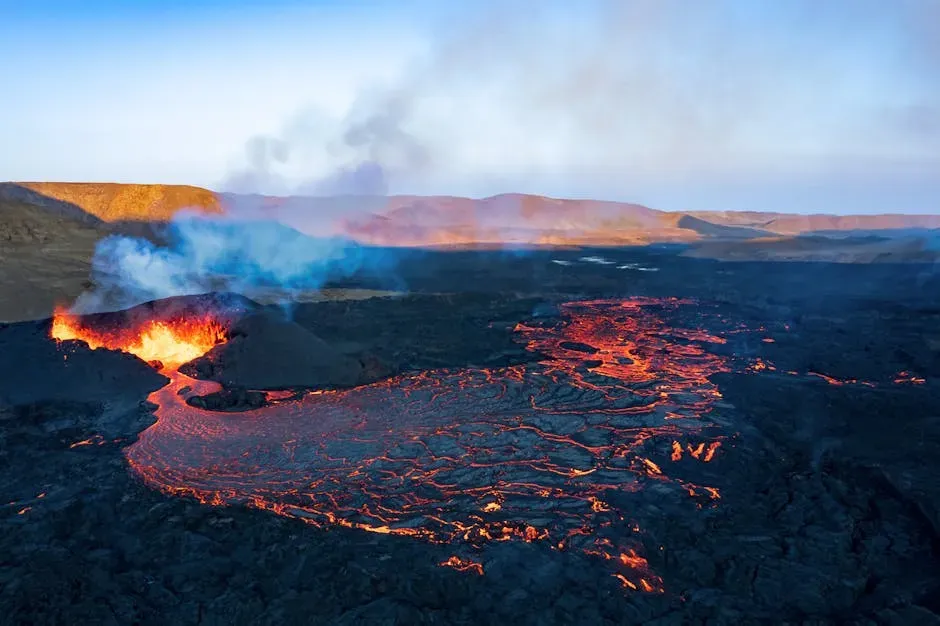
It’s easy to think of deep water as a fun trivia fact with no real impact on daily life, but it actually ties into some of the most dramatic things Earth does at the surface. Water lowers the melting point of rocks, which means water‑rich regions in the mantle are more likely to produce magma. This is one reason subduction zones – where oceanic plates sink back into the mantle – tend to be lined with explosive volcanoes. When the water locked in descending slabs is released, it helps generate melt that eventually erupts as lava.
Water also weakens rocks, making them more deformable. That matters for plate tectonics because it can influence how easily plates move, bend, and break. Some geophysicists argue that Earth’s long‑lived tectonic activity, which recycles carbon and regulates climate, is deeply connected to this internal water cycle. Without enough water inside the planet to “lubricate” its interior processes, our world might have ended up more like Venus: stagnant, oven‑hot, and tectonically frozen.
Rethinking the Origin and Fate of Earth’s Water
The idea of a hidden internal ocean forces us to revisit a surprisingly emotional question: where did all of Earth’s water come from? For a long time, the favored story was that icy comets and water‑rich asteroids delivered it after the planet formed. More recent work, though, suggests a huge chunk of Earth’s water may have been present from the very beginning, incorporated into the planet’s building blocks and dragged deep inside as it grew and differentiated into core, mantle, and crust. The deep reservoir might be a leftover signature of that ancient, chaotic era.
This interior water is not just a static archive; it’s part of a slow, planet‑wide circulation. Over geologic time, water cycles down with subducting plates and returns to the surface through volcanic eruptions and mantle upwelling. If the deep reservoir really rivals or exceeds the surface oceans, then shifts in how that water is stored could, over millions of years, change sea levels, climate stability, and even the likelihood of global glaciations or runaway greenhouse phases. It adds a new, hidden player to the long‑term story of habitability.
What this Hidden Ocean Means for Other Worlds and Life beyond Earth
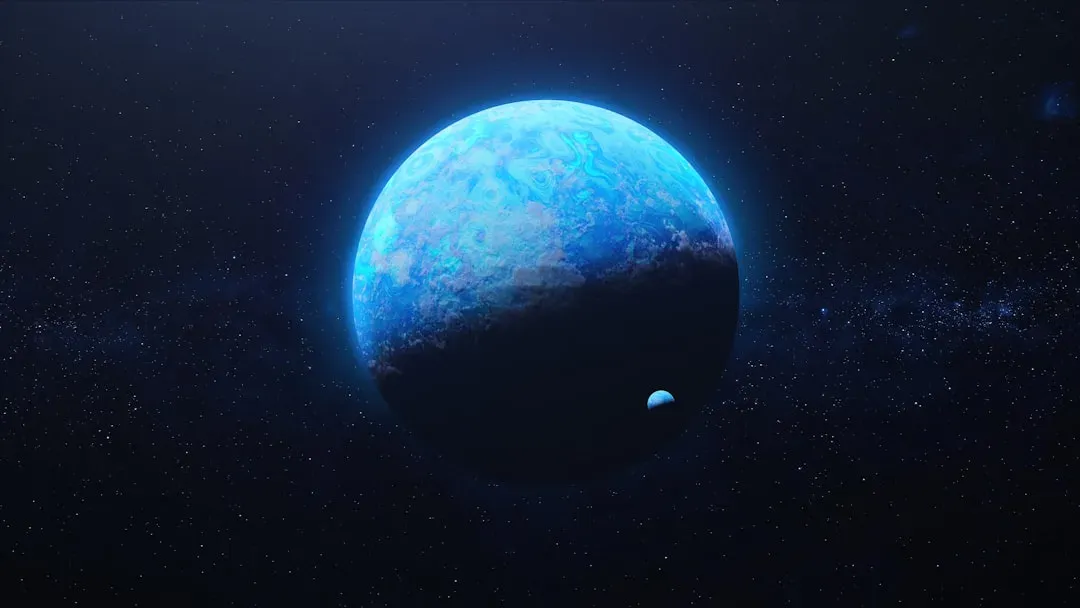
Once you accept that an “ocean” can exist as water locked in minerals under crushing pressure, the search for habitable worlds gets a lot more interesting. Planets that look dry or barren on the surface might secretly be water‑rich on the inside. Some exoplanets, especially super‑Earths, could have thick mantle layers that store vast internal oceans, slowly feeding volcanic outgassing and shaping a thin but persistent atmosphere over billions of years. That subtle, deep process might be as crucial to life as a surface ocean is.
Even in our own solar system, the hidden ocean idea reshapes what we look for. We already know some moons, like Europa and Enceladus, hide liquid oceans beneath ice shells. Now, scientists are asking whether rocky planets like Mars or Mercury once had, or still have, deep reservoirs of bound water that influenced their evolution. If Earth’s internal water helped keep it geologically active and climate‑stable, then worlds that lack this deep reservoir might have had much narrower windows for life to arise and survive.
The Unanswered Questions at the Edge of the Core
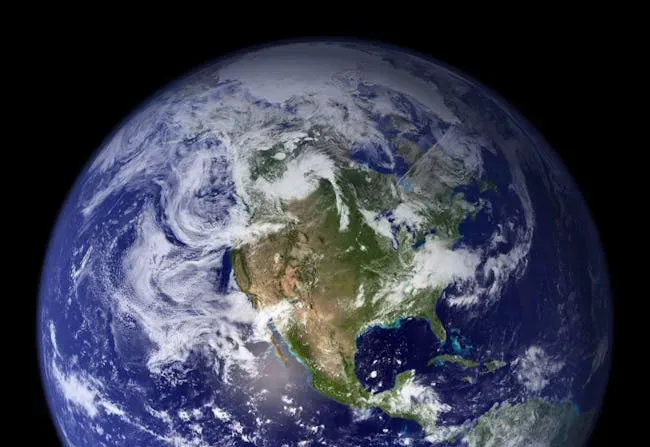
For all the excitement, a lot of the story is still fuzzy at the edges. How much water really sits near the core–mantle boundary, and how unevenly is it distributed? Is it concentrated in specific regions, like deep “wet patches,” or more spread out like a faint dampness throughout the mantle? Scientists are pushing seismic imaging to higher resolutions and refining lab experiments to get closer to the extreme conditions at those depths, but there are hard physical limits to what we can reproduce on the surface.
There are also big open questions about how this deep reservoir evolves over time. Is Earth slowly losing water from its interior to space, drip by drip, through volcanic outgassing? Or is the planet close to a long‑term balance, with water cycling in and out of the deep mantle at roughly similar rates? The answer matters for understanding whether Earth’s habitable conditions are a fragile, one‑time fluke, or something that can persist on many rocky worlds across the galaxy.
Conclusion: A Planet that is Less Solid than It Seems
The more we learn about the deep Earth, the more that simple textbook diagrams fall apart. Instead of a neat stack of dry rock layers surrounding a hot metal core, we’re looking at a dynamic, water‑rich interior where an invisible ocean helps steer everything from volcanic eruptions to long‑term climate. The surface oceans we sail on might just be the thin blue frosting on a much deeper, stranger cake.
In a way, it’s humbling: the planet we thought we knew still hides fundamental secrets only now coming into focus, thanks to earthquakes, tiny diamonds, and lab experiments that squeeze rocks until they behave like something from another world. We walk around assuming the ground beneath us is solid and simple, but a vast, silent reservoir of water is locked away far below, shaping our world in ways we’re only beginning to trace – how different would Earth look to us if we had known that from the start?