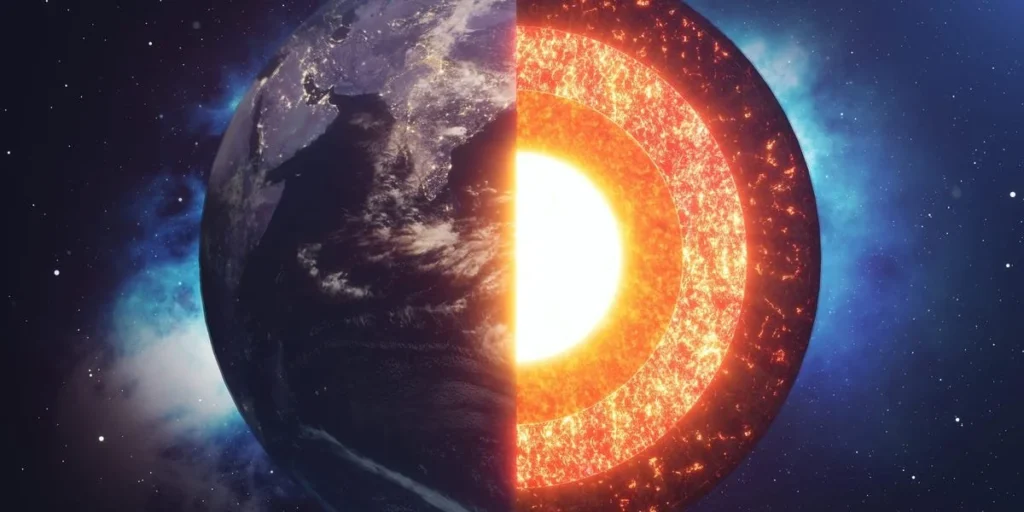

You might think that everything worth discovering has already been found. Here’s the thing: there’s an entire world thousands of miles beneath your feet that scientists are only now starting to truly understand. Deep below the surface, where no human could ever travel, the Earth’s core is revealing secrets that challenge what we thought we knew about our planet.
“This inner core is like a time capsule of Earth’s evolutionary history – it’s a fossilised record that serves as a gateway into the events of our planet’s past,” according to researchers studying the deepest regions of our planet. Every earthquake that shakes the ground becomes a tool for scientists to peer into this hidden realm. And what they’re discovering down there is nothing short of extraordinary.
A Solid Ball That Refuses to Stand Still
Let’s be real: the inner core isn’t behaving the way scientists expected. The inner core began to decrease its speed around 2010, moving slower than the Earth’s surface, according to recent findings from the University of Southern California. Think about that for a moment. The very center of our planet has been spinning independently from the rest of Earth, and now it’s slowing down.
The changes in rotational speed follow a 70-year cycle, which means this slowdown isn’t random. The inner core is considered to be reversing and backtracking relative to the planet’s surface due to moving slightly slower instead of faster than the Earth’s mantle for the first time in approximately 40 years. Honestly, it sounds almost impossible when you first hear it, yet the evidence is piling up from seismic stations around the globe.
Seismic Waves Become Underground Detectives
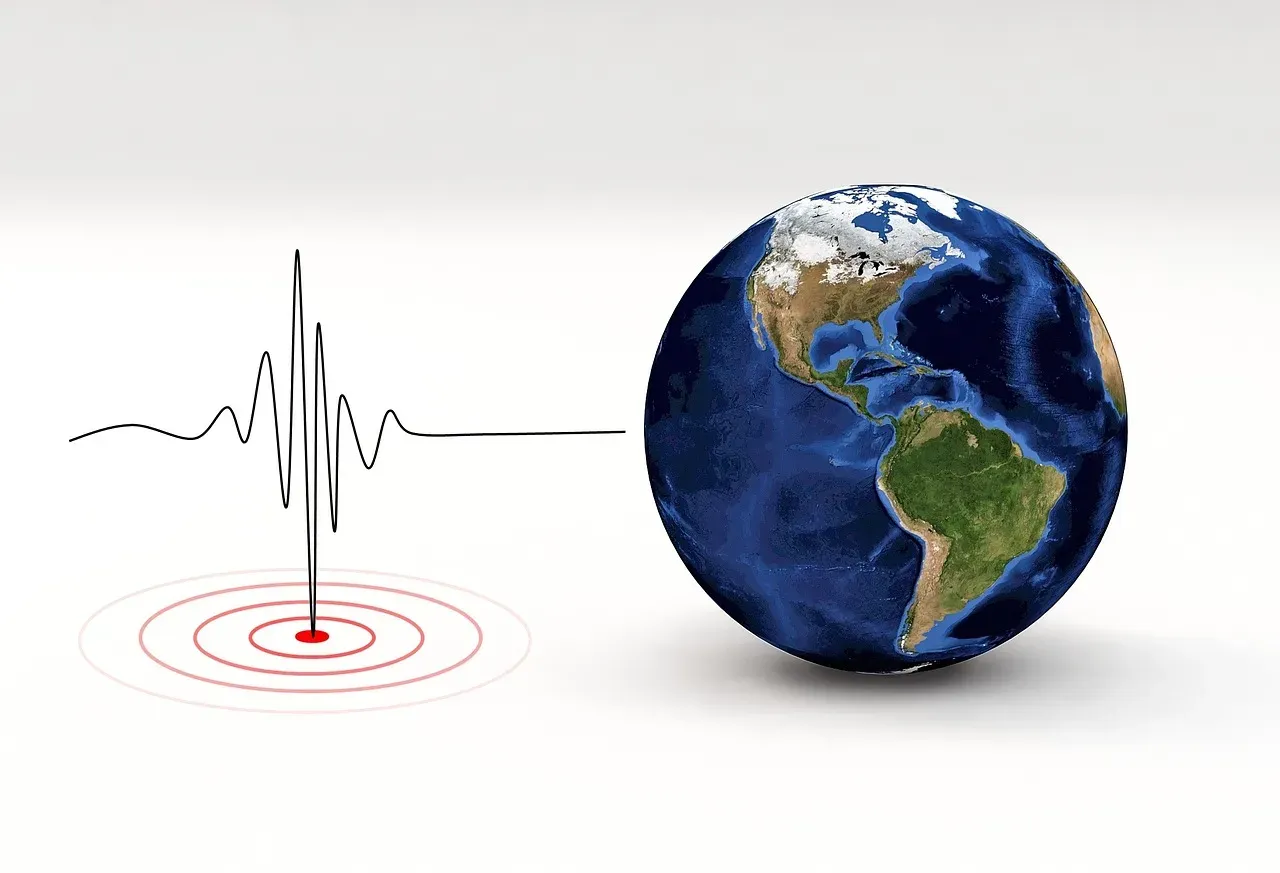
Since nobody can actually dig down thousands of miles to take a look, scientists have gotten creative. Direct observation of Earth’s core is impossible, and scientists typically study it by analyzing changes in the size and shape of seismic waves as they pass through the core. These waves from earthquakes travel through the planet like ripples in a pond, and they tell stories about what they encounter along the way.
Seismic waves that bounce back and forth up to five times along the Earth’s diameter were observed for the first time, explained researchers at the Australian National University. Previous studies had only documented a single bounce. The technique is similar to watching a ping pong ball travel through the planet and back again, measuring how it changes speed and direction as it encounters different materials. Each bounce provides another clue about the hidden structure below.
The Core Exists in a Strange State of Matter
Earth’s solid inner core is actually in a superionic state, where carbon atoms flow freely through a solid iron lattice, according to a groundbreaking study published in December. Wrap your head around that. The core is technically solid, yet atoms are moving through it like liquid.
This unusual behavior makes the core soft, matching seismic observations that have puzzled scientists for decades. Picture trying to push your hand through a block of cheese versus pushing it through steel. The superionic state is somewhere in between, and this discovery completely reshapes our understanding of what’s happening nearly three thousand miles below our feet. The mobility of these light elements may also contribute energy to Earth’s magnetic field, which means the strangeness at Earth’s center might be what keeps our planet’s protective magnetic shield alive.
An Innermost Inner Core Hides Even Deeper
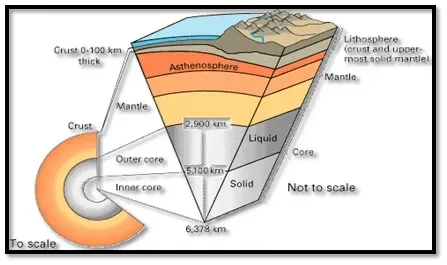
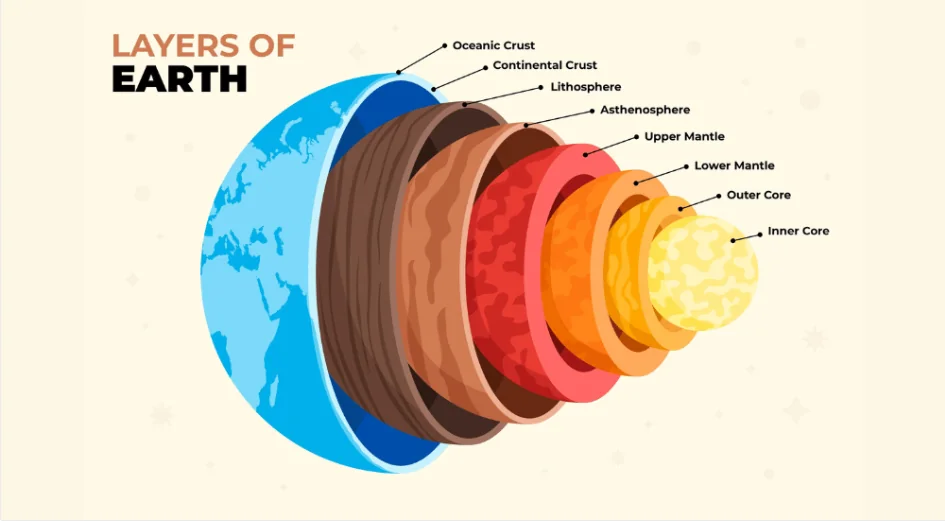
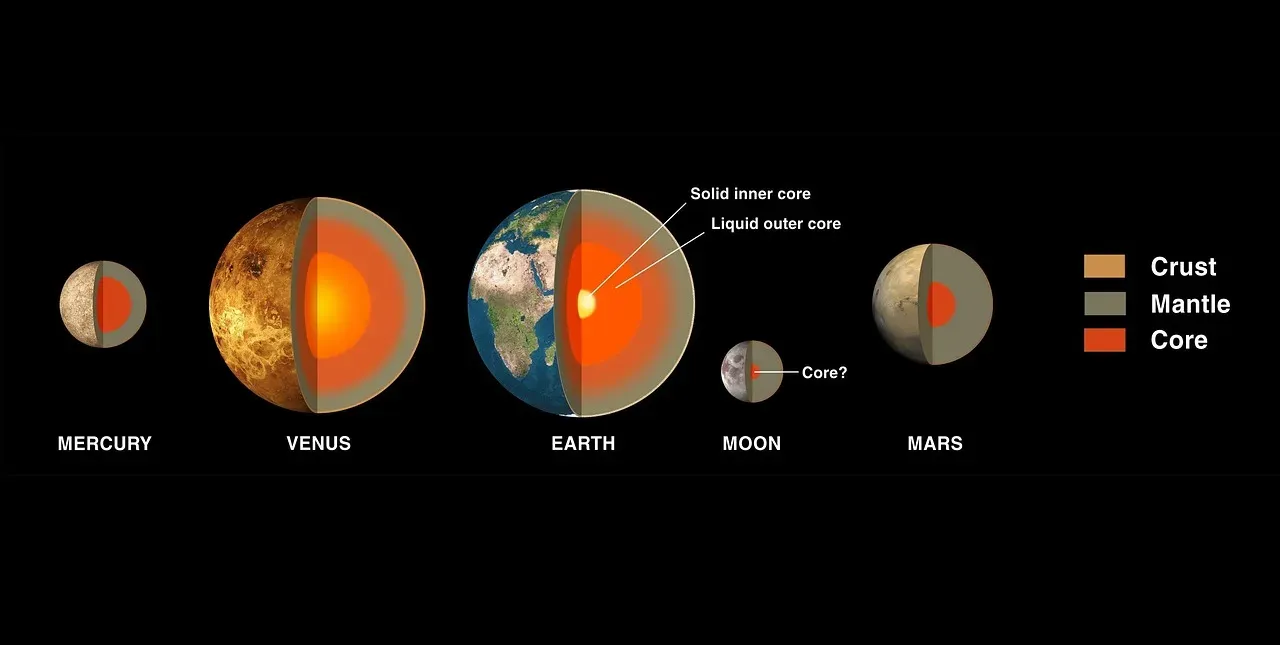
Just when you thought things couldn’t get more complicated, scientists found another layer. The findings confirm there is a fifth layer inside the planet. Not long ago, textbooks taught that Earth had four layers: crust, mantle, outer core, and inner core. Now we know there’s something even more hidden.
The innermost inner core is a solid ‘metallic ball’ that sits within the centre of the inner core. The crystallised structure within the inner core’s innermost region is likely different to the outer layer, which might explain why seismic waves behave so oddly when they pass through this deepest region. It’s like discovering a Russian nesting doll has yet another smaller doll inside that nobody knew existed.
The Core Is Changing Shape Before Our Eyes
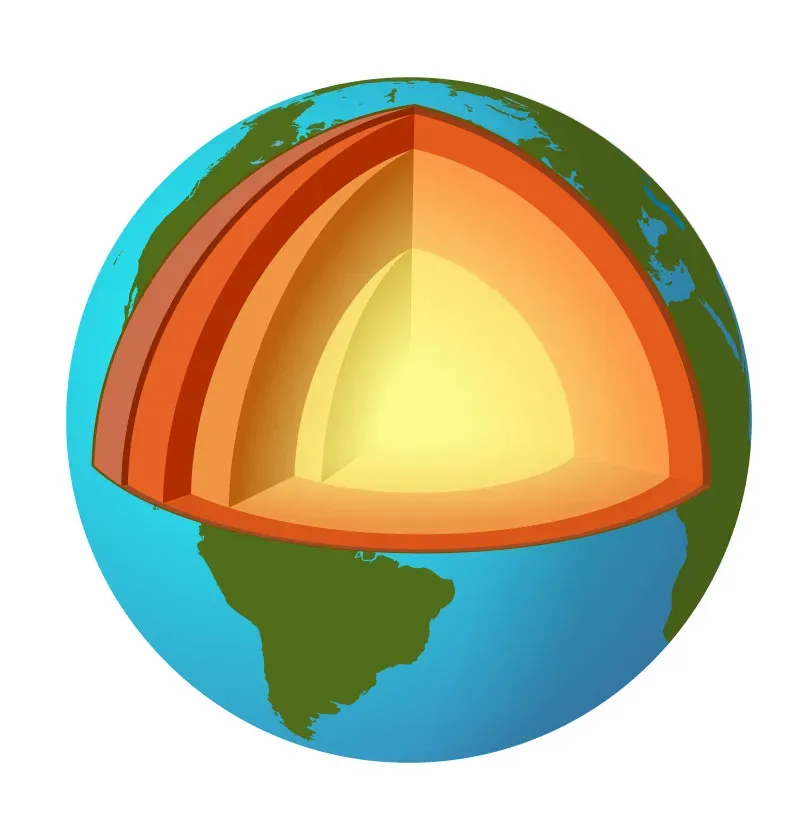
Scientists revealed changes to the inner core’s shape, with deformations in its shallowest level in a February study. The core isn’t a perfect sphere just sitting there unchanged. The soft outermost inner core probably deforms, which means it’s actively reshaping itself over time.
Specialized seismograms show deformities in the inner core, showing that it changes its shape over time. These aren’t dramatic shifts happening overnight. Rather, they unfold over years and decades, slowly altering the structure of Earth’s deepest layer. What could be causing these changes? Scientists suspect the churning liquid outer core and gravitational forces from the dense mantle play major roles, though the full picture remains frustratingly incomplete.
Temperatures as Hot as the Surface of the Sun
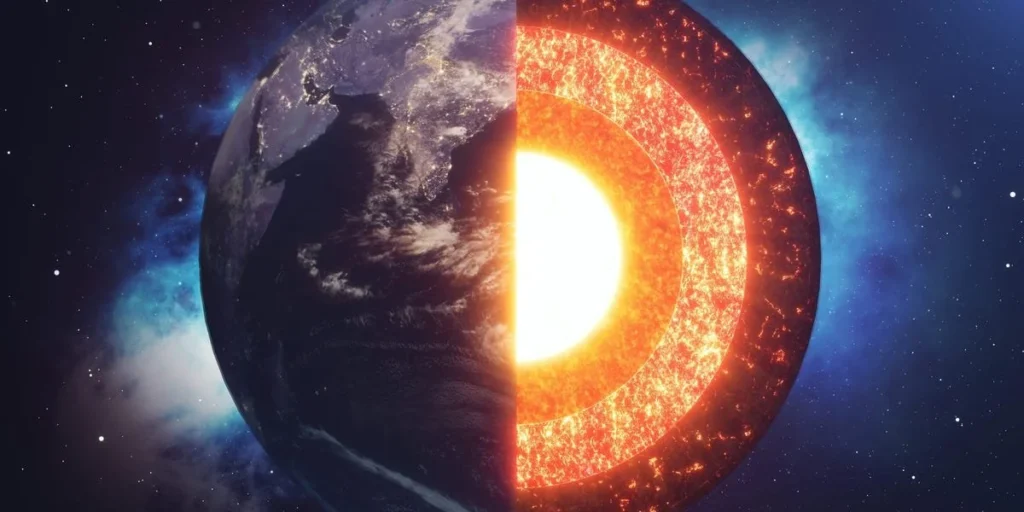
The temperature at its surface is estimated to be approximately 5,700 K (5,430 °C; 9,800 °F), about the temperature at the surface of the Sun. Let that sink in for a moment. The center of our planet is as hot as the star we orbit. Yet despite these infernal temperatures, the inner core remains solid.
The inner core is solid at high temperature because of its high pressure. The weight of everything above it squeezes so hard that iron atoms can’t move freely enough to become liquid, even at temperatures that would vaporize anything on the surface. The core’s temperature ranges from about 4,400 degrees Celsius at the outer edge of the outer core to about 6,100 degrees Celsius at the center, resulting from residual heat from Earth’s formation, frictional heat from iron sinking, and heat released from radioactive decay.
Ancient Heat Still Trapped From Earth’s Birth
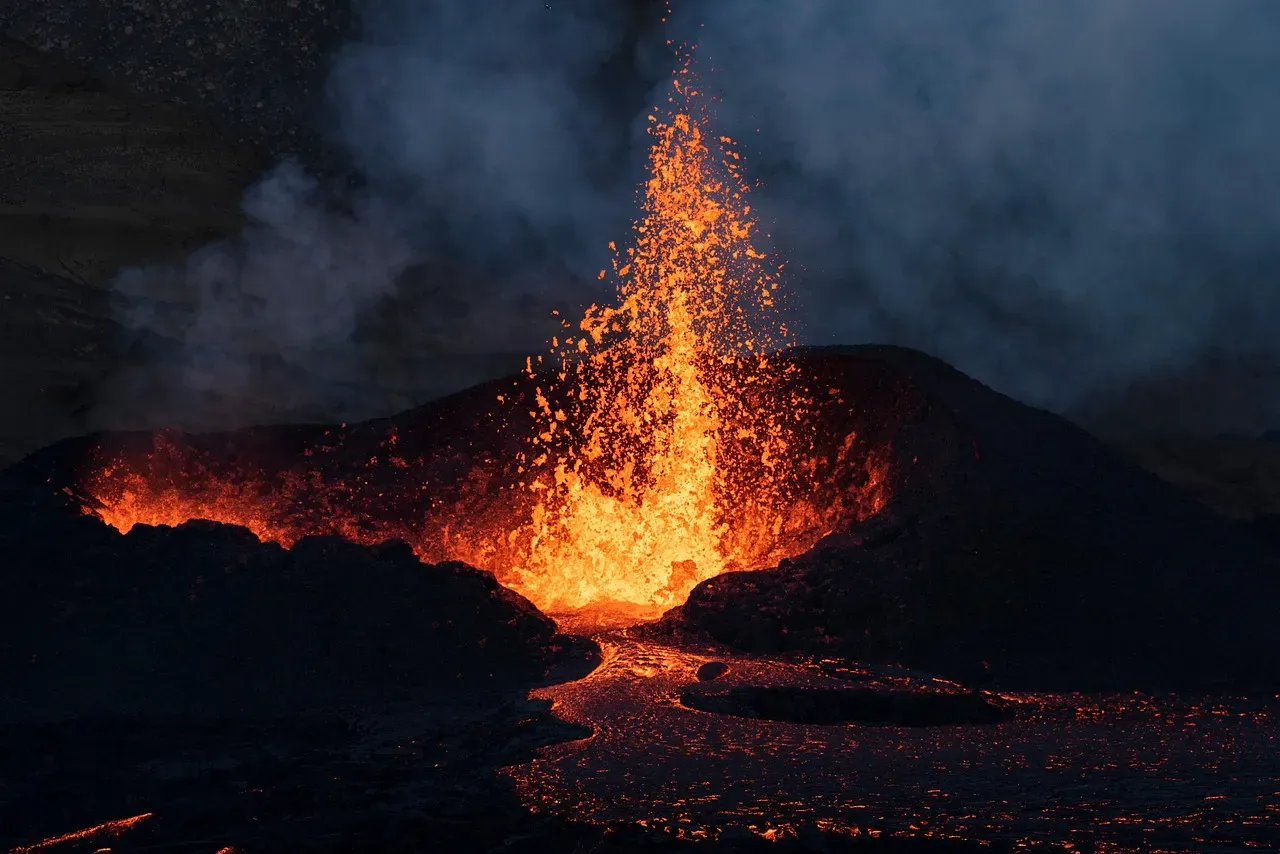
Most of Earth’s internal heat is left over from when our planet formed, about 4.5 billion years ago, as countless smaller bodies collided and clumped together. That primordial heat from violent collisions billions of years ago is still down there, trapped in the depths.
The energy of those violent collisions transformed into heat energy, and the intense compression of material deep inside the Earth increased internal heat even further. Then there’s the radioactive contribution. Heat flow from Earth’s interior, estimated at 47 terawatts, comes from two main sources in equal amounts: radiogenic heat produced by radioactive decay of isotopes in the mantle and crust, and the primordial heat left over from the formation of the Earth. Without radioactive elements continuously generating heat, our planet would have cooled off long ago.
What All This Means for Our Planet’s Future
The implications of this change in the inner core’s movement for Earth’s surface can only be speculated, though the backtracking of the inner core may alter the length of a day by fractions of a second. These effects are tiny, nearly impossible to detect in daily life.
Still, the discoveries emerging from deep Earth research paint a picture of a planet far more dynamic than anyone imagined. The core isn’t a dead, unchanging sphere of metal. It’s actively rotating, slowing down, changing shape, existing in exotic states of matter, and potentially influencing everything from our magnetic field to the volcanoes that erupt on the surface. Every new finding opens up more questions about how our planet formed, how it evolved, and what might happen in the distant future.
Conclusion
The Earth’s core truly is a time capsule, preserving clues about events that happened billions of years ago. From superionic states of matter to proto-Earth remnants still hiding in the mantle, scientists are piecing together a story that stretches back to the very beginning of our planet. The fact that the inner core is now rotating backwards compared to previous decades shows us that this hidden world is constantly changing, even if we can’t see it.
These discoveries matter because they reveal fundamental truths about the planet we call home. The heat and movement deep below drive plate tectonics, power our magnetic shield, and shape the surface world where life thrives. What do you think about these hidden processes happening thousands of miles beneath your feet? Tell us in the comments.