
Deep beneath your feet, far below the crust we walk on and the mantle that slowly churns, lies a realm we have never seen and will likely never touch. Yet this hidden world silently shapes the length of our days, steers our magnetic shield, and records the entire history of our planet in slow, molten script. Every time scientists think they have finally cracked the code of Earth’s core, new data arrives that unravels the story again. In 2025, we know more than ever about distant exoplanets and black holes, yet the heart of our own world remains stubbornly obscure. That tension between precision and mystery is what keeps geophysicists, seismologists, and planetary scientists staring into the dark, trying to read vibrations and clues from a place no human will ever visit.
The Hidden Clues Beneath Our Feet
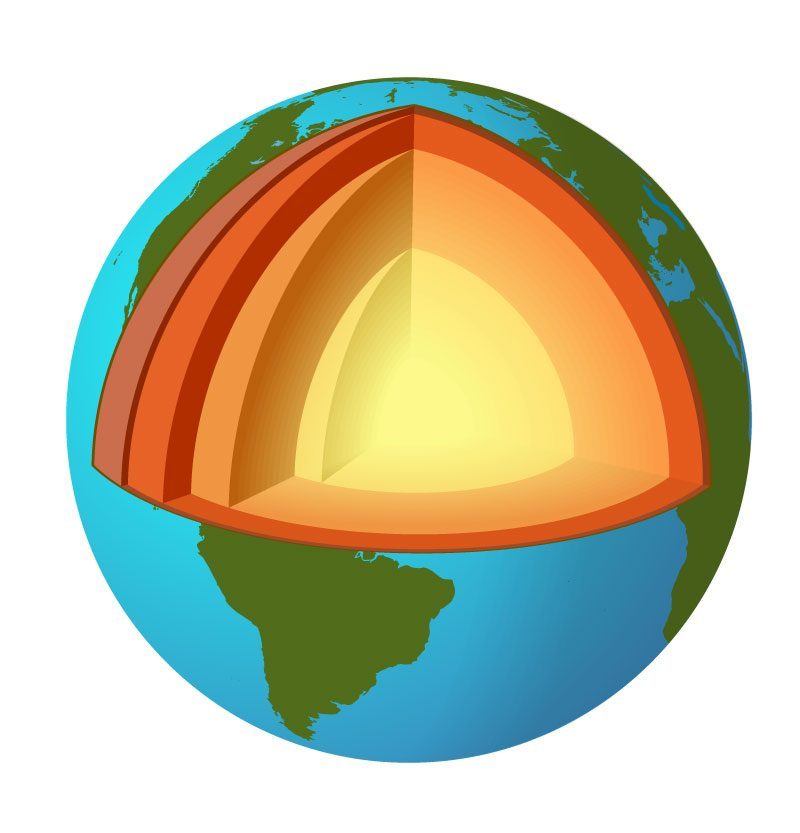
It is almost absurd when you think about it: the entire picture of Earth’s core is built from waves, equations, and a lot of patient inference. No probe has drilled more than a scratch into the crust compared to the nearly 2,900 kilometers to the core, so scientists turn to earthquakes as their accidental sonar. When seismic waves travel through the planet, they speed up, slow down, or vanish depending on the materials they meet, painting a ghostly X‑ray of the interior. For decades, this method seemed to confirm a simple model: a solid inner core of mostly iron and nickel, wrapped in a liquid outer core that generates our magnetic field. But the more precisely researchers listen, the more the story starts to sound off-key.
In recent years, ultra-sensitive seismic arrays have hinted that the inner core may not be a uniform, solid metal ball at all, but a layered, patchy, even wobbling structure with different regions behaving in distinctly different ways. Some studies suggest there might be a so‑called “innermost inner core,” a deeper heart within the heart, with crystals aligned in a different direction than the rest. Other work points to zones where seismic waves are strangely slow, as if iron had been mixed with lighter elements – carbon, hydrogen, or oxygen – that change how sound passes through. Each new dataset offers another piece of the puzzle, but the full picture keeps slipping just out of reach, like an object seen through frosted glass.
From Ancient Clues to Modern Science
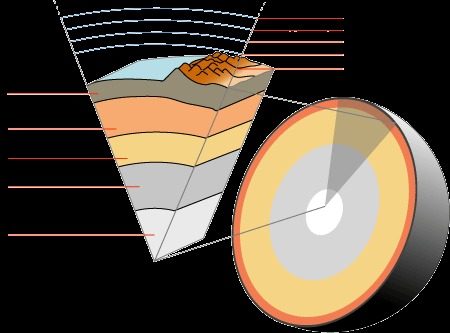
The story of the core actually begins long before high-tech seismometers and satellite missions, with the way ancient rocks quietly remember Earth’s magnetic moods. When iron-bearing minerals in lava cool and solidify, they “lock in” the direction of the magnetic field at that moment, preserving a tiny compass needle frozen in stone. By reading these minerals in rocks that are hundreds of millions, even billions of years old, geologists can reconstruct how the field has flipped, wandered, and weakened over time. Those paleomagnetic fingerprints tell us that the geodynamo in the outer core has been churning for much of Earth’s history, powered by heat and the slow, relentless crystallization of the inner core.
Fast forward to the twentieth and twenty-first centuries, and the picture becomes more dynamic and unsettling. Satellite missions have tracked rapid changes in the magnetic field, including localized zones where it has grown unexpectedly weak and regions where the poles seem to be drifting faster than expected. Laboratory experiments try to mimic core conditions by squeezing metals at pressures up to millions of times that at Earth’s surface and heating them to temperatures hotter than the surface of the Sun. Even then, these experiments are approximations; no lab on Earth can fully reproduce the exact mix of pressure, temperature, rotation, and composition that reigns at the core. Our models are descendants of those ancient rock records, upgraded with supercomputers and diamond-anvil cells, but still rooted in educated guesswork.
A Core That Refuses to Behave
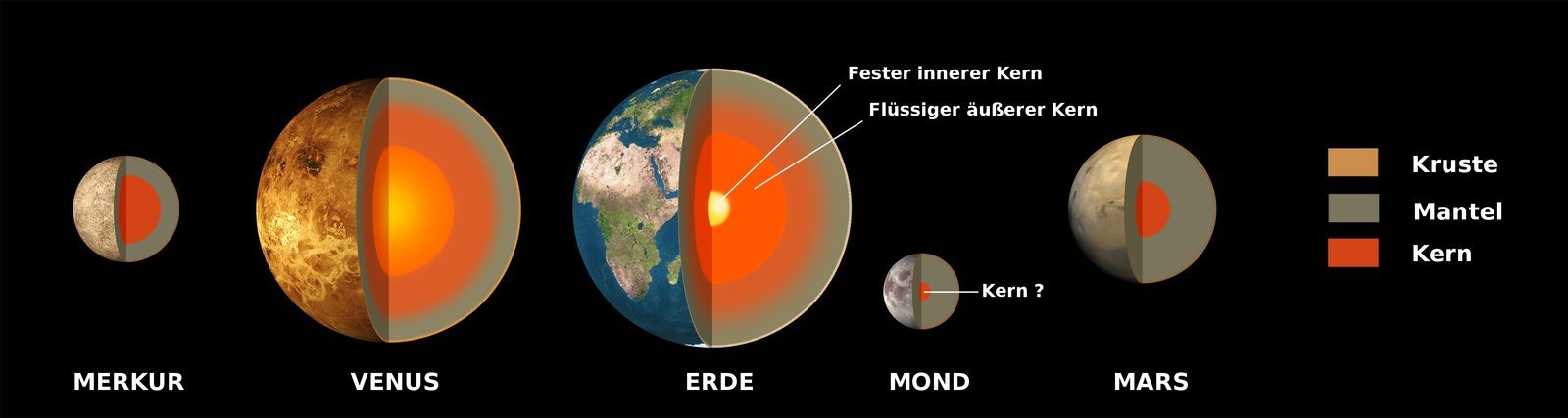
One of the most unsettling turns in recent research is the possibility that the inner core may not be spinning in lockstep with the rest of the planet. Several high-profile seismic studies have argued that the inner core periodically speeds up, slows down, or even slightly reverses its relative motion compared to the mantle. If that is true, it means the very center of Earth is engaged in a subtle tug-of-war with the fluid outer core and the solid layers above it. That internal dance would ripple outward, influencing how the magnetic field behaves, how heat is transported, and possibly how stable the whole system really is over geologic time.
At the same time, new work hints that the inner core may be softer than once believed – less like an unyielding iron ball and more like a strange metallic sponge, deforming slowly under impense pressure. Some researchers suggest that parts of it may behave almost like a superionic material, where atoms of lighter elements hop through an iron lattice, neither fully solid nor fully liquid. Others focus on hemispheric differences: one half of the inner core may be growing faster than the other, potentially tilting the balance of the entire system. These are not just minor adjustments to a textbook diagram. They are signs that our basic mental picture of the core as a neat, concentric structure may be far too simple for the wild reality beneath us.
Ancient Earth, Alien Worlds
When we talk about the core, we are really talking about deep time, because the structure we see today is the product of four and a half billion years of planetary evolution. Early Earth was a violent, molten world, hammered by impacts and heated from within by radioactive decay, where metals sank and silicates floated to build the core and mantle. How quickly that core formed, and when the inner portion began to crystallize, may have controlled everything from the onset of the magnetic field to the stability of the early atmosphere. Some researchers argue that the inner core is surprisingly young in geologic terms, perhaps less than a billion years old, meaning that for most of Earth’s life, the dynamo may have run on a different energy source. That idea forces a reevaluation of how early life survived under a potentially weaker or more erratic magnetic shield.
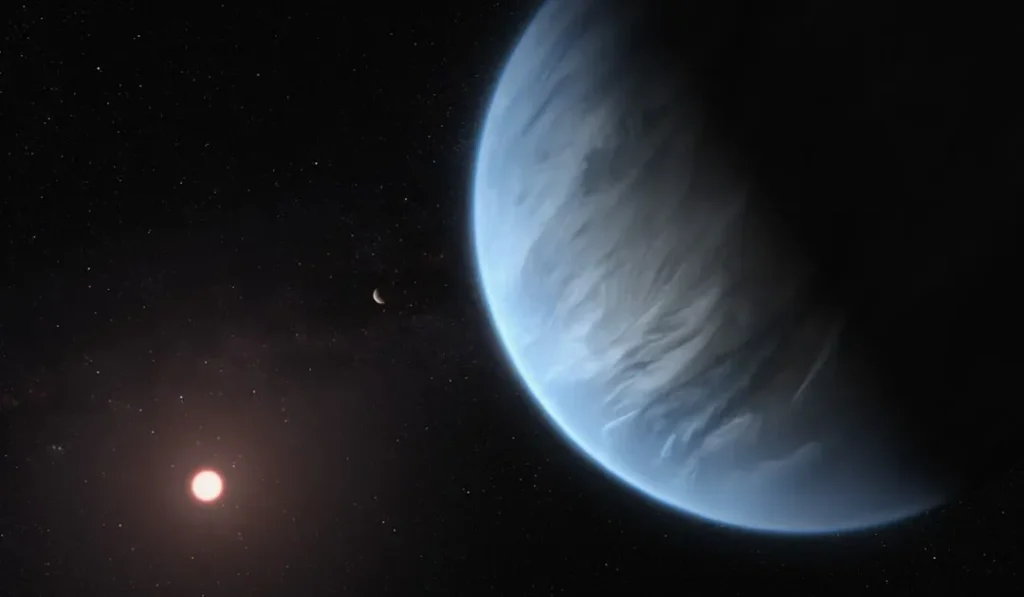
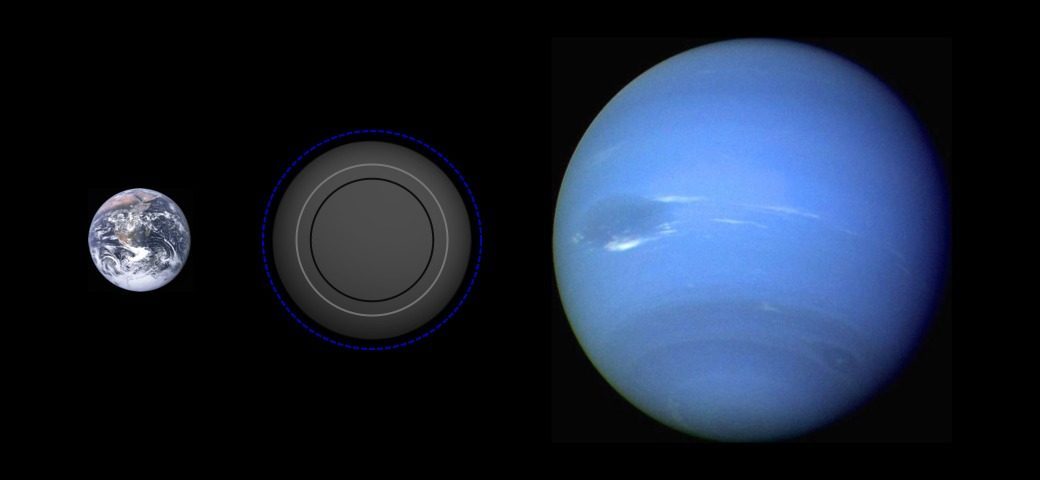
These questions do not just belong to our planet. As astronomers discover rocky exoplanets around distant stars, they often ask whether those worlds have molten metallic cores and protective magnetic fields of their own. Without that kind of shield, a planet’s atmosphere can be stripped by stellar winds, and any surface water may not last long on cosmic timescales. By studying Earth’s core and its history, scientists are building a comparative toolkit for understanding which planets might be truly habitable. In that sense, our own buried heart becomes a reference point for alien worlds, a secret key to judging where life might stand a chance – or where it never had one at all.
The Hidden Numbers That Shape Our Lives
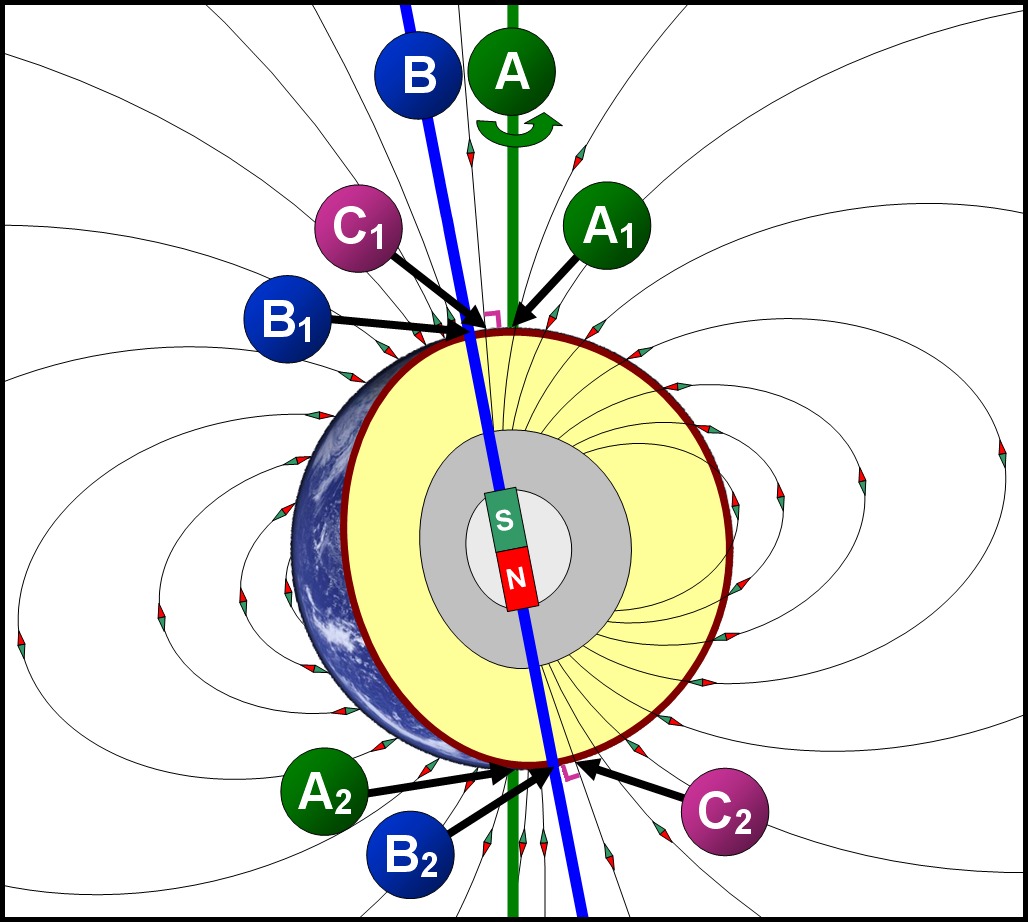
Even if you never think about the core, your daily life is quietly shaped by it in ways that are easy to overlook. The magnetic field born from the outer core steers charged particles from the Sun away from the surface, helping to protect satellites, power grids, and airline passengers from intense radiation. Without it, modern infrastructure would be at constant risk, and the long-term stability of the atmosphere itself would be in doubt. The very length of a day is also linked to the interactions between the core and the mantle, as angular momentum transfers and subtle changes in rotation gradually tweak how long Earth takes to spin once. Over millions of years, these changes accumulate, altering climate patterns and even the pacing of biological evolution through altered day-night cycles.
Scientists are also finding that small fluctuations in Earth’s rotation and magnetic field can be tied to changes in the inner and outer core over human time spans, not just deep time. These include:
- Minute variations in day length measured in milliseconds that correlate with core-mantle dynamics.
- Shifts in the location and strength of the magnetic poles, tracked by satellite and ground observatories.
- Episodes where parts of the field weaken, raising concerns about increased radiation exposure at high altitudes.
None of these phenomena can be fully explained without understanding the state of the core, yet at present we only have pieces of the story. The numbers tell us something is happening down there, but not exactly what, and that gap between data and explanation is where both anxiety and scientific excitement live.
Why It Matters More Than We Admit
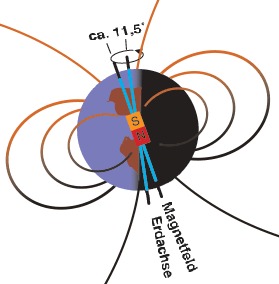
It is tempting to treat the core as an abstract curiosity, the planetary equivalent of obscure trivia, but the truth is much sharper: our ignorance about it is a vulnerability. If the magnetic field were to weaken dramatically or undergo a complex reversal pattern, satellites could fail more often, GPS systems could become less reliable, and power infrastructure in high-latitude regions could face damaging geomagnetic storms. We know from geological records that magnetic reversals have happened many times, sometimes with prolonged periods of instability, but we do not yet fully grasp how the inner and outer core orchestrate those events. That means our ability to forecast future changes is limited, much like trying to predict a storm without good data on the ocean beneath the clouds.
On a broader scale, the core is part of a single, interconnected system that includes mantle convection, plate tectonics, volcanic activity, and climate over geologic time. Traditional geology classes often present these as separate chapters, but the reality is more like a web than a set of isolated diagrams. Changes in how the core cools can alter mantle dynamics; shifting mantle patterns can, in turn, affect surface volcanism and outgassing; those processes then feed back into the composition of the atmosphere and oceans. Understanding the core is therefore not a niche pursuit. It is central to grasping how Earth maintains conditions that allow complex life to persist, and how fragile that balance might really be.
The Future Toolkit: Listening Harder to the Planet
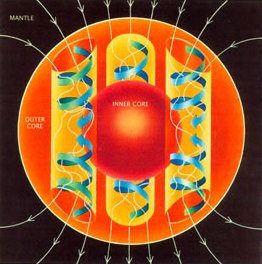
Because we will never drill to the core, the future of core research lies in building better ways to listen and simulate rather than touch. Upcoming seismic networks aim to capture smaller and more distant earthquakes with unprecedented clarity, turning the whole planet into a finer-grained listening device. Improved algorithms can tease out weak, repeating signals that once looked like noise, revealing subtle structures and flows within the inner and outer core. At the same time, experimental physicists are pushing the limits of high-pressure research, squeezing alloys under more extreme conditions while using advanced X‑ray techniques to watch how atoms arrange and move. These results feed directly into next-generation simulations that run on some of the world’s most powerful supercomputers.
There is also a growing push to combine multiple strands of evidence – seismic data, geomagnetic records, satellite measurements of gravitational changes, and even observations from other planets – into unified models. That integrated approach could expose patterns we have missed by looking at each dataset in isolation, such as long-period cycles in core convection or links between core behavior and surface phenomena. Still, serious challenges remain. Many of the key processes unfold over millions of years, far beyond the span of any research project or human lifetime, and small uncertainties in material properties can cascade into major differences in model outcomes. The most honest forecast is that we will gradually refine our understanding, but full certainty about the core’s structure and future behavior may always remain just out of reach.
What We Can Do From the Surface
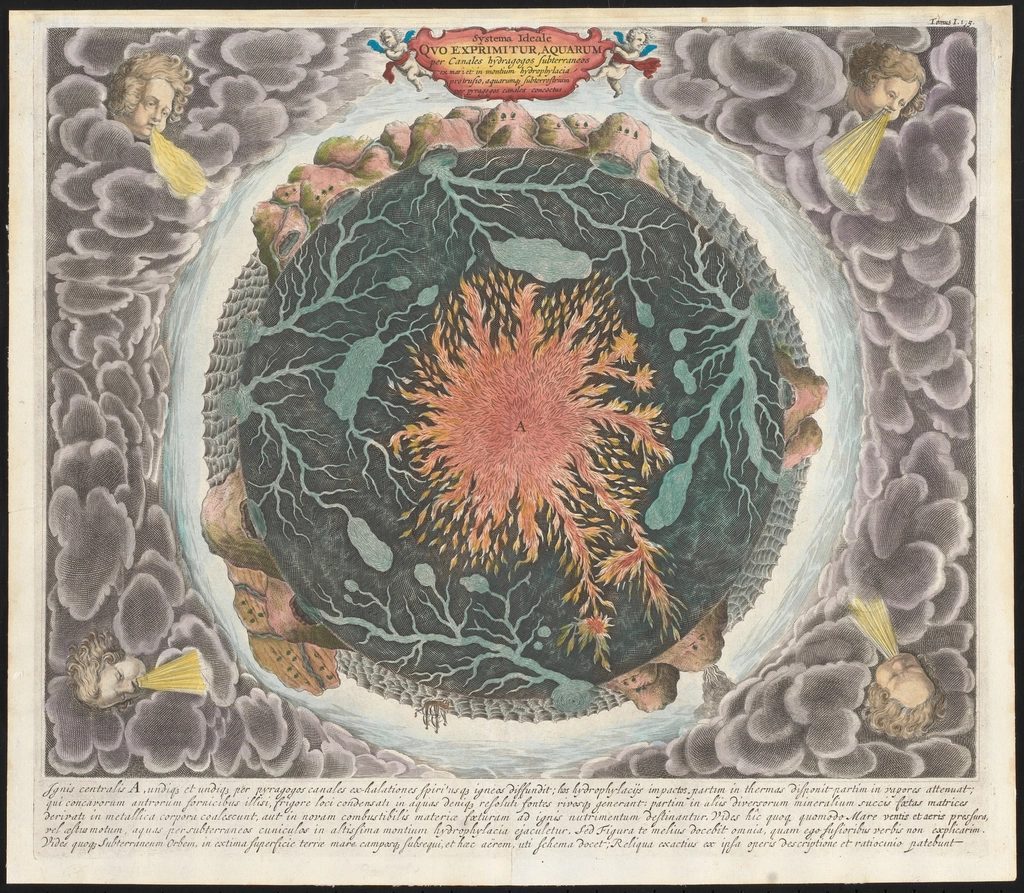
It can feel strangely helpless to learn that the fate of our magnetic shield and part of our climate history depends on a massive ball of metal we can never see. Yet there are real, tangible ways to support the science that is slowly decoding this hidden engine. Public funding for basic geophysics, seismology, and planetary science often competes with more immediately practical projects, even though the long-term payoff for understanding Earth’s deep interior is enormous. By paying attention to news about new seismic networks, satellite missions, and laboratory breakthroughs – and by backing policies that sustain them – you help keep that work alive. Even something as simple as visiting a local science museum, supporting outreach programs, or encouraging students to pursue Earth science can ripple outward more than it seems.
On a more personal level, staying aware of how dependent modern life is on the invisible protection of the magnetic field can shift how we think about our relationship to the planet. The next time you use GPS, watch auroras dance in a time-lapse video, or read about a solar storm, you are seeing the edge effects of a vast, hidden machine below your feet. If you are curious enough to dig deeper, there are open data portals where anyone can explore geomagnetic records, earthquake catalogs, and satellite observations, turning passive interest into active exploration. In the end, the greatest contribution most of us can make is to keep asking questions, to value scientific uncertainty not as a weakness but as an honest invitation to learn more. The core will probably never give up all its secrets, but the effort to understand it is part of what makes our species more than just passengers on a spinning rock.
Suhail Ahmed is a passionate digital professional and nature enthusiast with over 8 years of experience in content strategy, SEO, web development, and digital operations. Alongside his freelance journey, Suhail actively contributes to nature and wildlife platforms like Discover Wildlife, where he channels his curiosity for the planet into engaging, educational storytelling.
With a strong background in managing digital ecosystems — from ecommerce stores and WordPress websites to social media and automation — Suhail merges technical precision with creative insight. His content reflects a rare balance: SEO-friendly yet deeply human, data-informed yet emotionally resonant.
Driven by a love for discovery and storytelling, Suhail believes in using digital platforms to amplify causes that matter — especially those protecting Earth’s biodiversity and inspiring sustainable living. Whether he’s managing online projects or crafting wildlife content, his goal remains the same: to inform, inspire, and leave a positive digital footprint.