
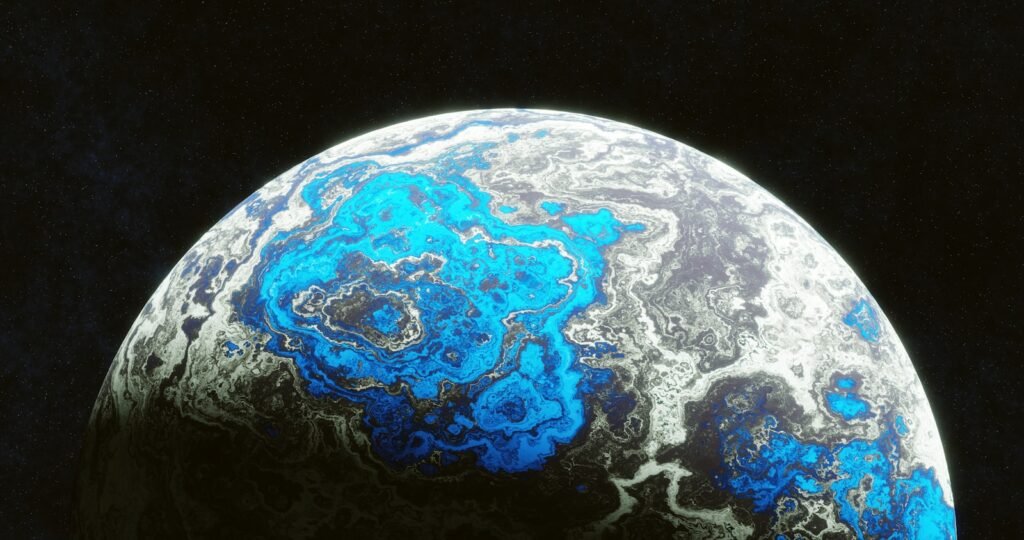

Deep beneath your feet, far below the crust and mantle, a metal heart is constantly churning out energy that helps rip continents apart, hurl mountains into the sky, and unleash earthquakes and eruptions that can rewrite human history in a single night. This is not just a poetic metaphor; the core’s heat and motion feed directly into many of the most violent and spectacular events on Earth’s surface. In this article, we’ll follow the chain of cause and effect from the core outwards, showing how invisible forces translate into visible chaos. Along the way, we’ll look at what scientists have learned in just the last few decades, what we still do not fully understand, and why this hidden engine matters to everyday life more than most people realize.
An Iron Furnace Under Crushing Pressure
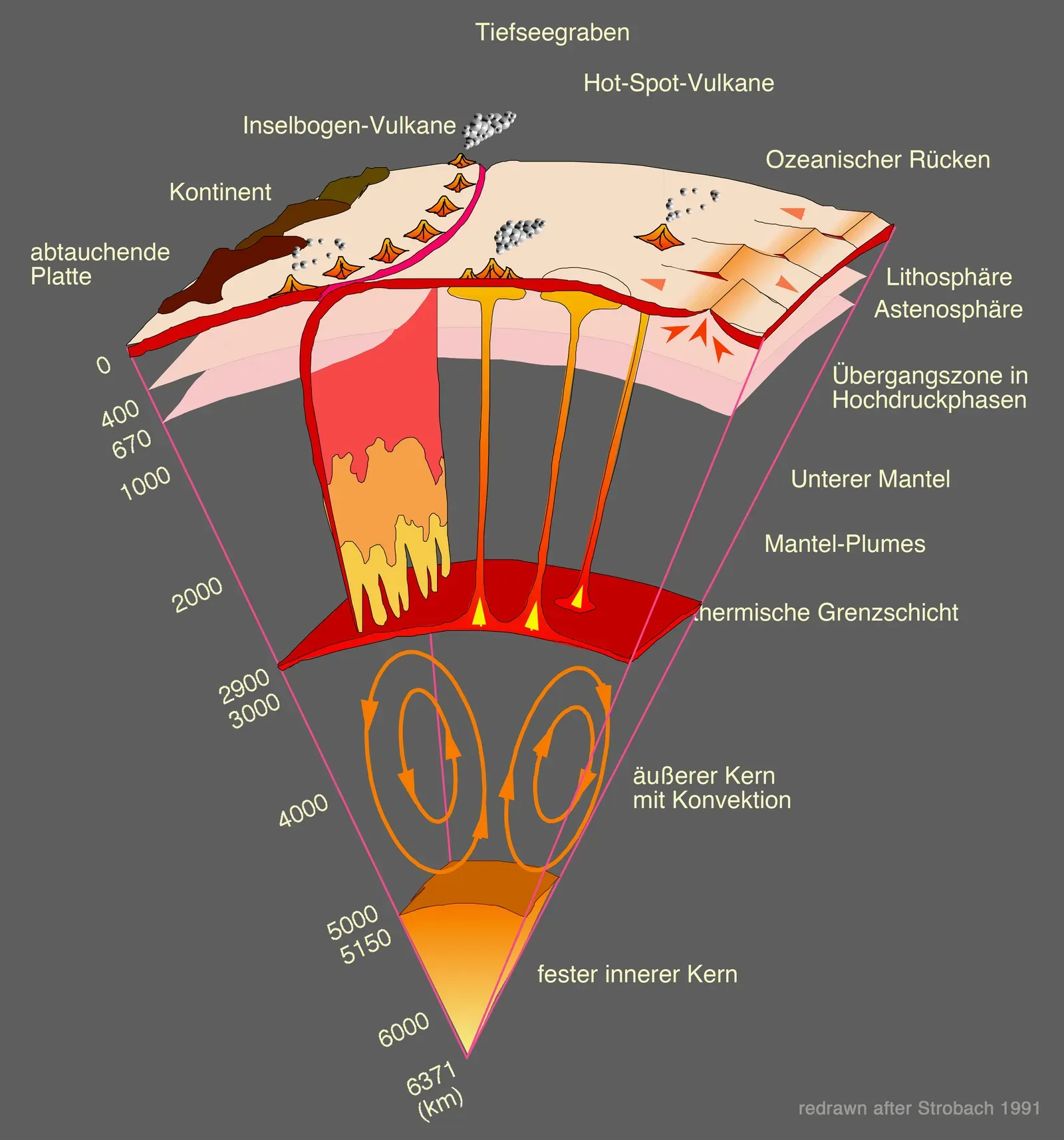
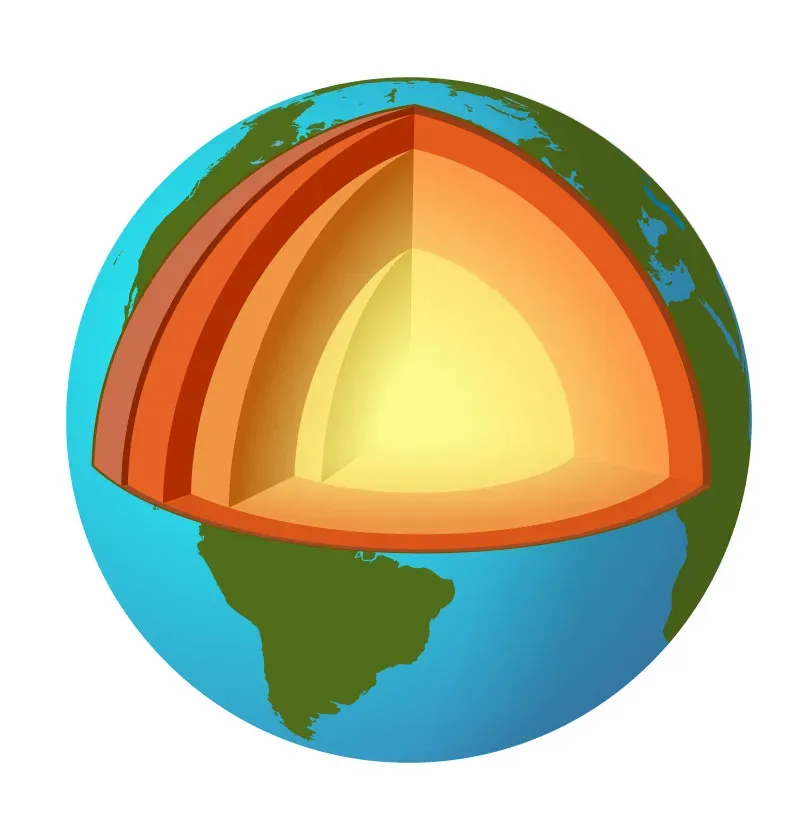
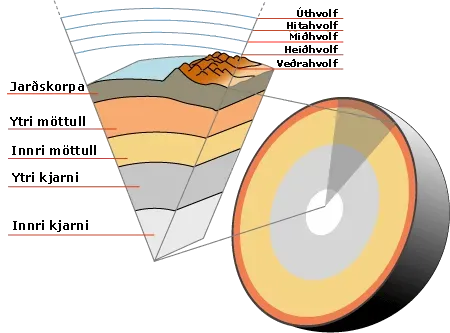
At the center of the planet, roughly three thousand miles below the surface, sits a solid inner core made mostly of iron, about the size of the Moon and hotter than the surface of the Sun. Surrounding it is a shell of liquid iron and nickel known as the outer core, swirling under pressures so intense that rocks would behave more like extremely slow-moving fluids. This entire system is kept scalding hot by leftover heat from Earth’s formation, radioactive decay of elements like uranium and thorium, and the gradual freezing of the inner core, which releases additional energy. None of this is gentle or static; it’s a turbulent, constantly evolving environment that has been running for billions of years.
That internal furnace drives temperature differences between the bottom and top of the outer core, and nature hates those gradients. Just as hot water in a pot rises and cooler water sinks, liquid metal in the outer core forms enormous convection currents. These slow but powerful loops of flowing metal set the stage for several kinds of planetary-scale phenomena, from the global magnetic field to the slow drift of continents riding on mobile plates. The violence we see at the surface is downstream of this deep and relentless energy flow.
From Core Heat to Moving Plates: The Great Energy Relay
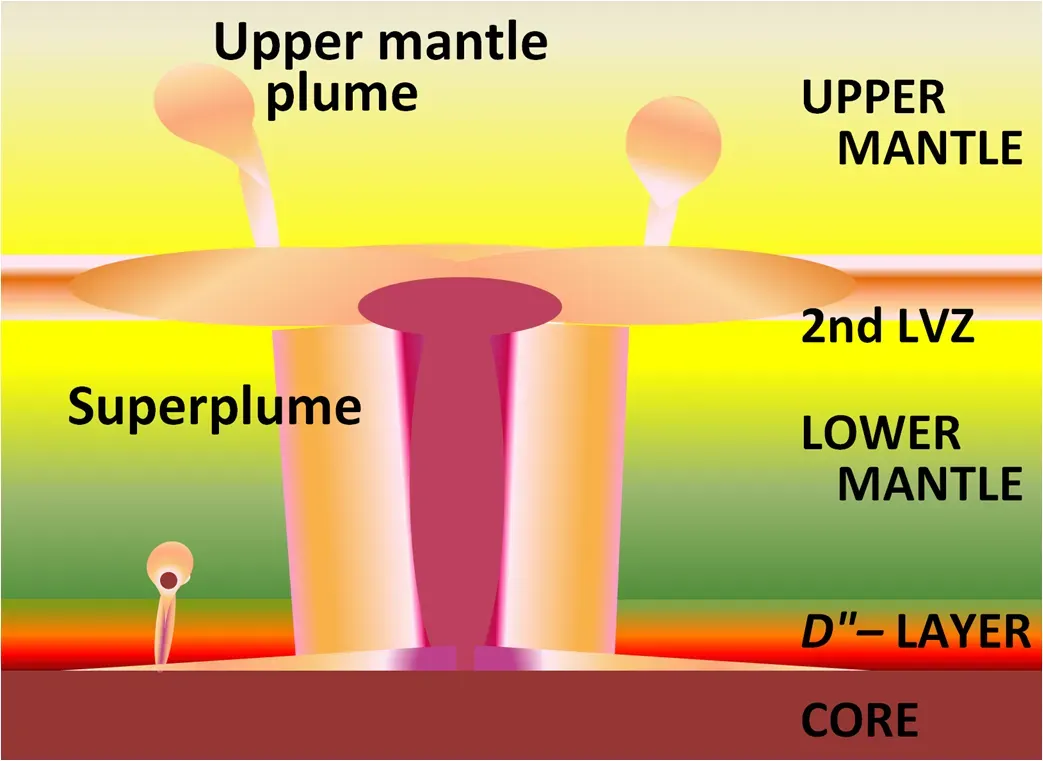
The energy released in the core does not shoot straight to the surface like a laser; it seeps and convects its way through the overlying mantle, a thick shell of hot, deformable rock. This mantle may seem rigid from a human perspective, but over millions of years it behaves more like super-thick caramel, with rising plumes of hotter rock and sinking slabs of colder, denser material. The heat coming from below helps keep this circulation going, and the circulation in turn drags and jostles the tectonic plates that form Earth’s outer skin. You can imagine the plates as rafts being slowly pushed around by sluggish but persistent currents in an underlying sea of rock.
Where plates diverge, converge, or slide past one another, mechanical stress builds up and eventually snaps, releasing energy as earthquakes and volcanic eruptions. The fundamental fuel for this puppet show of colliding continents and opening oceans is the heat escaping from the deep interior. Without that internal power source, the plates would lock up, mountain building would stall, and the familiar pattern of earthquake belts and volcanic arcs would fade. The surface drama is just the noisy edge of a planet still cooling and rearranging itself from the inside out.
Earthquakes: Sudden Releases from a Slowly Wound Spring
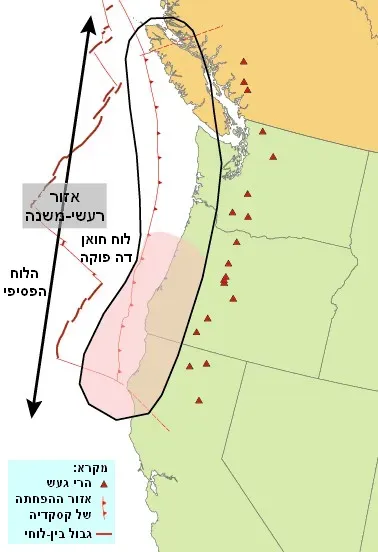
Most people experience the energy from Earth’s interior, if they ever feel it directly, as an earthquake. Along major plate boundaries like the Pacific Ring of Fire, the slow motion of plates driven by mantle dynamics causes rocks to deform elastically, storing strain like a wound spring. For decades or even centuries, this strain can accumulate with no visible result, while friction holds faults locked. Then, sometimes in a matter of seconds, a fault segment jolts forward, releasing accumulated energy as seismic waves that can topple buildings and reshape coastlines.
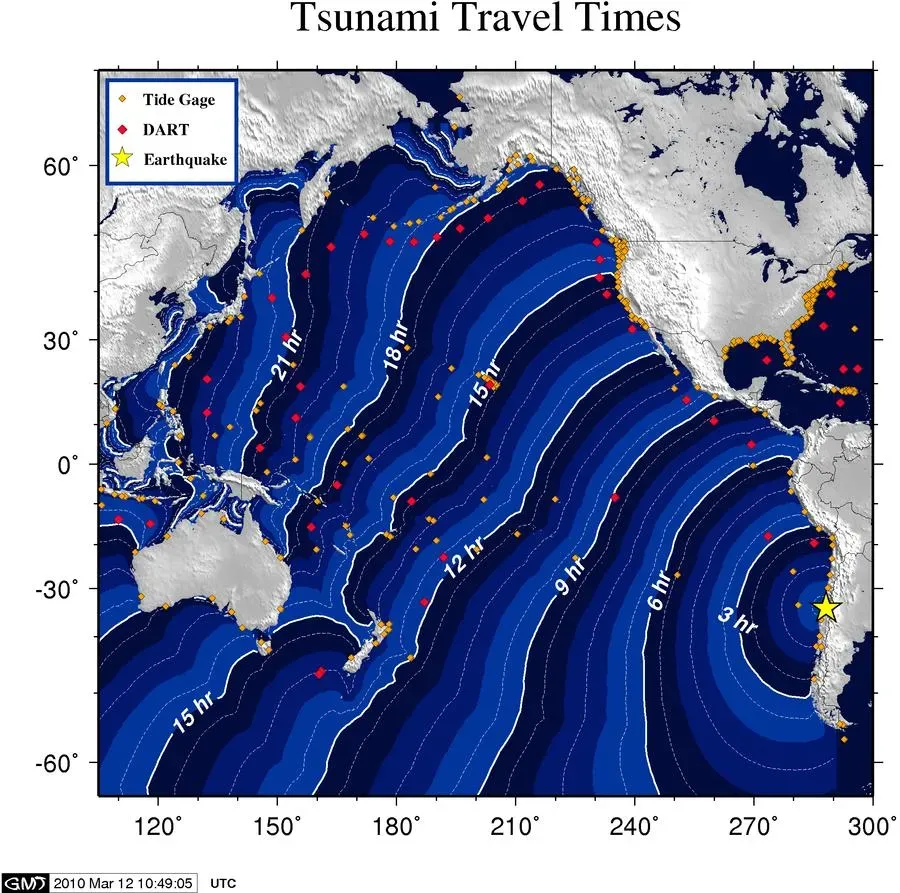
Although earthquakes are driven by local conditions, the engine that keeps loading those faults is global: the persistent transfer of energy from core to mantle to crust. Large subduction earthquakes off Japan, Chile, or Alaska are tied to slabs of cold oceanic crust sinking into the mantle, themselves pulled downward in part by temperature and density contrasts that ultimately trace back to internal heat. Even intraplate quakes in supposedly stable interiors, like the New Madrid region in the central United States, can often be linked to ancient zones of weakness stressed by the ongoing motions of surrounding plates. Every jolt is another reminder that the seemingly solid ground is the outer skin of a restless machine.
Volcanoes and Supereruptions: Pressure Valves on a Heated Planet
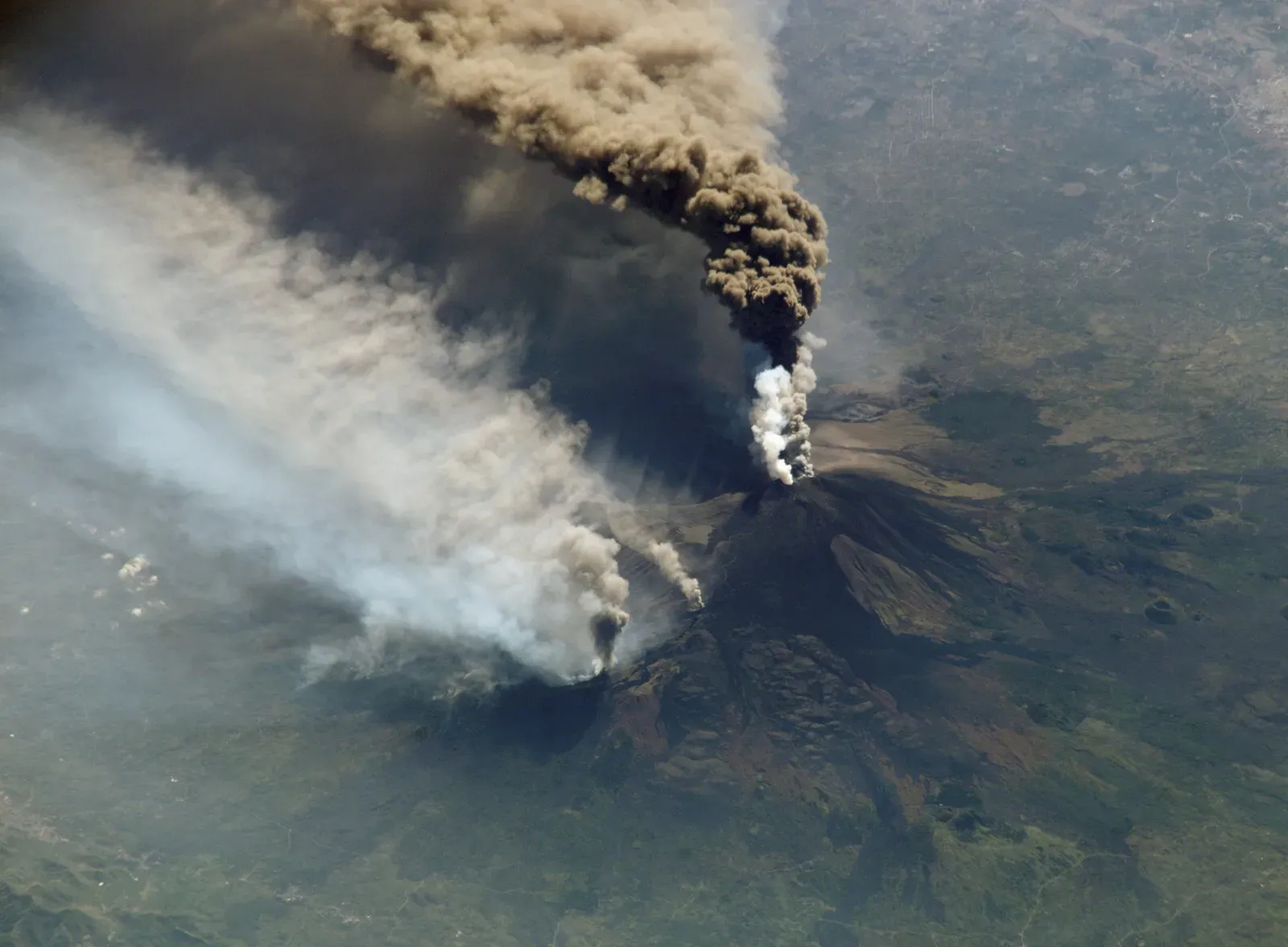
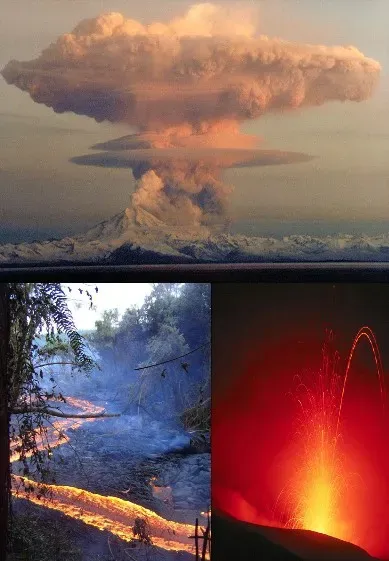
Volcanoes are perhaps the most vivid and cinematic evidence that Earth’s interior is still hot and active. Magma forms when mantle rock partially melts, often where water-rich slabs sink, or where especially hot mantle plumes rise from deep within. That melt, being less dense than the solid rock around it, ascends through the crust, sometimes pooling in magma chambers that can feed eruptions for centuries. The energy driving this melting is again rooted in internal heat, and without it there would be no glowing lava lakes or towering ash columns carving silhouettes against the sky.
In very rare cases, such as at Yellowstone in the United States or Toba in Indonesia, enormous volumes of magma can accumulate and lead to what are known as supereruptions. These events can release energy far beyond typical volcanic eruptions, blanketing continents in ash and altering climate on global scales. The intervals between such cataclysms stretch over hundreds of thousands of years, which makes them easy to ignore on human timescales, but geologically they are recurring expressions of the same internal stresses. Each eruption, big or small, is a pressure valve opening on a planet that is still cooling down from its fiery birth.
Magnetic Shields and Solar Storms: When the Core Defends the Surface
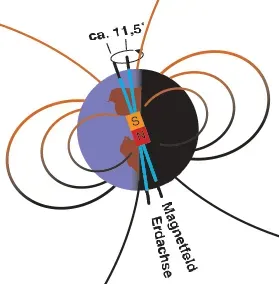
The same churning outer core that heats and stirs the mantle also powers Earth’s global magnetic field, a feature that quietly protects life from a barrage of charged particles streaming from the Sun. As liquid iron and nickel move through an existing magnetic field, they generate electrical currents, which reinforce and sustain that field in a self-exciting loop known as the geodynamo. The result is a magnetic bubble around our planet that deflects most of the solar wind and channels particle streams toward the poles, where they ignite auroras in the upper atmosphere. It is an invisible guardian with very tangible consequences.
When intense solar storms erupt from the Sun, they can disturb this magnetosphere, triggering geomagnetic storms that disrupt satellites, navigation systems, and power grids. The severity of these events depends on both what the Sun is doing and how strong and well-structured Earth’s magnetic field happens to be at that time. While we often focus on earthquakes and volcanoes as violent Earth events, magnetic storms are planetary-scale disturbances too, driven by the interplay between our internal engine and space weather. Without the core-powered field, the same storms could be far more destructive, stripping atmospheric gases and showering the surface with radiation. The core is not only a source of hazards but also a crucial line of defense.
Past Extinctions and Climate Shocks Tied to Deep Earth Energies
Some of the most devastating moments in Earth’s history appear to be linked to unusual bursts of internal activity. Vast volcanic provinces known as large igneous provinces, such as the Siberian Traps or the Deccan Traps in India, erupted over relatively short geological intervals and flooded regions with thick layers of basalt. These eruptions released enormous quantities of gases into the atmosphere, including carbon dioxide and sulfur compounds, altering climate, ocean chemistry, and atmospheric composition. Several mass extinction events line up suspiciously closely with such volcanic pulses.
While scientists still debate details like exact timing and mechanisms, there is growing agreement that internally driven volcanism has repeatedly reshaped the biosphere. These episodes are not random fireworks; they reflect unusual configurations in mantle convection, plume activity, and plate motions that modulate how energy escapes from the interior. When the deep engine runs in a particularly intense mode, the consequences can cascade from eruptions to climate shifts to biological crises. The fossil record, in this sense, is partly a history of how life has coped with the moods of a hot, cooling planet.
Rethinking a “Static” Earth: What the Core-Driven View Changes
Seeing Earth as a system driven from the core outwards changes how we interpret everything from mountain ranges to disaster risk maps. Older views treated continents and oceans almost like fixed scenery, with geological change happening slowly and uniformly, but plate tectonics and modern geophysics shattered that comfortable picture. We now understand that surface features respond to long-term flows of heat and material, and that the core’s behavior can ripple outward in complex ways over different timescales. This does not mean that a specific earthquake or eruption can be blamed directly on a particular motion in the core, but it does mean that the probability of such events is ultimately set by the energy budget of the whole planet.
Comparing this modern framework with pre-plate-tectonic ideas is like moving from a still photograph to a time-lapse movie. Instead of seeing mountains as eternal, we see them as short-lived wrinkles on a slowly cooling sphere. Instead of viewing earthquakes and volcanoes as isolated problems, we recognize them as expressions of a single engine driving heat and material from the center to space. That systems perspective is crucial for everything from long-term hazard planning to interpreting planetary data from Mars or Venus. It pushes us to ask not just what is happening at the surface, but why the planet as a whole behaves the way it does.
Unanswered Questions in a Deeply Active Planet
For all the progress in seismology, mineral physics, and numerical modeling, many aspects of the core’s role remain unsettled. Researchers are still debating, for example, exactly how fast the inner core is growing and whether it rotates slightly faster or slower than the rest of the planet over long periods. The detailed composition of the core, including which lighter elements are mixed in with iron and nickel, affects how heat is transported and how the geodynamo behaves. Even small differences in these properties can change estimates of how long Earth’s magnetic field will remain strong and how it has evolved over billions of years.
There are also open questions about the links between core dynamics, mantle plumes, and surface volcanism. Do changes in heat flow across the core–mantle boundary modulate the frequency of massive eruptions or alter mantle convection patterns in ways we can detect? Seismologists are pushing instruments and methods to their limits to image structures at those depths, while experimentalists recreate extreme pressures in diamond-anvil cells to test how materials behave. The picture that emerges is not of a neatly solved puzzle, but of a work in progress where each new constraint forces us to adjust our understanding of how energy moves through the planet.
Staying Curious on a Planet That Never Sleeps
It’s easy to think of earthquakes, eruptions, and geomagnetic storms as random bad luck, but they are really the inevitable side effects of living on an energetically active world. Recognizing that the core’s heat and motion are the ultimate drivers reframes these events as part of a long-running planetary story rather than isolated disasters. For individuals, that understanding can translate into practical choices, like supporting realistic building codes in quake-prone regions, or paying attention to local volcanic hazard maps instead of dismissing them as distant worries. For communities, it argues for sustained investment in monitoring networks that track seismic activity, ground deformation, and changes in Earth’s magnetic field.
You do not need a lab or a satellite to stay engaged with these questions; many national geological surveys and space agencies share real-time data and visualizations that anyone can explore. Following seismic feeds, space weather alerts, or new findings on Earth’s interior can turn abstract talk about the core into a living narrative you can watch unfold. The planet will keep moving, whether we understand it or not, but informed curiosity gives us a better chance to live with its power rather than just endure it.
Suhail Ahmed is a passionate digital professional and nature enthusiast with over 8 years of experience in content strategy, SEO, web development, and digital operations. Alongside his freelance journey, Suhail actively contributes to nature and wildlife platforms like Discover Wildlife, where he channels his curiosity for the planet into engaging, educational storytelling.
With a strong background in managing digital ecosystems — from ecommerce stores and WordPress websites to social media and automation — Suhail merges technical precision with creative insight. His content reflects a rare balance: SEO-friendly yet deeply human, data-informed yet emotionally resonant.
Driven by a love for discovery and storytelling, Suhail believes in using digital platforms to amplify causes that matter — especially those protecting Earth’s biodiversity and inspiring sustainable living. Whether he’s managing online projects or crafting wildlife content, his goal remains the same: to inform, inspire, and leave a positive digital footprint.


