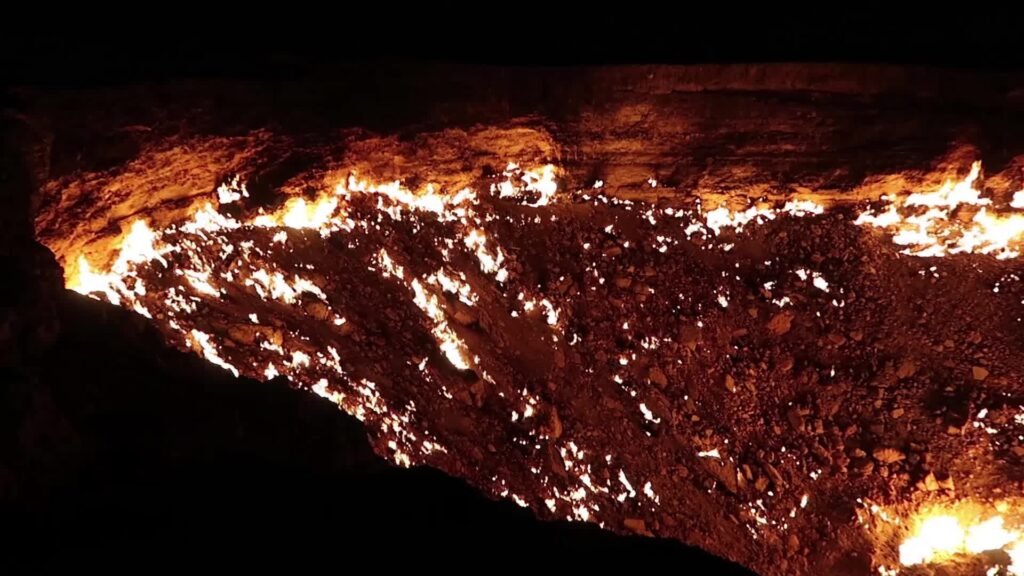

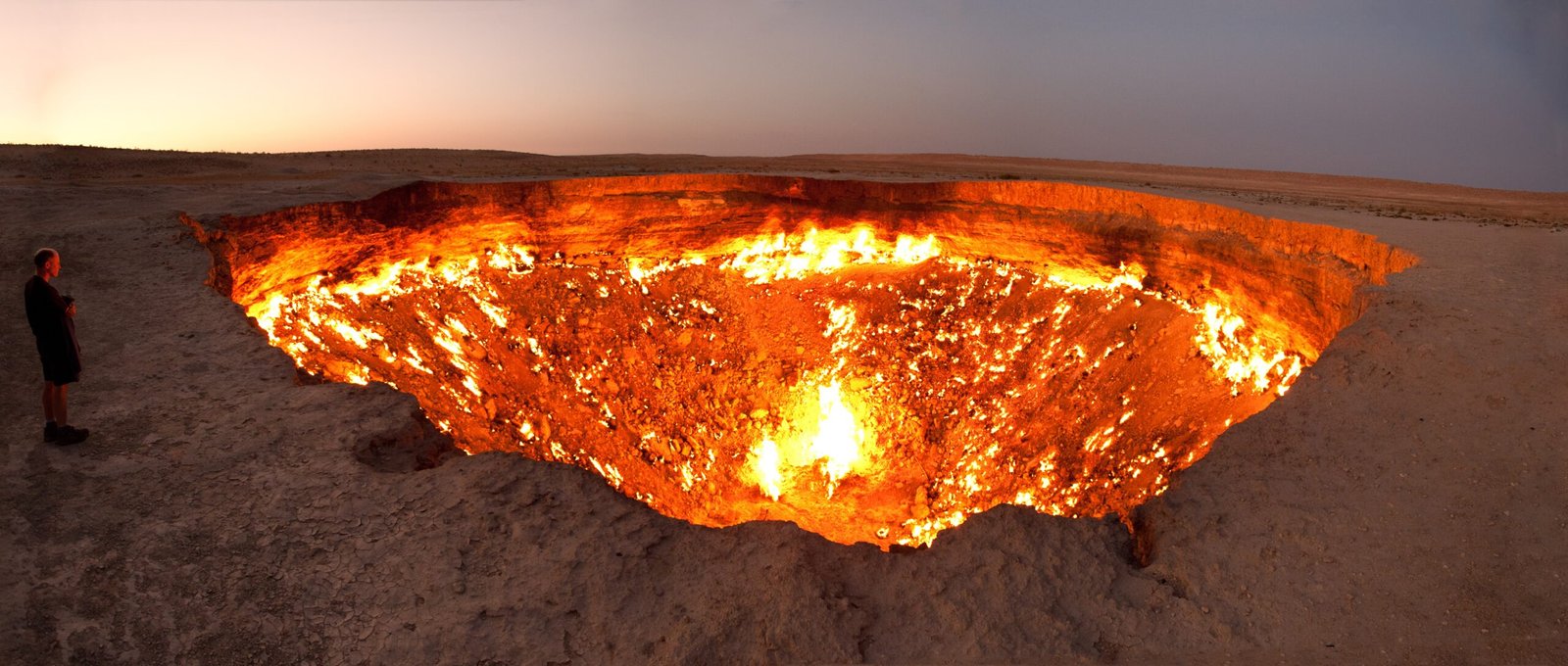
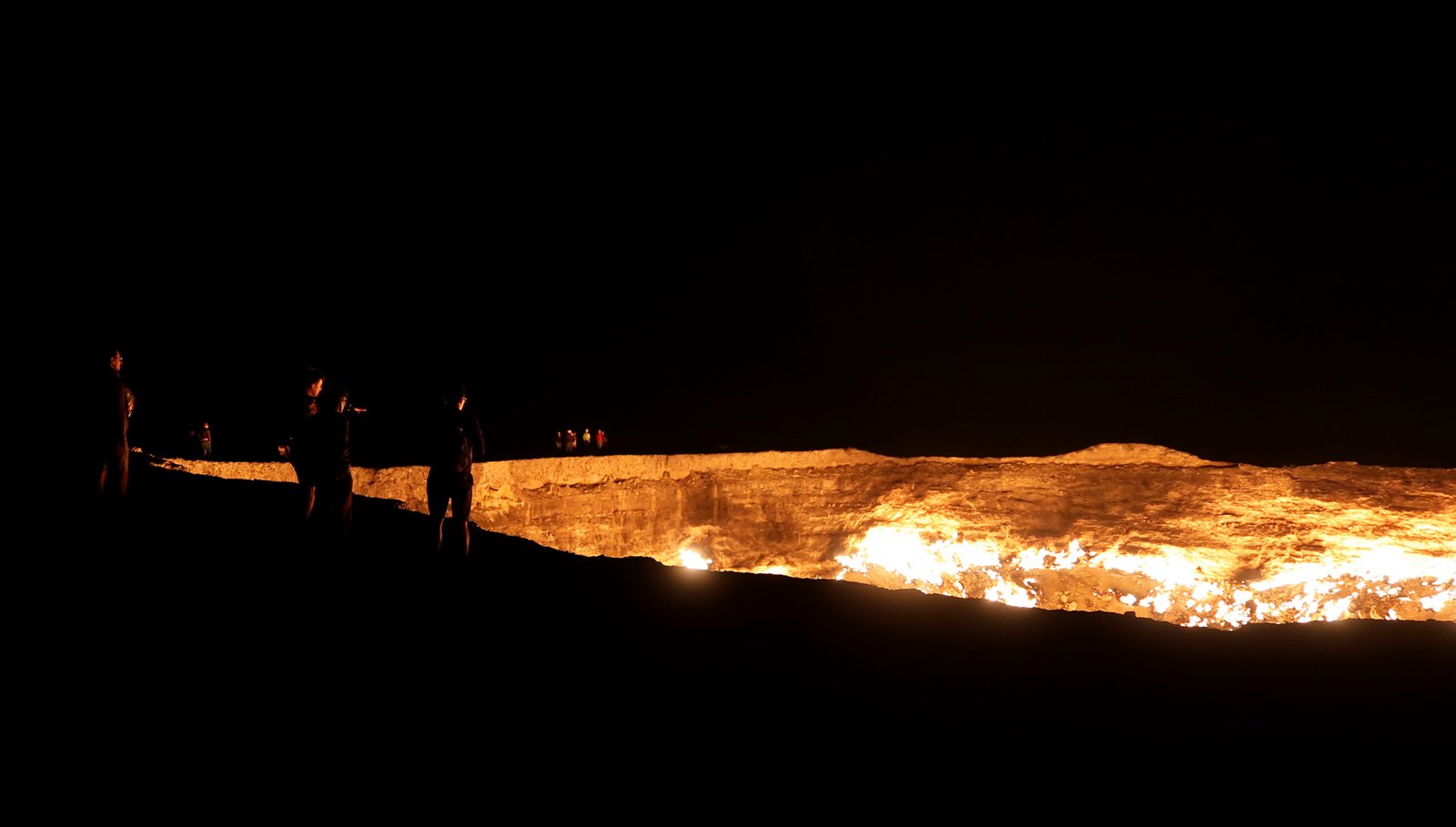
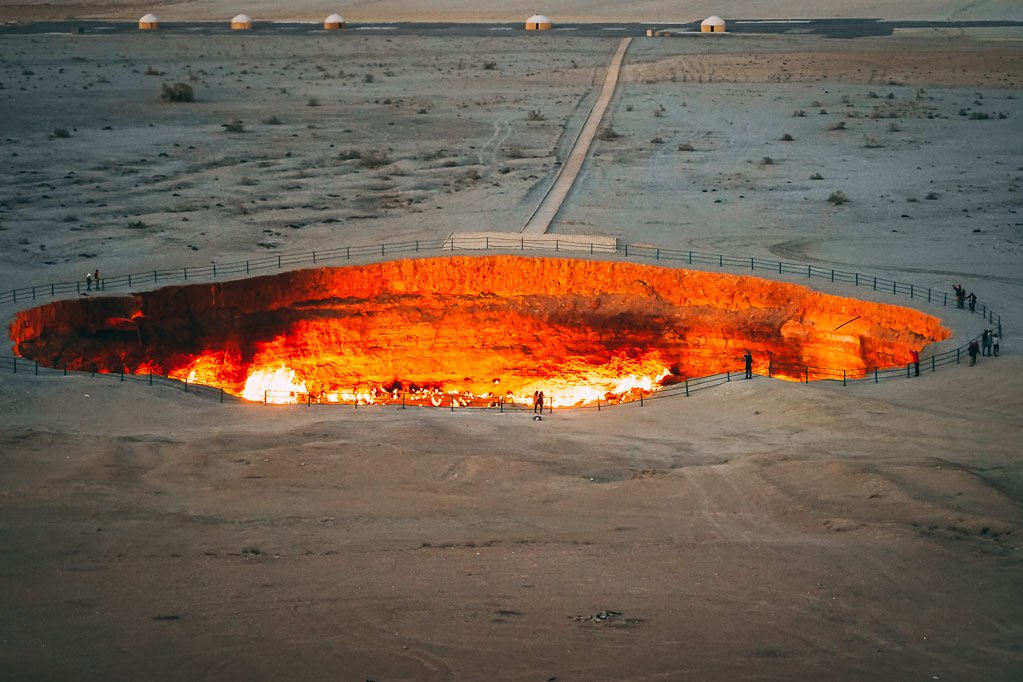
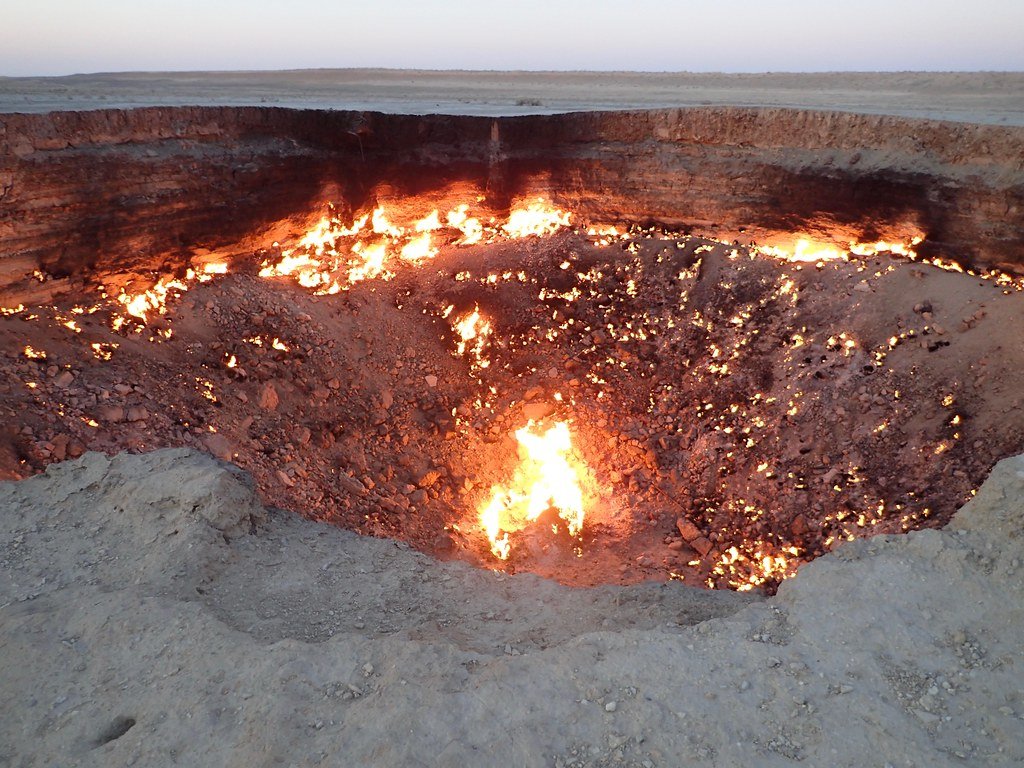
Picture this: you’re standing in the middle of the Karakum Desert, surrounded by endless sand dunes and scorching heat. Suddenly, you stumble upon what looks like a portal straight from the underworld – a massive crater, 70 meters wide, blazing with flames that dance against the night sky like demons performing an eternal ritual. This isn’t a scene from a Hollywood blockbuster or a fever dream. This is the Darvaza gas crater, better known as the “Door to Hell,” and it’s been burning continuously for over five decades.
The Birth of an Inferno
The story begins in 1971 when Soviet geologists were drilling for natural gas deposits in the remote Karakum Desert. What started as a routine exploration turned into an environmental catastrophe that would become one of the world’s most bizarre tourist attractions. The ground beneath their drilling rig collapsed, creating a massive crater filled with deadly methane gas.
Faced with the dangerous situation of toxic gas escaping into the atmosphere, the scientists made a decision that seemed logical at the time. They thought burning off the gas would be safer than letting it leak freely, expecting the flames to extinguish within days or weeks at most. Little did they know they were creating a fiery monument that would outlast the Soviet Union itself.
A Desert Transformed into Hell
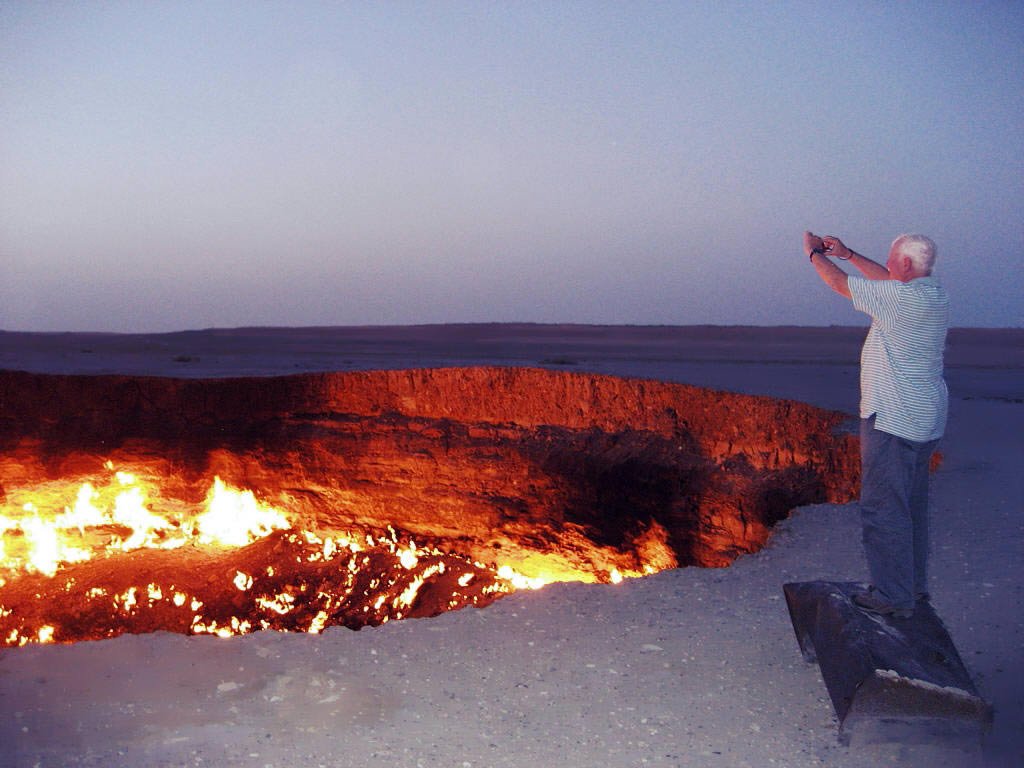
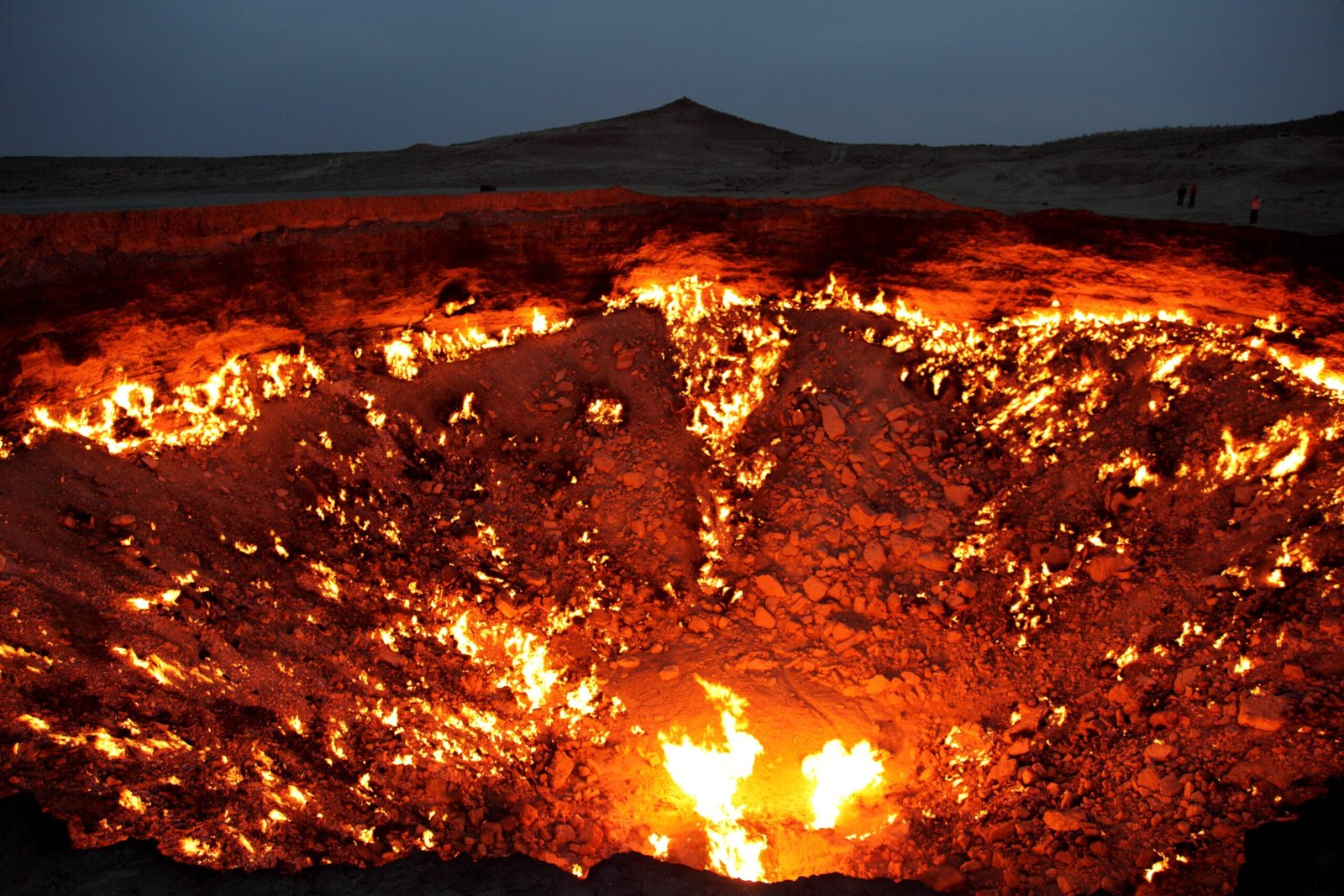
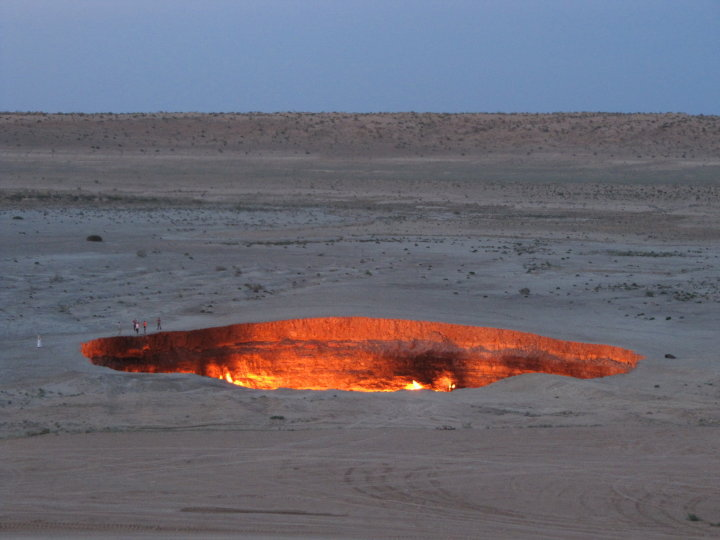
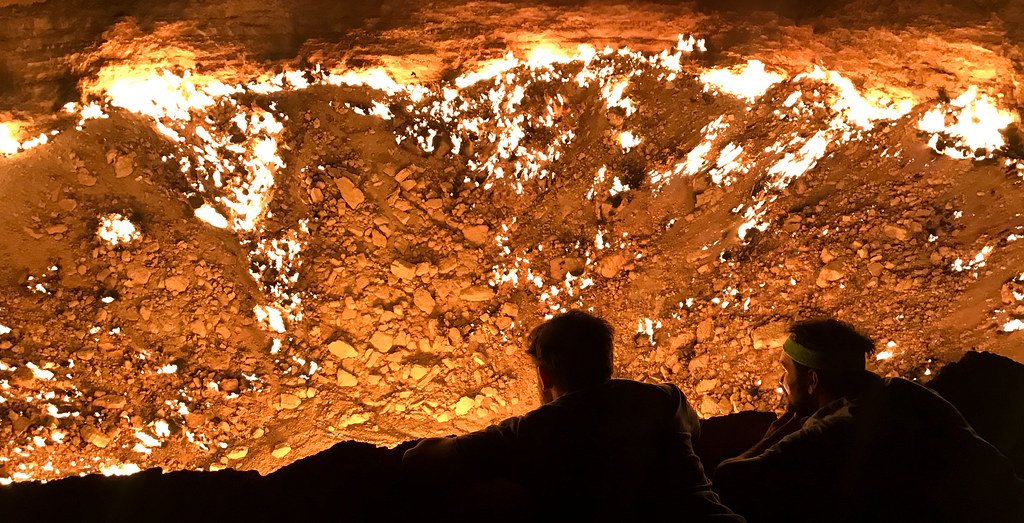
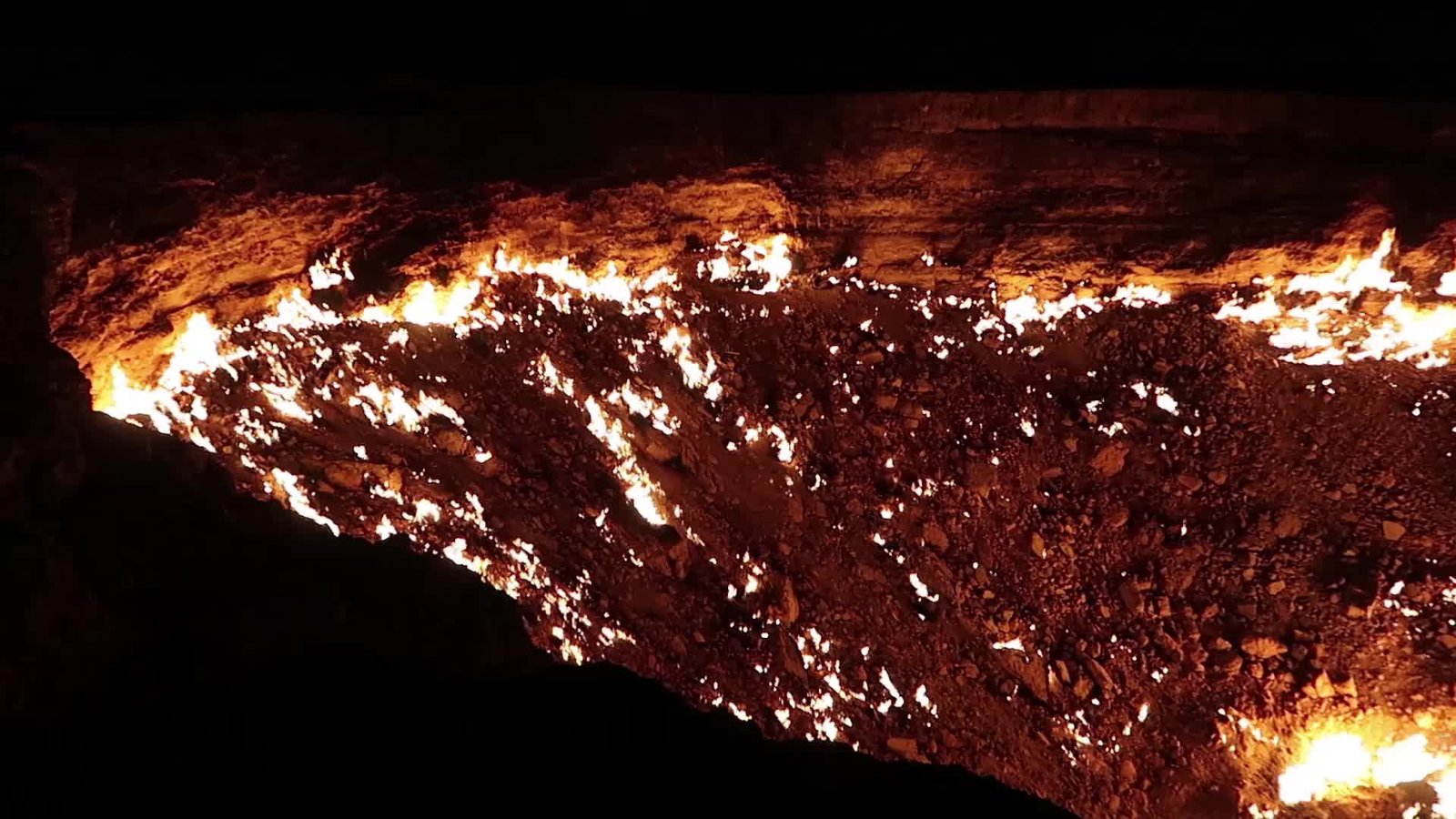
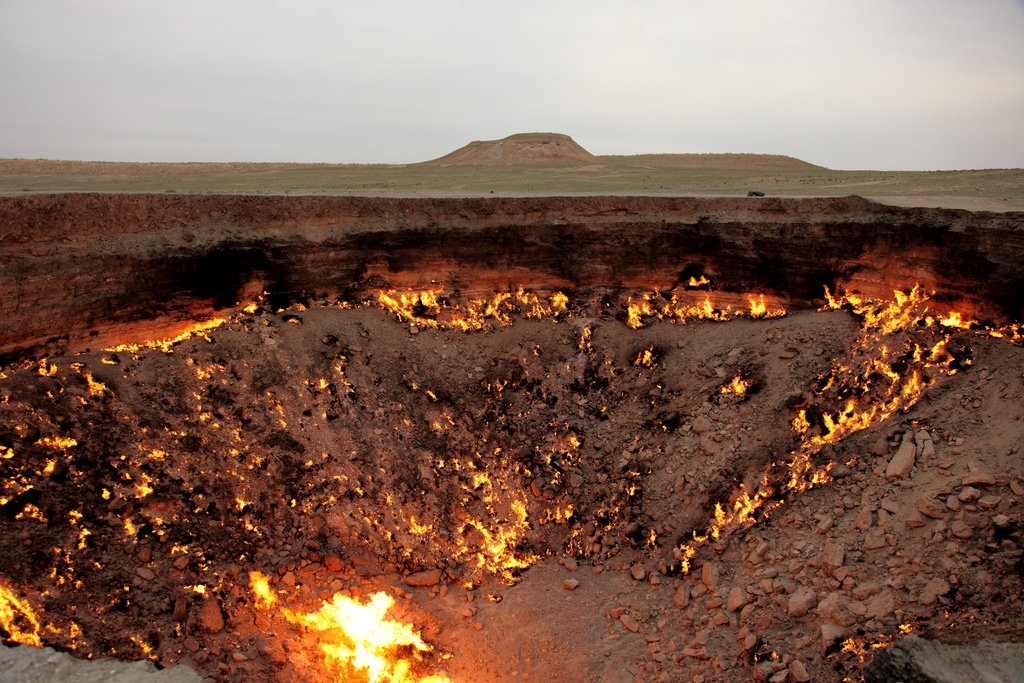
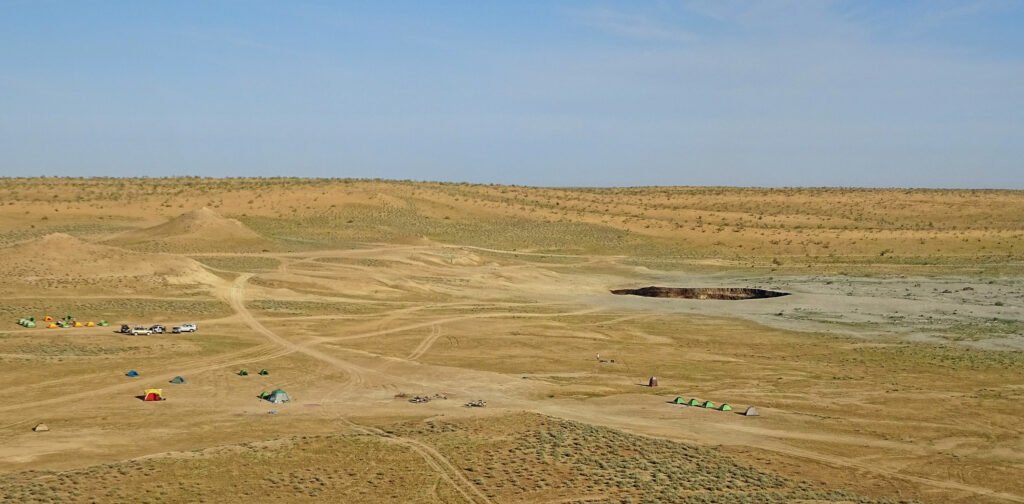
The Darvaza crater measures approximately 70 meters in diameter and 20 meters deep, making it roughly the size of a football field carved into the earth. The flames that emerged from this geological wound have never stopped burning, fed by the seemingly endless supply of natural gas beneath the surface. The sight is both mesmerizing and terrifying – hundreds of small fires dance across the crater floor like a colony of fire spirits.
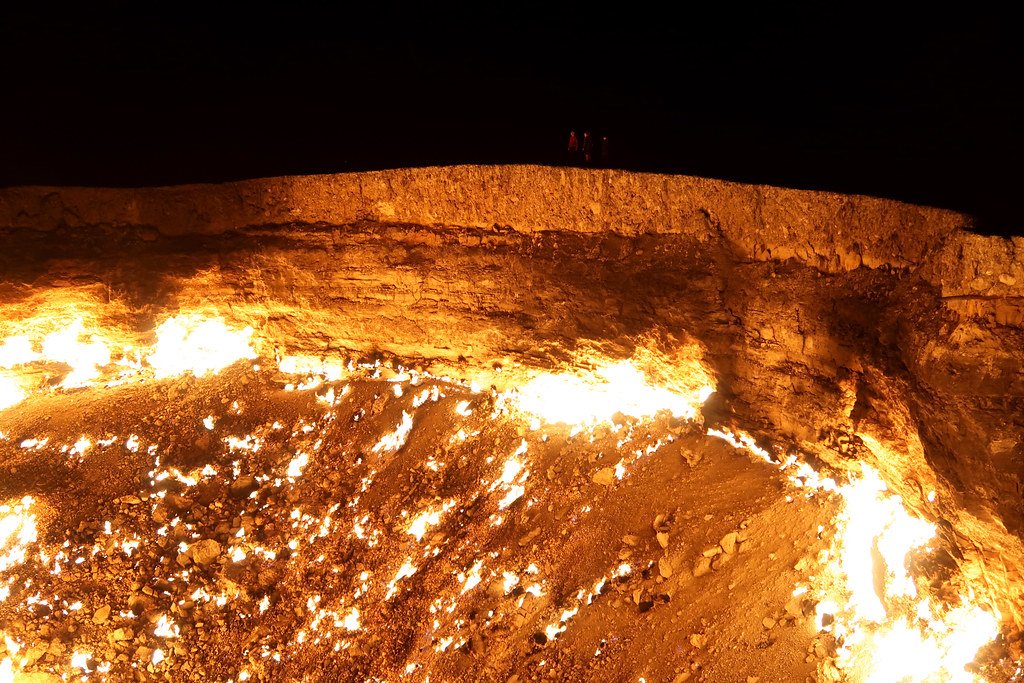
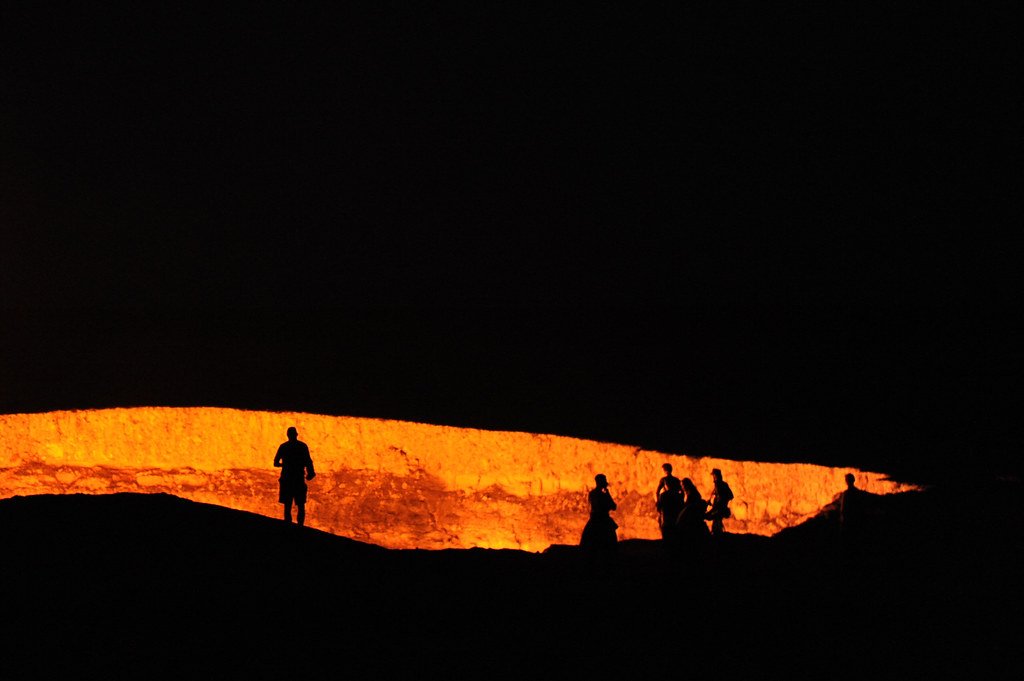
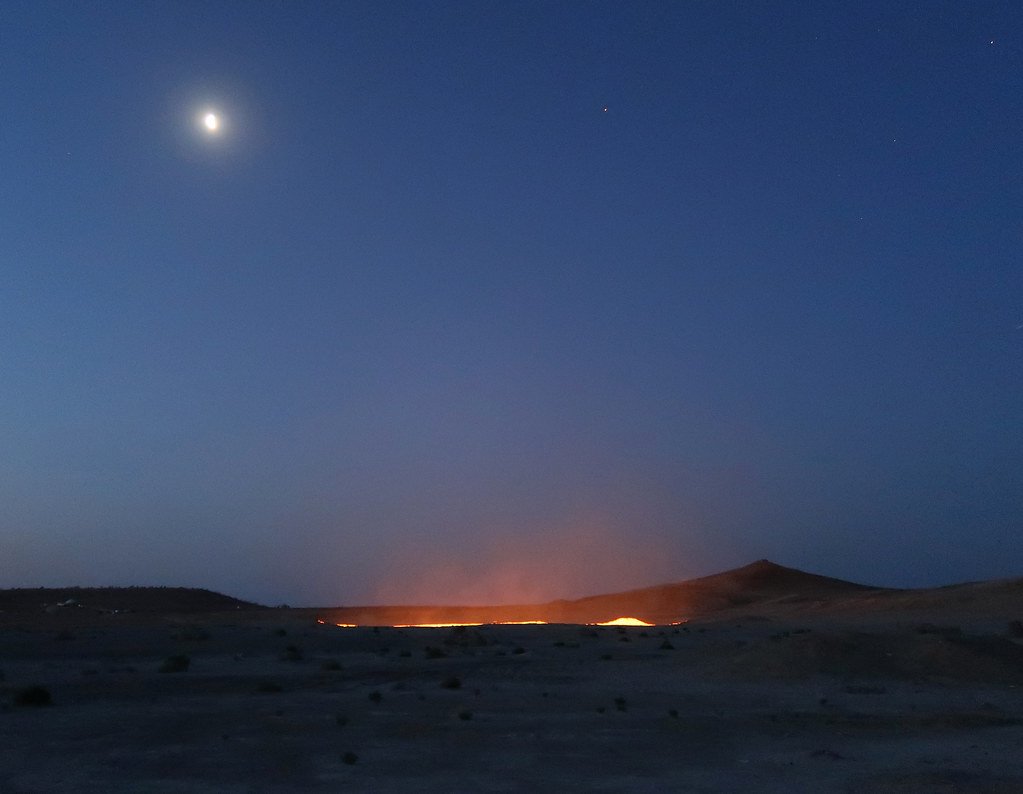
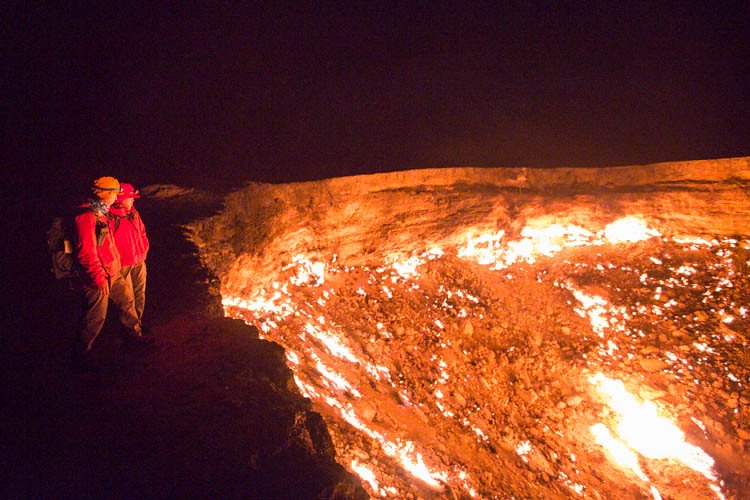
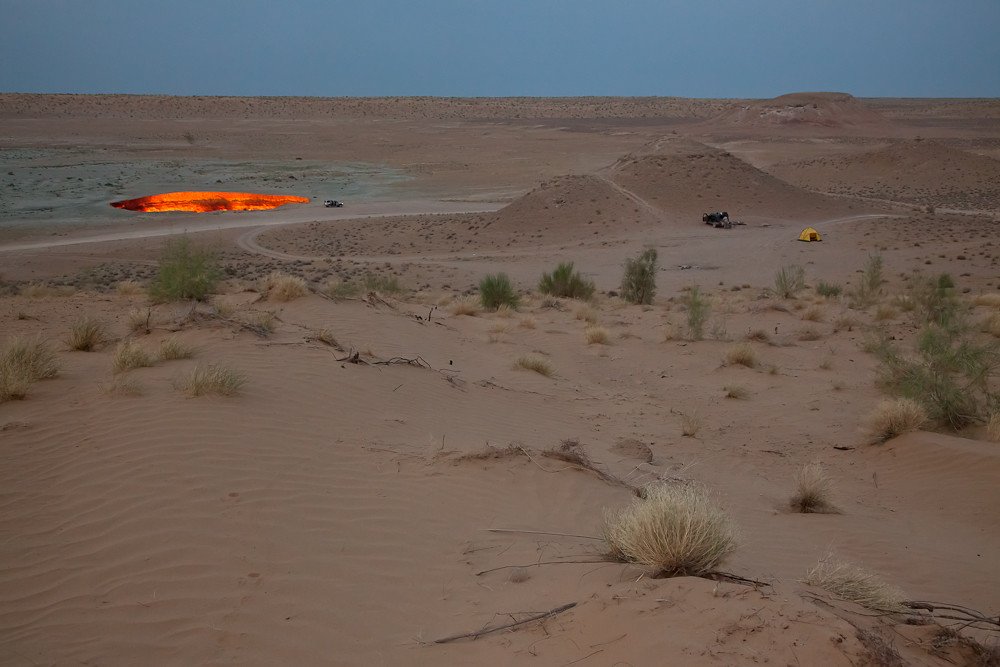
Standing at the rim during the day, you can feel the intense heat radiating from below, creating shimmering waves that distort your vision. But it’s at night when the crater truly earns its hellish nickname, glowing like a giant campfire visible from miles away across the flat desert landscape.
The Science Behind the Eternal Flame
The continuous burning is possible due to the vast underground reserves of natural gas trapped beneath the Karakum Desert. This region sits atop one of the world’s largest natural gas fields, containing an estimated 2.6 trillion cubic meters of gas reserves. The methane and other hydrocarbons seep through cracks in the earth, providing an endless fuel supply for the flames.
The chemical composition of the burning gas creates the spectacular visual display. Methane burns with a blue flame, while other hydrocarbons produce orange and yellow colors, creating a natural light show that shifts and changes with the wind patterns and gas flow rates. The temperature at the crater’s edge can reach 50°C (122°F), while the flames themselves burn at much higher temperatures.
Environmental Impact of the Burning Crater
From an environmental perspective, the Door to Hell presents a complex situation. On one hand, burning the methane prevents it from escaping directly into the atmosphere, where it would act as a potent greenhouse gas – methane is approximately 25 times more effective at trapping heat than carbon dioxide. However, the burning process still releases significant amounts of CO2 and other pollutants into the atmosphere.
The crater consumes an estimated 5,000 cubic meters of natural gas daily, which translates to millions of dollars worth of energy resources literally going up in smoke. This wasteful burning has drawn criticism from environmental groups and energy economists who argue that such valuable resources could power entire cities.
Wildlife in the Shadow of Fire
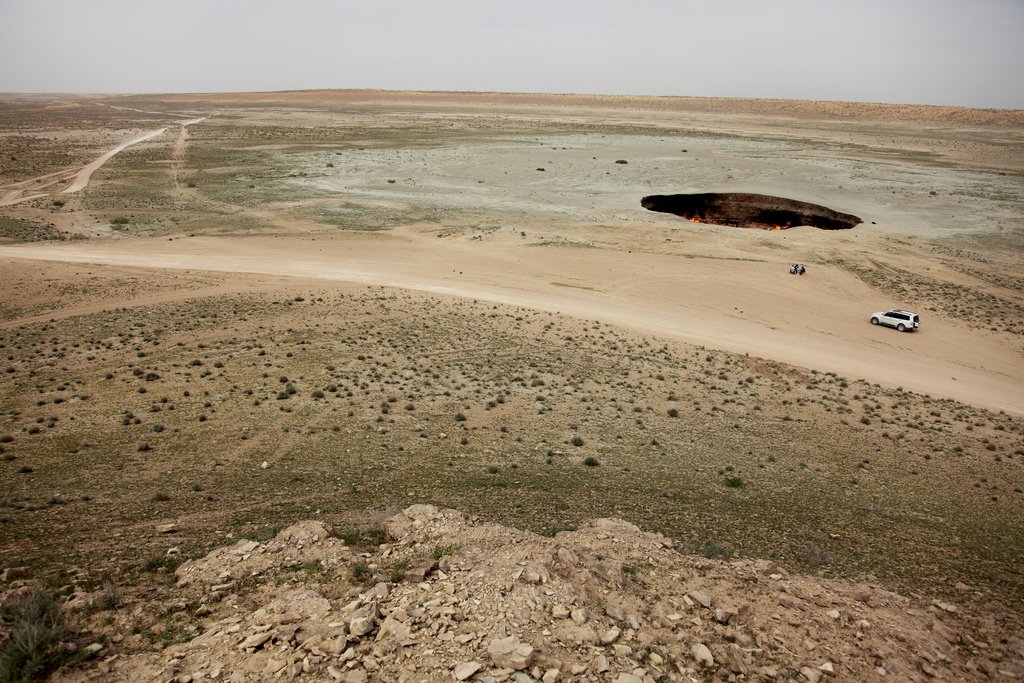
Surprisingly, the harsh desert environment around the Door to Hell supports various forms of life. Desert foxes, lizards, and hardy insects have adapted to the extreme conditions, though they maintain a respectful distance from the crater itself. The constant heat creates unique microclimates in the surrounding area, affecting local weather patterns and creating small oases of different vegetation.
Birds occasionally fly over the crater, though the rising hot air creates dangerous turbulence that most wildlife instinctively avoids. The ecosystem demonstrates nature’s remarkable ability to adapt to even the most extreme human-made environmental changes.
Tourism and the Door to Hell
What began as an industrial accident has transformed into Turkmenistan’s most famous tourist attraction. Thousands of visitors from around the world make the challenging journey to witness this geological spectacle firsthand. The journey typically involves a several-hour drive across rough desert terrain in specialized vehicles, making it an adventure in itself.
Tour operators have capitalized on the crater’s otherworldly appearance, offering overnight camping experiences where visitors can watch the flames dance against the star-filled desert sky. The contrast between the fiery crater and the peaceful vastness of the desert creates an almost spiritual experience for many visitors.
Local Legends and Cultural Impact
The local Turkmen people have woven the burning crater into their folklore, with some believing it to be a gateway to the underworld or a punishment from ancient spirits. These stories add a mystical dimension to the already supernatural appearance of the flames. The crater has also influenced local art, literature, and music, becoming a symbol of both destruction and wonder.
The name “Door to Hell” itself has become part of the global lexicon, used to describe other similar geological phenomena around the world. It represents humanity’s ability to accidentally create something both terrible and beautiful.
Government Attempts to Extinguish the Flames
In 2010, Turkmenistan’s president ordered the crater to be closed, citing environmental concerns and the waste of valuable natural gas resources. However, the technical challenges of extinguishing such a large, underground fire proved immense. Various methods were considered, including pumping sand or water into the crater, but none were successfully implemented.
The government’s attempts highlight the difficulty of undoing environmental damage once it’s been done. The crater has become so integrated into the local ecosystem and economy that closing it would require massive resources and potentially create new environmental problems.
Geological Significance of the Site
The Darvaza crater provides scientists with a unique natural laboratory for studying underground gas formations and combustion processes. Researchers have used the site to better understand how natural gas behaves in geological formations and how fires can be sustained over long periods. The crater offers insights into similar formations around the world and helps improve safety protocols for gas exploration.
The geological structure of the area continues to evolve, with small changes in the crater’s shape and size occurring over time due to the intense heat and ongoing combustion processes.
Photography and Media Attention
The Door to Hell has become one of the most photographed geological features on Earth, appearing in countless documentaries, magazines, and social media posts. The dramatic visual impact of flames emerging from the desert creates stunning imagery that captures the imagination of viewers worldwide. Professional photographers often spend days at the site, waiting for perfect lighting conditions and unique flame patterns.
The crater’s photogenic qualities have made it a favorite subject for time-lapse photography and aerial drone footage, revealing the dynamic nature of the flames and their interaction with the desert environment.
Comparison to Other Natural Phenomena
While the Door to Hell is unique in its origin and longevity, similar natural gas fires exist around the world. The Eternal Flame Falls in New York and the eternal flames of Chimera in Turkey are naturally occurring examples, while other human-caused gas fires like those in Iraq and Algeria demonstrate the global nature of this phenomenon. However, none match the scale, duration, or visual impact of the Darvaza crater.
These comparisons help scientists understand the conditions necessary for sustained natural gas fires and the various ways they can occur in different geological settings.
Economic Implications for Turkmenistan
The burning crater represents both a massive economic loss and a potential source of tourism revenue for Turkmenistan. The natural gas being consumed could theoretically supply energy to thousands of homes, yet the tourism dollars generated by visitors partially offset this loss. The government faces a complex decision between preserving a unique attraction and utilizing valuable natural resources.
The crater has also put Turkmenistan on the global map, raising awareness of the country’s vast energy resources and potentially attracting international investment in the energy sector.
Climate Change Considerations
In an era of increasing climate awareness, the Door to Hell represents a significant source of greenhouse gas emissions. While burning the gas prevents methane from entering the atmosphere directly, the CO2 produced by combustion still contributes to global warming. Climate scientists estimate that extinguishing the crater could reduce Turkmenistan’s carbon footprint significantly.
The site serves as a visible reminder of humanity’s impact on the environment and the long-term consequences of industrial activities.
Future Research Opportunities
Scientists continue to study the crater for insights into combustion dynamics, underground gas flow, and geological processes. Future research could focus on developing technologies to capture and utilize the escaping gas, potentially turning the environmental liability into an energy asset. Advanced monitoring systems could also provide better understanding of the underground gas reserves and their depletion rates.
The site offers unique opportunities for testing fire suppression technologies and studying the long-term effects of sustained combustion on geological structures.
Safety Concerns and Visitor Precautions
Visiting the Door to Hell requires careful preparation and respect for the dangerous environment. The intense heat, toxic gases, and unstable ground around the crater’s edge pose significant risks to unprepared visitors. Tour operators emphasize the importance of proper equipment, experienced guides, and safety protocols to prevent accidents.
Emergency medical facilities are limited in the remote desert location, making prevention and preparation crucial for visitor safety. The extreme temperatures and isolated location add additional challenges for rescue operations if needed.
Technological Solutions and Engineering Challenges
Various engineering solutions have been proposed to either extinguish or harness the energy from the crater. These include drilling relief wells to reduce gas pressure, installing gas collection systems, or using specialized fire suppression techniques developed for oil well fires. However, the scale of the operation and the remote location make implementation extremely challenging and expensive.
Modern technology offers new possibilities for addressing the crater, but the economic and environmental costs must be carefully weighed against the benefits of any intervention.
The Door to Hell’s Legacy
After more than five decades of continuous burning, the Darvaza crater has become more than just an environmental anomaly – it’s a testament to the unintended consequences of human activity and the awesome power of natural forces. The flames that Soviet scientists expected to burn out in days have created a lasting monument to both human hubris and the Earth’s incredible energy reserves.
The crater continues to burn today, serving as a powerful reminder of our planet’s hidden forces and the lasting impact of our industrial activities. As debates continue about its future, one thing remains certain: the Door to Hell will continue to captivate and mystify visitors from around the world, offering a glimpse into the raw power that lies beneath our feet. What does it say about humanity that we can accidentally create something so simultaneously destructive and beautiful?