

There’s something unsettling about the notion that the choices we make every day might not truly be ours. When you decided what to eat for breakfast or whether to hit the snooze button this morning, you probably believed those decisions were under your control. You felt like you were calling the shots. What if that feeling was nothing more than a comforting story your brain tells you after the fact? Neuroscientists and philosophers are increasingly challenging one of our most cherished beliefs, suggesting that our sense of free will might be an elaborate illusion.
Yet here’s the twist that makes this even more perplexing. Even if free will doesn’t exist in the way we think it does, many thinkers argue there may be social benefits to feeling and exhibiting moral emotions, even though the emotions themselves are based on a fiction, with such benefits being reason enough for holding fast to pre-philosophical beliefs about the existence of both free will and moral responsibility. So we’re left with a genuinely disturbing possibility: free will might not be real, but believing in it could be essential to how we function as individuals and as a society.
Your Brain Decides Before You Do

Picture yourself in a lab, watching a clock as you wait to press a button whenever you feel the urge. Simple enough, right? Brain activity was already preparing to move the finger a couple of hundred milliseconds before subjects became aware of their intention to press the button, leading researchers to conclude the brain had already decided to move before the subject even knew of her own intention. This is the essence of Benjamin Libet’s groundbreaking experiments from the 1980s, which sent shockwaves through both scientific and philosophical communities.
More recent studies have pushed this timeline even further back. Researchers now show that brain activity predicts even up to seven seconds ahead of time how a person is going to decide. Think about that for a moment. Your brain is making decisions while your conscious mind is still completely unaware. It’s like discovering there’s a puppet master pulling your strings, except the puppet master is actually part of you, working behind the scenes in neural circuits you can’t directly access.
The Unconscious Mind Runs the Show

Modern psychology and neuroscience increasingly suggest that much of what we call choice may be the result of unconscious processes that precede awareness, with the idea that free will might be an illusion challenging not only personal experience but also the foundations of ethics, law, and society. Honestly, it’s a bit unnerving when you really sit with this idea. We like to think we’re rational actors, carefully weighing our options and making informed choices.
Psychologists propose that we are built to have the impression to consciously control our actions or to have the power to freely choose, even though all that is only a cognitive illusion, with automatic cognitive processes of which we aren’t always aware originating our decisions, ultimately suggesting that consciousness, which should exercise control and assess the reasons for a choice, is thus allegedly causally ineffective: a mere epiphenomenon. The implications here are staggering. If consciousness is just along for the ride, what does that mean for everything we think makes us human?
The Illusion Might Be Necessary

Here’s where things get really interesting, though. The conclusions suggest free will remains a useful concept, although people may need to reexamine how they define it. Let’s be real: even if scientists can predict your decisions before you’re aware of them, you still experience yourself as an agent making choices. That subjective experience feels incredibly real and important.
Some philosophers argue that maybe we’re asking the wrong questions entirely. Much of what people do each day is arbitrary, with most of us not actively deliberating about which leg to put forward first when we start walking because it doesn’t matter, and the same is true for many other actions and choices, which are largely meaningless and irreflective. The experiments that supposedly disprove free will typically involve trivial decisions like pressing buttons. What about the big stuff – choosing a career, deciding to have children, committing to moral principles?
Moral Responsibility Hangs in the Balance

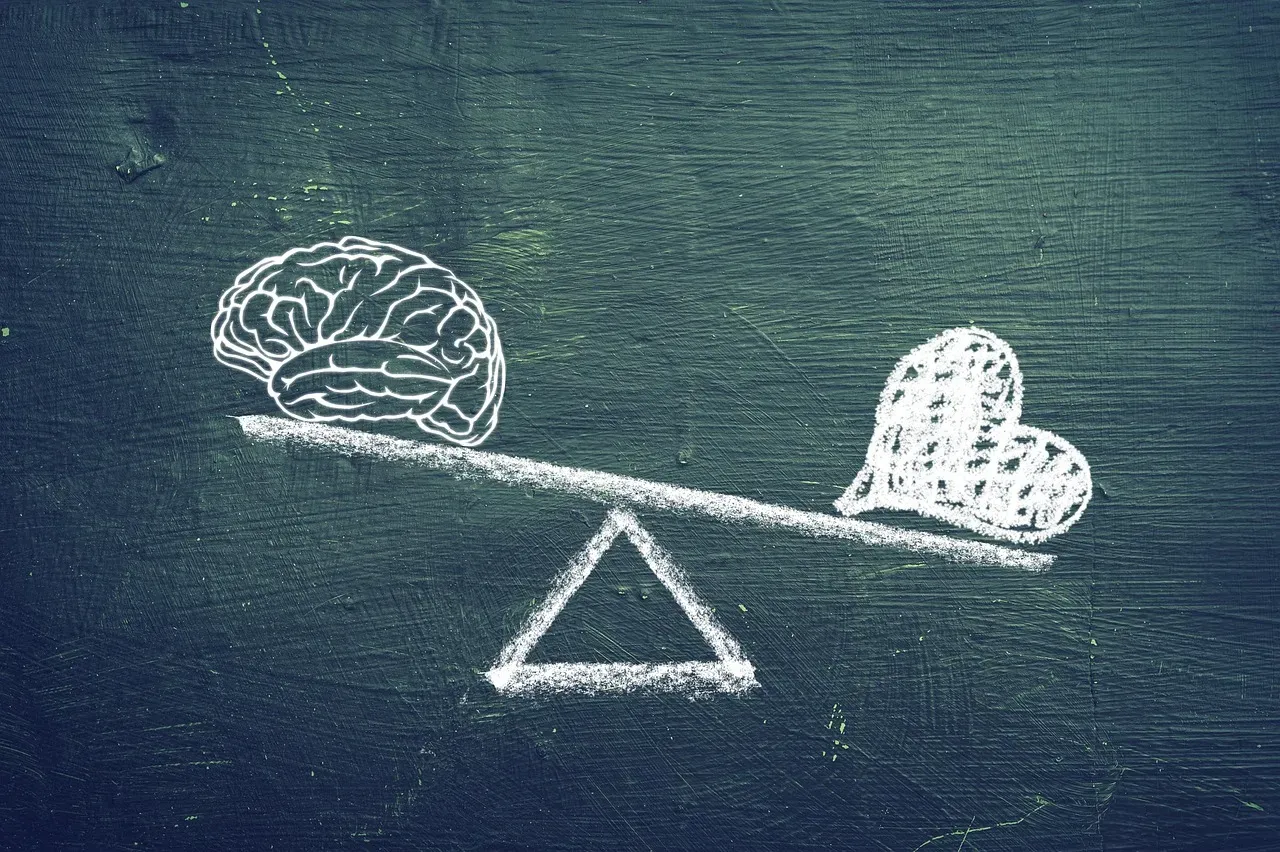
Free will and moral responsibility concern the problem of reconciling the belief that people are morally responsible for what they do with the apparent fact that humans do not have free will because their actions are causally determined, with hard determinism implying that people are not morally responsible for their actions since moral responsibility seems to require free will. This gets to the heart of why this debate matters so much. Our entire system of justice, reward, and punishment rests on the assumption that people could have chosen differently.
If free will is genuinely an illusion, should we still punish criminals? Can we praise heroes? The second reason to care about free will is that it seems to be required for moral responsibility. I think most of us would struggle to accept a world where these concepts lose their meaning. Yet that’s precisely what strict determinism seems to demand. The uncomfortable truth is that our intuitions about blame and praise run so deep that we might not be able to abandon them even if we intellectually accept they’re based on a false premise.
What Science Really Shows (And Doesn’t Show)
Let’s pump the brakes for a second. In another modified version of Libet’s experiment, participants showed readiness potential even when they made a decision not to move, which again casts doubt on the assumption that the readiness potential is actually registering the brain’s decision to move. Critics have pointed out numerous problems with the experiments that supposedly prove free will is an illusion. The measurements might not be as precise as claimed. The tasks studied are incredibly simple and artificial.
Neuroscience may not hold the definitive answer regarding the fundamental nature of brain processes, as even if some neuronal events appear to be deterministic or indeterministic at a certain level, the complexity of brain wiring and the epistemic limitations of neuroscientific techniques preclude us from drawing any definitive conclusion, and overall, it would seem that neuroscience cannot provide us with a definitive answer regarding the question of determinism and free will. So maybe we shouldn’t be so quick to throw out free will based on button-pressing experiments.
A Different Kind of Freedom

Even if the brain operates according to deterministic principles, determinism does not necessarily negate meaningful freedom, with compatibilist philosophers arguing that what matters is not whether actions have causes but whether those causes arise from the individual’s internal states – desires, beliefs, and reasoning – rather than external coercion, meaning from this view, a person acts freely when they act in accordance with their own motivations, even if those motivations have antecedent causes. This compatibilist position offers a middle ground that many find appealing.
Maybe free will isn’t about being uncaused or random. Maybe it’s about whether your actions flow from who you are – your values, your character, your reasoning process – rather than from external forces or internal compulsions you can’t control. It’s hard to say for sure, but this definition seems to capture something important about what we really care about when we talk about freedom.
Living With the Uncertainty
The question of free will remains unresolved, straddling the borders of philosophy, psychology, and neuroscience, with scientific evidence increasingly showing that unconscious processes shape our thoughts and actions long before awareness arises, yet this does not necessarily mean that freedom is an illusion in any practical sense, as consciousness still allows reflection, planning, and moral reasoning – abilities that distinguish human agency from mere mechanical causation. We’re left in this strange position of not knowing for certain whether our most fundamental experience of ourselves is real or illusory.
Perhaps the truth is that free will as a useful illusion represents a kind of pragmatic wisdom. We may not be the ultimate originators of our actions, but we are participants in a continuous dialogue between biology, experience, and reason, with our choices emerging from a complex interplay of causes, yet within that web, we can still cultivate awareness, shape habits, and strive toward values. Whether that constitutes genuine freedom or merely a sophisticated form of determinism might be less important than how we use that capacity.
Conclusion

The idea that free will might be a useful illusion is disturbing precisely because it challenges our deepest intuitions about ourselves. We want to believe that our choices matter, that we’re truly the authors of our own lives. Science suggests reality might be more complicated than that, with decisions forming in the hidden machinery of our brains before we’re consciously aware of them. Yet even if the scientific skeptics are right, the experience of agency and the framework of moral responsibility seem too valuable to discard.
What do you make of this paradox? Could you live your life fully embracing the idea that free will is an illusion, or does something in you rebel against that conclusion?