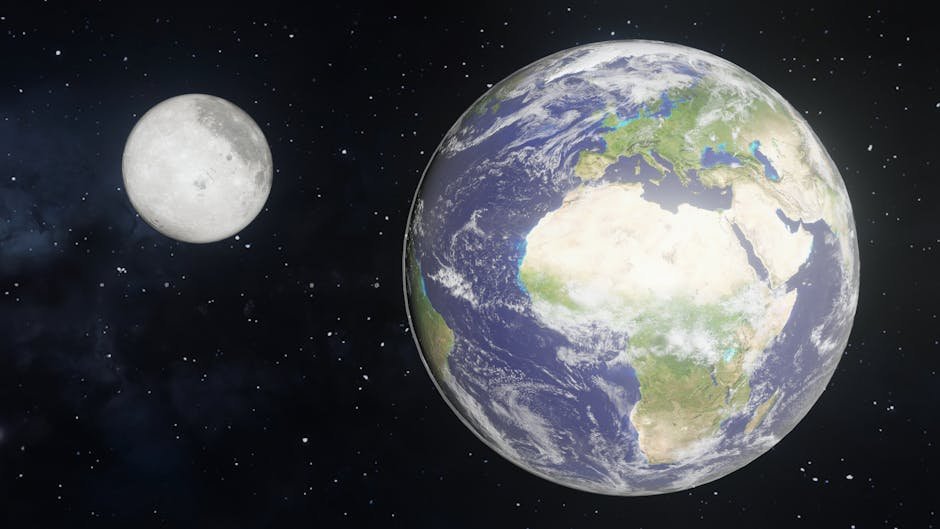

Look up at the night sky on a clear evening and you will see the Moon hanging there, seemingly enormous, undeniably familiar. You might even feel a strange sense of ownership over it, the way people do about things they have known their whole lives. Yet here is the strange part: most people who gaze at it cannot explain, in precise scientific terms, what it actually is or how it is fundamentally different from the world you are standing on.
The line between a moon and a planet is sharper than you might think, but it is also messier than most textbooks let on. There are edge cases that make astronomers genuinely argue, moons that secretly behave like planets, and a classification system that was only officially settled in 2006. Buckle up, because this is one of those cosmic rabbit holes that starts simple and gets wonderfully strange. Let’s dive in.
The Most Basic Distinction: Who Is Orbiting Whom
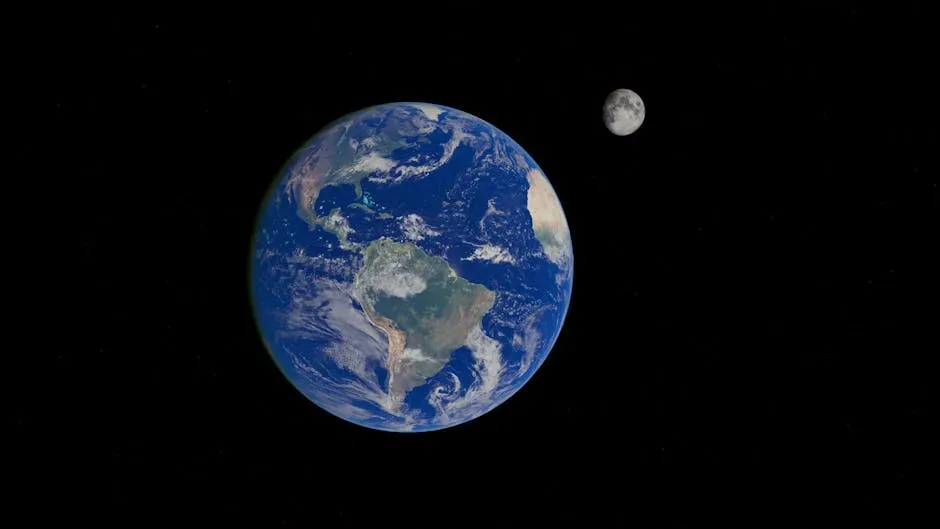
The clearest, cleanest way to separate a moon from a planet is simply to look at what each body is orbiting. The main difference between a planet and a moon is what they orbit: planets orbit stars, while moons orbit planets or dwarf planets. It sounds almost too easy, like defining a passenger by the fact that they are not driving. Yet that single orbital relationship carries enormous consequences for how a body forms, behaves, and evolves over billions of years.
A moon is not defined by its size. It simply has to be in orbit around a planet or another celestial body that is not a star. This means that the moment you strip away the notion that moons must be small and round and silvery, you open the door to a universe far stranger than you expected. Size, you will quickly discover, is actually one of the most misleading assumptions you can make when thinking about moons.
What Officially Makes a Planet a Planet
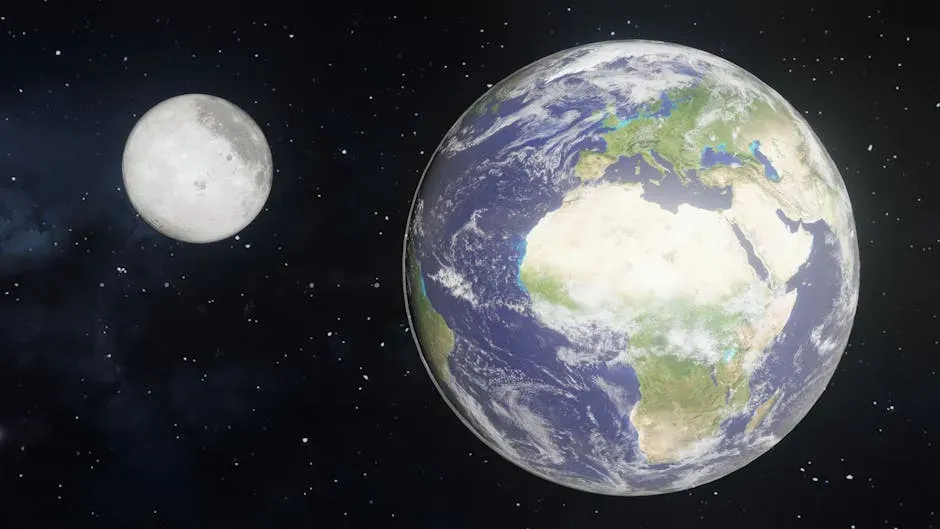
You might be surprised to learn that the word “planet” did not have a formal scientific definition until relatively recently. In 2006, the International Astronomical Union, a group of astronomers that names objects in our solar system, agreed on a new definition of the word “planet.” The IAU passed a resolution that defined the term planet. Before that vote, the classification was essentially based on tradition and common usage. Astronomers had been winging it for centuries.
A planet is a celestial body that is in orbit around the Sun, has sufficient mass for its self-gravity to overcome rigid body forces so that it assumes a hydrostatic equilibrium (nearly round) shape, and has cleared the neighborhood around its orbit. These three rules sound reasonable enough. Honestly, though, that third requirement about “clearing the neighborhood” is the one that changed everything, because it is the rule that officially demoted Pluto and sent millions of people into a mild astronomical existential crisis.
Moons Can Be Bigger Than Planets. Seriously.
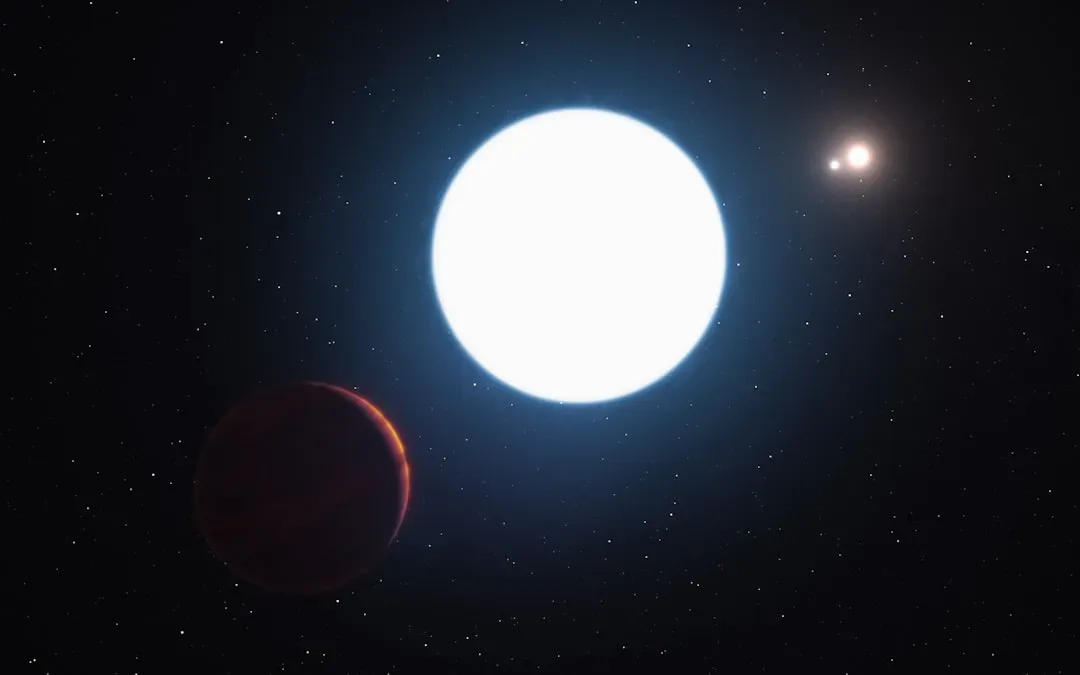
Contrary to what you may think, a moon can be bigger than a planet. This is the fact that stops most people mid-conversation. We grow up with mental images of the Moon as this pale companion circling our Earth, and it feels small by comparison. The assumption sticks. The reality, however, is far more humbling.
There are small, potato-shaped moons that are barely a few kilometres long, like Deimos on Mars, and moons that are very large and sphere-shaped like a planet, like Ganymede orbiting Jupiter and Titan orbiting Saturn, which are bigger than Mercury and Pluto. Think about that for a second. Ganymede, an official moon, is physically larger than an official planet. If Ganymede orbited the Sun directly instead of Jupiter, the scientific community would almost certainly call it a planet without blinking. Its classification hinges entirely on what it is circling.
How Our Moon Was Born: A Violent, Spectacular Beginning
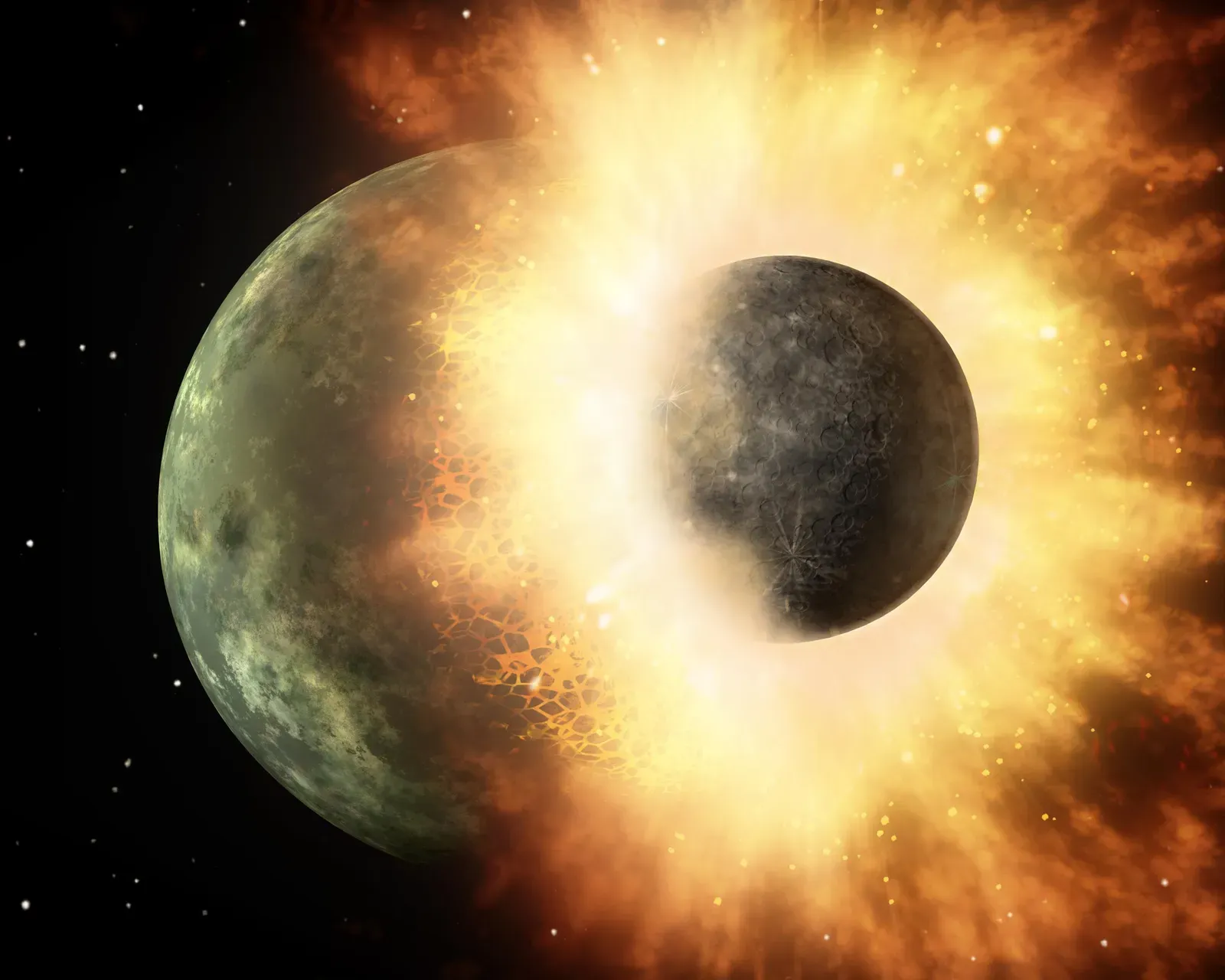
The story of how Earth’s Moon formed is genuinely one of the most dramatic origin stories in the solar system. The giant-impact hypothesis suggests that the proto-Earth collided with a Mars-sized co-orbital protoplanet approximately 4.5 billion years ago in the early Hadean eon, and some of the ejected debris from the impact event later re-accreted to form the Moon. That impactor is often called Theia, named after a figure in Greek mythology. Imagine two planetary bodies slamming into each other with unimaginable force. That catastrophe is what gave you the Moon you photograph on your phone.
In other cases, moons can be captured by a planet’s gravity when a passing asteroid or other celestial body is drawn into orbit. This is thought to be one possible explanation for moons like Mars’s Phobos and Deimos. Phobos is slowly drawing closer to Mars and could crash into the planet in 40 or 50 million years. Or the planet’s gravity might break Phobos apart, creating a thin ring around Mars. Formation stories, it turns out, are very much not one-size-fits-all in the cosmic sense.
The Planets Without Any Moons at All
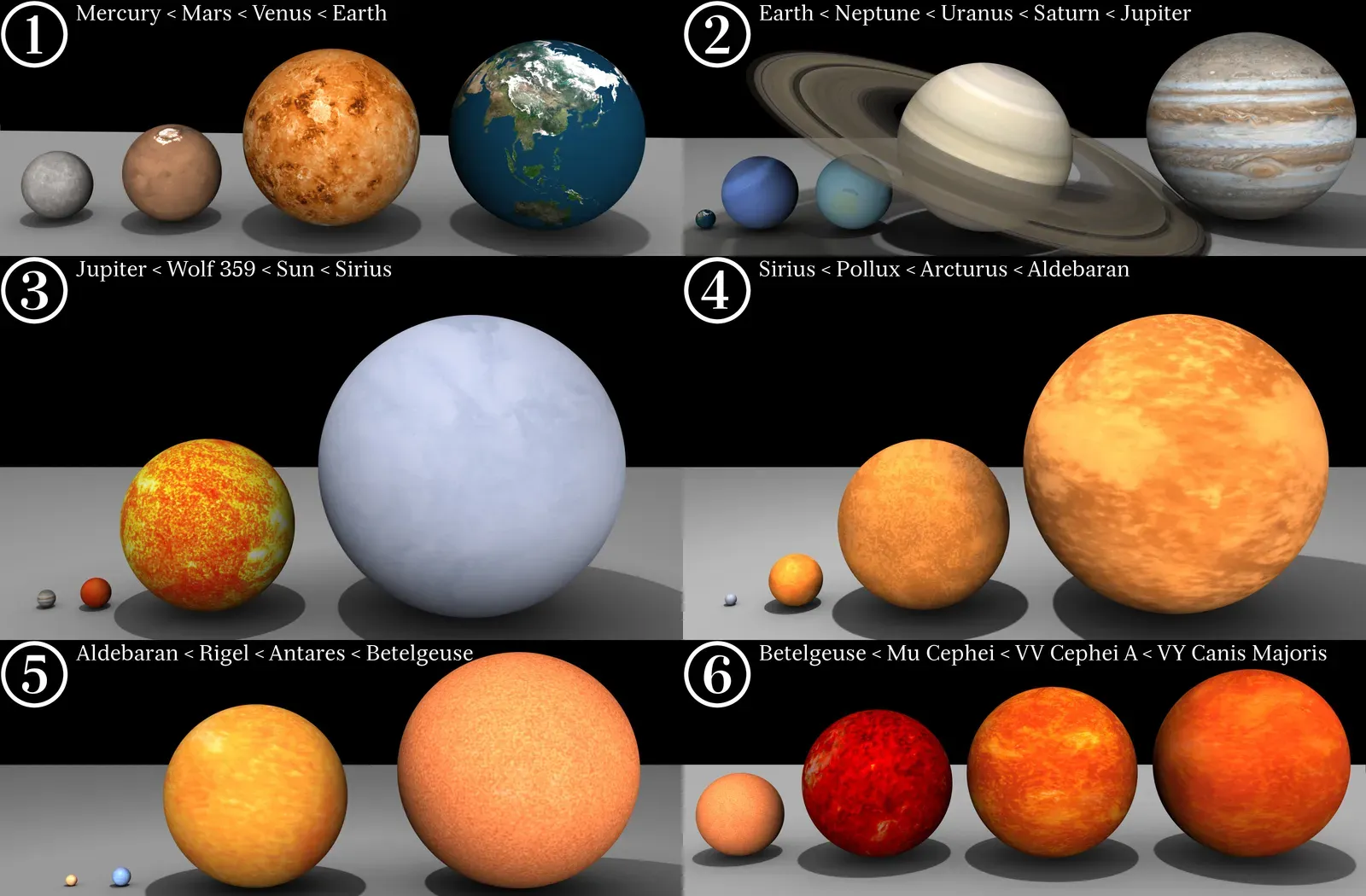
Here is something that catches people off guard: not every planet in our solar system has a moon. You might assume that having a moon is just part of the deal when you are a planet, the way having a shadow is just part of being an object in sunlight. Mercury and Venus are the only planets in our solar system with no moon. Two of our eight recognized planets orbit the Sun in what you might call cosmic solitude.
The absence of moons around Mercury and Venus is not random. It has to do with their proximity to the Sun and the gravitational dynamics involved. The number and type of moons a planet has depend on its gravitational influence, known as the Hill Sphere, which determines its ability to capture and retain satellites. For Mercury and Venus, that Hill Sphere is simply too small and too disrupted by the Sun’s overwhelming gravitational presence to hold onto a natural satellite in a stable orbit. I find it strangely poetic that two worlds share the same lonely orbital status.
Moons With Oceans, Atmospheres, and Geological Wildness
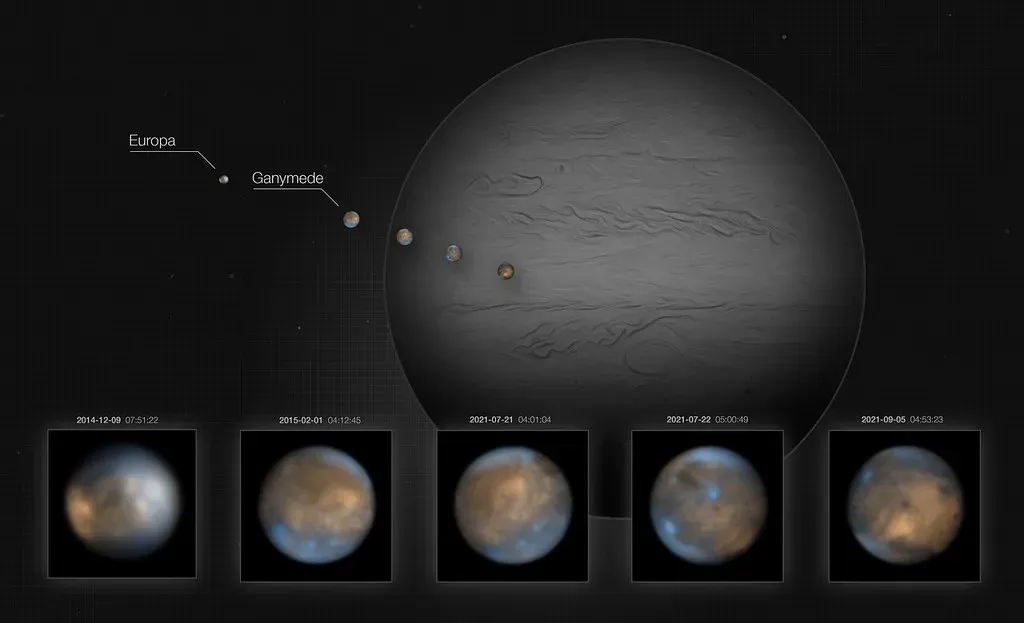
Here is where the story gets truly extraordinary, and where the line between “moon” and “planet-like world” starts to feel genuinely blurry. Major discoveries include subsurface oceans in at least five of these moons, geological activity on at least three, including Io, Triton, and Enceladus, and an active hydrological cycle involving hydrocarbons on Titan. These are not dead, passive rocks. These are active, evolving worlds that just happen to be orbiting a planet instead of a star.
Enceladus is a geologically active world with a global, salty ocean hidden beneath its icy surface. Scientists believe this ocean is the main source of the moon’s internal heat. Because it contains liquid water, warmth, and essential chemical ingredients such as phosphorus and complex hydrocarbons, this underground sea is considered one of the most promising environments in the solar system for life beyond Earth. Let that sink in. A moon of Saturn, a body orbiting a body orbiting a star, might actually harbor the conditions for life. Titan has an atmosphere even thicker than Earth’s. That is the kind of fact that makes you rethink what the word “moon” even means.
The Controversial Grey Zone: When Moons Blur Into Planets
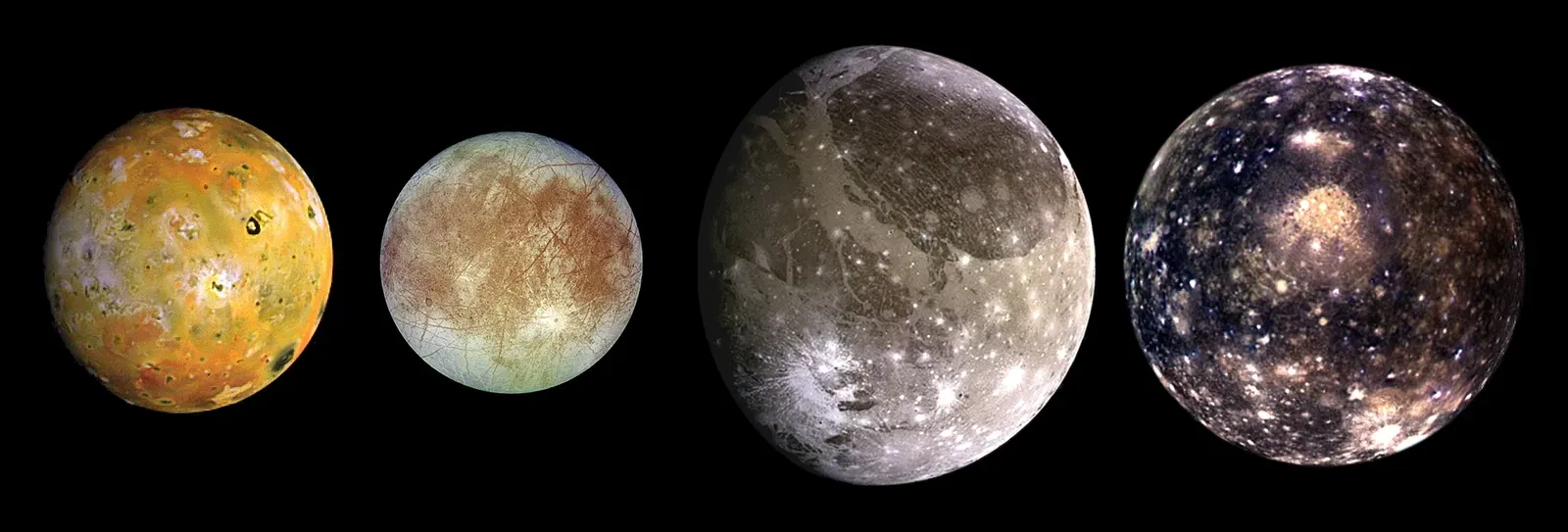
Some scientists argue that the current classification system draws arbitrary lines. What seems to be the most consistent defining factor is that of complex geology and geophysics. If we define planets by their geophysical qualities, then the Galilean Moons are planets, as is Pluto, as is Pluto’s moon Charon, as is our own Moon. That is a provocative argument, and it is not coming from armchair enthusiasts. These are credentialed planetary scientists pointing out that the IAU definition has real weaknesses.
Some research suggests that the Moon meets all three IAU requirements for being classified as a planet, even though it is traditionally considered a satellite because its orbital barycenter with Earth lies inside Earth’s radius. This has led to discussions about the need for additional definitions, such as “double planet” or “satellite planet,” to clarify the taxonomy of celestial bodies like the Earth-Moon system and Pluto-Charon system. The honest truth is that nature does not neatly follow human classification systems. We draw the lines, and then nature cheerfully ignores them.
Just How Many Moons Are Out There? The Count Keeps Growing
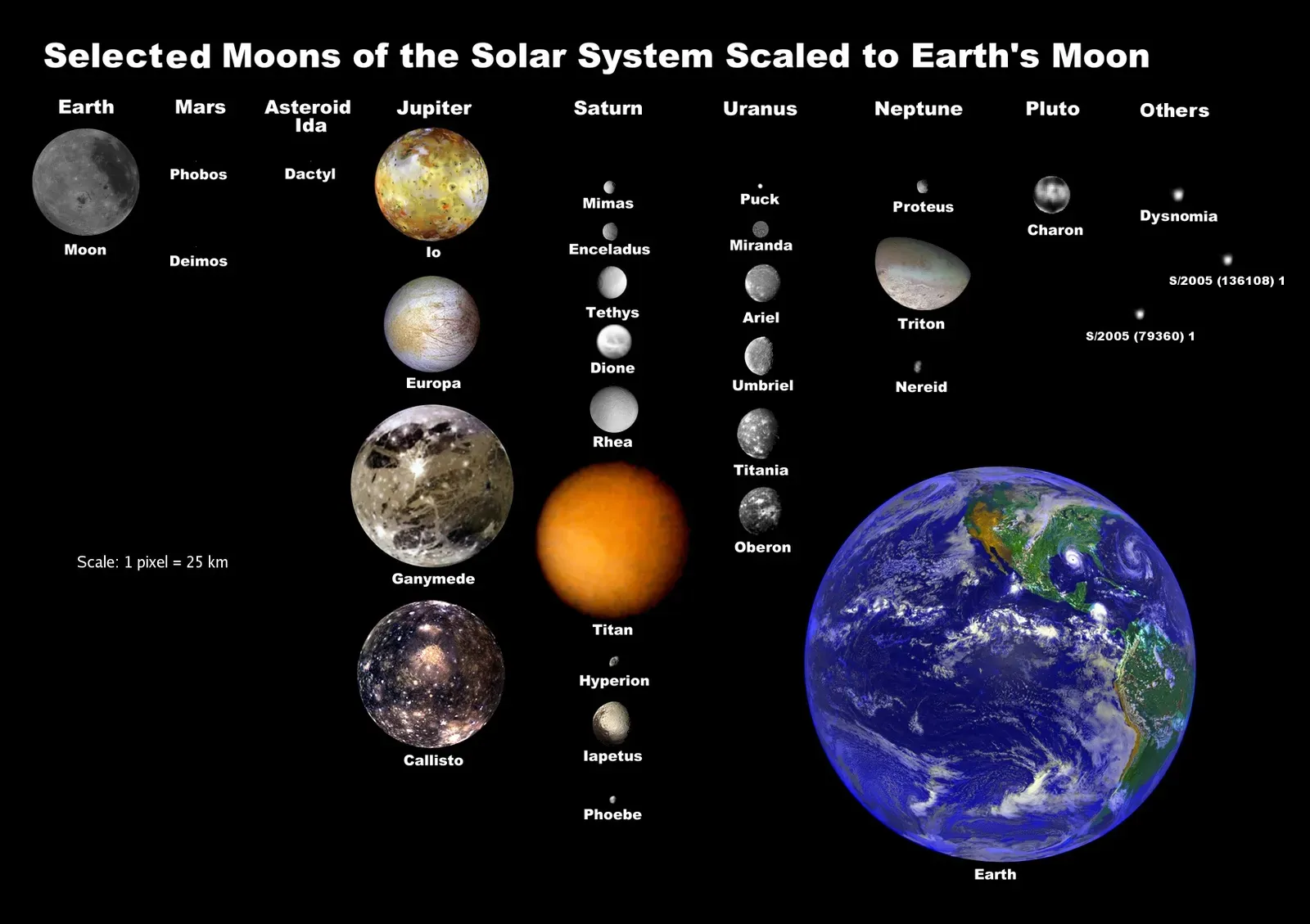
Sources:
This image is primarily based on Image:Moons of solar system.jpg, which is a copy of a NASA compilation found at http://solarsystem.nasa.gov/multimedia/display.cfm?IM_ID=2823
However, en:User:Deuar has also made the following subsequent modifications to better reflect current knowledge:
Charon was far too small, and Image:Charon_plutoface.png was scaled and used to rectify this.
Proteus was added, Image:Proteus (Voyager 2).jpg was used
Noise in the Nereid image was color-filtered out
Ariel was only partially seen, so NASA image http://photojournal.jpl.nasa.gov/jpeg/PIA01351.jpg was used
Similarly, Rhea and Tethys had bad quality images, and Image:Rhea hi-res PIA07763.jpg as well as the NASA image http://photojournal.jpl.nasa.gov/jpeg/PIA06625.jpg were scaled and inserted instead
Phobos, Deimos, and Dactyl were far too large to be in scale, and this was rectified.
Hyperion, was too large, so the newer Cassini image http://photojournal.jpl.nasa.gov/jpeg/PIA07740.jpg was used and scaled.
The moon image was distorted (elongated in the horizontal direction), http://photojournal.jpl.nasa.gov/jpeg/PIA00305.jpg was used
Satellites of en:Trans-Neptunian objects greater than ~250 km in diameter were added (synthetic images)
Inserted scale text and modified title., Public domain)
If you learned the number of moons in our solar system in school, there is a decent chance that number is now outdated. As of March 2025, there were more than 891 confirmed moons in our solar system, with 421 officially recognized moons orbiting planets, including dwarf planet Pluto. That number has been rising steadily as telescope technology improves and astronomers discover smaller and more distant satellites that were previously invisible to us.
Scientists were not even sure if asteroids could hold moons in their orbits until the Galileo spacecraft flew past asteroid Ida in 1993. Images revealed a tiny moon, later named Dactyl. Astronomers have since confirmed more than 470 moons orbiting asteroids and trans-Neptunian objects. So moons are not just for planets. Asteroids have them too. According to astronomers, it is even possible, though rare, for a moon to have its own moon. This type of celestial body is called a subsatellite or submoon. The solar system, it turns out, is even more layered and recursive than anyone comfortably imagined.
Conclusion: The Universe Does Not Care About Our Categories
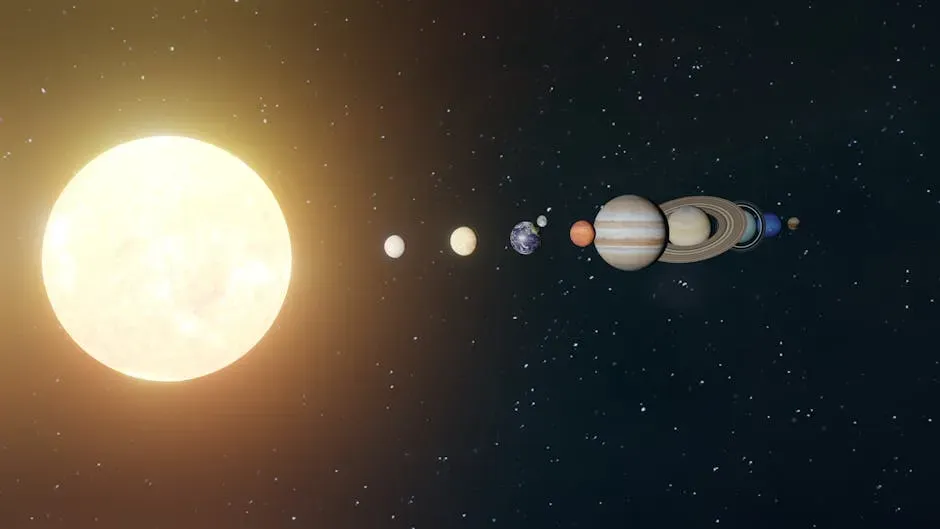
The difference between a moon and a planet is real and meaningful, grounded in physics, orbital mechanics, and millions of years of scientific thinking. A planet is defined by its orbit around a star, its mass and shape, and its ability to clear its orbit, while a moon is a natural satellite that orbits a planet or dwarf planet. That is a solid working definition. Yet as you have seen, the solar system keeps handing us objects that test those boundaries and force us to ask better questions.
Ganymede is bigger than a planet but orbits one. Enceladus may harbor life in a secret ocean beneath its ice. Our own Moon might technically qualify as a planet by some measures. The distinction can become blurred in special cases, prompting ongoing discussions about more precise definitions. The deeper lesson here is not just about astronomy. It is about the humbling reality that the universe is under no obligation to organize itself around the vocabulary we invented for it. Every time we think we have a neat answer, space finds a way to complicate it beautifully.
What do you think: should Ganymede be called a planet? Drop your take in the comments.