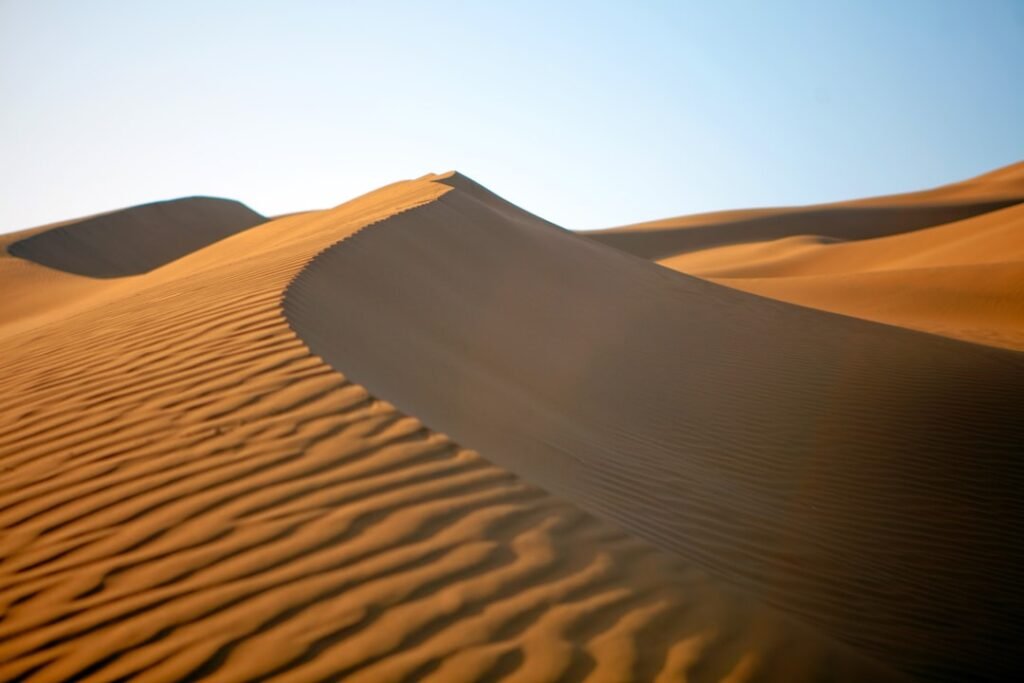

You might have heard tales from ancient travelers describing eerie voices in the desert, supernatural sounds that seemed to emerge from nowhere in the vast silence of sand dunes. What Marco Polo described as “evil spirits” making music in the thirteenth century wasn’t supernatural at all. It was physics in action, creating one of nature’s most mesmerizing acoustic phenomena.
Marco Polo, writing in the 13th century, described the famous singing sands, which “at times fill the air with the sounds of all kinds of musical instruments, and also of drums and the clash of arms.” But the low, loud rumbles coming from the dunes were not the work of spirits. They were the work of physics. As grains of sand slide down the side of certain dunes, they create vibrations that can be heard for miles around. You’re about to discover how the smallest grains of sand can produce sounds as loud as rock concerts, reaching volumes that could shake the ground beneath your feet. So let’s get started on this fascinating journey into the mysterious world of singing sand dunes.
What Are Singing Sand Dunes and How Loud Can They Get
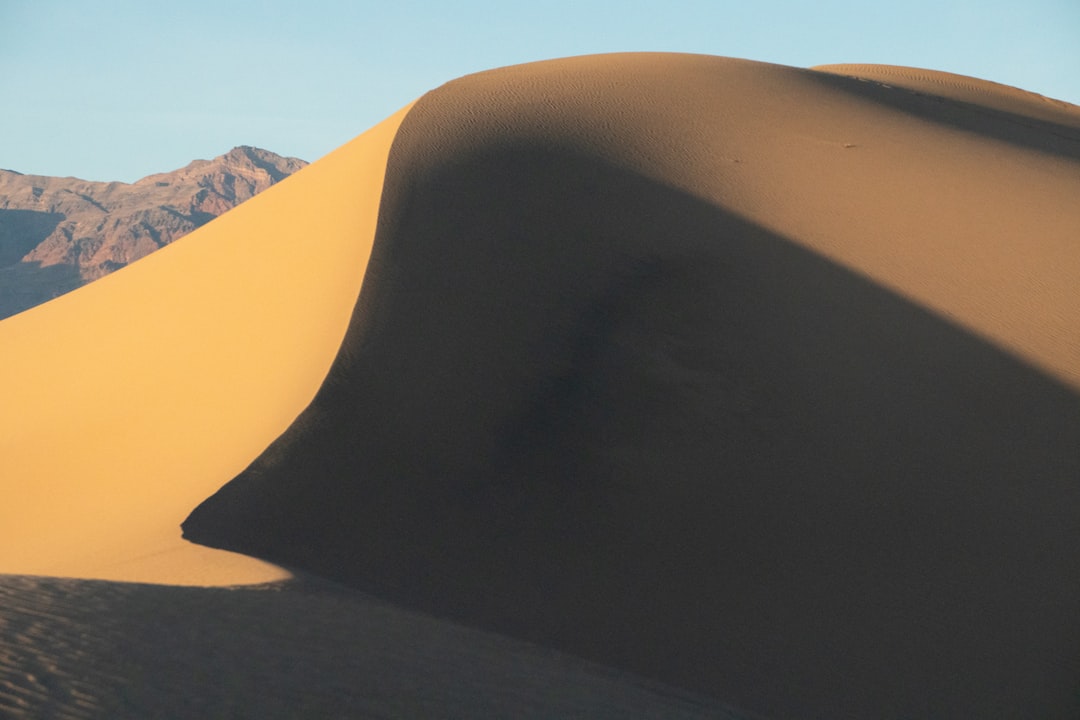
When you encounter a singing sand dune, you’ll witness one of nature’s most remarkable acoustic performances. Singing sand dunes produce a sound described as roaring, booming, squeaking, or the “Song of Dunes”. This is a natural sound phenomenon of up to 105 decibels, lasting as long as several minutes, that occurs in about 35 desert locations around the world. The sound is similar to a loud low-pitch rumble. That’s about as loud as a chainsaw or a rock concert, yet it emerges naturally from shifting sand.
You’ll find that these sounds can persist much longer than you might expect. These sand dunes will occasionally let out a loud, low-pitch rumble that lasts up to 15 minutes and can be heard up to 6 miles (10 kilometers) away. Some dunes are known to do it regularly, even daily. The power of these natural sound systems becomes even more impressive when you realize that massive sand dunes produce haunting sounds ranging from deep, resonant booms that shake the ground to high-pitched whistles that pierce the desert silence. These dunes can generate sounds as loud as a rock concert, reaching up to 105 decibels.
The Perfect Conditions Required for Desert Music
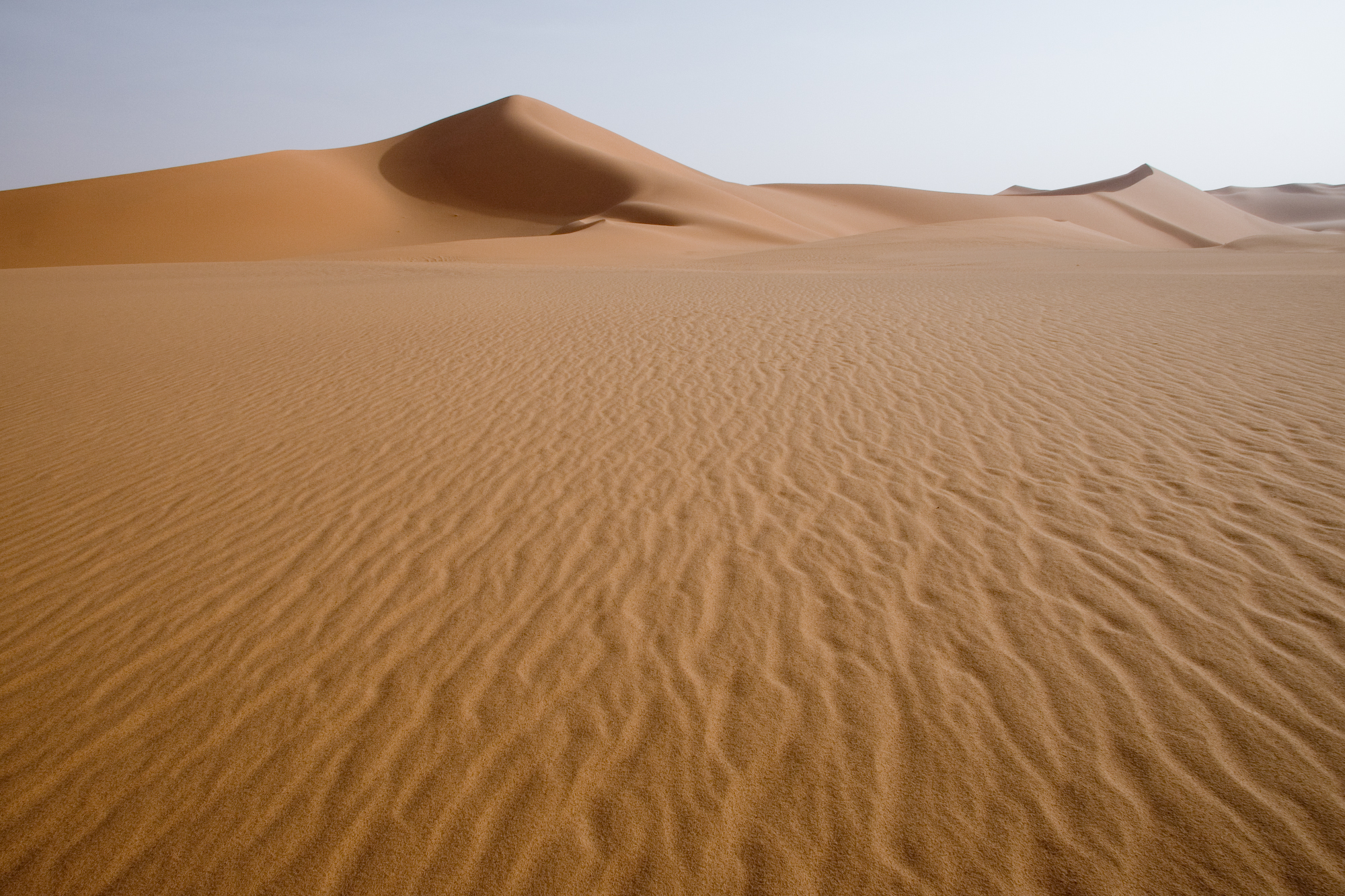
You can’t just expect any sand dune to start singing. Certain conditions have to come together to create singing sand: The sand grains have to be round and between 0.1 and 0.5 mm in diameter. The sand has to contain silica. The sand needs to be at a certain humidity. It’s like nature’s own incredibly demanding sound engineer, requiring perfect specifications before the show can begin.
The environmental conditions need to align with scientific precision. When conditions align ideally – temperature above 20°C (68°F), humidity below 15%, and a dune face angled between 30 and 35 degrees – the magic happens. The sand cascades down the dune face, and billions of grains begin bouncing against each other in near-perfect synchronization, creating pressure waves that travel through the dune, acting like a natural amplifier. The sand must be hot and extremely dry to sing. Dunes won’t sing in winter when increased internal moisture causes grains to adhere to each other.
The Physics Behind the Desert Symphony
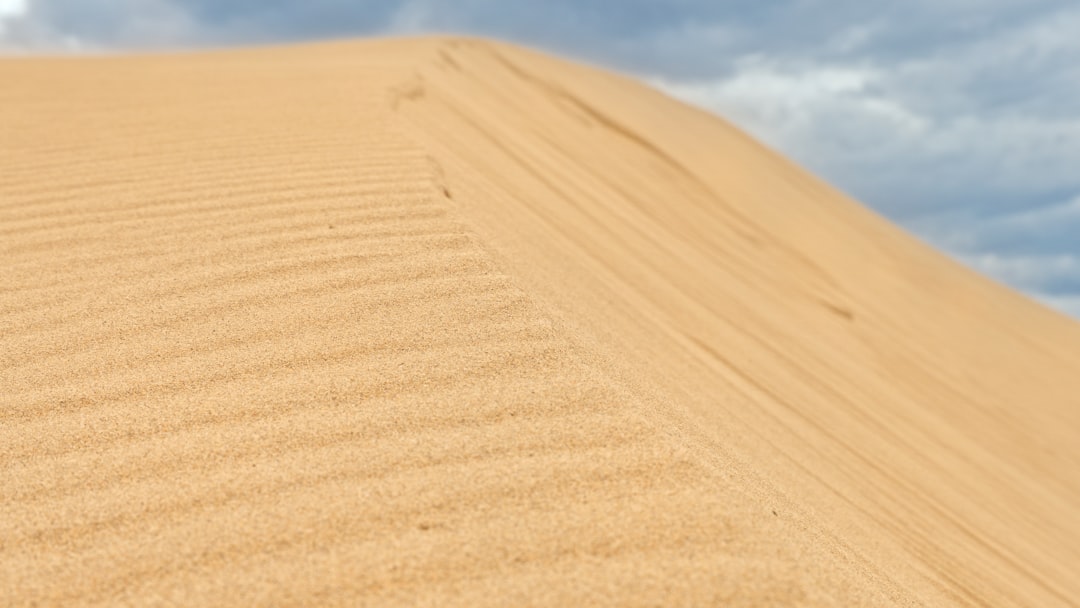
The sound production mechanism is far more complex than you might initially think. By measuring vibrations in the sand and air, researchers were able to detect surface waves on the sand that emanated from the avalanche at a relatively slow speed of about 130 feet per second (40 meters per second). In this way, the face of the dune acts like a huge loudspeaker – with the waves on the surface producing the sound in the air. These sand waves result from collisions that occur between grains at about 100 times per second, as measured in the lab.
What’s fascinating is how the grains coordinate their movements. In a kind of feedback loop, the waves synchronize the collisions, so they are all on basically the same beat. This model explains the low pitch – between 95 and 105 Hertz – of the sand song, which resembles a drum or a low-flying propeller aircraft. During an avalanche, grains of sand move together down the dune – each grain colliding with and rolling around its neighbors, creating a constant stream of collisions. Larger grains of sand move around each other at slower rates, and vice versa for smaller grains. Each bump makes a shock that, on its own, would be all but inaudible. But add them together in the right conditions, and you get “the sound of millions of little shocks.”
How Sand Grain Size Controls the Musical Notes
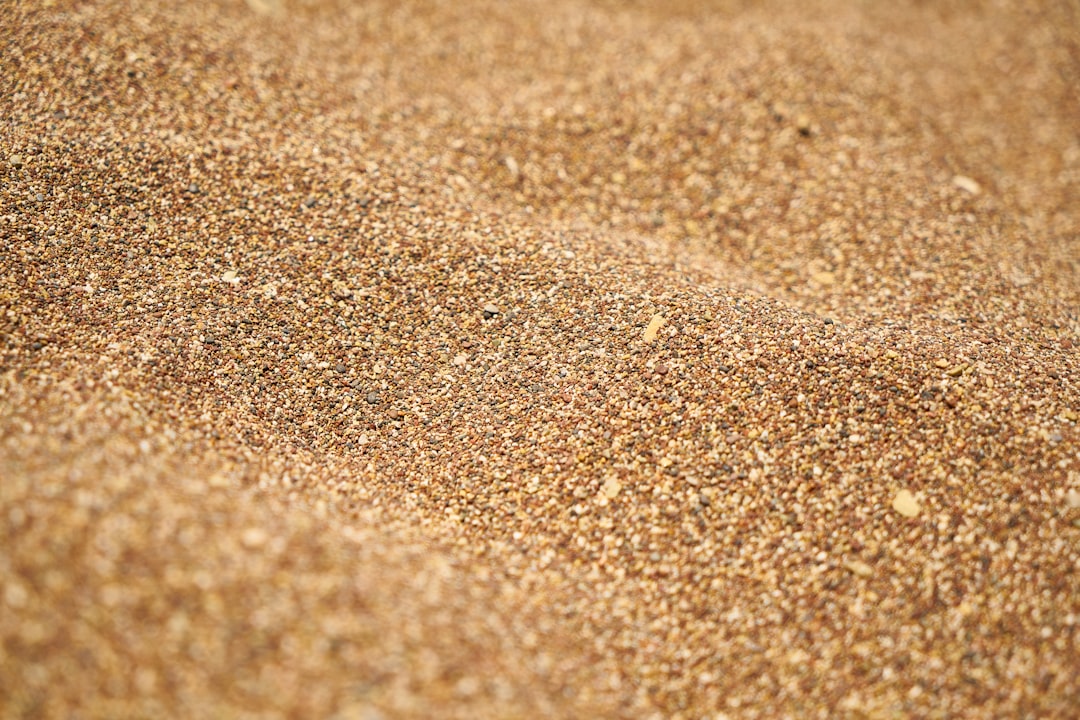
You’ll discover that grain size acts as nature’s tuning fork. The one-note Moroccan sand grains are almost entirely the same size – 160 millionths of a meter, or microns across – but the noisy Omani sands run the gamut, from 150 to 300 microns. But when the messy sands were sieved down to just the 200-to-250 micron particles, the tone cleared into a single tone. “The size of the grain controls the actual sound.”
The frequency of a dune’s song can be correlated to the size of sand grains in the dune. Finer grain sizes are associated with higher pitch. Well sorted sands produce pure tones compared to blended chords produced by sands with a wider range of grain sizes. Think of it like different sized instruments in an orchestra. The notes produced by the sands depend upon the size of the grains and the speed at which they whistle through the air. Fine sands produce only a poor, weak sounding bark. Medium-sized grains can emit a range of sounds, from a faint squeak or a high-pitched sound, to the best and loudest barks when scuffed enthusiastically.
Famous Singing Dunes Around the World

You can experience these natural concerts in numerous locations across the globe. The Badain Jaran megadunes that Marco Polo experienced in the western Gobi Desert reach more than 1,600 ft (500 m) tall and are some of the loudest dunes on Earth. Other international singing dune sites are located in Mongolia, Kazakhstan, Japan, Namibia, Egypt, Wales and others. Thirty locations worldwide, including ones in China and the US, have singing sand, but none, experts say, has as pronounced and mellifluous a sound as the giant dunes in the south of the United Arab Emirates.
North America offers several impressive singing dune experiences. Other locations where singing dunes can be found in North America include Utah’s Coral Pink Sand Dunes State Park, the White Sands National Park in New Mexico, Idaho’s Bruneau Dunes State Park, Nevada’s Sand Mountain, and the Warren Dunes in Michigan. The Kelso Dunes in California’s Mojave Desert are North America’s premier singing dunes. These golden giants produce distinctive low-frequency booms up to about 93 Hz. The sun-bleached sands of the Kelso Dunes rumble and sing the loudest when conditions are particularly warm and dry. The Kelso Dunes are responsible for the Mojave Desert’s most haunting and memorable song.
The Mystery of Multiple Notes from Single Dunes
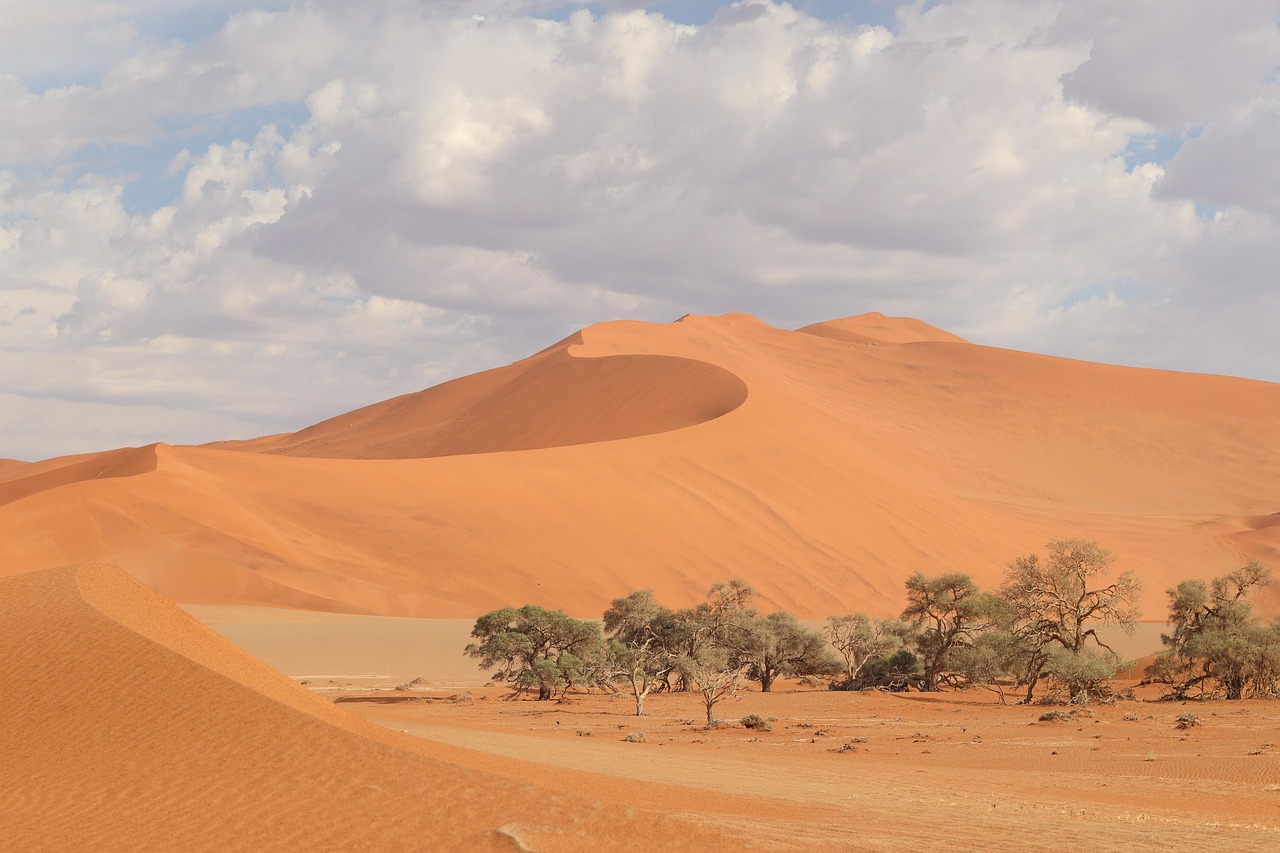
Some dunes don’t just play one note – they can perform entire chords. While the Moroccan hill moaned at a steady 105 Hz – or a low G sharp – the Omani dunes sang a nine-note blare that ranged from 90 to 150 Hz. This happens because different sized grains within the same dune create different frequencies simultaneously.
It can make multiple notes at the same time, a consequence of different-sized grains moving at different speeds. The Omani sands sang, but sometimes belted out a cacophony of almost every possible frequency from 90 to 150 hertz, or about F-sharp to D, a range of nine notes. Another vexing question is why different dunes sing different tunes – and how can some even sing more than one note at a time? The answer lies in the complex sorting patterns of sand grains during avalanches, where different grain populations move at different speeds and create their own distinct acoustic signatures.
The Synchronization Science Behind the Sounds

The key to understanding singing dunes lies in synchronized grain movement. When sand avalanches, the grains bump over each other at different frequencies and set up standing waves in the flowing sand layer. These waves then reinforce one another and make the layer vibrate. Moreover, only a thin layer of between about two to three centimetres is needed to set up this resonance.
The sand grains have to be moving at or above a speed of 0.45 metres per second before they can emit a sound. The researchers confirmed this finding by carrying out velocity measurements directly on a singing dune in the region of Morocco where their sand had come from. Sound is produced because moving grains synchronize their motions. The laboratory experiment shows that the dune is not needed for sound emission. This means you could theoretically recreate the effect in controlled conditions, which is exactly what researchers have done to study this phenomenon.
Environmental Factors That Influence Desert Songs
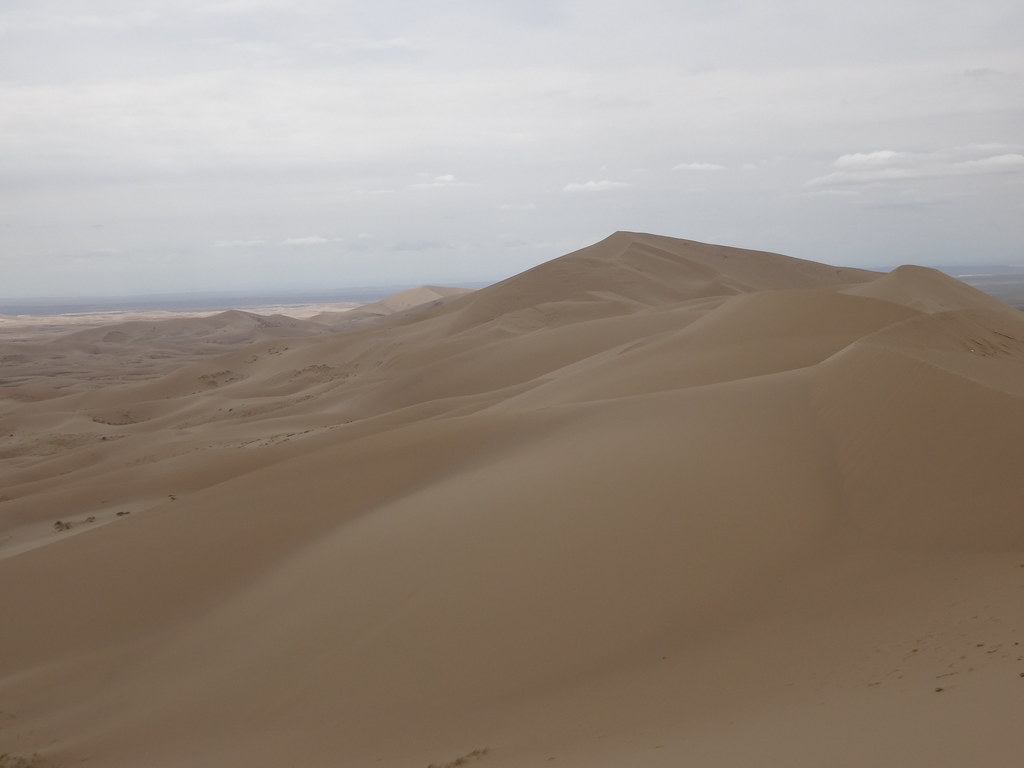
Moisture acts as a natural mute button for singing dunes. Water also influences the effect. Wet sands are usually silent because the grains stick together instead of sliding past each other, but small amounts of water can actually raise the pitch of the sounds produced. Humidity will prevent the booming sounds, and dry grains moving freely produce the sound.
Temperature variations can fine-tune the desert orchestra. Temperature variations can shift the frequency of these desert songs, with each degree Celsius changing the pitch by about 0.05 Hz. Most dunes can sing in particular weather and environmental conditions. The largest dunes are more likely to qualify as singing dunes as their surface becomes very hot in the afternoon and thus very dry. Other dunes may sing only if the sun has been able to dry the dune surface, which is more and more difficult to achieve for smaller and smaller dunes.
Different Types of Sand Sounds: Singing vs. Whistling vs. Booming
Not all sand sounds are created equal, and you’ll encounter distinct categories. Dunes are known to make two very different musiclike sounds when sand is sheared. These sounds fall broadly into either the “whistling sand” or “booming sand” category. A higher pitched sound in the 800 to 1,200 Hz or 500 to 2,500 Hz range is known to occur in dune sand and beach sand. Sands making such sounds are known as whistling, singing, squeaking, or barking sands.
The dunes “sing” in frequencies ranging from 70 to 105 Hertz, with higher harmonics. Prior to the onset of a nearly monotone booming, burps of sound of smaller amplitude occur over a significantly broader span of frequencies. The “booming” and “burping” correspond to the transmission of a class of different waves within the dune. Singing sand is the most common, and occurs on beaches. The mechanism for these sounds are the most well understood – when the grains are mechanically sheared, they produce a high (greater than 500 Hz) frequency sound.
Scientific Controversies and Competing Theories
The scientific community hasn’t always agreed on how singing dunes work. Douady realized that some of the grains must become synchronized in order to emit sound. Singing dunes, he thought, were the result of air being pushed in and out between the synchronized grains. Andreotti agreed that the synchronization of sand grains was responsible for the song of the dunes. But rather than being the result of squeezed air, he reasoned that the sound was due to the vibration of the surface of the avalanche – effectively turning it into the membrane of a powerful loudspeaker.
These disagreements led to fascinating scientific drama. This, combined with a subsequent quarrel over how best to publish their findings, led to the two researchers falling out. So much so, in fact, that they now avoid each other, despite working in the same small field of physics. Their scientific adventures and disagreements were the subject of an award-winning article in the November 2006 edition of Physics World. Some researchers have concluded that the sound depends on the dune itself and not on individual grains. Dunes have a layered structure that causes a dune to act as a waveguide, in which certain frequencies are preferentially propagated.
Conservation Challenges and Environmental Threats
The conditions required for sand dunes to “sing” are incredibly precise, making them fragile and vulnerable to environmental changes. Climate change, human intervention, and shifts in sand composition can permanently silence these natural musical instruments. Conservation efforts are crucial to preserving these unique geological formations and the complex ecosystems they support. Think of these dunes as delicate natural instruments that require perfect maintenance to keep playing their ancient songs.
Scientific research has shown that the acoustic properties of sand dunes can provide valuable insights into environmental changes. By studying how and when these dunes produce sounds, researchers can gather information about sand movement, wind patterns, and potential climate shifts. Even small amounts of pollution on the sand grains reduce the friction enough to silence the sand. This means that preserving singing dunes requires protecting not just the dunes themselves, but the entire surrounding environment that maintains their pristine acoustic conditions.
Conclusion: The Ongoing Mystery of Desert Music
The mystery is not completely solved. Recent research has centered on a seemingly magical musical property of the singing grains. It is not known, for instance, why the sliding of glass beads is silent, while some rougher sand grains belt out a tune. Despite decades of scientific investigation, singing sand dunes continue to hold secrets that challenge our understanding of acoustic physics and granular behavior.
These remarkable natural phenomena remind us that our planet still holds mysteries waiting to be unraveled. From the ancient observations of Marco Polo to modern scientific expeditions, singing sand dunes have captivated human imagination while pushing the boundaries of scientific knowledge. Whether you hear them as desert spirits or acoustic marvels, these dunes represent one of nature’s most extraordinary performances – a concert that has been playing in the world’s deserts for thousands of years, yet still leaves scientists scratching their heads about the complete mechanics behind their haunting melodies.
What would you have guessed could make sand sing like a musical instrument? Tell us in the comments about your thoughts on these mysterious desert concerts.