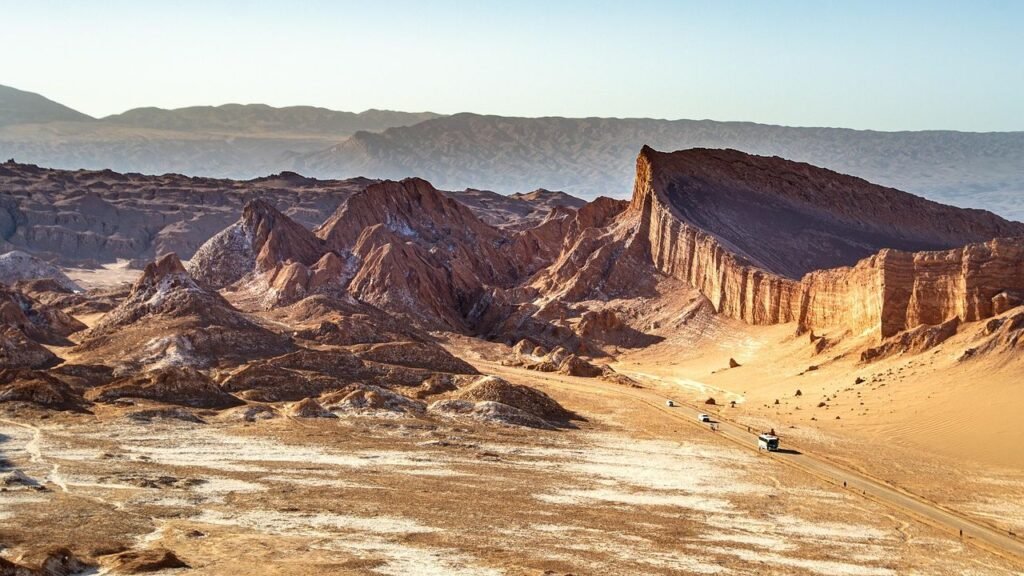

You might think you’ve seen dry places before. Maybe you’ve driven through Nevada or crossed Australia’s Outback. Perhaps you’ve even encountered the scorching dunes of the Sahara. None of those experiences, honestly, comes close to what awaits you in northern Chile. There, tucked between the Pacific Ocean and the towering Andes Mountains, lies a place so impossibly arid that rain isn’t just rare – it’s practically a myth. Evidence suggests that the Atacama may not have had any significant rainfall from 1570 to 1971. Imagine that. Four centuries without a drop.
There are areas that have received zero rainfall throughout recorded history, transforming this sprawling Chilean desert into Earth’s most extreme laboratory for understanding life at its very limits. What you’ll discover in the Atacama isn’t just a geographical curiosity. It’s a window into survival, adaptation, and the astonishing resilience of life itself.
The Driest Place on the Planet
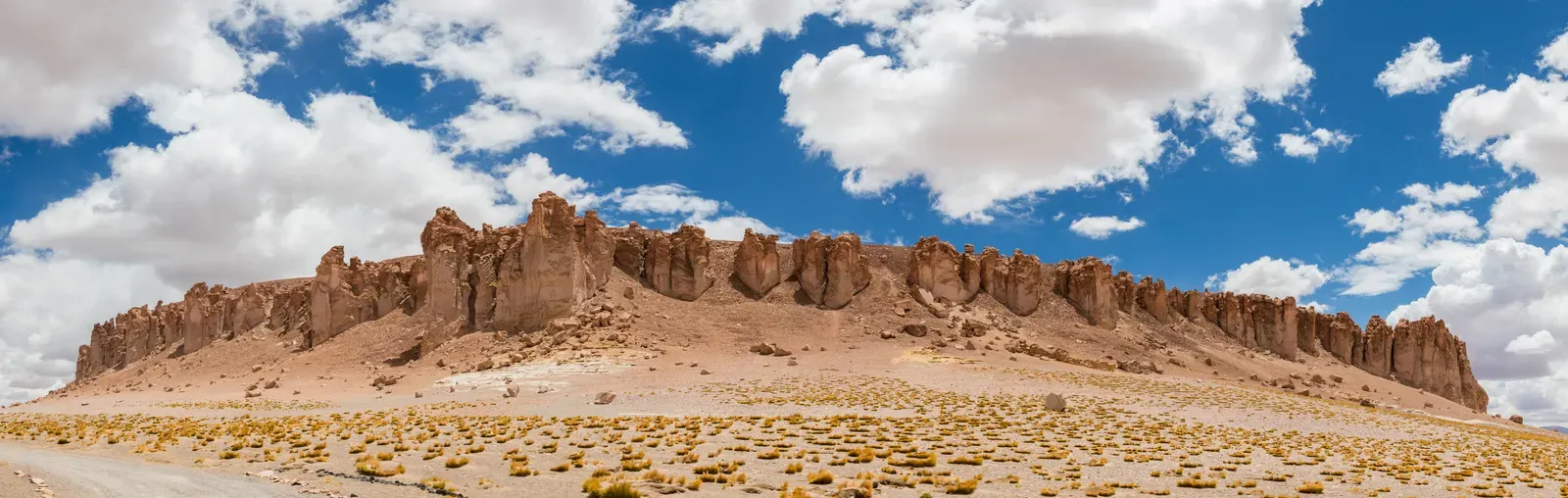
The Atacama Desert is commonly known as the driest place in the world and is the driest nonpolar desert in the world, and the second driest overall. When scientists talk about aridity, they’re not exaggerating here. The average rainfall in the Atacama Desert is less than one millimeter per year, making it roughly fifty times drier than California’s Death Valley. Think about that for a second. A millimeter. That’s barely the thickness of a credit card.
Some claim that portions of the Atacama Desert have never received rain in recorded human history. Moreover, some weather stations in the Atacama have never received rain, while others have registered periods up to four years without a single drop. The landscape itself seems to confirm this brutal dryness: vast salt flats, bone-dry riverbeds, and mountains stripped bare of vegetation. Even the rocks look tired here.
How Geography Creates a Rain-Free Zone
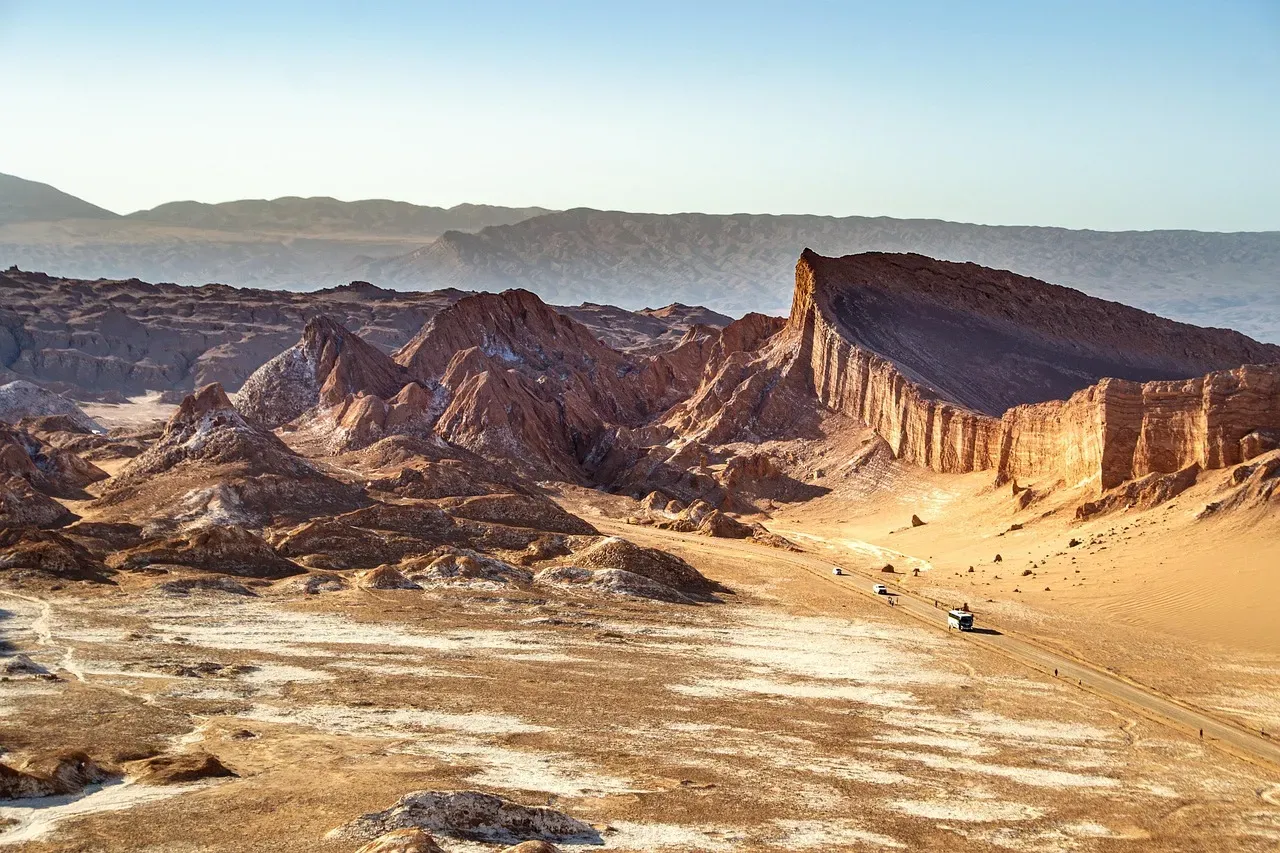
The Atacama’s extreme aridity isn’t an accident. It’s the result of multiple geographical forces working together in a kind of perfect storm – or rather, perfect drought. The most arid region of the Atacama Desert is situated between two mountain chains, the Andes and the Chilean Coast Range, which are high enough to prevent moisture advection from either the Pacific or the Atlantic Ocean, creating a two-sided rain shadow effect. Picture yourself trapped between two enormous walls that block every source of water from reaching you.
The constant temperature inversion caused by the cool north-flowing Humboldt ocean current and the strong Pacific anticyclone contribute to the extreme aridity of the desert. The cold Humboldt Current flows along the Chilean coast, cooling the air above the Pacific Ocean and reducing its ability to hold moisture. When this cool, dry air moves inland toward the desert, it can’t produce rain. Meanwhile, the Andes Mountains to the east trap what little moisture does come from the Amazon basin, leaving the Atacama starved for water from every direction.
An Ancient Wasteland Millions of Years in the Making
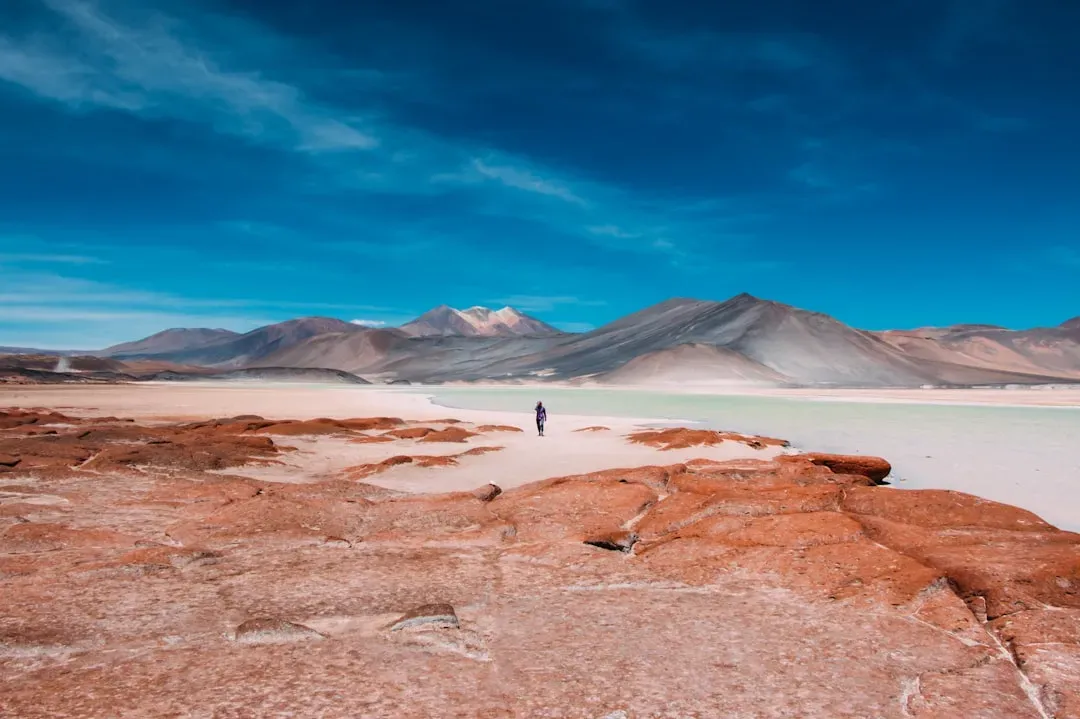
The Atacama Desert may be the oldest desert on earth, and has experienced hyper aridity since at least the Middle Miocene, since the establishment of a proto-Humboldt current in conjunction with the opening of the Tasmania-Antarctic passage ca. 33 Ma. That’s roughly thirty-three million years of unrelenting dryness. To put this in perspective, the Sahara Desert is only around seven million years old, making it a relative youngster by comparison. The Atacama has been perfecting its hostile conditions since long before our earliest human ancestors walked the Earth.
Studies by a group of British scientists have suggested that some river beds have been dry for 120,000 years. You can walk through valleys where water hasn’t flowed since Neanderthals roamed Europe. The sheer antiquity of this place is humbling, almost incomprehensible. Over millions of years, minerals and salts have accumulated without being washed away, creating soil chemistry so bizarre that it mimics the surface of Mars.
When Rain Finally Falls: Devastating Consequences
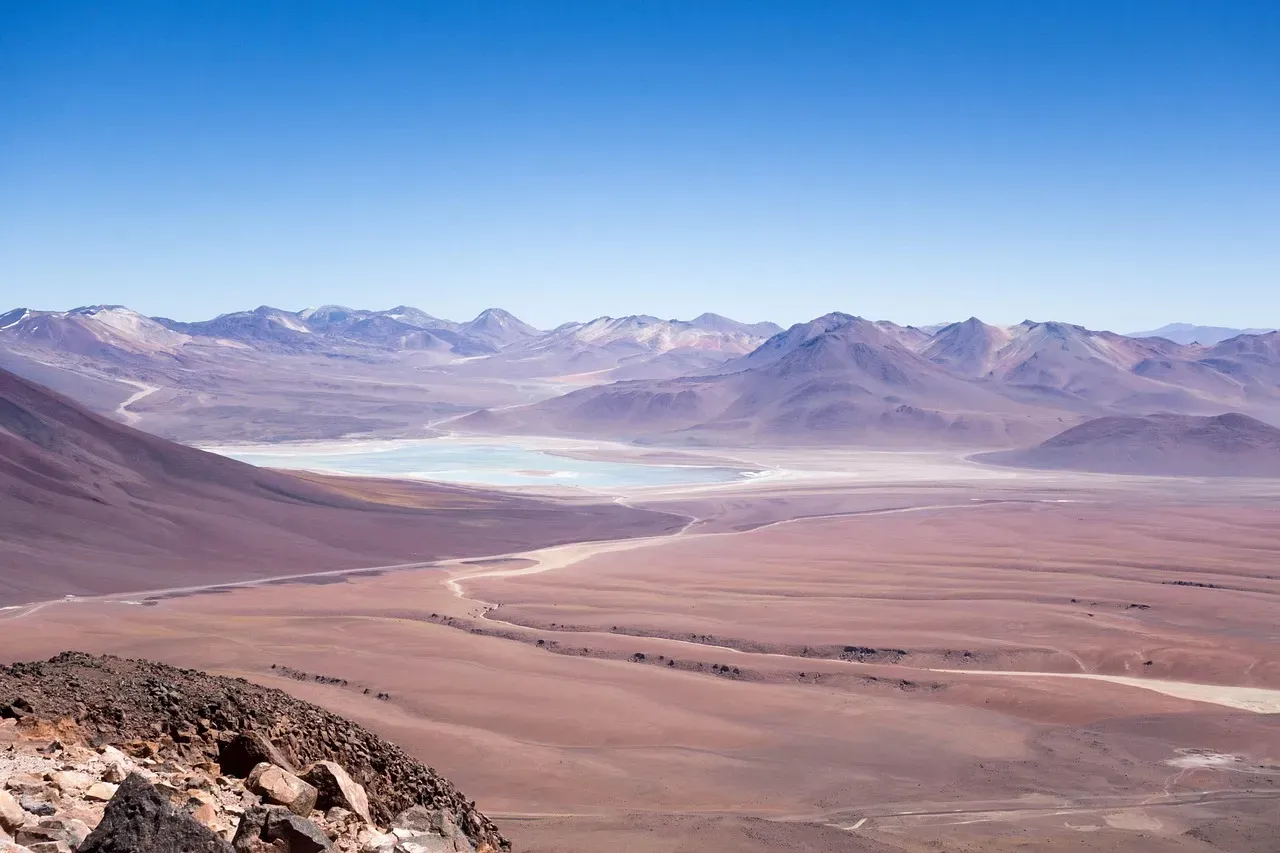
Let’s be real: when rain does occasionally visit the Atacama, it doesn’t gently nourish the land. It destroys it. Between March 24-26, a low-pressure system meandered to northern/central Chile from the southwest resulting in one to two inches of rainfall in 24 hours on March 25. A station south of the desert recorded more than 2 inches. An inch of rain represents multiple years worth of rain for the Atacama Desert. The ground, hard as concrete from decades or centuries without moisture, simply cannot absorb the water.
On 25 March 2015, heavy rainfall affected the southern part of the Atacama Desert. Resulting floods triggered mudflows that affected the cities of Copiapo, Tierra Amarilla, Chanaral and Diego de Almagro, causing the deaths of more than 100 people. Flash floods roared through towns that had barely seen a drop in living memory. The Copiapó River, which had been virtually dry for seventeen years, suddenly overflowed its banks. Houses crumbled. Lives were lost. This is the paradox of extreme dryness: when water finally arrives, the desert is utterly unprepared.
Life at the Edge of Survival
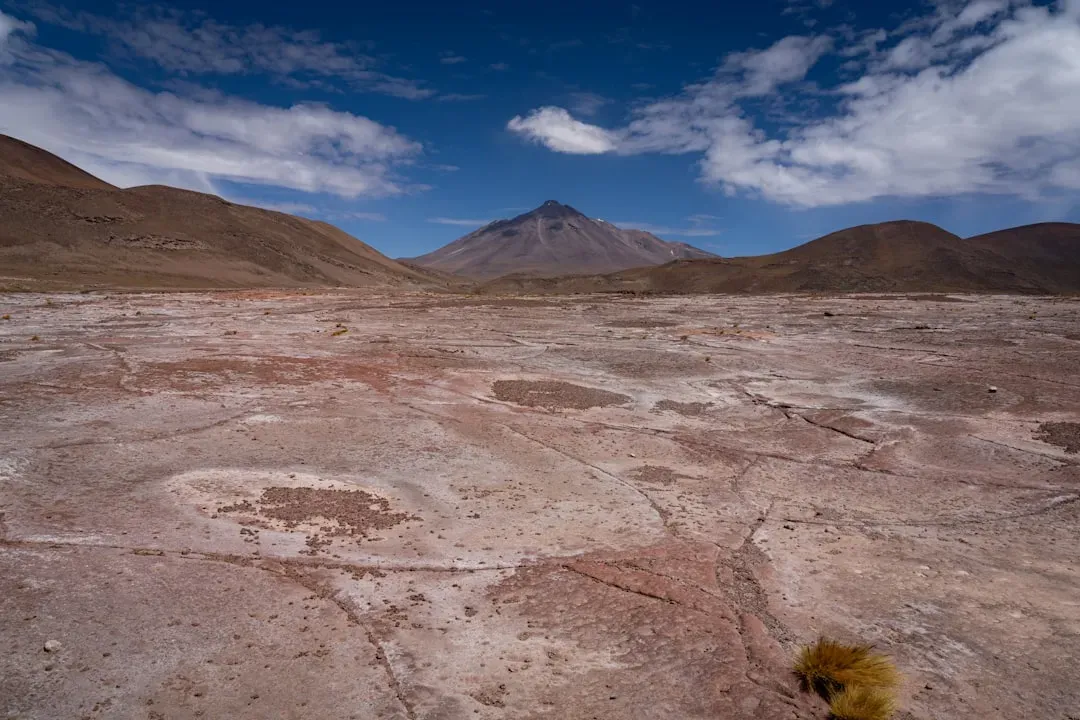
You’d think nothing could survive in such a place. You’d be wrong. A few feet beneath the Atacama’s surface, exceptionally hardy strains of bacteria, fungi, and other microbes have adapted to withstand punishing dryness, damaging ultraviolet radiation, and extreme saltiness. These aren’t your typical soil microbes. These organisms have evolved extraordinary survival strategies, entering dormant states during the driest periods and springing to life whenever the tiniest bit of moisture appears.
The analysis of the specialists shows that every niche in the Atacama Desert is colonized by specialized well adapted microorganisms, thus enabling active life in an otherwise hostile environment. Scientists have discovered microbial communities thriving in salt rocks, beneath the soil surface, and even in fog-dampened coastal areas. In spite of the geographic and climatic conditions of the desert, a rich variety of flora has evolved there. Over 500 species have been gathered within the border of this desert. From specialized cacti to hardy shrubs with roots reaching deep underground, life here refuses to surrender.
A Martian Landscape on Earth
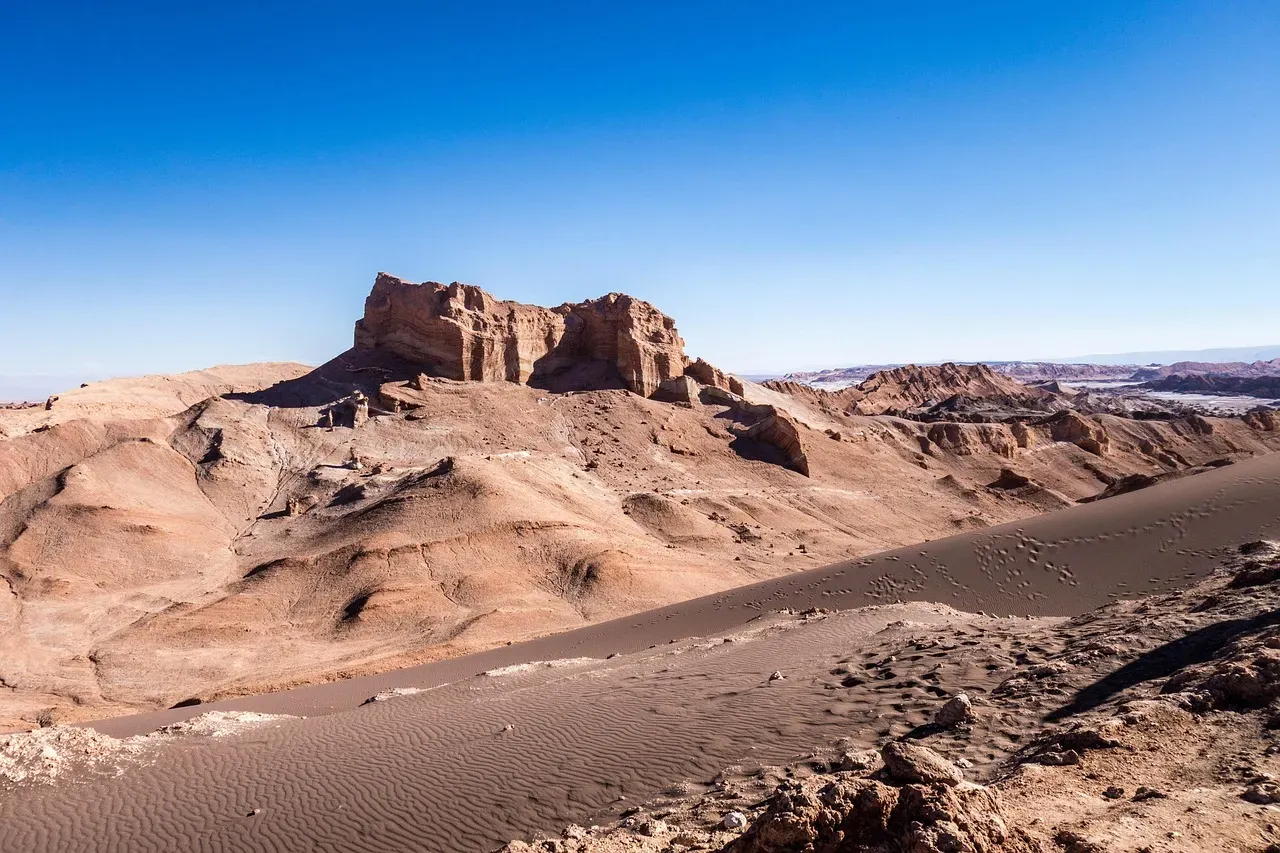
The area has been used as an experimentation site for Mars expedition simulations due to its similarities to the Martian environment. NASA scientists regularly test rovers, drills, and life-detection instruments in the Atacama because it’s the closest thing we have to the Red Planet without leaving Earth. Despite being considerably warmer than Mars, the region is remarkably similar to the Red Planet today, due to its extreme dryness and soil chemistry. The soil here contains perchlorates, nitrates, and sulfates – the same chemicals found on Mars.
The Atacama Desert is by far the driest and oldest desert on Earth, showing a unique combination of environmental extremes (extreme dryness, the highest UV radiation levels on Earth, and highly saline and oxidizing soils). If life can survive in the Atacama’s hyperarid core, perhaps it could survive – or could have survived – on Mars. The organisms discovered here have fundamentally changed how scientists think about the possibility of extraterrestrial life. The Atacama whispers: if life found a way here, maybe it found a way there too.
The Paradox of the Driest Desert
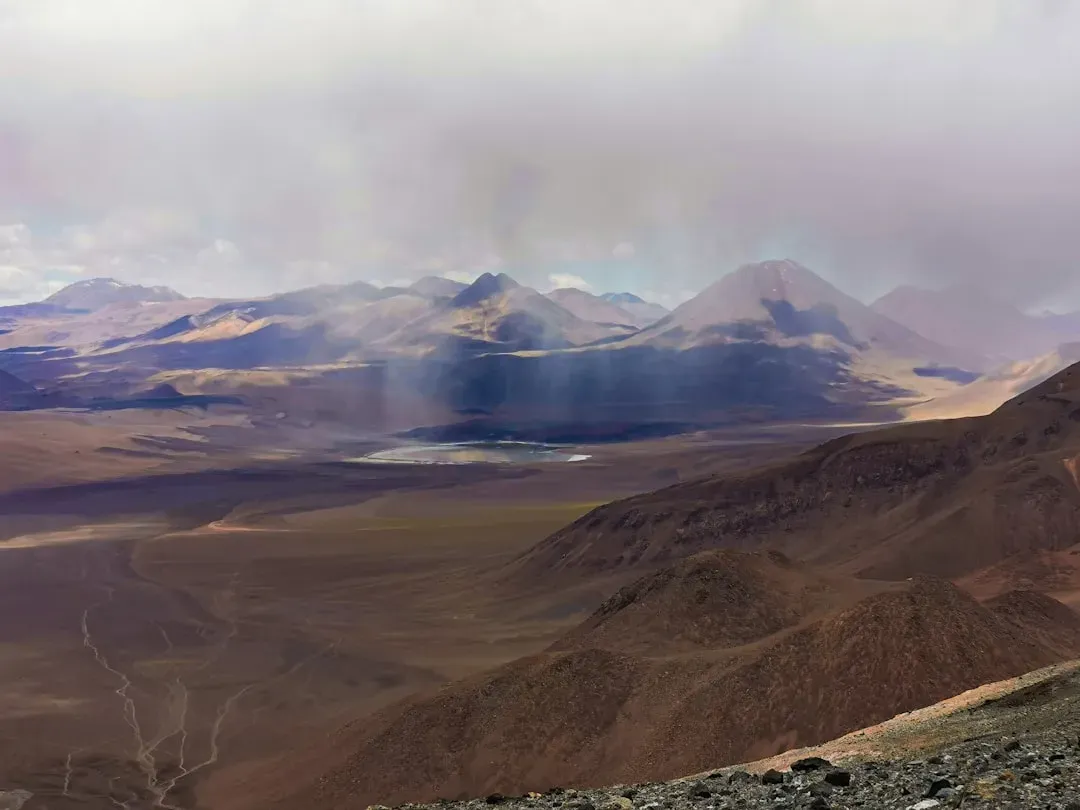
Here’s something that might surprise you. The driest place on Earth is also the largest fog desert in the world. Along the coast, a phenomenon known as the camanchaca occurs: a dense marine fog from the Pacific that blankets the desert. While it doesn’t produce any rain, the camanchaca does provide a minimal source of moisture for certain plants and animals. Local residents have learned to harvest this fog using nets and plastic sheets, collecting the condensed water for agriculture and drinking.
Because of its high altitude, nearly nonexistent cloud cover, dry air, and freedom from light pollution and radio interference from widely populated cities and towns, this desert is one of the best places in the world to conduct astronomical observations. The Atacama hosts some of the world’s most advanced telescopes, including the Atacama Large Millimeter Array, which peers deep into the universe’s earliest moments. So while rain refuses to fall, starlight showers down unimpeded, turning the night sky into a brilliant cathedral of distant suns.
Conclusion
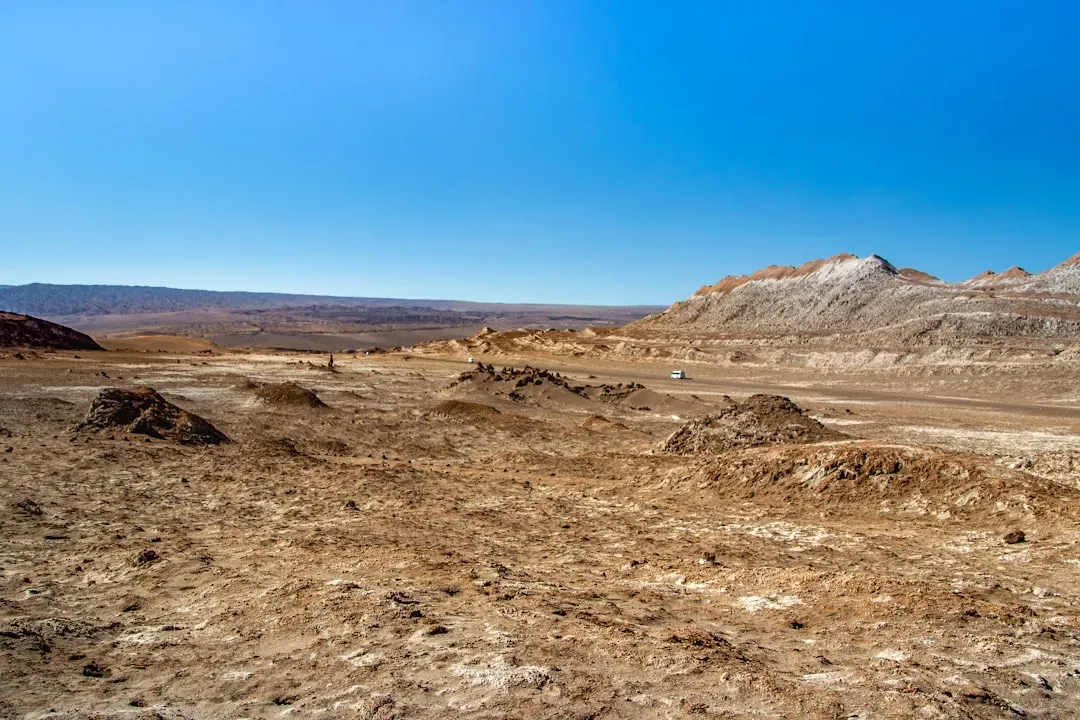
The Atacama Desert stands as one of nature’s most extreme experiments. For millions of years, it has endured without regular rainfall, creating conditions so harsh that they mirror another planet. Yet life persists here in astonishing ways, from microscopic bacteria sleeping in the soil to fog-harvesting communities clinging to the coast. The Atacama Desert, the driest and oldest desert on Earth, located in northern Chile, hides a hyper-arid core in which no rain has been recorded during the past 500 years. When rain does arrive, it brings destruction rather than relief, reminding us that even water – the source of all life – can become catastrophic when it visits a place unprepared for its presence.
This desert challenges everything we thought we knew about where life can and cannot exist. It’s a place where absence defines presence, where emptiness becomes profound. What’s your take on it? Could you imagine living in a place where rain is not just rare, but almost mythical?