
Far below the waves, past the reach of sunlight and the comfort of familiar blue water, lies a world that barely feels like it belongs on our planet. It’s a place of crushing pressure, freezing temperatures, and endless night – yet it’s packed with life so bizarre that the word “alien” honestly feels more accurate than “fish.” When scientists drag cameras or submersibles into this darkness, they often see things nobody has ever laid eyes on before.
I still remember the first time I saw footage of a deep-sea anglerfish as a kid; it felt less like a nature documentary and more like a horror movie. But the more I learned, the more I realized something important: these animals aren’t monsters. They’re survivors, perfectly adapted to a world we can barely imagine. Once you look past the teeth and glowing lures, their stories start to feel strangely inspiring.
The Midnight Zone: A World Without Sunlight
Imagine standing in a forest at midnight – then take away the moon, the stars, and every scrap of stray light. That’s the deep sea below about one thousand meters, a region scientists often call the midnight zone. Here, sunlight doesn’t just fade; it disappears completely, and your eyes are useless without help from artificial lights or natural glow from the creatures themselves.
This layer of the ocean is not just dark, it’s also incredibly hostile: the pressure can crush most human-made equipment if it’s not specially designed, and the water hovers near freezing. Yet countless species have adapted to this extreme environment so well that it’s the surface world, not the deep, that would kill them. In a strange way, for them, we are the aliens living in a bright, low-pressure universe that makes no sense.
Anglerfish: Living Nightmares With Ingenious Lures
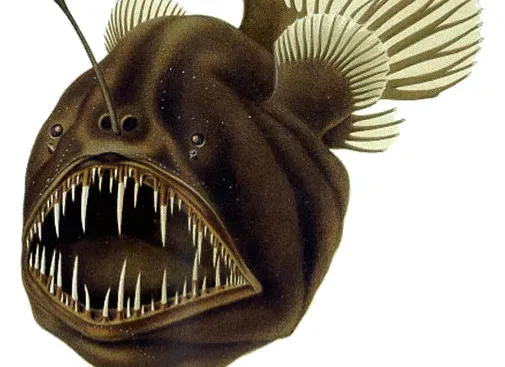
At first glance, an anglerfish looks like something a horror artist would sketch after a bad dream: enormous teeth, oversized jaws, and a face that seems permanently furious. The most famous feature is the glowing lure that hangs from its head like a fishing rod, a piece of flesh filled with light-producing bacteria that dangles right in front of its mouth. In a place where food is scarce and the darkness is total, a tiny glowing promise is irresistible to passing prey.
Even stranger is what happens when these fish mate. In some species, males are tiny compared to females – so small that when a male finds a mate, he bites into her and eventually fuses with her body. Over time he loses his organs until he’s little more than a living attachment, providing sperm while she carries on with the difficult business of survival. It sounds grotesque, but in a vast, empty ocean where another fish might be kilometers away, it’s an extreme but effective solution.
Vampire Squid: The Gentle “Monster” of the Deep
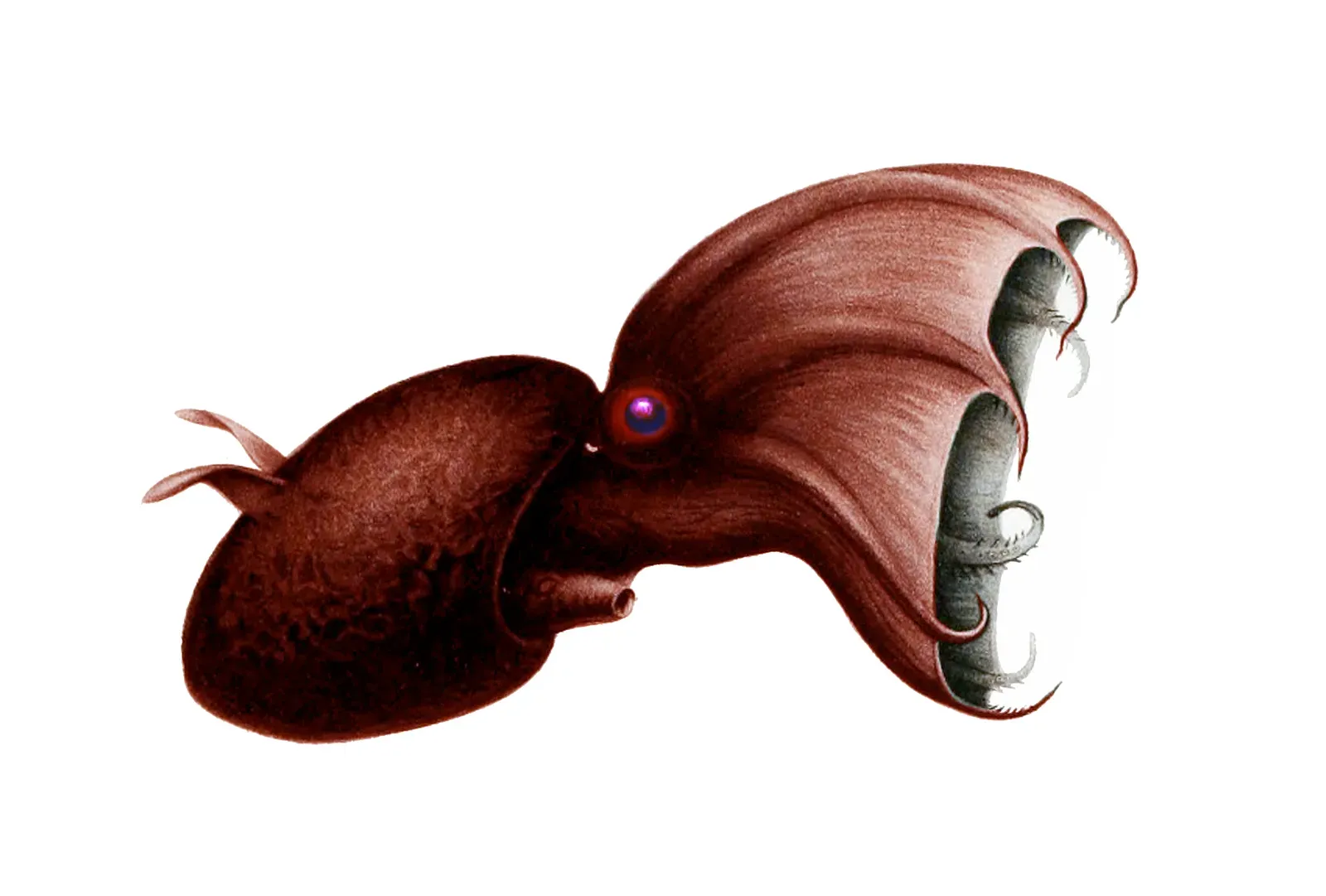
With a name like vampire squid, you’d expect a blood-sucking terror stalking the depths. In reality, this animal is more like a soft, floating relic from another era, with a cloak-like webbing between its arms and glowing organs that let it control its own light. It lives in oxygen-poor waters where many other creatures can’t survive, drifting calmly instead of racing after prey like classic predators do.
Instead of hunting down victims, the vampire squid feeds mostly on falling bits of organic debris, sometimes called marine snow, catching tiny particles with sticky filaments. When threatened, it can turn itself inside out in a dramatic display, wrapping its arms over its body and showing rows of soft, spiky structures that look more dangerous than they really are. It’s a reminder that names can be misleading and that some of the creepiest-looking animals are, in practice, quiet recyclers cleaning up the ocean’s leftovers.
Gigantic Jellies and Transparent Drifters
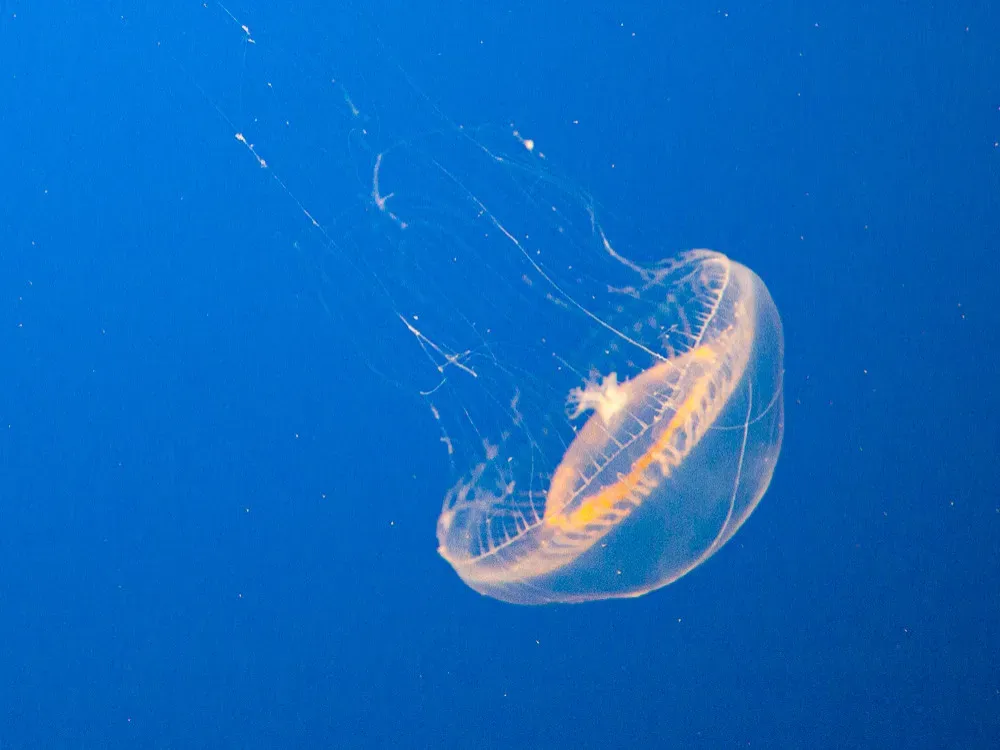
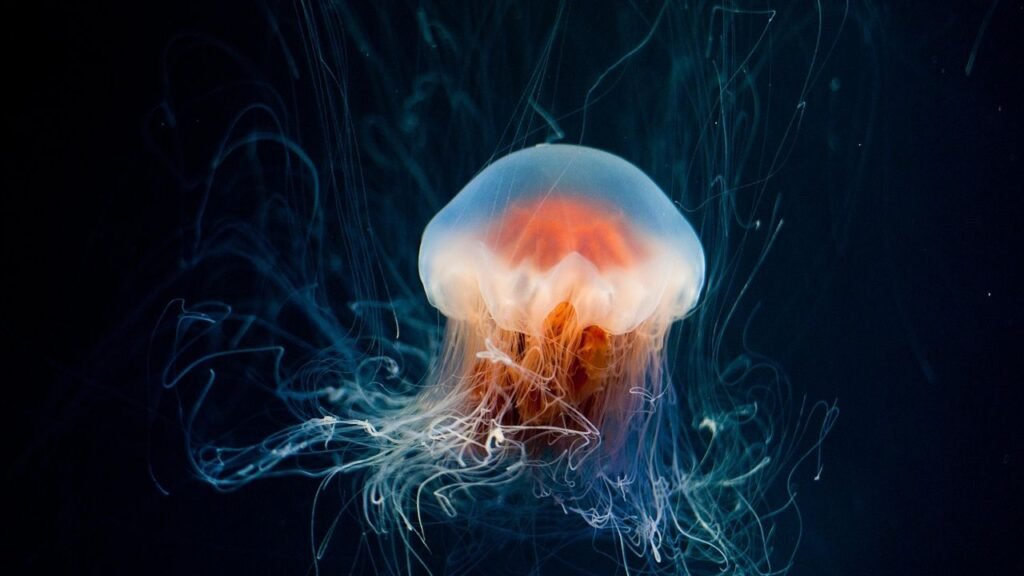
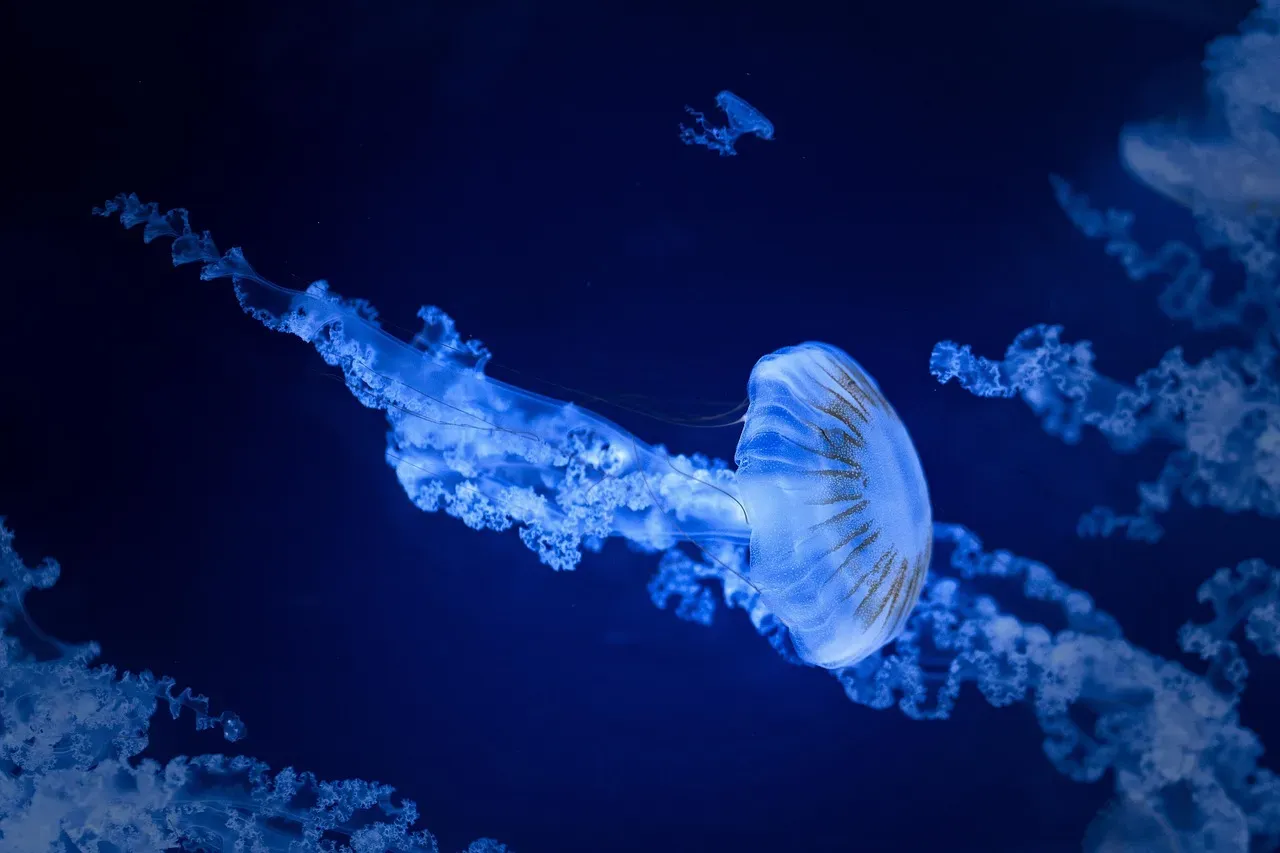
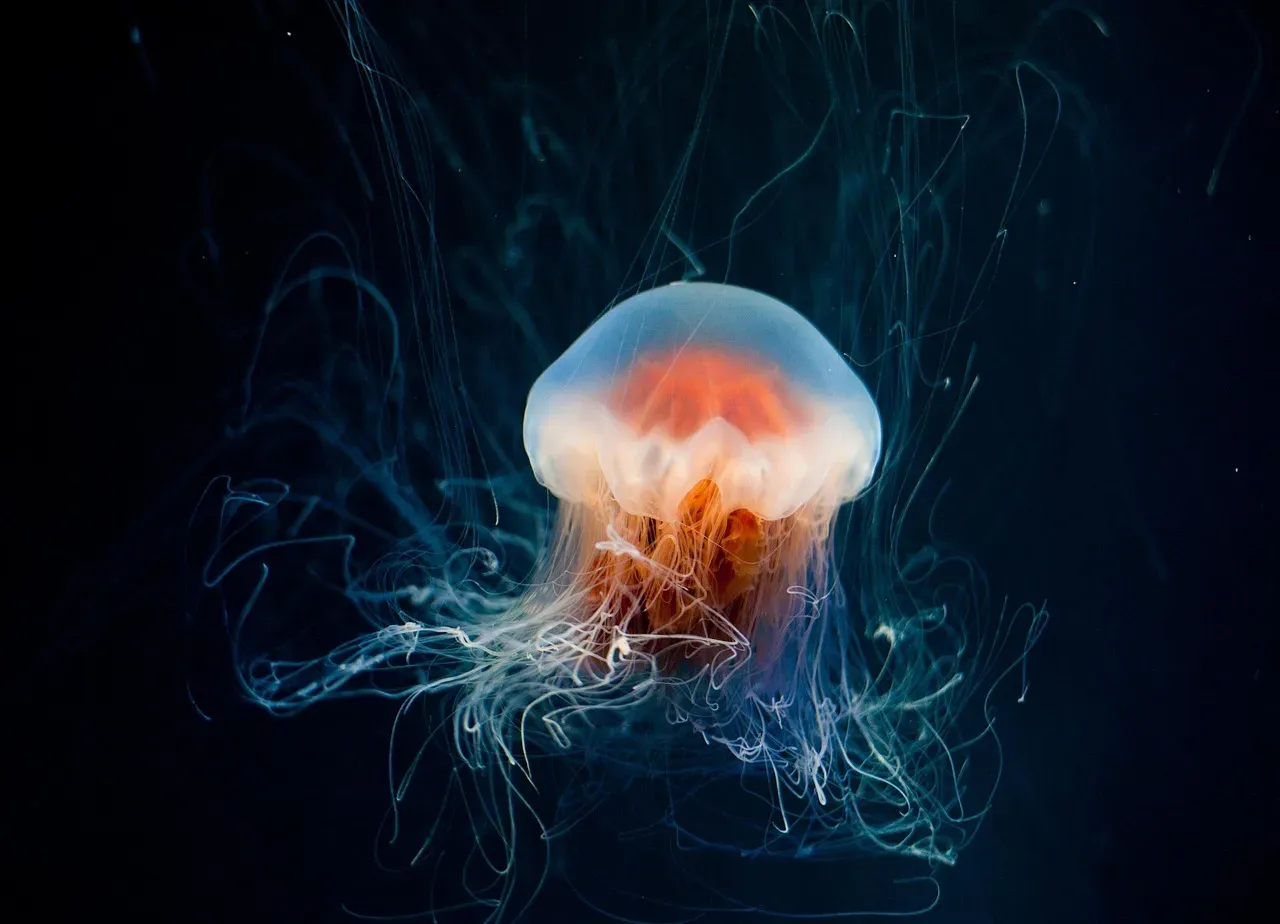
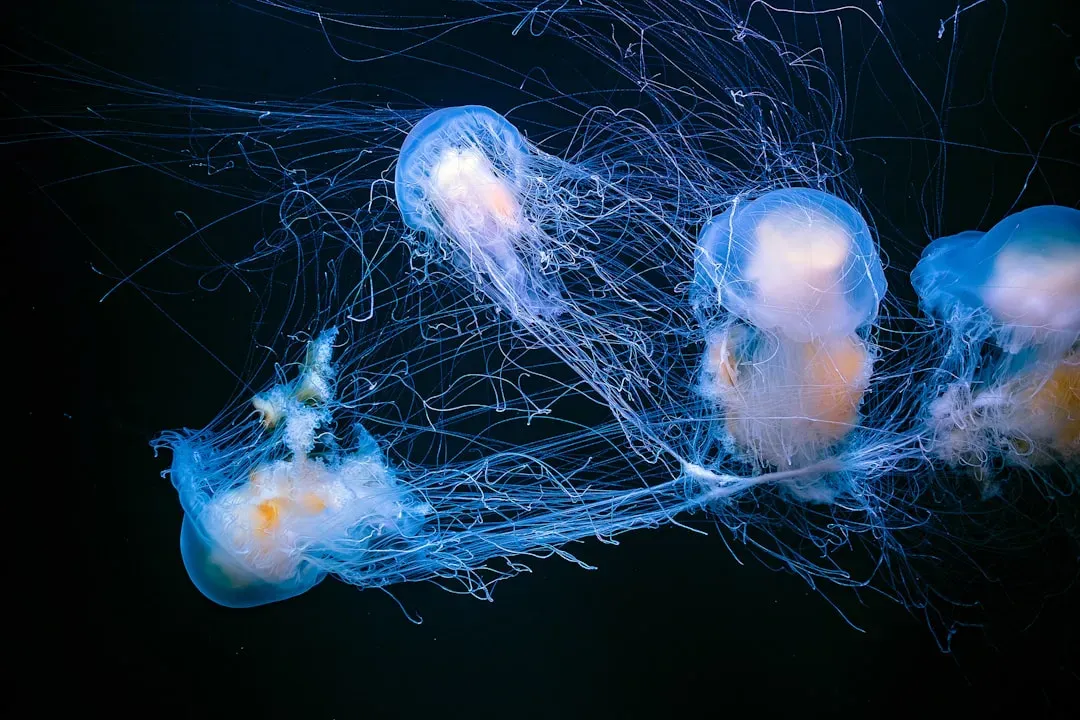
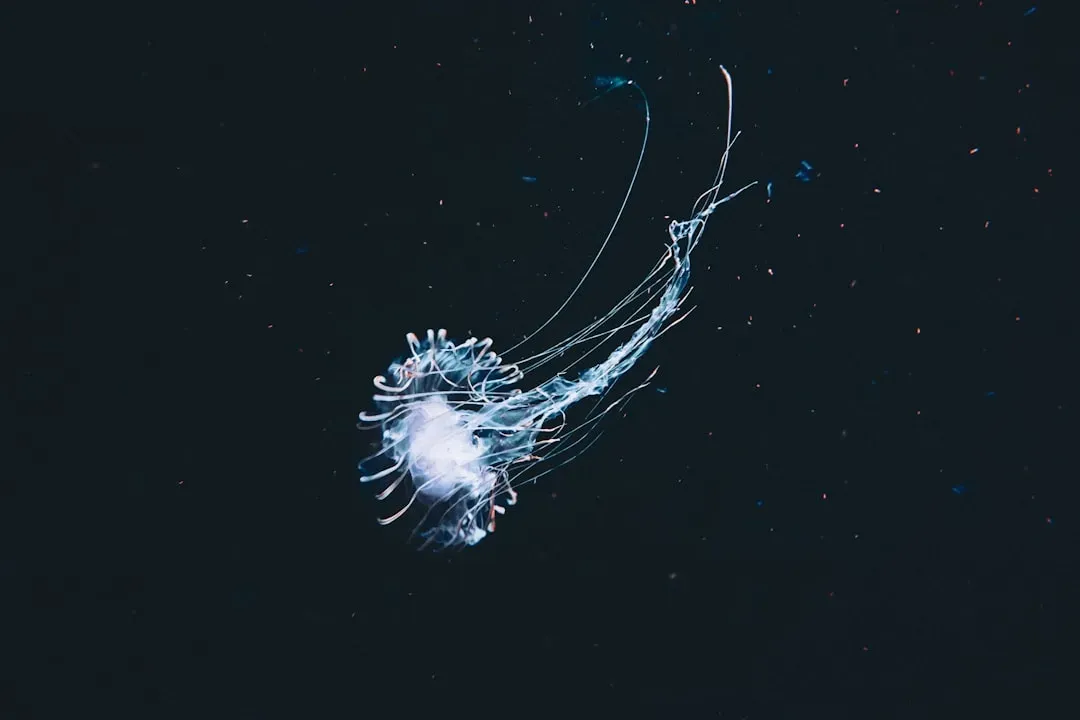
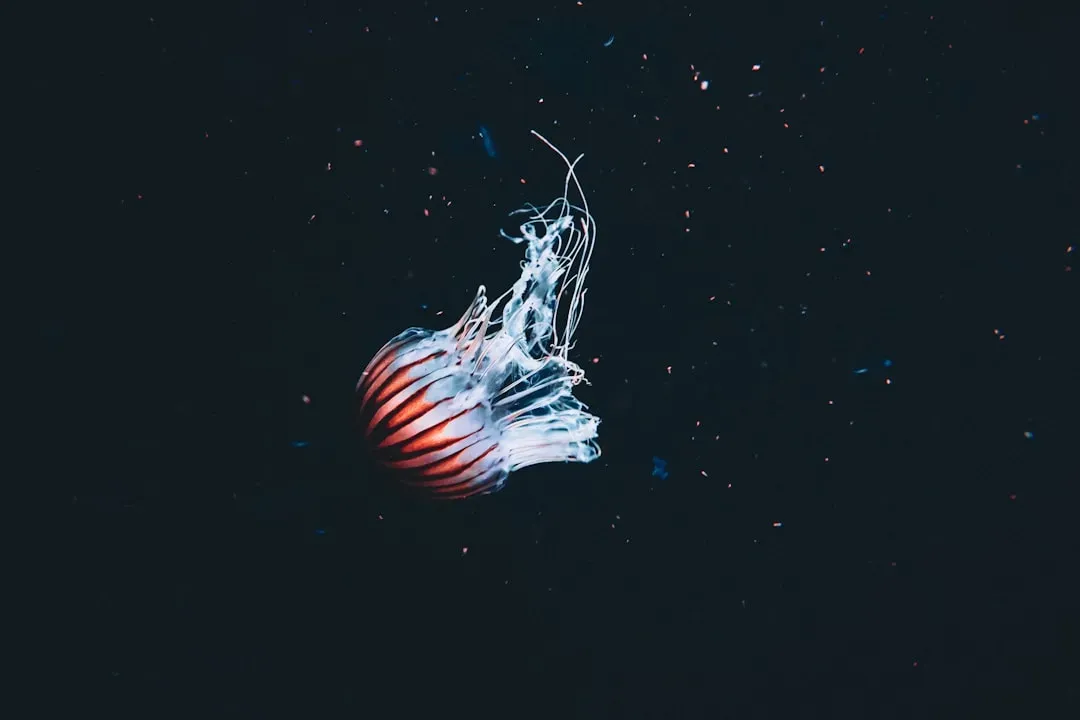
Some of the most otherworldly deep-sea residents are not armed with teeth or claws at all; they are made almost entirely of water and light. Giant jellyfish and comb jellies can grow to enormous sizes, with bells wider than a human and tentacles stretching like long ghostly curtains through the dark. Because they’re mostly transparent, they look like living glass sculptures, delicate and eerie and impossible to forget once you’ve seen them.
Many of these drifters produce light in complex patterns, lighting up their bodies in rippling waves or sudden flashes. Instead of bones or brains like ours, they rely on simple structures and slow, fluid movements to capture passing creatures. It’s a completely different blueprint for life, showing that being soft and fragile doesn’t automatically mean being weak; in the deep sea, being almost invisible can be the best armor there is.
Creatures of Living Light: Bioluminescent Wonders
If you could suddenly turn off the artificial lights on a deep-sea submersible, you wouldn’t just see empty black water – you’d see sparks, flashes, and slow glows from the animals themselves. Bioluminescence, the ability to produce light through chemical reactions, is incredibly common in the deep ocean. Some scientists think that a large majority of deep-sea animals can glow in some way, which makes light almost as fundamental as water down there.
These lights are not just pretty decorations; they’re tools for survival as powerful as claws or speed. Animals use them to attract prey, to confuse predators, to hide their silhouettes, or to signal to mates in the darkness. One species might release a glowing cloud to distract an attacker, while another flashes a precise pattern like a secret code only its own kind understands. It’s like a silent conversation in colors our eyes can barely grasp, happening nonstop in a place we mostly never see.
Bizarre Body Plans: From Gelatinous Blobs to Spiny Terrors
Deep-sea animals often look like evolution was given complete creative freedom with no rules at all. Some fish have enormous jaws and needle-like teeth because they can’t afford to let any possible meal escape, while others have tiny, delicate jaws designed only for microscopic food. You can find creatures with eyes so large they barely fit in their heads, and others with no eyes at all because light never reaches them.
There are sea cucumbers that crawl along the bottom like slow, fleshy vacuum cleaners, and spiky starfish that look more like medieval weapons than living beings. Many deep-sea fishes have bodies that seem loose or watery, built specifically to withstand crushing pressure while saving energy. It feels almost as if nature ran every weird design experiment possible and, if it worked, let it stay, no matter how strange it looked to us.
Why These Alien-Like Creatures Matter to Us
It’s easy to look at deep-sea creatures and think they’re just distant curiosities with no real connection to our everyday lives. But the deep ocean plays a major role in the health of the entire planet, helping to regulate climate, store carbon, and move heat around the globe through vast underwater currents. Many of the animals down there are part of complex food webs and chemical cycles that quietly support the surface world we depend on.
On top of that, deep-sea organisms have already inspired new materials, medical research, and ideas for technology, especially in areas like pressure-resistant engineering and low-energy light production. We’re still in the early stages of understanding what they can teach us, and yet deep-sea mining and pollution are already starting to threaten habitats we barely know. The most alien-looking creatures on Earth might end up being some of our most important teachers, if we choose to listen before we damage their world beyond repair.
A Planet More Alien Than We Realized
The deeper we look into the ocean, the more it shatters the idea that Earth is a familiar, fully mapped-out place. Down in the black water, animals glow, fuse, stretch, and drift in ways that challenge what we think life is supposed to look like. They show us that survival can take forms that seem uncomfortable, even disturbing, to our surface-trained eyes, and yet are absolutely perfect for the environment they call home.
In a sense, we don’t need to leave our planet to search for alien life; we just need to look more closely at the worlds hidden beneath our own waves. Each strange fish, glowing jelly, or drifting squid is a reminder that nature is far wilder and more inventive than our imagination usually allows. As we keep exploring, the real question is not whether we’ll find something new, but how much wonder we’re willing to feel when we do – what would you have guessed lives in that endless dark?