
If you want to glimpse something as close to an alien world as possible without leaving Earth, you don’t look to the stars. You look down, into the black, crushing depths of the ocean. Down there, in places sunlight has never reached, scientists are starting to piece together one of the biggest questions humans have ever asked: how did life begin in the first place?
What’s wild is that the answers might not come from pristine labs or high-tech particle accelerators, but from smoking underwater chimneys, strange pink “oceans” beneath the seafloor, and microbes clinging to rock in conditions that would shred a human in seconds. The more researchers send robots and sensors into the abyss, the more it looks like the deep ocean isn’t just a weird side chapter in Earth’s story. It may be the opening scene.
Hydrothermal Vents: Alien Landscapes on Our Own Planet
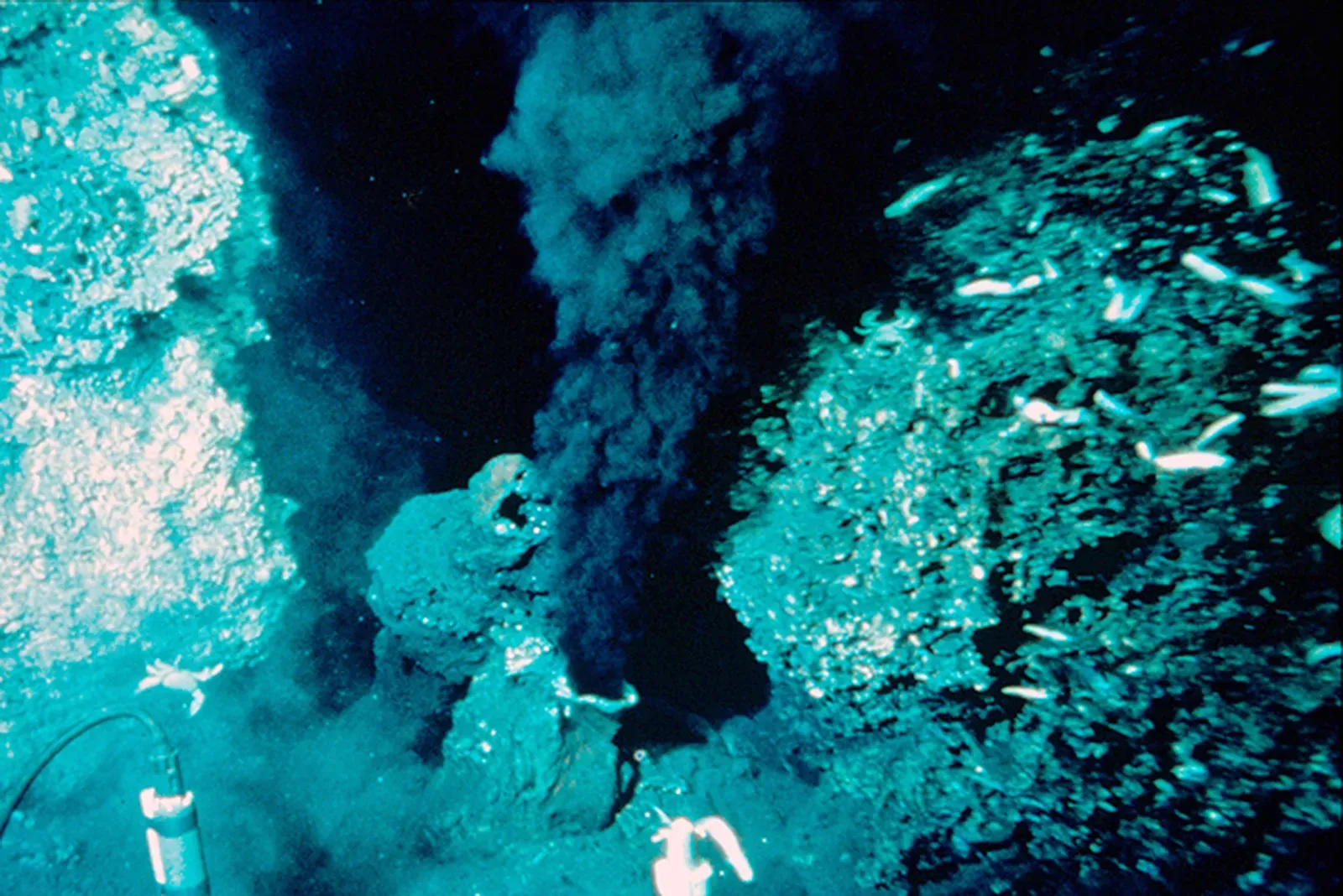
Imagine towering chimneys on the seafloor, spewing superheated, metal-rich fluid into water cold enough to freeze you solid in minutes. That’s a hydrothermal vent field: one of the most extreme, and strangely alive, places on Earth. The water blasting out can be hotter than boiling, yet doesn’t boil because of the enormous pressure at depth, and it’s loaded with chemicals like hydrogen, methane, and sulfides.
Instead of sunlight, these ecosystems run on chemistry. Microbes use the chemical energy from vent fluids the way plants use light, building sugars and fueling entire food webs of giant tube worms, crabs, clams, and fish. For origin-of-life researchers, hydrothermal vents are like natural laboratories: they bring together heat, minerals, steep chemical gradients, and surfaces where reactions can happen. That combination is exactly the kind of setting many scientists think could have sparked the first simple life.
Life Without Sunlight: A Blueprint for the First Cells
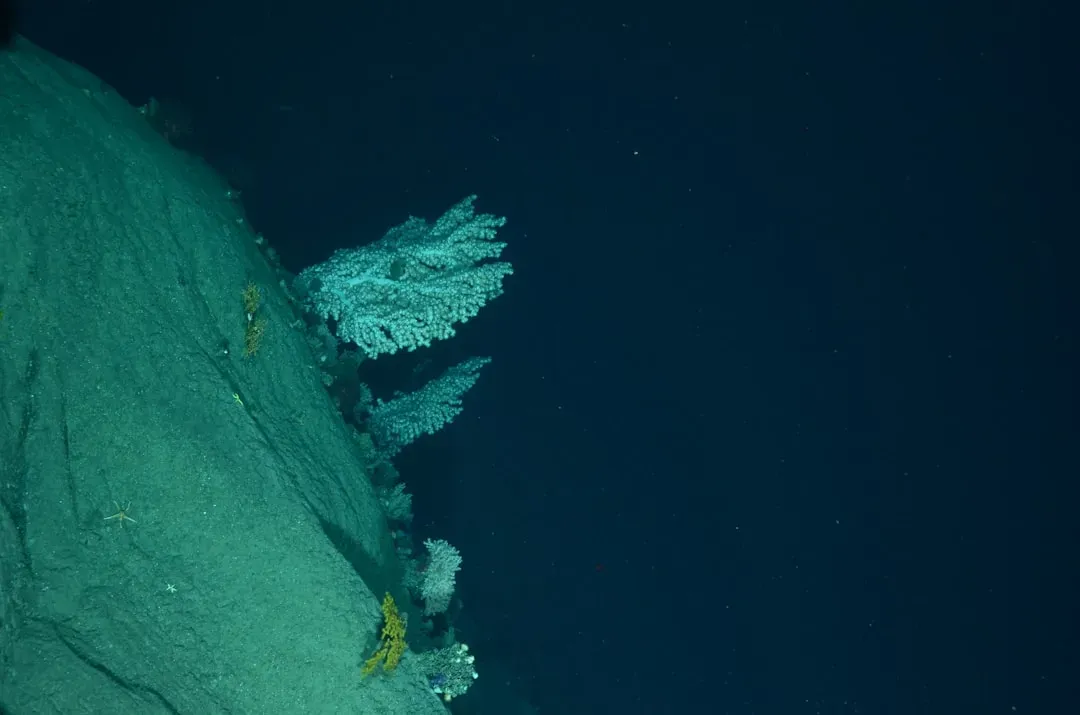
For most of history, people assumed life depends on sunlight. Deep-sea ecosystems smashed that belief. The creatures around hydrothermal vents and other dark habitats survive without photosynthesis, relying instead on chemosynthesis, where microbes pull energy from chemical reactions rather than from light. This proves that life doesn’t need a blue sky and a warm sun; it just needs a reliable source of energy and a way to capture it.
This is a big deal for origin-of-life theories. Early Earth was a wild, harsh place, but it had plenty of volcanic activity, minerals, and chemical gradients. Microbes in today’s deep sea show us that life can thrive in darkness, under immense pressure, clinging to rock and feeding on chemical flows. In a way, these organisms are like living time machines, hinting that the earliest cells might have been tiny chemists long before anything green ever turned sunlight into sugar.
Mineral Pores and “Natural Batteries” on the Seafloor
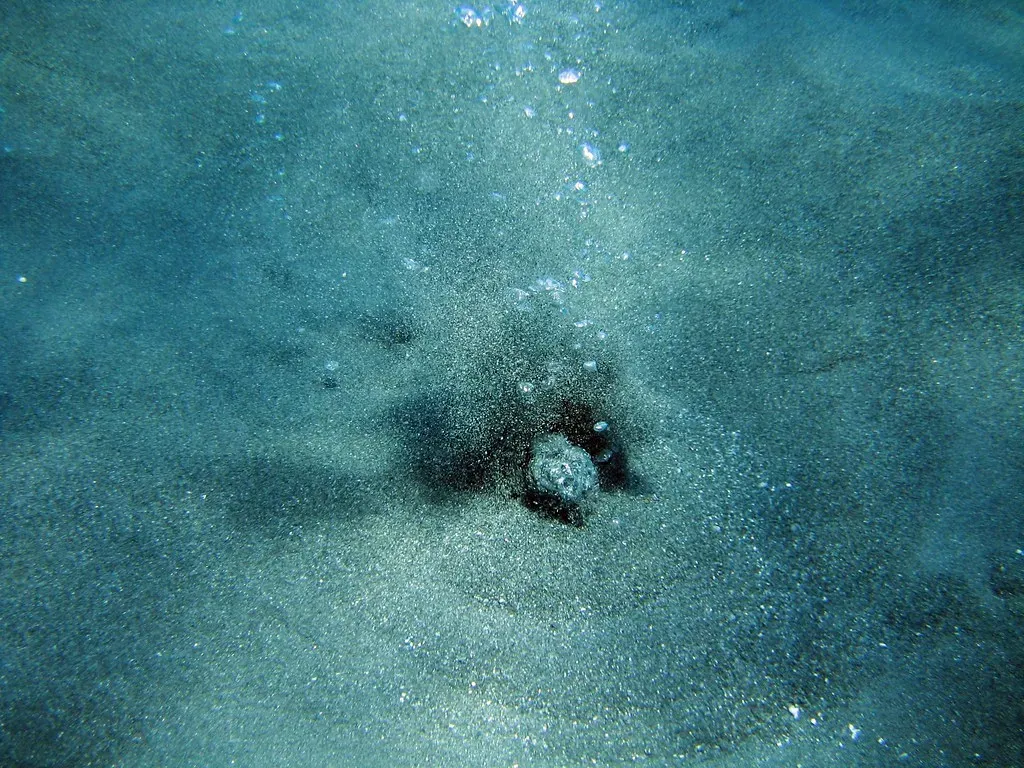
One of the most fascinating ideas about life’s origins focuses on mineral structures in alkaline hydrothermal vents. In some of these vents, fluids rich in hydrogen and other gases seep through porous, chimney-like formations made of minerals such as iron and nickel compounds. These minerals can act a bit like primitive catalysts, speeding up reactions that would normally happen very slowly. Inside them are tiny pores and compartments, like a sponge made of stone.
Those pores might have served as natural test tubes. Across their thin mineral walls, there are sharp differences in acidity and chemical composition that act like microscopic batteries, pushing charged particles around. Modern cells also run on gradients like that, using membranes to create electrical and chemical differences they can tap for energy. The resemblance is hard to ignore: mineral pores on the seafloor could have been an early version of cell membranes, offering shelter and energy until actual cells evolved their own boundaries.
The Deep Biosphere: An Invisible World Beneath the Seafloor
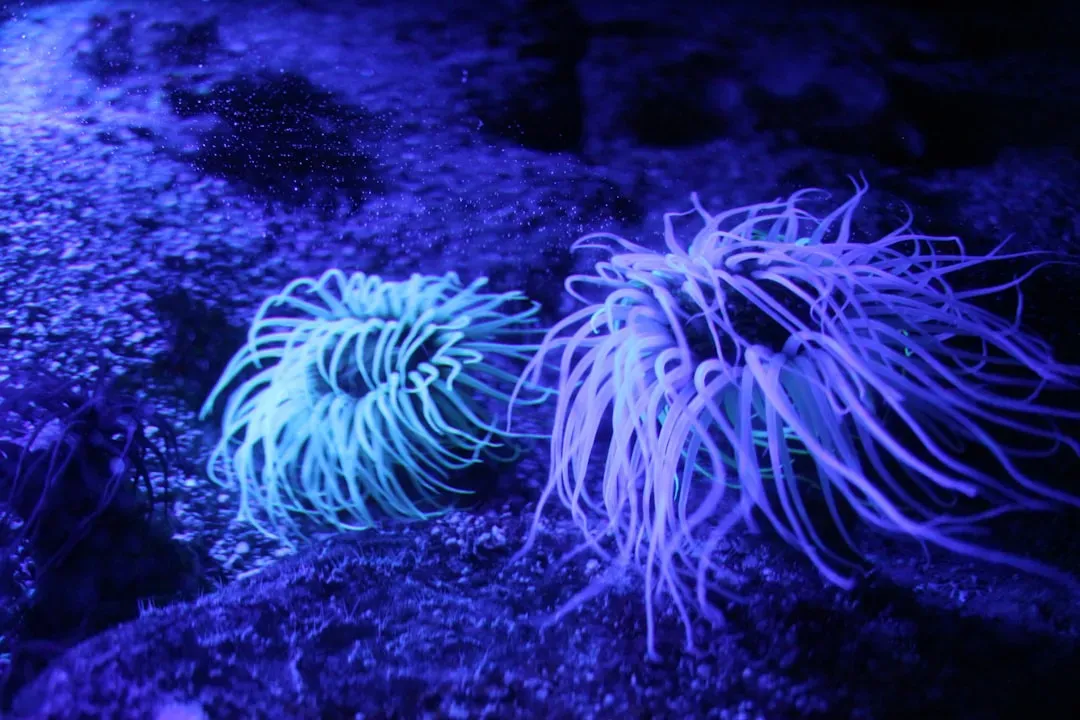
When people talk about the deep ocean, they usually picture fish, squid, or perhaps a giant squid lurking in the dark. But some of the most intriguing life is hidden in the rocks and sediments below the seafloor, in what’s called the deep biosphere. Drilling projects have found microbes living hundreds of meters, even kilometers, beneath the ocean floor, surviving on tiny trickles of energy from chemical reactions between water and rock. They grow incredibly slowly, sometimes taking years to divide just once.
This buried world may contain a huge fraction of Earth’s total microbial life, even though we can’t see it with the naked eye. It shows us that life doesn’t just survive on the surface; it seeps into cracks, pores, and minerals wherever there’s even the faintest hint of usable energy. When scientists think about how life might have started, this is crucial: if microbes can live so deep, then early life might have begun shielded underground or under the seafloor, protected from radiation and impacts while still accessing chemistry rich in potential.
Clues from Ancient Rocks and Modern Chemistry
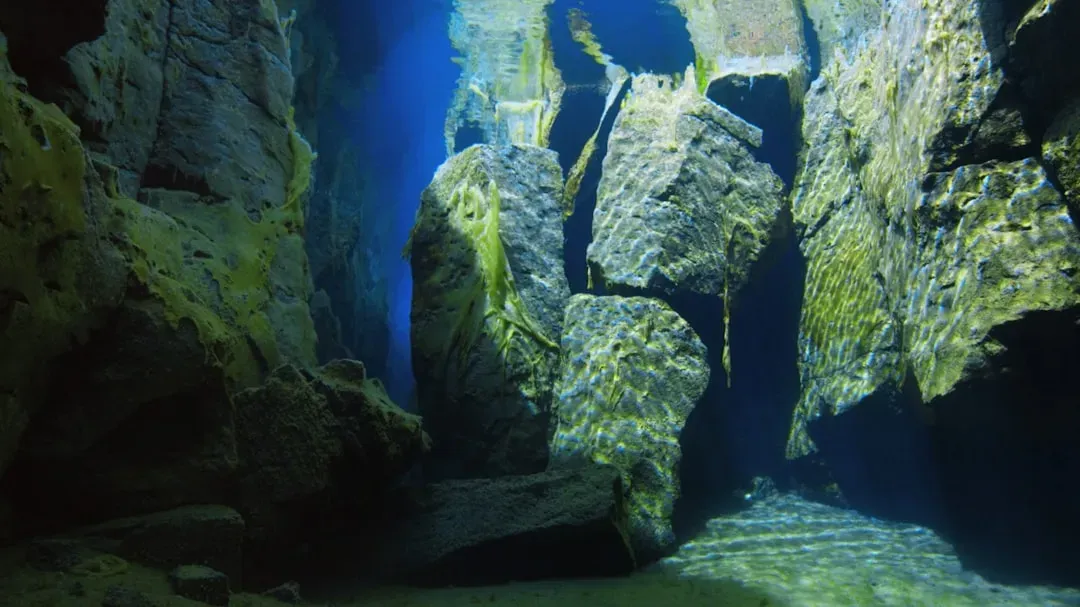
If the deep ocean and hydrothermal systems helped kick-start life, there should be clues left behind in ancient rocks. Geologists have found very old rocks, more than three and a half billion years in age, that contain specific patterns of carbon and tiny mineral structures some researchers think may be evidence of early microbial activity. In a few rare places, there are rock formations that look surprisingly similar to modern hydrothermal vent minerals, suggesting that vent-like environments existed early in Earth’s history.
At the same time, chemists are trying to recreate pieces of these processes in the lab. They use iron- and sulfur-rich minerals, hot water, and carefully tuned conditions to see if basic building blocks of life, like simple amino acids or lipid-like molecules, can form and assemble. While no lab has fully recreated life from scratch, some experiments have shown that key molecules can indeed appear under vent-like conditions. Taken together, the rocks and the chemistry point in the same direction: the early ocean floor was not just a passive backdrop, but an active chemical engine.
Deep Oceans and the Search for Life Beyond Earth
Once you accept that life can start and thrive in dark, pressurized oceans fueled by internal heat, our definition of a potentially habitable world expands overnight. I still remember the first time I saw a cutaway diagram of Europa, Jupiter’s moon, with a deep global ocean trapped under a shell of ice. Suddenly, it hit me: if Earth’s deep hydrothermal vents can host dense communities of life, maybe these icy moons have their own hidden ecosystems, humming along in the dark, completely unseen.
Planets and moons like Europa, Enceladus, and even some distant exoplanets might have oceans that never see a sunrise but still have seafloors warmed by tidal flexing or internal heat. If those seafloors host hydrothermal activity, then the recipe we see on Earth – water, rock, heat, and chemical gradients – might be playing out there too. Today, missions are being designed specifically to sample the plumes of material spraying into space from some of these worlds, looking for signs of organic molecules or even hints of microbial life. The deep ocean on Earth has become a kind of training ground for exploring alien oceans elsewhere.
Why the Deep Ocean Still Matters for Our Future
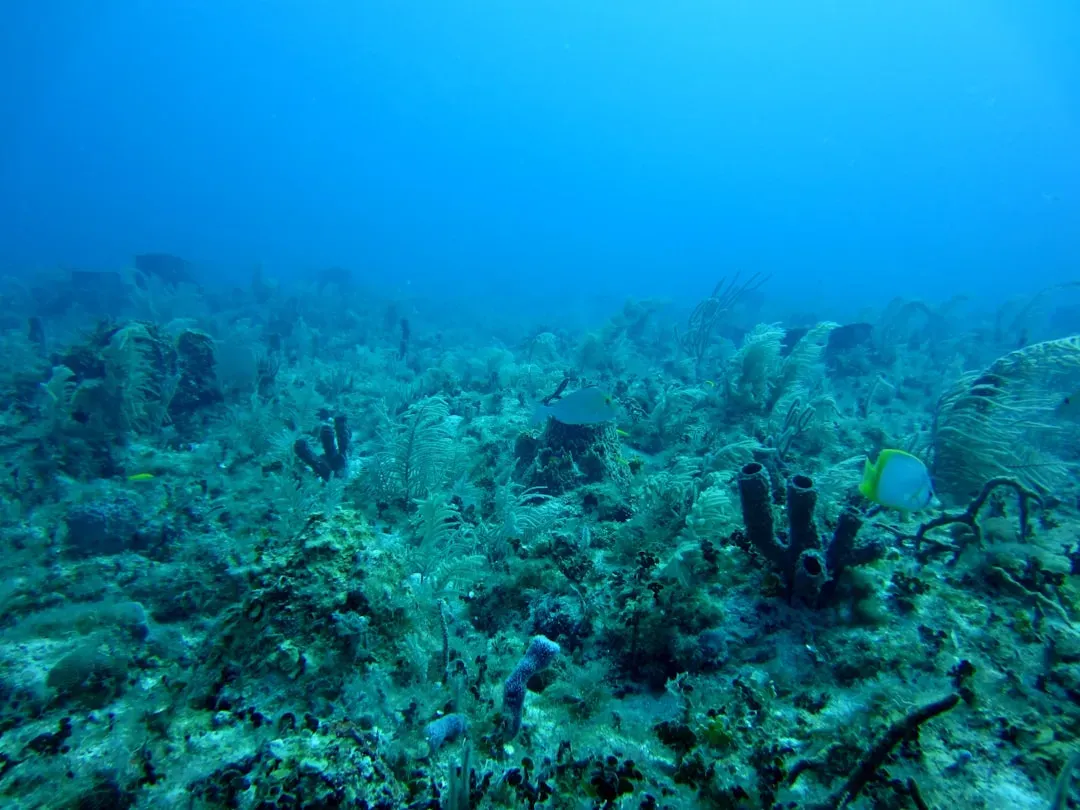
It’s tempting to think of all this as ancient history, relevant only to how things started billions of years ago. But the deep ocean is also a crucial part of how life continues to survive today. It helps regulate the planet’s climate, stores vast amounts of carbon, and provides unique chemicals and enzymes that are already inspiring new medicines and technologies. Some of the strange proteins and metabolic tricks used by deep-sea microbes could one day help us design better industrial processes or cleaner energy systems.
At the same time, there’s growing pressure to mine the deep seafloor for metals used in batteries and electronics. That raises a tough question: are we about to bulldoze through the very ecosystems that hold clues to our own beginnings, before we even understand them? Learning how life might have started in the deep ocean doesn’t just satisfy curiosity. It also forces us to decide what kind of relationship we want with this hidden world, and whether we’re willing to protect the cradle that may have rocked us into existence in the first place.
A Dark Ocean, A Bright Question
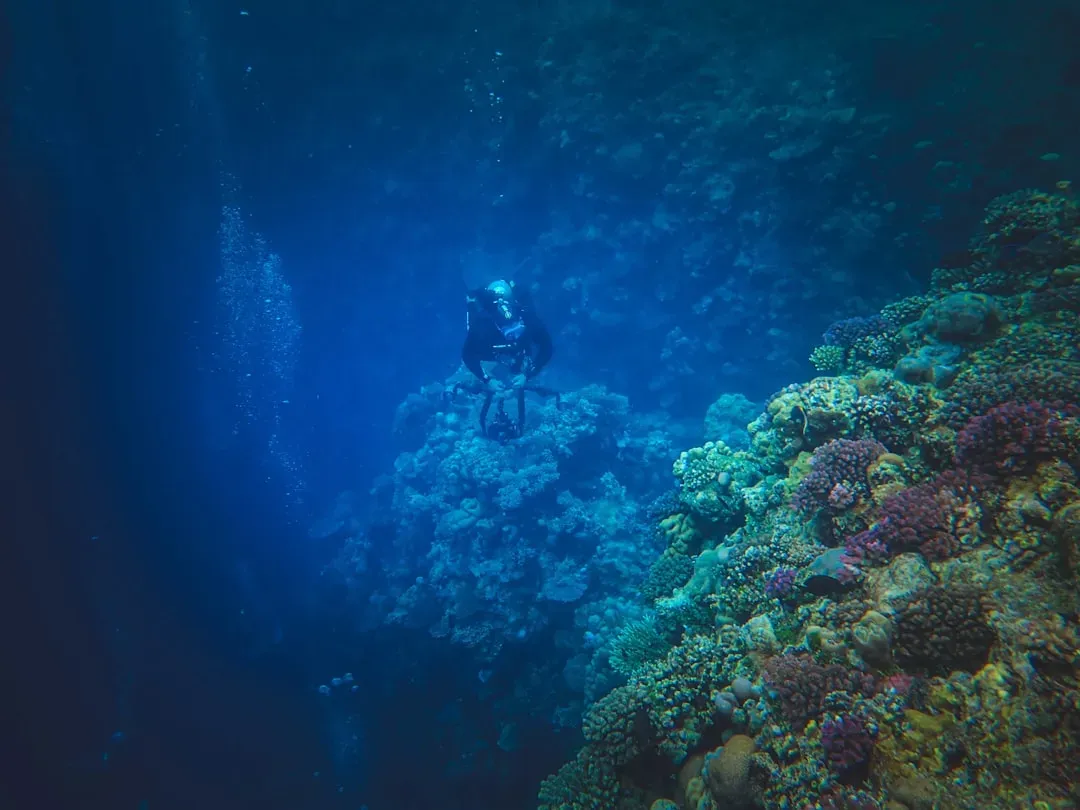
The more we probe the deep ocean, the less it feels like a remote, irrelevant realm, and the more it looks like the stage on which life’s first act played out. Hydrothermal vents, mineral pores, buried microbes, and ancient rocks all point toward a story where water, rock, and internal heat collaborate to assemble something astonishing from simple chemistry. That story is still full of gaps, but the outlines are getting clearer with every voyage, every core sample, every careful experiment.
Standing on the shore, looking out at a calm sea, it’s hard to imagine that miles below, in permanent night, might lie the reasons we are here at all. Yet that’s exactly what the science is hinting at: that our origin story may be written not in the stars, but in the seafloor. As we keep exploring this dark, pressurized, alien-like world beneath the waves, one question lingers: how much more of our own past is still hiding in the deep?