
Most people will never admit it out loud, but late at night, when the noise dies down and the phone is finally face down, the same question quietly shows up: does anything of “me” go on when my body stops? It is not just a philosophical puzzle; it hits much closer to home. It is about your memories, your loves, your private jokes, and that strange feeling of being a self looking out from behind your eyes. The idea that this might simply disappear feels, for many of us, not just scary but almost psychologically unacceptable.
Even in a world that loves to call itself rational and data-driven, belief in some form of ongoing consciousness – souls, reincarnation, spirits, simulations, multiverses – has not faded. In some places it is actually rising. The deeper you look, the clearer it becomes: this is not only about religion or culture. It taps into something baked into the way the human brain handles fear, time, and meaning. If you have ever felt that someone you lost was still “with you,” or that you somehow existed before you were born, you have already brushed up against this deep need.
The Shock Of Knowing You’re Going To Die
At some point, usually in childhood, a brutal realization arrives: one day you will die, and the world will go on without you. For many people this moment is genuinely shocking, even if they cannot remember the exact day it hit. The mind suddenly sees its own end and tries to slam the door shut again. You might distract yourself with school, friends, or TikTok, but a quiet part of you never forgets that the countdown is always running in the background.
This is where the idea of consciousness continuing becomes more than a belief – it becomes a psychological safety net. If you can imagine that the “you” inside your head is not completely tied to your physical body, then death shifts from a hard stop to a transition. The fear of total erasure softens, even if you are not religious in any formal sense. It is like telling yourself that when the movie ends, there might still be bonus scenes playing somewhere else that you just cannot see yet.
Brains Built For Meaning, Not Just Survival
From a biological point of view, our brains evolved to help us survive long enough to reproduce. But somewhere along the way, humans developed something extra: a hunger for meaning. We do not just want to live; we want our living to matter. That is a tall order in a universe that appears indifferent, where stars explode, species vanish, and nothing is guaranteed to last. Without some story that stretches beyond our own death, existence can easily start to feel small and strangely pointless.
Belief in ongoing consciousness plugs directly into that craving for purpose. If “who you are” continues in some form – whether as a soul, a reborn self, a digital upload, or a pattern in the cosmos – then the choices you make now echo into a longer timeline. Sacrifice makes more sense, love feels less fragile, and suffering is a little more bearable if it fits into a story that does not cut off the second your heart stops. In that way, belief in continuity is not just about comfort; it functions like psychological gravity, holding your life narrative together.
Culture, Religion, And A Very Persistent Idea
Across history and across continents, cultures independently invented stories in which the self outlives the body. Ancient Egyptians weighed hearts against feathers, Hindu and Buddhist traditions mapped out cycles of rebirth, Abrahamic religions described heavens and hells, and Indigenous cosmologies spoke of spirit worlds layered around the visible one. The details are wildly different, but the core message repeats: you are more than flesh, and your awareness does not simply blink out.
In modern cities full of science, streaming, and social media, this belief has not disappeared; it has shape-shifted. People who reject traditional religion still often talk about departed loved ones watching over them or energy never truly dying. Some blend neuroscience, quantum physics, and spirituality into personal mashup theories. The language may shift from “soul” to “consciousness as information,” but emotionally the function is similar: it says we are not just temporary animals wandering toward an abrupt end.
Attachment, Love, And The Refusal To Let Go

If you have ever sat at a funeral and felt, in your bones, that the person in the photo absolutely cannot just be gone, you have glimpsed this need up close. Love builds deep neural and emotional pathways; your brain literally rewires itself around the people who matter to you. When they die, the physical presence stops, but the brain circuits remain, still expecting a text, a voice, a laugh. Believing that the person continues in some way is not just comforting; it is one way the mind tries to reconcile those lingering pathways with a sudden absence.
This is why many people feel ongoing connections with the dead, whether or not they endorse any official doctrine. Talking to someone who has died, sensing their presence, or seeing “signs” from them can act as emotional shock absorbers. Psychologists have noticed that continuing bonds with the deceased can even help some people move through grief. The idea that consciousness continues allows love to feel less like something cut in half and more like something that has changed form but not totally vanished.
Science, Skepticism, And The Seduction Of Maybe
From a strict mainstream scientific standpoint, consciousness is usually treated as an emergent property of the brain. When the brain stops functioning, awareness – as far as current evidence shows – stops too. There is no widely accepted data proving that memories or personal identity float off intact into some other plane. Studies of near-death experiences, for example, are fascinating but still contested, and they have not settled the debate. For many neuroscientists, the safest position is that consciousness is tied to biology until proven otherwise.
Yet even among people who know this, the word “maybe” hangs stubbornly in the air. Quantum physics gets pulled into conversations, often in oversimplified ways, to keep the door slightly open. Emerging ideas about consciousness as a fundamental aspect of the universe, or simulations and multiverses, add more speculative fuel. While most of this is not solid proof of continued personal awareness, it is enough to give people a rational-sounding way to justify an emotional hope. In a sense, skepticism and longing end up coexisting in the same mind without fully canceling each other out.
New Afterlives: Digital Ghosts And AI Echoes
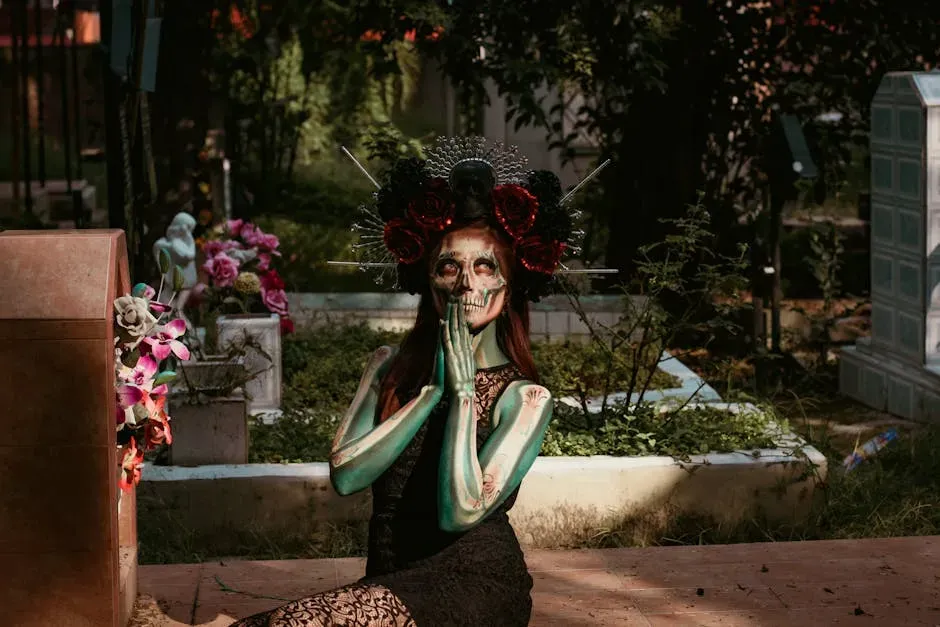
In the twenty-first century, belief in ongoing consciousness is not just spiritual; it is becoming technological. Some companies already offer to preserve your digital footprint – messages, videos, posts – and use artificial intelligence to create chatbots that mimic you after you die. Friends and family can keep interacting with a version of “you” that answers in your style, remembers shared events, and adapts over time. It is not real consciousness, but emotionally it can feel uncannily close, like a ghost made of data instead of mist.
There are also people seriously exploring ideas like mind uploading, brain emulation, and merging biological brains with machines to extend conscious experience. These ideas live on the edge of what current science can do, and much of it remains speculative or deeply uncertain. But notice the pattern: even in our most cutting-edge fantasies, we keep reaching for ways to continue awareness beyond the limits of a fragile body. Whether through a soul, a simulation, or a server farm, the theme is the same – some part of the story should not end when the heart does.
The Ego’s Revolt Against Nothingness
On a more personal level, belief in ongoing consciousness is also about ego, in the neutral psychological sense of “I-ness.” Your mind spends an entire lifetime constructing a detailed internal model of who you are: your likes, dislikes, victories, traumas, memories, hairstyle experiments, and playlists. By the time you are an adult, that inner character feels so solid that it seems absurd to imagine it dissolving into nothing. Total annihilation clashes with every instinct that says, “I am here, I matter, and my life has a shape.”
I remember my own first brush with this as a teenager, lying awake and suddenly thinking, one day even my thoughts about this moment will be gone. It was like the floor dropped out from under my brain. Instantly, I found myself hoping that maybe, somehow, there was more after death, even though I considered myself fairly skeptical. That reaction was not carefully reasoned; it felt more like a revolt of the self against the idea of becoming a blank space. In that sense, the is partly the self defending its own existence.
Can We Face Mortality Without A Forever Story?
So here is the uncomfortable, honest tension: almost everything in us wants to believe that consciousness goes on, while the most cautious reading of current science refuses to promise that it does. I think both sides deserve respect. Shrugging off the human need for continuity as “just superstition” misses how deeply it is woven into our emotional and social lives. On the other hand, inventing confident stories about eternity without evidence can easily slide into denial, manipulation, or disappointment when reality does not cooperate.
My own view is that we underestimate ourselves if we think we can only live fully by clinging to guarantees about forever. There is something fierce and strangely beautiful about building meaning, loving people, and doing good in a life that might be brutally finite. Maybe consciousness does continue; maybe it does not. Either way, the fact that we crave continuity so intensely says something profound about us: we are creatures who want our stories to matter beyond our own ending. The real question is not only whether we go on, but how we choose to live knowing that we might not. What kind of story are you writing with the time you actually know you have?