
Pisces has a reputation for being the soft-hearted empath of the zodiac, the friend who somehow feels your breakup like it was their own and cries at commercials you barely notice. But behind that romantic image lies a far harsher psychological reality: when you habitually absorb other people’s distress, your nervous system, identity, and relationships can slowly buckle under the weight. This article looks past horoscope clichés to ask a tougher question: what actually happens, scientifically and psychologically, when someone leans too far into emotional sponge mode? Drawing on research into empathy, trauma, and personality, we explore how traits often linked with Pisces can slide from compassionate to self-erasing, and why that shift is so hard to recognize from the inside. Along the way, we’ll connect these patterns to real-world dynamics like burnout, codependency, and online culture that rewards performative suffering. By the end, the comforting myth of the endlessly absorbing Pisces starts to look less like a gift – and more like a quiet, chronic form of self-harm.
The Myth of the Gentle Healer Meets the Biology of Stress
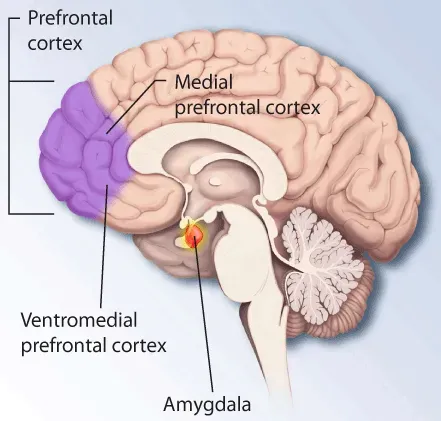
Popular astrology paints Pisces as the healer, the old soul, the person who “just understands,” but biology does not care what your star chart says. When you repeatedly expose yourself to other people’s fear, grief, or rage, your brain’s threat circuits still light up, especially in regions like the amygdala and insula that process emotional salience and bodily states. Studies on empathic distress show that observing someone else in pain can activate neural patterns similar to experiencing pain yourself, pushing your stress hormones upward even if you never say a word. Over time, that chronic activation can contribute to fatigue, sleep disruption, and a baseline sense of emotional heaviness that feels mysterious but is actually entirely traceable to overload.
The Pisces archetype often romanticizes this as spiritual sensitivity, but the underlying mechanisms are brutally practical: your nervous system is not infinite bandwidth. Repeated emotional over-identification blurs the boundary between “your feeling” and “my feeling,” which might feel like deep connection in the moment yet raises your allostatic load – your body’s accumulated wear and tear from adapting to stress. I have watched friends who lean hard into their “Pisces energy” quietly normalize constant exhaustion, chalking it up to being caring rather than chronically dysregulated. The cost is subtle at first, but biology keeps its own ledger, and interest is always due.
Empathy, Emotional Contagion, and When Caring Turns Against You

Psychologists distinguish between healthy, other-oriented empathy and something more volatile called emotional contagion: the automatic absorption of others’ feelings without reflection or boundaries. People who strongly identify with Pisces traits – absorbed in fantasy, open, highly impressionable – are often exquisitely primed for this contagion. They walk into a room and unconsciously scan faces, tones, micro-expressions, and then mirror them, sometimes so quickly they do not realize they have shifted. Neuroscience has linked this tendency to systems involving mirror neurons and rapid, preconscious social processing, which can be a strength in moderation.
The dark turn happens when emotional contagion becomes the default rather than the exception. Instead of empathizing from a stable base, you become a mood relay station, broadcasting everyone else’s distress through your own body. Research on empathic distress shows that people who over-identify with others’ suffering are at higher risk for anxiety, depression, and withdrawal, precisely because they have no inner buffer. What looks like compassion from the outside can, on the inside, feel like drowning in feelings that are not actually yours to carry. That is where “I feel your pain” quietly becomes “I no longer know where you end and I begin.”
Identity Erosion: When Being the Empath Becomes Your Only Role

One of the more unsettling psychological dynamics linked with the Pisces archetype is how quickly “I’m sensitive” can morph into a fixed identity: “I’m the one who feels everything for everyone.” Personality research shows that people high in traits often associated with Pisces – like openness and agreeableness – are more likely to prioritize harmony and others’ needs over their own. If you grow up rewarded for being the good listener or the emotional translator in your family, that role can become the main way you know who you are. You are not just someone who listens; you are the designated container for everyone else’s chaos.
Over time, this role-based identity carries a hidden cost: your own preferences, limits, and even desires can become fuzzy, because they are constantly reconfigured around whoever is in front of you. Clinicians sometimes describe this as a diffuse or externally anchored sense of self, and it is associated with feelings of emptiness, indecision, and susceptibility to manipulation. In plain language, if your entire worth feels tied to absorbing and soothing others, saying no becomes dangerous, and boundaries feel like betrayal. At that point, “Piscean empathy” is no longer compassion; it is a survival strategy that keeps you locked in relationships where your own needs never quite make the cut.
Compassion Fatigue, Burnout, and the Pisces Trap

There is a reason healthcare workers, therapists, and caregivers – professions that often attract people with Pisces-like traits – are studied so much in research on burnout and compassion fatigue. These conditions emerge not because people stop caring, but because they care intensely without enough recovery, boundaries, or structural support. Physiologically, repeated exposure to others’ trauma without processing time can lead to symptoms that look eerily like post-traumatic stress: intrusive thoughts, numbing, irritability, and detachment. You do not need to work in an emergency room to experience a civilian version of this; being the perpetual crisis hotline friend can be enough.
The trap for Pisces-identifying people is that they often interpret early signs of burnout – emotional blunting, avoidance, resentment – as moral failure rather than warning lights. Instead of stepping back, they double down, taking on more emotional labor to prove to themselves they are still “good.” Studies on compassion fatigue emphasize that unrelenting exposure without agency or boundaries is a key risk factor, and many self-described empaths are living this pattern in miniature. By the time they admit they are overwhelmed, they may already feel numb or detached, which can be terrifying for someone who has built their identity on being endlessly feeling and available.
The Analytics of a Water Sign: What Science Really Says About Personality

From a strict scientific standpoint, there is no robust evidence that being born under Pisces hardwires you for any particular psychological outcome. Large-scale studies testing correlations between sun signs and personality traits have consistently failed to find meaningful, reproducible effects. What science does support, however, is that some people are temperamentally more sensitive, imaginative, and emotionally reactive, and that culture often wraps those traits in zodiac language. In that sense, “Pisces” becomes a folk label for a very real cluster of tendencies recognized in research on sensory processing sensitivity and neuroticism.
The deeper significance lies in how these traits interact with modern life. Highly sensitive, emotionally permeable people living in a hyperconnected world saturated with crisis headlines, trauma disclosures, and algorithm-boosted outrage are operating under conditions their nervous systems were never designed for. Traditional frameworks, including astrology, frame this sensitivity as mystical or fated; contemporary psychology sees it as a mix of genetic predispositions and developmental experiences that can be either protective or harmful depending on context. Framing this as “Pisces energy” can be comforting, but it also risks obscuring the very real skill-building – like boundary setting, emotion regulation, and selective exposure – that science suggests is crucial for long-term mental health.
Dark Side Dynamics: How Emotional Absorption Enables Manipulation
There is an uncomfortable flip side to the empath narrative: people who habitually absorb others’ pain are often easier to exploit. Research on attachment and codependency shows that individuals who fear abandonment and define themselves through caregiving are more likely to stay in relationships with narcissistic or chronically chaotic partners. The Pisces archetype, with its themes of sacrifice and martyrdom, can normalize this pattern by casting it as romantic suffering or spiritual duty. You are not being drained; you are loving unconditionally. You are not being controlled; you are “just understanding them on a deeper level.”
Psychologically, this is fertile ground for gaslighting and emotional manipulation. If you are trained to doubt your own perceptions and prioritize the other person’s pain, it becomes easy for them to reframe your discomfort as selfishness or coldness. Over time, your emotional radar, which started as a strength, gets hijacked into a constant project of monitoring and managing someone else’s moods. Studies on interpersonal exploitation consistently highlight this pattern: highly empathic individuals, especially those with poor self-protection skills, show higher risk of victimization. In that light, the romantic idea of the endlessly forgiving Pisces looks less like devotion and more like a vulnerability that predators can and do learn to read.
Rewriting the Script: Boundaried Empathy as a Scientific Skill

The most important psychological shift for anyone living out a Pisces-like script is moving from absorption to what researchers call “regulated empathy.” Instead of fully merging with another person’s feelings, you learn to recognize, label, and respond to them while staying anchored in your own perspective. Techniques drawn from cognitive-behavioral therapy, mindfulness, and compassion-focused therapy all emphasize this separation: you can care deeply without internalizing everything you witness. Neuroscience studies suggest that training in these practices can decrease activation in brain regions linked to personal distress while increasing activity associated with perspective-taking and problem-solving.
In practice, this looks less mystical and more mechanical than many people expect. It means saying things like, “I can listen for half an hour, but then I need to rest,” or intentionally limiting your exposure to triggering content even if it makes you feel temporarily guilty. It means noticing when your heart starts racing during someone else’s story and treating that as data about your own limits, not a command to push past them. My own turning point came when I realized that collapsing under other people’s pain was not proof of love; it was a sign that my nervous system was over capacity. Boundaried empathy is not colder. It is simply sustainable, and science increasingly treats that sustainability as a measurable, trainable skill.
Why This Matters Now: A Hyperconnected World of Endless Pain Feeds

We are living in an era that weaponizes sensitivity. Social platforms reward posts that are emotionally intense, morally outraged, or trauma-laden, and the people most drawn to this content are often those with Pisces-like traits of fantasy, immersion, and emotional resonance. Every scroll can expose you to wars, disasters, personal tragedies, and intimate confessions from strangers, all funneled into the same cognitive space as your friend’s breakup or your own minor frustrations. Research on media exposure after collective traumas has shown that heavy, repeated viewing of distressing content can increase anxiety and stress symptoms, even for people far from the events themselves.
For emotional sponges, this environment is like living in a house with every window open during a storm. You may tell yourself you are staying informed or being supportive, but physiologically, you are taking full-body hits from events you cannot influence. That mismatch between involvement and agency is psychologically corrosive; it fosters helplessness, guilt, and paralysis rather than meaningful action. Recognizing the dark psychology of Pisces in this context is not about blaming a star sign. It is about naming a pattern: when sensitivity meets infinite input without boundaries, breakdown is not a personal failure, it is an almost inevitable outcome.
Choosing What You Carry: A Call for Conscious, Scientific Self-Protection

If you see yourself in these patterns – whether or not you care about astrology – the most radical move is not to care less but to care differently. Evidence-based self-protection for sensitive people looks mundane on the surface: regular sleep, reduced doomscrolling, clear limits on emotional labor, and spaces where you are allowed to take up attention without fixing anyone. It includes learning basic skills from therapies like dialectical behavior therapy or acceptance and commitment therapy, not because you are broken but because your wiring is finely tuned and needs deliberate handling. You would not run a high-performance engine on the cheapest fuel; your nervous system deserves the same respect.
On a cultural level, we can stop applauding self-erasure as proof of depth, especially in people who already lean toward sacrifice. Instead of praising friends for “always being there no matter what,” we can normalize and celebrate statements like, “I can’t hold that for you right now, but I care.” The dark psychology of Pisces is not destiny; it is a warning about what happens when tenderness is left unshielded in a world that never stops bleeding. The real question is not whether you are sensitive, but whether you are willing to become the kind of sensitive person who survives. What, honestly, are you still carrying that was never yours to hold in the first place?
Suhail Ahmed is a passionate digital professional and nature enthusiast with over 8 years of experience in content strategy, SEO, web development, and digital operations. Alongside his freelance journey, Suhail actively contributes to nature and wildlife platforms like Discover Wildlife, where he channels his curiosity for the planet into engaging, educational storytelling.
With a strong background in managing digital ecosystems — from ecommerce stores and WordPress websites to social media and automation — Suhail merges technical precision with creative insight. His content reflects a rare balance: SEO-friendly yet deeply human, data-informed yet emotionally resonant.
Driven by a love for discovery and storytelling, Suhail believes in using digital platforms to amplify causes that matter — especially those protecting Earth’s biodiversity and inspiring sustainable living. Whether he’s managing online projects or crafting wildlife content, his goal remains the same: to inform, inspire, and leave a positive digital footprint.