


Every seven seconds, somewhere in the world, a new smartphone notification pings. Every minute, thousands of social media posts flood our feeds. Every hour, groundbreaking technologies emerge that promise to revolutionize our lives. Yet here’s the paradox that’s haunting our digital age: the faster we innovate, the quicker we seem to forget everything that came before. We’re living in an era where yesterday’s breakthrough becomes today’s forgotten relic, and our collective memory is shrinking as our processing power explodes.
The Great Memory Paradox of Our Time

Think about this for a moment: we have more information at our fingertips than any generation in human history, yet we struggle to remember what we had for breakfast yesterday. This isn’t just absent-mindedness – it’s a fundamental shift in how our brains process and store information. Scientists call it the “Google effect” or “digital amnesia,” where our minds unconsciously decide that information easily accessible online doesn’t need to be remembered. We’ve essentially outsourced our memory to machines, and in doing so, we’ve started forgetting how to remember. The irony is staggering: the very tools designed to enhance our knowledge are making us more forgetful than ever. It’s like having a supercomputer in your pocket while your brain slowly transforms into a temporary storage device.
When Innovation Outpaces Understanding

Remember when you actually had to learn how things worked to use them? Your grandfather could probably fix his car with a wrench and some elbow grease, but today’s vehicles are rolling computers that most mechanics need specialized software just to diagnose. This acceleration of innovation has created a strange disconnect between users and understanding. We swipe, tap, and voice-command our way through life without the slightest clue about the mechanisms behind these interactions. The result is a society of expert users who are simultaneously technological illiterates. We’ve become so focused on the next upgrade, the next feature, the next breakthrough, that we’ve lost touch with the fundamental principles that make our modern world tick.
The Attention Economy’s Memory Theft
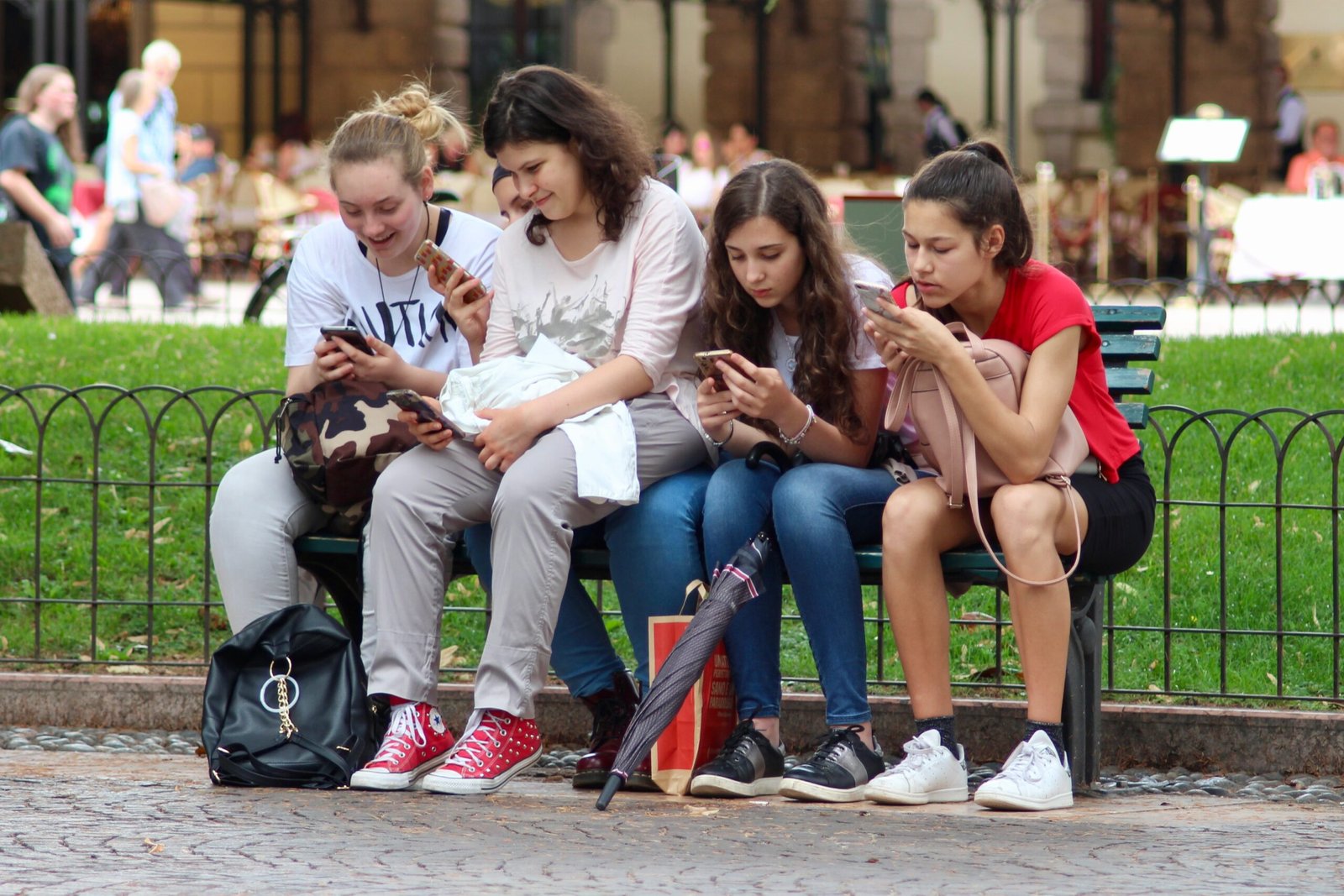
Your attention has become the world’s most valuable currency, and tech companies are mining it with ruthless efficiency. Every app, every platform, every digital service is designed to capture and hold your focus for as long as possible. But here’s what they don’t tell you: this constant state of distraction is rewiring your brain’s ability to form lasting memories. When you’re always switching between tasks, checking notifications, and consuming bite-sized content, your mind never gets the chance to properly encode experiences into long-term memory. It’s like trying to fill a bucket with holes in it – no matter how much information you pour in, most of it just leaks right back out. The companies profiting from your attention are literally stealing your ability to remember.
Why We Can’t Remember What We Used Before

How many phone numbers do you actually know by heart? If you’re like most people, the answer is probably close to zero. This phenomenon extends far beyond contact information – we’re losing touch with the tools, methods, and knowledge that sustained humanity for generations. Paper maps have been replaced by GPS, mental math by calculators, and handwritten letters by instant messages that disappear after reading. Each technological replacement doesn’t just change how we do things; it erases the neural pathways that once made us capable of doing them independently. We’re creating a world where power outages don’t just cut electricity – they cut our connection to basic human capabilities. The scariest part? Most of us don’t even notice what we’ve lost until it’s gone.
The Social Media Memory Massacre

Social media promised to help us remember and share our most precious moments, but it’s actually doing the opposite. When you’re constantly documenting your life for others to see, you’re not actually experiencing it fully yourself. Psychologists have discovered that people who take photos of experiences remember them less vividly than those who simply live in the moment. Your Instagram feed might look like a perfect memory bank, but your actual memories are becoming increasingly shallow and fragmented. The irony runs deeper: while you’re curating a digital version of your life, your authentic experiences are slipping away like sand through your fingers. Social media isn’t preserving your memories – it’s consuming them.
The Speed of Obsolescence Acceleration

Technology used to evolve in generations – radio dominated for decades, television reigned for generations, and computers had years between major innovations. Today, software updates arrive weekly, hardware becomes obsolete within months, and entire platforms rise and fall within years. This breakneck pace of change means we barely have time to master one tool before it’s replaced by something newer and supposedly better. The muscle memory you developed for one interface becomes useless overnight when the next update arrives. We’re stuck in a perpetual state of technological adolescence, always learning, never mastering, constantly adapting but never truly settling into competence.
How Instant Gratification Destroys Deep Learning

When was the last time you sat with a difficult problem long enough to truly understand it? In our instant-access world, we’ve trained ourselves to expect immediate answers, quick fixes, and rapid solutions. But deep learning – the kind that creates lasting knowledge and genuine understanding – requires patience, struggle, and time. When you can Google any fact in seconds, your brain stops bothering to encode that information permanently. When YouTube tutorials can teach you anything in minutes, you never develop the persistence needed for mastery. We’re creating a generation of surface-level learners who know a little about everything but understand deeply about nothing. The cost of instant gratification is the death of expertise.
The Lost Art of Boredom and Reflection

Boredom has become an extinct emotion in the smartphone age, and with it, we’ve lost one of our most powerful tools for memory consolidation and creativity. Those moments of mental downtime – waiting in line, walking without music, sitting without screens – used to be when our brains processed experiences and moved them from temporary to permanent storage. Now, every spare moment is filled with digital stimulation, leaving no time for the quiet reflection that turns experiences into memories. Your brain needs emptiness to create fullness, silence to process noise, and stillness to organize the chaos of daily input. By eliminating boredom, we’ve accidentally eliminated the very conditions that make lasting memories possible.
When Algorithms Replace Human Judgment

Recommendation algorithms have become the invisible curators of our lives, deciding what we see, what we buy, and what we remember. But these systems optimize for engagement, not for what’s actually important or meaningful to you. They create filter bubbles that narrow your worldview while making you feel like you’re seeing everything. The result is a false sense of knowledge coupled with actual ignorance – you think you’re well-informed because you’re constantly consuming information, but you’re actually just seeing variations of the same limited themes. These algorithms aren’t expanding your mind; they’re shrinking it into predictable patterns that serve corporate interests rather than human growth.
The Death of Institutional Knowledge

Companies used to have employees who worked for decades, accumulating deep institutional knowledge that kept organizations running smoothly. Today’s job-hopping culture, combined with rapid technological change, means that hard-won expertise walks out the door every few years. Corporations are discovering that their most valuable asset – accumulated wisdom – is evaporating as fast as they can acquire it. New hires are expected to hit the ground running with no time for the slow transfer of subtle knowledge that once passed from veteran to newcomer. We’re creating organizations with powerful tools but no memory of how to use them wisely.
Why Skills Don’t Stick Anymore

Learning used to be hard, slow, and permanent. You had to practice penmanship until it became automatic, memorize multiplication tables until they were instant, and study subjects until you truly understood them. Today’s learning is easy, fast, and temporary – we watch tutorial videos, follow step-by-step guides, and copy-paste solutions without ever developing true competence. The skills we acquire this way are like cotton candy: they look substantial but dissolve the moment we need them most. When you can always look up the answer, you never develop the mental muscles needed to work through problems independently. We’re becoming a society of permanent beginners.
The Cultural Amnesia Crisis

Each generation used to build upon the knowledge of those who came before, creating a cumulative understanding that grew stronger over time. Now, cultural knowledge has a shelf life measured in viral cycles rather than lifetimes. Traditional crafts, folk wisdom, and time-tested practices are being abandoned not because they don’t work, but because they don’t fit into our accelerated lifestyle. We’re losing languages, customs, and ways of thinking that took centuries to develop, often replacing them with digital substitutes that capture the form but miss the essence. The result is a kind of cultural amnesia where we mistake novelty for progress and information for wisdom.
How Multitasking Murders Memory Formation

The modern myth of multitasking has convinced us that doing more things simultaneously makes us more productive. But neuroscience tells a different story: when you split your attention between multiple tasks, your brain can’t properly encode any of them into long-term memory. You might feel busy and accomplished, but you’re actually creating a lot of mental noise with very little lasting signal. Think of it like trying to have three conversations at once – you might catch fragments from each, but you won’t truly hear any of them. Every time you check your phone while reading, every notification that interrupts your work, every background task running in your mind is stealing from your ability to create lasting memories.
The Wisdom of Intentional Ignorance

In a world overflowing with information, the most radical act might be choosing what not to know. Ancient philosophers understood that wisdom often comes from focusing deeply on fewer things rather than skimming the surface of everything. Today’s “fear of missing out” culture pushes us to consume as much information as possible, but this approach leaves us mentally overstuffed and cognitively malnourished. The most successful learners are often those who practice intentional ignorance – they deliberately limit their information diet to focus on what truly matters. It’s like the difference between eating at an all-you-can-eat buffet and savoring a carefully prepared meal; quantity doesn’t equal quality when it comes to feeding your mind.
Why Handwriting Still Matters in a Digital World

Your laptop might be faster, but your hand is smarter. When you write by hand, your brain engages multiple systems simultaneously – motor control, spatial processing, and language centers all working together to encode information more deeply than typing ever could. Studies consistently show that students who take handwritten notes understand and remember material better than those who type, even when the typed notes are more comprehensive. This isn’t nostalgia talking; it’s neuroscience. The physical act of forming letters by hand creates neural pathways that digital input simply cannot replicate. We’re abandoning one of our most powerful learning tools in favor of efficiency that isn’t actually efficient.
The Return to Slow Technology

A quiet revolution is brewing among those who’ve recognized the cost of our accelerated digital lives. The slow technology movement advocates for tools that enhance human capability without overwhelming it – devices that respond to your needs rather than demanding your constant attention. This isn’t about rejecting modernity; it’s about being intentional with how we engage with it. Some people are rediscovering the joy of single-purpose devices: cameras that only take photos, watches that only tell time, and phones that only make calls. Others are creating tech-free zones in their homes and lives, carving out space for the kind of deep thinking and genuine connection that our ancestors took for granted.
Reclaiming Your Mental Sovereignty

Your mind is the last truly private space you own, and it’s under siege from forces that profit from your distraction. Reclaiming your mental sovereignty starts with recognizing that every notification, every recommendation, every “smart” feature is someone else’s attempt to control your attention. The most rebellious thing you can do in our hyper-connected world is to disconnect intentionally and regularly. Turn off notifications, practice single-tasking, and rediscover the lost art of sustained concentration. Your brain didn’t evolve to handle the constant stream of digital input we now consider normal – it needs time to rest, process, and consolidate what you’ve learned.
Building Tomorrow’s Memory Keepers

The solution to our collective amnesia isn’t to abandon technology but to use it more wisely. We need to become curators of our own digital experience, actively choosing which innovations serve our humanity and which ones diminish it. This means teaching children not just how to use technology, but when not to use it. It means designing systems that enhance rather than replace human capabilities. It means remembering that the goal of innovation should be to make us more human, not less so. The companies that will truly change the world aren’t those that capture the most attention, but those that help us reclaim it.
We stand at a crossroads where our next choices will determine whether technology amplifies human potential or diminishes it. The curse of modernity isn’t inevitable – it’s the result of decisions we can still change. Every time you choose depth over breadth, presence over distraction, and wisdom over information, you’re pushing back against the forces that want to hollow out your mind. The future doesn’t have to be a place where we remember less and less about more and more. But creating that future requires something our current culture desperately lacks: the courage to slow down in a world obsessed with speed. What would happen if we started optimizing for memory instead of forgetting?


