
Picture the universe not as a random scatter of lonely galaxies, but as a vast, three‑dimensional spiderweb stretching across space. The bright “threads” of this web are made of galaxies and dark matter, woven together over billions of years by gravity. Empty-looking regions, the cosmic voids, are like the holes in the net, sometimes spanning hundreds of millions of light‑years with hardly a galaxy in sight.
For a long time, we simply didn’t have the data or the tools to see this grand pattern. Now, with giant surveys and supercomputers, we’re finally starting to map this hidden architecture. What we’re finding is both humbling and strangely familiar: the largest structures in the universe look a bit like neural networks in a brain scan or tangled roots under a forest floor. And the wild part? Our own Milky Way is just one tiny knot in this cosmic mesh.
The Surprising Discovery of the Cosmic Web
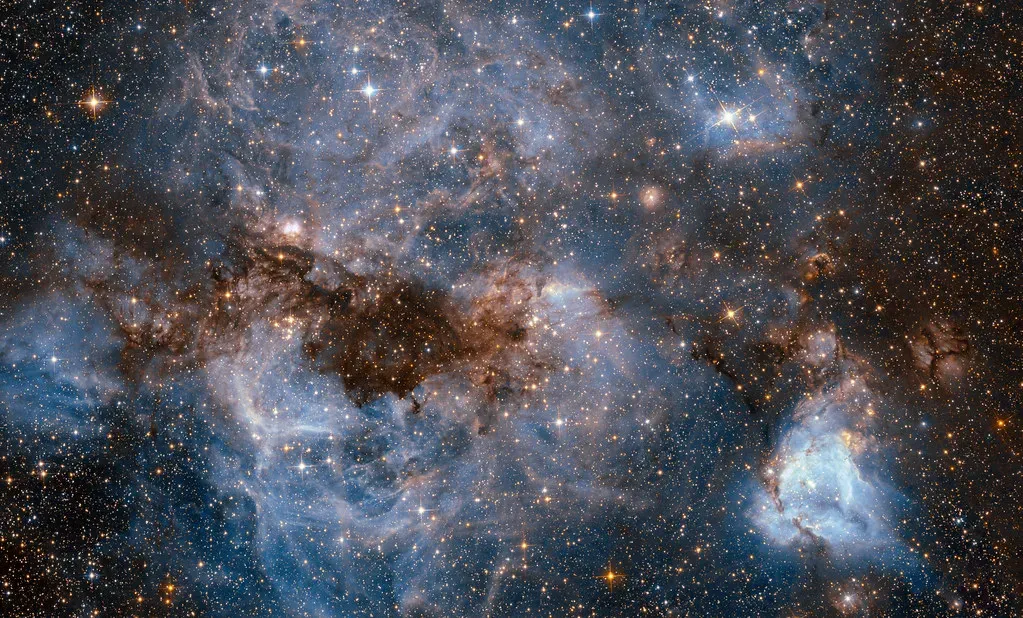
When astronomers first started cataloging galaxies in the twentieth century, many expected them to be more or less evenly spread out, like raisins stirred into dough. Instead, as galaxy redshift surveys expanded in the late twentieth and early twenty‑first centuries, a shocking pattern began to emerge: galaxies were clustering along long, thin structures, leaving enormous regions almost empty. It looked less like random chaos and more like a gigantic foam of bubbles and filaments.
Modern surveys that measure the positions of millions of galaxies have made this picture razor sharp. What was once a vague idea is now mapped in staggering detail: immense filaments connecting galaxy clusters, sheets of galaxies wrapping around vast voids, and dense nodes where many filaments intersect. The more we mapped, the clearer the pattern became, until the term “cosmic web” stopped being just a metaphor and turned into a literal description of how matter is arranged on the largest scales we can observe.
Filaments, Nodes, and Voids: The Universe’s Skeleton
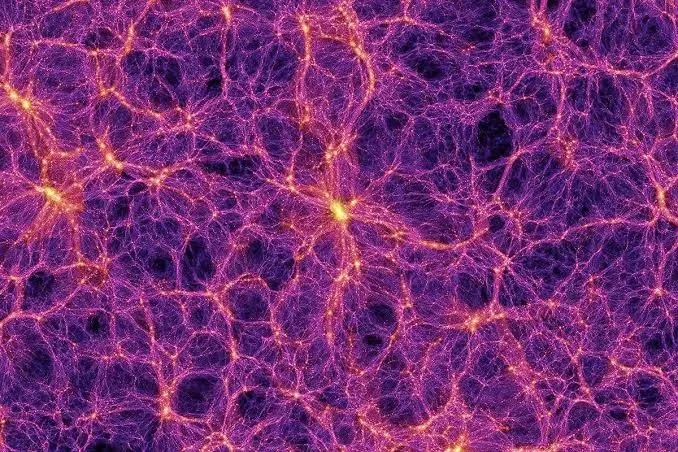
The cosmic web is often described as having three main components: filaments, nodes, and voids. Filaments are like the universe’s highways: long, rope‑like structures made of galaxies, gas, and a lot of dark matter, stretching for hundreds of millions of light‑years. Where several of these filaments intersect, they form nodes – gigantic clusters and superclusters of galaxies that act like bright junctions in the network.
In between these bright structures lie the voids: enormous, underdense regions that can be so empty they contain far fewer galaxies than the cosmic average. These voids are not completely blank, but compared to the filaments and nodes, they are the quiet deserts of the universe. Together, this mix of crowded intersections, long bridges, and vast empty basins forms a kind of skeleton for the universe, an underlying framework that everything else hangs on. If you could look at the universe from the outside, this web would be its defining shape.
Gravity and Dark Matter: The Invisible Architects
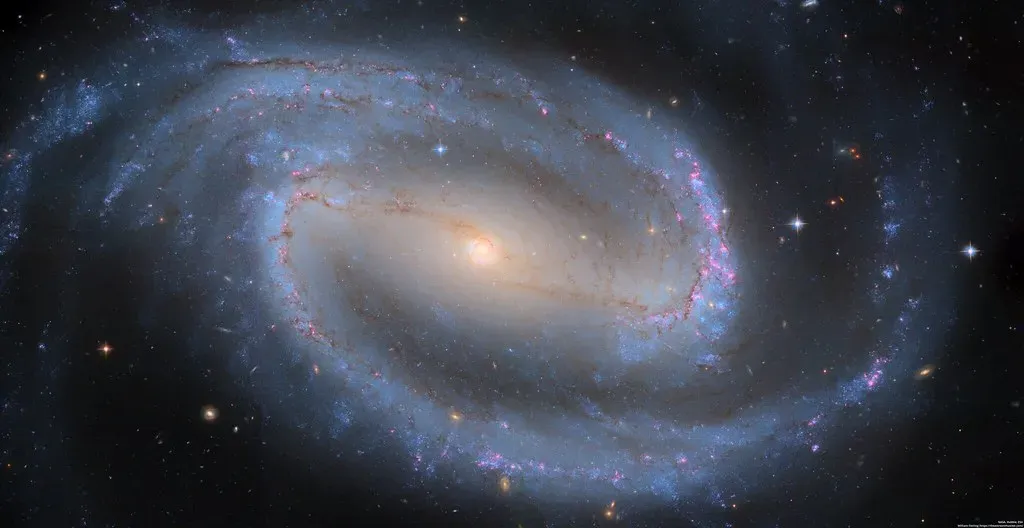
Underneath the visible galaxies and glowing gas lies the true architect of the cosmic web: dark matter. We can’t see dark matter directly, but its gravitational pull shapes how galaxies move and where they form. In the early universe, tiny fluctuations in density – small regions that were a bit heavier or lighter than average – gave gravity a starting point. Over billions of years, gravity amplified these differences, pulling more matter into the slightly denser regions and stretching them into filaments and clumps.
Computer simulations that include dark matter and gravity have been astonishingly successful at reproducing the cosmic web we observe. When scientists feed in the physical laws we know and let the simulation run from a very early universe to today, all by itself, a web of filaments and clusters emerges. The visible galaxies we see with telescopes end up tracing these invisible dark matter structures. In a sense, galaxies are like lanterns hung along unseen scaffolding, revealing a framework that would otherwise be completely hidden from us.
How We Map the Cosmic Web from Earth
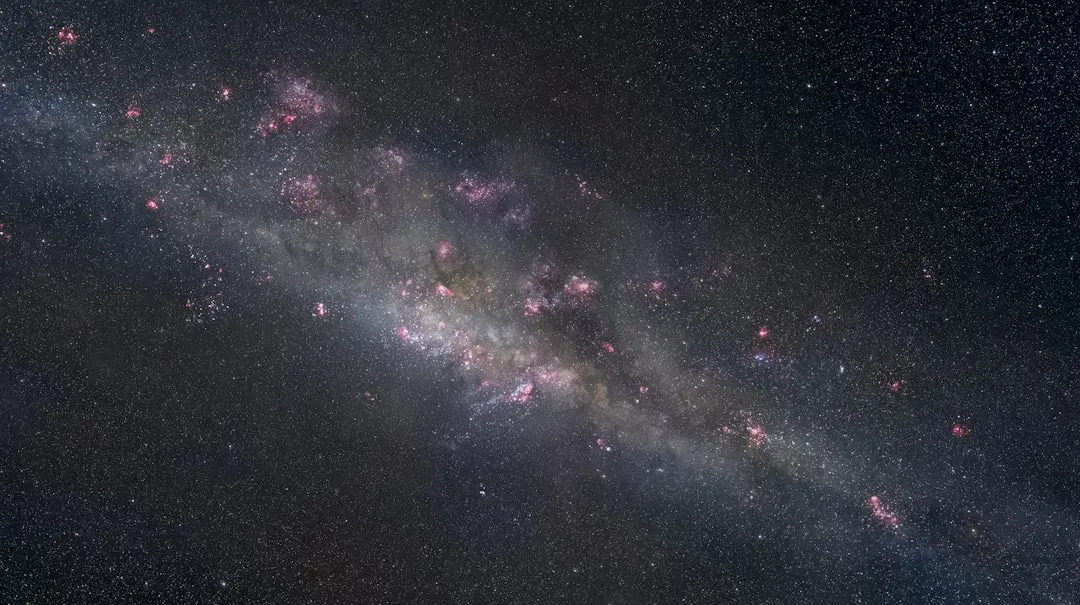
Given how enormous these structures are, it’s almost absurd that we can map them while sitting on a small planet orbiting an average star. The trick is to measure how far away galaxies are and where they sit in three‑dimensional space. Astronomers use redshift – the stretching of light due to the expansion of the universe – to estimate distances. By combining the redshift with the position of a galaxy on the sky, they can place it in a kind of 3D cosmic atlas.
Over the past few decades, surveys using large telescopes have charted millions of galaxies, building up maps that span billions of light‑years. New projects, including massive spectroscopic surveys and space missions, are pushing this even further, filling in gaps and reaching deeper into cosmic history. The result is a bit like turning up the resolution on a cosmic MRI scan: blurred blobs become clear filaments, hidden connections appear, and the overall structure of our universe comes into sharper focus with every new dataset.
The Cosmic Web’s Role in Galaxy Formation and Evolution
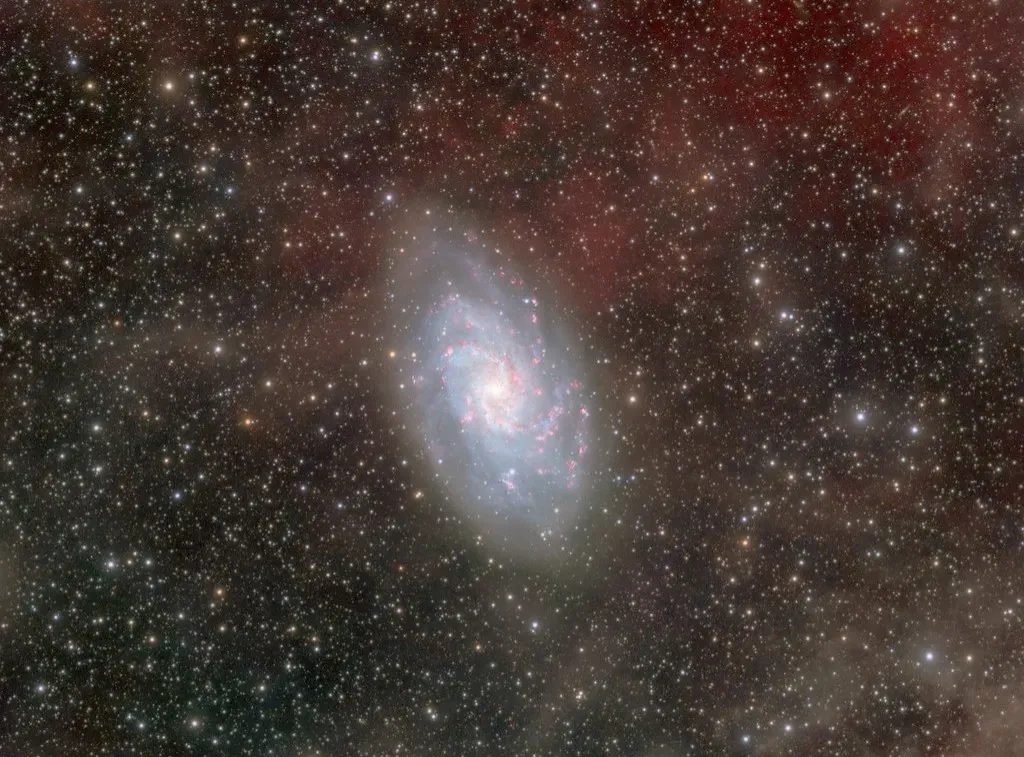
Galaxies don’t just happen to live in the cosmic web; their lives are shaped by it. Filaments funnel gas – especially cold, relatively pristine gas – into galaxies, providing the raw material for new stars. A galaxy sitting along a busy filament can be fed for a very long time, like a city built on a major river, while one in a sparse region has to make do with whatever trickles in. This feeding process influences how fast galaxies grow, how many stars they form, and even how active their central black holes become.
Environment also affects galaxy behavior in more dramatic ways. In dense nodes and clusters where filaments intersect, galaxies can be stripped of gas as they plow through hot, thin plasma, shutting down star formation. They collide and merge more often, sometimes triggering bursts of star birth and sometimes leaving behind massive, smooth elliptical galaxies. In quieter, lower‑density regions, galaxies tend to evolve more gently. In this way, the cosmic web acts like a landscape that shapes the “personality” and fate of each galaxy over billions of years.
Cosmic Web, Dark Energy, and the Fate of the Universe
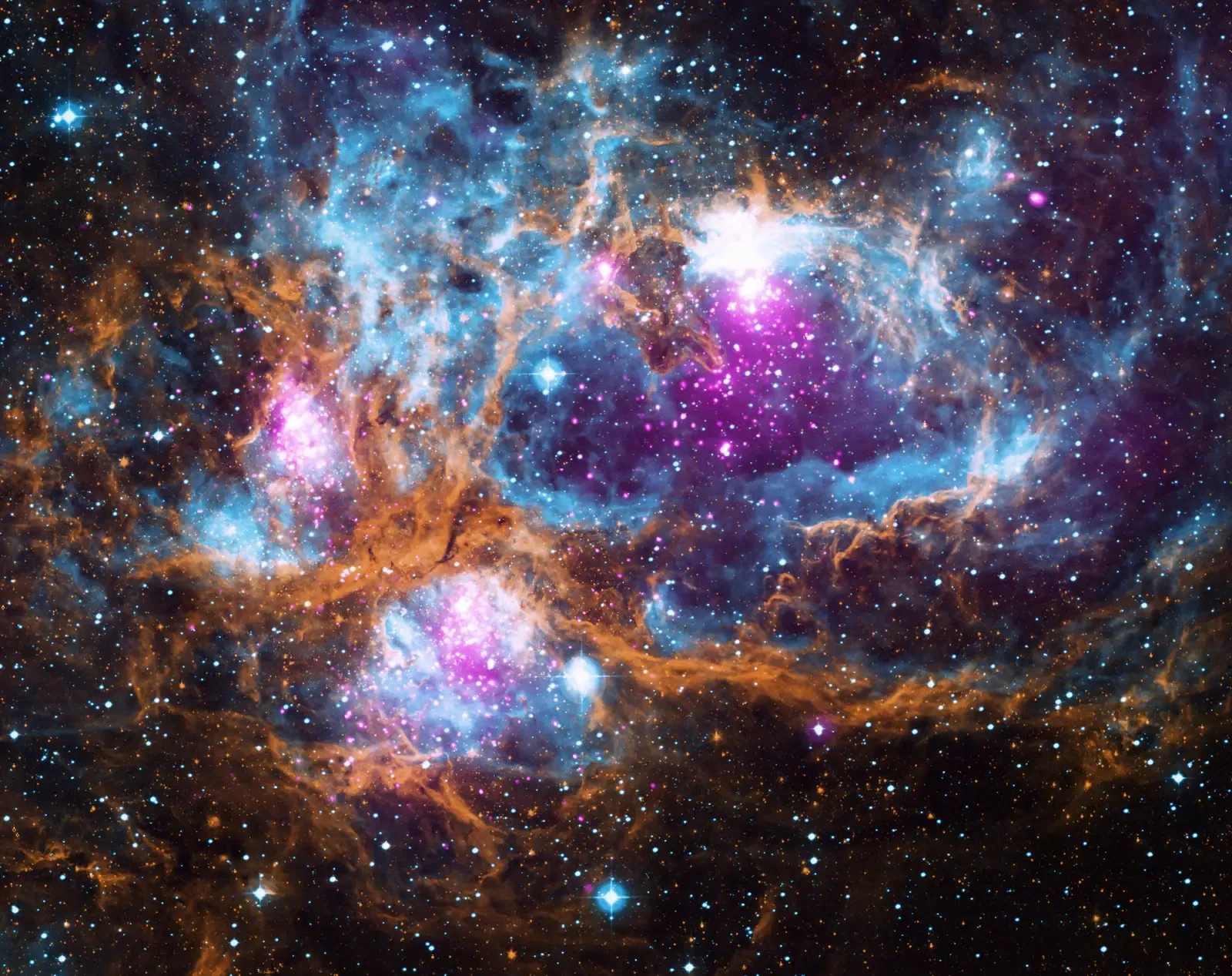
The cosmic web doesn’t just tell us where matter is now; it also carries clues about what the universe is made of and where it’s headed. The way filaments grow and the sizes of cosmic voids are influenced by the tug‑of‑war between gravity and dark energy, the mysterious component that drives the accelerated expansion of the universe. If gravity were the only force at play on large scales, structures would keep pulling together more strongly over time, but dark energy pushes space to expand faster, slowing down the growth of the web.
By measuring how the cosmic web has evolved across cosmic time – comparing nearby structures to those billions of light‑years away, and thus billions of years in the past – astronomers can test models of dark energy. Some future surveys are designed specifically to examine this large‑scale pattern, hoping to pin down whether dark energy is constant or changing. In a way, the cosmic web is like a fossil record of the universe’s expansion history, storing information about the balance between clustering gravity and the accelerating pull of dark energy.
Our Place in the Cosmic Web
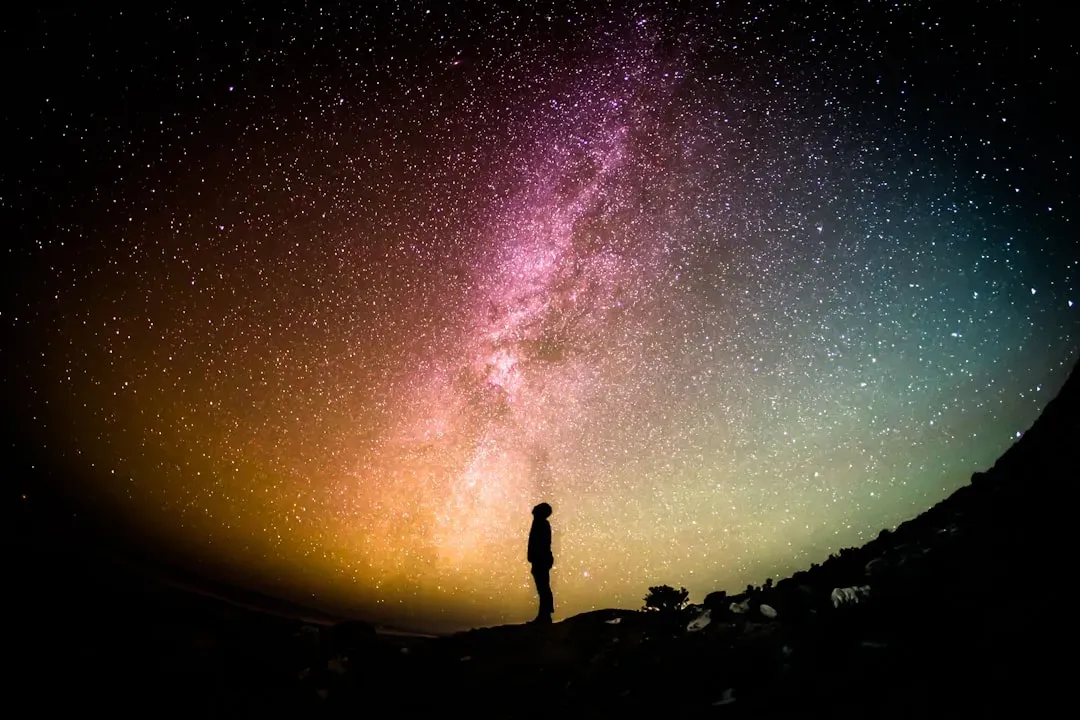
It’s easy to look at images of the cosmic web and feel painfully small, like a grain of dust in a storm of galaxies. Our Milky Way is just one galaxy in a filament, part of a local group that is itself embedded in a larger structure known as the Laniakea Supercluster. On these scales, everyday concerns shrink to almost nothing; the distances are so immense that even light, the fastest thing we know, would take hundreds of millions of years to travel along a single filament.
And yet, there’s another way to look at it. Somehow, in one tiny corner of this grand web, matter arranged itself into stars, planets, and eventually beings capable of mapping the structure that gave them birth. When I first saw a 3D visualization of the cosmic web, it felt like looking at the wiring diagram of a gigantic cosmic mind, with our galaxy as one tiny node. It’s strange, humbling, and oddly comforting to know that we’re not just floating randomly in space, but are part of a vast, interconnected structure that stretches across the universe.