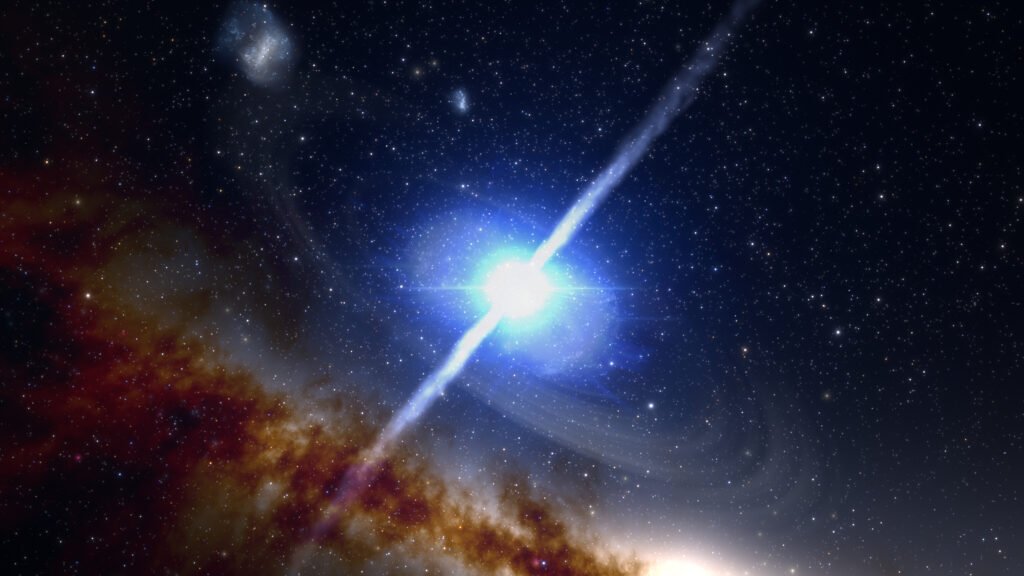

Something enormous just lit up the universe – and for a brief, staggering moment, it outshone entire galaxies. Scientists are scrambling to make sense of it, and honestly, the more they dig in, the stranger it gets. This isn’t your average celestial event. What researchers have recently identified pushes the boundaries of what we thought was physically possible in space. The scale is almost too big to wrap your head around. Let’s dive in.
A Flash of Light Unlike Anything on Record
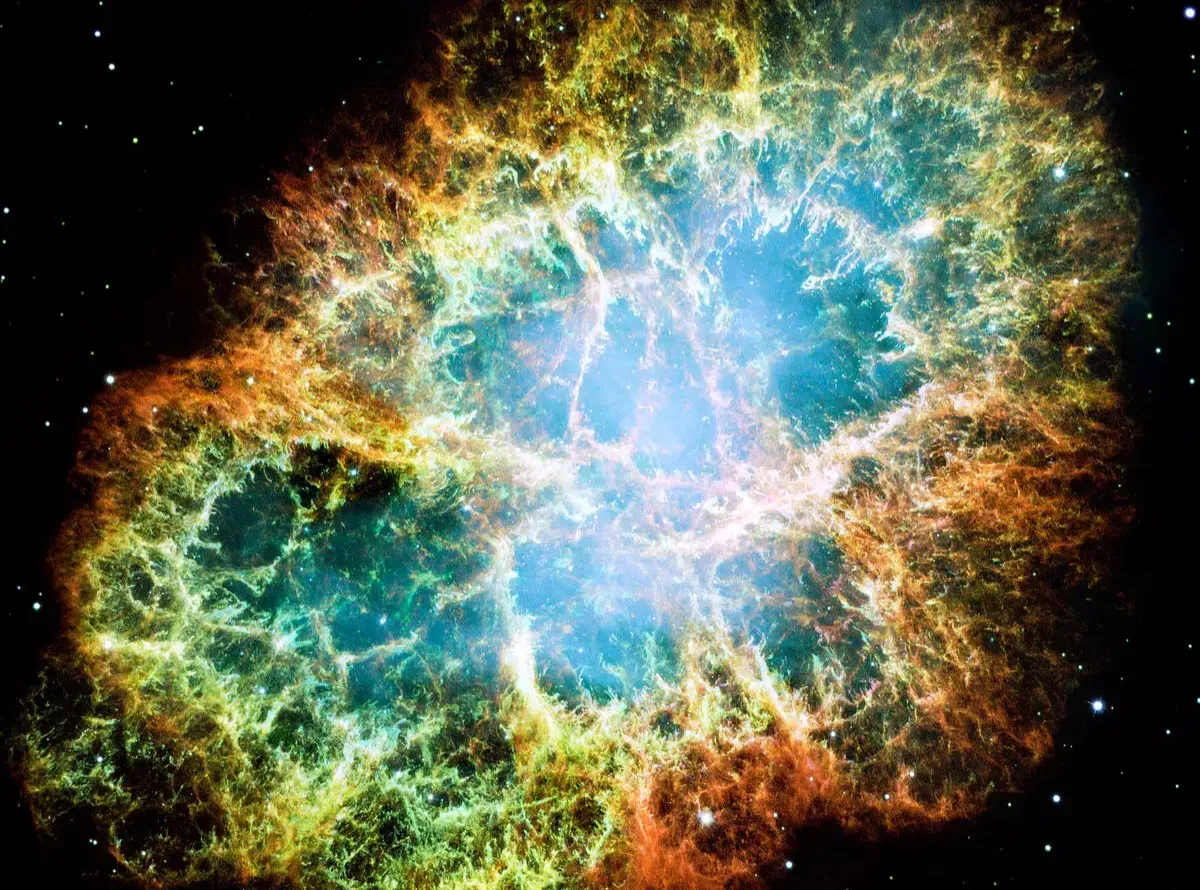
Here’s the thing – space is full of explosions. Stars collapse, black holes devour matter, neutron stars collide. We’ve catalogued thousands of cosmic blasts over the decades. So when astronomers say they’ve spotted something they’ve genuinely never seen before, that deserves a double take.
This newly detected cosmic explosion released energy so extreme it briefly surpassed the luminosity of roughly a billion suns combined. To put that in perspective, imagine every single star in a mid-sized galaxy suddenly switching on at full brightness at the exact same moment. That’s the kind of energy scale we’re talking about here.
What makes this discovery particularly gripping is that it doesn’t fit neatly into any existing classification. It’s not a standard gamma-ray burst. It’s not a known type of supernova. Scientists are dealing with something that sits stubbornly outside the familiar boxes.
How the Event Was Actually Detected
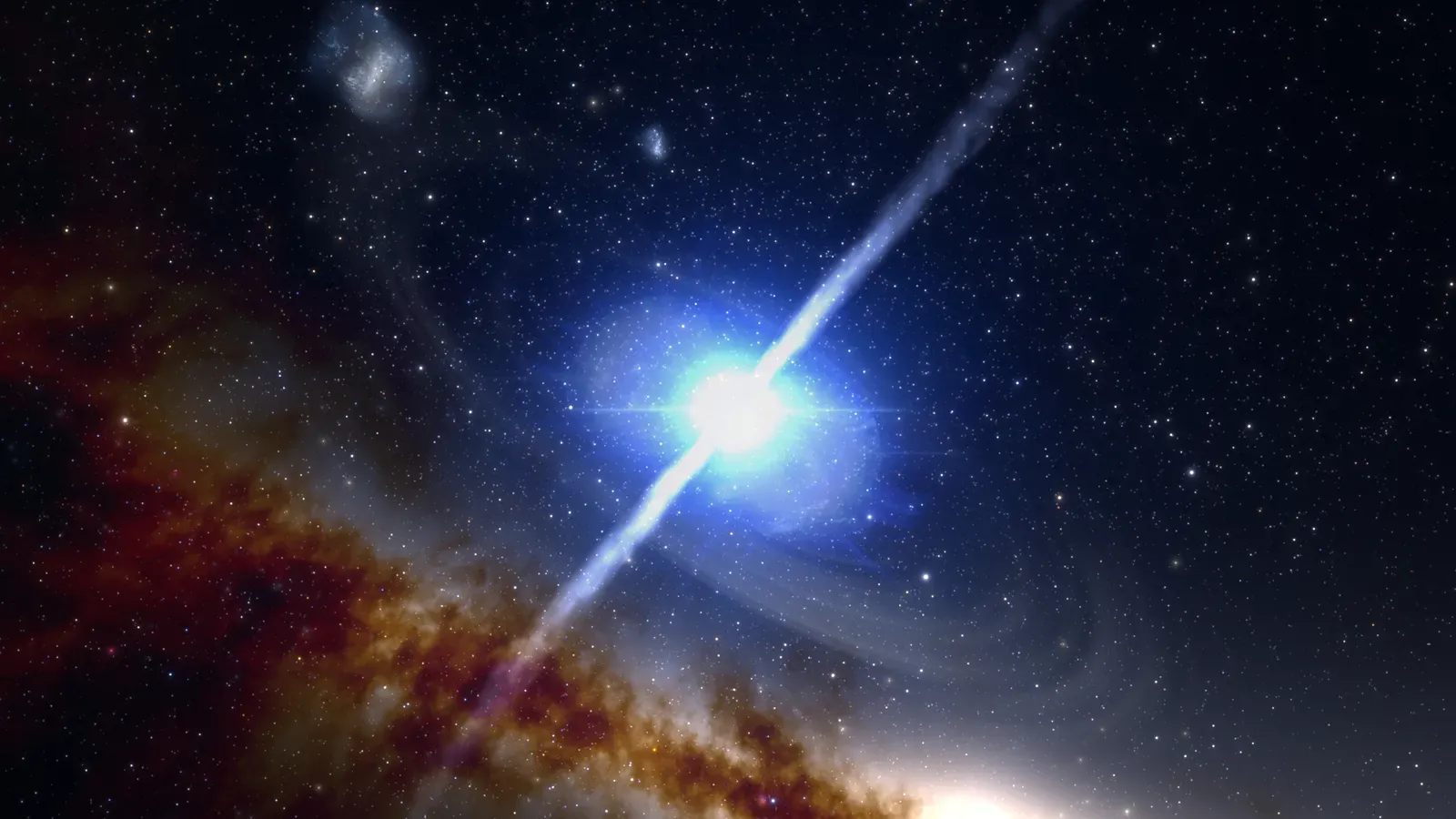
Detecting something this powerful from billions of light-years away is no small feat. Modern space observatories combined with ground-based telescopes worked in tandem to catch the signal, piecing together data across multiple wavelengths of light – from X-rays to optical emissions.
The event was initially flagged as an anomaly in automated alert systems, the kind of red flag that gets astronomers out of bed at odd hours. Follow-up observations then confirmed the staggering brightness and duration. It’s a bit like hearing a thunderclap so loud you assume it must be nearby, only to realize it came from hundreds of kilometers away.
Why the Scale of This Explosion Is So Hard to Comprehend
I think most people underestimate just how vast space is, which makes events like this feel abstract. So let’s try a quick analogy. If our Sun were a single candle flame, this explosion was like detonating every candle ever manufactured in human history simultaneously. In a single room.
The brightness measured here puts it among the most luminous transient events ever recorded. The sheer energy output challenges existing theoretical models for how matter and energy behave under extreme astrophysical conditions. Scientists aren’t just surprised – some are genuinely puzzled about the underlying physics that could produce such an output.
Transient luminous events have been studied for decades, yet the magnitude here is described as sitting far beyond the upper limits researchers previously considered realistic. It’s hard to say for sure, but this may force a genuine rethink of the energy budgets associated with certain stellar deaths or compact object mergers.
The Leading Theories Behind the Blast
Several explanations are currently on the table, though none has been confirmed. One leading hypothesis involves a rare type of stellar collapse – sometimes called a hypernova – where an exceptionally massive star doesn’t just die quietly but unleashes a catastrophic jet of energy as it implodes into a black hole.
Another possibility points toward the merger of two ultra-dense neutron stars, which can produce a kilonova and release mind-bending amounts of energy in a very short window. There’s also discussion around magnetars – rapidly spinning neutron stars with extraordinarily powerful magnetic fields – as a potential power source driving the luminosity.
What’s fascinating is that each of these theories explains part of the picture but not all of it. The event’s duration, brightness, and spectral signature don’t perfectly align with any single model. Astronomers are, to use a scientific understatement, intrigued.
What Makes This Discovery Scientifically Significant
Let’s be real – not every astronomical discovery changes the game. Sometimes a new star gets named, some data gets updated, and life moves on. This one feels different. The event probes physical conditions that lab experiments on Earth can’t even begin to replicate.
Studying such an explosion gives researchers a rare window into matter behaving under pressures and temperatures that defy everyday intuition. It’s like getting an accidental glimpse behind a curtain that the universe usually keeps firmly shut. The data gathered here could refine our understanding of nucleosynthesis – how heavy elements are forged in cosmic violence – and potentially reveal mechanisms that seed galaxies with the raw material for planets and life itself.
The timing is also notable. With next-generation space telescopes now either operational or coming online, scientists are better positioned than ever to study such events in real-time detail. This discovery may be the first of several that rewrite standard astrophysical models over the next decade.
The “Unseen” Aspect That Has Researchers Talking
The phrase “unseen” here carries real weight. It doesn’t just mean “rare.” It means this specific combination of characteristics – brightness, timescale, spectral properties – hasn’t appeared in any prior survey data across decades of sky-watching. That’s remarkable when you consider how many billions of events have been catalogued.
There’s also a spatial dimension to consider. The explosion occurred in a region of space that wasn’t under particularly intensive monitoring, which raises uncomfortable questions about how many similar events might have already happened and gone undetected. Honestly, the idea that the universe could be hiding explosions of this scale in plain sight is both humbling and a little unsettling.
Researchers are now going back through archival data from multiple observatories to search for any overlooked precursor signals or past events that might match the profile. It’s detective work on a cosmic scale, and the archive runs deep.
What Comes Next in the Investigation
The scientific process moves fast when something this significant surfaces. Multiple research teams around the world have already pivoted resources toward analyzing the available data, and peer-reviewed findings are expected to emerge over the coming months.
One of the key priorities is pinning down the host galaxy of this explosion and measuring its distance with precision. That distance calculation directly affects energy estimates – and getting it right is the difference between an impressive event and a truly paradigm-shifting one. Gravitational wave detectors may also be looped in to check whether the explosion left any ripples in spacetime.
The broader community is watching closely. If follow-up analysis confirms the initial readings, this event could join a very short list of cosmic discoveries that fundamentally altered how astrophysicists think about the universe’s most violent processes.
A Universe That Still Surprises Us
There’s something almost poetic about the fact that, in 2026, with all our satellites and supercomputers and decades of accumulated data, the universe can still throw something at us that leaves experts genuinely speechless. That’s not a failure of science – that’s science working exactly as it should.
This explosion serves as a reminder that we’re still very early in our cosmic education. The universe is enormous, ancient, and full of processes operating at scales our intuition simply wasn’t built to handle. Events like this don’t just generate headlines – they generate whole new research fields, new questions, and hopefully, new answers.
I think that’s what makes astronomy so endlessly compelling. Just when you think you’ve got a handle on how things work, the cosmos pulls something extraordinary out of nowhere. So what do you think – does a discovery like this make you feel small, inspired, or both? Drop your thoughts in the comments below.