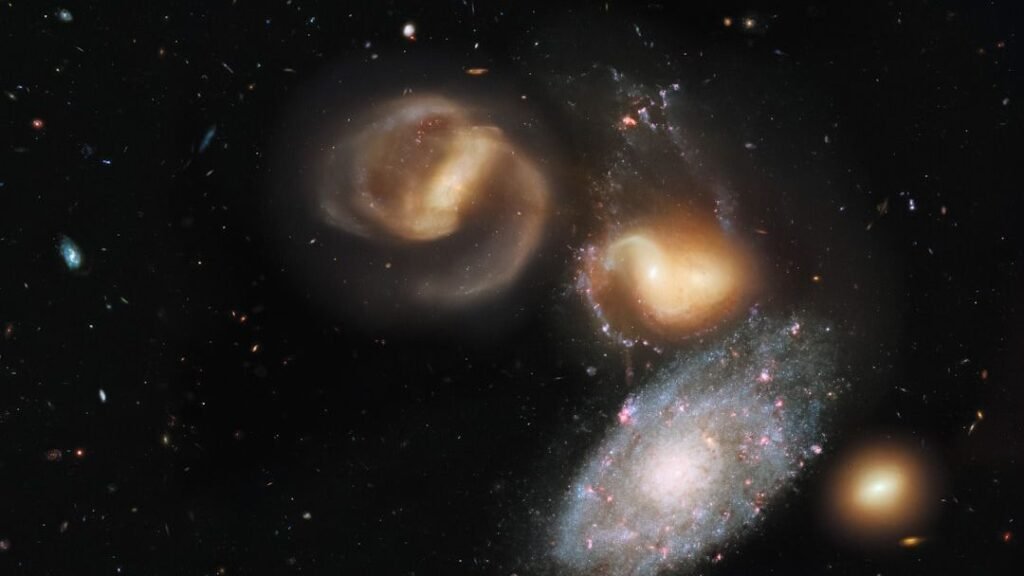

Picture this: you are standing outside on a clear night, looking up at a sky dusted with stars. What you’re seeing is just the tiniest sliver of reality. Billions of galaxies are swirling out there, grouped together, colliding, spinning in filaments, and drifting through emptiness on a scale that genuinely defies human imagination. The universe isn’t just big. It’s structured. Ordered. Almost choreographed.
Far beyond the blue sky, past the twinkling stars that decorate the night, there is a dance that has been unfolding for billions of years. Galaxies are not static pinpricks of light suspended in space. They are wanderers, voyagers, gliding, spinning, colliding, and pirouetting across the universe in a cosmic ballet choreographed by the fundamental forces of nature. So let’s dive in – because what you’re about to discover about the universe’s grand architecture will completely change how you see the night sky.
What the Universe Actually Looks Like from the Outside
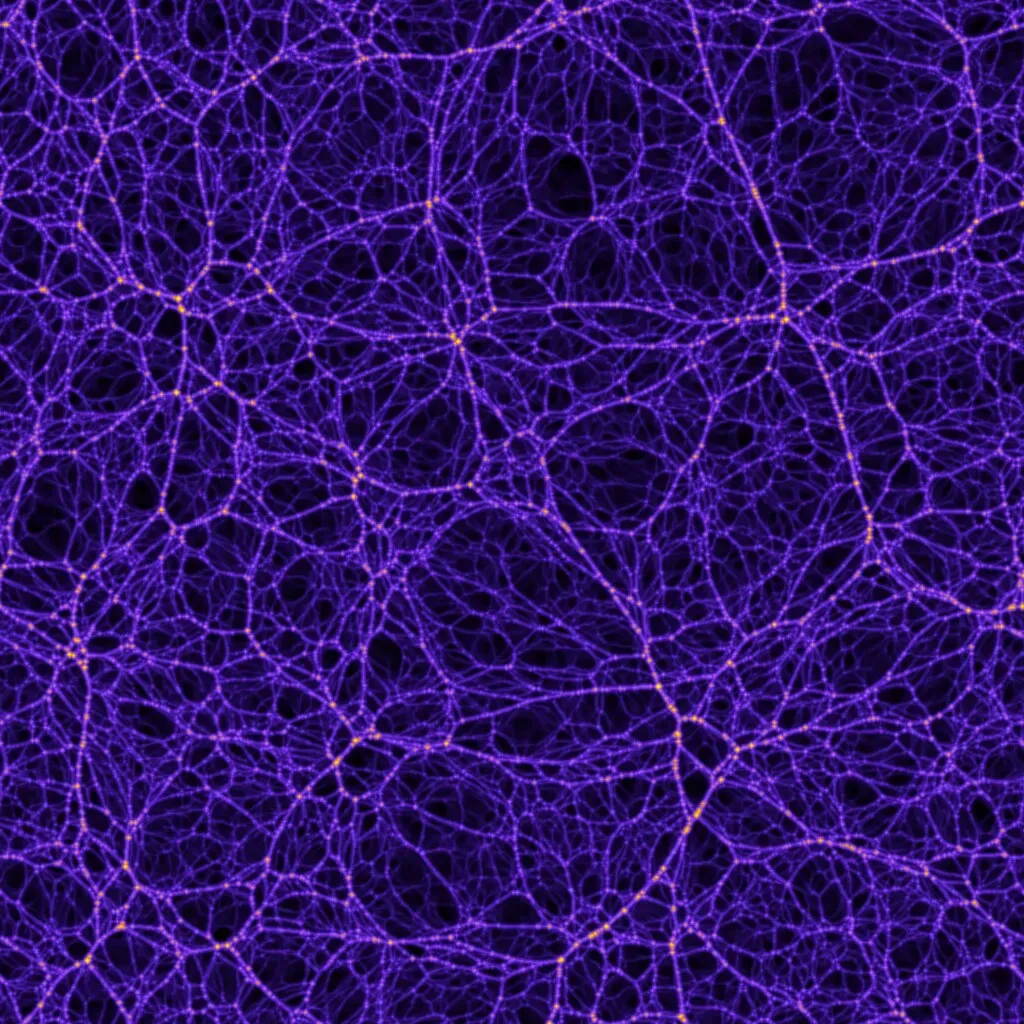
Most of us think of the universe as a random scatter of stars and galaxies, like someone threw glitter into a black void. But that picture couldn’t be further from the truth. The large-scale structure of the universe refers to patterns of galaxies and matter on scales much larger than individual galaxies or groupings of galaxies, with correlated structures seen up to billions of light years in length, created and shaped by gravity.
Galaxies, galaxy groups and clusters, superclusters, and galactic walls are arranged in twisting, thread-like structures called the cosmic web. The web forms as the gravitational attraction of the universe’s matter draws larger and larger objects together. This leads to concentrations of galaxies with voids of space in between, as if the galaxies were resting on empty bubbles. Honestly, the moment you truly grasp that image, it’s hard not to feel a rush of wonder. You are living inside a cosmic soap foam.
The Cosmic Web: The Universe’s Hidden Skeleton
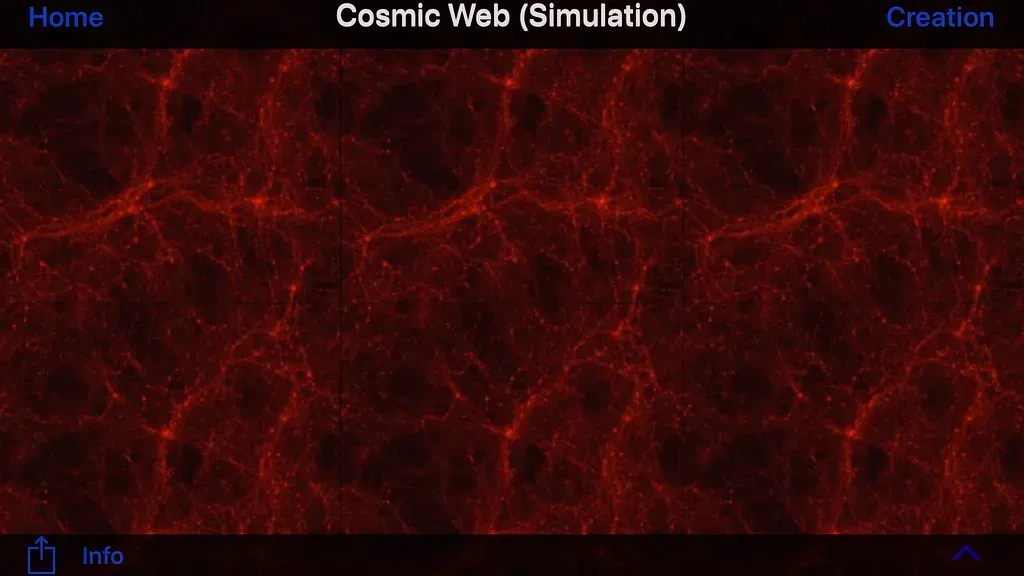
The universe is a vast, unseen loom, weaving galaxies into an intricate cosmic web through invisible threads of matter. This cosmic web is the fundamental scaffolding of everything we see, dictating where galaxies form and how they evolve. Think of it less like a random tangle and more like the nervous system of existence itself – everything connects, everything flows.
Cosmic filaments are the largest known structures in the universe: vast, thread-like formations of galaxies and dark matter that form a cosmic scaffolding. They also act as highways along which matter and momentum flow into galaxies. Cosmological simulations suggest that cosmic filaments contain over half of the universe’s matter, making understanding these structures essential for a comprehensive view of how galaxies form and evolve within this large interconnected web.
How Galaxies Spin, Move, and Why They Never Stand Still
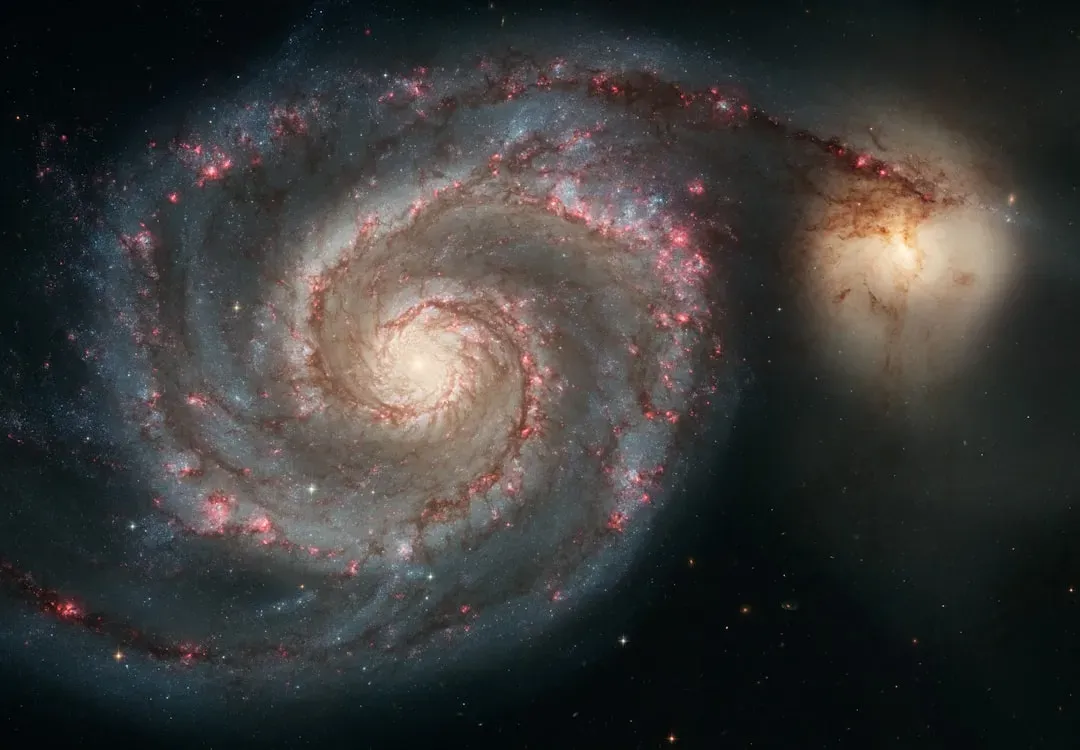
Galaxies spin due to the conservation of angular momentum, a fundamental principle of physics. In the early universe, vast clouds of gas collapsed under gravity, spinning faster as they shrank, like an ice skater pulling in their arms to twirl more rapidly. These rotating clouds became the galaxies we see today, their stars moving in vast orbital highways that span tens of thousands of light-years.
Galaxies do not simply hover in place like ornaments on a Christmas tree. They travel through space, influenced by the gravitational tug of nearby galaxies and the cosmic structures that surround them. Galaxies group together into clusters, and clusters into superclusters, all interconnected by vast filaments of dark matter and gas that make up the cosmic web. It’s a never-ending gravitational tug-of-war happening on a scale we can barely compute.
Dark Matter: The Invisible Architect Behind It All
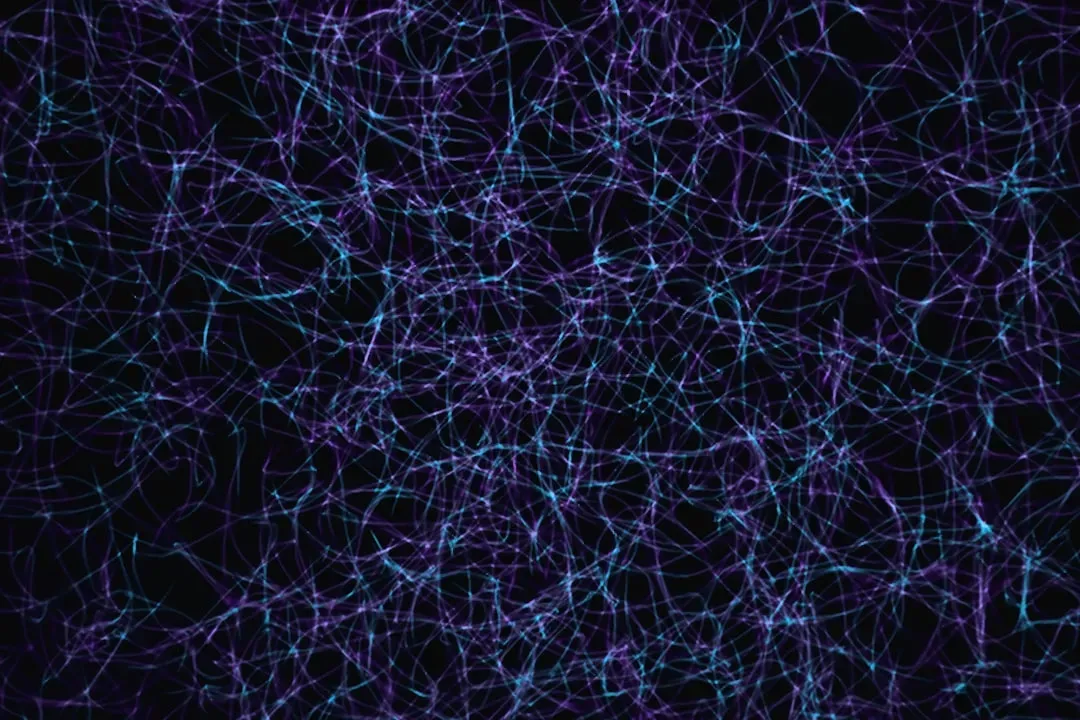
Here’s the thing – most of what shapes the universe is stuff you can’t even see. Dark matter is thought to serve as gravitational scaffolding for cosmic structures. After the Big Bang, dark matter clumped into blobs along narrow filaments with superclusters of galaxies forming a cosmic web at scales on which entire galaxies appear like tiny particles.
Astronomers have produced the most detailed map yet of dark matter, revealing the invisible framework that shaped the universe long before stars and galaxies formed. Using powerful new observations from NASA’s James Webb Space Telescope, the research shows how dark matter gathered ordinary matter into dense regions, setting the stage for galaxies like the Milky Way and eventually planets like Earth. In early 2026, that map became the clearest picture scientists had ever produced – and it was, in a word, breathtaking.
Spinning Filaments: One of the Most Stunning Recent Discoveries
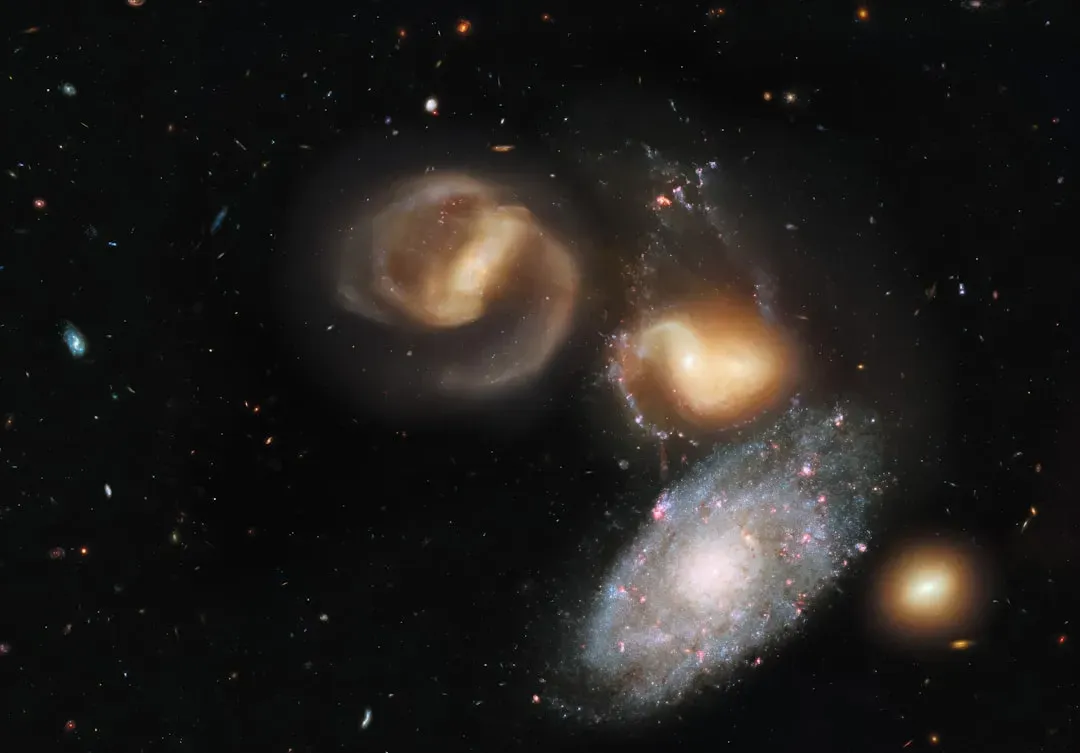
I know it sounds crazy, but some of these giant cosmic filaments are actually rotating. Not just holding spinning galaxies – rotating themselves, as a whole, enormous structure. An international team led by the University of Oxford identified one of the largest rotating structures ever reported: a razor-thin string of galaxies embedded in a giant spinning cosmic filament, 140 million light-years away. The findings could offer valuable new insights into how galaxies formed in the early universe.
The researchers found 14 nearby galaxies rich in hydrogen gas, arranged in a thin, stretched-out line about 5.5 million light-years long and 117,000 light-years wide. This structure sits inside a much larger cosmic filament containing over 280 other galaxies, and roughly 50 million light-years long. Remarkably, many of these galaxies appear to be spinning in the same direction as the filament itself, far more than if the pattern of galaxy spins was random. This challenges current models and suggests that cosmic structures may influence galaxy rotation more strongly or for longer than previously thought.
Galaxy Collisions: Violent, Beautiful, and Surprisingly Creative
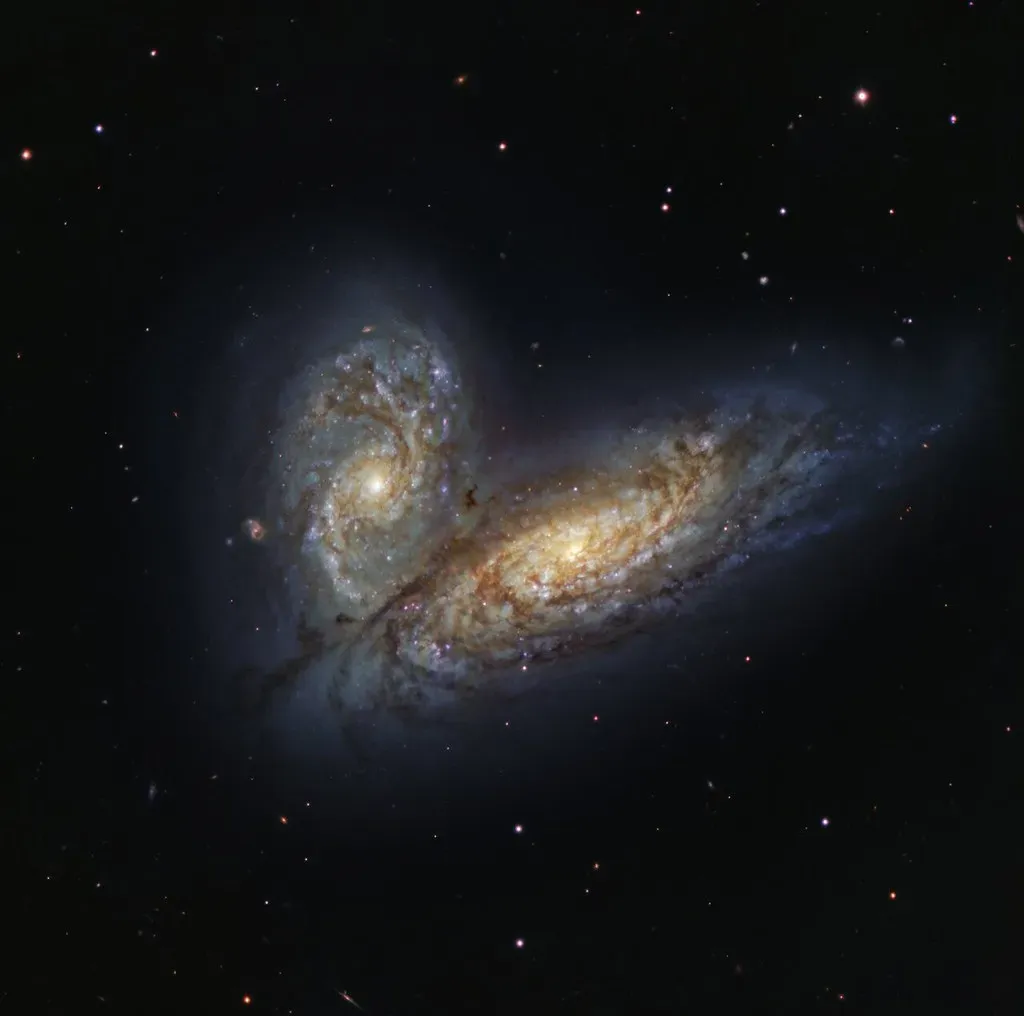
Galaxy collisions sound catastrophic. And in some ways, they are. But they’re also wildly creative events. When two galaxies collide and merge, star formation rates increase dramatically, resulting in massive clumps that are not seen in other galaxies not undergoing mergers. These clumpy structures build up over time until they become incredibly massive, and understanding how they contribute to galaxies evolving throughout cosmic time requires detailed study.
In early 2026, scientists made a discovery that genuinely rattled the astronomy community. Astronomers at Texas A&M University discovered a rare, tightly packed collision of galaxies in the early universe, suggesting that galaxies were interacting and shaping their surroundings far earlier than scientists had predicted. Using observations from the James Webb Space Telescope, the researchers identified an ongoing merger event of at least five galaxies about 800 million years after the Big Bang, along with evidence that the collision was redistributing heavy elements beyond the galaxies themselves. That’s a universe that was already busy – far sooner than anyone thought.
The Milky Way’s Own Cosmic Dance: Our Future Collision with Andromeda
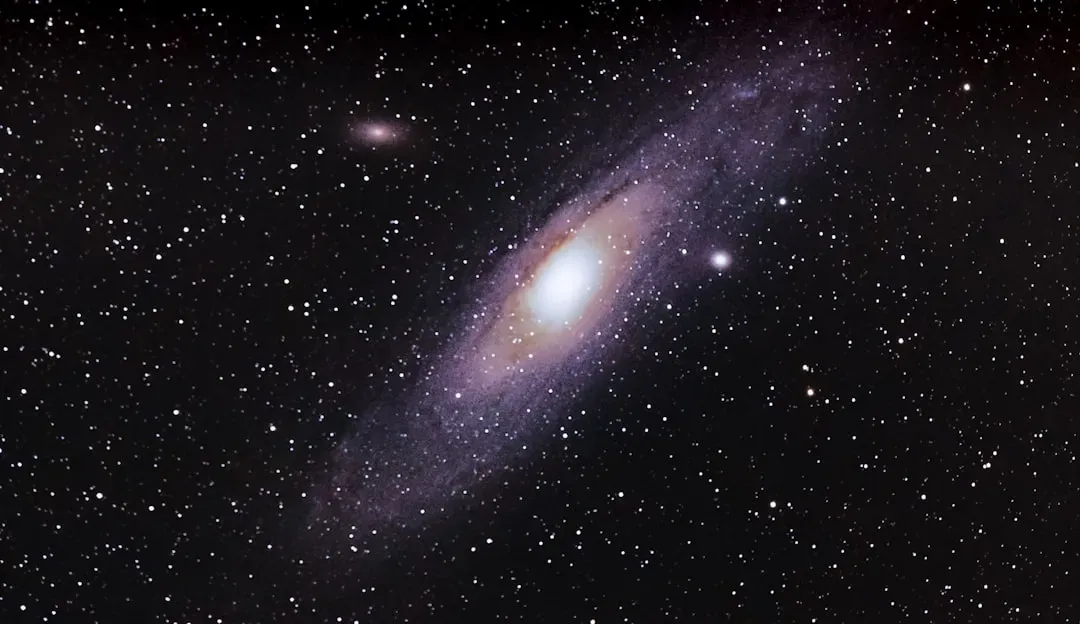
You might want to sit down for this one. Our own galaxy isn’t just drifting peacefully through space. It’s on a direct collision course. The Milky Way’s future is irrevocably linked with the Andromeda Galaxy, and together they are on a collision course set to take place in approximately 2.5 billion years. This merger will not be a simple encounter; it will also involve their smaller dwarf galaxies, which are currently gravitationally bound to both the Milky Way and Andromeda.
These two galaxies exhibit a unique behavior as they merge, with the galaxies and their smaller dwarf satellites rotating around each other in a manner that mirrors a cosmic dance. Scientists describe how these galaxies combine as if they were dancing with the closely located dwarf satellites rotating around them. This elegant interaction is an essential feature of the galaxy merger process, which results in highly organized systems rather than scattered clouds of stars. So in a few billion years, the night sky will look very, very different. But the dance will go on.
Cosmic Voids: The Universe’s Enormous Empty Rooms
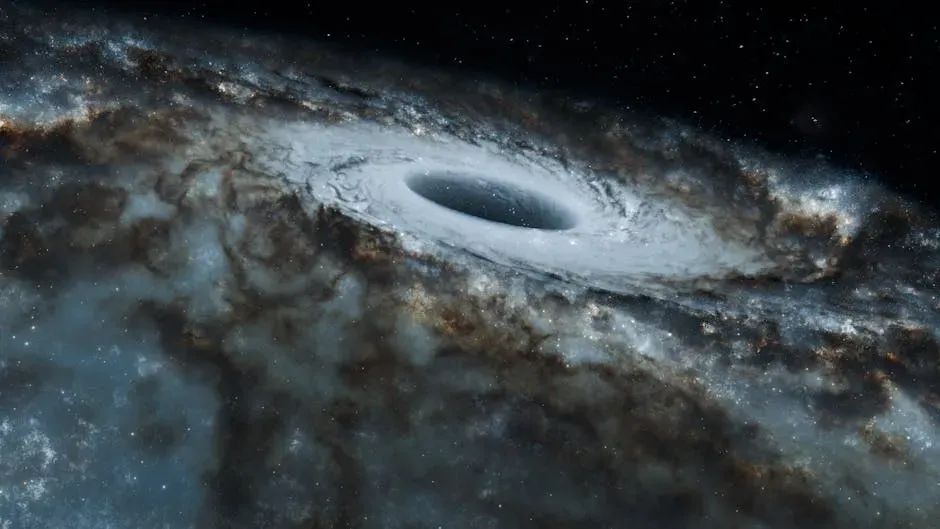
Between all those grand filaments and spinning clusters, there are vast stretches of almost nothing. Cosmic voids. They sound boring at first, but they’re actually some of the most scientifically fascinating regions in existence. Cosmic voids are vast regions of the universe where the density of galaxies is significantly lower than the average density. They can be thought of as the empty spaces between the galaxy filaments that crisscross the universe.
It’s hard to say for sure just how empty they truly are, because even these apparent deserts carry something remarkable. Even in these vast empty regions, the fundamental quantum fields that fill all of space remain, carrying a small but real amount of energy known as vacuum energy, or dark energy. While this energy is overwhelmed by matter in galaxies and clusters, in the deep emptiness of cosmic voids it becomes dominant. In cosmic voids, dark energy dominates, quietly driving the expansion of the universe and slowly tearing the cosmic web apart. So even “nothing” is doing something extraordinary.
The Tools Unraveling the Grand Design: New Telescopes and What They’re Showing Us
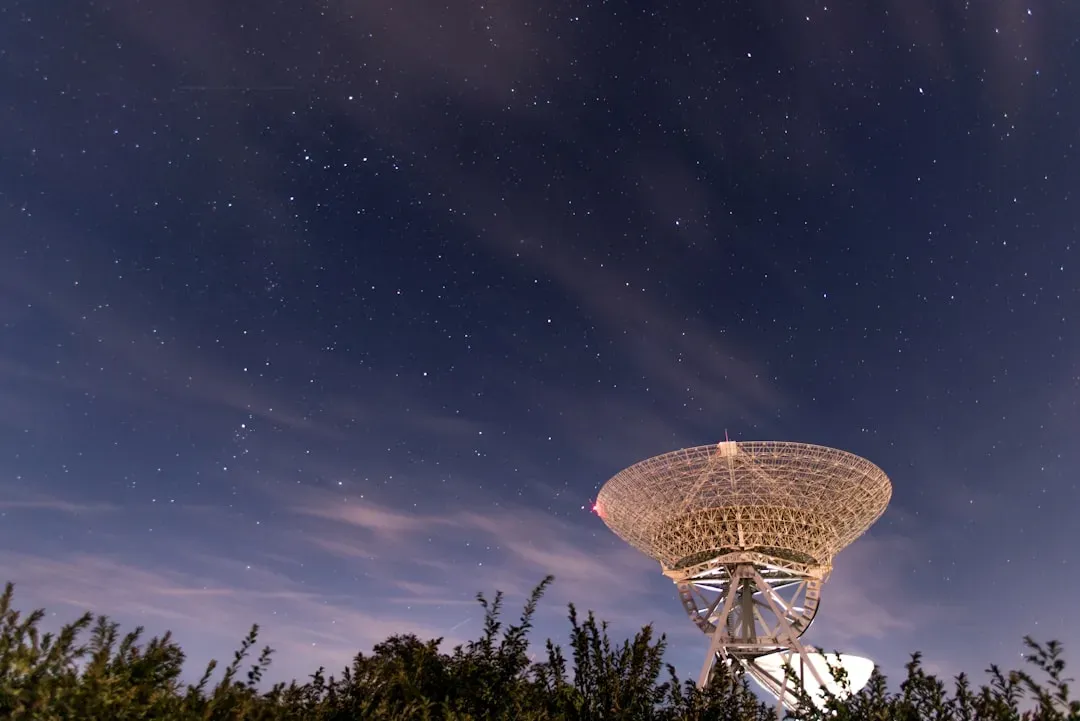
All of these discoveries would be impossible without increasingly powerful instruments peering deeper into space and time. The research team used data from South Africa’s MeerKAT radio telescope, one of the most powerful radio observatories in the world, made up of 64 interconnected dishes. The spinning filament was identified through a deep sky survey known as MIGHTEE, led by Professor of Astrophysics Matt Jarvis of the University of Oxford. The radio data were combined with optical observations from the Dark Energy Spectroscopic Instrument and the Sloan Digital Sky Survey, revealing a cosmic filament that shows both coordinated galaxy spin and large-scale rotation.
Teams plan to expand their work by mapping dark matter across the entire universe using the European Space Agency’s Euclid telescope and NASA’s upcoming Nancy Grace Roman Space Telescope. These future observations will help scientists better understand dark matter’s basic properties and how it may have evolved over cosmic time. We’re living in a golden age of cosmic discovery – and honestly, the biggest surprises almost certainly haven’t arrived yet.
Conclusion: You Are Part of This Dance
When you step back and look at all of it together – the spinning filaments, the colliding galaxies, the invisible dark matter scaffolding, the vast cosmic voids humming with dark energy – you realize the universe isn’t chaotic. It’s organized in a way that rewards curiosity. Every galaxy, including our own Milky Way, is embedded in a grand structure billions of years in the making, moving according to forces set in motion by the Big Bang itself.
In the grand scheme of the universe, galaxies dance in a rhythm influenced by gravity, luminosity, and their environment. Their shapes and alignments hold secrets to the universe’s structure and history. By studying this cosmic choreography, scientists inch closer to unraveling the mysteries of dark matter and energy, paving the way for future exploration. The more we look, the more we discover how deeply everything is connected – from the tiniest quantum fluctuation after the Big Bang to the colossal filaments stretching hundreds of millions of light-years today.
You are made of atoms forged in stars that are themselves part of a galaxy dancing through a cosmic web of unfathomable scale. The next time you look up at the night sky, remember – you’re not just an observer. You’re a tiny, remarkable part of the dance. Does knowing that change the way you see the stars?