
The odd thing about modern neuroscience is that the more precisely it maps the brain, the less it seems able to answer the question people actually care about: why are we here at all. Brain scans can now trace how a decision forms, how a memory resurfaces, even how a burst of awe lights up sensory and emotional circuits, yet none of that tells you whether your life has a purpose beyond biology. This gap between what science can measure and what humans long to know is not a failure of neuroscience; it is a clue to what the brain is actually for. Brains are exquisitely tuned engines for surviving in a physical world, not built-in philosophers with access to cosmic meaning. To see that clearly, you have to follow the evidence down to the level of cells, circuits, and evolution – and accept that the story they tell is about how we exist, not why.
From Survival Machine to Storyteller
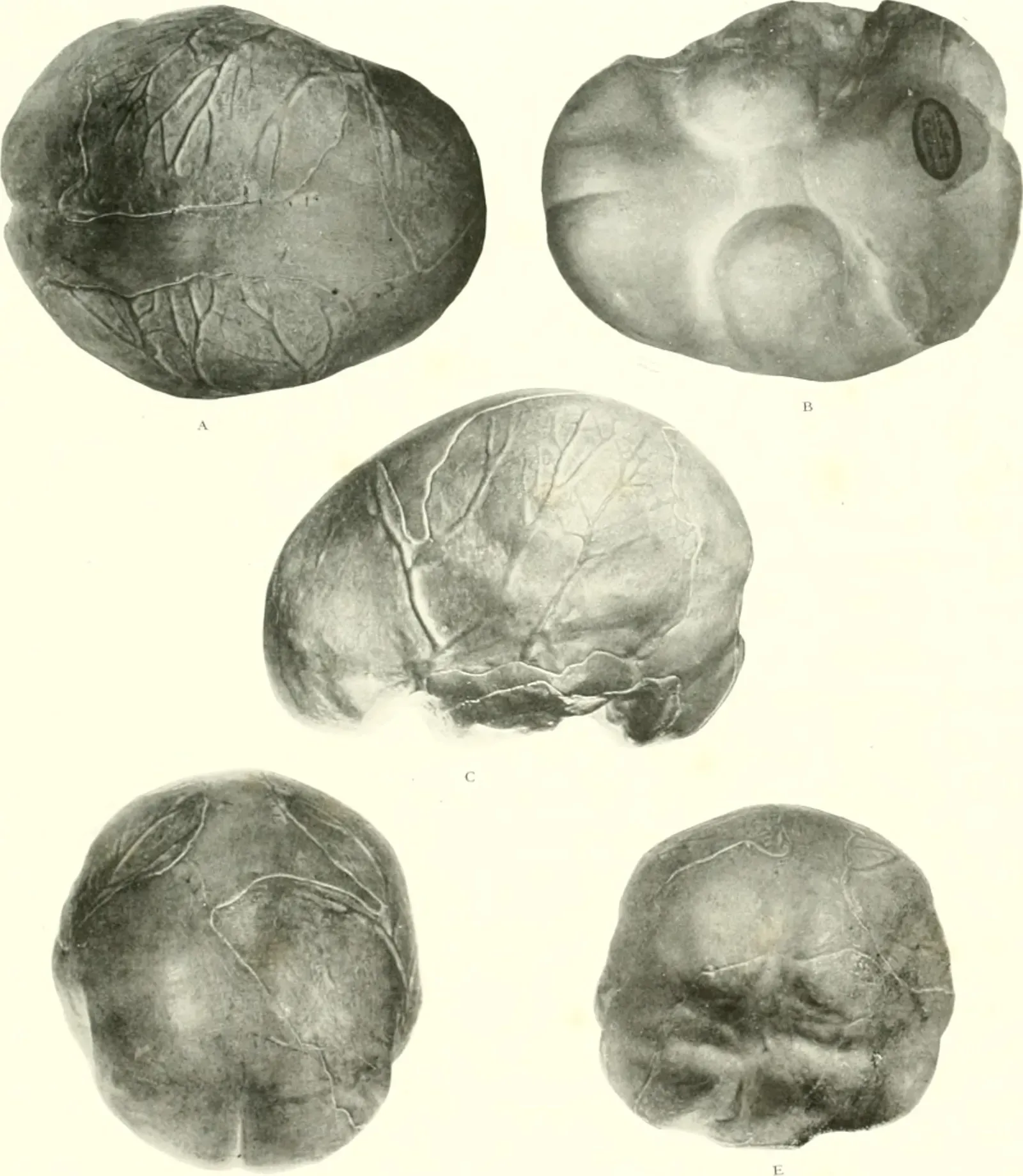
Every brain on Earth, from a fruit fly’s to a human’s, evolved first as a survival device, not a meaning detector. At its core, your brain is a prediction engine that constantly guesses what will happen next – where the food will be, where the danger might come from, how to move your body to stay intact one more day. Those basic calculations are stitched into reflexes, habits, and learned responses, long before any reflective thought about right, wrong, or purpose comes online. Even highly emotional experiences like falling in love, feeling betrayed, or being moved by music can be traced to networks that evolved to monitor social bonds and anticipate rewards and threats.
Only after those automatic systems are humming does the brain generate the stories we tell ourselves about who we are and why our lives matter. Language, memory, and imagination systems take raw experience and weave it into a narrative that feels seamless and intentional. That narrative feels like the main show, but from an evolutionary perspective it is more like a commentary track layered on top of a survival movie that has been playing for hundreds of millions of years. In that sense, the brain is first a machine for making life possible, and only secondarily an organ for making life meaningful.
The Physics of Thought: Signals, Not Souls
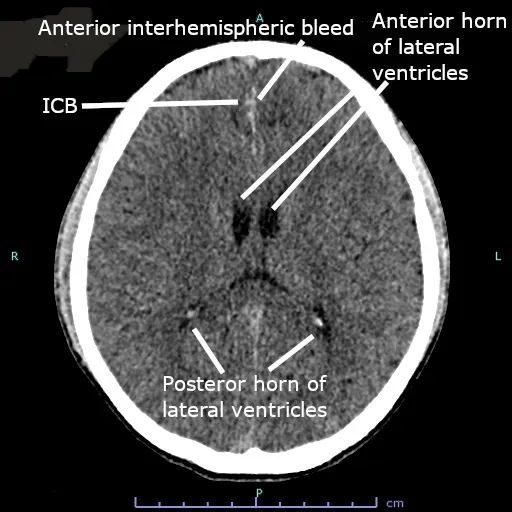
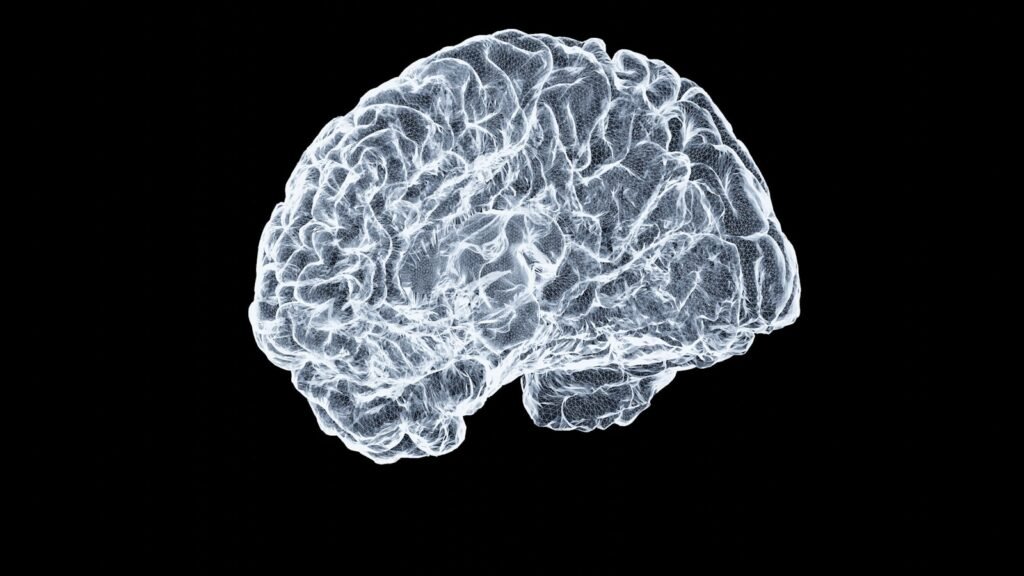
When neuroscientists peer into the brain with electrodes or brain scanners, they do not see purposes and destinies; they see electrical activity, chemical gradients, and shifting networks. A thought, in physical terms, is a pattern of nerve cells firing and communicating across synapses using molecules like glutamate and dopamine. Every feeling you have, from grief to euphoria, corresponds to particular configurations of these signals, distributed across regions like the prefrontal cortex, amygdala, and brainstem. This does not trivialize those feelings – it just shows that they arise from matter obeying the same physical laws as a storm cloud or a lightning strike.
Because of this, neuroscience is especially good at explaining how certain experiences arise. It can show how a stroke in one tiny artery leads to the loss of language, or how a specific seizure focus can generate religious visions or a sense of déjà vu. It can show how anesthetic gases, by subtly altering ion channels in cell membranes, can erase consciousness without erasing the brain’s physical structure. But within that framework there is simply no experimental knob labeled “ultimate purpose” to turn. The tools of physics and biology can track mechanisms, not metaphysical reasons.
Evolution’s Answer: How Brains Came to Be
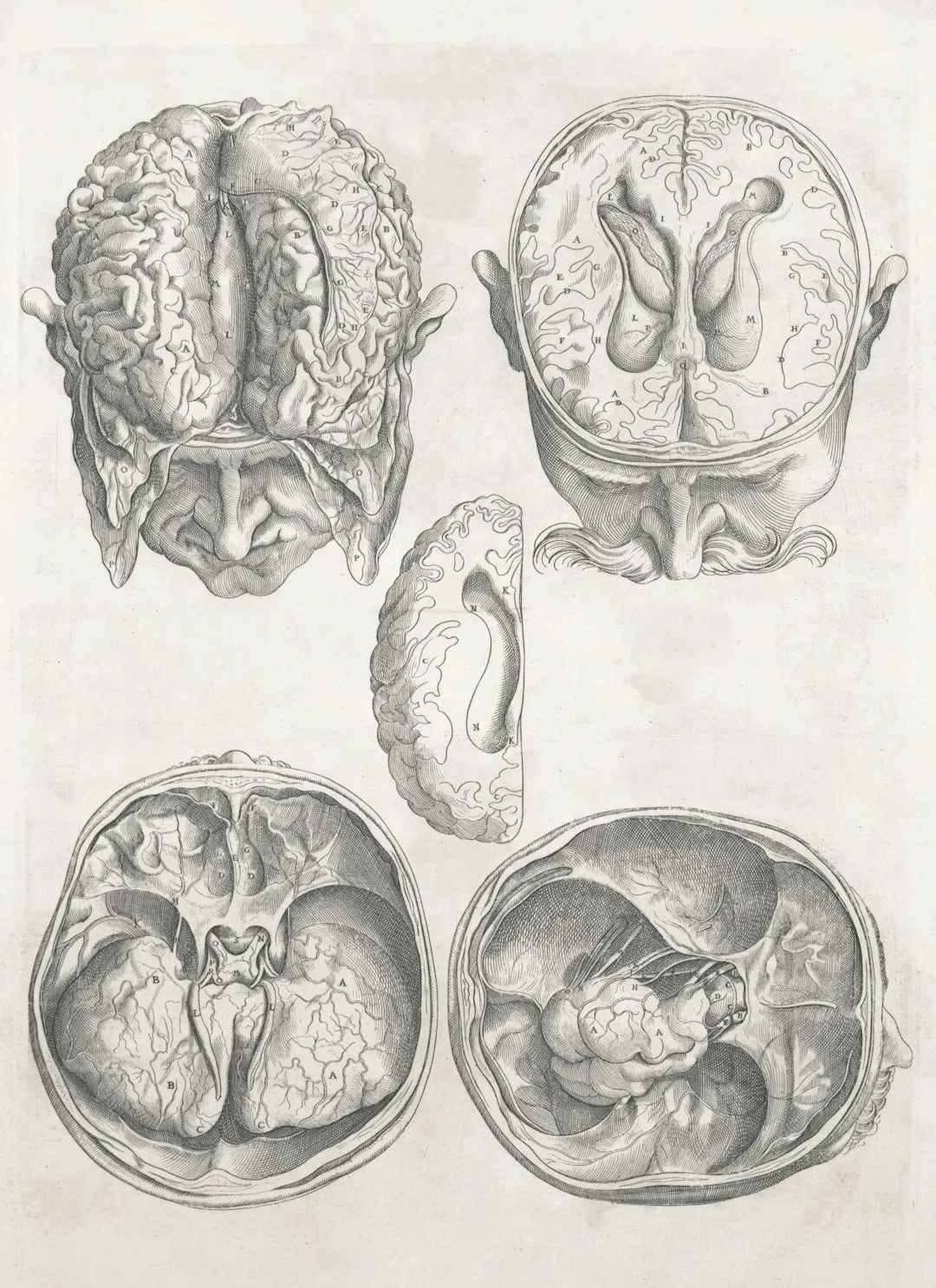
If you ask biology why the brain exists, the answer it gives is relentlessly practical: because organisms with brains out-competed those without them. Early nervous systems appear in simple animals as networks that help them move toward nutrients and away from harm, a kind of living control system. Over vast stretches of time, these networks became layered and folded, developing specialized structures for sensing, moving, remembering, and planning. At every step, the changes that stuck around were the ones that helped their owners survive long enough to reproduce, not the ones that made their owners ponder the nature of existence.
From that vantage point, your brain is the product of countless small wins in a long evolutionary tournament, not the result of a prewritten script about meaning. Traits like curiosity, imagination, and moral concern emerged because they helped social primates cooperate, raise offspring, and navigate complex group dynamics. They also made it possible to ask questions about destiny and purpose, much like a tool becoming sophisticated enough to examine its own design. But evolution can tell you how brains arose and what they are good at; it does not claim that natural selection had a goal beyond keeping certain genetic lineages afloat.
Consciousness: The Most Puzzling “How” of All
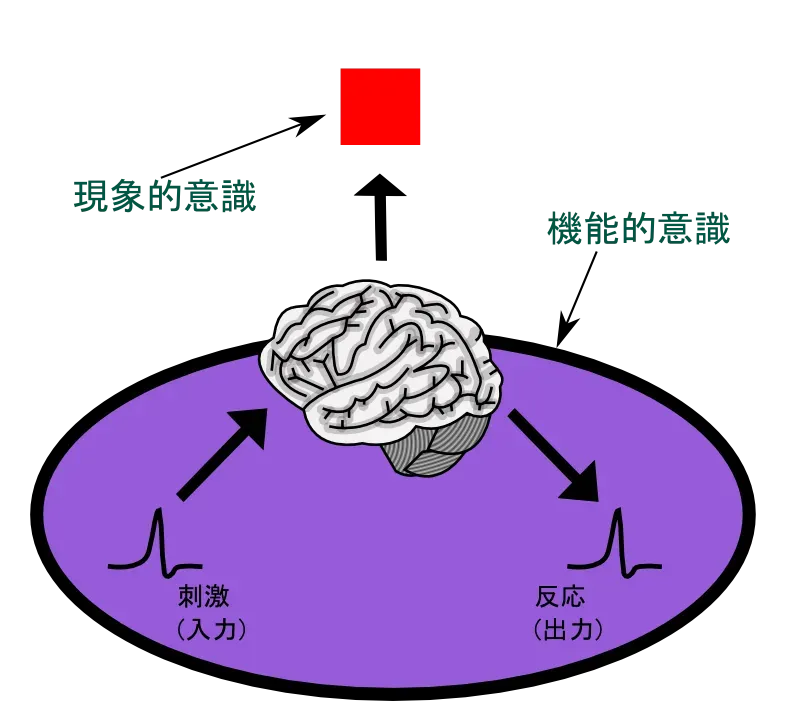
Among everything the brain does, consciousness is the most tempting place to look for a built-in answer to why we exist. The very fact that you have an inner movie – complete with colors, sounds, and a sense of self – feels so unlikely that many people assume it must be pointing toward a deeper purpose. Neuroscience tackles that feeling by asking how a three-pound organ made of water, fat, and salts can produce subjective experience at all. Competing theories try to explain how patterns of neural activity give rise to awareness, whether through information integration, global broadcasting across networks, or other large-scale dynamics.
Despite elegant models, there is still no consensus explanation that connects the firing of neurons to the feeling of being you. What researchers do agree on is that consciousness depends on specific brain states – damage the brainstem reticular formation or certain thalamic hubs, and awareness can vanish even if much of the cortex remains intact. That tight link suggests consciousness is an emergent property of particular physical processes, not an extra ingredient that was poured into the brain from the outside. It makes consciousness one of the most intricate how-questions in science, but still leaves the why-question open and untouched.
Free Will and the Illusion of Inner Exemption
One of the most unsettling encounters between neuroscience and everyday intuition comes from studies of decision-making and free will. Experiments using brain recordings have shown that measurable neural activity linked to a decision can appear a fraction of a second before a person reports having made a conscious choice. Other work shows that if you subtly nudge brain areas involved in motor planning or valuation, you can shift what people pick without them realizing that anything influenced them. These findings do not prove that free will is a complete illusion, but they do show that our sense of authorship rides on top of complex, partly unconscious processes.
For many people, free will felt like a foothold for purpose: if you can always do otherwise, perhaps there is some inner essence standing apart from physics. Neuroscience’s account undercuts that exemption by placing choices back inside the causal web of biology, learning, and context. Yet it also underscores how incredibly flexible those causal systems are; your brain can learn new rules, override impulses, and change long-established habits. So even if your decisions are implemented by neurons, that does not make them meaningless. It just means that the why of your choices is something you construct within a physical system, not something handed down from outside it.
The Brain’s Talent for Inventing “Why”
Strikingly, the brain appears to be wired to supply a why even when none exists. In classic psychology experiments, people watched random shapes move on a screen and almost automatically described them as characters chasing, bullying, or rescuing one another. The same pattern shows up when we see faces in clouds, hear messages in static, or attribute intent to a malfunctioning computer. This tendency is not a flaw; it is an extension of social brain circuitry that evolved to rapidly infer other people’s goals and motives, which is vital in cooperative and competitive groups.
The downside is that this hyperactive pattern detector does not turn off when we look beyond human affairs. We are quick to treat chance events or impersonal patterns – illness, weather, coincidence – as if they were meant for or against us. When that habit of mind scales up to questions about the universe itself, we naturally search for a cosmic agent with a plan. Neuroscience cannot say whether such a plan exists, but it does show how a brain built for social storytelling will keep generating why-explanations, whether or not the world actually offers them.
What Neuroscience Can Explain – and What It Deliberately Leaves Alone
The deeper neuroscience digs, the more clearly it carves a line between mechanism and meaning. It can explain how antidepressants change synaptic signaling and, in some people, relieve crushing despair, but it cannot tell you what a good life is. It can trace how moral judgments correlate with activity in frontal and parietal regions, but not whether a given moral code is ultimately correct. In that sense, the power of brain science is double-edged: it demystifies phenomena once attributed to spirits or fate, while refusing to answer questions that lie outside empirical testing.
This is not an oversight but a choice built into the scientific method. Science restricts itself to questions that can be probed with observation, measurement, and replication; why-we-exist, in a cosmic sense, does not fit that template. What brain research can do, though, is reveal where our feelings of meaning and purpose come from, how fragile or resilient they are, and how they can be shaped by injury, illness, or experience. That knowledge matters for everything from mental health treatment to end-of-life care, even if it stops short of declaring what anyone’s life should ultimately be about. In a way, accepting those limits is a form of intellectual honesty rather than a failure of imagination.
Making Peace with a “How” Universe
If the brain can only show us how we exist, what does that leave for people still hungry for a why. One answer is that meaning shifts from being discovered to being created: not found in the wiring diagram, but written in what we do with it. You can see this in the way people rebuild their sense of purpose after a brain injury, a diagnosis, or a major life upheaval, using the same neural machinery that once took meaning for granted. Another answer is that understanding the brain’s limits can make its abilities feel more astonishing, not less; that a lump of living tissue can fall in love, write poetry, or argue about philosophy is already wild.
There is also a practical invitation here. Learning about the brain’s biases, blind spots, and strengths can make you more patient with yourself and others, more skeptical of snap judgments, and more deliberate about the environments you choose. You do not have to resolve the biggest why-question to care about curiosity, empathy, or evidence. In the end, the brain’s story is about how an animal became a question-asking creature in the first place. What you do with those questions is up to you.
Suhail Ahmed is a passionate digital professional and nature enthusiast with over 8 years of experience in content strategy, SEO, web development, and digital operations. Alongside his freelance journey, Suhail actively contributes to nature and wildlife platforms like Discover Wildlife, where he channels his curiosity for the planet into engaging, educational storytelling.
With a strong background in managing digital ecosystems — from ecommerce stores and WordPress websites to social media and automation — Suhail merges technical precision with creative insight. His content reflects a rare balance: SEO-friendly yet deeply human, data-informed yet emotionally resonant.
Driven by a love for discovery and storytelling, Suhail believes in using digital platforms to amplify causes that matter — especially those protecting Earth’s biodiversity and inspiring sustainable living. Whether he’s managing online projects or crafting wildlife content, his goal remains the same: to inform, inspire, and leave a positive digital footprint.