
If the universe had a haunted house, it would be a black hole. These objects bend not just light and matter, but also our common sense, turning everyday ideas about space and time completely upside down. Yet the basic ideas behind them can be understood without a single equation, if you’re willing to let go of how you normally think the world should work.
I still remember the first time I really sat with the idea that inside a black hole, directions like “future” and “inward” become almost the same thing. It felt less like science and more like something from a surreal novel. But here’s the wild part: black holes are not fantasy. They are as real as the Sun in the sky, and we’ve actually seen their shadows and heard their “sounds” through gravitational waves. Let’s unpack what makes them so bizarre – in plain language.
What Is a Black Hole, Really?
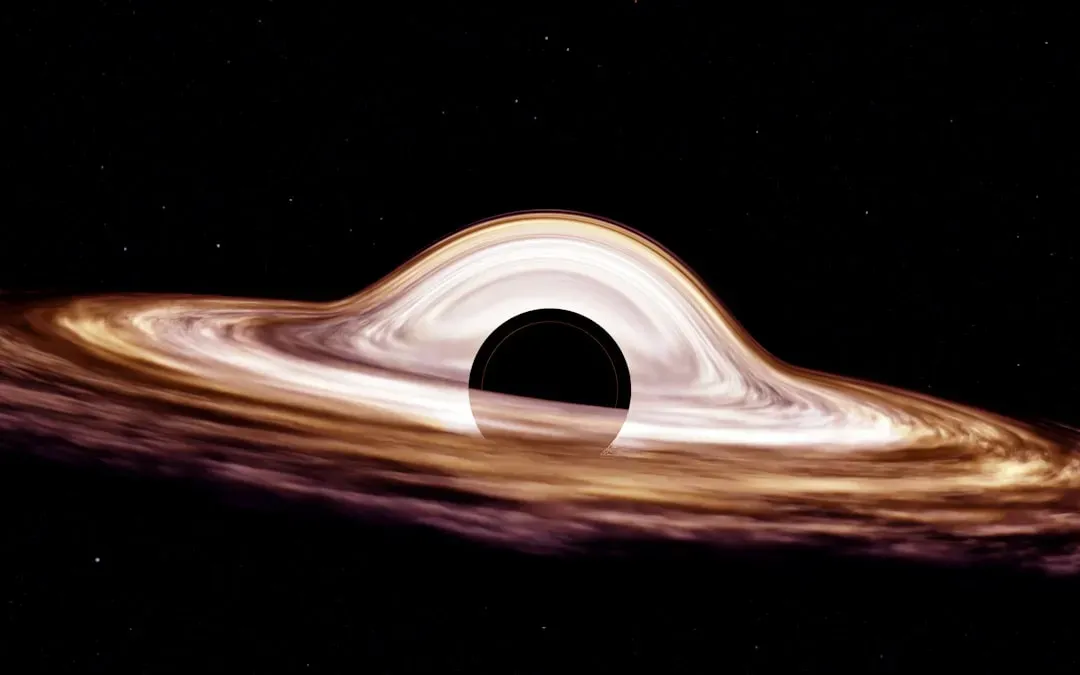
A black hole is not a cosmic vacuum cleaner or a hole in space; it’s a place where gravity has won completely. Imagine crushing a star many times more massive than the Sun into a region smaller than a city, until its gravity is so intense that nothing, not even light, can escape. That “point of no return” around it is called the event horizon, and once something crosses that boundary, it’s not coming back. From the outside, all we can see is this dark, seemingly empty region that gives black holes their spooky name.
The weirdest part is that from far away, a simple black hole is fully described by just a few things: its mass, how fast it spins, and its electric charge. All the messy details about the stars, gas, or even planets that fell in are erased, as if the black hole “forgets” what it has eaten. It’s like shredding a library’s worth of books, only to be left with a single number on a scale. That ruthless simplicity makes black holes both elegant and deeply unsettling.
Spacetime as a Stretchy Fabric
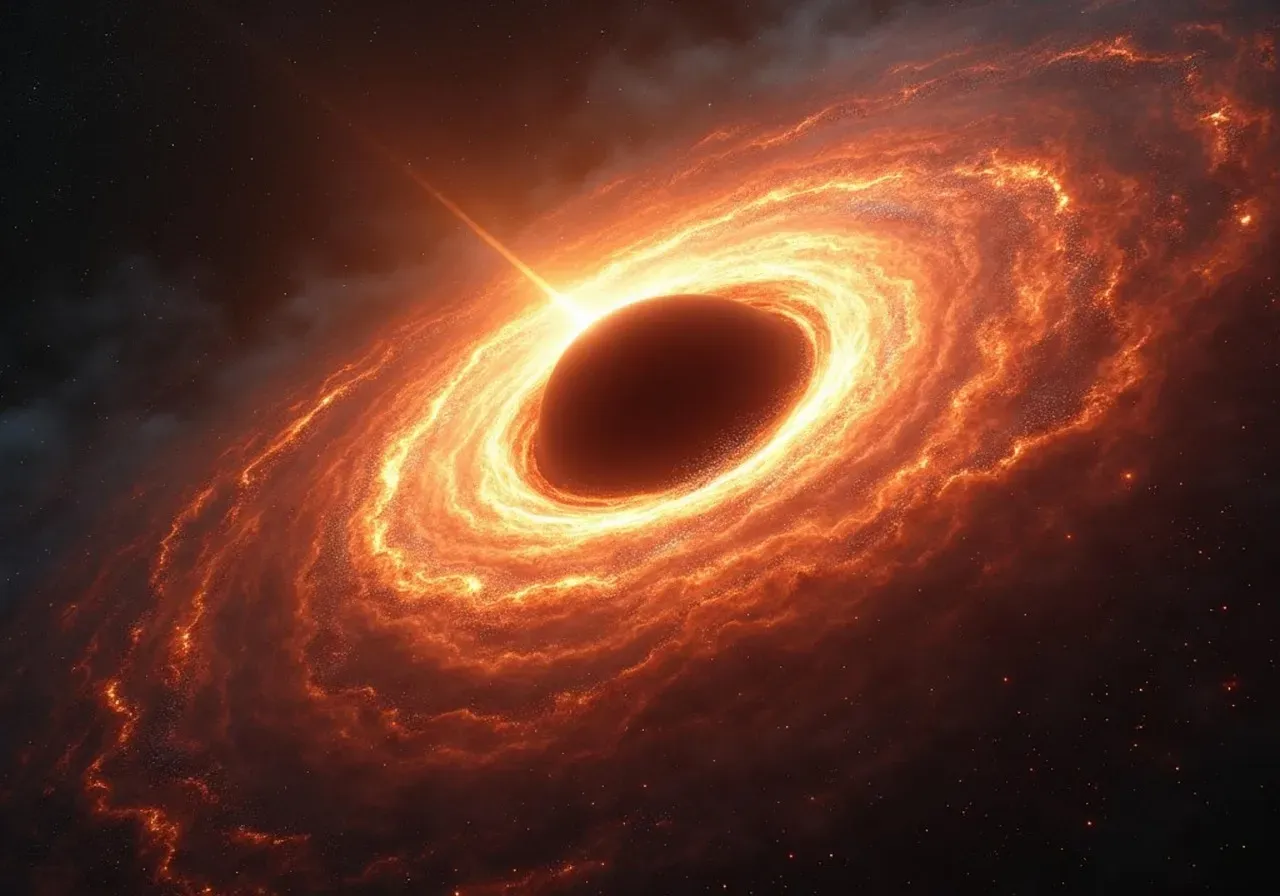
The key to understanding black holes is to stop thinking of gravity as a force that pulls, and start thinking of it as geometry that bends. Picture space and time together as a stretchy rubber sheet, and imagine placing a heavy bowling ball on it; the ball creates a dip. A small marble rolling nearby curves around the dip, not because the ball is “pulling” it, but because the surface itself is warped. In Einstein’s theory, mass and energy bend this fabric of spacetime, and black holes are regions where that bending becomes extreme.
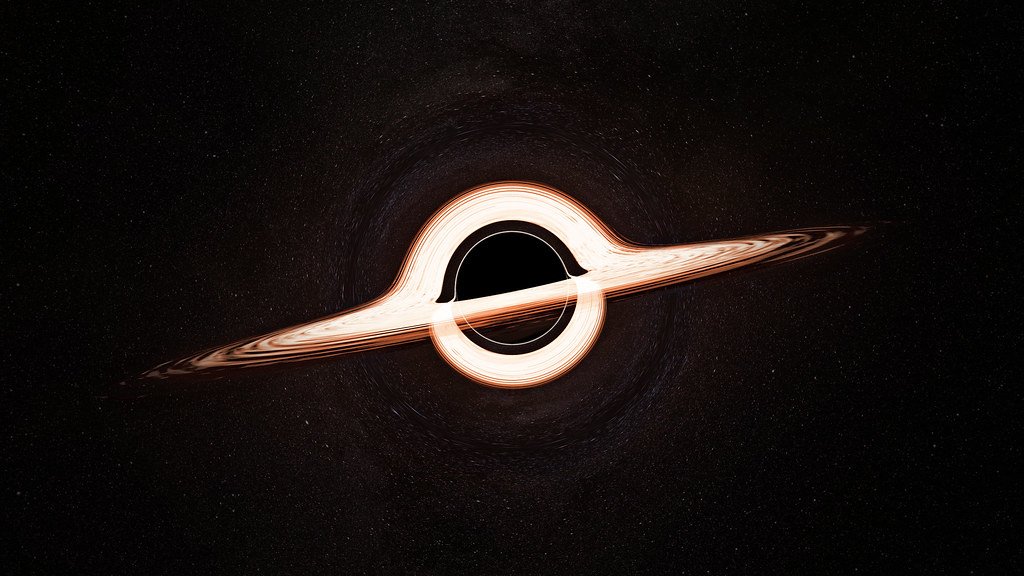
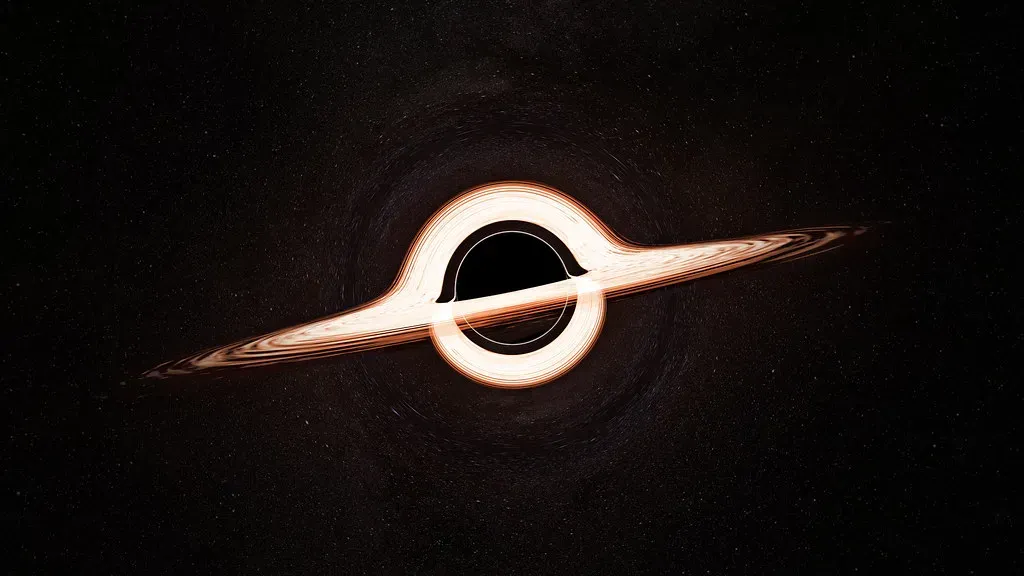
Near a black hole, spacetime isn’t just gently curved – it’s like the rubber sheet has been yanked down into a steep, almost bottomless funnel. Light rays, which normally travel in straight lines, are forced to curve so sharply that some spiral inward and never escape. From our vantage point, it looks like the universe has a missing piece where light should be, a shadow framed by warped starlight around it. That famous image of a black hole taken by the Event Horizon Telescope is basically a photograph of bent spacetime.
The Event Horizon: A One-Way Door
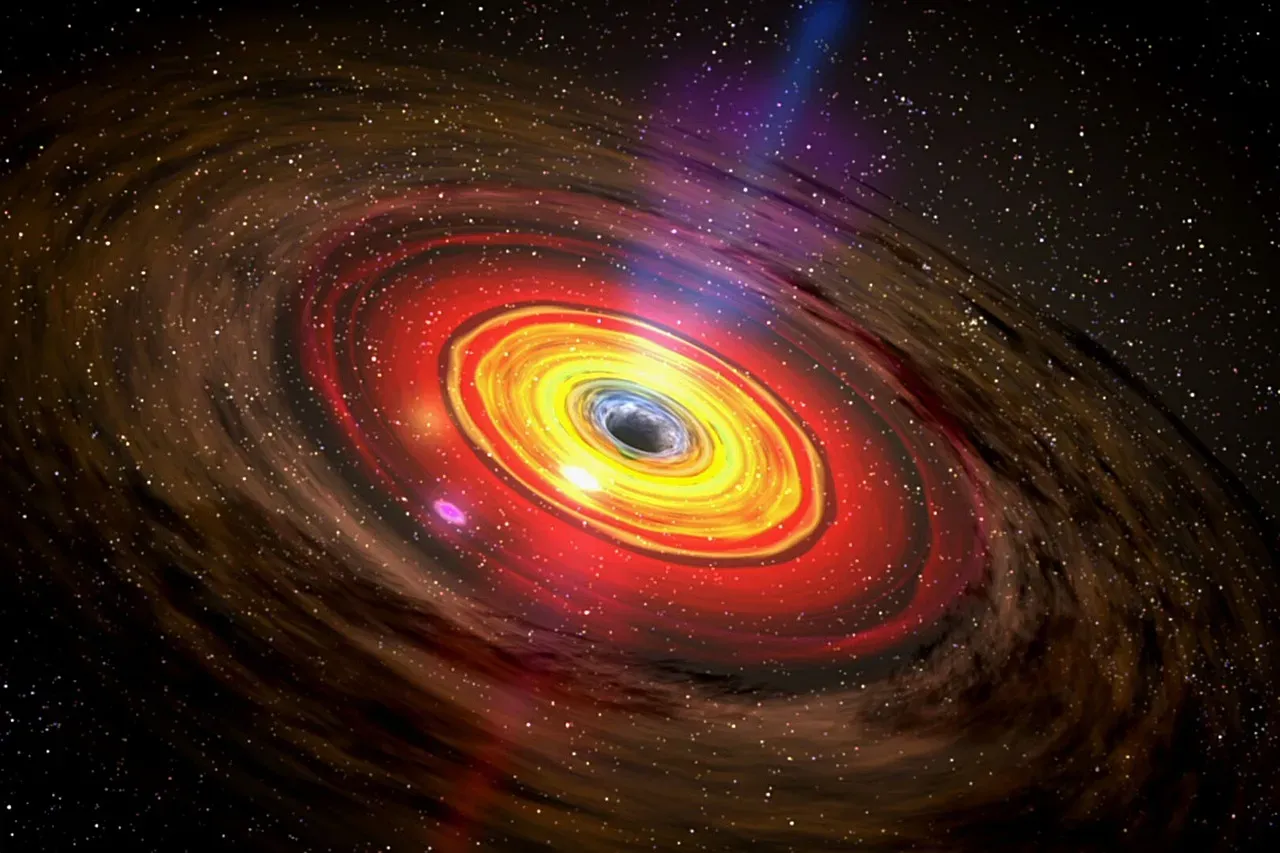
The event horizon is arguably the strangest “surface” in the universe: a boundary you can cross but never recross. It’s not made of matter; there’s no wall or membrane you’d bump into. Instead, it’s the location where escape becomes impossible, even for something moving at the speed of light. If you fired a rocket outward from just inside the horizon with unlimited fuel, no matter what you did, you’d still head inward toward the center. The geometry of spacetime has tilted too far.
From the outside, time near the event horizon appears to slow almost to a stop, thanks to extreme gravitational time dilation. If a friend fell toward a black hole, you’d watch their clock tick slower and slower, and they’d seem to freeze at the edge, fading from view. But in their own experience, they’d cross the event horizon quickly without noticing anything special at that exact location. Two people experiencing the same event can disagree completely about what happened and when, and yet both are right in their own frames of reference.
Spaghettification: When Tides Turn Deadly
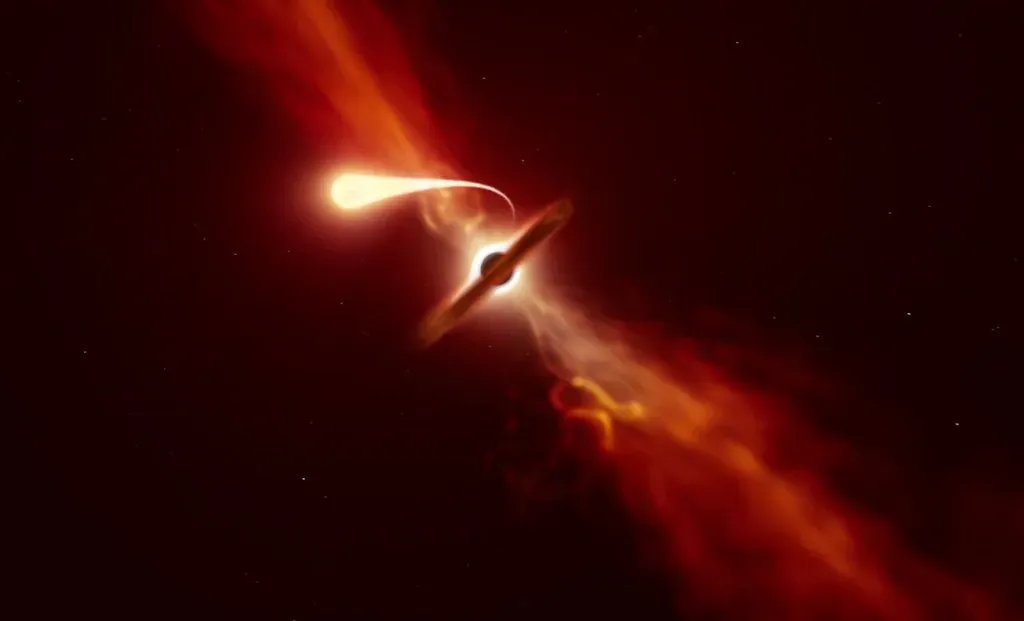
As you get closer to a black hole, gravity changes dramatically from your head to your feet. This difference is called a tidal force, and it’s the same effect that causes tides on Earth, although in a much gentler way here. Near a small black hole, those tidal forces become so extreme that your feet are pulled much harder than your head. The result is what physicists jokingly call spaghettification: you’d be stretched out into a long, thin strand like a cosmic noodle.
For a massive black hole, like the giants at the centers of galaxies, the story is a bit kinder at first. The event horizon of these monsters is so large that the tidal forces at the boundary can be surprisingly mild, so you might cross without instantly being torn apart. But as you move inward, closer to the central region where the mass is effectively concentrated, the tides ramp up viciously. No matter how big the black hole, if you go far enough in, physics as we know it stops being a helpful guide to survival.
The Singularity: Where Our Equations Break
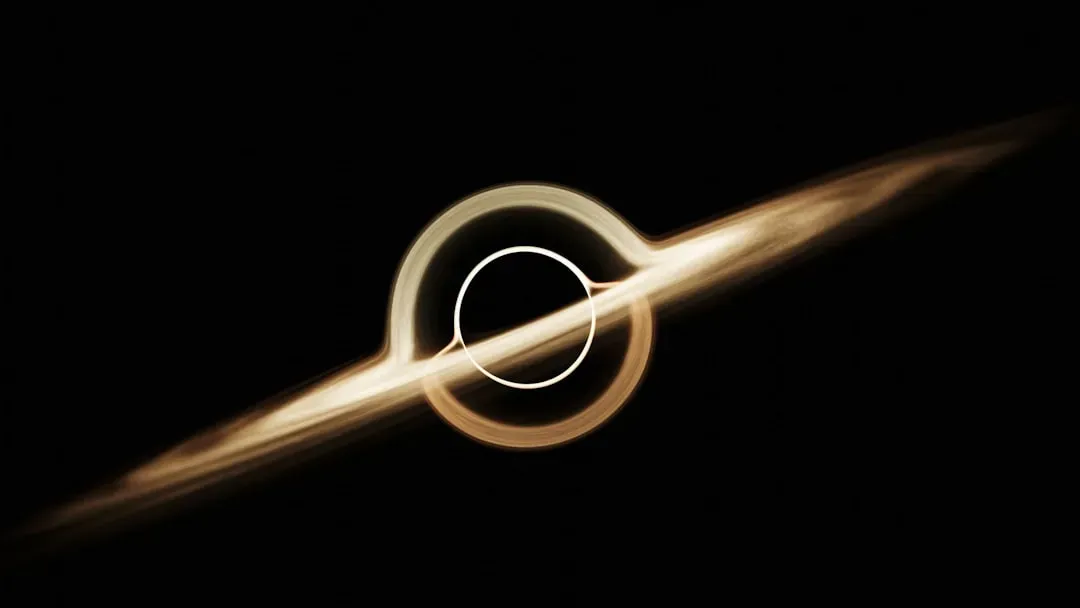
At the heart of a black hole, our current theories predict a singularity – a region where density becomes infinite and spacetime curvature blows up. That word “infinite” is usually a red flag in physics, a sign that the math is being pushed beyond where it’s trustworthy. It’s less that there really is an infinitely small point, and more that our best recipe for the universe, general relativity, stops working reliably. Trying to describe the singularity with existing equations is like trying to measure atoms with a yardstick.
Most physicists think that a better theory, one that successfully combines quantum mechanics with gravity, would smooth out this singularity in some way. But we don’t yet have that unified description nailed down, despite decades of effort. There are ideas involving quantum loops, extra dimensions, and exotic states of matter, but nothing universally accepted. Inside the singularity region, the story simply cuts to static; it’s the part of the movie reel that hasn’t been filmed yet. For now, the singularity stands as a stark reminder that even our most successful theories have limits.
Black Holes Are Not Completely Black
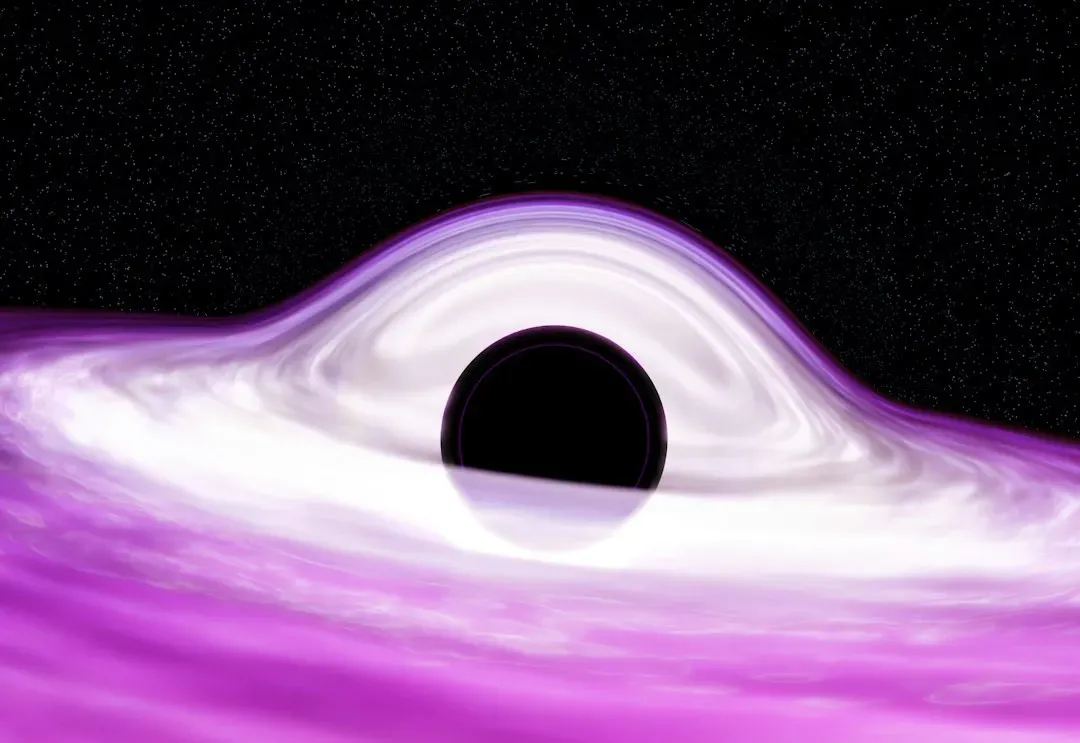
For a long time, physicists believed that nothing could escape from a black hole, making it a perfect cosmic prison. Then quantum theory crashed the party and changed everything. When you consider tiny quantum fluctuations near the event horizon, you find that particle pairs can flicker into existence, with one falling in and the other escaping. From far away, this looks like the black hole itself is radiating, slowly leaking energy. This effect, called Hawking radiation, means black holes can, in principle, evaporate over enormous stretches of time.
That idea leads to a deeply unsettling puzzle: if black holes evaporate, what happens to the information about everything that fell in? In ordinary physics, information is never truly destroyed; it might be scrambled beyond recognition, but it’s still there in some form. With black holes, it seems to vanish irreversibly, which clashes with the rules of quantum mechanics. This clash has driven fierce debates and creative new ideas, from holographic principles to the notion that the information is somehow encoded on the horizon itself. Black holes, in other words, are forcing us to rethink what it even means for something to exist and be knowable.
We’ve Actually Seen Their Shadows and Heard Their Collisions
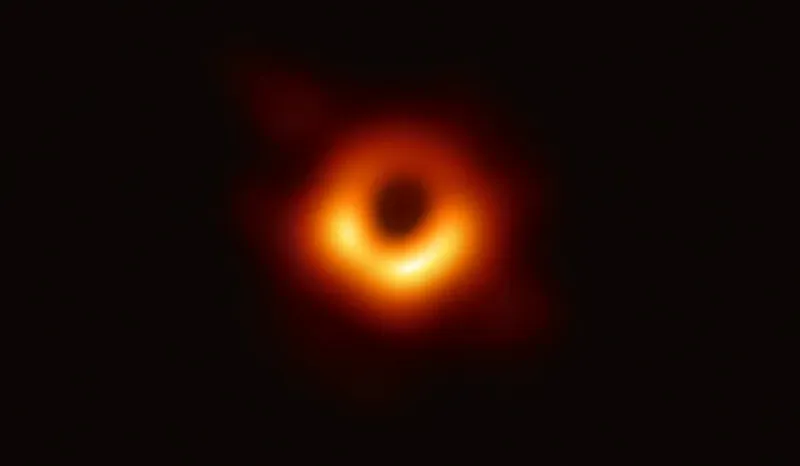
Black holes were once purely theoretical, but over the past decade, they’ve stepped into the spotlight in astonishing ways. Telescopes tracking stars at the center of our galaxy have watched them whip around an invisible heavyweight, revealing the presence of a supermassive black hole called Sagittarius A*. In 2019, a global network of radio telescopes stitched together data to produce the first direct image of a black hole’s shadow, a glowing ring of light surrounding an abyss. It was like finally seeing the outline of a monster we’d only known from footprints.
Even more dramatic are the ripples in spacetime detected by observatories that listen for gravitational waves. When two black holes spiral together and merge, they send out tiny vibrations in the fabric of spacetime that can be measured here on Earth. Those signals are literally recordings of distant cosmic collisions, letting us “hear” black holes crashing together. Each new detection adds another clue about how often they form, how big they can get, and how galaxies grow around them. Black holes have gone from abstract equations to some of the most directly studied and confirmed objects in modern astronomy.
Why Black Holes Matter for the Rest of Physics
Black holes might seem like niche curiosities, tucked far away in deep space, but they sit right at the crossroads of our biggest questions about reality. They force general relativity and quantum mechanics, our two great but incompatible theories, into a head-on collision. Any successful attempt to resolve their paradoxes will likely reshape how we think about space, time, and matter everywhere, not just near extreme objects. In that sense, black holes are like natural laboratories for the most ambitious physics we can imagine.
They also shape the visible universe in very practical ways. Supermassive black holes help regulate how galaxies grow, stirring and heating gas, influencing where and when new stars can form. Their violent feeding episodes can light up as quasars that are visible across billions of light-years, acting as beacons that let us probe the distant past. So even if you never get anywhere near one – and you definitely should not want to – the story of black holes is intertwined with the story of everything else. The strangest objects in the cosmos turn out to be central characters in explaining why the universe looks the way it does.