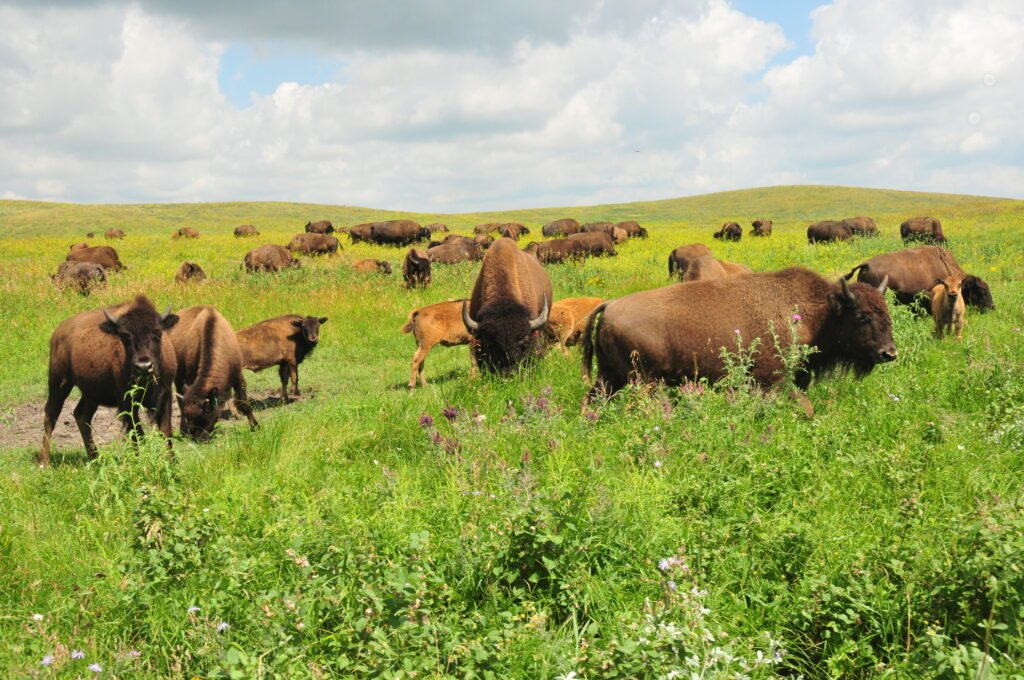

Picture this: millions of massive, shaggy beasts thundering across endless grasslands, their hooves creating earthquakes that could be felt miles away. These weren’t just animals—they were living, breathing architects of an entire continent, shaping landscapes and cultures in ways that still echo today. Yet in the span of just a few decades, this incredible force of nature was reduced to fewer than 1,000 individuals, bringing one of North America’s most iconic species to the very edge of extinction.
The Thunder That Shook the Plains
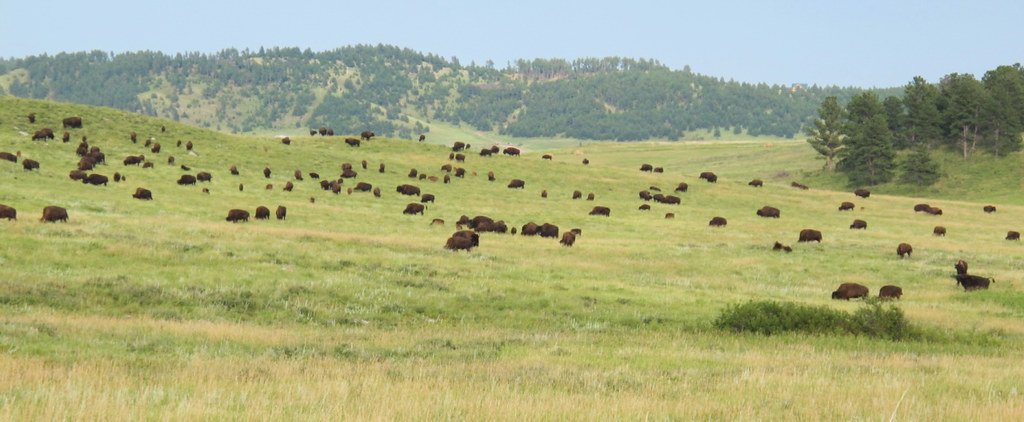
With an estimated population of 60 million in the late 18th century, American bison were once the defining feature of North America’s Great Plains. These weren’t just big animals wandering around—they were massive ecosystem engineers that literally created the landscape we know today. The largest terrestrial animals in North America, bison are characterized by a hump over the front shoulders and slimmer hindquarters, and their size was matched only by their incredible impact on the environment. When you think about 60 million creatures, each weighing up to 2,000 pounds, moving across the continent in synchronized waves, it’s no wonder early explorers described their migration as sounding like continuous thunder. The sheer scale of these herds was beyond anything we can imagine today, stretching from horizon to horizon in what must have been one of the most spectacular wildlife displays on Earth.
Nature’s Landscape Architects
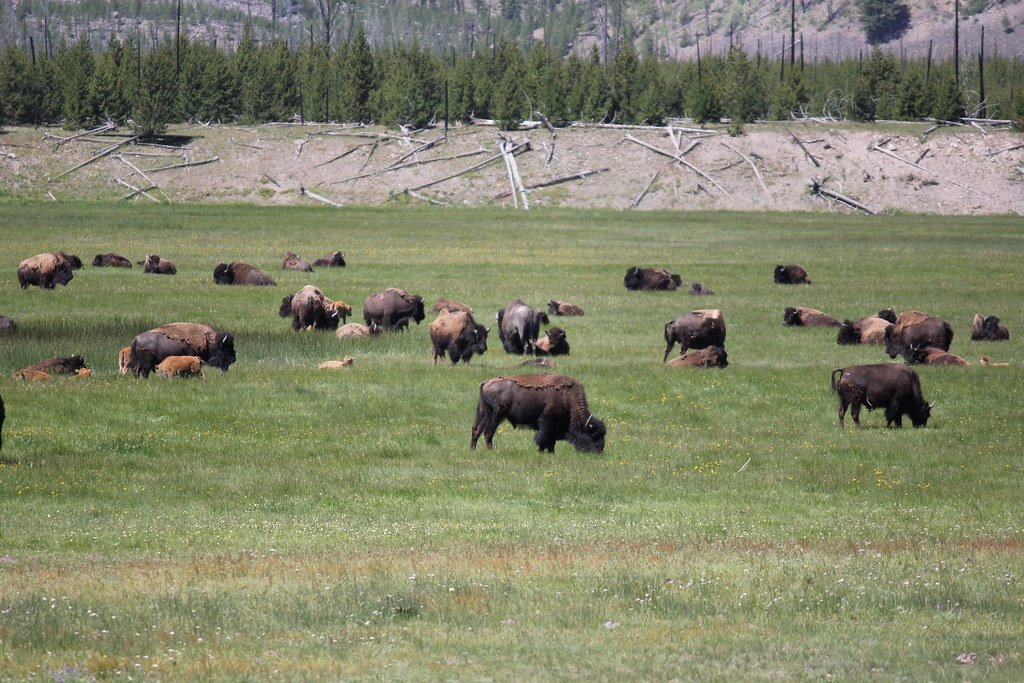
Bison, a keystone species, help create habitat on the Great Plains for many different species, including grassland birds and even many plant species. As bison forage, they aerate the soil with their hooves, which aids in plant growth, and disperse native seeds, helping to maintain a healthy and balanced ecosystem. Think of bison as the original landscape architects, but instead of using blueprints, they used their massive bodies and unique behaviors. Because bison graze in large, dense groups their grazing creates mosaics of different grass heights across the landscape. This heterogeneity is important to many species. Unlike cattle that graze uniformly, bison created a patchwork of habitats—some areas closely cropped, others left tall and wild. Their wallowing behavior created thousands of small depressions that collected rainwater, becoming mini-wetlands that supported completely different plant and animal communities. It’s like having a master gardener who works on a continental scale, except this gardener weighs a ton and has horns.
The Poop That Built an Ecosystem

Here’s something that might surprise you: bison poop was absolutely crucial to the health of the Great Plains. According to the National Park Service, “bison pies are elixirs of nutrients for the prairie, spreading seeds, fertilizing the soil, and attracting insects” like dung beetles and flies. Both bison feces and urine provide sources of nitrogen, phosphorus, calcium, sulphur and magnesium. The insect communities they attract—as many as 300 different species of insects may be found in a single bison pat—are key to spreading nutrients to the rest of the prairie. This might sound gross, but it’s actually incredible science in action. Each bison pat was like a tiny ecosystem unto itself, supporting hundreds of species and slowly releasing nutrients back into the soil over months or even years. The scale of this natural fertilization system, with millions of bison continuously enriching the soil, helped create some of the most fertile grasslands on the planet.
The Sacred Bond That Lasted Millennia

For thousands of years, Native Americans relied heavily on bison for their survival and well-being, using every part of the bison for food, clothing, shelter, tools, jewelry and in ceremonies. “We call ourselves Buffalo People,” explains Summer Afraid of Hawk (Cheyenne River Lakota), a herd development grant specialist. This wasn’t just about hunting animals for food—it was a deeply spiritual relationship that shaped entire cultures. Over these several thousand years, according to environmental historian Dan Flores, Indigenous peoples and bison “co-evolved” – meaning they influenced the others’ actions and behaviors. Native Americans didn’t just take from the bison; they gave back through careful management of the grasslands, using controlled burns to create the fresh growth that bison preferred. John Fire Lame Deer (Tahca Ushte), spiritual leader, stated, “The buffalo gave us everything we needed. Without it we were nothing. Our tipis were made of his skin. His hide was our bed, our blanket, our winter coat. It was our drum, throbbing through the night, alive, holy. Out of his skin we made our water bags. His flesh strengthened us, became flesh of our flesh”.
The Spiritual Connection That Transcended the Physical

Bison were seen as intermediaries between the physical and spiritual worlds, and their sacrifice during these ceremonies was believed to ensure the prosperity and well-being of the tribe. Gerard Baker, an elder from the Mandan-Hidatsa tribes, shared in a new PBS documentary film on the American bison, “When you look at a buffalo you just don’t see a big shaggy beast. You see life, you see existence, you see hope. Those are our relatives. They are a part of us”. The relationship between Native Americans and bison went far beyond the practical—it was deeply spiritual and cultural. The Lakota believe this landscape to be their “most sacred and culturally significant” area because it is a place of genesis for humans and bison. Many tribes believed that humans and bison were created together, meant to live in harmony on the same land. This spiritual bond influenced everything from naming ceremonies to religious rituals, with the bison serving as a bridge between the earthly and divine realms.
The Web of Life That Depended on Giants
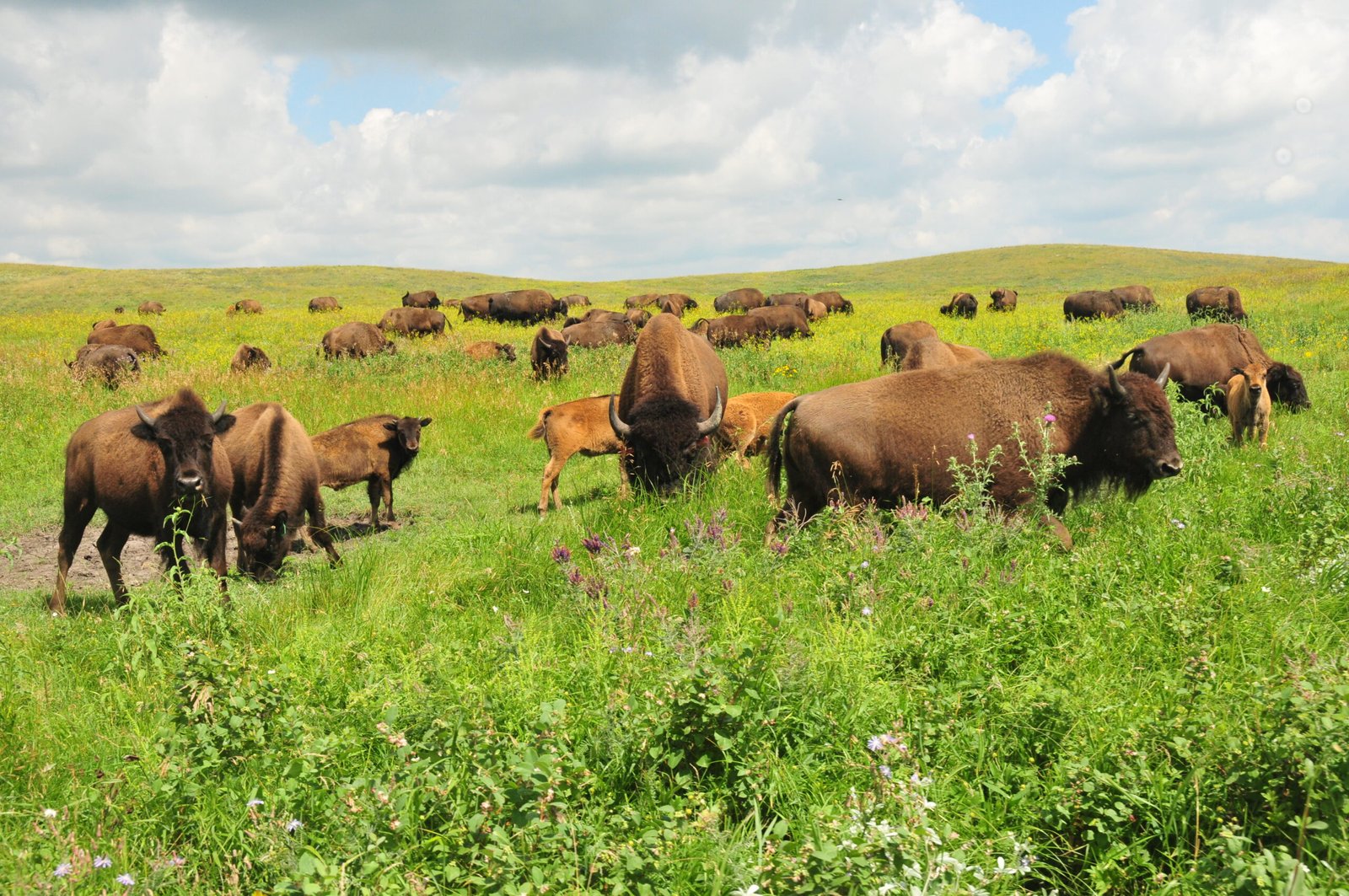
Grassland birds such as sharp-tailed grouse and burrowing owls depend on bison to create a variety of habitat in the prairie through their wallowing and grazing. Magpies even ride on bison to feed on insects in their fur. The bison’s influence on other wildlife was like a massive chain reaction of life. In the winter, bison make it possible for species like pronghorn to thrive. Pronghorn are unable to dig through the snow to find food, so they have a difficult time surviving the long hard prairie winters. But, bison use their massive heads to push the snow out of the way, exposing grass and other vegetation to eat. During the winter, pronghorn are able to eat in the places that the bison have uncovered. This kind of relationship existed with dozens of species—from tiny insects to large predators. The bison weren’t just living on the landscape; they were actively creating opportunities for other species to survive and thrive. Even their massive skulls and bones, after death, became important habitat features, providing shelter for small animals and slowly releasing nutrients into the soil.
The Arrival of a New Kind of Thunder

The westward expansion of European settlers across the continent in the 19th century was the primary driver in the rapid decline of bison in North America. But this wasn’t just about more people arriving—it represented a completely different way of thinking about the land and its animals. While Native Americans had lived in harmony with bison for thousands of years, European settlers saw them primarily as resources to be extracted or obstacles to be removed. Railways, rifles, and an international market for buffalo hides led to “the Great Slaughter” from about 1820 to 1880, when the bison population plummeted from 30-60 million (estimates vary) to fewer than 1,000 animals by the 1890s. The transcontinental railroad was like a knife cutting through the heart of bison country, dividing the great herds and making it easier for hunters to ship hides and meat to distant markets. What had taken thousands of years to build was being destroyed in mere decades.
The Calculated Cruelty of Extinction

The American government encouraged elimination of the Plains Indians’ primary food source, the bison. The idea was to kill off the Buffalo to starve the Indians, force them into relatively small areas, or north into Canada – make their food source either scarce or non-existent. This wasn’t just commercial hunting gone wrong—it was a deliberate strategy of cultural genocide. “Every buffalo dead is an Indian gone”, said Columbus Delano, the Secretary of the Department of the Interior in the early 1870s. Military leaders understood that destroying the bison meant destroying the foundation of Plains Indian culture and forcing Native Americans onto reservations. Military commanders were given license to kill as many buffalo as possible. Dignitaries from around the world attended massive hunts organized by the U.S. army. Troops shot buffalo for target practice. The U.S. government encouraged the slaughter by providing settlers and tourists with ammunition and reward money. The scale of this killing was industrial—hunters would shoot hundreds of animals in a single day, take only the hides and tongues, and leave the rest to rot on the plains.
The Silence That Fell Across the Plains
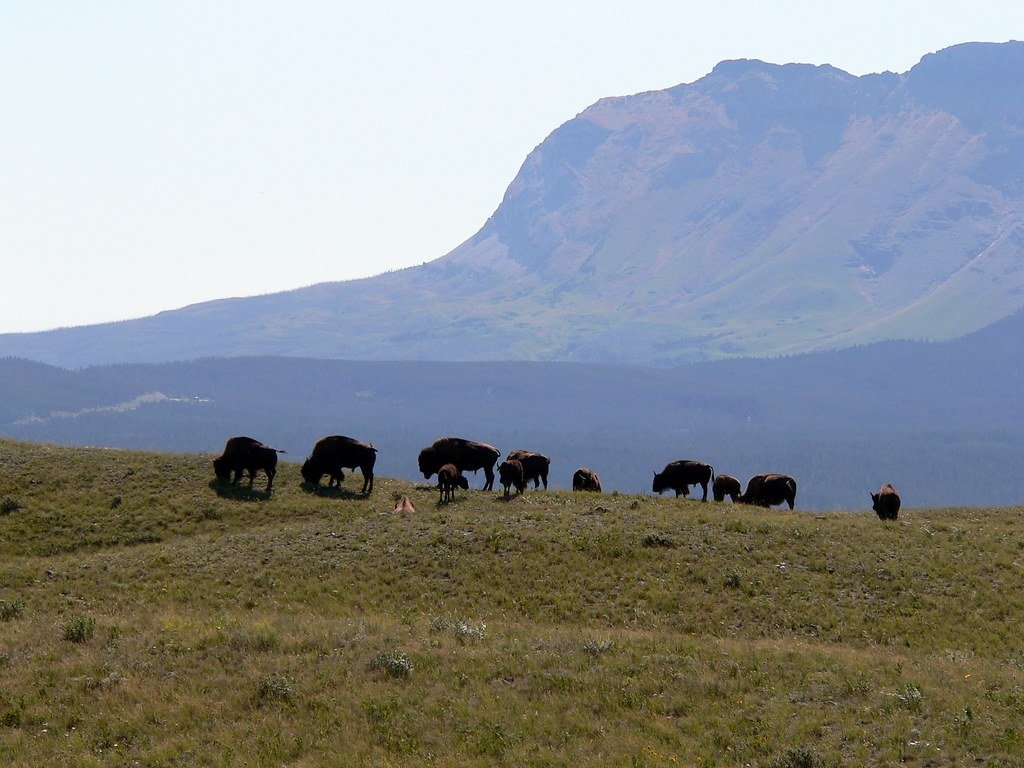
With an estimated population of 60 million in the late 18th century, the species was culled down to just 541 animals by 1889, with some estimates suggesting the population dropped even lower. Imagine the silence that must have fallen across the Great Plains as the thunder of millions of hooves was replaced by empty grasslands stretching to the horizon. At their lowest numbers, some estimated that there were only 300 bison that survived the slaughter, bringing the species to the brink of extinction. The ecological impact was immediate and devastating—without their architects, the grassland ecosystems began to change. Plant communities shifted, soil quality declined, and countless other species that had depended on bison-created habitats struggled to survive. It was like watching a finely tuned ecosystem unravel thread by thread, leaving behind a shadow of what had once been one of the world’s most spectacular natural systems.
The Heroes Who Refused to Let Giants Die

The genocide of the American Bison stopped and their recovery started in 1905 when William T. Hornaday, director of the New York Zoological Park (now the Bronx Zoo), created the American Bison Society and a breeding program in 1905, and became its president. Theodore Roosevelt helped protect the remaining buffalo and accepted the position as the society’s honorary president. But the real heroes were often individuals acting alone, driven by the desperate realization that they were witnessing the end of an era. During that period, a handful of ranchers gathered remnants of the existing herds to save the species from extinction. Had it not been for a few private individuals working with tribes, states and the Interior Department, the bison would be extinct today. These weren’t wealthy conservationists or government officials—they were ordinary people who saw something irreplaceable disappearing and decided to act. Some captured wild calves and raised them in secret, others negotiated with tribes to protect the last remaining herds. Their actions, often undertaken at personal risk and expense, literally saved an entire species from vanishing forever.
The Genetic Bottleneck That Nearly Broke a Species

Each of the privately ranched herds had an initial effective population size (Ne) of an estimated 5 to 7 individuals, for a total combined effective population size of between 30 and 50 individuals, from which all of the modern plains bison descend. This is what scientists call a population bottleneck, and it’s one of the most severe ever recorded for a large mammal. Bison are a species of conservation concern in part because they suffered a severe population bottleneck at the end of the 19th century. Think about it: every single bison alive today can trace its ancestry back to just a few dozen individuals. This is especially true of the Texas State Bison Herd, which underwent very extreme genetic bottlenecking, with a founding population of only 5 individuals. The Texas State Bison Herd (TSBH), also known as the Goodnight herd, was established by Charles Goodnight in the mid-1880s with five wild-caught calves. The genetic implications of this bottleneck continue to affect bison populations today, limiting their genetic diversity and making them more vulnerable to diseases and environmental changes.
The Yellowstone Miracle That Kept the Wild Alive
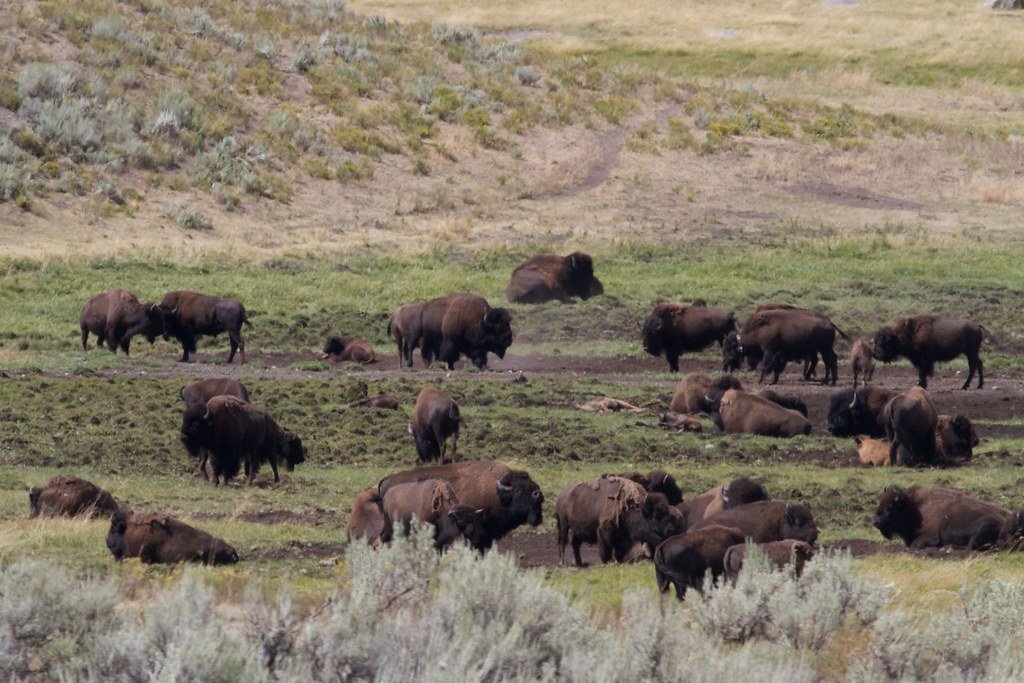
Yellowstone National Park is the only place in the U.S. where bison have continuously lived since prehistoric times. Although the original 23 remaining bison in Yellowstone were supplemented with approximately 25 bison from private Montana and Texas herds, Yellowstone’s bison are the only pure descendants of early bison that roamed our country’s grasslands. This is absolutely remarkable—while the rest of the continent fell silent, a tiny population of bison continued to roam wild in Yellowstone, maintaining their natural behaviors and seasonal migrations. As of August 2016, Yellowstone’s bison population was estimated at 5,500 — making it the largest bison population on public lands. These Yellowstone bison are living treasures, carrying within their genes and behaviors the memory of how wild bison lived for thousands of years. They still migrate seasonally, still wallow and graze in ancient patterns, still embody the wild spirit that once defined the American continent.
The Science That Revealed Ancient Partnerships

The pastures grazed by the bison had a native plant species richness increase of 86 percent compared to the ungrazed portion of the prairie. Dozens of native plant species returned to the prairie. This suggests that the long-term presence of bison is inherently linked to these plants’ survival. Modern research has revealed something incredible: bison and prairie plants evolved together over thousands of years, creating partnerships so tight that many native plants literally cannot survive without bison grazing. To explain these results, researchers hypothesize that bison exhibit a trait called keystone herbivory. This means that they control dominant grasses that would otherwise outcompete and take over the prairie ecosystem. Bison selectively graze four grass species that proliferate in the ungrazed system. Native plant diversity increased by only 30 percent under the cattle treatment—less than half the positive effect of bison (86 percent). As an added benefit, these gains in biodiversity were resilient to extreme drought. This research has fundamentally changed how we understand prairie ecosystems—they’re not just grasslands, they’re bison-dependent grasslands.
The Comeback That Defied All Odds
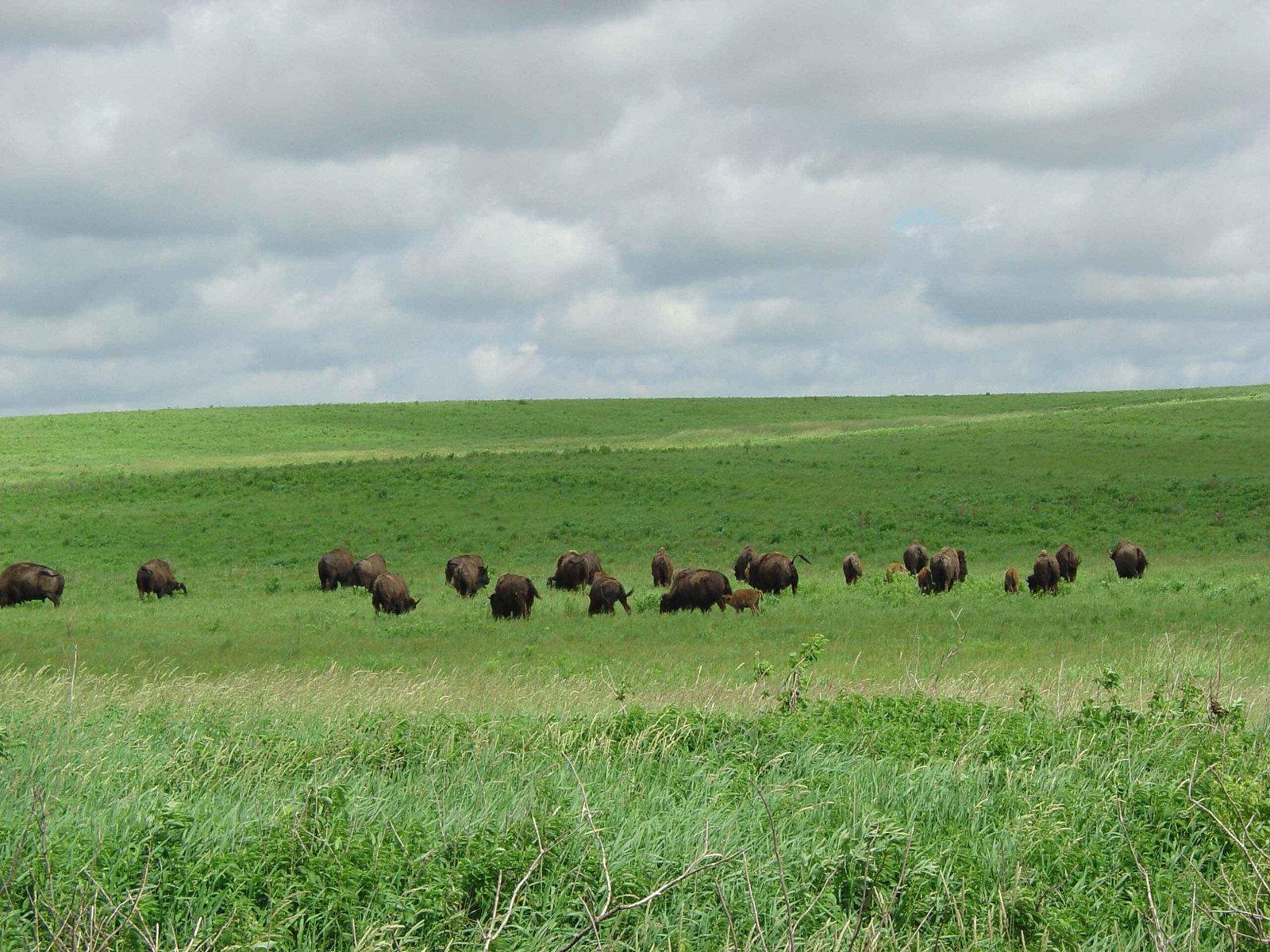
From the late 19th century onwards, the bison population gradually rose from 325 in 1884 to 500,000 in 2017, as a result of careful preservation and a general population boom. This recovery represents one of the most successful conservation stories in American history, though it’s important to understand what “recovery” really means. Of the remaining American bison population, approximately 500,000 individuals are managed as livestock by private commercial ventures, while conservation herds are comprised of around 30,000 individuals. Bison occupy less than one percent of their historical range with fewer than 20,000 bison in conservation herds on public, tribal or private protected lands. So while the numbers sound impressive, most of these bison live more like cattle than wild animals. The truly wild, free-roaming bison—the ones that still embody the spirit of the great herds—number in the thousands rather than millions. Still, going from near-extinction to half a million animals represents an incredible achievement that required decades of dedicated work by scientists, conservationists, and Native American tribes.
The Cultural Resurrection of the Buffalo People

Today, bison are central to many American Indian traditions, spiritual rituals and healthy diets, and more than 60 tribes are bringing their sacred Brother Buffalo back to their families, lands and ways of life. In 1991, tribes from over twenty states united to form the InterTribal Buffalo Council. Representatives from the Lakota, Crow, Shoshone-Bannock, Gros Ventre/Assiniboine, Blackfeet, Pueblo, Winnebago, Choctaw, Round Valley, and other tribes convened in South Dakota, uniting to restore bison populations on tribal lands for cultural and spiritual enhancement and preservation