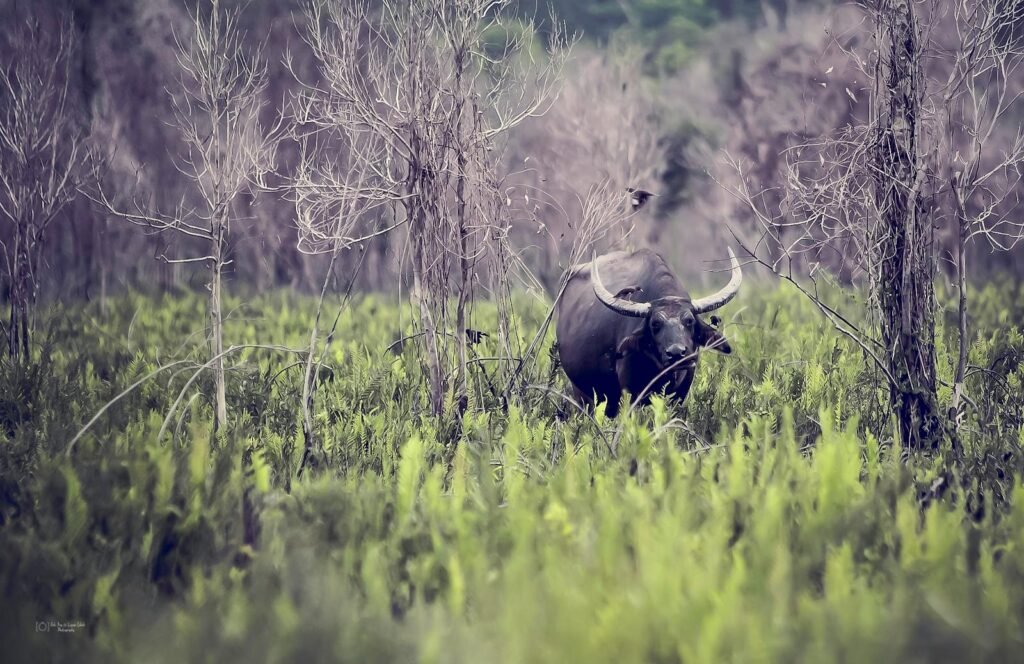

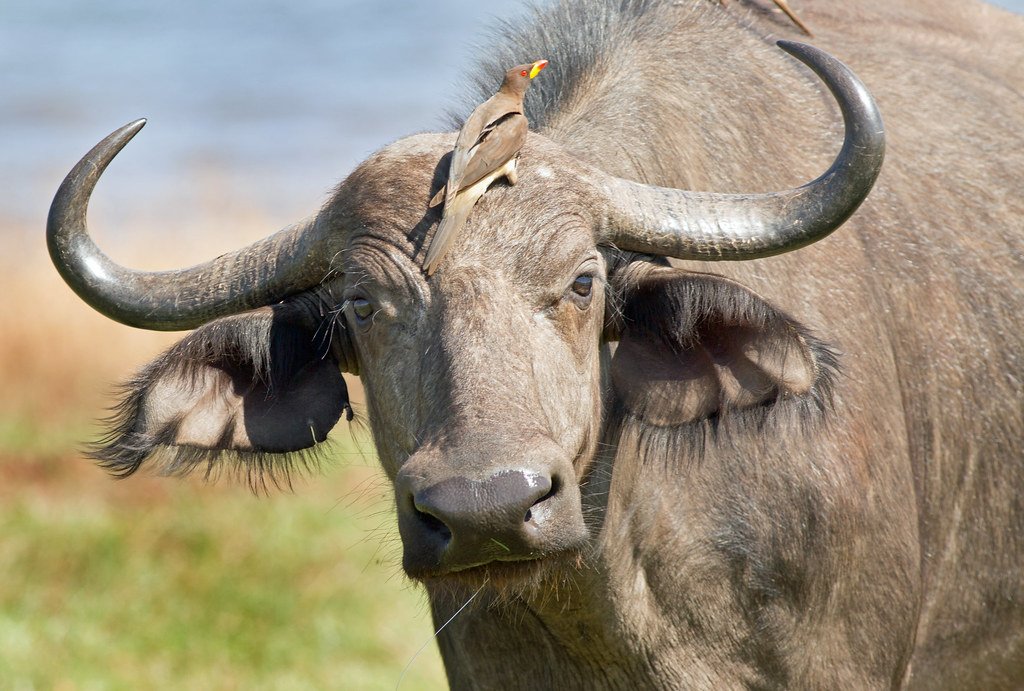
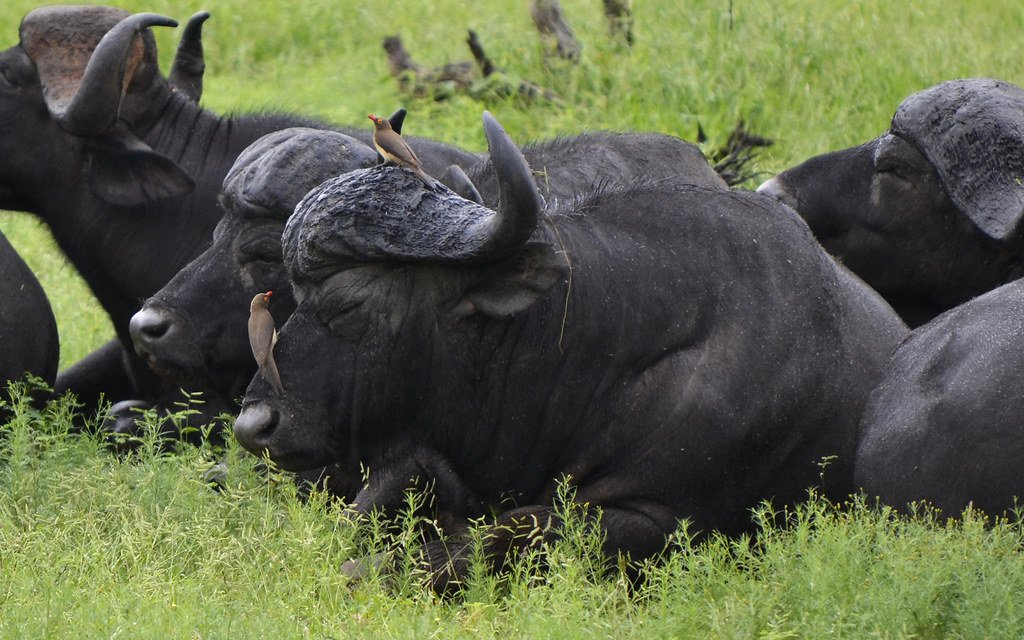
Picture this: a massive African buffalo stands motionless in the savanna heat, while tiny red-billed oxpeckers dance across its hide like living decorations. Meanwhile, deep in the buffalo’s gut, millions of microscopic bacteria work tirelessly to break down tough grasses. This isn’t just a random collection of creatures sharing space – it’s one of nature’s most remarkable survival partnerships.
These three wildly different species have evolved together over millions of years, creating a relationship so intricate that removing just one piece could cause the entire system to collapse. What makes this partnership even more fascinating is how each species has developed unique adaptations specifically to benefit the others, turning what could be a competition for resources into a masterclass in cooperation.
The African Buffalo: A Living Ecosystem on Four Legs

The Cape buffalo stands as one of Africa’s most formidable herbivores, weighing up to 900 kilograms and sporting horns that can span over a meter. But beneath this intimidating exterior lies a walking restaurant and hotel for countless other species. Their thick, dark hide provides the perfect landing platform for birds, while their constant movement through different habitats creates a mobile buffet of parasites and insects.
These massive grazers spend up to 18 hours a day eating, consuming over 35 kilograms of grass daily. Their digestive system is a four-chambered marvel that requires an army of specialized bacteria to break down cellulose – the tough fiber that makes up plant cell walls. Without these microscopic partners, a buffalo would literally starve to death surrounded by food.
Red-Billed Oxpeckers: The Ultimate Pest Control Service
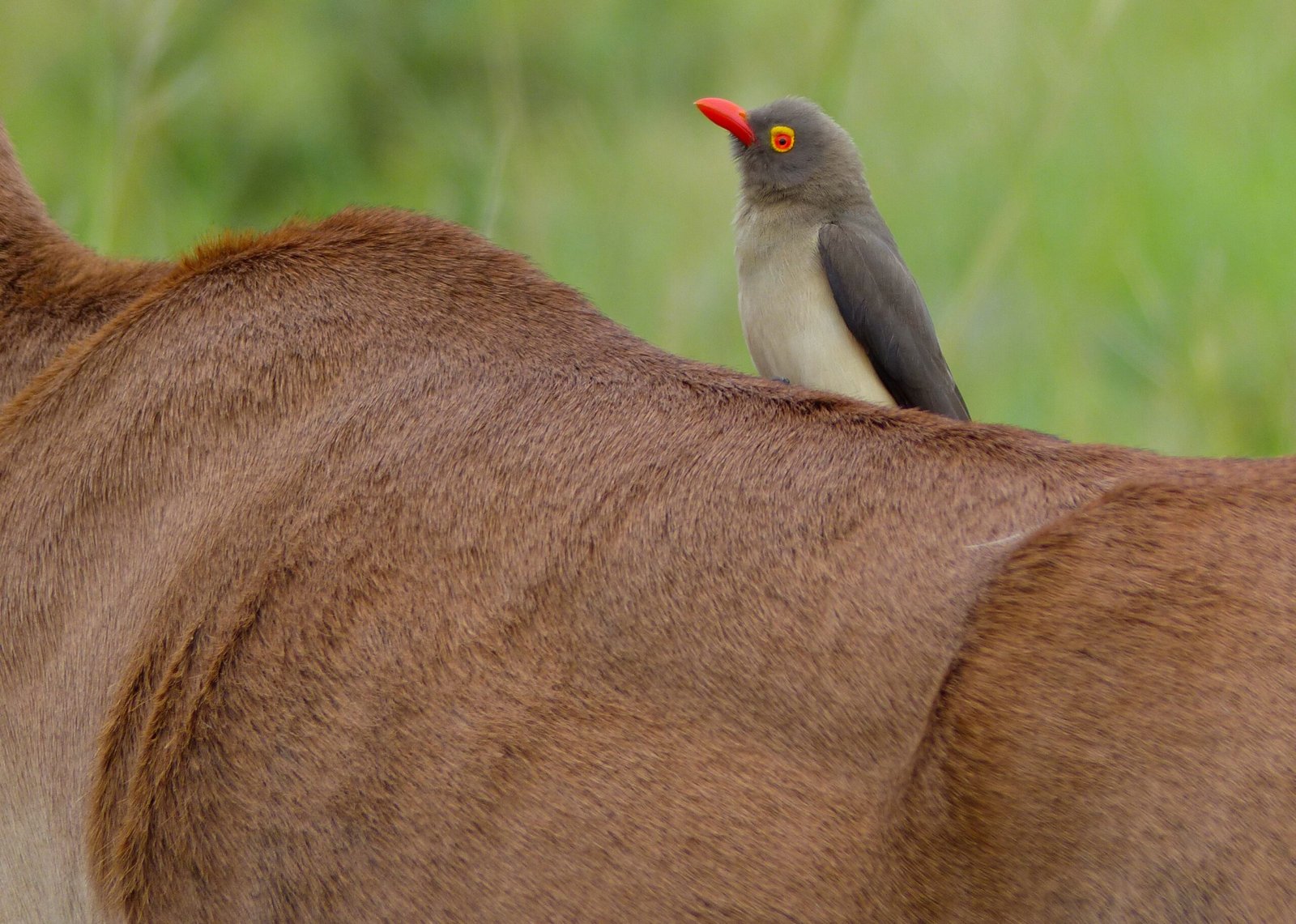
Red-billed oxpeckers might look like ordinary small birds, but they’re actually highly specialized living vacuum cleaners. These remarkable creatures have evolved sharp, pointed beaks perfect for plucking ticks, flies, and other parasites from their massive hosts. A single oxpecker can consume over 100 ticks in a single day, making them worth their weight in gold to any buffalo.
Their feet have also adapted specifically for this lifestyle, with curved claws that grip perfectly onto buffalo hide without causing injury. Even their social behavior revolves around their hosts – oxpecker pairs often establish territories on individual buffalo, following them for weeks or even months. It’s like having a personal cleaning crew that never takes a day off.
The Invisible Army: Gut Bacteria That Make Life Possible
Deep within the buffalo’s digestive system lives an entire universe of microorganisms, with some estimates suggesting over 200 different bacterial species call this place home. These microscopic heroes accomplish something that the buffalo’s own body cannot – they produce enzymes capable of breaking down cellulose into digestible sugars. Without them, all that grass would pass through unchanged, providing zero nutrition.
The most important players in this microscopic orchestra are cellulolytic bacteria, which literally means “cellulose-eating.” These bacteria have evolved over millions of years to specialize in dismantling plant fibers, creating a biochemical factory that operates 24 hours a day. They’re so efficient that they can extract nutrients from plant material that would be completely indigestible to humans or other animals.
A Three-Way Street: How Each Species Benefits

This relationship goes far beyond simple cooperation – it’s a carefully balanced exchange where each participant receives exactly what they need to survive. The buffalo gets relief from painful parasites that could otherwise transmit diseases or cause serious health problems. Some of these parasites, like certain ticks, can carry deadly pathogens that would be fatal to their massive hosts.
The oxpeckers receive not just food, but also protection, shelter, and transportation to new feeding grounds. They save enormous amounts of energy by not having to hunt for food or build traditional nests. Meanwhile, the gut bacteria receive a warm, nutrient-rich environment where they can reproduce and thrive, protected from the harsh external world.
The Science Behind Symbiosis: When Cooperation Beats Competition

Scientists classify this three-way relationship as a form of mutualism, where all participants benefit from the association. This challenges the traditional view of nature as a constant struggle for survival where only the strongest prevail. Instead, it shows how cooperation can actually be a more successful evolutionary strategy than competition.
Research has shown that buffalo with healthy oxpecker populations have significantly lower parasite loads and better overall health outcomes. Similarly, studies of their gut microbiome reveal that buffalo with diverse bacterial communities can extract more nutrients from the same amount of food, giving them a crucial advantage during lean seasons.
Communication Across Species Lines

One of the most remarkable aspects of this relationship is how these three species have learned to communicate with each other despite their vastly different evolutionary backgrounds. Oxpeckers have developed specific alarm calls that warn buffalo of approaching predators, often spotting threats before the buffalo’s own senses detect them. These birds essentially serve as early warning systems, perched high on their hosts with excellent vantage points.
The buffalo, in turn, have learned to interpret these calls and respond appropriately. They might freeze, look in the direction the oxpecker is indicating, or even change direction based on the bird’s warnings. This inter-species communication has evolved to be so sophisticated that some researchers compare it to a primitive language.
The Evolutionary Arms Race That Never Ends

As impressive as this partnership is, it’s constantly evolving and adapting to new challenges. Parasites don’t simply accept their fate – they continue to evolve new strategies to avoid detection and removal by oxpeckers. Some ticks have developed behaviors that make them harder to spot, while others have evolved to burrow deeper into the buffalo’s hide.
This creates an ongoing evolutionary arms race where each species must constantly adapt to stay ahead. The oxpeckers develop better hunting techniques, the buffalo’s immune system becomes more sophisticated, and the gut bacteria evolve new enzyme systems to break down different types of plant material. It’s a never-ending dance of adaptation and counter-adaptation.
When the System Breaks Down: Consequences of Disruption

Unfortunately, human activities are putting increasing pressure on this delicate balance. Habitat destruction forces buffalo herds into smaller, more fragmented areas where oxpecker populations struggle to maintain stable territories. Pesticide use in agricultural areas can poison the insects that oxpeckers depend on, creating food shortages for these specialized birds.
Climate change adds another layer of complexity, altering the timing of insect lifecycles and changing the composition of grasslands that buffalo depend on. When any one component of this three-way partnership suffers, the effects ripple through the entire system. Buffalo without adequate oxpecker services show increased stress levels and reduced reproductive success.
The Ripple Effects: How This Partnership Shapes Entire Ecosystems

The influence of this three-species alliance extends far beyond the immediate participants. Buffalo are considered ecosystem engineers – their grazing patterns create diverse habitats that benefit countless other species. The way they move across the landscape, influenced partly by their oxpecker partners, determines which areas get grazed and which are left to grow tall.
Their dung, enriched by the efficient bacterial processing in their guts, fertilizes the soil and provides nutrients for plants, insects, and other animals. Even their wallowing behavior, which they use partly to discourage parasites, creates water holes that other species depend on during dry seasons. It’s like watching a single partnership create an entire web of ecological relationships.
Seasonal Rhythms: How the Partnership Changes Throughout the Year

This relationship isn’t static – it changes dramatically with the seasons, creating a dynamic partnership that adapts to environmental conditions. During the rainy season, when grass is abundant and lush, the bacterial communities in buffalo guts shift to process these nutrient-rich plants. The easier digestion means buffalo can spend more time in areas with higher parasite loads, providing more food opportunities for oxpeckers.
Dry seasons create different challenges and opportunities. Buffalo must travel longer distances to find adequate food, and their bacterial communities adapt to extract maximum nutrition from tougher, more fibrous grasses. Oxpeckers face their own seasonal challenges, with some parasite species becoming more active during certain times of year.
Comparing Notes: Similar Partnerships Around the World
While the buffalo-oxpecker-bacteria trio is particularly well-studied, similar partnerships exist across the globe. In the Galápagos Islands, marine iguanas rely on small finches to remove parasites, while in their digestive systems, specialized bacteria help them process the tough seaweed that makes up their diet. These parallel evolutions show that cooperation isn’t just a lucky accident – it’s a fundamental strategy for survival.
What makes each partnership unique is how the species involved have fine-tuned their relationship to their specific environment. The African savanna’s particular challenges – from seasonal droughts to specific parasite species – have shaped this three-way alliance in ways that wouldn’t work in other ecosystems.
The Hidden Costs: When Helping Isn’t Always Helping
Despite the obvious benefits, this relationship isn’t always perfectly harmonious. Sometimes oxpeckers can become a bit too enthusiastic in their cleaning duties, pecking at wounds or scratches on the buffalo’s hide. This behavior, called “wound-picking,” can actually delay healing and create opportunities for infections to take hold.
Similarly, certain bacterial species in the buffalo’s gut can sometimes overpopulate, leading to digestive issues or nutrient imbalances. These occasional conflicts remind us that even the most successful partnerships require constant balance and adjustment. Nature rarely provides perfect solutions – just ones that work well enough to keep everyone alive.
Modern Threats: Antibiotics and the Microbiome Crisis

One of the most concerning modern threats to this partnership comes from veterinary treatments designed to help buffalo. Antibiotics used to treat diseases in livestock can devastate the delicate bacterial communities in their digestive systems. When these microscopic partners are wiped out, buffalo can suffer from serious digestive problems and malnutrition, even when surrounded by abundant food.
Researchers are now working to develop more targeted treatments that can address specific health issues without destroying the beneficial bacteria that buffalo depend on. Some are even exploring the possibility of probiotic treatments that could help restore healthy bacterial communities after antibiotic use.
Conservation Challenges: Protecting All Three Partners

Traditional conservation efforts often focus on protecting individual species, but this three-way partnership shows why we need to think more holistically. You can’t save buffalo without also protecting the grasslands they depend on, the oxpeckers that keep them healthy, and even the microscopic bacteria that make their digestion possible.
This means conservation strategies must consider everything from pesticide use in surrounding agricultural areas to the genetic diversity of bacterial communities. It’s a complex challenge that requires cooperation between wildlife managers, farmers, veterinarians, and microbiologists. The good news is that protecting this partnership benefits the entire savanna ecosystem.
Technology Meets Biology: New Tools for Understanding Old Relationships
Advanced DNA sequencing technologies are revolutionizing our understanding of these microscopic partnerships. Scientists can now identify and study bacterial species that were previously invisible, revealing the incredible diversity of life inside buffalo digestive systems. Some researchers have discovered bacterial species that exist nowhere else on Earth except in the guts of specific herbivores.
GPS tracking and remote sensing allow researchers to follow oxpecker-buffalo pairs across vast distances, mapping their movements and understanding how environmental changes affect their partnership. High-speed cameras capture the intricate behaviors involved in parasite removal, revealing techniques that took millions of years to perfect.
The Chemistry of Cooperation: Molecular Signals That Bind Species

Recent research has uncovered an fascinating chemical dimension to this partnership. Buffalo produce specific pheromones that help oxpeckers locate areas with high parasite concentrations, essentially creating a chemical treasure map for their feathered partners. Meanwhile, certain bacterial species in the buffalo’s gut produce compounds that influence the host’s immune system and even behavior.
This chemical communication operates on multiple levels simultaneously. Oxpeckers can detect chemical signals from stressed buffalo, helping them prioritize which animals need attention most urgently. The bacteria, in turn, respond to chemical changes in their environment, adjusting their metabolic processes based on what the buffalo has been eating and how well it’s digesting.
Climate Change: Adapting Ancient Partnerships to Modern Challenges

Climate change is forcing this ancient partnership to adapt faster than ever before. Rising temperatures affect the lifecycle of parasites, potentially creating boom-and-bust cycles that could disrupt oxpecker populations. Changes in rainfall patterns alter the composition of grasslands, challenging the bacterial communities that have specialized in processing specific types of plants.
Buffalo are being forced to migrate to new areas as their traditional grazing grounds become unsuitable, but their bacterial partners need time to adapt to different plant species. Some researchers are studying whether buffalo can “teach” their gut bacteria to process new food sources more quickly, or whether young buffalo inherit bacterial communities better suited to changing conditions.
Hope for the Future: Resilience Through Diversity

Despite these challenges, this three-way partnership has already survived ice ages, volcanic eruptions, and dramatic climate shifts over millions of years. Their secret weapon is diversity – in bacterial species, in oxpecker behaviors, and in buffalo adaptations. This genetic and behavioral diversity provides multiple backup plans when environmental conditions change.
Conservation efforts are now focusing on protecting this diversity rather than just maintaining population numbers. Genetic banks are being established to preserve bacterial strains that might be crucial for future survival. Researchers are also working with local communities to develop sustainable practices that support all three partners simultaneously.
The story of the bird, the buffalo, and the bug reveals something profound about how life works on our planet. In a world that often seems dominated by competition and conflict, these three species have found a way to turn their differences into strengths. The massive buffalo provides mobility and protection, the tiny oxpecker offers precision cleaning services, and the microscopic bacteria perform biochemical miracles that make it all possible.
Their partnership reminds us that cooperation isn’t just a nice idea – it’s often the most successful survival strategy available. As we face our own environmental challenges, perhaps we could learn something from these unlikely allies who have been making it work together for millions of years. What would happen if we approached our problems with the same spirit of mutual benefit that keeps these three species thriving?