
The universe has an origin story that most of us learn in a single phrase: the Big Bang. But in the last two decades, that once-daring idea has started to look almost conservative compared with what cosmologists are now proposing. From bouncing universes to cosmic inflation fields and simulated realities, new theories are chipping away at the comforting simplicity of a single explosive beginning. The more precisely telescopes and particle accelerators probe the cosmos, the stranger the origin story becomes, and the less certain we are that there was ever a clean “before” and “after.” What is emerging instead is a picture where our universe may be just one chapter in a far older, far weirder cosmic saga.
The Hidden Clues in the Cosmic Afterglow
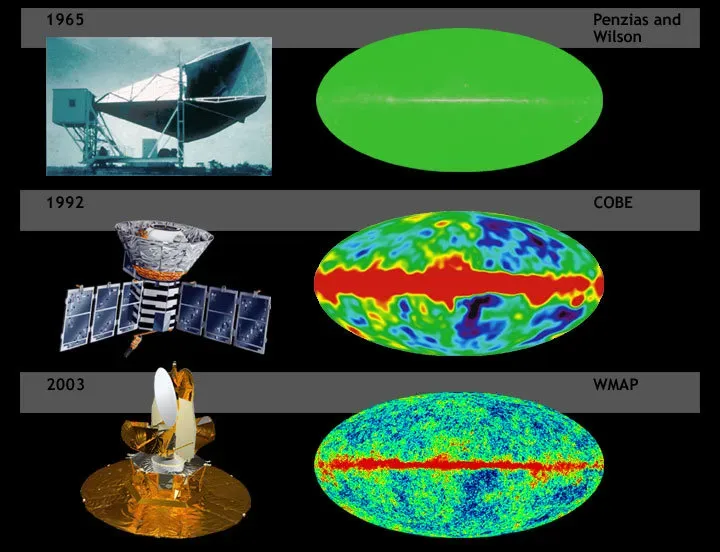
Imagine trying to reconstruct the history of a bonfire from the faint smell of smoke hours later – that is roughly what cosmologists do with the cosmic microwave background. This microwave afterglow, a wash of ancient light filling space, is a snapshot of the universe when it was just a few hundred thousand years old. Tiny temperature ripples in this background act like fossil fingerprints of whatever happened in the first split second. Satellite missions such as WMAP and Planck have mapped those ripples with extraordinary precision, revealing a universe that is strikingly uniform but not perfectly so. Those tiny imperfections are exactly what seeded galaxies, stars, and eventually us.
Yet buried in that apparent smoothness are subtle oddities that fuel new theories about cosmic origins. Some analyses have reported a large-scale asymmetry in the pattern of fluctuations, as if one half of the sky is just a bit different from the other. There are also hints of unexpected “cold spots” that standard Big Bang models struggle to explain without extra ingredients. These puzzles encourage physicists to consider scenarios like multiple rounds of inflation or interactions with other universes. In a sense, the oldest light we see is both confirming the Big Bang and quietly whispering that the full story is more complicated than a single primordial bang.
From a Singular Bang to a Swiftly Inflating Cosmos
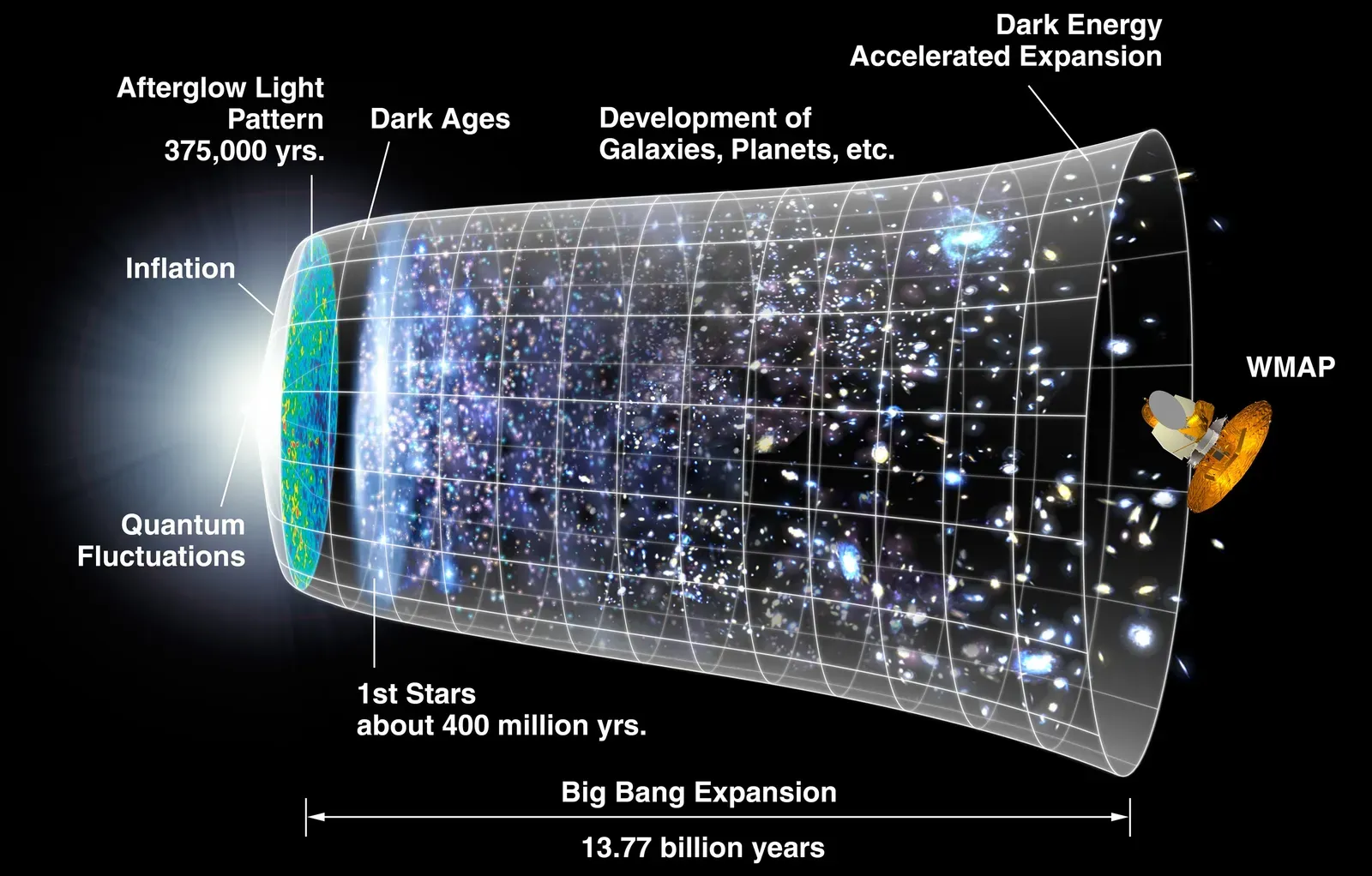
The traditional Big Bang picture paints an almost brutal opening scene: an infinitely dense point erupting into space and time. Modern cosmology has quietly retired that image and replaced it with the idea of cosmic inflation, a short-lived but ferociously rapid expansion driven by a mysterious energy field. In this inflationary view, the universe ballooned faster than the speed of light in the first blink of existence, smoothing out any wrinkles and explaining why distant regions look so similar today. Tiny quantum jitters in the inflation field were stretched into the seeds of all cosmic structure. It is a wild idea, but it fits the data astonishingly well.
The catch is that no one knows what actually powered inflation or whether it even had a clean beginning or end. Some inflation models predict that while our patch of space stopped inflating and cooled into a conventional universe, other regions kept inflating endlessly. That leads to the unsettling concept of an eternal inflation multiverse, where countless other universes may be budding off, each with different physical properties. For some cosmologists, this solves nagging fine-tuning problems; for others, it feels like replacing one mystery with an infinite stack of new ones. Still, inflation has become the leading framework, not because it is philosophically comfortable, but because it keeps predicting what telescopes actually see.
Bouncing Universes and Cycles Without a Beginning
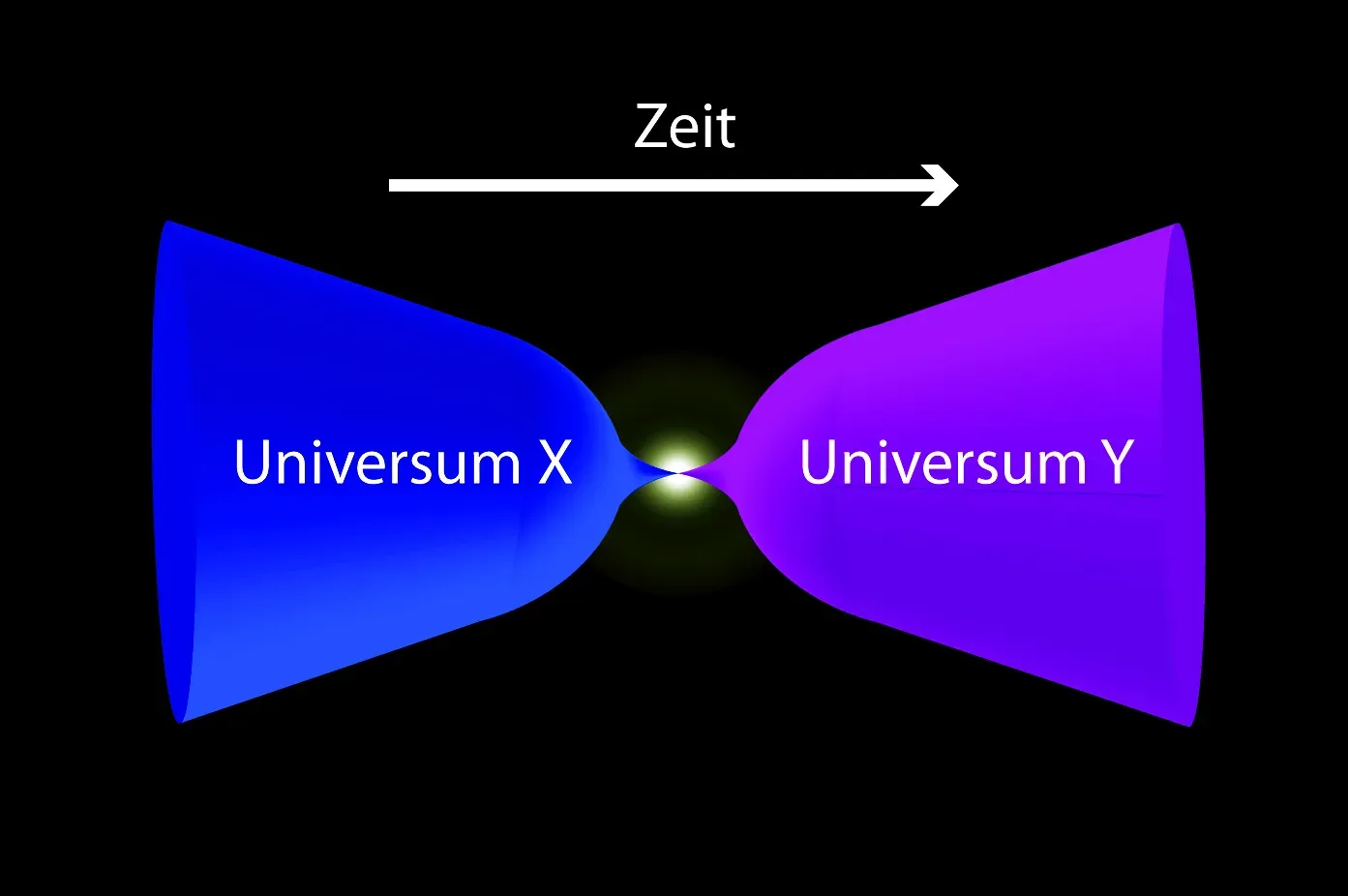
One of the most provocative challenges to the classic Big Bang is the idea that the universe did not start at all – it bounced. In bouncing or cyclic models, the Big Bang becomes a Big Bounce, the turnaround point between a previous contracting phase and our current expansion. Instead of an initial singularity where physics breaks down completely, the universe shrinks to an extremely dense but finite state, then rebounds. Quantum gravity theories, such as loop quantum cosmology, suggest that spacetime itself could resist being squeezed into a true singularity. That resistance would naturally trigger a bounce.
These cyclic scenarios appeal to researchers who dislike the notion of a hard beginning, because they can, in principle, extend the story infinitely into the past. Some even propose that cosmic history is a long series of expansions and contractions, each cycle smoothing out irregularities and resetting conditions. Observationally, scientists hunt for subtle signatures in the cosmic microwave background or in patterns of gravitational waves that might betray a pre-bounce universe. So far, there is no decisive evidence either way, but the mathematics shows that bouncing universes are not just philosophical fantasies. They are concrete, testable alternatives that put the Big Bang into a much longer cosmic rhythm.
Quantum Foam, Multiverses, and the Edge of Reality
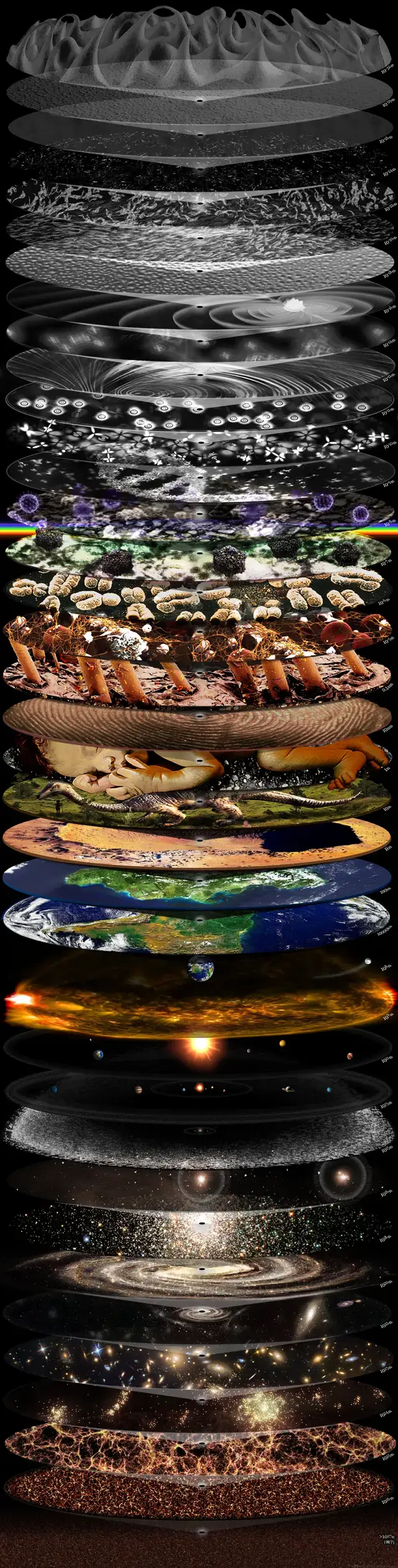
If inflation and bouncing cycles sound ambitious, quantum cosmology goes even further, questioning what we mean by “universe” in the first place. On the tiniest scales, space itself is thought to fizz with uncertainty, a quantum foam where particles and even mini-universes could flicker into and out of existence. Some theories suggest that our cosmos might have emerged from such a quantum fluctuation, a rare but inevitable blossom in an otherwise chaotic sea. In that picture, asking what came “before” our universe is a bit like asking what is north of the North Pole – the question stops making sense.
Layered on top of this are multiverse ideas that arise almost reluctantly from existing physics. Eternal inflation naturally spawns many bubble universes, while string theory allows enormous numbers of possible vacuum states, each corresponding to different physical laws. Some scientists argue that the strange fitness of our universe for life could be an observational selection effect: we find ourselves in a universe where life is possible because we could not exist in the countless others where it is not. Critics counter that such multiverses risk slipping beyond testable science, flirting with metaphysics. Still, as quantum theory and gravity are pushed to coexist, the border between what is physically real and what is mathematically possible grows surprisingly thin.
New Eyes on the First Light
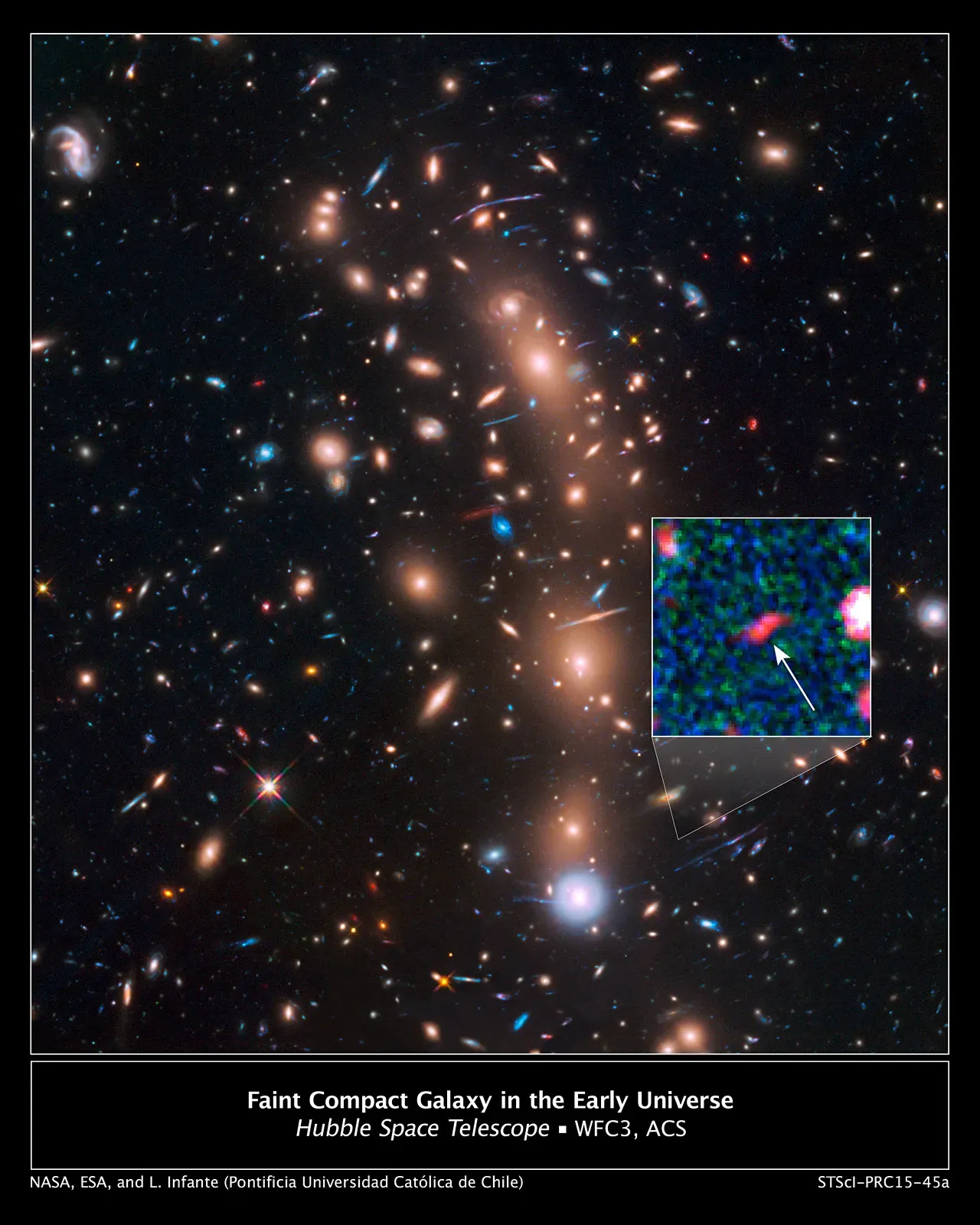
The theories would remain speculation if not for a new generation of instruments designed to capture the universe’s earliest whispers. The James Webb Space Telescope, launched in the early 2020s, has already found galaxies shining surprisingly bright when the cosmos was only a few hundred million years old. Those early heavyweights challenge standard timelines for how fast structure can form, nudging theorists to adjust their models of dark matter, star formation, or even the expansion history itself. Radio observatories are chasing the faint hydrogen signal from the cosmic “dark ages” before the first stars ignited. Each new detection sharpens the picture of how rapidly the first lights switched on.
At the same time, gravitational-wave observatories are beginning to listen for ripples in spacetime that could originate from the universe’s first instants. Future detectors are being designed to probe frequencies that inflation or phase transitions in the early universe might have produced. Complementing that, particle accelerators on Earth keep pushing toward energies that mimic conditions fractions of a second after the Big Bang. Together, these tools turn abstract origin theories into testable predictions. Even modest discrepancies – a galaxy that seems too massive, a spectrum slightly off – can point toward entirely new physics lurking in the first heartbeat of time.
Why It Matters: Origins, Meaning, and Our Cosmic Address
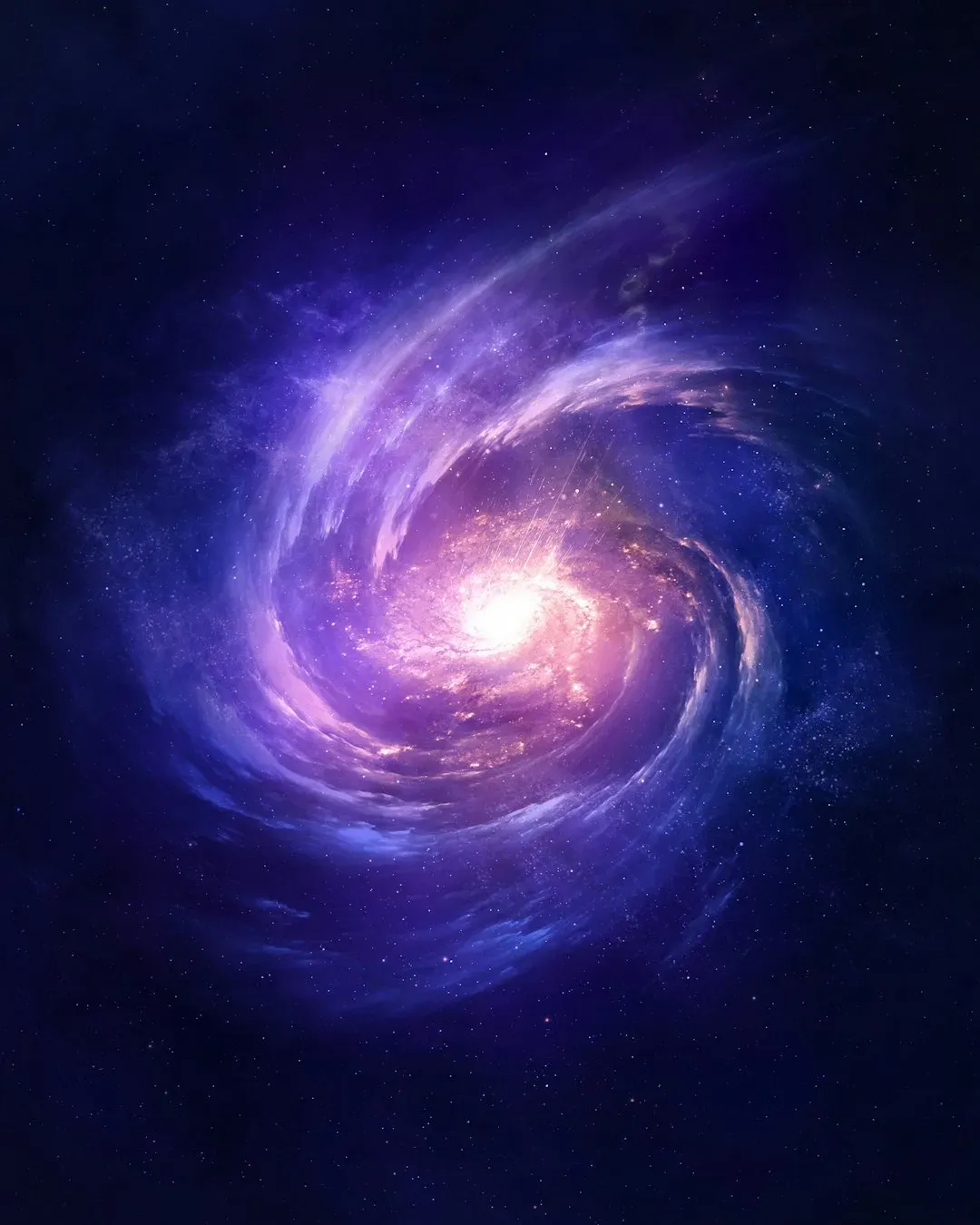
It is fair to ask why any of this matters when daily life is ruled more by rent payments than by quantum foam. Yet origin stories have always shaped how humans see themselves, from ancient creation myths to Darwin’s evolution. The Big Bang is our modern creation story, and when it changes, our sense of place in the cosmos shifts with it. If the universe is part of a vast multiverse, then our existence may feel both more precarious and more natural at the same time, as just one realization among many. If instead the cosmos cycles endlessly, then our universe becomes a fleeting act in a play with no first scene.
Comparing older models with today’s theories highlights just how quickly our understanding can evolve. A century ago, most astronomers thought the universe was static and eternal; now we debate not whether it is expanding, but what triggered that expansion. Traditional Big Bang cosmology gave a single beginning and a relatively simple narrative arc. The new generation of theories replaces that with branching possibilities, feedback loops, and deep links between the tiniest quantum events and the largest cosmic structures. That complexity may feel unsettling, but it is also a powerful reminder: our best explanations are always provisional, and that humility is a strength of science, not a weakness.
The Future Landscape: Next-Generation Experiments and Big Unknowns
The next few decades promise to be a stress test for every elegant theory about cosmic origins. Planned space telescopes and ground-based observatories aim to map the sky with unprecedented precision, tracking how galaxies cluster and how dark energy drives expansion. Ultra-sensitive experiments will search for primordial gravitational waves, the long-sought fingerprints of inflation. If those waves are found, they could narrow the flood of inflation models to a few survivors – or, just as dramatically, reveal that something beyond inflation did the job. If they are not found where they are expected, theorists will be forced back to the drawing board.
Meanwhile, quantum gravity research is quietly advancing, attempting to merge general relativity with quantum mechanics into a single framework. Whether that turns out to be some version of string theory, loop quantum gravity, or an approach not yet imagined, it will reshape the conversation about beginnings. There are also technological and political hurdles: giant observatories are expensive, slow to build, and vulnerable to shifting priorities. International collaborations and long-term commitments will be essential if we want to keep pushing into earlier and earlier cosmic times. The global implications are subtle but real – understanding dark energy, for instance, could alter predictions about the ultimate fate of the cosmos, which in turn colors how civilizations think about their future timeline.
How You Can Engage With the New Cosmic Story
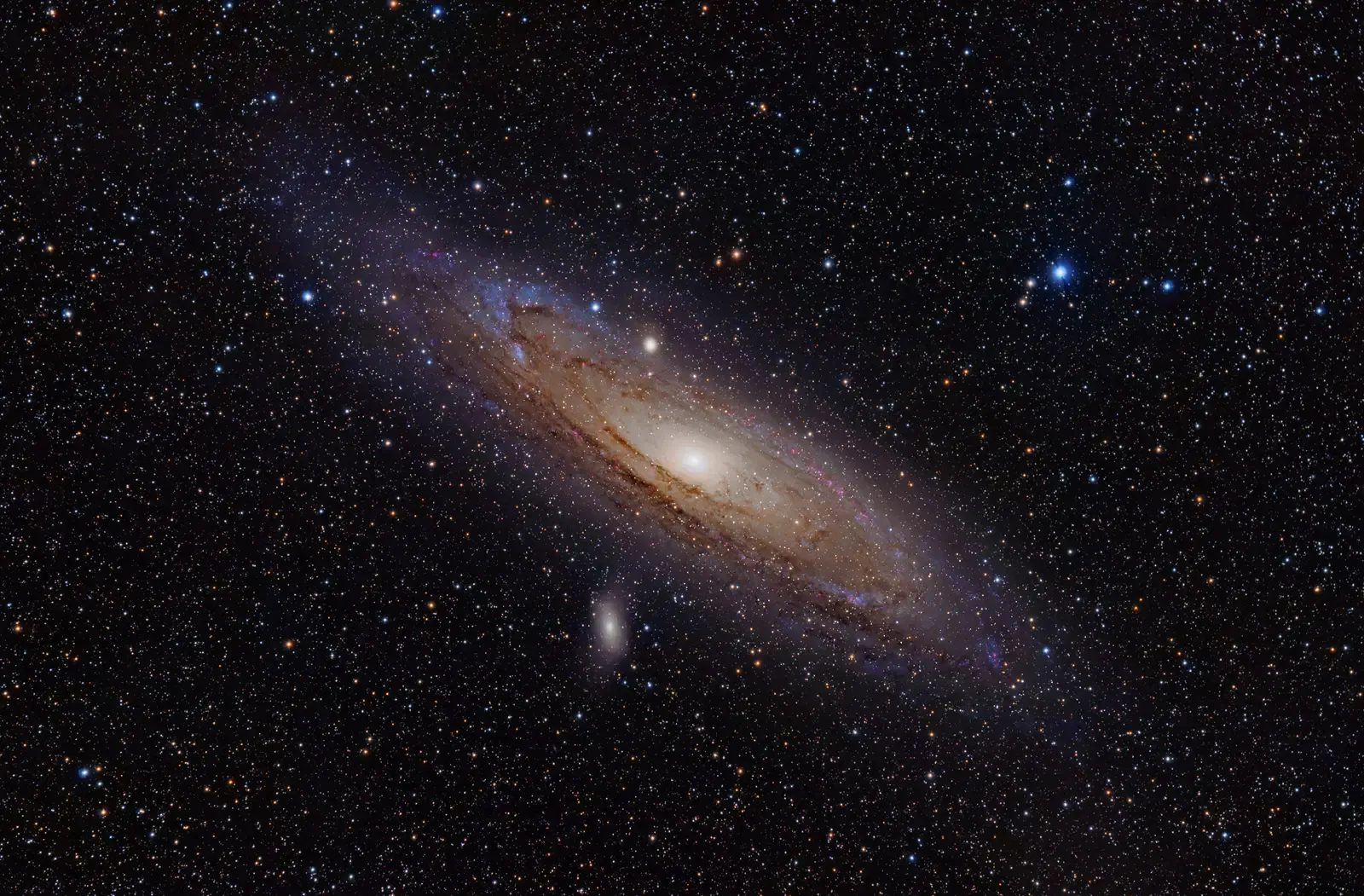
Getting involved in this unfolding origin story does not require a physics degree or a research grant. One simple step is to follow reputable astronomy news from observatories, space agencies, and science magazines that translate fresh results into accessible language. Public data from major missions are often freely available, and citizen-science platforms sometimes invite volunteers to help classify galaxies or spot unusual events. Supporting science education – through local schools, planetariums, or nonprofits – helps ensure that the next generation of cosmologists is as diverse and imaginative as the questions they face. Even something as ordinary as attending a public lecture or star party can spark connections that make the abstract feel personal.
On a more reflective level, you can treat these theories as invitations to rethink your own sense of time, scale, and significance. Sharing these ideas with friends, asking skeptical questions, and resisting oversimplified “final answers” all contribute to a healthier public conversation about science. If you have the means, donations to research institutions, scholarship funds, or equipment for under-resourced schools can turn curiosity into concrete opportunities. Ultimately, the story of the universe’s origins is not something happening far away to other people – it is the backstory of everything we care about. The more eyes and minds we bring to it, the more honest and awe-filled that story can become.
Suhail Ahmed is a passionate digital professional and nature enthusiast with over 8 years of experience in content strategy, SEO, web development, and digital operations. Alongside his freelance journey, Suhail actively contributes to nature and wildlife platforms like Discover Wildlife, where he channels his curiosity for the planet into engaging, educational storytelling.
With a strong background in managing digital ecosystems — from ecommerce stores and WordPress websites to social media and automation — Suhail merges technical precision with creative insight. His content reflects a rare balance: SEO-friendly yet deeply human, data-informed yet emotionally resonant.
Driven by a love for discovery and storytelling, Suhail believes in using digital platforms to amplify causes that matter — especially those protecting Earth’s biodiversity and inspiring sustainable living. Whether he’s managing online projects or crafting wildlife content, his goal remains the same: to inform, inspire, and leave a positive digital footprint.