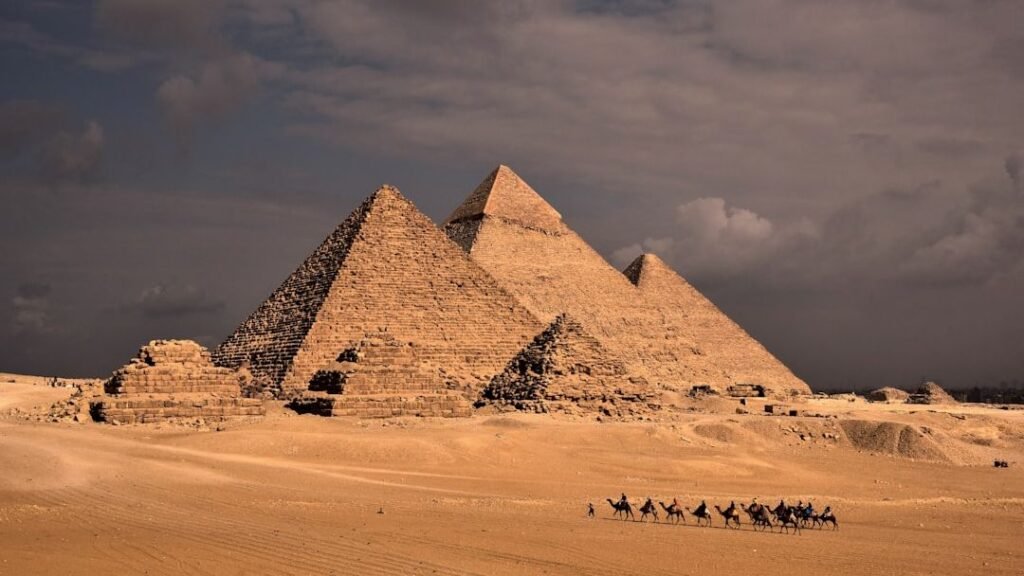

There is something quietly unsettling about standing at the base of the Great Pyramid of Giza. You look up, and you realize instantly that you are not just looking at old stone. You are looking at a decision made roughly 4,500 years ago, a decision so precise, so deliberate, so astronomically charged that modern engineers still scratch their heads trying to explain it. How did they do it? How did a civilization without computers, without steel, without GPS, manage to orient a monument so perfectly that it aligns with celestial bodies that were not even named yet?
The answers are stranger and more magnificent than you might expect. Somewhere in the angles of ancient shafts, the shadows of equinox sunsets, and the geometry of circumpolar stars, lies a picture of human intelligence that is breathtaking in its depth. Let’s dive in.
A Monument Built Not Just for Kings, But for the Cosmos
Most people learn in school that the pyramids were tombs. Technically, that is not wrong. However, that framing is like saying a cathedral is just a room with seats. Astronomy played a central role in ancient Egyptian culture, religion, and state organization. The Egyptians carefully observed the movements of the sun, moon, and stars to regulate agricultural cycles, religious festivals, and royal rituals. Celestial events such as solstices, equinoxes, and stellar risings were not abstract phenomena but sacred moments tied to divine order, known as Ma’at. That is a civilization with its eyes permanently fixed on the sky.
The ancient Egyptians watched Earth’s night sky closely and named constellations after their gods. They tracked the night sky closely, studied the constellations, and used the motion of the stars to make decisions about when to plant crops and when to harvest. So when they built their most enduring monuments, the sky was not an afterthought. It was the blueprint.
The Jaw-Dropping Precision of Alignment
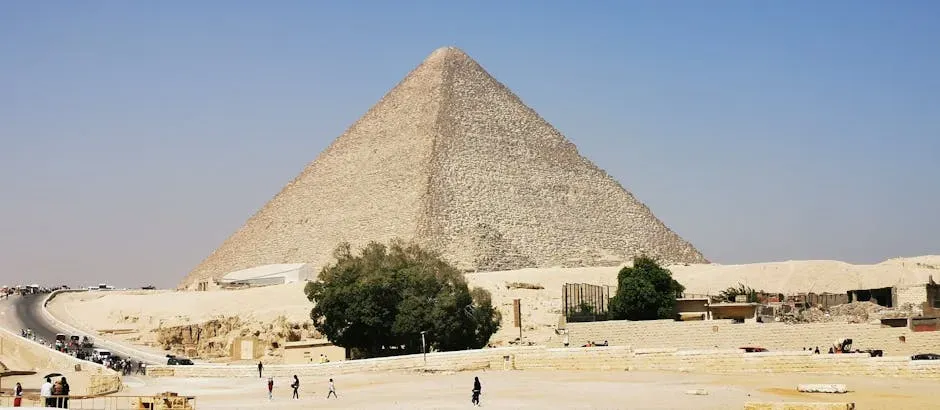
Here is a fact that honestly keeps me up at night. Although slightly lopsided overall, the square sides of the 138.8 meter Great Pyramid of Giza are aligned almost perfectly along the cardinal points, north-south-east-west. The builders aligned the great monument to the cardinal points with an accuracy of better than four minutes of arc, or one-fifteenth of one degree. Think about that for a moment. One-fifteenth of a single degree. Your smartphone compass is barely more accurate.
The pyramids of Egypt, particularly those of the IV Dynasty Kings Cheops, Khephren and Mycerinus, raised on the plateau of Giza some 4,500 years ago, are orientated with extraordinary accuracy with the four cardinal points. This was not a lucky guess or a happy accident. It was deliberate, methodical, and rooted in a sophisticated understanding of celestial mechanics that most of us would struggle to replicate without a computer today.
The Merkhet: The Ancient World’s Most Elegant Astronomical Instrument
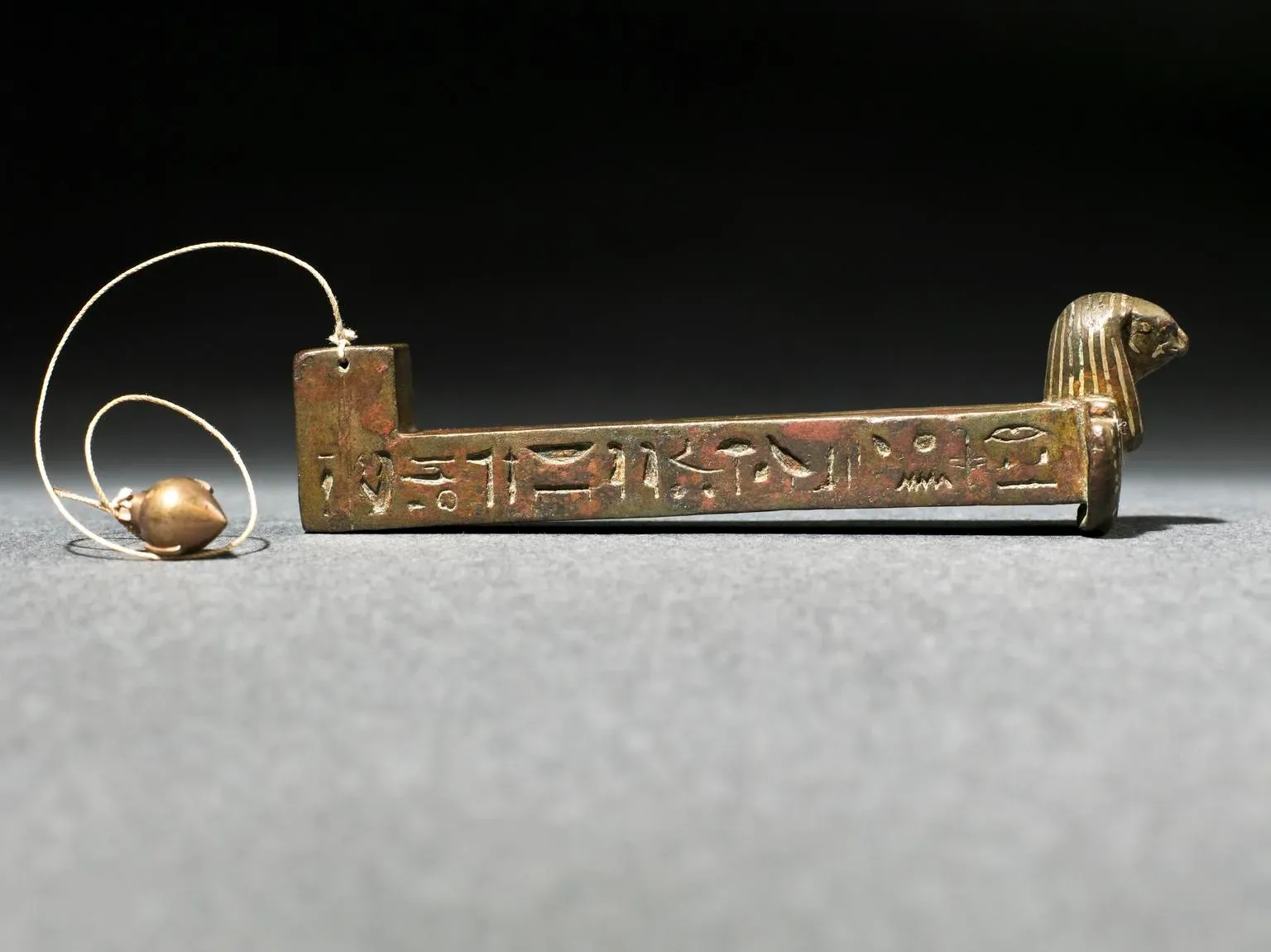
The merkhet, meaning “instrument of knowing,” was an ancient surveying and timekeeping instrument. It involved the use of a bar with a plumb line attached to a wooden handle. It was used to track the alignment of certain stars called decans, and when visible, those stars could be used to measure the time at night. Simple? Absolutely. Effective? Remarkably so.
The ancient Egyptians achieved their Great Pyramid alignment through stellar observation. Using a tool called a Merkhet, a plumb line and sighting bracket, ancient astronomers tracked circumpolar stars, stars that never set below the horizon. In pyramid construction, the merkhet facilitated foundation laying by allowing surveyors to observe star transits during optimal visibility windows, such as when circumpolar stars were prominent near the meridian. This tool, documented in ancient Egyptian texts and artifacts from the period, enabled the precise marking of cardinal directions on the ground, ensuring the pyramid bases were level and oriented correctly before stone placement began.
The “Imperishable Stars” and the Secret of True North
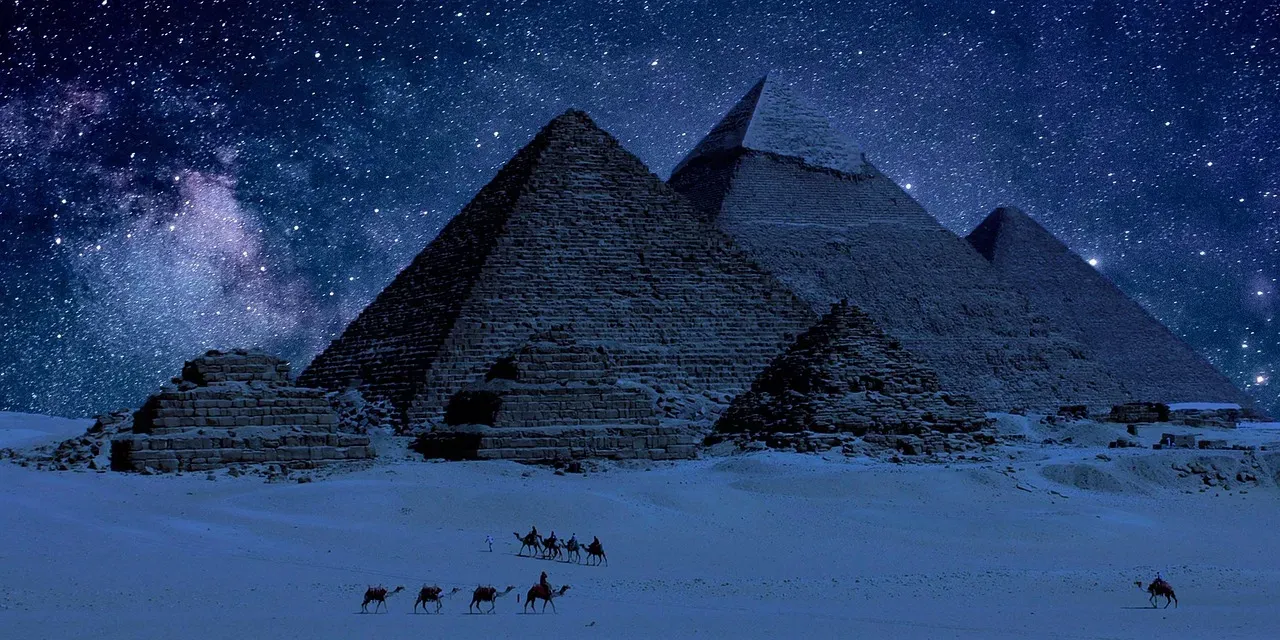
You might wonder: without a compass, how does anyone find true north? The Egyptians had a beautifully elegant answer. In ancient Egyptian astronomy, the term “The Indestructibles” refers to the circumpolar stars, transliterated from the hieroglyphic phrase iḫmw-sk, which literally translates to “the ones not knowing destruction” or “the imperishable ones.” These were stars that never set, stars that circled the pole eternally, and they were the ancient Egyptians’ most reliable navigational tool.
Early Egyptians were deeply interested in the night sky, particularly two bright stars that could be seen circling the North Pole: Kochab and Mizar, which belong to constellations Ursa Minor and Ursa Major respectively. In ancient Egypt, they were known as “the indestructibles.” Egyptians took measurements from “the indestructibles” to accurately align a pyramid or a temple with the Earth’s four cardinal points. It is, when you think about it, a staggeringly clever solution to a genuinely hard problem.
The Two-Star Method That Changed Egyptology
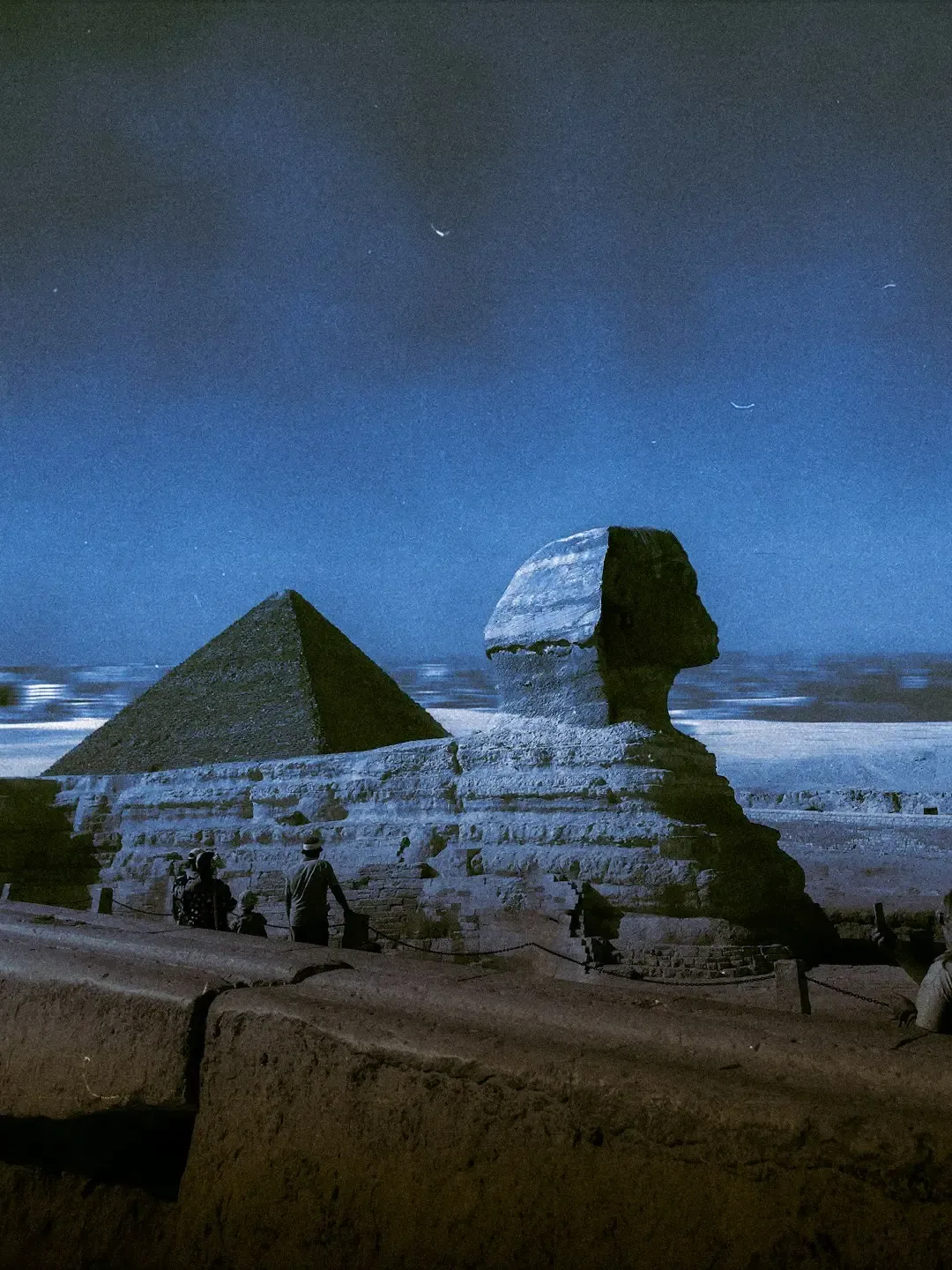
Researchers have demonstrated that the Egyptians aligned their pyramids to north by using the simultaneous transit of two circumpolar stars. Modelling the precession of these stars yields a date for the start of construction of the Great Pyramid that is accurate to within five years, thereby providing an anchor for the Old Kingdom chronologies. This is a breathtaking piece of forensic astronomy. A construction date derived purely from starlight and geometry.
For the period of interest, researchers found that the stars named Mizar and Kochab would have appeared to revolve around the pole on almost opposite sides, so that a line joining them would always pass very nearly through the pole. When these two were aligned vertically, the pyramid builders might have hoisted a long plumb line and fixed it at the moment when the two stars both lay on the line. It is suggested that, during a formal evening ritual, the priests and the king used a giant merkhet to hang a plumb line and thereby determine when the lower star was directly beneath the upper star, this then being taken as the direction of true north. If this method had been used, the Great Pyramid would have been aligned in 2467 BC, plus or minus five years.
The Fall Equinox Theory: Sunlight as a Surveying Tool

Not every alignment secret involves the stars. Some researchers have pointed the finger squarely at the sun. One compelling suggestion is that the ancient Egyptians used the sun to align the pyramids, but specifically on the day of the fall equinox. The length of day and night are equal on the fall equinox, which is one of two annual equinoxes when the sun sits directly above the equator. The genius of this theory lies in its beautiful simplicity.
To demonstrate this theory, one researcher set out with a rod known as a gnomon for tracking the movement of the sun on the day of the fall equinox. He planted the gnomon on a wooden platform and marked the location of the rod’s shadow throughout the day, forming a curve. At the end of the day, he wrapped a piece of string around the pole and used it to mark an arc that intercepted two points of the curve. When a straight line was drawn through, it pointed almost perfectly east to west, with a slight counterclockwise rotation, just like the alignment of Egypt’s three biggest pyramids. A stick. A shadow. And the entire mystery of pyramid alignment, potentially solved.
The Orion Connection: Myth, Magic, or Masterplan?
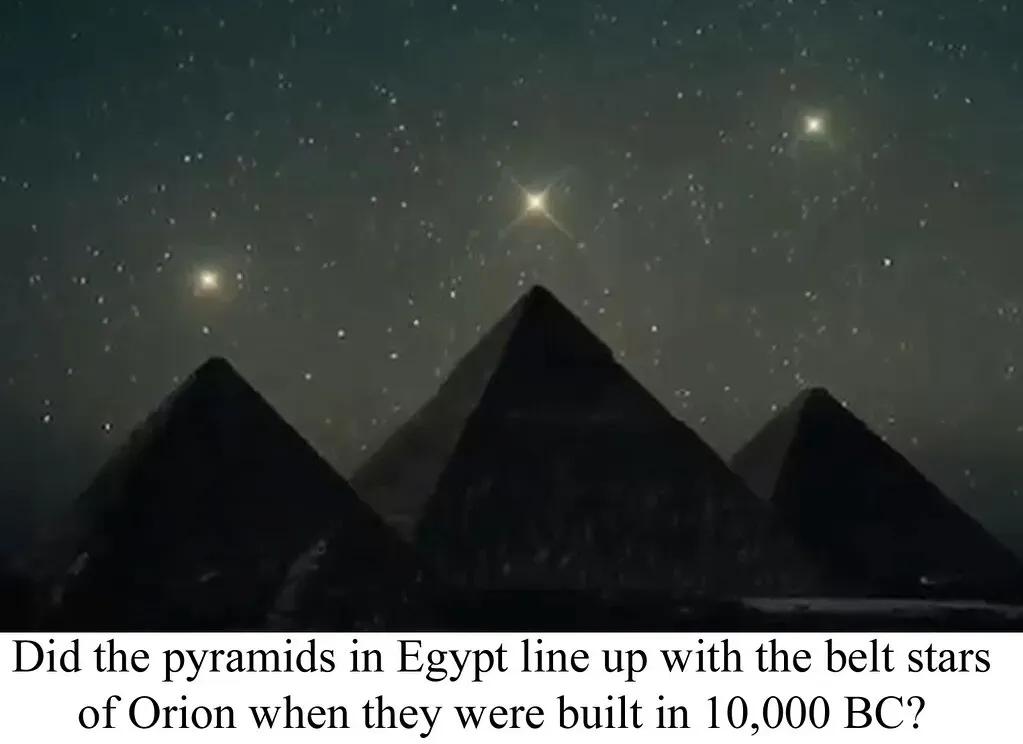
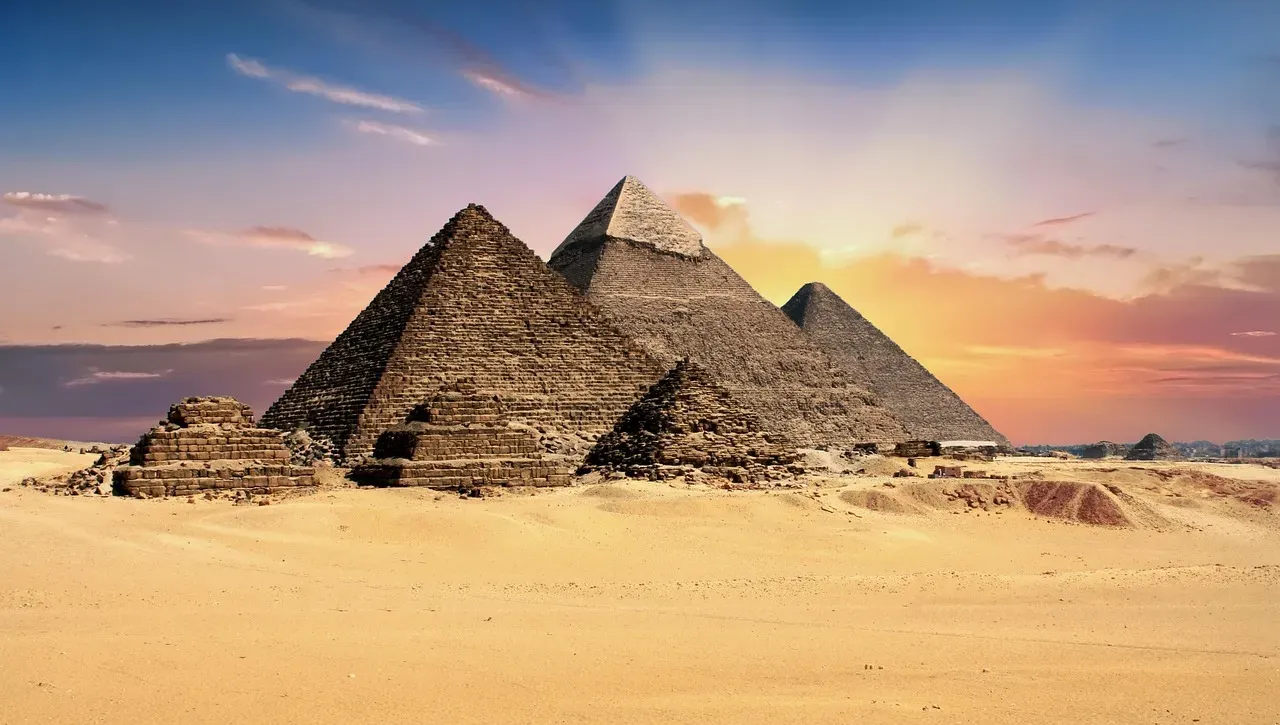
Honestly, this is where things get wildly fascinating and also genuinely controversial. In the 1980s, a researcher named Robert Bauval came up with a suggestion that has since buried itself in the minds of the public. He pointed out that there are similarities between the layout of the three pyramids of the Giza Complex and the relative separation between the three stars of Orion’s Belt in the constellation Orion. To millions of people, it feels undeniably compelling.
The stars of Orion were associated with Osiris, the god of rebirth and afterlife by the ancient Egyptians. In Egyptian mythology, Orion was closely associated with Osiris, ruler of the underworld and judge of the dead. The deceased pharaoh was believed to transform into Osiris after death, ascending to the stars to live eternally among the gods. Most archaeologists have concluded the Orion Correlation Theory is a fringe idea, and astronomers have also used computers to determine the past positions of many stars, making it easy to assess the idea that the pyramids aligned with Orion’s Belt some 10,000 years ago. So: fascinating, religiously rich, but academically contentious.
The Star Shafts Inside the Great Pyramid
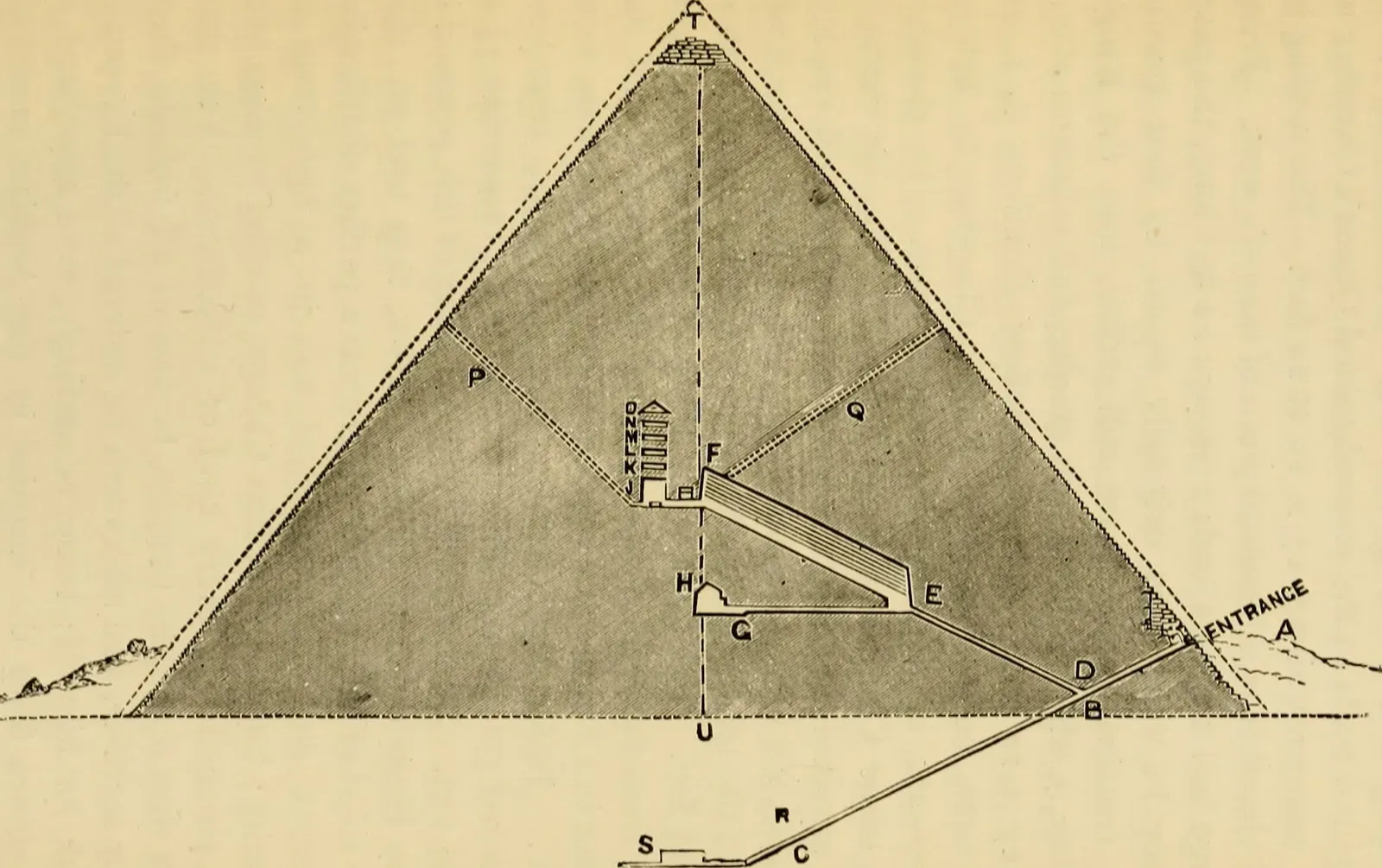
Now here is something that does not get nearly enough attention. Inside the Great Pyramid, there are four narrow shafts cutting through millions of tons of stone. It is expected that at the time of the pyramid’s construction around 2500 BC, the shafts aligned with the transit points of Alpha Draconis, which was the star closest to the north celestial pole, as well as Orion’s Belt, Sirius, and Beta Ursae Minoris. Four shafts. Four stars. This is not coincidence, it is an architectural intention.
Virginia Trimble posited that the north shaft was meant to point towards the north circumpolar stars, known as the Indestructibles. The ancient Egyptians believed that these stars were closely associated with eternity and the afterlife, so this northern shaft possibly could have been a way whereby the soul of the deceased king might ascend to the stars. The northern shaft aligns with Thuban, in the constellation of Draco. Nowadays, Polaris marks our celestial north pole, but at the time of the ancient pyramid builders, the star closest to the pole was Thuban. The architects literally built the afterlife into the stone.
What This All Tells Us About the Ancient Egyptian Mind
Ancient Egyptian astronomy stands as a remarkable example of humanity’s early quest to understand the cosmos. Long before the development of telescopes or advanced mathematics, Egyptian priests and scholars systematically tracked the movements of stars, planets, and the sun, weaving their celestial observations into the very fabric of their civilization. You do not do that by accident. You do it because the sky is, to you, not just scenery. It is scripture.
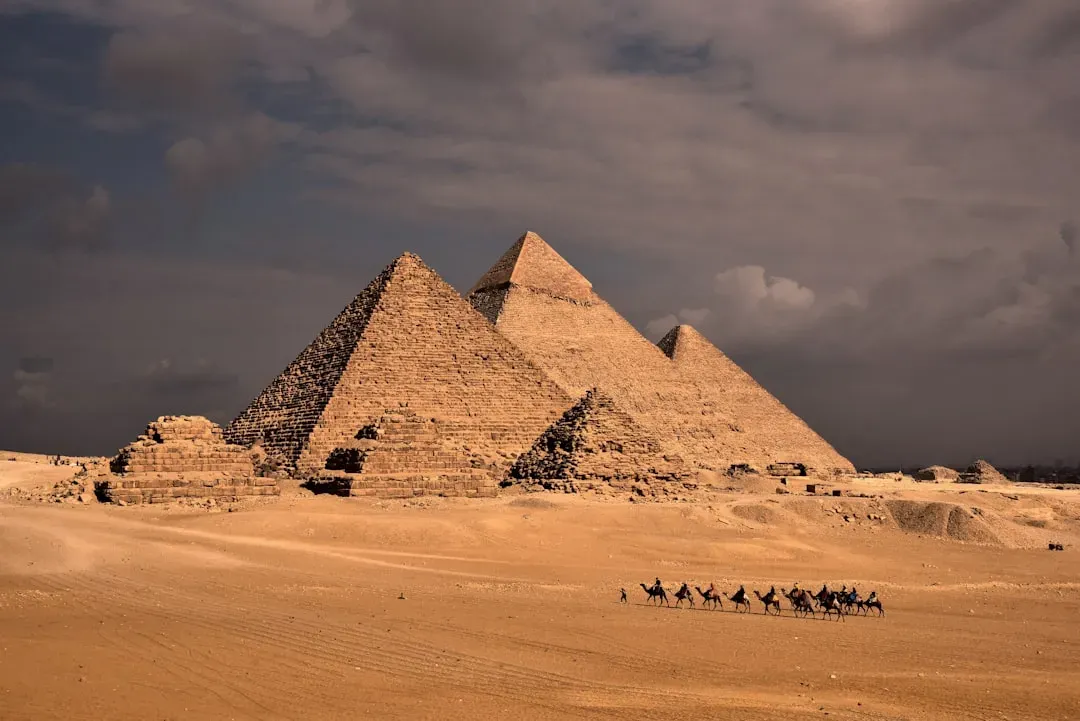
The Giza pyramids stand not merely as tombs of stone but as enduring expressions of humanity’s desire to understand its place in the cosmos. Far from being relics of a “primitive” society, these monuments suggest a civilization deeply attuned to celestial cycles, spiritual continuity, and cosmic order. The ancient Egyptian engineering secrets teach us that “early” does not mean “unintelligent.” That is perhaps the most important lesson these pyramids have left us, encoded in stone, oriented to the stars, waiting patiently for us to catch up.
Conclusion: The Sky Is the Blueprint
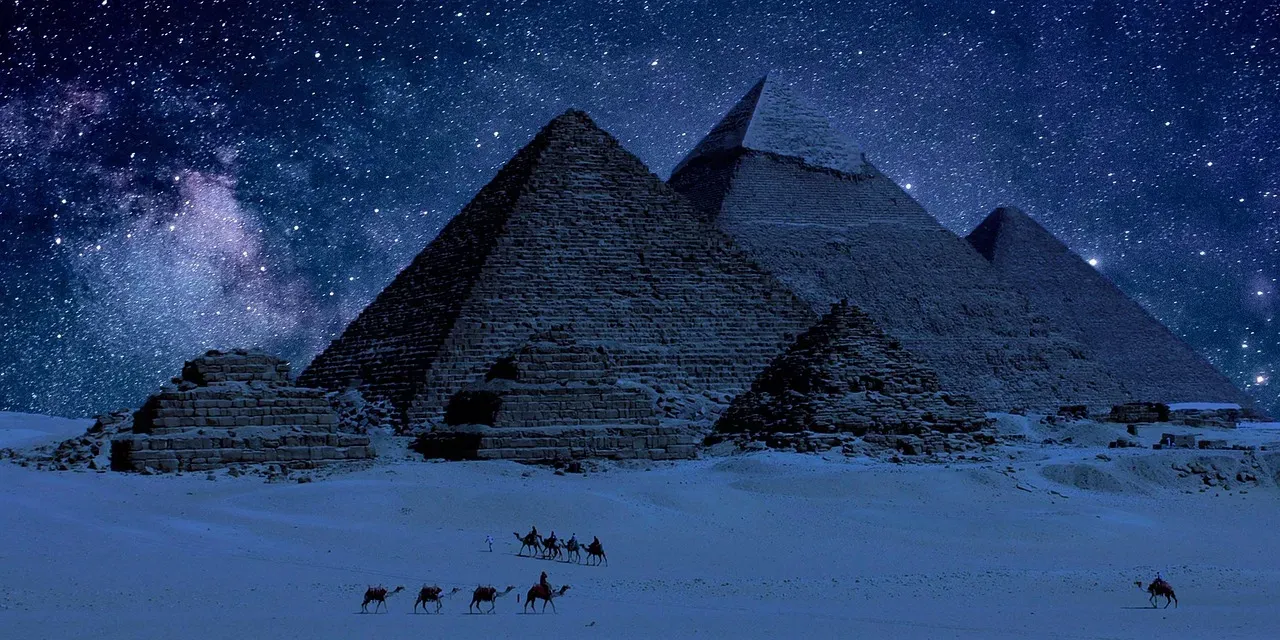
Every time a new study chips away at the mystery of pyramid alignment, it reveals something more astonishing than what came before. The Great Pyramid is aligned to within a fraction of a degree of true north. Its internal shafts point toward stars that were sacred in ancient Egyptian religion. Its very layout on the Giza plateau echoes celestial patterns that the builders held divine. Whether you follow the equinox shadow theory, the two-star transit method, or the symbolic resonance of Osiris and Orion, one conclusion is inescapable: these people knew the sky profoundly, intimately, and spiritually.
It’s hard to say for sure exactly what knowledge has been lost in the millennia between their world and ours. However, what survives in stone is enough to humble even the most confident modern engineer. The pyramids are not relics of a world that did not know better. They are monuments from a world that may have known something we have forgotten. What does it say about our civilization that we build skyscrapers that sway in the wind, while they built structures that still point true north after 4,500 years?