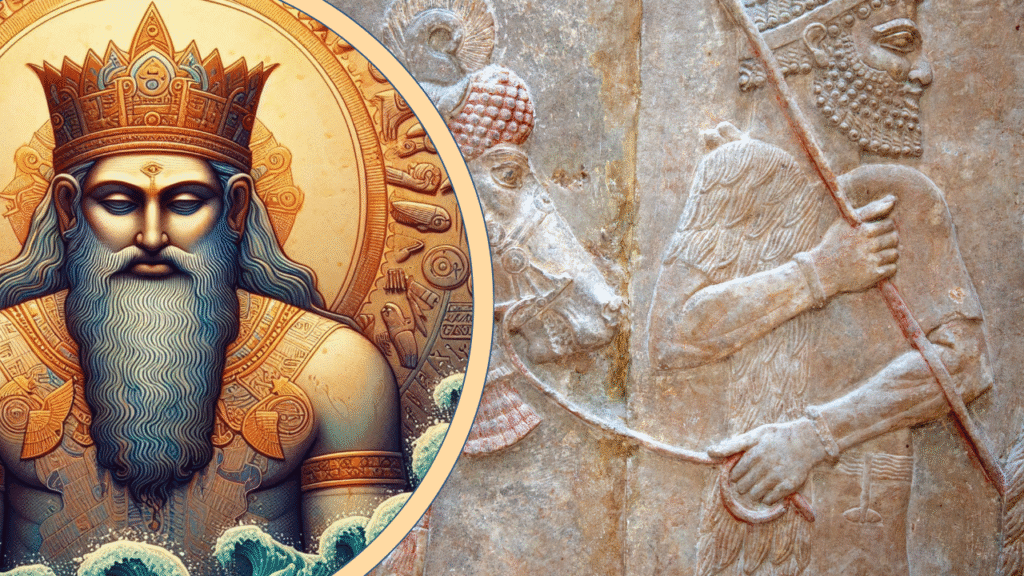

Imagine a pantheon of gods so mysterious that millennia later they spark internet conspiracies, UFO lore, and heated debates about human origins. That is the strange, fascinating legacy of the Anunnaki — a term from ancient Mesopotamia that’s been reinterpreted in wildly different ways over time.
In this piece we’ll trace where the Anunnaki came from, how they were understood in ancient Sumer and Babylon, why modern “ancient astronaut” authors latched onto them, and how scholars today separate myth from speculation.
From Sumer to You: Who Were the Anunnaki?
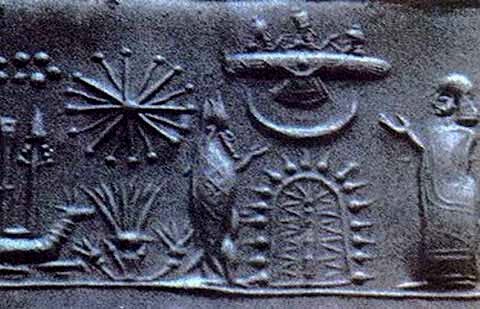
The Anunnaki (also spelled Anunaki, Anunna, etc.) are a class of deities in the mythologies of ancient Sumer, Akkad, Assyria, and Babylonia. Etymologically, the name is likely derived from An / Anu (the sky god) and a genitive element that roughly means “offspring” or “seed.” Thus, Anunnaki often translates as “Princely Offspring” or “Royal Seed.”
In Sumerian myth, they are often depicted as descendants of An (sky) and Ki (earth, also sometimes identified with the goddess Ninhursag). In some creation tales, after Enlil is born, he separates heaven and earth, thereby establishing order, and the Anunnaki emerge as divine beings who help govern or “decree the fates” of humanity.
However, the texts are frankly inconsistent about how many Anunnaki there were, what each one’s domain was, or exactly how they operated. In some texts, they are cosmic gods; in others, they are underworld judges.
Functions, Roles & Myths: Shifting Divine Powers
In many myths, the Anunnaki are depicted as judges of the underworld, particularly in stories of Inanna’s descent. In those contexts, they hear cases, pass judgment, enforce punishments, and act as balance-keepers in the afterlife. Elsewhere, they are participants in a divine assembly, distributing lands, cities, and responsibilities among the gods and sometimes exercising authority over humanity’s destiny.
One myth, Enki and the World Order, shows the Anunnaki “doing homage” before Enki, singing hymns, and living among humans (in mythic form). Interestingly, in Akkadian and Babylonian eras, the term “Anunnaki” gradually became more associated with the underworld deities, while another category called the Igigi sometimes referred to celestial gods.
The Modern Twist: From Myth to Alien Gods
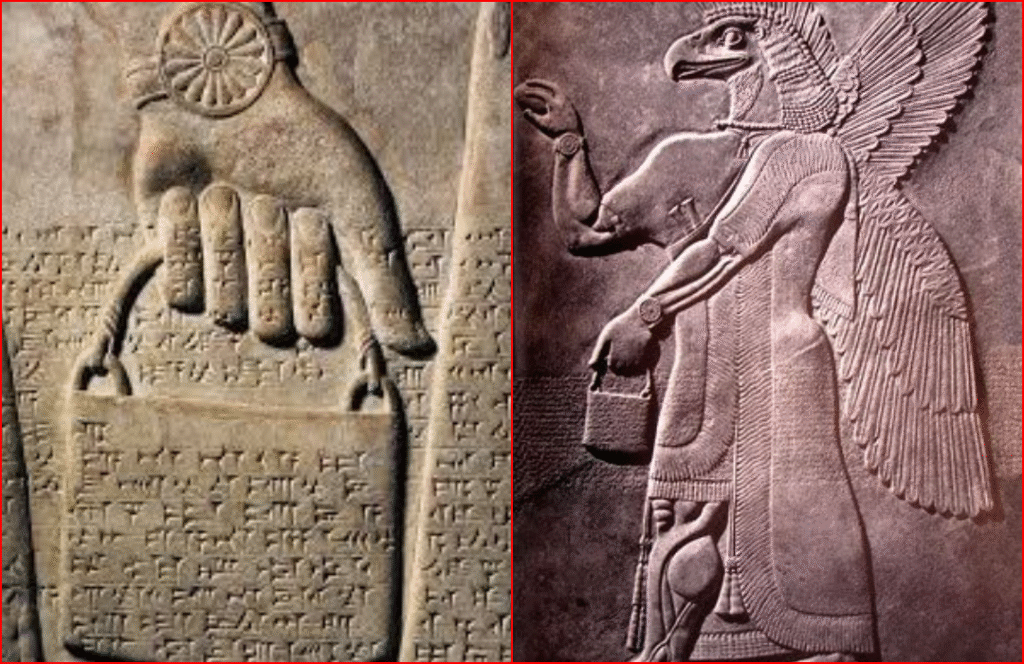
Fast forward to the 20th century. The ancient narratives of Mesopotamia caught the eye of authors mixing myth, speculation, and fringe theories. The most famous (or infamous) among them: Zecharia Sitchin.
In 1976, author Zecharia Sitchin published The 12th Planet, the first in his Earth Chronicles series. He claimed the Anunnaki were aliens from a hidden planet called Nibiru, which allegedly orbits the sun every 3,600 years. According to Sitchin, they came to Earth to mine gold, engineered humans as workers, and kickstarted civilization.
It was a sensational story, and millions loved it. Sitchin’s books inspired documentaries, late-night radio shows, and countless memes. Today, if you’ve ever seen the phrase “aliens built the pyramids,” chances are it can be traced back to his work.
In his bestselling Earth Chronicles series (starting with The 12th Planet), Sitchin proposed that the Anunnaki were extraterrestrial colonizers from a planet called Nibiru, which supposedly follows a 3,600-year elliptical orbit. These alien beings, Sitchin claimed, genetically engineered Homo sapiens to mine gold for them and established ancient civilizations as their “labor camps.”
Sitchin’s narrative has inspired countless derivative works, YouTube videos, and podcasts — turning the Anunnaki into pop-culture icons of ancient astronaut lore. His The Anunnaki Chronicles collects his writings and extends his myth into the present.
Why Scholars Reject the Alien Reading
Despite broad popularity, virtually all experts in Assyriology, Sumerology, archaeology, and linguistics reject Sitchin’s theories. His work is considered pseudoscience and pseudohistory.
Here are some key reasons the academic consensus resists the modern “Anunnaki = aliens” narrative:
- Translation errors and creative liberty: Sitchin’s translations of Sumerian and Akkadian texts often deviate drastically from accepted scholarly translations. He sometimes assigns meanings to signs that no established lexicon supports.
- Selective evidence use: He often quotes fragments out of context, ignores opposing textual evidence, or truncates passages to force a narrative.
- Astronomical and physical implausibility: The concept of a planet with a 3,600-year orbit crossing the solar system repeatedly is inconsistent with orbital mechanics and observational astronomy. No credible evidence supports Nibiru’s existence.
- Myth ≠ historical record: The original Mesopotamian myths never depict the gods as space-faring extraterrestrials. They are deities, symbolically powerful, but not technical engineers from another world.
In short, the modern alien reading is a fun, imaginative story — but it’s not grounded in the ancient texts or supported by archaeology.
Why the Anunnaki Fascinate Us Today
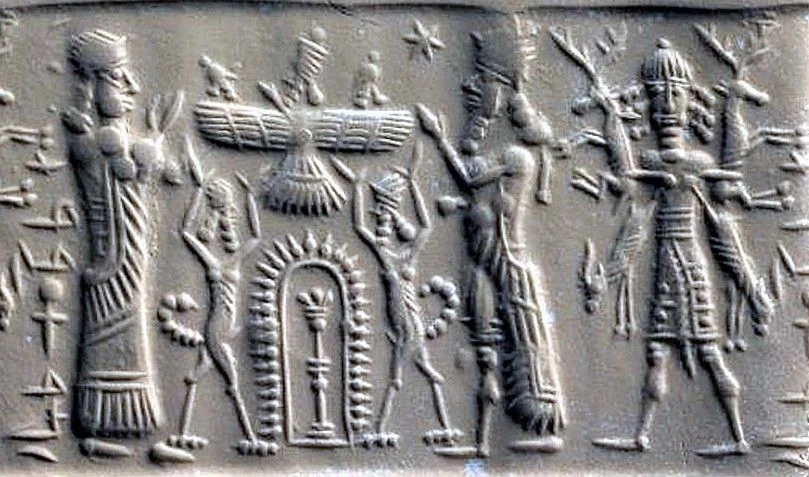
What gives the Anunnaki myth such staying power in the 21st century? A few possible answers:
- Mystery + Gap Filling: Ancient civilizations leave gaps in our understanding. That invites speculation and creative narratives to fill the void.
- Technology + Myth Merge: In an era obsessed with advanced tech and aliens, mythic deities get rebranded as space visitors.
- Cultural Crossovers: Sitchin and others tie the Anunnaki to biblical stories, Mesoamerican ruins, and global mythic motifs — giving them a universal appeal.
- Identity and Belief: For some, the idea that humanity’s origin is cosmic yet tied to an ancient divine legacy can feel empowering or mystical.
- The Anunnaki, in modern lore, become a mirror through which we view our own hopes, anxieties, and desire for cosmic meaning.
Looking Back to Authentic Roots: What the Texts Really Say
To respect the original tradition, it’s worth revisiting how ancient Mesopotamian sources portray the Anunnaki:
- Inanna’s Descent: In one of the best-known myths, Inanna (goddess of love and war) ventures into the Underworld, stands trial before seven Anunnaki judges, and is condemned.
- Enki and the World Order: This myth shows the Anunnaki acknowledging Enki’s allocation of cities and responsibilities — a divine administrative theme.
- The Birth of the Great Gods: A Sumerian myth describes how Ki (earth) and An (sky) unite, then Enlil separates them, and the Anunnaki are born to fulfill cosmic order.
These stories depict a cosmos of divine politics, moral order, and human-divine relationships. The Anunnaki are never shown tooling around in spacecraft or imposing alien tech; they are symbolic, mythic actors.
How to Read the Anunnaki Today: Myth, Metaphor, or Mystery?
We can think of the Anunnaki in three overlapping ways. As an element of myth and religion, they are central to Mesopotamian theology and the way ancient people understood power, fate, and cosmic order. In modern culture they have become symbols of hybrid origin narratives, lost knowledge, and speculative futures.
The controversy over Sitchin’s work is a reminder that translating ancient languages, interpreting myth, and building narratives must come with rigorous discipline—otherwise you end in fascinating fiction, not history.
Final Thoughts: From Ancient Tablets to Modern Lore
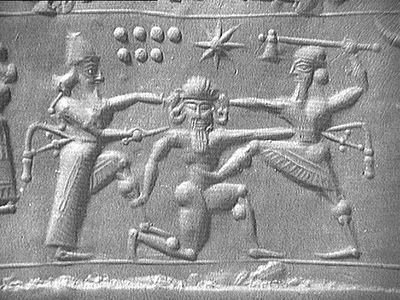
The Anunnaki stand at the intersection of our past and our future. They were born in clay tablets, recited in fireside myths, and centuries later revived as protagonists in cosmic origin stories. When we see them in YouTube videos or speculative books, what we often see is a reflection of our own yearnings: for mystery, for ancient wisdom, for connection to something greater. So how should we think about the Anunnaki today?
- As myth, they belong to one of humanity’s oldest civilizations, shaping how people saw life and death.
- As modern icons, they’re symbols of mystery, fueling shows, novels, and conspiracy forums.
- As a cautionary tale, they remind us that without careful scholarship, myths can be bent into whatever narrative we want.
The academic truth is more modest: the Anunnaki were gods of the cosmos, judges of the underworld, powerful symbols in a religious imagination. But that doesn’t make them less compelling. The tension between myth and speculation invites us to look closer, read more carefully, and appreciate both what we know — and what remains beautifully mysterious.
Hi, I’m Andrew, and I come from India. Experienced content specialist with a passion for writing. My forte includes health and wellness, Travel, Animals, and Nature. A nature nomad, I am obsessed with mountains and love high-altitude trekking. I have been on several Himalayan treks in India including the Everest Base Camp in Nepal, a profound experience.