
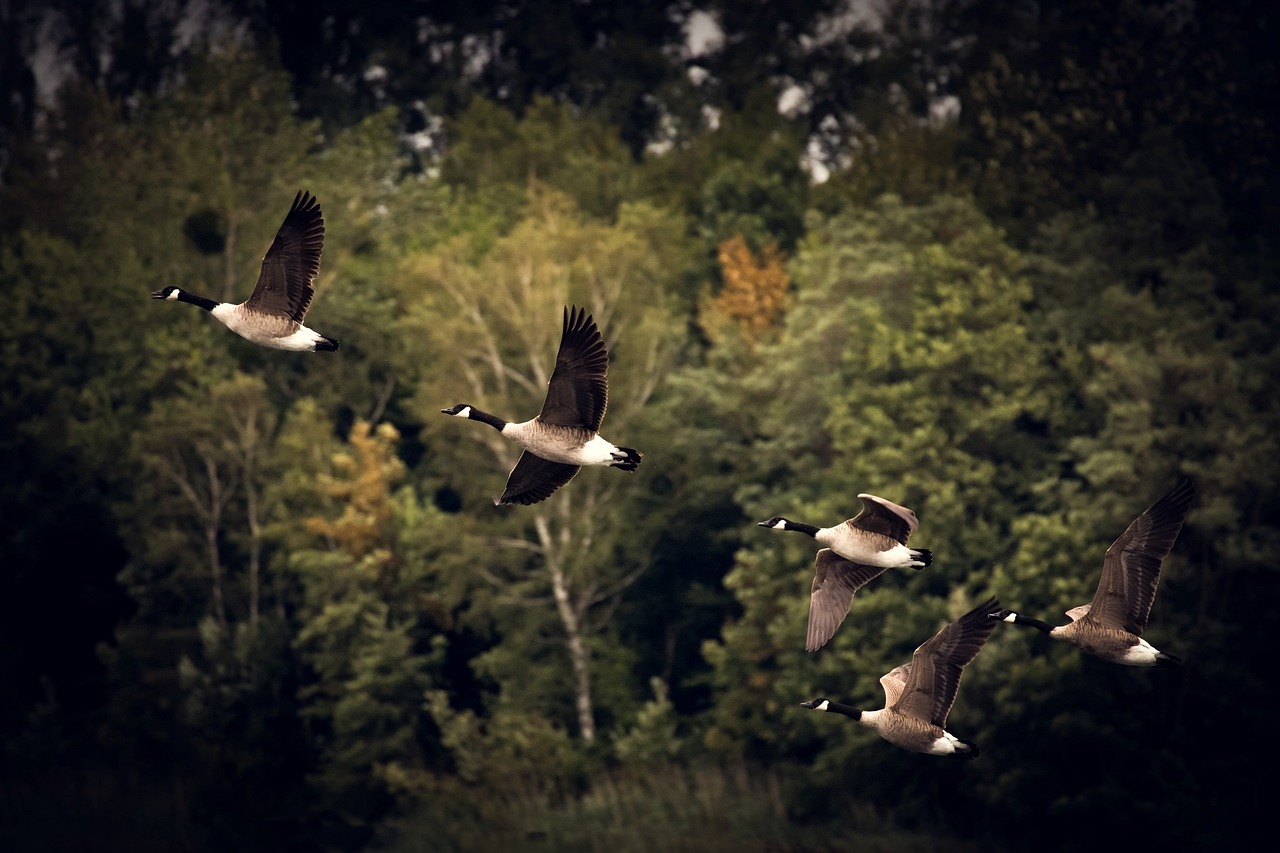
Have you ever watched a flock of birds disappear into the horizon and wondered how they know exactly where to go? For centuries, scientists have been mystified by the extraordinary navigation abilities of countless animals that traverse vast distances with pinpoint accuracy. The truth is even more remarkable than most of us imagine. Animals from tiny insects to massive whales possess an invisible sixth sense that humans lack entirely: the ability to detect and interpret Earth’s magnetic field.
Magnetoreception is a sense which allows an organism to detect the Earth’s magnetic field. This remarkable ability extends far beyond what we might expect, with animals with this sense include some arthropods, molluscs, and vertebrates (fish, amphibians, reptiles, birds, and mammals). From the tiniest fruit flies to ocean-spanning sea turtles, nature has crafted an incredible array of biological compasses that put our GPS technology to shame. Let’s dive into this fascinating world where quantum physics meets biology, and discover how evolution has equipped these creatures with one of nature’s most sophisticated navigation systems.
The Discovery That Changed Everything

The journey to understanding animal magnetoreception began in the 1960s with a discovery that initially met with considerable skepticism. In 1972, Roswitha and Wolfgang Wiltschko showed that migratory birds responded to the direction and inclination (dip) of the magnetic field. This groundbreaking work opened the floodgates for decades of research that would reveal the true scope of magnetic sensing in the animal kingdom.
Yet it took quite a while until it was discovered that animals, too, can use magnetic information for orientation and navigation, although this possibility was already discussed in the nineteenth century. The skepticism was understandable. After all, magnetoreception is not a straightforward extension of human abilities, and neither intuitive understanding nor the medical literature on human senses provides much guidance.
What makes this discovery even more extraordinary is the challenge researchers faced in proving it existed at all. There are several reasons why locating magnetoreceptors has proven to be unusually difficult. First, magnetic fields are unlike other sensory stimuli in that they pass unimpeded through biological tissue.
Sea Turtles: Masters of Magnetic Maps
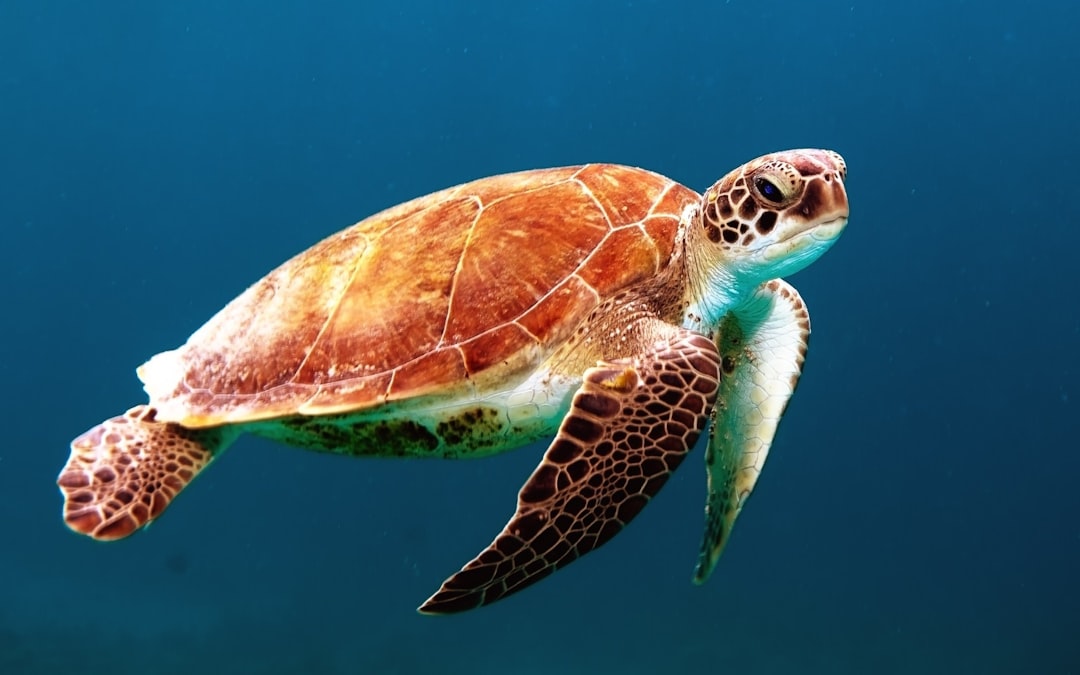
Perhaps no animal demonstrates the power of magnetic navigation more dramatically than sea turtles. These ancient mariners accomplish one of nature’s most impressive feats: returning to the exact beach where they hatched after decades of wandering the open ocean. After hatching on beaches around the world, these huge marine reptiles undertake multiyear, epic migrations at sea. Then, the turtles return to the exact spot where they were born to mate and lay their own eggs.
Recent research has revealed just how sophisticated their magnetic sensing system truly is. Loggerhead turtles are famous for their extraordinary migrations, guided by an internal magnetic map that enables them to determine their location by detecting variations in Earth’s magnetic field. Until now, scientists had speculated that turtles might also have the ability to learn and recognize magnetic fields associated with important locations, but no empirical evidence had confirmed this ability – until now.
Scientists discovered that each part of the coastline has its own magnetic signature, which the animals remember and later use as an internal compass. Even more remarkable, the magnetic field changes slowly, and loggerheads have to shift their nesting sites in response. This means these creatures are not only reading magnetic maps but constantly updating them as Earth’s field drifts over time.
Hatchlings in the open sea are guided at least partly by a ‘magnetic map’ in which regional magnetic fields function as navigational markers and elicit changes in swimming direction at crucial locations along the migratory route. The magnetic map exists in turtles that have never migrated and thus appears to be inherited.
Birds and the Quantum Compass Mystery
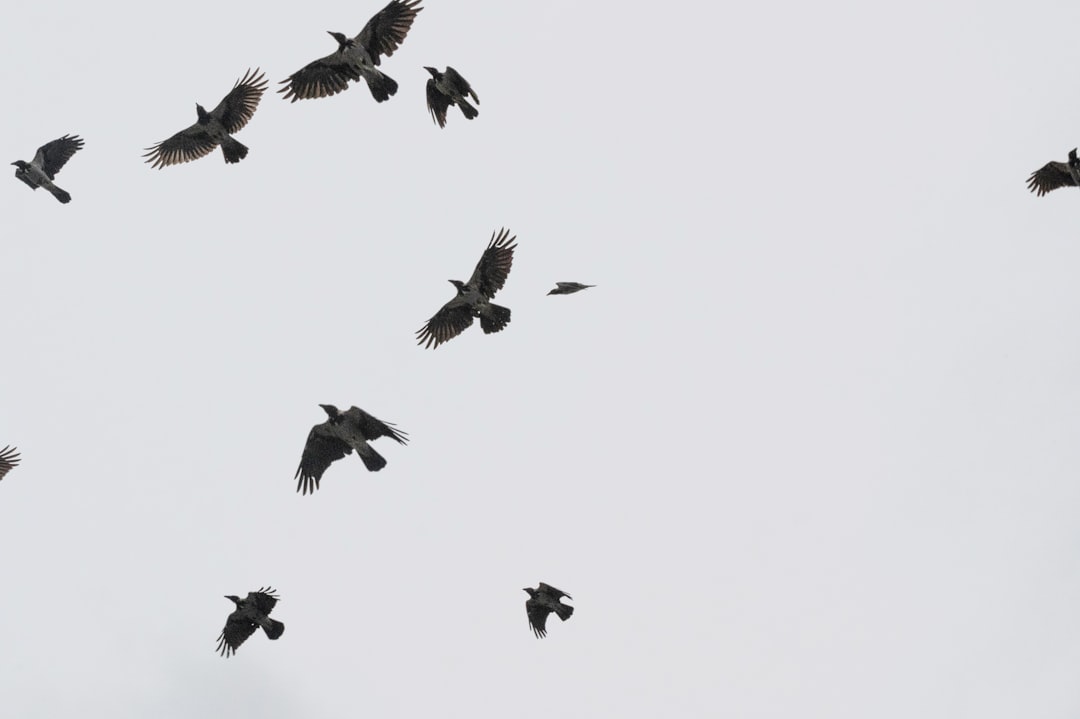
While sea turtles rely on magnetic maps, birds appear to use an entirely different mechanism that ventures into the realm of quantum physics. Perhaps the most well-studied example of animal magnetoreception is the case of migratory birds (e.g. European robins (Erithacus rubecula), silvereyes (Zosterops l. lateralis), garden warblers (Sylvia borin)), who use the earth’s magnetic field, as well as a variety of other environmental cues, to find their way during migration.
The leading theory for bird magnetoreception centers on a protein called cryptochrome found in their eyes. New measurements support the idea that a protein in birds’ eyes called cryptochrome 4, or CRY4, could serve as a magnetic sensor. That protein’s magnetic sensitivity is thought to rely on quantum mechanics. This isn’t science fiction. It’s real quantum biology happening inside the eyes of birds.
When a particle of light, or photon, hits bird cryptochrome, its energy can perturb molecules within the protein. The disturbance catapults a pair of molecules into an unstable state so fragile that it can be affected by even the subtle energetic pulse of Earth’s magnetic field. The process creates what scientists call radical pairs, molecules with unpaired electrons that behave like tiny magnets.
What makes this particularly fascinating is that cryptochrome 4 exhibits greater sensitivity to magnetic fields in migratory birds like robins than it does in resident species like chickens and pigeons. Evolution has apparently fine-tuned this quantum compass specifically for species that need it most.
Sharks and Electric Navigation
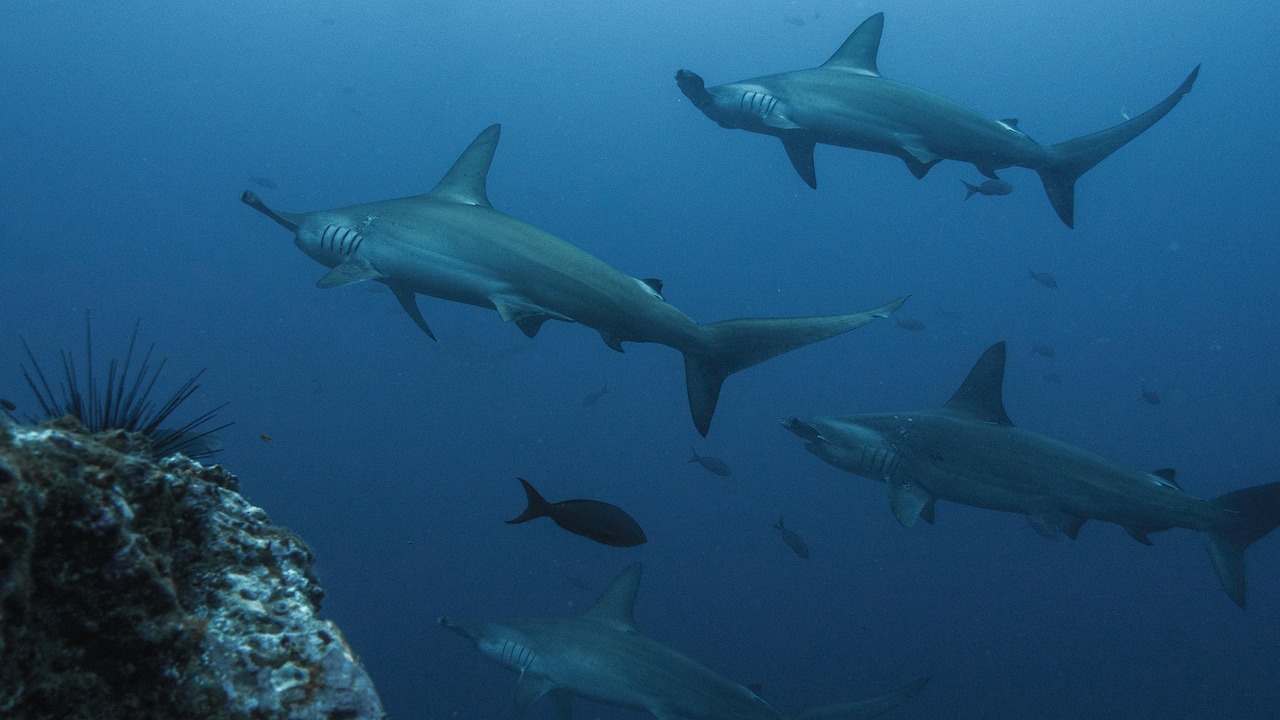
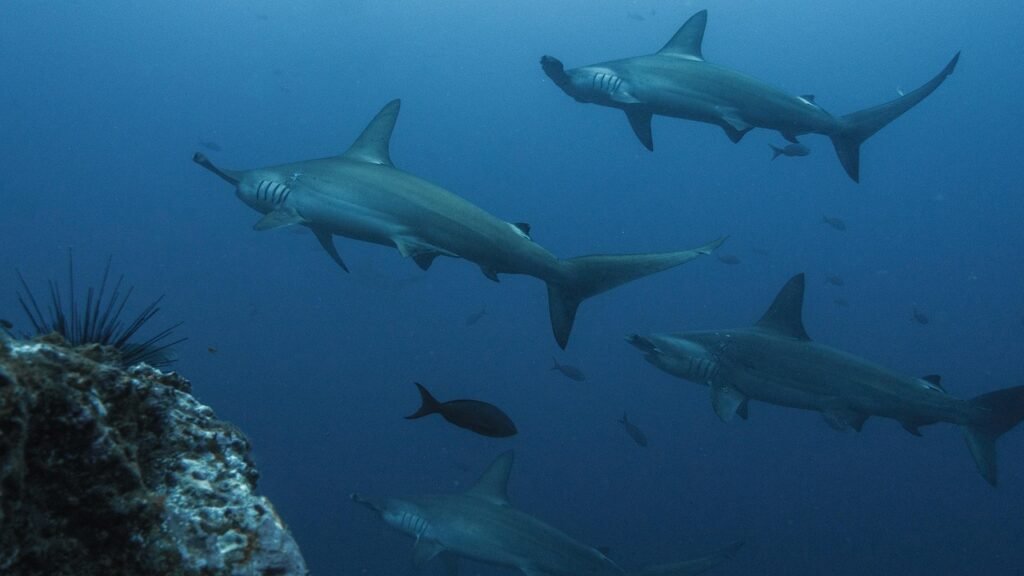
Some of the ocean’s most fearsome predators use yet another approach to magnetic navigation. Sharks and rays possess extraordinary electroreceptors called ampullae of Lorenzini that are so sensitive they can detect the electrical signatures created when these fish move through Earth’s magnetic field. Cartilaginous fish including sharks and stingrays can detect small variations in electric potential with their electroreceptive organs, the ampullae of Lorenzini.
These receptors are so sensitive to weak electrical changes that they might detect the voltage drop of induced currents that arise as the fish swim through Earth’s field. As a shark swims through Earth’s magnetic field, it induces weak electric currents to flow through the surrounding seawater. In effect, the shark uses its electric sense to infer its magnetic heading.
This electromagnetic induction method is particularly clever because it turns the shark’s entire body into a compass. The yellow stingray, Urobatis jamaicensis, is able to distinguish between the intensity and inclination angle of a magnetic field in the laboratory. This suggests that cartilaginous fishes may use the Earth’s magnetic field for navigation.
However, this system comes with limitations. Electromagnetic induction appears unlikely to be a widespread mechanism for magnetoreception because only elasmobranchs are known to have the extreme electrical sensitivity required. Most animals with electroreceptors have electric thresholds two to five orders of magnitude higher – too high for magnetoreception.
Salmon: Following Magnetic Highways Home
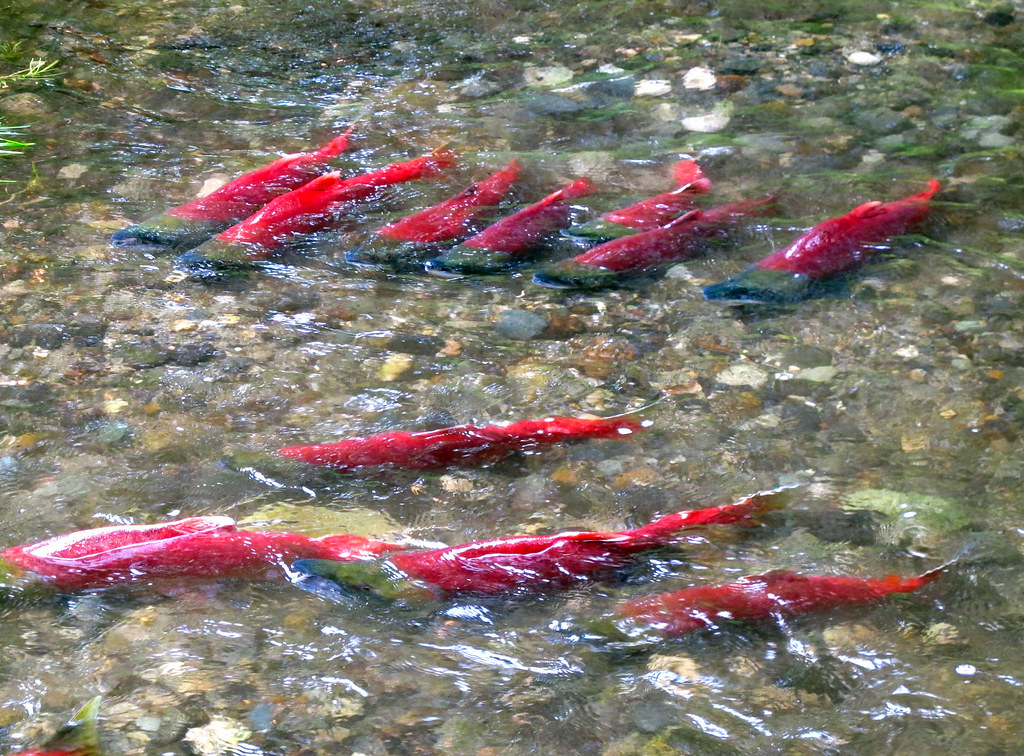
Pacific salmon demonstrate another remarkable aspect of magnetic navigation: the ability to remember and return to incredibly specific locations. Salmon come back to the stream where they were ‘born’ because they ‘know’ it is a good place to spawn; they won’t waste time looking for a stream with good habitat and other salmon. Scientists believe that salmon navigate by using the earth’s magnetic field like a compass.
What’s particularly impressive about salmon navigation is how they use magnetic information at different scales. Subtle changes in the local magnetic field affect natal homing in these fish, allowing them to fine-tune their navigation as they approach their birth streams. When they find the river they came from, they start using smell to find their way back to their home stream.
This represents a sophisticated two-stage navigation system where magnetic sensing gets them to the general area, and chemical cues guide them to the precise location. It’s like using GPS to get to your neighborhood, then switching to visual landmarks to find your house.
Iron-Based Compasses in Nature
Not all magnetic navigation relies on quantum effects or electrical induction. Some animals appear to use tiny particles of magnetite, an iron-based mineral, as biological compass needles. Birds have iron-containing materials in their upper beaks. There is some evidence that this provides a magnetic sense, mediated by the trigeminal nerve, but the mechanism is unknown.
The only conclusively demonstrated magnetoreceptors are found in various phytoplankton and bacteria, which contain chains of crystals of ferrimagnetic minerals, either magnetite (Fe3O4) or greigite (Fe3S4). The torque on the chain is so large that it rotates the entire organism to align with Earth’s field. The field generally has a vertical component, and some of those organisms use magnetoreception to sense what direction is “down” and to move toward the deeper, less oxygenated mud they prefer.
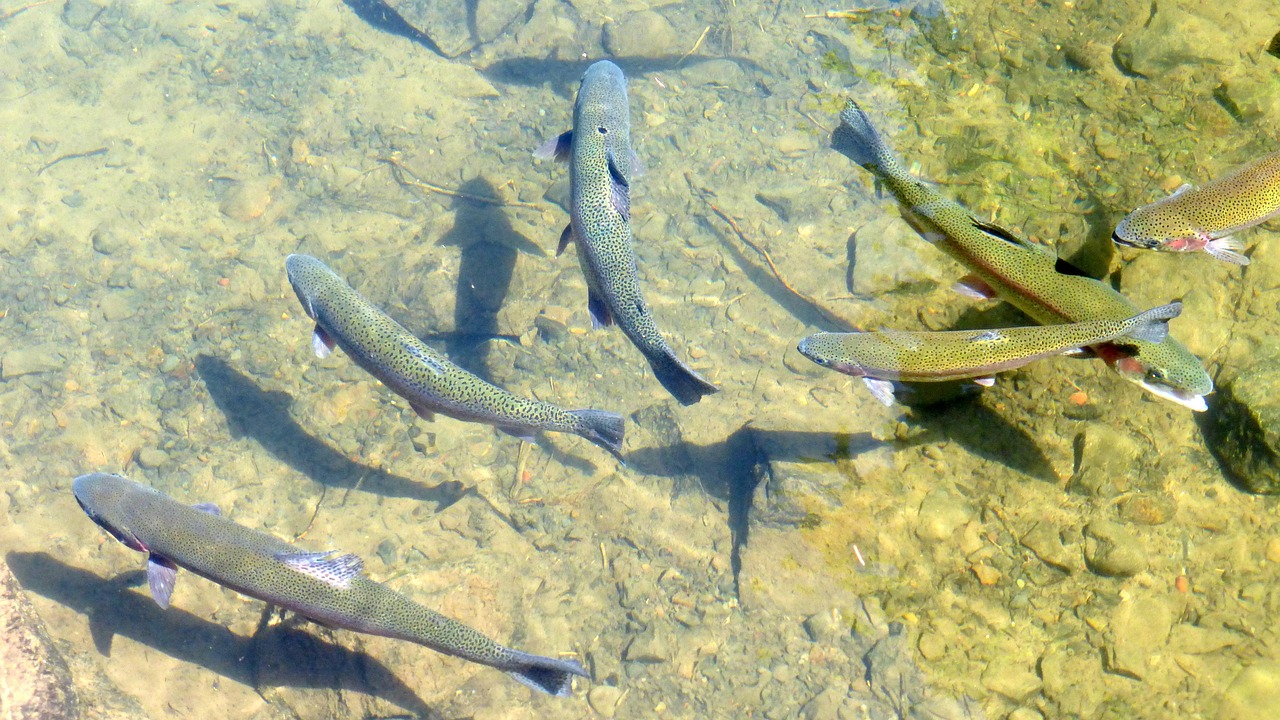
In 1988, M. M. Walker and colleagues identified iron-based (magnetite) magnetoreceptors in the snouts of rainbow trout. In 2003, G. Fleissner and colleagues found iron-based receptors in the upper beaks of homing pigeons, both seemingly connected to the animal’s trigeminal nerve. These discoveries suggest that some animals may actually have dual magnetic sensing systems, perhaps using different mechanisms for different navigational tasks.
The Surprising Magnetic Sense of Insects

You might not expect tiny insects to possess sophisticated navigation systems, but research has revealed that many arthropods are accomplished magnetic navigators. Magnetoreception has been studied in detail in insects including honey bees, ants and termites. Ants and bees navigate using their magnetic sense both locally (near their nests) and during longer foraging expeditions.
Animals known to have magnetoreception includes birds, salmon, frogs, sea turtles, honey bees, salamanders, lobsters, dolphins, and rodents. This remarkable diversity shows that magnetic sensing has evolved independently multiple times across different animal lineages.
Even fruit flies have gotten in on the magnetic action. The fruit fly Drosophila melanogaster may be able to orient to magnetic fields. The flies were trained to associate the magnetic field with a sucrose reward. Flies with an altered cryptochrome, such as with an antisense mutation, were not sensitive to magnetic fields. This research has provided crucial evidence that cryptochromes are indeed involved in magnetic sensing.
Lobsters: Navigating the Ocean Floor
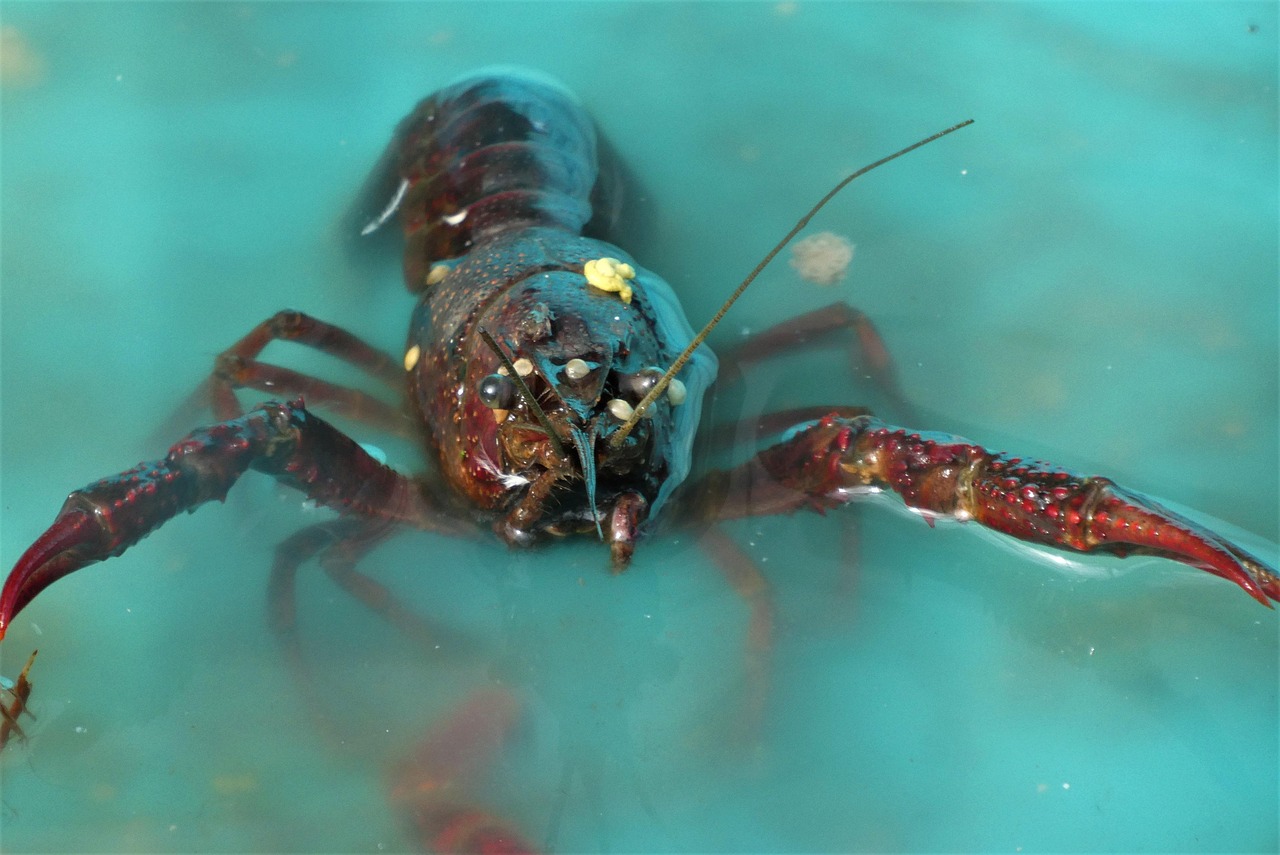
Marine arthropods have also mastered magnetic navigation, with spiny lobsters demonstrating particularly impressive abilities. These creatures can navigate across seemingly featureless ocean floors using Earth’s magnetic field as their guide. Spiny lobsters can detect longitude as well as latitude, and can orient in the proper direction toward home from a distance of 23 miles.
Diverse animals ranging from lobsters to birds are now known to use magnetic positional information for a variety of purposes, including staying on track along migratory pathways, adjusting food intake at appropriate points in a migration, remaining within a suitable oceanic region, and navigating toward specific goals.
The lobster’s magnetic navigation system appears to work like a biological GPS, capable of determining both latitude and longitude from magnetic field information. Being able to detect multiple components of the magnetic field, specifically the intensity and inclination, enables animals to form a bicoordinate map. The use of this map sense provides much more accurate navigation capability than is available with just a simple compass.
The Two-Compass System

Recent research has revealed something truly remarkable: some animals appear to possess not just one, but two distinct magnetic sensing systems. Two different mechanisms of magnetoreception probably exist in sea turtles; a mechanism underlying the compass sense that is disrupted by radiofrequency fields, and a mechanism underlying the map sense that is not. In part by using their magnetic map sense to identify magnetic signatures encountered along the route and then using their magnetic compass sense to swim in appropriate directions to help them progress along the migratory route.
This dual system makes perfect sense from an evolutionary perspective. In addition to providing animals with a source of directional or ‘compass’ information, Earth’s magnetic field also provides a potential source of positional or ‘map’ information that animals might exploit to assess location. We then summarize evidence for magnetic maps in different animals, highlighting two types of maps: one used by first-time migrants to guide movements along migratory pathways and apparently based largely on inherited information, the other involving navigation to a goal and based on information that is partly or entirely learned.
Other experiments have shown that birds might in fact possess two distinct magnetic senses: a quantum-based compass in the eye and another, most likely map-related sense linked to the trigeminal nerve. Having multiple magnetic sensors would provide backup systems and different types of navigational information, much like modern aircraft use multiple navigation systems.
The Challenges of Magnetic Field Detection
Understanding how animals detect Earth’s weak magnetic field remains one of biology’s greatest challenges. In understanding the mechanism of magnetoreception, one is immediately faced with the puzzle that the geomagnetic field is very weak (ca. 0.5 Gauss). Any suggestion for a magnetoreceptor mechanism needs to address the question whether a field as weak as the geomagnetic field can be detected by the proposed mechanism under conditions as they can be found in animals.
The difficulty goes beyond just the weak signal. Receptors for senses such as olfaction and vision must make contact with the external environment, but magnetoreceptors might plausibly be located almost anywhere inside an animal’s body. Second, magnetoreceptors might be tiny and dispersed throughout a large volume of tissue. Third, the transduction process might occur as a set of chemical reactions, in which case no obvious organ or structure devoted to this sensory system necessarily exists.
According to one researcher, “determining how animals orient themselves using Earth’s magnetic field can be even more difficult than finding a needle in a haystack. It is like finding a needle in a stack of needles.” This complexity explains why magnetoreception remained mysterious for so long and why researchers are still working to understand all its mechanisms.
Conservation Implications and Human Impact
As we learn more about animal magnetoreception, we’re also discovering how human activities might be disrupting these natural navigation systems. Though being able to have an internal GPS system seems great, some animals have negative experiences thanks to this ability. Gray whales are believed to use Earth’s magnetic field to navigate, but on days with high levels of radio-frequency noise, caused by solar storms and human electromagnetic interference, their navigation can be compromised.
Understanding how turtles detect and interpret magnetic fields could help conservationists mitigate disruptions caused by human-made structures, such as power lines and offshore wind farms, which can interfere with natural magnetic cues. Additionally, insights from this research may contribute to the development of novel navigation technologies inspired by nature.
The implications extend far beyond individual animals. Conservationists need to ensure that turtles can imprint on their natal beach in a natural magnetic environment, and they need to understand that turtle populations are probably not interchangeable. Animals programmed to migrate in the Atlantic Ocean are unlikely to navigate appropriately in the Pacific and vice versa.
This knowledge is crucial for conservation efforts and highlights how electromagnetic pollution could be silently disrupting migration patterns worldwide. It’s “increasingly evident that even weak electromagnetic fields, including low-frequency radio fields and those from electronic equipment and power grids, have physiological effects on a variety of cell types.”
Conclusion: The Hidden World of Magnetic Navigation
The discovery of magnetoreception has revealed an entirely hidden dimension of animal behavior that surrounds us every day. From quantum compasses in bird eyes to magnetic maps in turtle brains, nature has evolved an astounding array of solutions to the challenge of navigation. The discovery of the magnetic map sense has revolutionized studies of animal navigation and transformed our understanding of how animals guide themselves, especially over long distances. Indeed, magnetic maps now appear likely to explain many of the most impressive navigational feats in the animal kingdom.
What makes this field even more exciting is how much we still have to learn. The puzzle isn’t solved. The team have shown that cryptochromes are indeed magnetically sensitive but they haven’t yet proven that these proteins are the critical ingredient in magneto sensing in birds. Each new discovery opens up more questions about the sophisticated ways animals interact with Earth’s magnetic field.
If researchers keep such needs in mind, it seems likely that the same skills that guided turtles for the last 120 million years will keep them on track for the next 120 million. continue to amaze us with their hidden superpowers, reminding us that there’s still so much about our natural world that remains wonderfully mysterious.
What do you think about these incredible magnetic navigation abilities? Have you ever noticed signs of this behavior in animals around you? Tell us in the comments.
Hi, I’m Andrew, and I come from India. Experienced content specialist with a passion for writing. My forte includes health and wellness, Travel, Animals, and Nature. A nature nomad, I am obsessed with mountains and love high-altitude trekking. I have been on several Himalayan treks in India including the Everest Base Camp in Nepal, a profound experience.