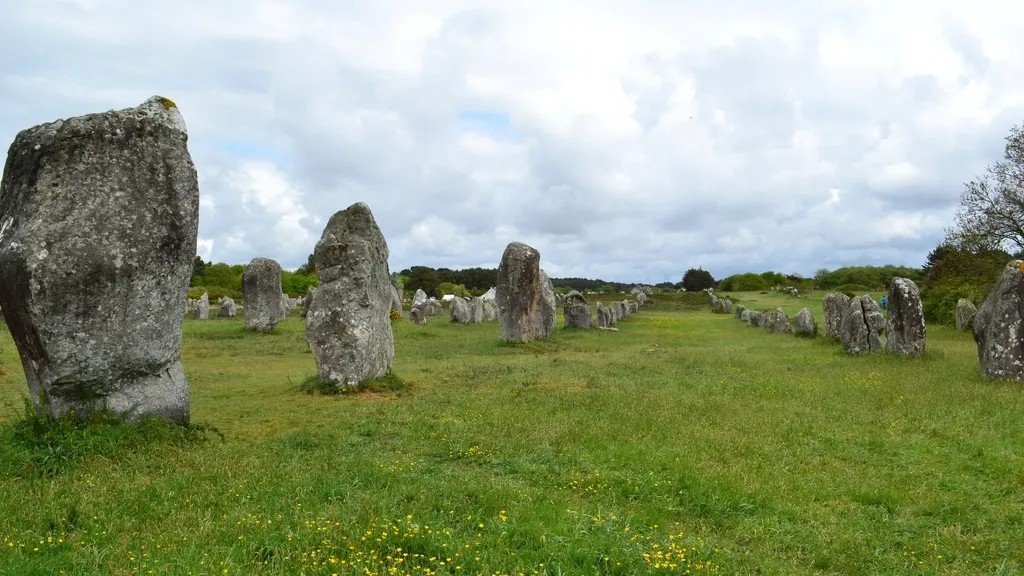

On a quiet stretch of the Breton coast in northwestern France, thousands of ancient stones stand in long, eerie lines, as if an invisible army froze mid-march. These are the megaliths of Carnac, one of the most mysterious and least fully understood prehistoric sites in Europe. People drive past them on their way to the beach, barely realizing they’re skimming past one of humanity’s oldest open-air enigmas.
For more than a century, archaeologists, astronomers, mystics, and casual travelers have tried to answer a simple question: why on earth did people in the Stone Age drag and raise more than three thousand heavy stones over several kilometers? Some say Carnac was a vast calendar aligned with the sun and stars. Others think it was all about the dead, the land, or the power of a community proving what it could do together. The truth might be messier, more layered, and more interesting than any single theory.
A Forest of Stone: What Exactly Is at Carnac?
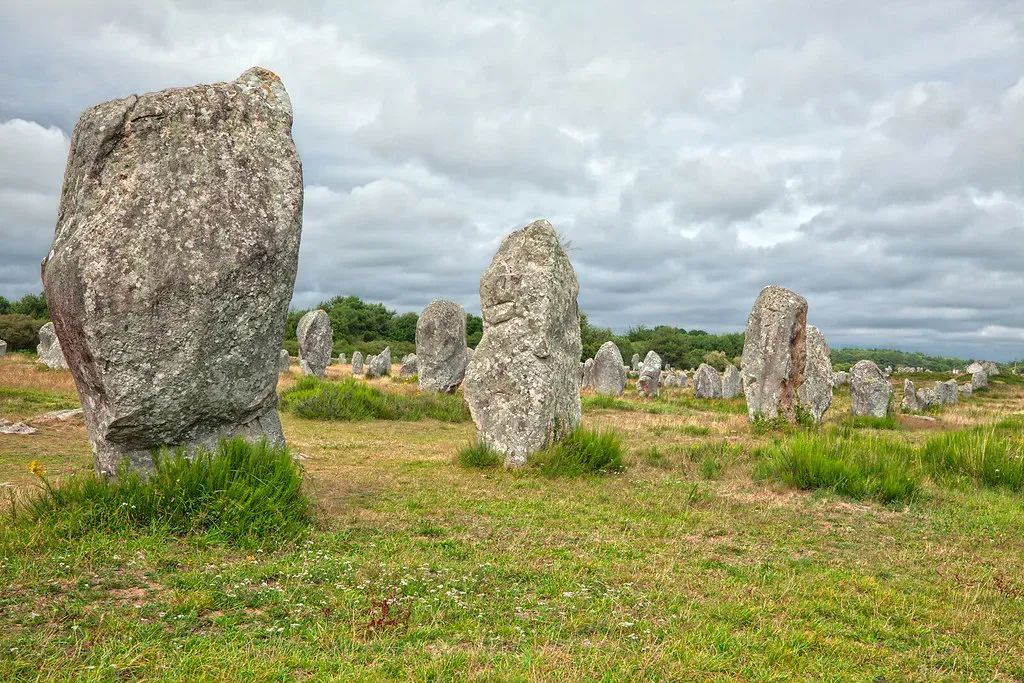
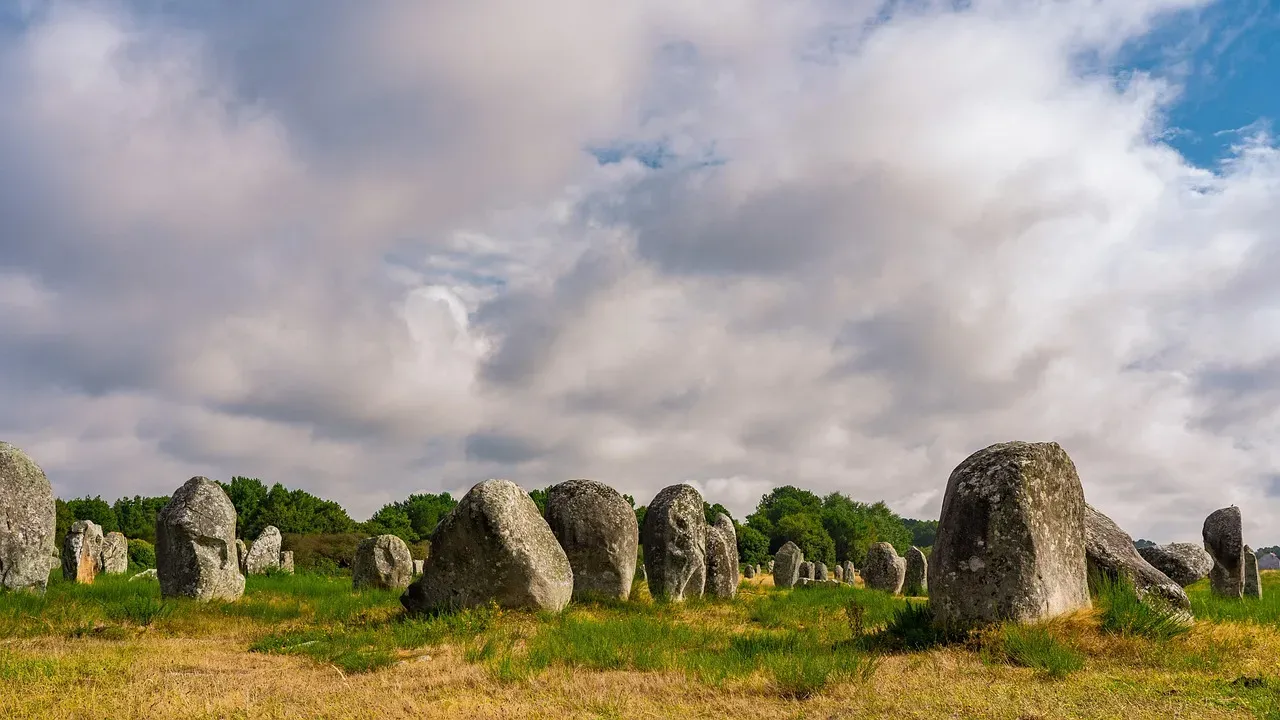
Walk into Carnac for the first time and it doesn’t feel like one monument; it feels like an entire landscape rearranged by human hands. There are rows of standing stones called alignments stretching for kilometers, clusters of taller stones known as menhirs, round stone circles, and burial mounds known as tumuli and cairns. The main alignments – Ménec, Kermario, and Kerlescan – form huge, slightly curving lines that march over low hills and fields, quietly dominating the countryside.
Some stones are small enough for a strong person to maybe imagine lifting with help; others are massive blocks that would crush a car. The largest, like the famous now-fractured “Géant du Manio,” tower above a human being, hinting at the incredible effort it took to move them with only stone tools, wood, rope, and muscle. What’s striking is not just the size of a few stones, but the sheer quantity, placed with a regularity that feels intentional but not fully decipherable. It’s like walking into a book written in a lost language, where you can see the paragraphs and punctuation, but not quite read the story.
Who Built Carnac – And How Far Back Does It Go?
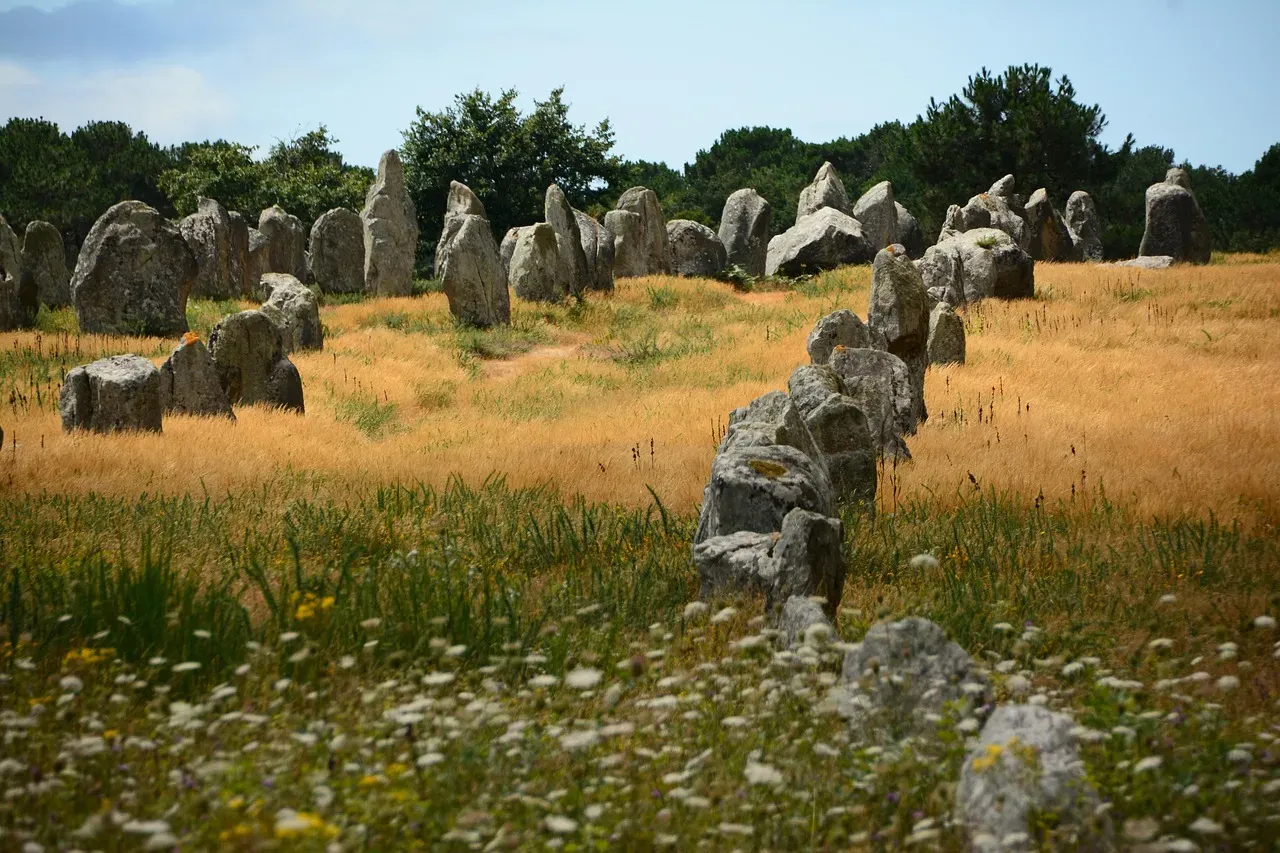
Archaeologists generally agree that the people who built Carnac were Neolithic farming communities, living long before metal tools, writing, or cities appeared in Europe. Radiocarbon dating of nearby tombs and settlement remains suggests that the main building phases stretch back roughly six to seven thousand years, with some activity possibly even a bit earlier or later. That means Carnac is older than the pyramids of Egypt and far older than Stonehenge, which often surprises visitors who assume Britain must be the star of European prehistory.
These were not “cavemen” in animal skins running wild in the woods. They farmed, herded animals, shaped polished stone tools, built longhouses, and clearly organized large-scale communal projects. Moving stones weighing several tons would have required coordination, planning, and probably a social structure that could mobilize many people at once. I always picture it like an ancient version of a modern community building a cathedral: exhausting, long-term, and deeply tied to beliefs, identity, and the hope of being remembered.
A Stone Age Calendar? The Astronomical Hypothesis
The most seductive idea about Carnac is that it was basically a gigantic calendar, tracking the movements of the sun, moon, and stars across the sky. Some researchers have suggested that particular lines of stones align with solstices – those turning points in the year when the days are longest or shortest – or with the lunar standstill, when the moon reaches its most extreme rising and setting points. If that’s true, Carnac might have helped Neolithic farmers predict seasons, mark ritual dates, or time agricultural activities.
But when you look closer, the picture gets complicated. Unlike some later monuments where alignments with solstices are precise and repeatable, Carnac’s stones are spread over a vast area, with many different orientations. A few alignments might match important solar or lunar events, while others do not, leaving room for debate. It’s tempting to see patterns everywhere, especially when the idea of a Stone Age observatory sounds so impressive, but researchers have to be careful not to cherry-pick only the lines that fit a neat story. Carnac may incorporate some sky-watching, but it doesn’t behave like a simple cosmic clock.
Beyond the Sky: Ritual, Territory, and the Dead
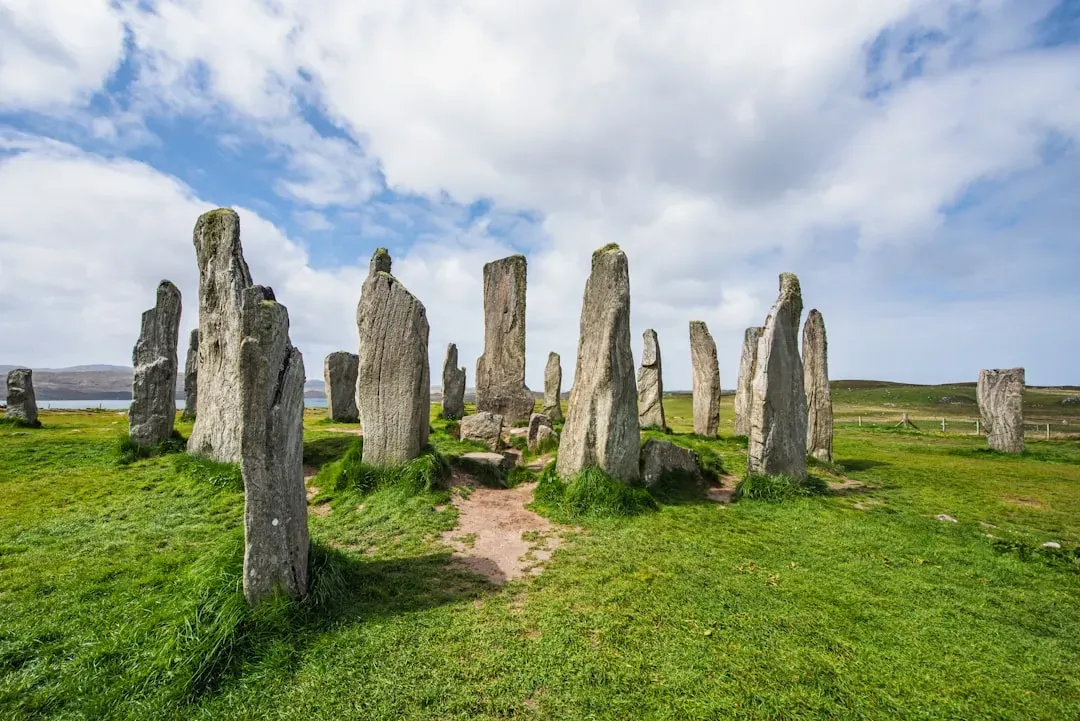
If Carnac isn’t just a calendar, what else could it have been? Many archaeologists lean toward a more mixed interpretation: part sacred landscape, part territorial marker, part network of places connected to memory and ancestors. The presence of burial mounds and stone chambers near or within the broader megalithic complex strongly suggests that death, lineage, and continuity mattered here. You can imagine processions snaking through the stone rows, ceremonies taking place at key points, and stories being told about who was buried where and why.
At the same time, long alignments of stones could have acted like monumental fences or routes, visually shaping how people moved across the land. In a world without maps, giant lines of stone would have been impossible to ignore. They might have laid claim to territory, marked boundaries between groups, or pointed toward resources like water, pasture, or the coast. Rather than a single-purpose “machine” for timekeeping, Carnac starts to look more like a multi-layered stage where spiritual, social, and practical life all overlapped.
Engineering Without Metal: How They Raised the Stones
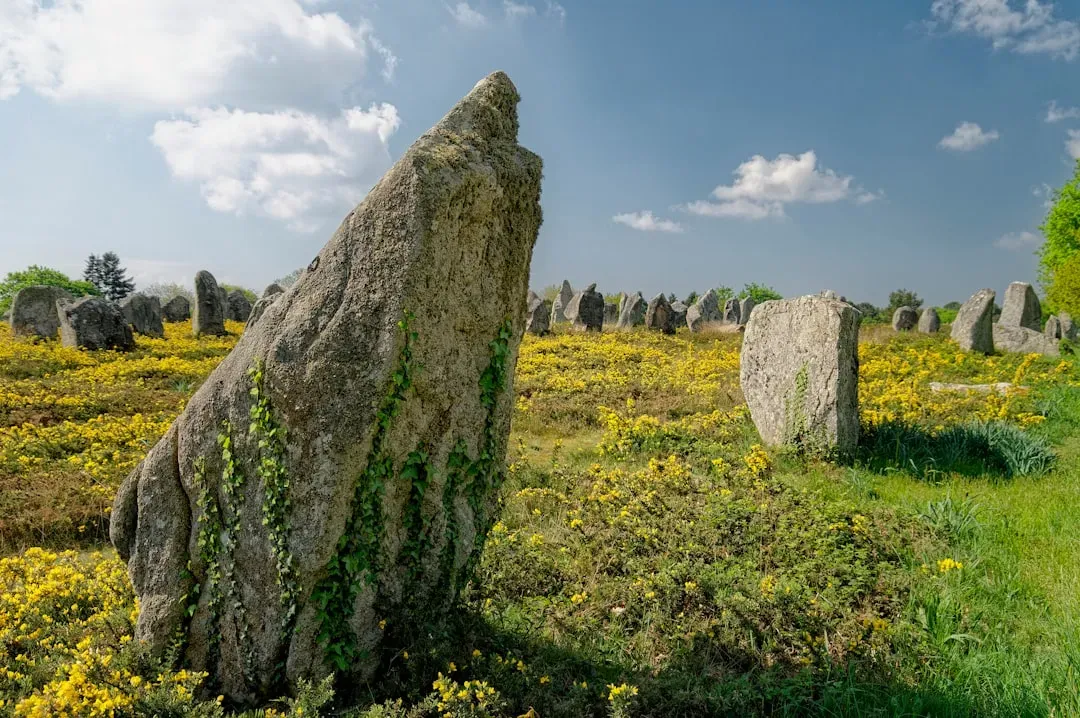
One of the most grounding questions is simply: how did they do it? Without cranes, trucks, or metal tools, Neolithic builders at Carnac likely used a combination of wooden sledges, rollers, levers, and earthen ramps to haul and raise the stones. Experiments with similar megaliths in Europe have shown that teams of people with basic equipment can move multi-ton blocks by pulling them over logs or greased tracks, step by slow step. It’s backbreaking work, but it’s not magic.
Once a stone reached its destined spot, builders could have dug a pit, tipped the stone upright using ropes and leverage, then packed the base with smaller stones and soil to keep it upright. The lack of carved decoration on most Carnac stones suggests the focus was on their placement, not their surface. The engineering is impressive precisely because it relies on clever use of simple principles: friction, balance, and teamwork. In a way, the construction itself may have been as important socially as the finished monument – shared labor binding a community together, one stone at a time.
Myths, Legends, and the Lure of the Mysterious
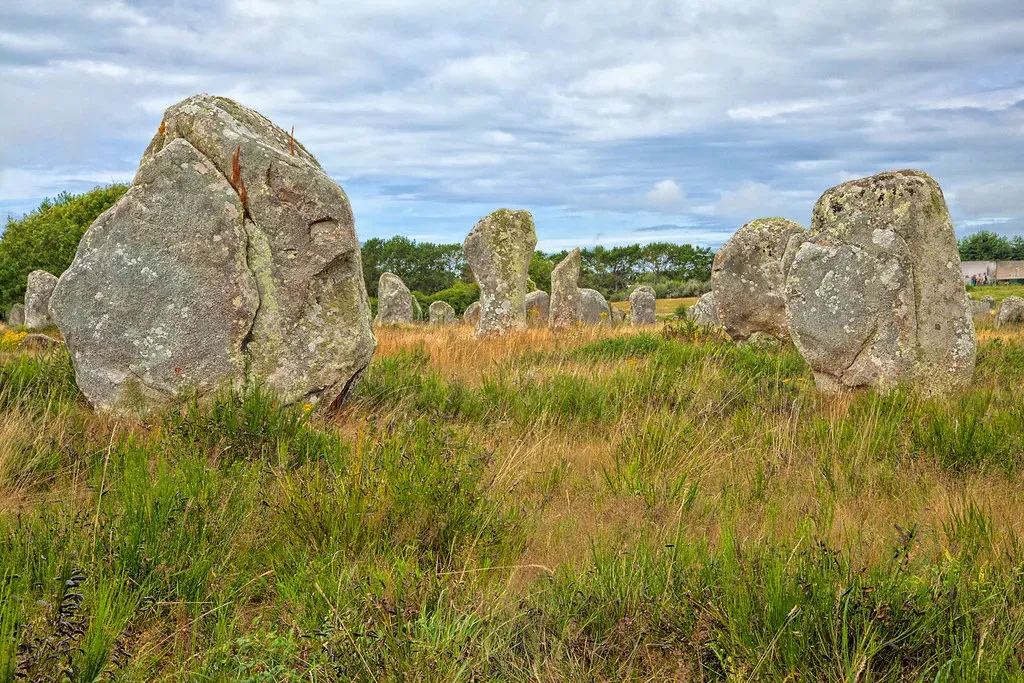
Over thousands of years, people forgot who built Carnac and why, but they never really stopped making up stories about it. In medieval and later folklore, the stones were sometimes said to be soldiers turned to stone, cursed armies frozen by a saint or supernatural power. Others imagined them as markers of lost battles, treasure guardians, or remnants of some forgotten giant race. These tales might not be historically accurate, but they reveal how unsettling and powerful such a landscape can feel when its original context is lost.
Even today, Carnac attracts modern myths: from New Age energy lines to alien intervention theories, people love to project their own fears and hopes onto the stones. I think that’s partly because the site refuses to give us a tidy answer. In a world obsessed with instant explanations, a place that simply stands there and says nothing back is almost provocative. The danger, of course, is when dramatic myths drown out the slower, quieter work of archaeology and careful reasoning. The real story of human determination, imagination, and trial-and-error is already incredible enough.
What Carnac Teaches Us About the People Behind the Stones
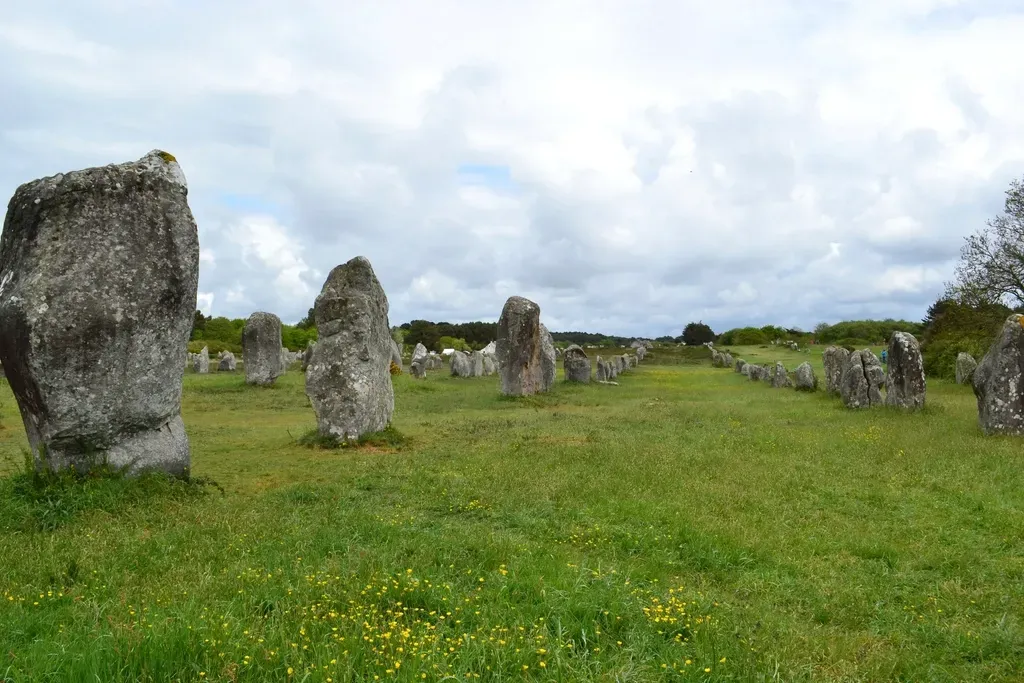
When you strip away the wildest theories and focus on what can be reasonably inferred, Carnac points to communities that were organized, deeply connected to their landscape, and willing to invest staggering effort in projects that did not produce food, tools, or obvious material gain. That alone is striking. It suggests that meaning, memory, ritual, and belonging were powerful enough to justify decades, maybe generations, of work. The stones are less about mystery for its own sake and more about what people thought was worth doing with their limited time and strength.
Standing among the alignments, you can feel both distance and kinship. We don’t share their exact beliefs, but we recognize the urge to build things that outlast us: cathedrals, monuments, skyscrapers, even digital archives. Carnac reminds us that humans have been reshaping landscapes to leave a mark long before modern technology or written history. Whether it was a calendar, a sacred route, a memorial, or all of these at once, the stones still stand, quietly insisting that people six or seven thousand years ago were thoughtful, ambitious, and far from simple.