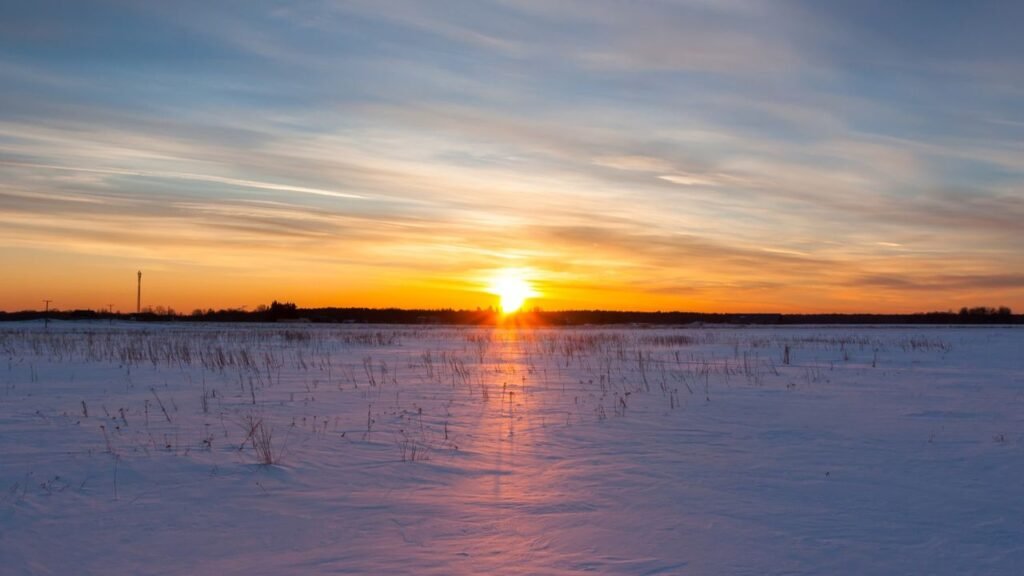

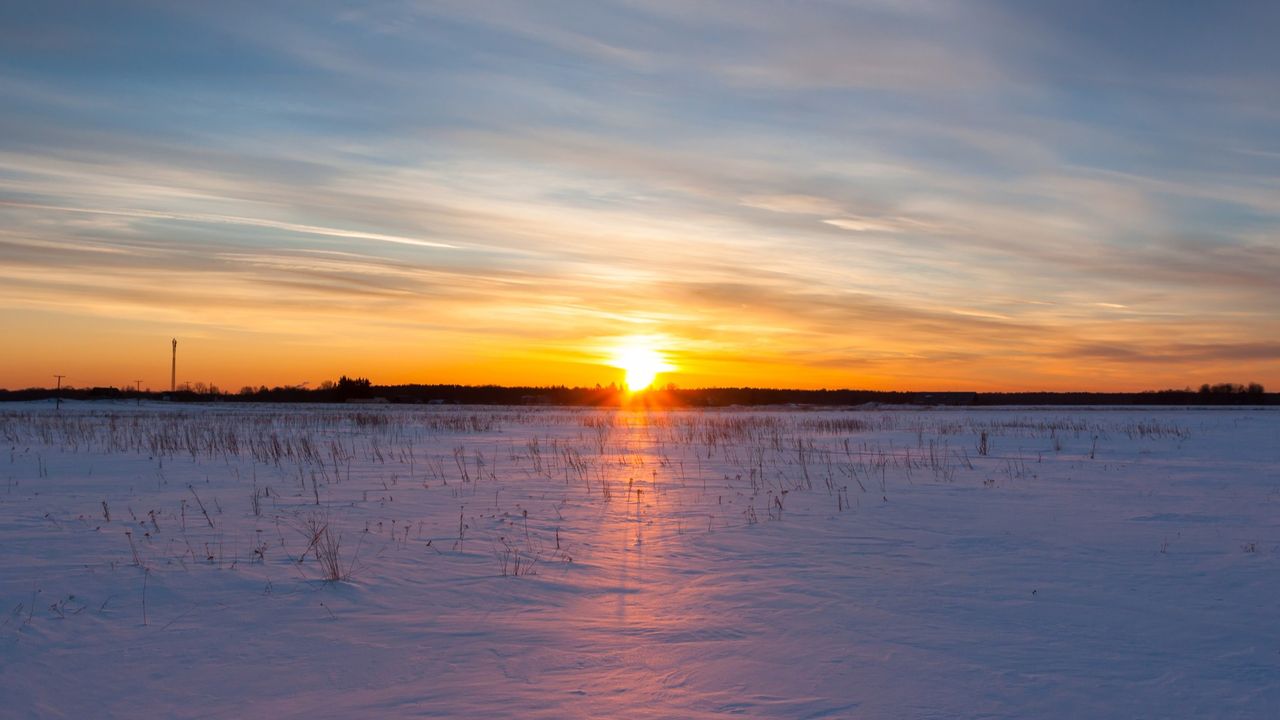
The Astrophysics Behind the Shortest Day (Image Credits: Cdn.mos.cms.futurecdn.net)
On December 21, 2025, the Northern Hemisphere experienced its annual tilt toward darkness as the winter solstice arrived, signaling the onset of astronomical winter with the sun’s lowest path across the sky.
The Astrophysics Behind the Shortest Day
Earth’s axial tilt of approximately 23.5 degrees creates the dramatic shift in daylight hours that defines the solstice. At this precise moment, the North Pole reached its maximum distance from the sun, resulting in the briefest period of daylight for locations above the equator. Astronomers noted the event occurred at 15:03 UTC, or 10:03 a.m. Eastern Standard Time, when the sun crossed the celestial equator heading southward. This alignment ensured sunrises and sunsets positioned at their most southerly points, compressing daylight into mere hours in higher latitudes.
The phenomenon stems from the planet’s yearly orbit around the sun, where the tilt remains fixed while the orbital path progresses. In northern regions like Europe and North America, daylight dwindled to as little as seven hours in some areas. Observatories worldwide tracked the sun’s declination, confirming it had dipped to about 23.44 degrees south. This solstice not only marked a celestial milestone but also highlighted the predictable rhythms governed by gravitational forces and orbital mechanics.
Timing and Observance in 2025
The 2025 winter solstice fell on a Sunday, allowing many to pause and reflect on the turning point of the season. Reports from meteorological agencies indicated that in the United Kingdom, daylight lasted just over seven and a half hours, while parts of Canada saw even less. The exact instant of the solstice passed quickly, yet its effects lingered through the day, with twilight extending the perceived darkness. Families and communities gathered for traditional observances, from lighting candles to stargazing events, embracing the night’s dominance.
Unlike the equinoxes, which balance day and night, the solstice amplified the contrast, with nights stretching up to 16 or 17 hours in temperate zones. Weather patterns often compounded the chill, as colder air masses settled over the hemisphere. Scientists emphasized that while the solstice itself was instantaneous, the gradual shift in solar angles would soon begin reversing the trend. This event served as a reminder of Earth’s dynamic relationship with its star, influencing everything from wildlife behavior to human calendars.
Contrasts Across Hemispheres
While the Northern Hemisphere plunged into its longest night, the Southern Hemisphere celebrated the opposite: the summer solstice brought extended daylight and warmth. In places like Australia and South America, the sun climbed higher, offering up to 15 hours of light and marking the peak of their warm season. This hemispheric divide underscores the solstice’s global symmetry, where one side’s winter mirrors the other’s summer due to the planet’s orientation.
Astronomical bodies such as NASA highlighted how these events synchronize the planet’s seasons without fail. The tilt ensures that no location experiences perpetual day or night year-round, except near the poles during extremes. For equatorial regions, the change proved subtler, with daylight hovering around 12 hours regardless. This balance maintains ecological stability, as species adapt to the predictable cycle of light and shadow.
Cultural Echoes and Scientific Insights
Throughout history, the winter solstice inspired festivals and rituals across cultures, from ancient stone circles aligned to capture the sun’s return to modern light displays combating seasonal gloom. In 2025, astrophysicists used advanced telescopes to study solar activity during the event, linking it to broader patterns in Earth’s climate. The solstice also prompted discussions on light pollution’s impact, as urban skies obscured the very stars that once guided solstice celebrations.
Key facts about the solstice include:
- It occurs annually around December 21 or 22 in the Gregorian calendar.
- The term “solstice” derives from Latin, meaning “sun stands still,” reflecting the sun’s apparent pause in its path.
- Polar regions endure continuous night for months around this time, with the Arctic Circle marking the boundary.
- Post-solstice, each day gains about a minute of sunlight in mid-latitudes.
- Climate data shows the solstice influences weather fronts, often ushering in colder snaps.
Key Takeaways
- The 2025 winter solstice at 15:03 UTC confirmed the Northern Hemisphere’s tilt away from the sun, yielding the year’s minimal daylight.
- Days begin lengthening immediately after, promising gradual renewal through spring.
- This event bridges astrophysics and culture, reminding us of our planet’s orbital dance.
As the solstice fades into memory, it leaves a profound sense of transition, where the promise of longer days emerges from the depths of winter. This celestial checkpoint invites reflection on resilience amid seasonal change. What traditions will you carry forward into the brighter months ahead? Share your thoughts in the comments below.
Hi, I’m Andrew, and I come from India. Experienced content specialist with a passion for writing. My forte includes health and wellness, Travel, Animals, and Nature. A nature nomad, I am obsessed with mountains and love high-altitude trekking. I have been on several Himalayan treks in India including the Everest Base Camp in Nepal, a profound experience.